Best Line and Leader Setup for Lake Barkley Sauger
Trying to figure out the perfect fishing line and leader setup for sauger on a big lake like Barkley can feel like cracking a secret code. You spend hours on the water, you feel a faint tap, set the hook, and nothing—or worse, you get a bite, fight the fish for a moment, and then it's gone, leaving you wondering if your setup was to blame. It's incredibly frustrating to invest your time and effort only to be hampered by doubts about your gear. This guide is here to demystify the world of fishing lines and leaders, giving you the confidence to rig up effectively for those elusive Lake Barkley sauger, ensuring you're ready for every bite.
Understanding Your Main Line Options for Sauger
When you're chasing sauger, especially in the clear, often current-swept waters of Lake Barkley, your main line isn't just a connection to your rod; it's a critical component that affects everything from bite detection to lure presentation. There are three primary types of fishing line that anglers typically choose from, each with its own set of characteristics that can either help or hinder your sauger success. Choosing the right one means understanding how sauger behave and where they live.
Monofilament Line: The Classic Choice
Monofilament, often just called mono, is the old reliable of fishing lines. It's been around forever, and for good reason: it's affordable, easy to tie knots with, and offers a good amount of stretch. This stretch can be a double-edged sword when sauger fishing. On one hand, it acts like a shock absorber, cushioning sudden lunges from a fish and preventing hooks from tearing out. If you're using a relatively stiff rod or you have a heavy hand on the hookset, that little bit of give can be a lifesaver.
However, the stretch also means reduced sensitivity. When a sauger, known for its incredibly subtle bite, just mouths your jig in deep water or strong current, that stretch can absorb the faintest tap, making it feel like nothing at all. Imagine trying to feel a feather landing on a rubber band – that's a bit like what it's like detecting a sauger bite with too much mono stretch. Additionally, mono tends to have more memory, meaning it retains the shape of the spool, leading to coils that can make casting and line management a bit more challenging, especially with lighter lures. It's generally more visible in the water too, which isn't ideal for finicky sauger in clear conditions. While it's great for certain applications, for the typical jigging or trolling techniques used for sauger, it's often overlooked as a main line in favor of more sensitive options.
Fluorocarbon Line: The Invisible Advantage
Fluorocarbon line truly shines when stealth and sensitivity are paramount, which describes sauger fishing to a T. The biggest advantage of fluorocarbon is its refractive index, which is very close to that of water. In plain terms, it's nearly invisible underwater. This is a massive boon when you're targeting wary sauger in clear Lake Barkley water, especially during bright conditions. These fish have excellent eyesight, and a highly visible line can definitely turn them off.
Beyond stealth, fluorocarbon offers excellent sensitivity due to its lower stretch compared to monofilament. This means those light bites from a sauger, which might otherwise be missed, are more readily telegraphed up your rod blank. It also has good abrasion resistance, which is valuable when fishing around rocky points, ledges, or submerged timber where sauger often congregate. The downside? Fluorocarbon can be a bit stiffer and has more memory than braid, and it's generally more expensive. Tying strong knots with fluorocarbon also requires a bit more care and practice, as it can be prone to slipping if not tied properly and cinched down slowly. For some anglers, a full spool of fluorocarbon is their go-to main line, offering a direct, sensitive connection that few other lines can match.
Braided Line: The Ultimate in Sensitivity and Strength
Braided line has become incredibly popular for sauger fishing, and for good reason. Its primary advantage is its near-zero stretch. This translates into unparalleled sensitivity, allowing you to feel every bump, tick, and, most importantly, every subtle sauger bite, no matter how deep you're fishing or how strong the current is. When you're vertical jigging or slowly dragging a bait along the bottom, that direct connection can make all the difference in detecting a strike and getting a solid hookset.
Braided line is also incredibly strong for its diameter. You can spool up with a lighter pound test braid, which casts further and cuts through the water and current better, all while maintaining superior breaking strength compared to mono or fluoro of the same diameter. Its lack of memory means smooth casting and fewer tangles. The biggest drawback, however, is its visibility. Braided line, even in natural colors, is highly visible underwater. This is where the leader comes in, but we'll get to that in a moment. Additionally, braid can be more prone to abrasion on sharp rocks or mussel shells if not handled carefully, and its slick texture can make knot tying a different beast altogether, often requiring specific knots for optimal performance. Many anglers turn to companies like Bass Pro Shops for a wide selection of braided lines, from standard greens and yellows to low-visibility options.
| Line Type | Sensitivity | Visibility | Abrasion Resistance | Stretch | Knot Tying | Cost | Ideal Application for Sauger |
|---|---|---|---|---|---|---|---|
| Monofilament | Medium | High | Medium | High | Easy | Low | Beginner setups, topwater, trolling with shock absorption needed. |
| Fluorocarbon | High | Low (near invisible) | High | Low | Moderate (careful) | High | Main line for direct jigging, leader material. |
| Braided Line | Very High | Very High | Low (can fray) | None | Moderate (specific knots) | Medium | Main line for maximum sensitivity, especially with a leader. |
The Critical Role of Your Leader
If your main line is the engine, your leader is the finely tuned steering system. For sauger fishing, it's not just an afterthought; it's an absolutely crucial component of your tackle. Ignoring the leader, or choosing the wrong one, can severely impact your catch rate, leading to frustration and missed opportunities.
Why a Leader is Non-Negotiable for Sauger
Sauger are predatory fish with sharp teeth, and they often inhabit areas with abrasive structure like rocks, mussel beds, and submerged timber. A direct connection of your main line to your lure in these conditions is a recipe for disaster. The leader serves several vital purposes. First and foremost, it provides a buffer against the sauger's teeth. While not as aggressive as a pike or muskie, their small, sharp teeth can easily nick and fray lighter main lines, especially monofilament or braid, leading to break-offs. A robust leader material can withstand these nicks much better.
Secondly, and this is where it truly shines, the leader offers invisibility. As we discussed, braided line is incredibly visible in the water. Sauger are sight feeders, and presenting your lure on a thick, brightly colored braid is often a turn-off. A clear, low-visibility leader makes your bait appear much more natural and enticing. It separates your bait from the potentially intimidating main line, increasing your chances of a strike, especially in clear water or during slow bites. Finally, the leader can add a small amount of stretch (if using fluorocarbon or mono) to a braid setup, providing a little shock absorption that helps prevent hook pulls, especially when a sauger unexpectedly thrashes at the boat.
Fluorocarbon vs. Monofilament Leaders
When it comes to leader material for sauger, you essentially have two choices: fluorocarbon and monofilament. Most serious sauger anglers overwhelmingly prefer fluorocarbon.
Fluorocarbon Leaders: These are the gold standard for sauger leaders. Their near-invisibility underwater is the primary draw. You want your lure to be the focus, not your line. Fluorocarbon's excellent abrasion resistance is another huge plus. When your jig bounces off rocks or snags momentarily, a fluoro leader is much less likely to fray and break than a comparable monofilament. It's also stiffer than mono, which can help prevent your lure from tangling with your main line, especially when jigging or casting. You can find high-quality fluorocarbon leader material from many reputable brands, often available in bulk spools at places like Amazon for convenience.
Monofilament Leaders: While not as popular for sauger, monofilament leaders can be used, particularly if you're fishing in stained or muddy water where visibility isn't as critical. Mono is more supple and stretchy than fluoro, which some anglers prefer for certain lure presentations or to add extra shock absorption. It's also generally less expensive. However, its higher visibility and lower abrasion resistance compared to fluorocarbon make it a secondary choice for most sauger applications. If you're on a budget or fishing particularly murky water, a good quality mono leader might suffice, but if you want the absolute best chance, fluorocarbon is the way to go.
Choosing Leader Length and Strength
The ideal leader length for sauger fishing on Lake Barkley can vary based on the technique and conditions. For vertical jigging or trolling, a leader between 2 to 4 feet is a common starting point. This length provides enough separation from your main line for stealth and allows for good abrasion resistance without being so long that it becomes difficult to cast or manage. If you're casting lighter jigs or live bait rigs, a slightly longer leader, maybe 5 to 6 feet, can enhance presentation and minimize line twist. However, exceptionally long leaders can make landing fish at the boat tricky, especially if the knot connecting your main line to your leader passes through your rod guides.
As for strength, a good rule of thumb for sauger on Lake Barkley is to use a leader in the 8 to 12-pound test range. If your main line is 10-pound braid, an 8-pound fluorocarbon leader creates a "breakaway" point, meaning if you snag, you're more likely to break off the leader and save your more expensive main line. However, a 10 or 12-pound leader offers more abrasion resistance and a better chance of landing a bigger fish, especially if you're targeting those trophy sauger or accidentally hook into a stout walleye. Match the leader strength to the size of your main line and the overall conditions, but don't go too heavy, as it can compromise stealth.
Putting It All Together for Lake Barkley Sauger
Now that we've broken down the individual components, let's talk about how to combine them for optimal sauger success on Lake Barkley. The synergy between your main line and leader is what truly makes a difference in detecting those subtle bites and landing those fantastic fish.
Braided Main Line with a Fluorocarbon Leader
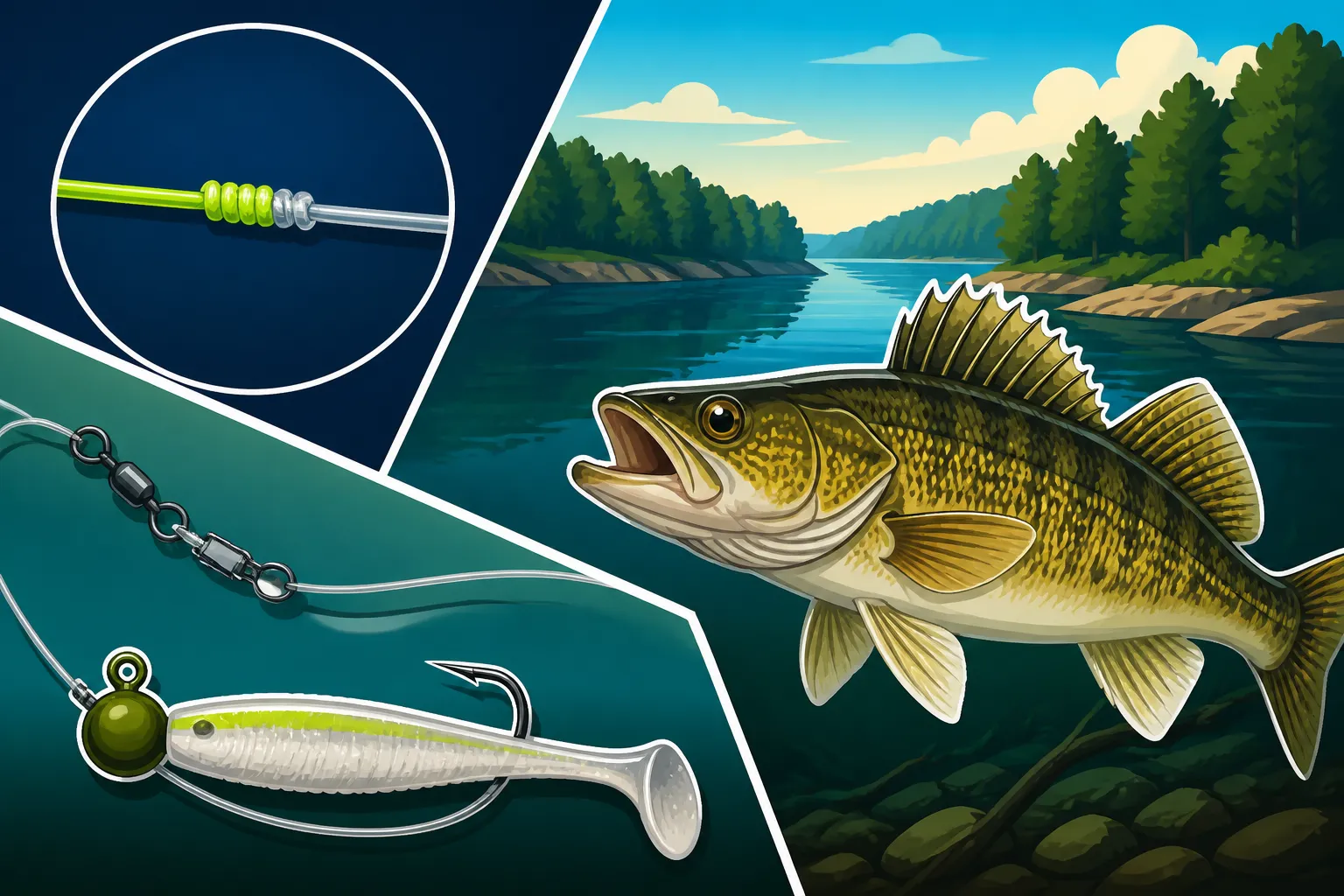
This is arguably the most popular and effective line and leader combination for sauger fishing, especially for jigging and bottom bouncing on Lake Barkley. The braided main line, typically 8 to 15-pound test, provides incredible sensitivity and strength, ensuring you feel every little tap and can set the hook even in deep water. This strength also helps to power through heavy current. The highly visible nature of braid is then mitigated by a fluorocarbon leader, usually 8 to 12-pound test, creating a nearly invisible presentation to the sauger.
When selecting your braid, consider a low-visibility color like green or brown if you feel it helps, but remember the leader does most of the "invisibility" work. For the leader, a good quality 100% fluorocarbon line is essential. Brands that specialize in fluorocarbon are often a good bet. You'll attach the braid to the fluorocarbon leader using a strong, reliable knot designed for dissimilar line types. The FG knot is considered one of the best for this purpose, offering incredible strength and a very slim profile that passes through rod guides smoothly. Other good options include the Double Uni knot or the Albright knot, though they tend to be bulkier. Practice these knots at home until you can tie them quickly and correctly, as a weak knot will be your ultimate failure point. A fresh spool of leader material from Bass Pro Shops or a new bulk roll purchased from Amazon is a small investment that pays off big time.
Tying the Perfect Connection: Knots Matter!
The knot connecting your main line to your leader is arguably the most critical knot in your entire setup for sauger fishing. A poorly tied knot can fail under pressure, leading to lost fish and lost lures. Given the sensitivity of sauger and the typical conditions on Lake Barkley, you need a strong, low-profile knot that won't hinder casting or create a weak point.
For connecting braided main line to a fluorocarbon leader, the FG knot is the champion. It's a friction knot that creates a strong, slim, and smooth connection. It can be a bit tricky to learn at first, requiring practice, but it's well worth the effort. There are numerous instructional videos available online that can walk you through the steps. The key is to keep tension on both lines throughout the tying process and to cinch it down very slowly and firmly.
If the FG knot proves too challenging, the Double Uni knot is a more accessible alternative that still offers good strength, though it creates a slightly bulkier knot. Another option is the Albright knot, which is also relatively easy to tie and provides a decent connection. Whichever knot you choose, remember these universal knot-tying tips:
- Moisten the knot: Before cinching down any monofilament or fluorocarbon knot, always moisten the line with saliva or water. This lubricates the line, allowing the knot to tighten properly without generating friction heat that can weaken the line.
- Cinch slowly and firmly: Don't just yank the knot tight. Pull gradually and firmly, ensuring all the wraps seat correctly.
- Trim tags closely: Once tight, trim your tag ends as close as possible to the knot without cutting the main lines. This reduces snagging and keeps the connection streamlined.
Maintenance and Best Practices for Your Line and Leader
Even the best line and leader setup won't perform optimally if it's not maintained properly. Sauger fishing puts a lot of stress on your gear, and diligent upkeep is key to preventing frustrating break-offs and missed opportunities.
Checking and Re-Tying Your Line and Leader
This is probably the most overlooked aspect of fishing line maintenance. Every time you go fishing for sauger, and especially after catching a fish, bouncing off the bottom, or experiencing a snag, you must check your leader. Run your fingers slowly along the last few feet of your fluorocarbon leader, feeling for any nicks, abrasions, or rough spots. Sauger teeth, rocks, and even small bits of debris can cause damage. If you feel any compromise in the line, don't risk it – cut off the damaged section and re-tie your lure.
It's also a good practice to re-tie your main line to leader knot periodically, even if it looks fine. Especially with braided line, microscopic fraying can occur over time, weakening the connection. If you've been on a particularly productive trip or faced a lot of snags, consider re-tying the main line to leader knot before your next outing. Regularly checking and re-tying will save you from the heartbreak of losing a big sauger or an expensive lure due to preventable line failure. When you're fishing for sauger, you often target very specific structures, so losing your tackle to a preventable line break is even more frustrating.
Seasonal and Situational Adjustments
While the braided main line to fluorocarbon leader setup is a fantastic all-around choice for Lake Barkley sauger, don't be afraid to make minor adjustments based on the conditions or specific fishing techniques.
For example, in extremely cold water during winter, when sauger are incredibly lethargic and bites are almost imperceptible, you might consider using an even lighter fluorocarbon leader (say, 6-pound test) to maximize invisibility and presentation subtlety. However, this comes at the cost of abrasion resistance, so be extra cautious around structure. Kentucky Fishing Seasons: What to Catch Each Month delves deeper into seasonal behaviors, which can influence your tackle choices.
If you're trolling, particularly with crankbaits that have a lot of wobble, a slightly longer leader (4-5 feet) can help with lure action and reduce line twist. For vertical jigging directly over brush piles or deep ledges, where snagging is common, you might opt for a slightly heavier leader (12-pound test) to give you a better chance of pulling free without breaking your entire rig. Knowing Kentucky Fishing Rules by Lake and Water can also inform your decisions, as some areas might have stricter tackle requirements.
Proper Line Storage and Care
Taking care of your fishing line when you're not on the water is just as important as on-the-water maintenance. Store your fishing rods in a way that keeps the line from being exposed to direct sunlight for extended periods. UV rays are the enemy of fishing line, especially monofilament and fluorocarbon, causing them to degrade and lose strength over time.
Additionally, avoid leaving your line spools in extreme temperatures. A hot garage or a freezing shed can negatively impact line performance. If you're going to store extra spools of line, keep them in a cool, dark place. On your reels, occasionally pull off a good section of line and cut it back, especially the first 10-20 feet that see the most action and sun exposure. This is particularly true for monofilament and fluorocarbon main lines. Braided line is more resilient but still benefits from careful storage and occasional trimming of the working end. By following these simple care routines, you'll extend the life of your line and maintain its peak performance, ensuring your Best Rods and Reels for Kentucky Fishing are always rigged and ready for action. You can learn more about specific gear in our Best Gear for Kentucky Sauger Fishing on Lake Barkley guide. And for those cold water bites, check out Cold-Water Sauger Fishing at Kentucky's Lake Barkley for even more tailored advice. If you're new to fishing, our Kentucky Fishing License Guide is a great place to start, and for those looking for an edge, our How to Fish for Sauger in Cold Water article provides invaluable tips.
Conclusion: Confidence in Your Connection
The pursuit of sauger on Lake Barkley is a rewarding challenge, often demanding precision and sensitivity. By understanding the distinct advantages of braided main lines and pairing them with the invisibility and abrasion resistance of a fluorocarbon leader, you're building a connection that maximizes your chances of success. It's about feeling those incredibly subtle bites, protecting against the sauger's sharp teeth and the lake's unforgiving structure, and ultimately, having the confidence to land your next trophy fish. Take the time to practice your knots, routinely check your line, and make those small, intelligent adjustments to your setup, and you'll find yourself much more successful on the water, turning those frustrating missed opportunities into memorable catches.
Disclaimer
This article is for general informational purposes only and does not constitute professional advice. Laws, prices and regulations vary by location and change over time. Consult a qualified professional for guidance on your specific situation.