Best Rods for Bank Fishing Crappie
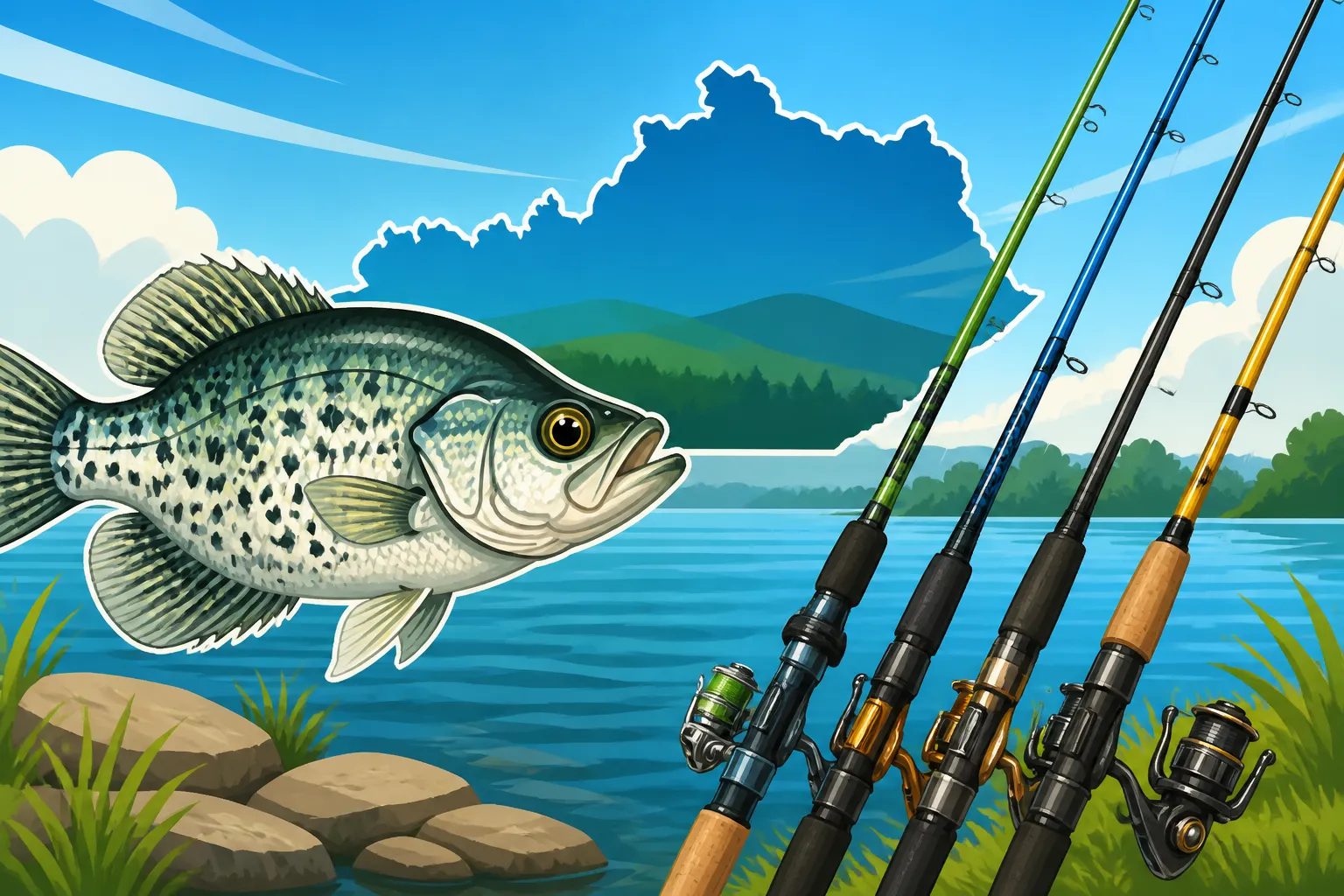
There’s nothing quite like the peace and quiet of finding a perfect spot on the bank of a Kentucky lake or river, soaking up the sun, and waiting for that tell-tale tap of a crappie bite. But let's be honest, it can also be incredibly frustrating when you’re using the wrong gear, especially a rod that just doesn't feel right or let you feel the fish. This guide is all about cutting through that confusion and helping you pinpoint the best rods specifically designed to make your bank fishing crappie trips more successful and enjoyable.
Why Bank Fishing for Crappie Demands Specific Rod Features
When you're out on the shore, casting your line into the calm waters of a Kentucky lake, you quickly realize that bank fishing for crappie isn't just "fishing." It's a specialized art form that requires a nuanced approach, particularly when it comes to your rod selection. It's not about brute force or heavy tackle; it's about finesse, reach, and feeling those incredibly subtle bites that crappie are famous for. Just grabbing any old rod from your garage probably won't cut it, and that's where a lot of the frustration can creep in.
The Frustration of Overkill and Underkill Rods
Have you ever tried to cast a tiny 1/32 ounce jig with a heavy-action bass rod? It's like trying to thread a needle with a rope! The rod is too stiff, you can't feel the weight of the lure, and your casts are either wildly inaccurate or barely make it past your feet. It's overkill, and it completely ruins the delicate presentation crappie often require. You spend more time untangling line or retrieving poorly cast baits than actually fishing. On the flip side, trying to handle a decent-sized crappie, especially a slab pulling hard near cover, with a flimsy, ultra-light rod meant for tiny panfish can be equally maddening. The rod might bend in half, offering no control, and before you know it, that beautiful fish has either broken your line or tangled itself in a submerged branch. You feel every surge, but have no power to guide it away from danger. It's a delicate balance, and choosing a rod that's either too much or not enough for the job can lead to a lot of missed opportunities and grumbles from the bank.
Casting Distance and Accuracy from Shore
One of the biggest limitations of bank fishing is, well, the bank itself. You don't have the luxury of a boat to position yourself right on top of the fish. Often, crappie will hold in deeper water, near brush piles, or along ledges that are just out of reach of an average 6-foot rod. This is where casting distance becomes paramount. Imagine seeing a beautiful submerged log a little further out in Lake Barkley, knowing those crappie are stacked on it, but your rod just can't get your jig there. It's infuriating! A longer rod, combined with the right action, can significantly increase your casting range, allowing you to present your bait to those fish that others can't reach.
Beyond distance, accuracy is just as vital. Crappie love structure – sunken trees, docks, lily pads, bridge pilings. From the bank, you often need to thread your jig into tight pockets, under overhanging trees, or precisely along the edge of a weed line. A rod that allows for precise, controlled casts means you're spending less time snagged and more time in the strike zone. Without that accuracy, you're constantly retrieving lures from obstacles or simply missing the best spots, turning a relaxing day into a frustrating exercise in futility. It truly makes a difference when you can cast a small jig with pinpoint accuracy right into a tight pocket where crappie are hiding. Best Shore and Bank Fishing Spots in Kentucky will often highlight these kinds of structural elements.
Sensitivity for Detecting Subtle Crappie Bites
Crappie are notoriously light biters. Sometimes it's a confident thud, but more often, it's just a faint tick, a slight pause in your line, or the almost imperceptible feeling of extra weight. Missing these subtle takes is probably the number one reason anglers struggle to catch crappie from the bank. You think your jig is just hitting bottom or dragging through weeds, only to reel in and find your bait has been expertly stolen. It's disheartening and leaves you wondering if there are even any fish there at all.
This is where rod sensitivity truly shines. A sensitive rod acts as an extension of your hand, transmitting every bump, tap, and subtle change in line tension directly to you. This sensitivity comes from the material the rod is made of (more on that later) and the design of its tip. With the right rod, that almost invisible "thump" translates into a solid hookset, turning a missed opportunity into a fish on the line. It builds confidence and helps you differentiate between a snag and a hungry crappie, making for a much more rewarding fishing experience. Many experienced anglers will tell you that a highly sensitive rod is the secret to increasing your crappie catch rate, especially when they're being finicky.
Key Rod Characteristics for Bank Fishing Crappie
Now that we understand why specific rod features are important, let's dive into what those features actually are. When you're standing on the bank, whether it's at Lake Cumberland or a local farm pond, having the right combination of length, power, action, and material can elevate your crappie fishing from a guessing game to a confident pursuit. These characteristics work together to create a tool perfectly suited for feeling those light bites and making those crucial casts.
Rod Length: Finding Your Sweet Spot
Choosing the right rod length for bank fishing crappie is a bit like Goldilocks finding the right bed – it needs to be "just right" for your specific situation. You’re typically looking for something longer than your average bass rod, but not so long it becomes cumbersome.
- Shorter Rods (6 to 7 feet): These are more manageable if you're fishing in really tight quarters, say, a heavily treed bank along a small creek, or if you're trying to cast under low-hanging branches. They offer a bit more control for precise, short casts. However, their main drawback is reduced casting distance and less leverage for fighting fish or reaching distant cover. If you find yourself in spots like the Best Remote Fishing Coves on Lake Cumberland where space is limited, a shorter rod might be ideal.
- Medium Rods (7 to 8 feet): This range is often considered the sweet spot for many bank crappie anglers. They provide a significant boost in casting distance compared to shorter rods, allowing you to reach those far-off brush piles or submerged structure. They also offer better line control, making it easier to mend your line and detect those subtle bites. For general purpose crappie fishing from the bank in open areas, this length offers a great balance of castability, sensitivity, and control.
- Longer Rods (8 to 10+ feet): These are fantastic for maximizing casting distance, especially on wide-open banks where you need to reach far out into the main lake. Think of fishing a long stretch of rip-rap or a pier where fish are holding a good distance away. They also provide excellent leverage, which can be a huge advantage when fighting a bigger crappie or trying to steer a fish away from snags. The downside is that they can be unwieldy in tight spots, harder to transport, and generally require more space to cast effectively. If you're using a technique like "spider rigging" from the bank (yes, some folks do!), a longer rod can help spread out your lines.
Ultimately, your ideal rod length will depend on the specific banks you frequent. If you primarily fish open stretches of water, leaning towards the longer end of the spectrum will likely yield better results. If you're constantly navigating dense vegetation or tight spaces, a slightly shorter rod will be more practical.
Rod Power and Action: The Crappie Conundrum
Understanding rod power and action is crucial for crappie fishing, as it directly impacts how well you can cast light lures, feel bites, and fight fish.
-
Rod Power refers to the lifting strength or backbone of the rod. For crappie, you're generally looking at:
- Ultra-Light: These rods are incredibly thin and flexible, perfect for casting the lightest jigs (1/32 oz or smaller) and protecting very light line. They bend easily, which makes even a small crappie feel like a monster. However, they lack the backbone to quickly pull a larger crappie away from heavy cover.
- Light: A step up from ultra-light, offering a bit more power. These are excellent for slightly heavier jigs (1/16 to 1/8 oz) and still provide superb sensitivity. Many crappie anglers find this power level to be ideal for a versatile bank fishing rod.
- Medium-Light: This power offers a good balance, providing enough backbone for larger crappie or accidental bycatch (like a bass) while still being sensitive enough for crappie bites. It can handle jigs up to 1/4 oz comfortably.
-
Rod Action describes where the rod bends when pressure is applied.
- Fast Action: The rod bends mostly in the tip section. This provides maximum sensitivity and allows for quick, powerful hooksets, which is great for feeling those subtle crappie bites and reacting instantly.
- Moderate Action (or Moderate-Fast): The rod bends through the upper half to two-thirds of the blank. This action offers a good balance of casting distance (it loads more of the rod) and a forgiving bend that helps prevent hooks from tearing out of a crappie's soft mouth.
For bank fishing crappie, a common and highly effective combination is a Light to Medium-Light power rod with a Fast to Moderate-Fast action. This pairing gives you the sensitivity to detect delicate bites, the backbone to handle decent fish, and the ability to cast those small crappie jigs accurately.
Here's a quick table to summarize:
| Rod Characteristic | Description | Ideal for Bank Crappie Fishing |
|---|---|---|
| Power | Lifting strength/backbone | Light to Medium-Light (handles light jigs, good sensitivity) |
| Action | Where the rod bends when pressure is applied | Fast to Moderate-Fast (sensitive tip, good casting & hookset) |
| Length | Overall length of the rod | 7 to 8 feet (good balance of distance and control) |
| Material | What the rod blank is made from | Graphite (for maximum sensitivity) |
Material Matters: Graphite vs. Fiberglass
The material your rod is constructed from plays a huge role in its overall performance, especially regarding sensitivity and durability.
- Graphite Rods: These are the darlings of sensitive fishing. Graphite is lighter, stiffer, and transmits vibrations much more efficiently than fiberglass. This means you can feel every little bump, tick, and even the subtle movement of your jig's tail with incredible clarity. For bank fishing crappie, where bites can be almost imperceptible, this heightened sensitivity is a game-changer. You'll feel bites you might have otherwise missed, leading to more hooksets and more fish. The trade-off is that graphite can be more brittle than fiberglass, so it requires a bit more care to prevent breakage, especially if you're prone to bumping your rod on rocks or trees while moving along the bank. Many top-tier crappie rods, including those you might find at Bass Pro Shops, are made from high-modulus graphite.
- Fiberglass Rods: Fiberglass rods are known for their incredible durability and a more "parabolic" bend, meaning they bend smoothly throughout the entire blank. They are generally less expensive than graphite and much more forgiving, making them a great option for beginners or those who are a bit rougher on their gear. While they lack the extreme sensitivity of graphite, their softer action can be beneficial for keeping a crappie hooked once it bites, acting as a shock absorber against sudden head shakes. However, casting lighter lures and detecting those faint crappie taps can be more challenging with fiberglass. They might be a good choice for situations where you're primarily using bobbers and watching the float for a bite, rather than relying on direct feel.
For serious bank crappie fishing, particularly with jigs and artificial lures, a high-quality graphite rod is generally the preferred choice due to its superior sensitivity. It allows you to feel the subtle differences between a snag and a bite, dramatically increasing your chances of success.
Recommended Rod Types for Bank Fishing Crappie
Now that we’ve delved into the nitty-gritty of rod characteristics, let's talk about the specific types of rods you should be looking for to conquer those crappie from the shore. These are the tools that will empower you to reach those hidden pockets and feel those elusive bites, turning a hopeful cast into a successful catch. Whether you're a seasoned angler or just starting out, there’s a rod type perfectly suited for your bank fishing adventures in Kentucky.
Panfish Specific Rods: Built for the Job
If you're truly dedicated to crappie fishing from the bank, your best bet is often a rod explicitly marketed as a "panfish" or "crappie" specific rod. These aren't just marketing gimmicks; they are purposefully engineered to meet the unique demands of these species. Manufacturers understand that panfish, including crappie, require a particular blend of sensitivity, delicate presentation, and enough backbone to handle a good-sized slab.
These rods typically feature ultra-light or light power with a fast or extra-fast action. This combination means you get an incredibly sensitive tip that will telegraph even the slightest nibble, followed by a surprisingly robust mid-section that provides the power to set the hook and fight the fish effectively. You'll often find them in lengths ranging from 6.5 to 8 feet, which we've already established is ideal for bank casting distance and control. The materials are almost always high-modulus graphite to maximize that crucial sensitivity. When you pick one of these up at a local tackle shop or browse options on Amazon, you'll immediately notice how lightweight and balanced they feel, making a full day of casting from the bank far less tiring. For instance, brands like St. Croix, Fenwick, and BnM often have excellent panfish-specific lines that anglers rave about. You might even find specialized "jigging" rods that are fantastic for vertical presentations from a dock or steep bank.
Using a rod designed specifically for crappie fishing truly highlights the difference compared to a general-purpose setup. You'll suddenly start feeling bites you never knew you were missing before, and your ability to cast those tiny crappie jigs will improve dramatically. It's like switching from a multi-tool to a specialized surgical instrument – everything becomes more precise and effective.
Light Spinning Rods: The Versatile Workhorses
For many anglers, a good quality light spinning rod is the versatile workhorse for crappie fishing from the bank. While not always "crappie-specific," a well-chosen light spinning rod can perform exceptionally well and often doubles as a great rod for other smaller species like bluegill or trout. This makes them a fantastic option if you're looking for a rod that can do a bit of everything without needing a dedicated crappie setup.
When selecting a light spinning rod for crappie, look for models in the 6.5 to 7.5-foot range with a light or medium-light power and a fast or moderate-fast action. These rods are usually made from graphite composites, offering a good balance of sensitivity and durability. Their versatility means you can easily switch between different crappie techniques, from casting small jigs and grubs to fishing with a slip bobber and minnow. They are generally widely available and come in various price points, making them accessible to almost any angler. Brands like Ugly Stik, Shimano, and Daiwa all offer excellent light spinning rods that are perfect for crappie. You can find a huge selection of these types of rods at large retailers like Bass Pro Shops or with convenient online shopping on Amazon. Many anglers will pair a good light spinning rod with a light line, perhaps 4 to 6-pound test, to maximize their casting distance and sensitivity. Consider exploring the options for Best Rod and Reel Combo for Beginners if you're new to the game, as many of those setups are perfect for crappie.
The beauty of a light spinning rod is its adaptability. You can use it to target crappie in various environments, from the open waters of Kentucky Lake to the brushy banks of a smaller reservoir. It's a reliable choice that will serve you well through countless crappie seasons.
Telescoping Poles and Bream Busters
While often overlooked by modern anglers, telescoping poles (sometimes called "bream busters" or "cane poles") still have a valuable place in the bank fishing crappie arsenal, especially for specific situations. These aren't your traditional casting rods; they are designed for vertical jigging or presenting bait in extremely tight, hard-to-reach cover where casting is simply impossible.
Imagine you're on a steep bank, and there's a dense mat of lily pads right at your feet, or a tangle of submerged trees directly below a dock. Trying to cast into these spots with a conventional rod is a recipe for snags and frustration. This is where a telescoping pole shines. These poles can extend from a compact size to lengths of 10, 15, or even 20 feet, allowing you to quietly drop your jig or minnow directly into a small pocket of open water within the cover. You simply extend the pole, lower your bait, and wait for the bite. They offer direct contact with the lure and excellent control in close quarters.
While they don't offer the casting ability of spinning rods, their utility in specific bank fishing scenarios is undeniable. They are usually very lightweight and easy to carry, making them perfect for anglers who like to walk the bank and target specific pieces of visible cover. They are often less sensitive than graphite casting rods, as you're typically relying on visual cues (like your line twitching) or a more aggressive take from the fish. These poles are particularly effective for techniques like dipping or dunking, where precision placement in tight cover is key. If you frequent spots known for dense cover, like certain areas on Barren River Lake Crappie Size Limit in Kentucky where submerged timber is plentiful, a telescoping pole could be a secret weapon.
Pairing Your Rod with the Right Reel and Line
Choosing the perfect rod for bank fishing crappie is a fantastic start, but it's only half the battle. To truly maximize your success, you need to pair that rod with the right reel and line. Think of it like a finely tuned musical instrument – each component needs to work in harmony to produce the best performance. A great rod can be undermined by a mismatched reel or inappropriate line, leading to casting woes, missed bites, and ultimately, fewer fish in your cooler.
Spinning Reels for Balance and Performance
For the light to medium-light spinning rods we've been discussing, a high-quality, small spinning reel is undoubtedly the way to go. Forget those heavy, oversized reels meant for bass or catfish; they will throw off the delicate balance of your crappie rod and make it feel clunky and awkward.
You'll want to look for spinning reels in the 1000 to 2500 size range. These reels are designed to be lightweight, compact, and perfectly complement the finesse nature of crappie fishing. The key features to prioritize in a crappie reel include:
- Smooth Drag System: Crappie have relatively soft mouths, and a jerky drag can easily tear the hook out, especially if you're using light line. A smooth, consistent drag system allows the fish to take line when it needs to, preventing break-offs and helping you land more fish.
- Lightweight Construction: A lighter reel helps maintain the overall balance of your rod and reel combo. This is crucial for sensitivity, as it allows you to feel those subtle bites without your hand or wrist getting fatigued from an unbalanced setup.
- Good Line Capacity: Even with light line, you'll want enough capacity for longer casts and fighting a good-sized crappie. These smaller reels are perfectly capable of holding plenty of 4-6 pound test line.
- Smooth Operation: Look for reels with a decent number of ball bearings. More bearings generally translate to smoother retrieves and a more enjoyable fishing experience.
Brands like Shimano, Daiwa, and Penn offer a wide range of excellent spinning reels that pair beautifully with crappie rods. While you don't need to break the bank, investing in a reel with a smooth drag and reliable components will pay dividends on the water. A poorly balanced reel can make your ultra-sensitive graphite rod feel dead in your hand, so choose wisely.
Line Choices: Mono, Fluoro, and Braid
Your fishing line is the direct connection between you and the fish, so selecting the right type and pound test is paramount for crappie fishing from the bank. Each type of line has its own strengths and weaknesses:
- Monofilament (Mono): This is the classic, all-around fishing line. It's affordable, easy to tie knots with, and offers a good amount of stretch, which can be forgiving when a crappie makes a sudden run or shakes its head. The stretch also helps prevent hooks from pulling out of soft mouths. However, mono has more memory (it retains coil shape) and is less sensitive than other options. For crappie, a 4 to 6-pound test monofilament is a good starting point, especially if you're using a bobber rig.
- Fluorocarbon (Fluoro): Fluorocarbon is much less visible underwater than monofilament, making it an excellent choice for clear water conditions or when crappie are particularly skittish. It also has very little stretch, offering superior sensitivity – almost as good as braid – which is fantastic for feeling those light bites. The downsides are that it can be stiffer than mono, sometimes harder to cast, and generally more expensive. You might use 4-pound test fluoro as a main line or as a leader connected to braid for invisibility.
- Braided Line (Braid): Braid offers incredible strength-to-diameter ratio, no stretch, and maximum sensitivity. You'll feel everything that happens at the end of your line, which is a huge advantage for crappie. However, braid is highly visible underwater, can be more expensive, and can be challenging to tie knots with if you're not used to it. Many anglers mitigate the visibility issue by tying a short fluorocarbon or monofilament leader (2-4 feet) to their braided main line. A 6-pound test braid, with a 4-pound fluoro leader, provides an incredibly sensitive and strong setup. This combination is particularly effective for feeling subtle bites in deeper water or when fishing in current.
For bank fishing crappie, a strong argument can be made for either a high-quality 4-6 pound monofilament or a 6-pound braided main line with a 4-pound fluorocarbon leader. Experiment to see what works best for your local conditions and fishing style. Don't forget to check the Statewide Bag and Size Limits by Fish Species for crappie in your area before heading out!
Terminal Tackle Considerations
While not directly part of your rod and reel, the terminal tackle you use greatly influences how your rod performs. When fishing for crappie from the bank, your terminal tackle will typically be small and light, which further emphasizes the need for a sensitive rod and a balanced setup.
- Jigs: Crappie jigs often range from 1/32 oz to 1/8 oz. These tiny lures require a rod that can load and cast them effectively, and a sensitive tip to detect strikes. A heavier jig can be cast on a slightly stiffer rod, but the lighter ones truly demand that finesse setup.
- Hooks: Crappie hooks are usually small, ranging from size 4 to size 8. These fine-wire hooks penetrate easily with a light hookset, which a sensitive rod allows you to execute precisely.
- Bobbers: If you're using a slip bobber or fixed bobber, the weight of the bobber itself, plus your jig or minnow, needs to be considered. A rod with a moderate action can often cast bobbers more effectively as it loads the entire rod blank during the cast.
Always ensure your terminal tackle is appropriately matched to your chosen rod, reel, and line. A super light jig on a heavy line with a stiff rod will lead to nothing but frustration. Conversely, a heavy sinker on an ultra-light setup might damage your rod. Pay attention to the details, and your crappie fishing success from the bank will surely improve.
Disclaimer
This article is for general informational purposes only and does not constitute professional advice. Laws, prices and regulations vary by location and change over time. Consult a qualified professional for guidance on your specific situation.