Best Gear for Shore Fishing the Ohio River
Shore fishing the Ohio River in Kentucky presents a unique set of challenges that can leave even seasoned anglers scratching their heads, wondering why their usual lake setups just aren't cutting it. From relentless currents to snag-infested bottoms and often limited access, it's easy to feel defeated before you even cast a line. This guide is dedicated to equipping you with the specialized gear and knowledge needed to confidently tackle the mighty Ohio from the bank, helping you find success and enjoyment.
Understanding the Ohio River's Unique Shore Fishing Challenges
The Ohio River isn't your average placid pond or even a large reservoir. It's a massive, dynamic waterway with characteristics that demand specific approaches and, consequently, specialized gear for shore anglers. If you walk up to its banks with the same ultralight setup you use for bluegill in a farm pond, you're going to have a frustrating day.
Current, Debris, and Structure Along the Banks
One of the biggest factors that makes shore fishing the Ohio River so different is the sheer force of the current. Whether it's after heavy rains, when a dam is releasing water, or just the natural flow, that river is moving. This current isn't just an inconvenience; it will sweep lightweight baits away, make it impossible to hold bottom with insufficient weight, and generally make your life difficult. You'll quickly learn that a 1/4 oz sinker, which might be plenty in a lake, is practically useless here.
Beyond the current, the Ohio River's banks and bottom are often littered with all sorts of snags. Think about centuries of floods, industrial activity, and natural erosion. You've got submerged trees, rock piles, old bridge pilings, concrete rubble, and even discarded tires. These aren't just minor annoyances; they are tackle graveyards waiting to claim your hooks, sinkers, and lures. This means your gear needs to be robust enough to withstand constant abuse and, at times, strong enough to break free or pull in heavy debris if you get snagged. Best Rigs for Catfish Fishing in Current can give you a head start on understanding how to counter some of these challenges.
Varying Depths and Bottom Composition
The Ohio River's bottom isn't uniform; it's a patchwork of different depths and compositions that can change dramatically within a few feet of the bank. You might have a relatively shallow, sandy flat extending out, only for it to drop off sharply into a deep channel or scour hole created by the current. Other areas might be rocky, muddy, or a mix of all three. Knowing this variation is crucial because it dictates where fish might be holding and what kind of presentation will work best.
Fish will often relate to these changes in depth and structure. Catfish might be lurking in the deeper scour holes or along the edges of current seams, while bass or crappie might hold in shallower, calmer pockets behind structure. Your gear needs to allow you to adapt to these conditions. You can't just throw out a bobber rig and expect it to work everywhere; you'll need the capability to cast heavy bottom rigs into deep water or present baits effectively in shallower, snaggy cover.
Boat Traffic and Bank Access Considerations
Let's be realistic: finding prime, easily accessible, and legal shore fishing spots on the Ohio River can be a treasure hunt in itself. Much of the riverfront in populated areas is commercial, industrial, or private property. Even in public parks or designated fishing areas, access can be limited to concrete boat ramps, rip-rapped banks, or muddy trails. This often means you'll be dealing with uneven terrain, steep inclines, or long walks to get to your fishing spot. Best Bank Fishing Access on the Ohio River in Kentucky can help you scout some promising locations.
Another significant factor is boat traffic. The Ohio River is a major commercial waterway, seeing everything from barges to towboats, pleasure craft, and other anglers in their boats. These vessels create wakes that can make bank fishing precarious, pulling gear into the water, and even posing a safety hazard if you're too close to the edge. Your setup needs to be stable, and you need to remain vigilant, always prioritizing safety. This reality also means your gear needs to be relatively portable and manageable to carry over varying distances and terrains.
Essential Rod and Reel Setups for Ohio River Shore Anglers
Given the formidable nature of the Ohio River, your rod and reel selection needs to be a step above what you might use for smaller bodies of water. This isn't the place for delicate finesse fishing; it's about power, durability, and the ability to handle heavyweights and strong fish.
Medium-Heavy to Heavy Power Rods
For most Ohio River shore fishing, especially when targeting catfish, sauger, or larger bass, a medium-heavy to heavy power rod is your bread and butter. The "power" of a rod refers to its lifting strength or how much pressure it takes to bend the blank. A medium-heavy power rod, typically 7 to 9 feet long, gives you the backbone needed to cast heavy sinkers (think 2-6 ounces) to hold bottom in current and to muscle in larger fish. This power also helps when you inevitably get snagged, allowing you to try and free your rig without snapping your rod in half.
For trophy catfish anglers, moving up to a heavy or even extra-heavy power rod, sometimes 8 to 10 feet in length, is not uncommon. These longer rods offer better casting distance, crucial for reaching deeper channels from the bank, and even more leverage against truly monstrous blue or flathead catfish. Look for rods with a fast to moderate-fast action, meaning the rod bends mostly in the tip section. This provides good sensitivity for detecting subtle bites, while the powerful mid and butt sections give you the necessary lifting power. Brands like Ugly Stik offer incredibly durable and affordable options that are practically bomb-proof against river abuse, which you can often find at stores like Bass Pro Shops or on Amazon.
Durable Spinning and Baitcasting Reels
Your reel needs to complement your heavy-duty rod. For spinning reels, look for models in the 4000 to 6000 size range, or even larger if you're specifically targeting huge catfish. Key features include a robust drag system that can withstand powerful runs from large fish, a high line capacity to hold plenty of heavy line, and sturdy construction. Aluminum frames are generally more durable than graphite, offering better longevity against the harsh river environment. Sealed bearings can also help protect against grit and water intrusion, extending the life of your reel.
Baitcasting reels, particularly heavy-duty conventional reels, are often favored by serious catfish anglers for their immense power and line capacity. A good quality baitcaster designed for heavy freshwater applications will provide superior winching power, making it easier to pull in heavy sinkers and powerful fish against the current. Again, look for strong drag systems, durable gears, and ample line capacity. Many anglers prefer a low-profile baitcaster for versatility, but round-profile conventional reels are often the choice for the biggest fish. Ensure your reel feels solid and smooth; there's nothing worse than a sticky drag when a big fish hits. Best Rods and Reels for Kentucky Fishing provides more general advice on selecting setups.
Choosing the Right Line Strength and Type
Line choice is critical for Ohio River shore fishing. You need something strong enough to handle big fish, heavy weights, and the abrasive nature of the river bottom. Monofilament, fluorocarbon, and braided lines all have their place, but braided line is often the top choice for many Ohio River anglers.
- Braided Line: This is arguably the best all-around choice for the Ohio River. Its extreme strength-to-diameter ratio means you can use a thinner line that still has incredible breaking strength (often 30-80 lb test). The no-stretch property of braid gives you superior sensitivity to feel bites, even in strong current, and maximum power for hooksets. Critically, its abrasion resistance is excellent, which is a huge advantage when fishing around rocks and snags. The downside is its visibility, so many anglers will tie a short fluorocarbon or monofilament leader (15-30 lb test) to their braid to provide a more subtle presentation and an extra layer of abrasion resistance right at the hook.
- Monofilament Line: Monofilament is more affordable and has some stretch, which can be forgiving when fighting fish. However, its abrasion resistance isn't as good as braid or fluorocarbon, and its stretch can reduce sensitivity in current. If you choose monofilament, opt for heavy line, typically 20-40 lb test, to handle the challenges of the river.
- Fluorocarbon Line: Fluorocarbon is highly abrasion-resistant and nearly invisible underwater, making it an excellent choice for leaders. Some anglers use it as a main line, but it can be more expensive and has less stretch than mono but more than braid. For the Ohio River, its primary use is often as a leader material for braided main lines.
No matter which type you choose, inspect your line regularly for fraying or nicks, especially after fighting a fish or getting snagged. A small nick can quickly turn into a lost fish on the next cast.
Tackle Box Must-Haves for Ohio River Shore Fishing
Your tackle box for the Ohio River needs to be stocked for battle. Forget delicate jig heads and tiny hooks; you'll be reaching for robust, heavy-duty gear designed to withstand current and target larger species.
Weights, Hooks, and Terminal Tackle for Current
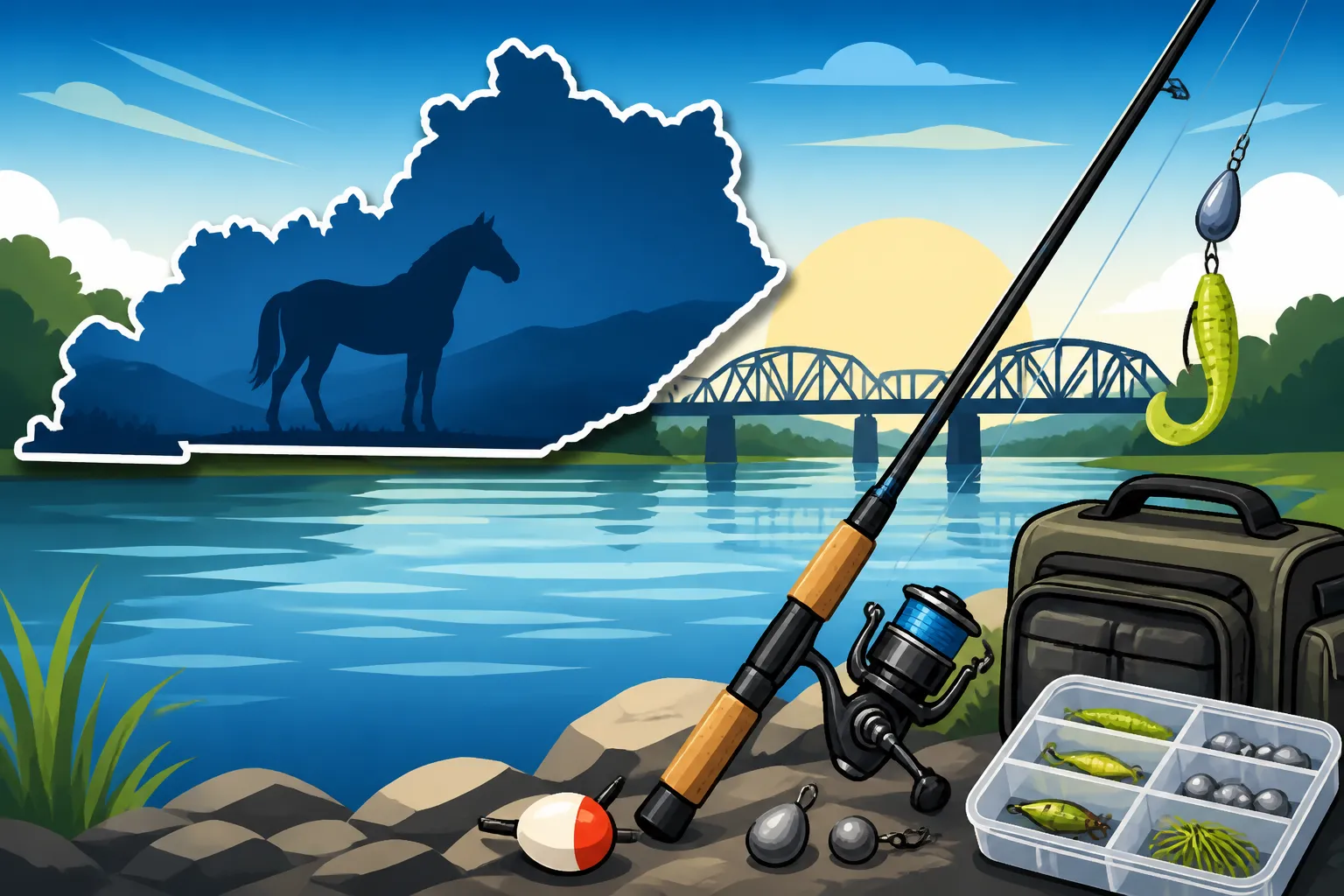
The first thing you'll notice when fishing the Ohio River is the current's relentless pull. To hold your bait on the bottom, you're going to need significantly heavier weights than you might be used to. A good starting point is a variety of no-roll sinkers, pyramid sinkers, or flat bank sinkers in weights ranging from 2 ounces up to 8 ounces or more, depending on the current strength. No-roll sinkers are particularly good as they resist tumbling in the current and are less likely to snag in rocky bottoms. Having a selection of these weights is crucial.
For hooks, consider the species you're targeting. For catfish, strong, sharp circle hooks (sizes 3/0 to 8/0 or larger) are excellent as they typically hook fish in the corner of the mouth, making for easier release and less gut hooking. For bass or other species, stout J-hooks or wide-gap hooks will be necessary to handle powerful fish and heavy line. Swivels (barrel or snap swivels) are essential to prevent line twist, especially with braided lines, and snaps make it quick to change lures or weights. Always opt for heavy-duty components; cheap terminal tackle will fail you on the Ohio. You can find robust options for all of these at any Bass Pro Shops or through online retailers like Amazon.
Baits and Lures for Common Ohio River Species
The Ohio River is home to a diverse array of fish, and your bait and lure selection should reflect that. While live bait is often king, a good selection of artificials can also be highly effective.
- Catfish: For channel, blue, and flathead catfish, live bait (shad, sunfish, skipjack herring) or cut bait (strips of fresh fish) are top choices. Stink baits, chicken livers, and commercial catfish baits also work well, especially for channel catfish. Make sure your bait is fresh and lively if using live bait. Kentucky Catfish Limit: 15 Fish, Only 1 Over 25 Inches gives you an idea of the sizes you might encounter.
- Bass (Largemouth, Smallmouth, Spotted): While the Ohio River isn't typically thought of as a bass powerhouse from the bank, you can still catch them. Crankbaits that dive to different depths, jig-and-trailer combinations, and soft plastics (worms, creature baits) rigged weedless are good options, especially when targeting slack water areas or structure near the bank.
- Sauger and Walleye: These cool-water predators often hug the bottom in current. Blade baits, jigging spoons, and hair jigs tipped with minnows are excellent choices. Trolling is common for these from a boat, but vertically jigging from the bank in current seams or below dams can be highly effective.
- Panfish (Crappie, Bluegill): For crappie, small jigs (1/16 to 1/8 oz) tipped with a minnow or soft plastic are effective. Bluegill will readily take worms or crickets under a bobber in calmer, shallower areas. While not usually the primary target for Ohio River shore anglers, they can provide consistent action.
- Other Species: Don't forget about Freshwater Drum Fishing on the Ohio River in Kentucky or Longnose Gar Fishing on the Ohio River, which can provide unique and exciting battles.
Essential Tools and Accessories
Beyond your rod, reel, and tackle, a few essential tools can make your Ohio River shore fishing experience much more enjoyable and efficient.
- Pliers/Forceps: You'll need a good pair of pliers or forceps for removing hooks, cutting line, and crimping weights. Heavy-duty options are best, as fish often swallow hooks deep, or you might need to cut through thick line after a snag.
- Line Clippers: Small, sharp line clippers are indispensable for quickly trimming tag ends after tying knots.
- Net: A long-handled, sturdy landing net is a must. The banks can be steep and muddy, and trying to hoist a heavy fish up a bank by the line is a recipe for disaster. A net ensures a safe landing for both you and the fish.
- First Aid Kit: Accidents happen, especially on uneven terrain or around sharp hooks. A basic first aid kit with bandages, antiseptic wipes, and pain relievers is a smart addition to your gear.
- Headlamp/Flashlight: If you plan on fishing early mornings, evenings, or into the night (which is prime time for catfish), a reliable headlamp or flashlight is non-negotiable for safety and visibility.
- Cutting Board and Knife: If you're using cut bait, a small cutting board and a sharp knife are incredibly useful.
- Rod Holders: Bank fishing can be a waiting game, especially for catfish. Sturdy rod holders that can be pushed into the bank or set up on rocks will save your arms and prevent your rod from being pulled into the river by a hard-hitting fish.
Comfort and Safety Gear for Bank Fishing the Ohio River
Your personal comfort and safety are just as important as your fishing tackle, especially when spending extended periods on the unpredictable banks of the Ohio River. Don't let a lack of preparedness cut your trip short or put you in danger.
Weather-Appropriate Apparel and Footwear
Kentucky weather can be notoriously fickle, and being exposed on the riverbank means you need to be ready for anything. Layering is key: start with moisture-wicking base layers, add insulating layers, and top it off with waterproof and windproof outerwear. Even on sunny days, a sudden rain shower or a strong breeze off the water can make you uncomfortably cold if you're not prepared. A wide-brimmed hat or baseball cap and polarized sunglasses are essential for sun protection and seeing into the water.
Your footwear is paramount for navigating the often uneven, muddy, or rocky banks. Waterproof boots with good ankle support and aggressive tread are highly recommended. Muck boots or sturdy hiking boots are far better than sneakers, which will quickly become waterlogged and offer little protection. There's nothing worse than wet feet making you miserable and forcing you to pack up early. Think about the conditions you'll face – mud, slick rocks, and possibly shallow water at the edge – and choose accordingly.
Safety Essentials and Personal Gear
Safety should always be your top priority, especially when fishing a large river with current and boat traffic.
- Life Jacket: While not strictly required for bank fishing, if you're going to be on a steep bank, walking near deep water, or in any situation where falling in could be a risk, wearing an automatic or manual inflatable life jacket is a wise precaution. The current can be strong, and the water can be cold.
- Cell Phone: Always have a fully charged cell phone for emergencies.
- Whistle: A whistle can be used to signal for help or alert nearby boaters to your presence if needed.
- Hydration and Snacks: Carry plenty of water, even on cooler days, and some non-perishable snacks to keep your energy up. Fishing can be physically demanding, and dehydration can set in quickly.
- Insect Repellent: Depending on the season, mosquitoes, ticks, and other biting insects can be a major nuisance. A good insect repellent can make your experience much more pleasant.
- Sunscreen: Even on cloudy days, UV rays can cause sunburn. Apply sunscreen regularly, especially to exposed skin.
Transporting Your Gear to the Riverbank
Remember those access challenges we talked about? Hauling all your gear—rods, reels, tackle box, cooler, chair, rod holders, net—across potentially long distances or uneven terrain can be exhausting. Investing in some gear transport solutions can significantly improve your comfort.
- Backpack or Tackle Bag: A large, durable backpack or purpose-built tackle bag allows you to consolidate smaller items and keep your hands free for carrying rods or navigating difficult spots. Look for models with plenty of compartments for organization.
- Fishing Cart or Wagon: For those longer walks or when you're bringing a lot of gear, a sturdy fishing cart or wagon with large, all-terrain wheels can be a game-changer. These allow you to load up everything and roll it to your spot, saving your back and multiple trips. Brands often sold at Bass Pro Shops or on Amazon have various options for different needs and budgets.
- Rod Carrier: A simple strap or bungee cord can keep your rods bundled together, preventing tangles and making them easier to carry in one hand.
Being well-prepared for the unique environment of the Ohio River will not only enhance your chances of success but also ensure a safer and more enjoyable fishing trip.
Here's a quick comparison of some common rod and reel setups:
| Setup Type | Rod Power/Action | Reel Size (Spinning/Baitcasting) | Recommended Line Weight (Braided) | Primary Target Species | Key Advantages |
|---|---|---|---|---|---|
| All-Around (General) | Medium-Heavy / Fast | 4000-5000 / Medium Baitcaster | 30-50 lb | Catfish, Bass, Sauger, Drum | Versatile for many techniques and species, good casting power |
| Heavy Catfish Rig | Heavy to Extra-Heavy / Moderate-Fast | 6000+ / Heavy Conventional | 50-80 lb | Trophy Blue Catfish, Flathead | Maximum power for big fish and heavy current, long casting |
| Lighter Current Rig | Medium / Fast | 3000-4000 / Small Baitcaster | 20-30 lb | Smaller Catfish, Bass, Crappie | More sensitive for lighter bites, still capable in moderate current |
Remember, this is just a starting point, and your specific approach may vary based on your exact fishing spot and preferred techniques. For instance, Best Catfish and Paddlefish Gear for Kentucky's Ohio River will likely lean more towards the heavy catfish rig. Always check Statewide Bag and Size Limits by Fish Species before you go, and consider reading up on Kentucky Fishing Regulations Explained to be fully prepared for your next outing on the Ohio River.
Disclaimer
This article is for general informational purposes only and does not constitute professional advice. Laws, prices and regulations vary by location and change over time. Consult a qualified professional for guidance on your specific situation.