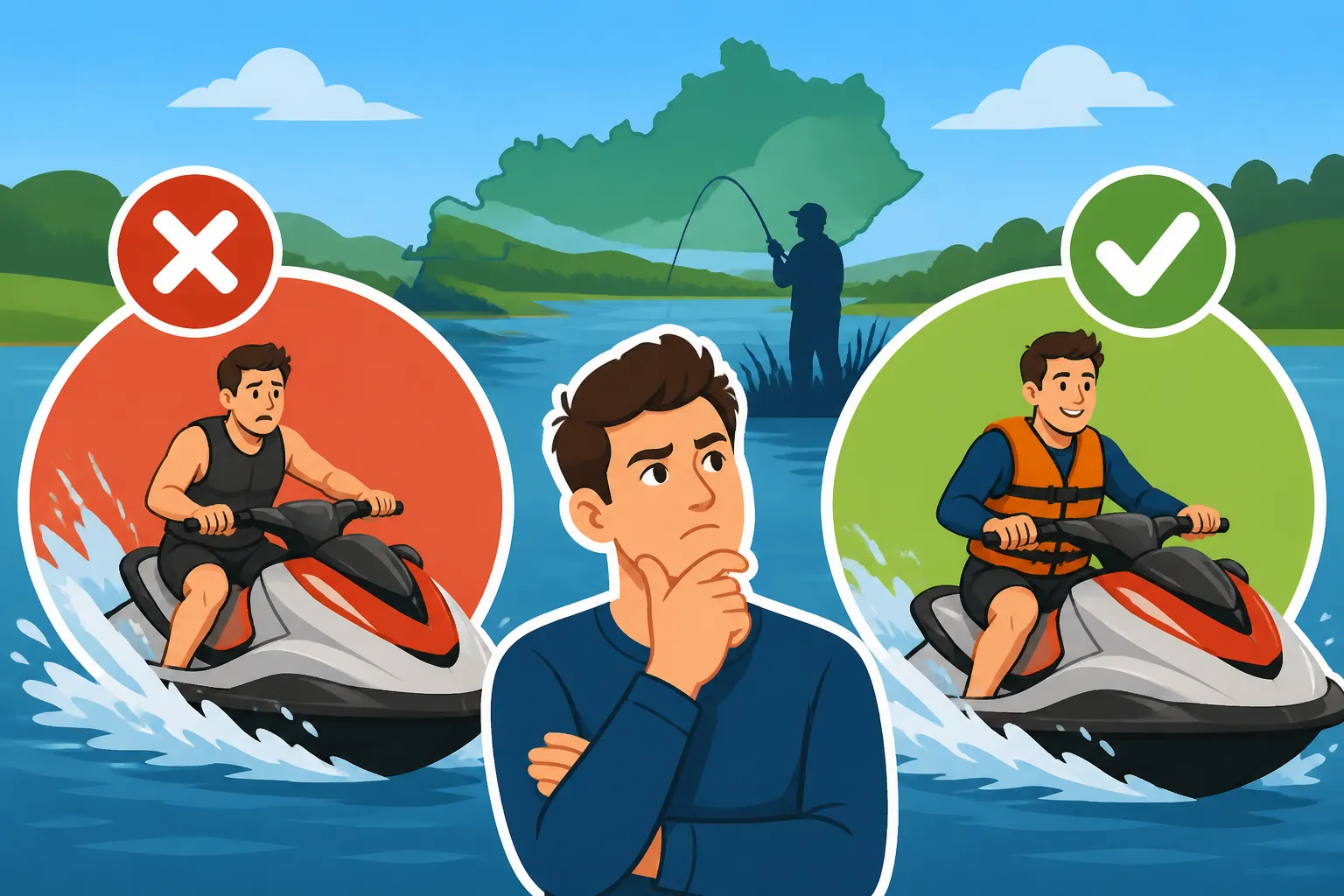
Must You Wear a Life Jacket on a Jet Ski in Kentucky?
It's a beautiful day out on the water, you've got your personal watercraft — your jet ski — revving and ready to go, and you're just itching to feel that spray. But before you hit the throttle, a nagging question might pop into your head: do I really have to wear this life jacket? It's bulky, it's hot, and sometimes it just feels like it gets in the way of your fun. Trust me, I get it. But when it comes to jet skis in Kentucky, the answer is a resounding yes, and this guide will break down exactly why, what kind of life jacket you need, and why it's truly for your own good.
Kentucky's Hard and Fast Rule for Personal Watercraft (PWC)
Kentucky boating regulations are pretty clear when it comes to personal watercraft. Unlike larger boats where you might just need to have a life jacket on board for everyone, PWC operate under a different, much stricter rule. This isn't just a suggestion; it's a legal requirement designed to keep you safe on the fast-paced, dynamic waters of our beautiful lakes and rivers.
Everyone Onboard a Jet Ski Must Wear a Life Jacket
That's right, no exceptions for PWC. If you're riding a jet ski in Kentucky, whether you're the driver or a passenger, you absolutely must be wearing a U.S. Coast Guard (USCG) approved life jacket. This isn't a rule that changes based on age, swimming ability, or how experienced you are. From the seasoned veteran who's been riding for decades to the absolute beginner, everyone needs to be securely buckled into their personal flotation device (PFD) before the engine even starts.
Think about it: jet skis are inherently different from a pontoon boat or even a fishing boat. They're built for speed and agility, allowing for sharp turns and jumps that can easily eject a rider. When you're thrown from a PWC, it happens fast, often unexpectedly, and you can hit the water with considerable force. Having a life jacket on board won't do you any good if it's not on you the moment you need it. This mandatory "wear it" rule mitigates that immediate risk.
It's a common point of confusion, especially for those who also operate larger vessels. On a typical recreational boat, the law generally states that you need one USCG-approved PFD for each person on board, readily accessible. But with personal watercraft, the dynamic nature of the ride increases the immediate danger, so regulators wisely made the call for continuous wear. This is just one of the many important details covered in comprehensive guides like Kentucky Fishing Regulations Explained or Kentucky Boat Registration Requirements Explained.
What Defines a US Coast Guard Approved Life Jacket
Not just any old floatation device will cut it; your life jacket must be approved by the U.S. Coast Guard. These aren't pool noodles or inflatable armbands. USCG-approved PFDs are rigorously tested to ensure they provide adequate buoyancy and are designed for specific uses. For jet ski riders, you're generally looking for Type III or Type V PFDs, though Type II can also be used.
Type III, often called a "flotation aid" or "vest," is super common for PWC because it's designed for comfort and wearability during active sports. It allows for a full range of motion, which is crucial when you're maneuvering a jet ski. Type V PFDs are special-use devices, which might include specific vests for personal watercraft that also incorporate impact protection. Regardless of type, the key is the USCG approval stamp right on the label.
When you're shopping for a life jacket, whether you're browsing at Bass Pro Shops or looking through options on Amazon, always check for that USCG approval. It's usually a clear label stitched into the jacket. Beyond approval, ensure the jacket is in good, serviceable condition. No rips, tears, or broken buckles. A damaged life jacket can lose its buoyancy and won't protect you when you need it most.
Why Jet Skis Are Treated Differently Under Kentucky Boating Law
It might seem unfair to have a different set of rules for your jet ski compared to your buddy's fishing boat, but there's solid reasoning behind it. The unique characteristics of personal watercraft present distinct safety challenges that necessitate stricter regulations. It's all about mitigating risk where the potential for immediate danger is higher.
The Dynamic Nature and Higher Risk of Personal Watercraft
Think about how you ride a jet ski. You're accelerating quickly, carving sharp turns, potentially jumping waves, and often riding in close proximity to other watercraft or the shoreline. This high-energy, high-impact style of operation means that being suddenly thrown from the vessel is a very real and common occurrence, even for skilled riders. Unlike falling out of a slow-moving canoe, an ejection from a jet ski often involves significant speed and can be disorienting.
When you're unexpectedly plunged into the water, especially at speed, you could hit your head, get disoriented, or even be temporarily stunned. Having a life jacket already on ensures you'll immediately float to the surface, maintaining your airway and making it easier for rescuers (or your riding companions) to spot you. If your life jacket was simply stowed under the seat, you wouldn't have time to retrieve and don it in an emergency. This immediate flotation capability is why the "wear it" rule is so critical for PWC.
This increased risk factor also extends to situations like cold water immersion. If you fall into Kentucky's lakes and rivers during cooler months, the initial shock of the cold water can cause involuntary gasping, making it incredibly difficult to stay afloat without assistance. A life jacket buys you precious time and conserves energy, preventing hypothermia from setting in too quickly. It's a layer of protection that acknowledges the inherent thrill and corresponding risks of jet ski operation.
Avoiding Penalties and Game Warden Checks
Let's be realistic: nobody wants to get a ticket while they're trying to enjoy a day on the water. Game wardens and marine patrol officers in Kentucky are out there, and they take boating safety seriously. They're highly visible on popular waterways like Kentucky Lake, Lake Barkley, and Lake Cumberland, and they are trained to look for compliance with all boating regulations, including life jacket requirements for PWC.
If you're caught operating or riding a jet ski without wearing a USCG-approved life jacket, you could face a citation and a fine. These aren't just minor slaps on the wrist; penalties for violating boating safety laws can be costly. Just like there are Penalties for Fishing Without a License in Kentucky, there are consequences for neglecting PWC safety rules. Officers aren't trying to ruin your day; they're trying to prevent accidents and save lives. Their checks ensure that everyone understands and follows the rules designed for their own protection.
During a routine stop, a game warden will typically ask to see your registration, look for required safety equipment like a fire extinguisher (if applicable), and of course, verify that all PWC riders are wearing their properly fitted life jackets. It's a quick check that ensures compliance and ultimately promotes a safer environment for everyone enjoying our shared waters. Knowing what to expect and being prepared is part of responsible boating. A Safety Gear Checklist for Kentucky Boaters can help you remember everything you need.
Choosing the Right Life Jacket and Ensuring a Safe Ride
Okay, so we know we have to wear one. Now let's talk about how to make that experience as comfortable and safe as possible. A life jacket that fits well and is comfortable is one you're much more likely to wear consistently, and that's half the battle won right there.
Finding the Perfect Fit for Comfort and Safety
The best life jacket is the one you'll actually wear, and that starts with fit. A properly fitting life jacket should be snug, but not constricting. It shouldn't ride up around your ears when you're in the water, nor should it feel so tight that it restricts your breathing or movement on the jet ski. Different brands and styles will fit differently, so it's really worth taking the time to try several on.
When trying one on, make sure all zippers, buckles, and straps are fastened. Then, have someone gently pull up on the shoulders of the jacket. If it rides up past your ears, it's too big and won't keep your head above water effectively. If it feels too tight or uncomfortable, try a different size or style. For children, this fit test is even more critical. While the general PWC rule covers all ages, specific Life Jacket Requirements for Kids Under 12 in Kentucky further emphasize the importance of proper fit for our youngest riders. A well-fitting PFD can make all the difference in an emergency.
Consider the type of PWC riding you'll be doing. If you're mostly cruising, a slightly less athletic-cut vest might be fine. But if you're into aggressive riding, sharp turns, or even wakeboarding behind the jet ski, you'll want a vest designed for maximum mobility and impact protection. Brands offer various designs, so take your time to find one that feels right for you. You can often find a wide selection of USCG-approved PFDs online from retailers like Amazon or at local sporting goods stores.
Maintaining Your Life Jacket for Longevity and Performance
A life jacket is an investment in your safety, so treat it like one! Proper care and maintenance will ensure it lasts for years and performs as it should if an emergency arises. Most life jackets are made of durable synthetic materials, but they're not indestructible.
After each use, rinse your life jacket with fresh water, especially if you've been in saltwater or chlorinated pools (though most Kentucky waters are freshwater). Allow it to air dry completely in a well-ventilated area, out of direct sunlight. Storing a wet life jacket can lead to mildew, which not only smells terrible but can also degrade the fabric and stitching over time. Never store your life jacket in a confined, hot space like a boat locker or car trunk when it's still damp.
Regularly inspect your life jacket for any signs of wear and tear. Look for faded or torn fabric, broken zippers, frayed straps, or squashed flotation material. If you find significant damage, it's time to replace it. A compromised life jacket might not provide the buoyancy you need. Remember, this piece of gear is literally designed to save your life, so don't skimp on its care or replace it when it's past its prime. For more general advice on PFDs, checking out guides like Coast Guard-Approved Life Jackets for Adults in Kentucky or Best Life Jackets for Fishing on Big Water can offer additional insights, even if they're not specifically about jet skis.
Beyond Compliance: The Practical Benefits of Wearing Your Life Jacket
While the law dictates that you must wear a life jacket on a jet ski, thinking of it solely as a legal obligation misses the bigger picture. There are immense practical benefits and peace of mind that come with always donning your PFD. It's not just about avoiding a fine; it's about making your time on the water truly safer and more enjoyable.
Preparing for the Unexpected: Falls, Waves, and Sudden Stops
The very nature of jet skiing means you're operating a powerful machine in an unpredictable environment. Even on a perfectly calm day, a rogue wake from another boat, a sudden shift in weight, or an unexpected mechanical issue could send you into the water. As a veteran lifestyle blogger, I've seen firsthand how quickly situations can change on Kentucky's lakes and rivers. When you're ejected from a jet ski, you're not always landing gracefully or in clear, shallow water. You might be disoriented, gasp for air, or even be temporarily stunned from the impact.
Having your life jacket on eliminates the frantic, life-threatening scramble to find and put on a PFD in an emergency. It ensures immediate flotation, allowing you to regain your bearings, assess the situation, and signal for help if needed. This immediate buoyancy is especially crucial if you happen to hit your head or become incapacitated. It's a proactive measure that gives you the best chance of survival and minimizes the severity of an already bad situation.
Consider the water conditions too. High winds or choppy waves can make it incredibly difficult to stay afloat without assistance, even for strong swimmers. The continuous wear of a life jacket provides that constant, reliable support against the elements. It’s a simple layer of protection that often goes unappreciated until it’s truly needed.
Setting an Example for Fellow Riders and Youth
Responsible boating is a community effort, and your actions on the water can influence others. When you consistently wear your life jacket on your jet ski, you're not just protecting yourself; you're setting a positive example for everyone around you. This is particularly important if you're riding with friends, family, or children. Kids, especially, look to adults for guidance, and seeing you prioritize safety reinforces good habits.
Imagine a group of friends heading out on jet skis. If one person decides to skip the life jacket, it can create a ripple effect, making others feel pressured to do the same, even if they're uncomfortable with it. By proudly and consistently wearing your USCG-approved PFD, you're promoting a culture of safety. It shows that you respect the rules, understand the risks, and care about your well-being and the well-being of those you're sharing the water with.
This commitment to safety goes hand-in-hand with other important boating practices, such as getting your Kentucky Safe Boating Certificate Requirements or knowing how to properly operate your vessel. It's all part of being a responsible boater in Kentucky. Whether you're getting your certificate or just making sure your PFD is in good shape, safety is always the primary concern.
Maximizing Your Enjoyment on Kentucky's Waterways
Ultimately, safety measures are there to allow you to enjoy your activities to the fullest. When you know you're protected, you can relax and truly immerse yourself in the experience of jet skiing on Kentucky's beautiful lakes and rivers. The peace of mind that comes with wearing a life jacket frees you up to focus on the thrill of the ride, the beauty of your surroundings, and the joy of being on the water.
There’s no need to constantly worry about "what if" scenarios when you've taken the essential step of wearing your PFD. This sense of security translates into more confidence, more fun, and a greater overall appreciation for your time outdoors. It allows you to push your comfort zone safely, knowing you have a crucial layer of protection in place.
So, while that life jacket might feel a little cumbersome at first, consider it an essential part of your jet ski attire, just like a helmet for a motorcyclist. It's not just a piece of gear; it's your lifeline, allowing you to create incredible memories on the water without unnecessary risk.
Here's a quick reference table summarizing the key life jacket rules for different types of vessels in Kentucky:
| Vessel Type | Life Jacket Requirement | Key Reason for Rule Difference |
|---|---|---|
| Personal Watercraft (Jet Skis) | Everyone onboard MUST WEAR a USCG-approved PFD. | High speed, sudden maneuvers, increased risk of ejection and disorientation. |
| Conventional Boats (e.g., Fishing Boats) | One USCG-approved PFD for each person onboard, readily accessible. Kids under 12 must wear a PFD. | Generally lower immediate ejection risk; ability to retrieve a PFD. |
| Canoes/Kayaks (over 16 feet) | One USCG-approved PFD for each person onboard, readily accessible. | Similar to conventional boats, though often smaller and less stable. |
| Stand-up Paddleboards (outside swimming/surfing areas) | One USCG-approved PFD for each person onboard, readily accessible. | Considered vessels by USCG; need flotation aid. |
Remember, this table is a general guide. Always check the official Kentucky Department of Fish and Wildlife Resources regulations for the most current and specific details before heading out. Safety on the water is paramount, and being informed is your first line of defense. Now go enjoy those beautiful Kentucky waters, safely!
Disclaimer
This article is for general informational purposes only and does not constitute professional advice. Laws, prices and regulations vary by location and change over time. Consult a qualified professional for guidance on your specific situation.