Can You Keep a 10-Inch Bass in Kentucky?
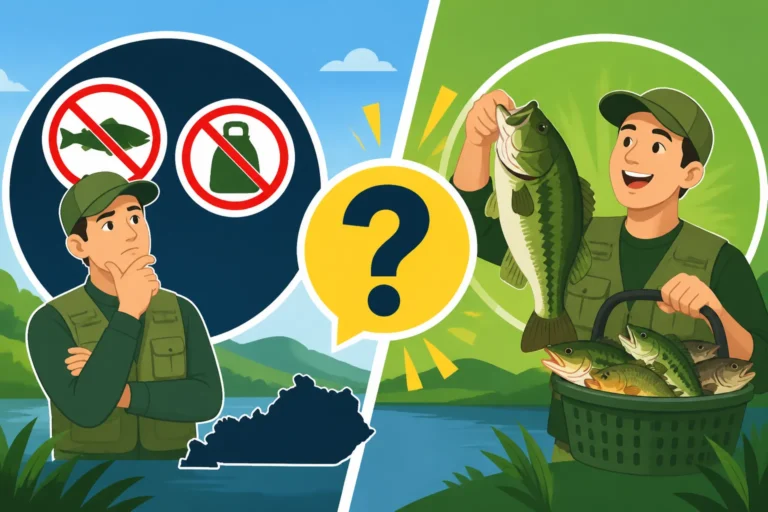
It’s a truly common scenario: you’re out on a beautiful Kentucky lake, the bite is on, and you reel in a feisty largemouth bass that looks just about perfect. You grab your ruler, measure it up, and it comes in right at 10 inches. Now what? That moment of uncertainty, wondering if you can keep it or if it needs to go back, is something almost every angler has faced. This guide will clear up the confusion about bass size limits in Kentucky, so you can fish with confidence and stay on the right side of the regulations.
The Simple Answer: Why a 10-Inch Bass is Usually a 'No-Go'
Let's cut right to the chase because nobody likes ambiguity when they've got a fish on the line. Generally speaking, no, you cannot keep a 10-inch bass in Kentucky's public waters. The statewide regulation for black bass (which includes largemouth, smallmouth, and spotted bass) is a minimum size limit of 12 inches. This means any bass you catch that measures under 12 inches from the tip of its nose to the end of its tail must be immediately released unharmed.
Imagine you're fishing at a popular spot like Taylorsville Lake or Green River Lake, and you've got a stringer-worthy fish in your hands, or so you think. You lay it against your measuring board, and it's a solid 10 inches. Your heart sinks a little, right? It feels substantial, healthy, and would make a great meal. But those regulations are in place for a reason, and ignoring them could lead to a hefty fine and a ruined day on the water. It’s always better to know the rules cold than to assume.
Diving Deeper into Kentucky's Bass Regulations
The 12-inch statewide minimum size limit isn't just an arbitrary number dreamed up by fisheries biologists. It's a carefully considered regulation designed to manage the health and sustainability of Kentucky's bass populations. Understanding the "why" behind these rules can help us all appreciate their importance and comply willingly, even when it means letting a perfectly good-looking 10-inch bass swim away.
Why the 12-Inch Minimum Exists
The primary reason for the 12-inch minimum size limit across most of Kentucky's waters is to allow bass to reach sexual maturity and spawn at least once, and ideally multiple times, before they are harvested. This ensures that they contribute to the next generation of bass, keeping the population robust and healthy for years to come. If anglers were allowed to keep smaller bass, there would be a risk of over-harvesting fish before they've had a chance to reproduce, which could drastically reduce future fish numbers.
Consider a young bass, perhaps two or three years old, reaching that 10-inch mark. It's growing strong, feeding well, but it might not have had a full season or two of spawning yet. By letting it go, you're investing in the future of the fishery. It's a bit like farming; you wouldn't harvest a crop before it's had a chance to fully mature and re-seed for the next season. The same principle applies to our precious natural resources. This also allows the fish to grow larger, giving every angler a better chance at catching a truly trophy-sized bass down the road. You can learn more about specific regulations in our comprehensive guide to Kentucky Fishing Regulations Explained.
Understanding Daily Limits and Possession
Beyond the size limit, Kentucky also enforces a daily creel limit for black bass. Across most public waters, you're allowed to keep a maximum of six black bass per day. This limit is in addition to the size restriction, meaning all six of those fish must be 12 inches or longer. The purpose of a daily limit is to distribute the harvest among more anglers and prevent any single individual from taking an excessive number of fish.
It’s crucial to remember that "daily limit" often refers to a 24-hour period, not just a calendar day. If you're planning a multi-day trip, it's important to understand the nuances of the daily and possession limits. For instance, if you catch your limit on Monday, you generally cannot go out and catch another limit on Tuesday without first consuming or properly storing the previous day's catch, ensuring you never exceed the possession limit, which is typically equal to the daily limit unless otherwise specified. Always check the latest KDFWR guide for exact details, as these regulations can sometimes vary slightly. To clarify statewide limits for other species, check out Statewide Bag and Size Limits by Fish Species.
Specific Lake Regulations and Why They Matter
While the 12-inch statewide minimum is the rule for most of Kentucky's lakes and rivers, there are specific water bodies that have their own, often more restrictive, bass regulations. These site-specific rules are put in place by the Kentucky Department of Fish and Wildlife Resources (KDFWR) to address unique ecological conditions, fishing pressure, or management goals for particular bodies of water. You definitely want to be aware of these before you cast your line.
Lake Barkley: A Prime Example of Special Rules
One of the most well-known exceptions to the statewide bass limit is Lake Barkley. On Lake Barkley, the minimum size limit for black bass is 15 inches. This is a significant jump from the statewide 12-inch rule. So, if you're fishing on Lake Barkley, not only can you not keep a 10-inch bass, but you can't even keep a 12-, 13-, or 14-inch bass either. Everything under 15 inches must be released.
This stricter limit on Lake Barkley is a prime example of targeted fisheries management. Historically, Lake Barkley's bass population might have benefited from allowing more fish to grow to a larger size, which can improve the overall quality of the fishery, creating more opportunities for anglers to catch trophy-sized fish. It also helps manage competition for food resources among the fish. These localized rules are why it’s absolutely essential to check the current regulations for the specific body of water you plan to fish before you head out. A quick check on the KDFWR website or their annual fishing guide can save you a lot of headache. For more details, explore Lake Barkley Bass Size Limit Exception in Kentucky.
Other Potential Lake-Specific Regulations
While Lake Barkley stands out with its 15-inch minimum, other lakes or river stretches in Kentucky might have slot limits or other unique regulations. A slot limit, for example, might allow you to keep bass under a certain size (e.g., under 12 inches) and over another size (e.g., over 16 inches), but not fish within the "slot" (e.g., 12 to 16 inches). These are designed to protect a specific size class of fish, often the prime breeding stock, to encourage growth and reproduction.
It’s rare to find a public lake in Kentucky where you can keep a bass under 12 inches. The overall trend in fisheries management is towards protecting younger, smaller fish to ensure a healthy future. Never assume that the rules for one lake apply to another, even if they're geographically close. Always do your homework. Trust me, it’s not worth the risk of a citation from a game warden, who are out there diligently protecting our waters. Knowing your stuff will help you avoid penalties, which are outlined in resources like Penalties for Fishing Without a License in Kentucky.
Here’s a quick overview of key bass regulations:
| Category | Statewide Regulation | Lake Barkley Exception | Rationale |
|---|---|---|---|
| Minimum Size | 12 inches | 15 inches | Allow fish to mature, reproduce, and grow larger |
| Daily Limit | 6 black bass per angler | 6 black bass per angler | Distribute harvest, prevent over-fishing |
| 10-Inch Bass? | Must be released | Must be released | Below minimum size limits |
Best Practices for Measuring, Handling, and Releasing Bass
So, you've caught that 10-inch bass, confirmed it's undersized, and now you need to release it safely. Proper technique in measuring, handling, and releasing fish is just as important as knowing the regulations. After all, the goal of these size limits is conservation, and a poorly released fish is often a dead fish.
Accurate Measurement Techniques
To avoid any doubt, always use a reliable measuring device. A flat, rigid measuring board is ideal, especially if you're targeting bass. You want to lay the fish flat on the board, with its mouth closed and resting against the bump stop. Gently squeeze the tail to get the maximum length. That's your official measurement.
Avoid "eyeballing" it or using a flexible tape measure on a wriggling fish, as this can lead to inaccuracies. Having a good quality measuring board is a small investment that pays off big time in compliance and confidence. You can find excellent, durable bump boards on platforms like Amazon that are designed for accurate fish measurement. Some even float, which is a nice bonus if you're prone to dropping things in the water (we've all been there!).
Gentle Handling for Survival
When you're handling any fish, especially one you intend to release, speed and gentleness are key. The less time a fish spends out of water, the higher its chances of survival.
- Wet Hands: Always wet your hands before touching the fish. Dry hands can remove the fish's protective slime coat, making it vulnerable to disease.
- Support the Body: If you need to hold the fish, support its weight horizontally. Avoid holding it vertically by the jaw alone, especially for larger bass, as this can damage its internal organs and jaw structure. If you must hold it vertically by the jaw (like for a quick photo), support its belly with your other hand.
- Minimize Air Exposure: Keep the fish in the water as much as possible. If you need to take a quick photo, do it quickly and get the fish back into the water promptly.
- Careful Hook Removal: Use needle-nose pliers or a de-hooking tool to remove the hook quickly. If the fish is deeply hooked, especially in the gills or gut, it might be best to cut the line as close to the hook as possible. The hook will often rust out, or the fish's immune system can encapsulate it. Struggling to remove a deep hook often causes more damage. You can find essential tools like specialized fishing pliers and de-hookers on Amazon to make this process easier and safer for the fish.
Proper Release Methods
Once measured and de-hooked, don't just toss the fish back into the water. Gently place it back in the water, head first, in an upright position. If it seems disoriented or sluggish, hold it gently in the water, supporting its belly, and move it back and forth slightly to push water over its gills. This helps revive it. Once it kicks its tail and swims away on its own power, you know you've done your part.
Practical Tips for Compliance and Responsible Angling
Staying informed and practicing responsible angling isn't just about avoiding fines; it's about being a good steward of Kentucky's incredible fishing resources. Here are some practical tips to help you always stay compliant and contribute positively to our shared passion.
Staying Up-to-Date on Regulations
Fisheries regulations aren't set in stone. They can change from year to year, or even mid-season if biologists identify a critical need. The best ways to stay current are:
- KDFWR Website: The Kentucky Department of Fish and Wildlife Resources website is the official source for all regulations. Make it a habit to check it before your first trip of the season, and ideally, before visiting any new body of water.
- Annual Fishing Guide: Pick up a physical copy of the Kentucky Fishing & Boating Guide. These are usually available wherever licenses are sold, such as bait shops, sporting goods stores, and county clerk offices. They're handy to have in your tackle box or boat.
- Local Bait Shops: The folks who run your local bait and tackle shops are often excellent sources of up-to-date, hyper-local information. They know what's biting, but also what the current rules are for nearby lakes and rivers.
Knowing the rules, whether it's about bass size limits or when your Kentucky Fishing License Year and Renewal Dates are, is part of being a responsible angler.
What to Do If You're Unsure or Make a Mistake
Let's be honest, sometimes things happen. You might misread a rule, or accidentally keep a fish that you later realize is undersized. What then?
- Re-measure: If you're ever in doubt, re-measure. Measure twice, release once.
- When in Doubt, Release: This is a golden rule. If you're genuinely unsure about a size limit, or if your measurement is borderline, err on the side of caution and release the fish. It's better to let a legal fish go than to keep an illegal one.
- Self-Correction: If you realize you've accidentally kept an undersized fish, immediately correct the mistake by releasing it (if it's still alive and releasable). While this doesn't guarantee you won't face consequences if a game warden has already observed the infraction, it demonstrates intent to comply.
- Report Serious Violations: If you witness someone intentionally and repeatedly violating fishing regulations, consider reporting it to the KDFWR. Conservation relies on everyone doing their part. Game wardens are vital to protecting our fisheries, and they do conduct Game Warden Enforcement and License Checks While Fishing.
The Role of Personal Responsibility
Ultimately, responsible angling comes down to personal responsibility. These regulations are in place to ensure that Kentucky's fishing opportunities remain abundant for everyone, for generations to come. By understanding and following the rules, especially those pesky size limits that make you release a perfectly good-looking 10-inch bass, you're contributing to a sustainable future for our beloved sport. It allows us all to continue enjoying the thrill of the catch on Kentucky's amazing waters, whether it's a smallmouth in the Cumberland River or a largemouth in Kentucky Lake.
The next time you pull in a 10-inch bass, remember the 12-inch statewide limit, or the 15-inch limit on Lake Barkley, and confidently send that fish back to grow bigger.
Disclaimer
Please remember that fishing regulations, including size and creel limits, are subject to change. Always consult the most current Kentucky Department of Fish and Wildlife Resources (KDFWR) regulations before heading out on the water. This guide is for informational purposes only and should not be considered legal advice.