Where to Catch a Trophy Blue Catfish on the Ohio River in Kentucky
Chasing that elusive trophy blue catfish on the Ohio River can feel like a quest for a mythical beast, especially when you're dreaming of those monstrous blues that make your reel scream and your arms ache. Many anglers get frustrated trying to pinpoint where these giants hide in such a vast waterway, often ending up with smaller channel cats instead of the true river monsters. This comprehensive guide will peel back the layers of the Ohio River, revealing the precise locations, proven techniques, and essential gear you’ll need to finally land the blue catfish of a lifetime from Kentucky's side of this mighty river.
Understanding the Ohio River's Blue Catfish Habitat
The Ohio River isn't just a big ditch; it's a complex, dynamic ecosystem, and understanding where blue catfish thrive is the first step to finding the true titans. These fish are masters of their environment, constantly seeking out optimal conditions for feeding and sheltering. You can't just drop a line anywhere and expect a record-breaker; you need to think like a blue cat.
Deep Channels and Current Breaks
Trophy blue catfish are predominantly riverine fish, meaning they are built for current. They love to hold in the deepest parts of the river, especially along the main channel, where they can ambush prey moving downstream. However, they're smart – they don't want to fight the current constantly. Instead, they position themselves strategically in current breaks adjacent to these deep channels. Think about those subtle eddies behind points, submerged islands, or even bridge pilings. These spots offer a respite from the main flow but put them in a prime position to snatch an easy meal as it drifts by. Often, these deep scour holes and trenches, created by years of relentless current, are magnets for baitfish, which in turn attract the big blues. Pay close attention to your sonar to identify these sharp drop-offs and depth changes.
Structure and Cover for Big Cats
Blue catfish, especially the really big ones, are not just hanging out in open water; they are almost always associated with some form of structure. This could be natural features like underwater rock piles, fallen timber, log jams, or even old stump fields. On a river as heavily trafficked and industrialized as the Ohio, man-made structures are equally, if not more, important. Bridge pilings, barges (especially those tied up and sitting for a while), old submerged docks, sunken boats, and even discarded industrial debris can all create fantastic ambush points and cover for blue cats. These structures provide protection from the strong current, a place to hide from predators (though a trophy blue has few natural predators), and an excellent staging area for feeding. The key is to find structure that also offers access to deep water and current. A seasoned guide found through platforms like FishingBooker can often point you to these lesser-known, productive spots.
Seasonal Movements and Forage
Blue catfish are migratory to an extent, moving with the seasons and the availability of their primary food sources. In warmer months, especially during summer and early fall, they tend to be more active and spread out, often moving into shallower flats near the main channel to feed on shad, skipjack herring, and other baitfish. As water temperatures drop in late fall and winter, they typically congregate in deeper holes, often near the warmest available water, such as power plant discharges or deep bends protected from the coldest currents. During these colder months, they feed less frequently but often target larger, slower-moving prey. The Ohio River is teeming with forage, from gizzard shad and emerald shiners to skipjack herring and even smaller drum, all of which are on the menu for a hungry blue. Understanding these patterns, like when the baitfish are schooling or moving, will give you a significant advantage in predicting where the big blues will be. You might also want to check out our detailed guide on the Best Time of Year to Catch Catfish on the Ohio River for more specific seasonal insights.
Top Hotspots for Trophy Blue Catfish on the Kentucky Side of the Ohio River
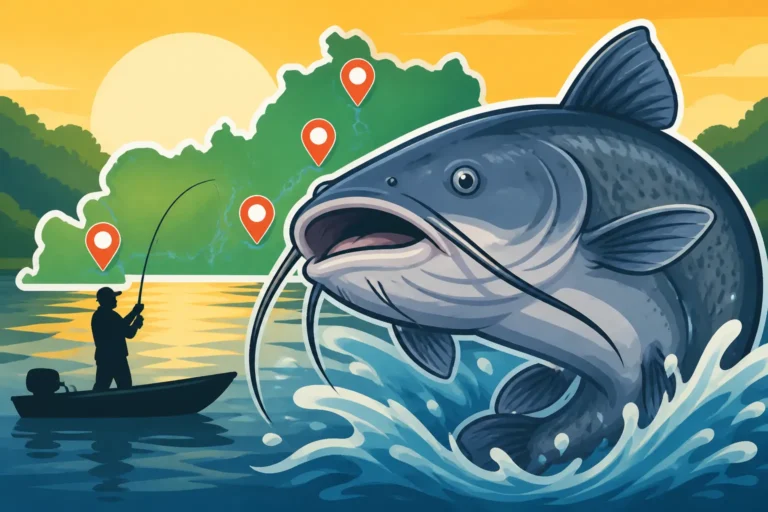
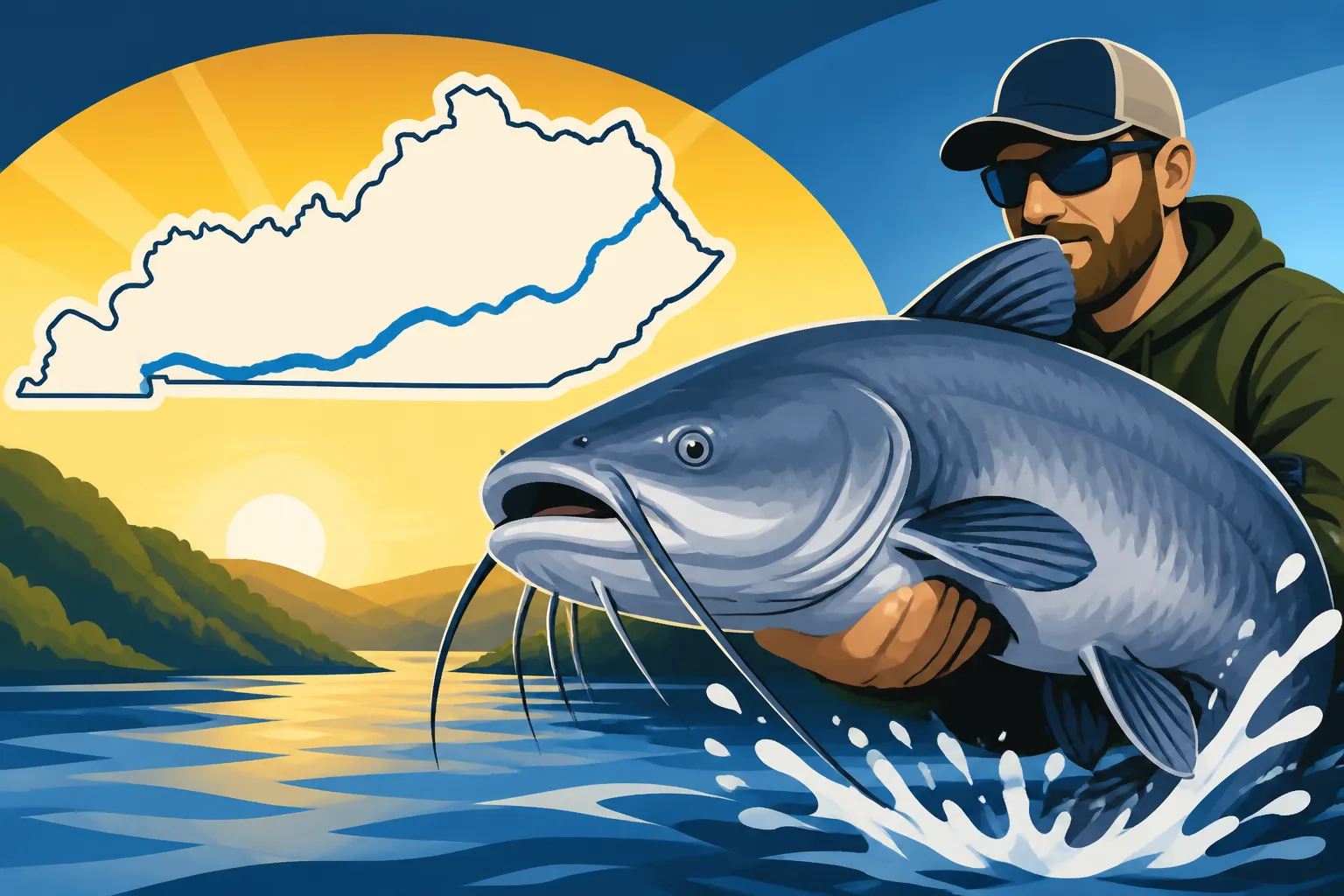
The Ohio River forms Kentucky's northern border, offering hundreds of miles of prime trophy blue catfish habitat. While giants can be found throughout the river, certain sections consistently produce bigger fish due to unique topographical features and current dynamics. Knowing these general areas and then drilling down to specific features within them is key.
Identifying Key River Sections
Kentucky's stretch of the Ohio River is vast, but some regions are particularly renowned for trophy blue catfishing.
- Louisville Area: Around the Falls of the Ohio, just below the McAlpine Dam, is a legendary spot. The turbulent waters, deep holes, and abundant baitfish create a perfect environment for massive blues. The numerous bridges and their pilings also provide excellent structure. While navigating the Falls can be challenging, the rewards are often worth it. This area offers some of the Best Catfish Fishing Spots on Kentucky's Ohio River.
- Paducah Area: Downstream, near Paducah, where the Ohio meets the Mississippi River, the confluence creates massive currents, deep scour holes, and an incredible amount of baitfish. This mixing of two major river systems concentrates nutrients and forage, making it a hotspot for all types of catfish, especially the largest blues. Anglers often find phenomenal fishing in this region.
- Maysville/Augusta Area: Further upstream, around Maysville and Augusta, you'll find classic river bends with deep outside turns, significant tributary confluences, and plenty of barge traffic that creates current breaks and disturbed bottom. These areas, though perhaps less famous than the Falls, consistently produce quality fish for those who know how to read the river.
When planning your trip, consider using resources like FishingBooker to connect with local fishing guides who specialize in these specific Ohio River sections. Their local knowledge of subtle nuances can shave years off your learning curve.
Dam Tailwaters: A Prime Location
If there's one single location type that screams "trophy blue catfish" on the Ohio River, it's the tailwaters below the various locks and dams. Dams act as giant sieves, concentrating baitfish that are pulled through the turbines or over the spillways, creating a feeding frenzy for opportunistic predators like blue cats. The powerful current below the dams also carves out incredibly deep holes, often littered with rocks and debris, which serve as perfect staging areas.
The McAlpine Dam at Louisville is arguably the most famous example on the Kentucky side, but other dams like Markland, Meldahl, and Newburgh also offer fantastic opportunities. Fish tend to stack up below these structures, especially during periods of high flow or when the turbines are generating power. It's crucial to exercise extreme caution when fishing these areas due to the strong, unpredictable currents and commercial barge traffic. Always maintain a safe distance from the dam structures themselves, and understand that specific fishing regulations may apply to areas immediately below the dams.
Tributary Confluences and Creek Mouths
Another fantastic, yet often overlooked, hotspot for trophy blue catfish is where major tributaries or even significant creeks flow into the Ohio River. These confluences act as natural funnels, bringing in fresh water, nutrients, and more importantly, a constant supply of baitfish. The change in water chemistry, temperature, and current where a smaller river meets the mighty Ohio creates unique micro-habitats that blue cats exploit.
For example, where the Kentucky River meets the Ohio near Carrollton, or where the Green River flows in further downstream, you'll often find deep pockets and current seams. Blue catfish will hold in the slightly calmer, often muddier water of the tributary's plume, waiting for baitfish to be washed out into the main river current. The shallower flats just inside the mouth of these tributaries can also be productive, especially during feeding windows. These areas are excellent for finding larger fish that move in and out of the main river.
| Ohio River Hotspot Type | Key Features | Blue Catfish Attraction | Best Time to Fish |
|---|---|---|---|
| Dam Tailwaters | Strong currents, deep scour holes, concentrated baitfish, turbine washes, rocky bottoms. | Abundant, easy food source; deep, stable holding areas. | Year-round, especially good during high flow or active generation. Use caution. |
| Deep Channel Bends | Sharp outside bends, deep water, submerged structure (logs, rocks), current breaks on inside turns. | Ambushes points for passing baitfish; comfortable holding depths. | Spring, Summer, Fall. Fish deeper in colder months. |
| Tributary Confluences | Mixing of different water types, influx of baitfish, varied current seams, shallow flats near mouths. | Concentrated food sources; diverse habitat options; potential for slightly warmer or cooler water depending on the tributary. | Spring and Fall are excellent, as baitfish are often moving. Summer can also be good. |
| Bridge Pilings | Vertical structure, current breaks, scour holes around bases, shade. | Protection from current; ambush points; shade in summer. | Year-round, especially effective during sunny days and moderate current. |
| Barge Tie-ups/Fleets | Large, stationary objects, creating significant current breaks, shade, and debris accumulation. | Excellent cover and current breaks, often holding areas for baitfish. | Any time barges are present, particularly if they’ve been in place for a while, allowing fish to settle. |
Essential Techniques and Gear for Ohio River Trophy Blues
Catching a truly massive blue catfish on the Ohio River isn't just about finding them; it's about being prepared with the right tools and knowing how to present your bait effectively. These fish are powerful, and they demand serious tackle.
Heavy Tackle and Line Choices
Forget your bass rod; when you're targeting blue catfish that can easily top 50, 60, or even 100 pounds, you need heavy-duty gear.
Your rod should be a sturdy, heavy-action catfish rod, typically 7 to 9 feet long, capable of handling heavy weights and immense pulling power. Brands like Ugly Stik or Catfish Pro offer excellent options built for this kind of abuse. Pair this with a robust baitcasting reel, such as an Abu Garcia Ambassadeur 7000 series or a Penn Squall, that has a strong drag system and a high line capacity. A reel that can hold at least 250-300 yards of 50-80 pound test line is ideal.
For mainline, braided line is almost universally preferred by serious catfishermen on the Ohio. Its no-stretch properties provide incredible sensitivity for detecting subtle bites in current, and its strength-to-diameter ratio means you can spool up heavy test without sacrificing capacity. Fifty to 80-pound test braided line is a good starting point. You'll also need a heavy monofilament or fluorocarbon leader, typically 80 to 100 pounds, to protect your main line from abrasion against rocks, mussel beds, and the rough mouths of big blues. Understanding How to Tie a Fishing Knot for Beginners is crucial, but for these heavy applications, make sure you're using strong knots like the Palomar or improved clinch.
Best Baits for Big Blue Cats
Blue catfish are primarily piscivores, meaning they eat other fish. While they will sometimes scavenge, fresh cut bait is almost always the most effective choice for trophy hunters. The fresher, the better.
- Skipjack Herring: Hands down, this is considered the "gold standard" for trophy blues on the Ohio River. Skipjack are abundant in the Ohio and have an oily, bloody flesh that blue cats find irresistible. Catching skipjack can be a sport in itself, often done below dams using small spoons or sabiki rigs.
- Gizzard Shad: Another excellent choice, readily available in most Ohio River sections. Use fresh-caught shad, cut into steaks or large chunks.
- Asian Carp (Silver and Bighead): These invasive species are often overlooked as bait, but their oily flesh makes them fantastic for blues. Plus, using them as bait helps control their populations. Cut into large chunks or fillets.
- Other Live/Cut Baits: If skipjack or shad are hard to come by, fresh common carp, drum, or even large bluegill (where legal) can work. Live bait, particularly a large live skipjack or shad, can be incredibly effective for attracting the largest, most aggressive blues, but ensure it's allowed by Kentucky Fishing Regulations Explained.
Remember, you're targeting a big fish, so don't be afraid to use a big piece of bait. A 4-6 inch chunk or a whole small fish is not too much. Check our guide on Best Bait for Blue Catfish Fishing for more in-depth bait strategies.
Effective Rigging and Presentation
On a river with strong currents like the Ohio, presentation is everything. You need to get your bait down to the bottom where the big blues live and keep it there, without it tumbling uncontrollably in the current.
- Santee Cooper Rig: This is a favorite among Ohio River catfishermen. It consists of a swivel connecting your mainline to a leader, with an inline sinker (often a flat or pyramid sinker to resist current) sliding freely above the swivel. The key is a small float (often a peg float) placed a few inches above the hook on the leader. This float lifts your bait off the bottom, making it more visible and preventing it from being buried in silt or debris. This presentation is excellent for fishing deep channels and structure.
- Carolina Rig (Heavy Duty): Similar to a Santee Cooper but without the float. A heavy bullet or egg sinker slides on the main line above a barrel swivel, which is then tied to a heavy leader and hook. This rig keeps your bait tight to the bottom and is effective in areas with less current or when you want your bait to stay directly in contact with the bottom.
- Sinker Size: You'll need substantial weight to hold bottom in the Ohio River's current, often ranging from 6 ounces to well over a pound, depending on the current speed and depth. Bank sinkers, pyramid sinkers, or even custom flat weights are commonly used.
- Hook Selection: Use large, strong circle hooks, typically 8/0 to 12/0 in size. Circle hooks are crucial for ethical catch-and-release, as they typically hook the fish in the corner of the mouth, reducing gut hooking. They also increase your hook-up ratio as the fish hooks itself as it swims away.
When you've found a promising spot, anchoring securely is often necessary. Read up on How to Anchor for Catfish on a River to ensure your boat stays put in the strong current, allowing your baits to settle in the target zone. Deploy multiple rods, staggered at different depths and distances from your boat, to cover more water and identify where the fish are holding.
Navigating and Safety on the Ohio River
Fishing the Ohio River for trophy blue catfish is an incredible experience, but it comes with unique challenges, especially regarding navigation and safety. This is a working river, shared with barges, towboats, and other recreational users, and its currents can be deceptively powerful.
Boat Handling and Navigation Challenges
The sheer size and commercial traffic on the Ohio River mean you need to be proficient at handling your boat. Large towboats pushing multiple barges have the right of way and can create massive wakes that require careful navigation. Always be aware of your surroundings, use proper navigation lights if fishing at dawn, dusk, or night, and monitor marine radio channels for traffic updates.
The current is another major factor. Even on calm days, the underlying current can be very strong, making boat positioning, anchoring, and fighting large fish significantly more challenging. When you're drifting, understand how the current will carry you. When anchored, ensure your anchor is properly set and can hold your vessel securely. For stability and power, many serious catfishermen opt for specific craft; consider exploring guides like Best Jon Boats for Catfishing on the Ohio River for suitable boat types.
Safety Considerations and Regulations
Safety should always be your top priority. The Ohio River is not a place to take risks.
- Life Jackets: Ensure everyone on board has a properly fitting, Coast Guard-approved life jacket. For children under 12, wearing a life jacket is mandatory at all times while the boat is underway in Kentucky waters, as detailed in Life Jacket Rules for Boats in Kentucky. Even for adults, especially when fishing near dams or in strong currents, wearing one is highly recommended.
- Boat Safety Equipment: Carry all required safety equipment, including a fire extinguisher, distress signals, a whistle or horn, and navigation lights. It's also wise to have a first-aid kit, a spare prop, and basic tools on board.
- Weather Monitoring: River conditions can change rapidly. Always check the weather forecast before heading out and be prepared to seek shelter if storms approach. High winds can make navigation dangerous and even small waves on a big river can be hazardous.
- Fishing Licenses and Regulations: Make sure you have a valid Kentucky Fishing License Guide. Remember that you also need to be aware of the specific limits for catfish on the Ohio River. While the statewide limit for blue and channel catfish is 15 fish combined, only one of those can be over 25 inches. So, if you're targeting trophies, you can only keep one truly giant blue cat per day. Understand regulations like Kentucky Catfish Limit: 15 Fish, Only 1 Over 25 Inches and How Many Catfish Over 25 Inches Can You Keep? to stay compliant. Also, be mindful of any reciprocal agreements with Ohio and Indiana if you fish near the state lines.
Final Tips for Your Trophy Catfish Hunt
Landing a true trophy blue catfish from the Ohio River is a monumental achievement, a testament to patience, skill, and the power of Kentucky's waterways. These fish are not only challenging to find but also incredibly strong fighters, making the entire experience unforgettable. Keep your lines tight, stay vigilant, and always respect the river's immense power. If you're looking for that extra edge, consider hiring a local guide. Many experienced captains, often listed on platforms like FishingBooker, have spent decades learning the intricate secrets of the Ohio River and can put you on fish quickly. Their expertise can be invaluable for pinpointing those exact spots where a monster blue cat like Kentucky's record blue catfish, which weighed an astounding 106 pounds 14 ounces, might be lurking. Arm yourself with the right knowledge and gear, and the Ohio River could just give you the fight of your life.
Disclaimer
The information provided in this guide is for general informational purposes only and does not constitute legal advice. Fishing regulations, license requirements, and boating laws can change, and it is the sole responsibility of the angler to stay informed of and comply with all current rules set forth by the Kentucky Department of Fish and Wildlife Resources and other relevant authorities. Always prioritize safety on the water.