Best Spots to Catch a State-Record Blue Catfish
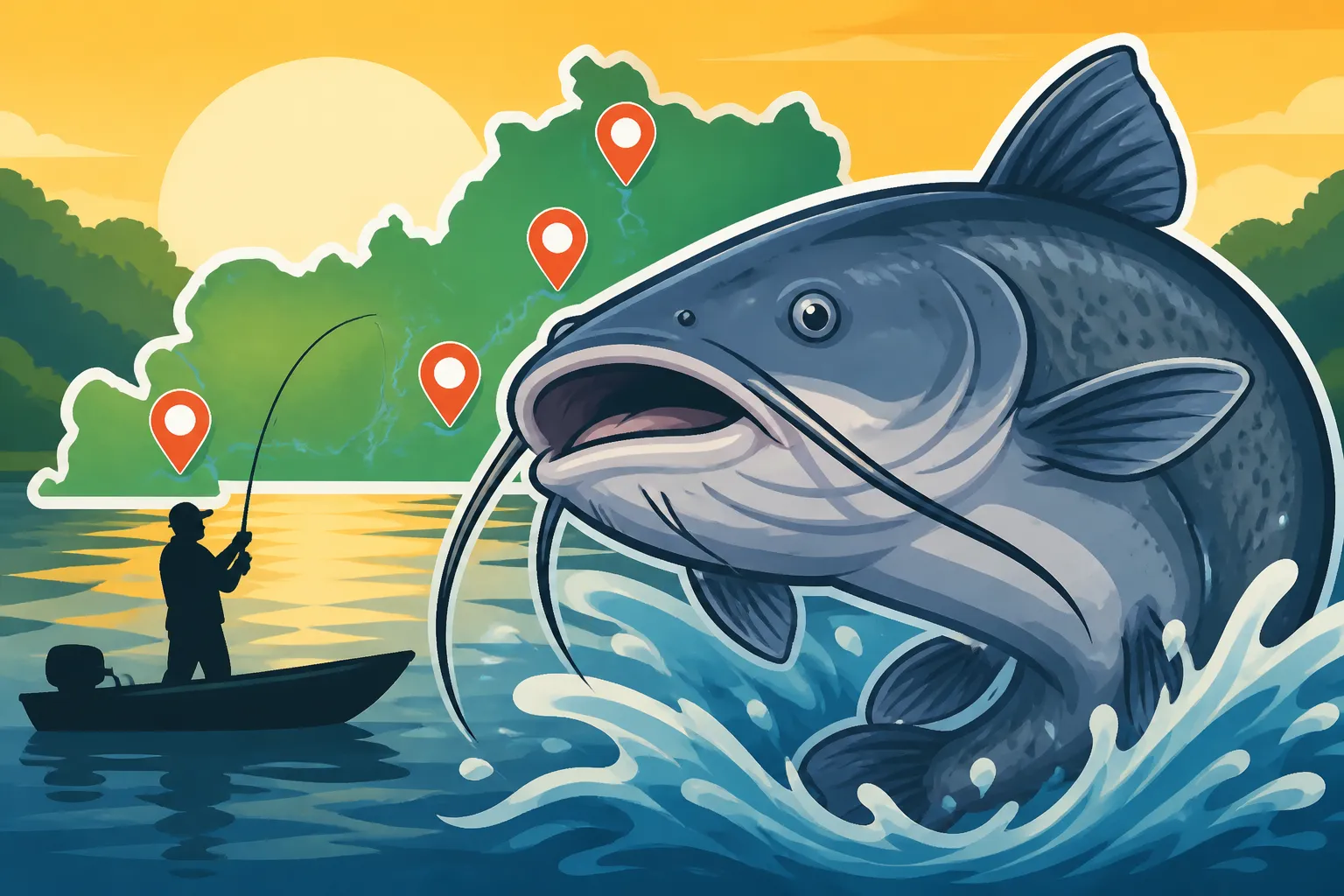
Catching a state-record blue catfish isn't just a fishing trip; it's an epic quest, a true angler's dream that many chase but few achieve. Kentucky's waters hold some absolute giants, and the thought of hooking into one of these freshwater leviathans is enough to send shivers down any serious catfisherman's spine. This guide is all about giving you the inside scoop on where these colossal cats lurk and what it takes to bring one of them to the scales as a potential record-breaker.
Understanding Kentucky's Trophy Blue Catfish Potential
Kentucky is blessed with incredible fisheries, and when it comes to blue catfish, the potential is truly astounding. These fish aren't just big; they're magnificent, powerful creatures that command respect and offer an unparalleled angling challenge.
The Allure of State-Record Blue Catfish
The current Kentucky state record for a blue catfish is a truly incredible fish, weighing in at a staggering 106 pounds and 14 ounces, caught right out of the Ohio River. Just imagine reeling in a fish that tips the scales at over 100 pounds – it’s a moment that would define an angler's career! This record isn't just a number; it's a testament to the immense growth potential these fish have in Kentucky's rich, fertile waters. Blue catfish are known for their impressive size, often growing much larger than their channel or flathead cousins. They are apex predators in many of our river and reservoir systems, thriving on abundant baitfish populations like shad and skipjack herring. The sheer power of a big blue on the end of your line is something you have to experience to truly appreciate; it’s a tug-of-war that tests your tackle, your strength, and your resolve. For many, the chase isn't just about the record, but the pursuit of that once-in-a-lifetime fish, a true trophy that represents the pinnacle of freshwater angling. If you're curious about just how massive these fish can get, you might want to read up on Kentucky's Record Blue Catfish Weighed 106 Pounds 14 Ounces to get a sense of the bar that's been set.
Key Factors for Finding Giant Blues
To consistently find and target these monstrous blue catfish, you need to understand their preferred habitat and behavior. Blue cats are primarily riverine fish, meaning they thrive in flowing water environments, but they also do exceptionally well in large reservoirs with extensive river channels running through them. They love deep water, often congregating in holes, scour marks, and along ledges and drop-offs. Current is a major draw for them because it concentrates baitfish and brings food directly to them. Look for areas with structural elements like old river bends, submerged timber, rock piles, or bridge pilings that create current breaks or ambush points. During warmer months, they might roam more, but in colder water, they tend to stack up in the deepest, most stable spots. Their diet consists almost entirely of other fish, so finding concentrations of shad, skipjack, or even smaller panfish is absolutely crucial. These big blues are always on the hunt, and understanding the food chain is paramount to putting your bait in the right place at the right time.
Top Rivers and Lakes for Monster Blue Catfish
Kentucky offers several prime locations where you have a legitimate shot at catching a blue catfish that could be a contender for the record books. These waters provide the necessary depth, current, and food sources that allow blues to grow to incredible sizes.
The Mighty Ohio River
Without a doubt, the Ohio River is the undisputed champion when it comes to producing gargantuan blue catfish in Kentucky. It's where the current state record was caught, and for good reason. This massive river system, forming Kentucky's northern border, offers miles and miles of deep channels, powerful currents, and an almost endless supply of baitfish. The sheer volume of water and the constant flow create an ideal environment for blues to grow old and enormous.
Specific stretches of the Ohio River are particularly renowned. The pools below the many dams – like the Markland Dam near Warsaw, the McAlpine Dam at Louisville, or the Smithland Dam further downstream – are absolute magnets for trophy blue cats. The turbulent water below these dams oxygenates the water and churns up an abundance of disoriented baitfish, creating a feeding frenzy. Anglers often target deep holes, current seams, and eddy lines in these areas. While fishing the Ohio, it's not uncommon to encounter commercial barge traffic, so safety and awareness are crucial. Furthermore, navigating such a large river can be daunting for those unfamiliar with it. For those looking to shorten the learning curve on such vast waters, booking a trip through platforms like FishingBooker can connect you with seasoned local guides who know the river's secrets and precisely where to find the biggest cats. Remember, local knowledge is invaluable on a system as complex as the Ohio. You can find more detailed information on specific locations in our guide, Best Catfish Fishing Spots on Kentucky's Ohio River.
Kentucky Lake's Deep Channels
While the Ohio River holds the record, Kentucky Lake is another powerhouse fishery with serious trophy blue catfish potential, especially in its deeper, riverine sections. Part of the Tennessee River system, Kentucky Lake is one of the largest man-made lakes in the eastern United States, renowned for its incredible fishing across multiple species. While often lauded as Kentucky Lake: The State's Top Bass Fishing Destination, its deep main river channel and vast expanses also harbor a thriving population of monster blue catfish.
Look for blue cats in the old Tennessee River channel that snakes its way through the lake. These fish will often relate to deep ledges, humps, and submerged creek channels, particularly during the colder months when they stack up in dense schools. The areas near the Kentucky Dam and further south towards New Johnsonville are particularly productive. Drifting cut bait along these deep contours, especially where the channel makes a sharp bend or meets a significant creek arm, can be incredibly effective. Kentucky Lake also benefits from strong populations of shad and other baitfish, providing a consistent food source for blues to reach impressive sizes.
Lake Barkley's Connected Waters
Connected to Kentucky Lake by the short Barkley Canal, Lake Barkley shares many of the same characteristics and trophy potential for blue catfish. This twin lake system means that fish, including massive blue cats, can move freely between the two bodies of water. For anglers visiting the area, understanding the connection between these two renowned fisheries is key. Our Lake Barkley Fishing Guide for Kentucky Anglers provides a wealth of information about this fantastic waterbody.
Like Kentucky Lake, Lake Barkley's blue catfish congregate in the deepest parts of its main river channel, which is the old Cumberland River bed. Areas around bridges, particularly the US 68 bridge near Cadiz and the I-24 bridge, often create current breaks and deep holes that hold big fish. During periods of generation at the Barkley Dam, the current can pick up, activating the bite for these powerful predators. Target large, open flats adjacent to deep channels, especially those with some subtle contour changes or sparse cover. Drifting baits or anchoring on significant drops can yield excellent results. The combined potential of Kentucky Lake and Lake Barkley offers an immense playground for trophy catfish anglers.
Tactics and Gear for Landing a Record-Breaker
Catching a blue catfish that could challenge the state record isn't about luck; it's about preparation, the right gear, and sound angling techniques. These fish are powerful, and if you're not ready, they'll make short work of your tackle.
Essential Gear and Rigging
When you're targeting blue catfish that can exceed 50, 70, or even 100 pounds, your tackle needs to be serious. This isn't the time for lightweight spinning gear. You'll want heavy-action catfish rods, typically 7 to 9 feet long, capable of handling heavy weights and powerful fish. Pair these with robust, large-capacity baitcasting reels, like those from Abu Garcia, Penn, or Shimano, spooled with 50-80 pound braided line or 30-50 pound monofilament. Braided line offers superior sensitivity and strength for its diameter, which can be critical when fishing deep water or heavy current.
For rigging, a Santee Cooper rig or a Carolina rig are popular and effective choices. Both allow your bait to be presented just off the bottom, making it easily accessible to foraging catfish. You'll need heavy lead weights, anywhere from 3 to 12 ounces, depending on current conditions, to keep your bait anchored. Always use strong, circle hooks, typically sizes 8/0 to 12/0, which are designed to hook fish in the corner of the mouth, minimizing harm and making release easier if you're not planning to keep the fish. A strong swivel (200lb+ test) is also crucial to prevent line twist. Don't forget heavy-duty leaders, often 80-100 pound test monofilament or fluorocarbon, to withstand abrasive structures and the fish's rough mouth.
Best Baits for Trophy Blue Catfish
When it comes to tempting a record-sized blue cat, fresh cut bait is king. These fish are primarily piscivores, meaning they eat other fish, and they have an incredible sense of smell. Skipjack herring, often referred to as "skip," is arguably the best bait for trophy blues on the Ohio River and large reservoirs. Their oily flesh and strong scent are irresistible. Other excellent choices include fresh shad (gizzard or threadfin), white perch, or even chunks of carp.
The key is freshness. Dead or frozen bait simply doesn't compare to the scent trail put out by fresh-cut pieces. Cut your bait into chunks that are appropriate for the size of hook you're using – generally 2-4 inch strips or sections for larger fish. Some anglers prefer to use whole small baitfish, like a live shad, suspended under a bobber or fished on the bottom. Live bait can be incredibly effective, especially if you're targeting truly wary, large fish, but it often requires more effort to procure and keep alive. Remember that using game fish as bait is often prohibited, so always check Kentucky Fishing Regulations Explained before heading out.
Seasonal Strategies and Timing
Trophy blue catfish can be caught year-round in Kentucky, but certain seasons offer better opportunities.
- Spring (March-May): As water temperatures rise into the 50s and 60s, blue cats become highly active, moving out of their deep wintering holes to feed aggressively. They'll often follow baitfish into shallower flats and channel edges. This can be an excellent time for quantity and quality.
- Summer (June-August): While it's hot, the deep holes and strong current breaks on rivers like the Ohio remain productive, especially during periods of reduced sunlight like dawn, dusk, or at night. Night fishing is a popular and often highly effective tactic for big blues in the summer. During the day, they'll often retreat to the deepest, coolest water available.
- Fall (September-November): This is arguably one of the best times to target monster blue catfish. As water temperatures begin to drop, blue cats go on a feeding frenzy, bulking up for winter. They can be found moving up and down the channels, gorging on shad. The bite can be incredibly intense.
- Winter (December-February): Don't count out winter! While less active, blue cats will often school up tightly in deep, stable holes. Finding these schools can be challenging, but once located, anglers can often catch multiple large fish. Vertical jigging or presenting baits directly on their heads can be effective.
Understanding the Kentucky Fishing Seasons: What to Catch Each Month will give you a broader picture of fish behavior throughout the year.
Here's a quick comparison of the top blue catfish spots in Kentucky:
| Location | Primary Attraction | Best Season | Typical Depth | Key Feature for Big Fish | Best Bait |
|---|---|---|---|---|---|
| Ohio River | Deep river channels, dams | Fall, Spring | 30-100+ feet | Consistent current, abundant baitfish | Fresh cut skipjack, shad |
| Kentucky Lake | Old river channel, ledges | Fall, Winter | 20-60 feet | Vast lake, abundant shad schools | Fresh cut shad, skipjack |
| Lake Barkley | Old river channel, bridges | Fall, Winter | 20-60 feet | Connected to Kentucky Lake, current breaks | Fresh cut shad, skipjack |
Documenting Your Potential State Record Catch
So, you've battled a true behemoth and brought it to the boat. Now what? Documenting a potential state record isn't as simple as snapping a quick photo. There are specific procedures and regulations you need to follow meticulously.
Knowing the Rules Before You Go
Before you even launch your boat, you need to be familiar with the Kentucky Department of Fish and Wildlife Resources (KDFWR) regulations regarding state record fish. The worst thing would be to catch a record-breaker only to find it disqualified due to a technicality. The KDFWR website is your best friend here. They typically require that the fish be caught legally, by hook and line, without snagging or illegal methods. There are also specific rules about measurements and weighing.
It's a good idea to have a clear understanding of the Kentucky Catfish Daily Limit and Trophy Fish Rule and other specific regulations for the water body you're fishing. For instance, some waters might have length limits or specific rules on how many fish over a certain size you can keep. Always respect these rules, as they are in place to manage the fishery responsibly. Make sure you have a valid Kentucky Fishing License Guide and any necessary permits, like a Kentucky Trout Permit, if you're fishing waters where trout might also be present.
The Verification Process
If you believe you've caught a state-record blue catfish, here's what you generally need to do:
- Keep the Fish Alive (if possible): While a record catfish is often a kept fish, if you're not absolutely sure it's a record, keeping it alive in a livewell can allow for safe release if it doesn't quite measure up.
- Contact KDFWR Immediately: As soon as possible, contact the Kentucky Department of Fish and Wildlife Resources. You'll want to speak with a fisheries biologist or a conservation officer. They will guide you through the official process.
- Find a Certified Scale: This is absolutely critical. The fish must be weighed on a certified scale, usually found at local grocery stores, marinas, or bait shops that have scales regularly inspected by the state for accuracy. The KDFWR will often have a list of approved locations.
- Get it Witnessed: Have at least two credible witnesses present during the weighing and measuring process. Their testimony will be crucial for verification.
- Photographs and Measurements: Take clear photographs of the fish, especially with the weight showing on the scale. Measure the fish's length and girth accurately. The KDFWR will have specific guidelines on how these measurements should be taken.
- Paperwork: You'll need to fill out official state record application forms, providing all necessary details about the catch, date, time, location, tackle used, and witness information.
Remember, the goal is not just to catch a big fish, but to ensure it's properly documented so that your achievement can be officially recognized. It's a journey from the cast to the record books, and every step matters!
Disclaimer
The information provided in this guide is for general informational purposes only. Fishing regulations, license requirements, and fish populations can change. Always consult the latest official regulations from the Kentucky Department of Fish and Wildlife Resources (KDFWR) before planning any fishing trip. Adhere to all local, state, and federal laws and practice responsible angling.