Where to Catch Crappie on Green River Lake
It can be incredibly frustrating to hit the water on a big, beautiful lake like Green River Lake, geared up and ready to catch some crappie, only to spend hours searching without a single nibble. These delicious panfish can feel downright invisible at times, especially when you're not sure where to start looking in such a vast body of water. This guide is designed to take the guesswork out of your next crappie trip to Green River Lake, breaking down exactly where and how to find these sought-after fish, so you can fill your livewell instead of just burning gas.
Understanding Green River Lake's Crappie Habitat
Green River Lake, nestled in south-central Kentucky, is a sprawling reservoir known for its excellent fishing, and crappie are a big part of that reputation. But like any large lake, it has diverse habitats, and understanding where crappie prefer to hang out is your first step to consistent success. They're not just anywhere; they have preferences based on structure, cover, and water conditions.
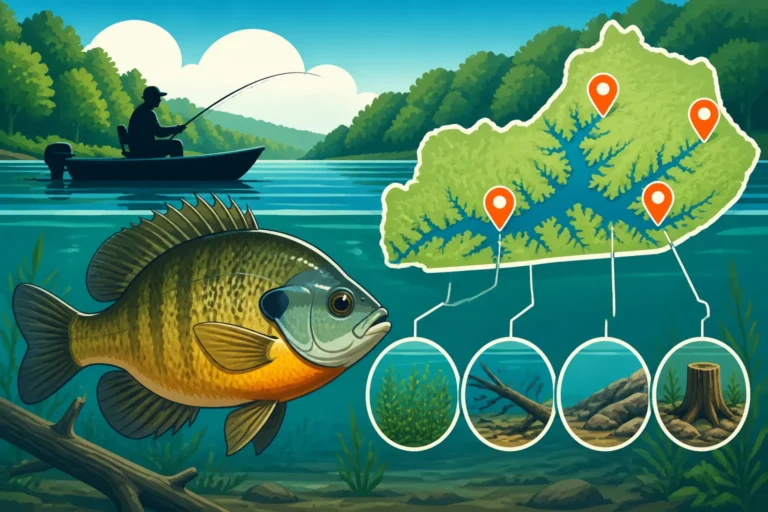
Crappie are masters of relating to structure and cover. Think about the basic needs of a crappie: food, shelter from predators, and comfortable water conditions. Submerged timber, brush piles, rock ledges, creek channels, and even man-made fish attractors are all prime real estate for crappie. Green River Lake is particularly rich in standing timber in its upper reaches and numerous coves, providing ample opportunities for these fish to hide and ambush bait.
Deep Creek Channels and Timber Stands
One of the most consistent places to find crappie on Green River Lake, especially outside of the spring spawn, is along its old creek and river channels. The main Green River channel winds its way through the lakebed, offering deeper water access even in shallower areas. Crappie often suspend just off the edges of these channels, particularly where there's standing timber or brush. These deeper channels serve as major highways for crappie, allowing them to move between shallower feeding grounds and deeper, more stable holding areas as conditions change.
Imagine a section of the lake where the old creek bed drops from 15 feet down to 30 feet. If that drop-off is lined with a dense stand of submerged hardwood trees, you've found a crappie magnet. The trees provide vertical cover, extending from the bottom almost to the surface in some places, giving crappie plenty of ambush points. Anglers often find success by slowly trolling jigs or minnows along the edges of these timber lines, keeping an eye on their fish finder for schools of baitfish or crappie suspended within the timber itself. For more insights into how water depth impacts fish, check out our guide on How Fish Behavior Changes From Summer to Fall.
Man-Made Fish Attractors and Brush Piles
The Kentucky Department of Fish and Wildlife Resources (KDFWR) actively manages Green River Lake, and part of that management includes deploying numerous fish attractors. These are often made from discarded Christmas trees or PVC structures, designed to create instant habitat in areas that might otherwise be barren. These attractors are fantastic for crappie, providing concentrated cover that’s easy to locate with sonar. Many of these locations are even marked on navigation charts or can be found on the KDFWR website.
Local anglers also frequently sink their own brush piles, often near submerged points or along channel bends. While these aren't always publicly marked, word often gets around about productive "community" brush piles. These man-made covers are essentially crappie apartment complexes, offering security and a place for baitfish to congregate, which in turn draws in hungry crappie. When you're out on the lake, keep an eye on your electronics for tell-tale signs of dense underwater structure – it could be a natural timber stand or a hidden brush pile teeming with crappie.
Seasonal Crappie Hotspots on Green River Lake
Crappie are highly migratory within the lake, their movements dictated by water temperature, spawning urges, and the availability of food. What works in spring won't necessarily work in fall, and understanding these seasonal shifts is critical to consistent success.
| Season | Typical Water Temperature | Crappie Location | Recommended Baits/Techniques |
|---|---|---|---|
| Spring (Pre-spawn) | 50-60°F | Creek channel bends, secondary points, submerged timber near channels | Jigs (chartreuse, white), minnows, slow trolling |
| Spring (Spawn) | 60-70°F | Shallow coves, protected flats, around submerged brush/roots (2-8 ft) | Small jigs (bright colors), minnows under bobber, casting |
| Summer | 70-85°F | Deeper brush piles, main lake points, ledges, standing timber (10-25 ft) | Minnows, spider rigging, vertical jigging, small crankbaits |
| Fall | 55-65°F | Creek channel drops, main lake points, schooling baitfish | Jigs, minnows, small crankbaits, faster retrieve |
| Winter | 35-50°F | Deep creek channels, standing timber, main lake holes (20-40 ft) | Vertical jigging with minnows/small jigs, slow trolling |
Spring: The Crappie Spawn Bonanza
Ah, spring! This is arguably the most anticipated season for crappie anglers on Green River Lake. As water temperatures begin to climb, typically starting in late March and peaking in April and May, crappie move from their deeper winter haunts towards shallower waters to spawn. This is when they become incredibly accessible, even for bank anglers. For a detailed look at this exciting time, check out our Kentucky Crappie Fishing: Spring Spawn Run Guide.
During the early pre-spawn, when water temperatures are in the low to mid-50s, crappie will stage on secondary points and creek channel bends just outside the spawning flats. They're waiting for the water to warm up just a little more before making their final push. Focus on areas where these channels meet coves that have plenty of submerged brush or timber.
As the water warms into the 60s, the crappie move into the shallow coves and flats, seeking out submerged wood, old stumps, roots, and any other cover to lay their eggs. Depths of 2 to 8 feet are common during the spawn. The protected coves in areas like Caney Creek, Robinson Creek, and around the Holmes Bend Recreation Area can be absolute crappie havens. You'll often find them guarding nests, becoming quite aggressive. A simple jig under a bobber cast near cover is deadly during this time. Remember, knowing When Does Crappie Spawning Start in Kentucky is key to timing your trip perfectly.
Summer: Adapting to Deeper Waters
Once the spawn is over and water temperatures really heat up, crappie transition to deeper, more stable environments. They'll often pull out to main lake points, deep ledges, and especially back to the extensive standing timber in the lake's upper end. Look for them suspended over or within brush piles and timber at depths ranging from 10 to 25 feet, sometimes even deeper, depending on the thermocline.
This is a great time for spider rigging, where multiple rods are deployed from the front of the boat with jigs or minnows at varying depths, effectively covering a wide water column. Slow trolling with small crankbaits can also be effective when crappie are scattered along ledges. Focus your efforts during the cooler parts of the day, like early mornings or late evenings, or even consider night fishing around lighted docks, as crappie are attracted to the baitfish that gather there.
Fall: Following the Bait
As autumn arrives and water temperatures begin to drop, crappie become more active and start feeding aggressively to fatten up for winter. They often follow schools of baitfish, which can be found in a variety of locations. Main lake points, especially those with access to deep water, and creek channel drops become productive again. The fish might be slightly shallower than in summer, but still relating to structure.
This time of year, crappie can be found suspending at mid-depths over old creek channels or along breaks. Jigs become very effective, and you might even have success with faster retrieves as crappie chase bait. Look for birds diving on baitfish or use your electronics to spot schools of shad, as crappie won't be far behind.
Winter: Deep and Slow
Winter crappie fishing on Green River Lake requires patience and precision. The crappie retreat to the deepest, most stable water they can find, often congregating in large schools in the main lake's deepest channels or within the densest standing timber. Depths of 20 to 40 feet are not uncommon, and sometimes even deeper.
Vertical jigging with small jigs or minnows directly over the schools is the most effective technique. Your electronics will be your best friend here, helping you pinpoint these deep schools. The bite will often be subtle, so light line and a sensitive rod are crucial. Focus on slow, deliberate presentations, as crappie are lethargic in the cold water. Areas around the main lake dam or deep pockets near major creek arms can hold substantial winter crappie populations.
Effective Techniques and Baits for Green River Lake Crappie
Knowing where the crappie are is only half the battle; the other half is knowing how to make them bite. Crappie aren't overly picky, but certain presentations and baits consistently outperform others on Green River Lake.
Jigs: Versatility and Effectiveness
Jigs are undoubtedly one of the most popular and effective lures for crappie. The beauty of a crappie jig is its versatility. You can cast it, vertical jig it, troll it, or use it under a bobber. On Green River Lake, popular jig sizes range from 1/32 ounce to 1/8 ounce, with 1/16 ounce being a common all-around choice.
When it comes to colors, it often varies by water clarity and personal preference, but some staples tend to shine. Chartreuse, white, black/chartreuse, and blue/white are perennial favorites. If the water is stained or murky, brighter colors like chartreuse or orange can offer better visibility. In clearer water, more natural colors like smoke or pearl might be better. To dive deeper into color choices, check out our guide on Best Crappie Jig Colors for Stained Water. For how to rig these, our article on How to Rig a Jig for Crappie Fishing has excellent advice.
Soft plastic bodies that imitate minnows or small insects are the go-to choices. Think about small tubes, grub tails, or tiny paddle tails. Tipping your jig with a live minnow can significantly increase its effectiveness, especially when the bite is tough.
Live Minnows: The Irresistible Classic
You simply can't beat live minnows for crappie fishing. They are natural food, and crappie find them almost irresistible. Minnows can be fished in a variety of ways:
- Under a bobber: This is a classic, effective method, especially in shallow water during the spawn. Set your bobber so the minnow is suspended just above the crappie's depth.
- On a bare hook: Use a small Aberdeen hook (size 4 or 6) with a split shot or two a foot or so above it. This allows the minnow to swim more naturally.
- Tipped on a jig: As mentioned, a minnow adds scent and natural action to a jig, making it even more tempting.
- Spider Rigging: This technique is extremely effective for covering water and presenting multiple baits at once. You use a spread of rods, often from the front of the boat, with minnows or jigs suspended at various depths. Our guide on How to Spider Rig for Crappie provides excellent detail on this strategy.
When fishing live minnows, pay attention to how crappie are biting. Sometimes they'll inhale the minnow; other times, it's just a light tap. A sensitive rod is key to feeling these subtle bites.
Other Effective Lures and Methods
While jigs and minnows dominate, there are other techniques worth trying:
- Small Crankbaits: During summer and fall, when crappie are chasing schools of baitfish, small crankbaits can be surprisingly effective, especially when trolled along ledges or channel edges. Look for models designed for panfish or shallow-running bass crankbaits.
- Slip Bobber Rigs: For precise depth control, especially when crappie are suspended at specific depths over brush piles or timber, a slip bobber rig is invaluable. It allows you to cast further than a fixed bobber while still presenting your bait at the perfect depth. Learn more with our Slip Bobber Technique for Crappie Fishing.
- Trolling: Whether you're pulling jigs, minnows, or small crankbaits, trolling is a great way to cover large areas of Green River Lake and locate active crappie. Pay attention to your boat speed and adjust it until you find what the fish prefer. This is especially useful when fish are scattered. For general strategies, consider reading up on Boat Fishing Techniques for Crappie.
Navigating Green River Lake: Access and Considerations
Green River Lake offers fantastic angling opportunities, but it's a large body of water, and knowing how to access it and what to keep in mind for a safe and productive trip is important. Before heading out, remember to secure your Kentucky Fishing License Guide to ensure you're fishing legally.
Public Access Points and Boat Ramps
Green River Lake boasts several excellent public boat ramps and access points, making it easy for anglers with boats to launch. Some of the most popular include:
- Green River Lake State Park Marina: Located near Campbellsville, this is a major hub with multiple ramps, ample parking, and services.
- Holmes Bend Recreation Area: Another popular spot with multiple ramps, often busy during peak seasons.
- Emerald Isle Resort & Marina: Offers convenient access to the lower end of the lake.
- Jacobson Park Ramp: Providing access further up the river arm.
For bank anglers, there are also various opportunities, particularly within Green River Lake State Park, where you can find shore access in designated areas. Exploring different coves and points by foot can lead you to some hidden gems, especially during the spring spawn when crappie move shallow.
Understanding Lake Levels and Conditions
Like many reservoirs, Green River Lake's water levels can fluctuate, particularly seasonally. High water can mean crappie move further back into flooded timber and shoreline cover, while low water concentrates them more in the main channels and established cover. Always check the current lake level conditions before your trip, as this can significantly impact where crappie are holding. You can usually find this information through local bait shops, the U.S. Army Corps of Engineers website, or KDFWR.
Water clarity also plays a role. After heavy rains, the upper sections of the lake and major creek arms can become stained or muddy, pushing crappie to clearer water or deeper cover. Conversely, consistently clear water might require lighter lines and more subtle presentations. If you're looking for broader fishing advice for the area, our Green River Lake Fishing Guide and Best Spots offers a wealth of information.
Local Knowledge and Guided Trips
While this guide provides a solid foundation, there's no substitute for local knowledge. Stopping by a local bait shop around Campbellsville or Columbia can provide invaluable, up-to-the-minute reports on what's biting, where, and on what bait. These local experts live and breathe Green River Lake fishing and can offer insights that you won't find anywhere else.
If you're new to the lake or want to fast-track your learning curve, consider hiring a local fishing guide. A guide can put you on fish quickly and teach you the nuances of fishing Green River Lake. When planning your next crappie adventure on Green River Lake, you might check FishingBooker for available local charters and guides who specialize in crappie fishing. They can be an excellent resource for a productive and enjoyable day on the water. Many seasoned anglers use services like FishingBooker to find reputable guides who know the seasonal patterns inside and out, ensuring a rewarding experience.
Always remember that while there are statewide limits for crappie, such as the Kentucky Crappie Daily Limit Rules, it's crucial to be aware of any site-specific regulations for Green River Lake itself. These are rare but can occur, so a quick check with the KDFWR ensures you're always fishing within the law.
Green River Lake is a treasure for crappie anglers in Kentucky, offering diverse habitats and abundant fish. By understanding their seasonal movements, choosing the right techniques and baits, and utilizing the available resources, you'll be well on your way to a successful and enjoyable crappie fishing experience.
Disclaimer
The information provided in this guide is for general informational purposes only. Fishing conditions, regulations, and fish behavior can change rapidly. Always consult the latest regulations from the Kentucky Department of Fish and Wildlife Resources (KDFWR) before fishing and prioritize safety on the water.