Dale Hollow Lake’s Best Smallmouth Bass Spots
There's nothing quite like the thrill of chasing smallmouth bass, those feisty, hard-fighting bronzebacks, especially when you're on a legendary fishery like Dale Hollow Lake. But let's be real, a lake this vast and complex can feel overwhelming, making it tough to pinpoint where these elusive fish hide. This guide is here to cut through the guesswork, sharing the best smallmouth bass spots on the Kentucky side of Dale Hollow and the strategies to make your next trip a resounding success.
Understanding Dale Hollow Lake's Smallmouth Habitat
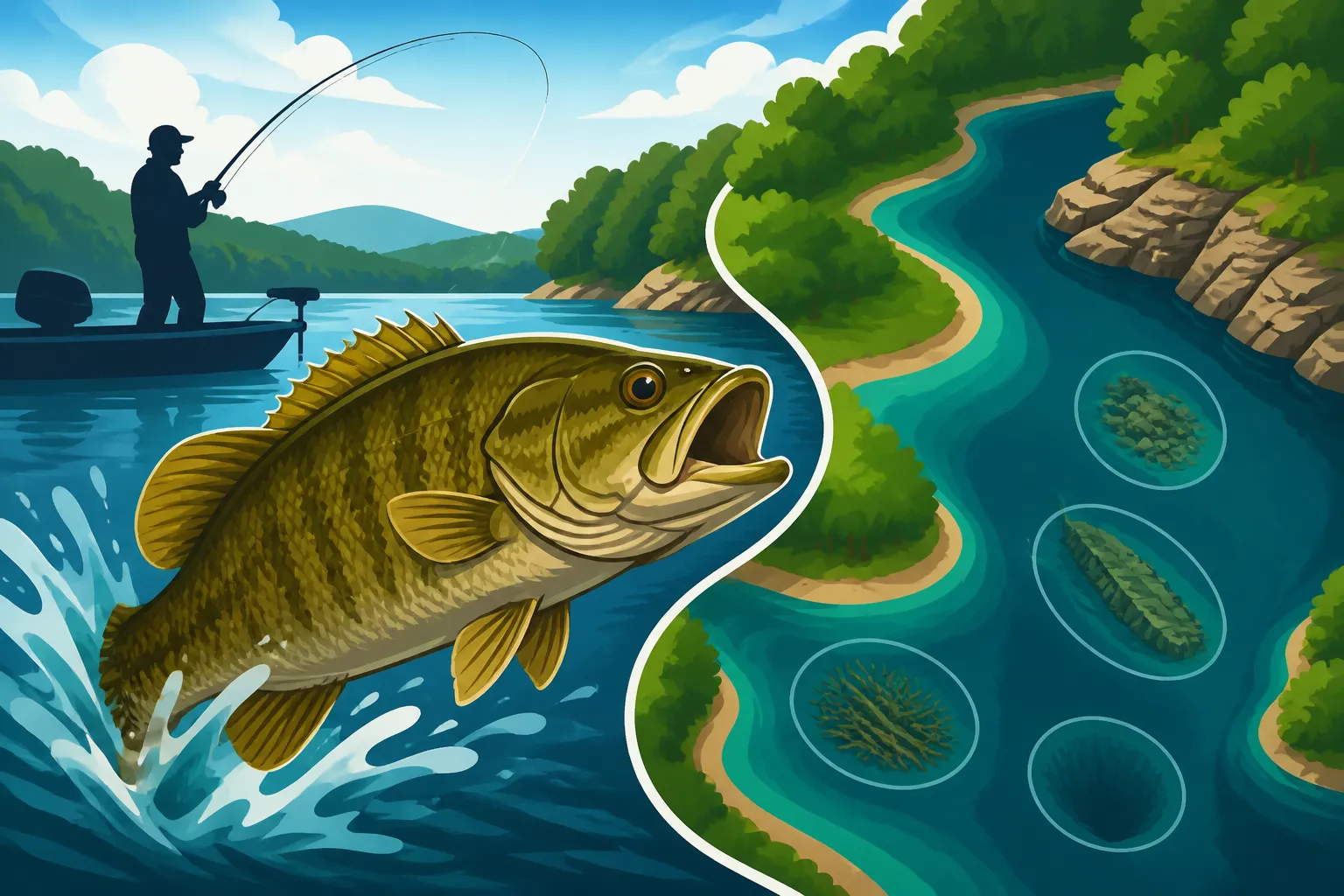
Dale Hollow Lake isn't just a big body of water; it's a deep, clear, and incredibly fertile reservoir that provides an ideal environment for smallmouth bass to thrive. But what makes it so special for these particular fish, and how does that influence where you should cast your line? It all comes down to understanding their preferred habitat – they're not just anywhere. Smallmouth are structure-oriented, preferring rocky areas, steep banks, and underwater features where they can ambush prey and find refuge.
The Role of Depth and Clarity
Unlike their largemouth cousins who often lurk in shallow, weedy cover, smallmouth in Dale Hollow typically favor deeper, clearer water. The lake's exceptional clarity, a hallmark of many highland reservoirs, allows sunlight to penetrate further, supporting forage fish populations at greater depths. This means smallmouth often relate to structure much deeper than you might expect, sometimes 20, 30, or even 50 feet down, depending on the season and time of day.
This depth preference is especially pronounced during the warmer months when surface temperatures climb. The smallmouth will retreat to cooler, more oxygenated water found deeper. In the colder months, while they might still be deep, their activity levels change, and they might suspend over even deeper water or hug tight to vertical structure. It's a constant game of hide-and-seek, but knowing they prefer that clear, cool, deep water is your first major clue.
Key Structural Features That Attract Smallmouth
When you're out on Dale Hollow, whether you're navigating by GPS or just reading the water, you're looking for specific features. Smallmouth are drawn to sharp breaks, rock piles, ledges, humps, and points that extend into deep water. These aren't just random rocks; these are transitions in the lakebed that provide ambush points and foraging lanes.
Imagine a submerged bluff wall that drops steeply into the abyss. Smallmouth will patrol those edges, waiting for schooling baitfish. Or consider a long, tapering point that gradually descends into deeper water; they'll use those contours as highways. Even subtle changes, like a patch of chunk rock on an otherwise smooth bottom, can concentrate fish. Don't overlook submerged timber either, especially if it's near a deep-water access point. These features provide shade, cover, and a perfect ambush spot for a hungry bronzeback.
Top Smallmouth Bass Hotspots on Kentucky's Dale Hollow
Now that we understand what makes Dale Hollow tick for smallmouth, let's talk about some specific areas on the Kentucky side that consistently produce. While every day on the water is different, these spots have a proven track record.
Wolf River and Its Tributaries
The Wolf River arm of Dale Hollow Lake, particularly on the Kentucky side, is legendary for its smallmouth population. This area offers a fantastic mix of deep channels, rocky bluffs, and numerous creek arms that feed into the main river channel. The constant flow of the river, even in a reservoir setting, creates subtle current breaks that smallmouth absolutely adore.
As you move up the Wolf River towards places like Sulphur Creek and Indian Creek, you'll encounter a series of long, tapering points and rocky banks that drop off steeply. During the spring, smallmouth will push into the backs of these creeks and coves, looking for spawning areas. Focus your efforts around rocky pockets and gravel flats where they might build nests. In the summer and fall, they'll retreat to the main river channel, often suspending over deep water near submerged timber or holding tight to bluff walls. Using your electronics to locate these deeper structures is key here. FishingBooker can connect you with experienced guides who specialize in navigating the intricate structure of the Wolf River arm for smallmouth.
Obey River Section and Main Lake Points
While a good portion of the Obey River is in Tennessee, the Kentucky side around the main lake area and where the Obey meets the main body of Dale Hollow offers exceptional smallmouth opportunities. This section is characterized by vast expanses of deep, clear water and prominent main lake points that stretch far into the lake.
Look for areas where these points feature chunk rock, gravel, or even some larger boulders. Smallmouth will stage on the sides and ends of these points, especially during migration periods in spring and fall. These main lake points often have deep water access close by, making them prime ambush locations for roaming schools of baitfish. During the summer, focus on the deeper ledges and humps associated with these points, often 25 to 40 feet down. Even in winter, these deeper structures can hold active fish. Experiment with different depths along the contour of the point until you find where they are holding.
Specific Structural Hotspots to Target
Beyond the broad areas, there are specific types of structures you'll want to hone in on. Dale Hollow is riddled with them, and a good fish finder is your best friend here.
- Bluff Walls and Steep Banks: These vertical structures are smallmouth magnets. Fish will often hold at various depths along these walls, depending on light conditions and bait presence. Look for any irregularities like small shelves, cracks, or submerged trees clinging to the wall.
- Humps and Ridges: Submerged humps that rise up from deep water are classic smallmouth haunts. These underwater islands act as congregation points for baitfish and predators alike. Pay close attention to the top and sides of these humps. Often, the side facing the current or deepest water will hold more fish.
- Rocky Points and Secondary Points: These are transitions. Main lake points are obvious, but don't overlook secondary points within bays or creek arms. Smallmouth use them to move between deep and shallow water, making them excellent staging areas. Remember to check out Dale Hollow Lake's Best Smallmouth Bass Spots for more details on specific geographic features!
Seasonal Strategies for Dale Hollow Smallmouth
Smallmouth bass, like most fish, are highly influenced by the seasons. Understanding their movements and behaviors throughout the year is crucial for consistent success on Dale Hollow. What works in spring won't necessarily work in winter, and vice versa.
Spring: Pre-Spawn and Spawn Aggression
Spring is arguably the most exciting time for smallmouth fishing on Dale Hollow. As water temperatures begin to rise (typically into the mid-50s to low 60s Fahrenheit), smallmouth start to move out of their deep wintering grounds and migrate towards shallower spawning areas. This pre-spawn period is characterized by aggressive feeding as they bulk up for the spawn.
Look for smallmouth on secondary points, rocky flats, and the backs of creek arms, particularly those with gravel or chunk rock bottoms. Jerkbaits, crankbaits, and suspending stickbaits are incredibly effective during this time, mimicking the baitfish they're actively chasing. As the water warms further (mid-60s), the spawn will commence. Smallmouth typically spawn in slightly deeper water than largemouth, often 5-15 feet deep, around rocky or gravelly bottoms. Sight fishing can be effective if the water clarity allows, but even if you can't see them, fan-casting these areas with tubes, jigs, or Ned rigs can draw strikes from territorial fish.
Summer: Deep Water and Low Light Bites
Once the post-spawn funk subsides and the water temperatures consistently hit the 70s and beyond, Dale Hollow smallmouth retreat to deeper, cooler water. This is when your fish finder becomes your most valuable tool.
During the daytime, focus on main lake points, submerged humps, and deep bluff lines, often in 20-50 feet of water. Drop-shot rigs, football jigs, and deep-diving crankbaits are prime choices. The smallmouth will often suspend over deep water or hug tight to structure. Early mornings, late evenings, and even night fishing can also be incredibly productive. During these low-light periods, smallmouth will often move shallower to feed, sometimes as shallow as 5-15 feet. Topwater lures, spinnerbaits, and buzzbaits can produce explosive strikes at these times. For more on how fish behave with changing temperatures, check out How Falling Water Temperature Changes Fish Behavior.
Fall: Migration and Feeding Frenzies
As the days shorten and water temperatures begin to cool, smallmouth on Dale Hollow will initiate their fall migration, often moving back towards those shallower, rocky points and creek arm entrances. They sense winter is coming and will feed aggressively to build up fat reserves.
This is a fantastic time for covering water with moving baits like crankbaits, spinnerbaits, and jerkbaits, as smallmouth will be actively chasing baitfish. Look for schools of shad or other forage fish on your electronics; the smallmouth won't be far behind. The bite can be fantastic on main lake points and humps, and shallower rocky areas can also produce, especially on sunny days when the rocks warm up. Keep an eye on Kentucky Fishing Seasons: What to Catch Each Month for a broader overview of seasonal patterns.
Winter: Slow and Deep Presentations
Winter fishing on Dale Hollow can be challenging, but it can also offer some of the biggest smallmouth of the year. The key is to slow down significantly and target deeper water. Smallmouth will typically congregate in very deep water, often 30-60 feet or even deeper, usually near vertical structure like bluff walls or deep humps with direct access to the main river channel.
Vertical presentations are your best bet. Spoons, Ned rigs, football jigs, and blade baits are excellent choices. Often, the fish will be lethargic, so a slow retrieve and subtle movements are critical. Your fish finder is essential for locating these deep schools of fish. Once you find them, be patient and work your baits slowly through the school. Bites can be very subtle, feeling more like a slight weight on your line than an aggressive strike. It's a game of finesse and persistence during the colder months.
Essential Gear and Techniques for Dale Hollow Smallmouth
Having the right tackle and knowing how to present your baits effectively can make all the difference when chasing Dale Hollow's smallmouth. These fish are powerful and intelligent, so your setup needs to be up to the task.
Rods, Reels, and Line
For Dale Hollow smallmouth, versatility is key. You'll want a combination of spinning and baitcasting setups to handle different presentations.
- Spinning Gear: A medium-light to medium power, fast action spinning rod (6'9" to 7'2") paired with a 2500 or 3000 size spinning reel is ideal for finesse techniques like drop-shotting, Ned rigs, and tubes. Spool it with 6-10 lb fluorocarbon or a braided main line (10-15 lb) with an 8-10 lb fluorocarbon leader for sensitivity and low visibility.
- Baitcasting Gear: A medium-heavy to heavy power, fast action baitcasting rod (7' to 7'6") with a high-speed reel is great for throwing jerkbaits, crankbaits, and larger jigs. Spool with 12-17 lb fluorocarbon or 30-40 lb braid for strength.
Remember, the clear water of Dale Hollow often necessitates lighter lines and longer leaders, especially for finesse presentations. Check out Best Rods and Reels for Kentucky Fishing for more general recommendations on choosing tackle.
Top Lures and Baits
Smallmouth on Dale Hollow have a diverse diet, and being prepared with a variety of lures will increase your chances.
- Jerkbaits: Absolutely deadly, especially in spring and fall. Brands like Rapala, Lucky Craft, and Megabass make excellent suspending jerkbaits that can be twitched and paused to entice strikes.
- Crankbaits: Deep-diving crankbaits are essential for probing those deeper humps and ledges in summer and winter. Medium-diving crankbaits work well in spring and fall when fish are shallower. Look for natural baitfish patterns.
- Tubes: A classic smallmouth bait, tubes are incredibly versatile. Rigged on a jig head, they mimic crawfish or baitfish. Drag them along the bottom, hop them, or swim them. Green pumpkin, smoke, and black are reliable colors.
- Ned Rigs: This finesse technique has exploded in popularity for a reason – it catches fish! A small jig head with a short, buoyant soft plastic worm is irresistible to smallmouth, especially when the bite is tough.
- Drop Shots: Another finesse powerhouse, the drop shot allows you to present a soft plastic bait precisely at a specific depth, which is invaluable when smallmouth are suspended or holding tight to structure.
- Swimbaits: Paddle-tail swimbaits rigged on jig heads can be extremely effective for mimicking baitfish, particularly when smallmouth are actively chasing schools of shad.
- Topwater Lures: Don't forget the explosive fun of topwater! Poppers, walking baits, and buzzbaits can trigger aggressive strikes during low-light conditions in warmer months. For more specific lure ideas, you might want to read Best Lures for Smallmouth Bass in Kentucky Rivers.
Boat and Electronics for Dale Hollow
Fishing a large, deep lake like Dale Hollow often requires a well-equipped boat and reliable electronics. A bass boat with a powerful outboard can cover water efficiently, but even a well-outfitted fishing kayak can be highly effective, especially for getting into tighter coves or for a more stealthy approach.
Your fish finder is paramount. Look for units with high-definition side imaging and down imaging to help you identify subtle structure, isolated rock piles, and even individual fish arches in deep water. GPS capabilities are also critical for marking hotspots, navigating safely, and returning to productive areas. Consider using mapping chips for detailed contours of the lake. Booking a trip through a service like FishingBooker can provide access to professional guides with top-tier boats and electronics, offering an invaluable learning experience for navigating and finding fish on Dale Hollow.
Conservation and Responsible Angling
Dale Hollow Lake is a precious resource, renowned for its smallmouth bass fishing, and it's up to all of us to ensure its health for future generations. Practicing responsible angling is not just about following the rules, but adopting an ethos of conservation.
Catch and Release Practices
While Kentucky does have legal harvest limits for smallmouth bass, many anglers on Dale Hollow practice catch and release, especially for the larger, older fish that are the backbone of the trophy fishery. If you do choose to keep fish, make sure they meet the minimum size requirements and adhere to daily creel limits.
When practicing catch and release, handle fish with care. Minimize their time out of the water, use wet hands to protect their slime coat, and revive them gently if needed. Barbless hooks can also make removal easier and reduce stress on the fish. Protecting these bronzebacks ensures that Dale Hollow remains a premier smallmouth destination.
Respecting the Environment and Fellow Anglers
Dale Hollow is a popular lake, and sharing the water respectfully is important. Always be mindful of other boaters and anglers, giving them ample space. Pack out everything you pack in, leaving no trace of your visit. This includes fishing lines, soft plastic baits, and any other trash.
By taking care of the lake, we're not just preserving the fishing; we're preserving the entire natural beauty that draws us to places like Dale Hollow. Remember to always have your Kentucky Fishing License Guide handy, and be familiar with the Kentucky Fishing Regulations Explained before heading out. Sometimes, the best way to learn about the nuances of a lake and its regulations is by going out with a local expert, and a quick search on FishingBooker can help you find a highly-rated guide in the Dale Hollow area who can share not just the best spots, but also best practices for responsible fishing.
Dale Hollow Smallmouth Hotspots Table
| Location Type | Key Features | Best Seasons | Recommended Lures/Techniques | Depth Range (Typical) |
|---|---|---|---|---|
| Wolf River Arm | Deep channels, rocky bluffs, creek mouths, current breaks | Spring, Fall, Summer (deep) | Jerkbaits, Tubes, Jigs, Crankbaits, Drop Shots | 10-50 feet |
| Main Lake Points | Long tapering points, chunk rock, deep water access | Spring, Fall, Summer (deep) | Crankbaits, Jigs, Drop Shots, Swimbaits | 15-40 feet |
| Submerged Humps/Ridges | Underwater islands, rising from deep water, baitfish congregation | Summer, Winter, Fall | Football Jigs, Spoons, Drop Shots, Deep Crankbaits | 20-60+ feet |
| Steep Bluff Walls | Vertical drops, submerged timber, subtle ledges | All Seasons (varies) | Drop Shots, Tubes, Blade Baits, Jigs | 15-60+ feet |
| Creek Arm Entrances | Rocky transition zones, shallower flats | Spring, Fall | Jerkbaits, Crankbaits, Spinnerbaits, Jigs | 5-25 feet |
Disclaimer
The information provided in this guide is for general informational purposes only and is subject to change. Always consult the official Kentucky Department of Fish and Wildlife Resources regulations before fishing, as rules, limits, and license requirements can change seasonally and annually. Ensure you have all necessary permits and licenses, such as a valid fishing license and a trout permit if targeting trout. Fish at your own risk and always prioritize safety on the water.