Fly Fishing Techniques for Trout
It can be incredibly frustrating to stand by a beautiful Kentucky stream, watching trout rise, but feel utterly lost on how to present a fly. Many anglers, used to traditional spinning gear, often feel intimidated by the seemingly complex world of fly fishing. This comprehensive guide aims to demystify fly fishing for trout in Kentucky, breaking down the techniques, gear, and strategies you need to confidently pursue these elusive fish across the Commonwealth's diverse trout waters.
Understanding Kentucky's Trout Waters
Kentucky might not be the first state that comes to mind when you think of trout fishing, but we have some truly special waters, thanks to dedicated stocking programs and unique environments. Understanding where trout live and thrive is your first step toward fly fishing success.
Designated Trout Streams and Tailwaters
Kentucky has several designated trout streams, many of which are cold-water tailwaters found below large dams. These areas provide the consistent cold temperatures trout need to survive, even through the warmer summer months. Think about places like the Cumberland River below Lake Cumberland, where the constant release of deep, cold water from the dam creates a perfect trout habitat. These tailwaters are often home to healthy populations of rainbow and brown trout, with some brook trout making an appearance in colder tributaries.
Fishing these streams often means dealing with variable water flows. One day, the river might be a gentle wade, and the next, it could be a raging torrent after a power generation release. This constantly changing environment requires adaptability in your approach. You'll need to pay close attention to the generation schedule if you're fishing the Cumberland River, for instance, which you can often find online. Smaller, spring-fed streams like those found in the Daniel Boone National Forest, while less dramatic in flow changes, still present their own challenges with tight casting quarters and spooky fish. These smaller streams are often where you'll find native or wild trout populations, offering a truly rewarding experience for the dedicated fly angler. Always be sure to check the specific regulations for these unique areas, as they can sometimes differ from statewide rules.
Lake Cumberland's Unique Trout Fishery
While many think of trout as purely stream fish, Lake Cumberland offers a fantastic and often overlooked opportunity for lake-dwelling trout, particularly during the colder months. This massive reservoir, especially its deeper sections and the lower reaches near the dam, holds a significant population of stocked rainbow and brown trout. These fish thrive in the cooler, oxygen-rich depths. Fishing for trout in a lake presents a different challenge than a river; instead of reading currents and seams, you're often looking for temperature breaks, submerged structures, or schools of baitfish.
Anglers targeting trout on Lake Cumberland often employ trolling techniques with downriggers or lead core lines, presenting flies or small spoons at specific depths. However, fly anglers can also find success, particularly near tributary mouths where colder water enters the lake, or in spring and fall when trout are more likely to cruise shallower water. In winter, jigging with sinking fly lines and streamers can be effective. If you're planning a trip, understanding the Best Time of Year to Catch Rainbow Trout on Kentucky's Lake Cumberland can significantly boost your chances of success. It's a different kind of fly fishing, for sure, but the potential for catching larger, robust trout in a vast, beautiful setting is an experience not to be missed.
Identifying Ideal Trout Habitats
No matter if you're on a small mountain stream or a large river tailwater, trout tend to congregate in specific types of water. Learning to "read the water" is perhaps the most crucial skill a fly angler can develop. Trout are constantly seeking three things: food, cover, and favorable water temperatures/oxygen levels. Look for areas where these elements converge.
Deep pools, especially those with submerged logs, undercut banks, or large boulders, are classic trout holding lies. The depth provides cover from predators and fluctuating temperatures, while the structure offers ambush points for passing food. Riffles and runs, the faster, shallower sections of a stream, are feeding zones where oxygen is abundant and insects are washed downstream. The trick is to find the "soft water" adjacent to these fast currents – the seams where a trout can hold with minimal effort while waiting for a meal. Even subtle changes in depth, current speed, or bottom composition can create a prime trout spot. On larger rivers, pay attention to current breaks formed by eddies, points, or bridge pilings. Don't overlook the simple shade cast by overhanging trees on a sunny day; even that can be enough to draw a trout to cooler, darker water. Learning about Brown Trout and Brook Trout in Kentucky's Cold-Water Streams means understanding these subtle habitat preferences for each species.
Essential Fly Fishing Gear for Kentucky Trout
Fly fishing often gets a reputation for being overly expensive or complicated when it comes to gear. While you can certainly go deep down the rabbit hole of specialized equipment, getting started for Kentucky trout is quite accessible. Focus on functional, reliable gear that suits the waters you'll be fishing.
Rods, Reels, and Lines for Trout
For most trout fishing in Kentucky, a medium-action fly rod in the 3- to 5-weight range, between 7.5 and 9 feet long, is a perfect all-around choice. A 4-weight, 8.5-foot rod, for example, offers enough backbone to handle a decent-sized trout in a river current while still being delicate enough to present small dry flies to spooky fish. Pair this with a matching fly reel; for trout, the reel's primary purpose is to hold your line, not to fight the fish. A simple, reliable disc-drag reel is more than sufficient. You can find excellent starter combos on sites like Amazon that include the rod, reel, and even a basic line, making it easy to get started without breaking the bank.
The fly line itself is the most critical component. For beginners, a weight-forward (WF) floating line is generally the best choice. This line design has a heavier taper at the front, which helps load the rod for easier casting and allows for delicate presentations. If you plan to fish deeper pools or larger rivers more often, consider a sink-tip line or a full sinking line for getting flies down to where the trout are holding. However, for most general-purpose trout fly fishing in Kentucky, a good quality floating line will serve you well. Don't skimp on your fly line; it's the connection between you and the fish, and a cheap line can make casting a frustrating experience.
Waders, Boots, and Essential Apparel
To truly access the best trout water and present your flies effectively, you'll almost certainly need waders and wading boots. Chest waders are highly recommended, as they allow you to wade deeper and stay dry and comfortable, especially in the cold waters where trout reside. Breathable waders, made from Gore-Tex or similar materials, are worth the investment as they prevent you from getting sweaty and clammy on warmer days. Neoprene waders are warmer but less breathable, making them better suited for very cold winter fishing.
Wading boots, worn over your wader's booties, provide crucial grip and ankle support on slippery riverbeds. Felt soles offer excellent traction on wet rocks, but rubber soles are becoming increasingly popular, especially with studs, as they are less likely to track invasive species and perform better in mud. Beyond waders and boots, layers are key. Even on a warm day, the water can be frigid, so moisture-wicking base layers, fleece or wool mid-layers, and a waterproof-breathable outer shell are essential for comfort and safety. Don't forget a good hat for sun protection and polarized sunglasses, which dramatically reduce glare and allow you to spot fish and submerged structure much more easily.
Leader, Tippet, and Fly Selection Tools
The leader is the clear, tapered section of monofilament or fluorocarbon that connects your fly line to your fly. Its tapered design helps transfer the casting energy smoothly, allowing your fly to land delicately. Leaders typically come in lengths from 7.5 to 12 feet, with a 9-foot leader being a good starting point for most situations. The "tippet" is the fine, untapered section of monofilament or fluorocarbon tied to the end of your leader, to which you attach your fly. It's designed to be easily replaceable as you change flies or break them off, preserving the longer, more expensive tapered leader.
Tippet is measured in "X" sizes, with higher numbers indicating finer diameter and lower breaking strength (e.g., 5X is finer than 3X). For general trout fishing, 4X to 6X tippet is commonly used. Finer tippet (6X-7X) is ideal for tiny flies and spooky fish in clear water, while stronger tippet (3X-4X) is better for larger flies, bigger fish, or nymphing rigs. You'll also want a few essential tools: nippers for cutting line, forceps or hemostats for removing hooks, and a small fly box to organize your flies. A small sling pack or vest from Amazon can keep all these essentials within easy reach while on the water.
Mastering Fly Casting Techniques
The cast is often what intimidates new fly anglers the most, but with practice, it becomes a smooth, rhythmic motion. The goal isn't necessarily distance, but rather accuracy and a delicate presentation.
The Basic Forward Cast and Roll Cast
The basic forward cast is the foundation of almost all fly casting. It's a smooth, controlled movement, not a forceful whip. Start with about 10-15 feet of fly line extended from your rod tip. Think of your rod as a clock face: start with the rod tip low (around 8 or 9 o'clock). Smoothly accelerate the rod backward to about 1 or 2 o'clock, stopping crisply. This "back cast" sends the line behind you. Allow the line to unroll fully behind you (you should feel a slight tug as it straightens). Without pausing too long, smoothly accelerate the rod forward, stopping again crisply at 10 or 11 o'clock. This "forward cast" propels the line toward your target. The key is to keep your wrist relatively stiff, using more forearm and shoulder. The "crisp stop" is crucial, as it creates the loop that unrolls the line.
The roll cast is an indispensable technique for situations where you have no room for a back cast, such as when fishing with trees or bushes directly behind you. To perform a roll cast, gather a small amount of line near the rod tip. Lift your rod smoothly, creating a D-loop with the line on the water directly in front of you. Without breaking contact with the water, make a forward "roll" with the rod, pushing the line forward. The line will roll out in front of you without going behind, delivering your fly. It takes some practice to get the timing and power right, but it's incredibly useful for getting your fly into tight spots where a traditional back cast is impossible.
Mending Line for Natural Drifts
One of the biggest challenges in fly fishing for trout is achieving a natural, "drag-free" drift. This means your fly moves at the same speed as the current, just like a real insect. "Drag" occurs when the fly line is pulled by currents faster or slower than the current around your fly, causing the fly to skate unnaturally across the surface or through the water column. Mending is the technique used to correct drag.
A "mend" is simply flipping or rolling a section of your fly line upstream or downstream in the air, creating slack in the right place to allow your fly to drift naturally. If your line is being pulled downstream faster than your fly (a common issue), you'd make an "upstream mend," flipping a loop of line upstream. This gives your fly more time to drift before the current catches up to and pulls your line taut. Conversely, a "downstream mend" might be used to straighten out a line that has sagged or is caught in slower water. Mastering mending takes observation and practice, but it's fundamental to catching more trout, as they are incredibly wary of anything that looks unnatural. It's a dynamic skill you'll employ on nearly every cast in moving water.
Dealing with Wind and Obstacles
Wind can be a fly angler's nemesis, turning delicate presentations into tangled messes. However, with a few adjustments, you can learn to cast effectively even in breezy conditions. When casting into the wind, you'll need to generate more line speed and keep your casting loops tight and low to the water. A tighter loop cuts through the wind more efficiently. For crosswinds, try to cast at a slight angle into the wind, allowing the wind to push your line into position rather than against it. Sometimes, a sidearm cast, keeping the rod parallel to the water, can help keep your line below the strongest wind currents.
Overhead obstacles like tree branches are common on many Kentucky trout streams. This is where the roll cast shines, as discussed earlier. For side obstacles, practicing your sidearm cast can help you shoot line under branches or overhangs. Sometimes, a "flip cast" or a "bow and arrow" cast (where you hold the fly in one hand, bend the rod, and release) can deliver your fly with surprising accuracy in extremely tight quarters. Always remember to look behind you before making a back cast to avoid snagging trees, bushes, or even your fellow anglers. Being aware of your surroundings is crucial for both effective fishing and safety.
Key Fly Patterns and Their Presentation
Choosing the right fly pattern can feel overwhelming, but for trout in Kentucky, a handful of reliable patterns, presented correctly, will cover most situations. The key is to "match the hatch" – or at least, match the general size, shape, and color of the insects trout are likely feeding on.
Dry Flies and Emergers for Surface Action
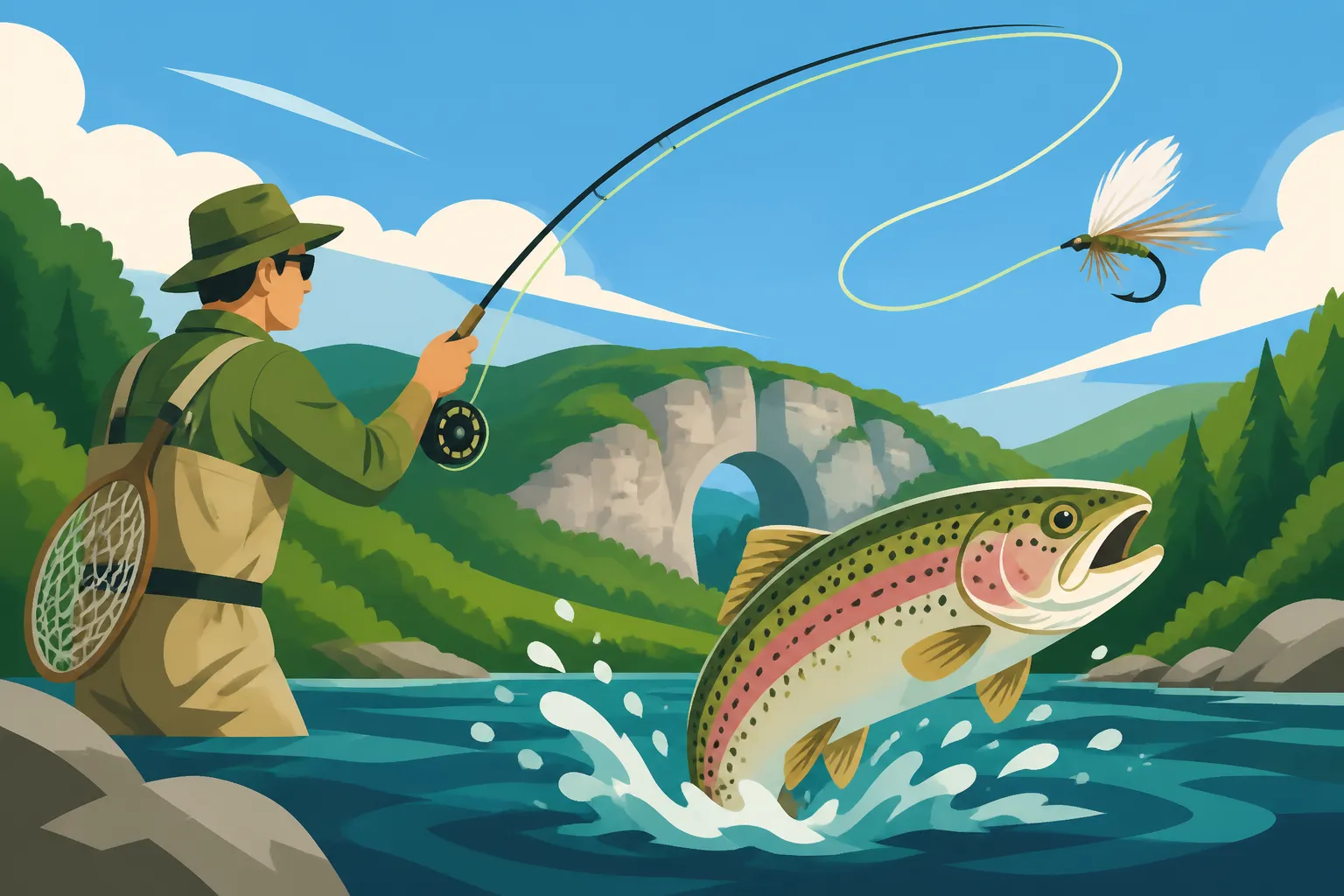
There's nothing quite like the thrill of seeing a trout rise to a dry fly on the surface. Dry flies imitate adult insects like mayflies, caddisflies, and stoneflies that have landed on the water or are caught in the surface film. Classic patterns like the Elk Hair Caddis, Adams, Parachute Adams, and various ant and beetle imitations are staples for Kentucky trout. Presentation is paramount with dry flies; they must land softly and drift naturally, without any drag. A soft landing avoids spooking wary fish, especially in clear, still water.
Emergers are flies that imitate insects transitioning from their aquatic nymph stage to their adult winged stage, often getting stuck in the surface film. Trout frequently key in on these vulnerable insects. Patterns like the LaFontaine's Sparkle Pupa, Barr's Emerger, or a small Pheasant Tail nymph fished just beneath the surface can be deadly. When you see trout rising but they're refusing your dry fly, an emerger is often the answer. Observing the water for actual insect hatches can help you select the correct size and color, but having a variety of common patterns in sizes 12-20 will cover most bases.
Nymphing Techniques for Subsurface Success
The vast majority of a trout's diet consists of aquatic insects in their nymph or larval stage, living on the stream bed. This makes nymphing one of the most consistently effective fly fishing techniques. Nymph patterns like the Pheasant Tail, Hare's Ear, Prince Nymph, and Squirmy Wormy are excellent imitators of common aquatic insects and worms. The challenge with nymphing is getting your fly down to the trout's feeding zone and achieving a drag-free drift.
There are several nymphing techniques. "Indicator nymphing" involves attaching a strike indicator (a small bobber) to your leader, which helps detect subtle bites and suspend your nymph at a specific depth. This is a great technique for beginners. "Euro nymphing" or "tightline nymphing" is a more advanced technique that eliminates the indicator, relying on a sensitive rod and specialized leader to feel subtle takes. For getting your nymphs deep quickly, especially in faster currents, you'll need to add weight. This can be done with split shot crimped onto your leader a few inches above the fly, or by using weighted flies with tungsten beads. Knowing the Kentucky Trout Stocking Schedule Explained can sometimes help predict active nymphing periods, especially after recent stockings.
Streamers for Aggressive Trout
When trout are feeling aggressive, or when you're targeting larger fish, streamers can be incredibly effective. Streamers imitate baitfish, leeches, or other larger prey items that trout actively hunt. Patterns like Woolly Buggers (in black, olive, or brown), Clouser Minnows, and Sculpzillas are popular choices. Fishing streamers is a more active style of fly fishing; instead of presenting a natural drift, you're stripping the line in short, erratic pulls to make the fly "swim" and entice a strike.
Streamers are particularly effective in higher or stained water, after heavy rains, or during low-light conditions when trout are more willing to chase. They can also be fantastic for targeting brown trout, which are often more predatory than rainbows. When fishing streamers, focus on areas where baitfish might hide, such as submerged timber, undercut banks, or deeper pools. Vary your retrieve speed and depth until you find what triggers a strike. A fast retrieve might provoke a reaction strike, while a slower, more deliberate retrieve could tempt a lethargic fish. Having a few go-to streamer patterns is a must for any Kentucky trout angler.
Reading the Water and Finding Trout
Successfully fly fishing for trout isn't just about casting pretty loops; it's about understanding where the fish are and presenting your fly to them effectively. Learning to read the water is a skill that develops over time, but there are definite cues to look for.
Identifying Holding Lies and Feeding Lanes
Trout, being cold-blooded predators, are opportunistic. They want to expend the least amount of energy for the greatest caloric reward. This means they will position themselves in "holding lies" – spots where they feel safe and comfortable, with easy access to food. These are often in deeper water, behind large rocks, or under undercut banks that provide cover from both predators and strong currents. Think of a big boulder in a stream: the fast water hits it, creating a calmer "cushion" of water directly upstream and a significant eddy or current break downstream. Trout will often hold in these calmer spots, darting out into the faster current to grab passing food.
"Feeding lanes" are the specific currents or seams where the most food is drifting. These are often obvious current lines, where two different currents merge, or where slower water meets faster water. Foam lines or floating debris are good indicators of a feeding lane. Your job is to cast your fly upstream of these feeding lanes, allowing it to drift naturally into the zone where a trout is likely to be waiting. Remember that trout generally face upstream, waiting for food to come to them. Your fly needs to approach from the same direction as natural food.
Understanding Current and Structure
Current is the lifeblood of a trout stream, bringing food and oxygen. Understanding how different currents behave and interact with the stream's structure is key. Fast currents typically carry more food, but trout usually won't hold directly in the fastest water for long, as it requires too much energy. Instead, they'll hold in the slower water adjacent to the fast current, or in "current breaks." These breaks can be created by anything that obstructs the flow: large rocks, logs, fallen trees, deep pools, or even subtle changes in the streambed.
Structure, whether natural or man-made, provides cover and ambush points. Submerged logs, rock piles, root wads, and undercut banks are prime examples. These spots offer safety from overhead predators and provide a place for trout to hide while waiting for food. Pay particular attention to transitions: where a shallow riffle drops into a deep pool, where a slow eddy meets a fast current, or where a smooth bottom transitions to rocky substrate. These transitional areas are often hotspots. Even seemingly barren sections can hold fish if there's a subtle depression or a shift in current speed. When you're fishing a new area, observe for a few minutes before casting. Look for rises, watch the current, and try to visualize where a trout might be holding.
Approach, Stealth, and Presentation Angles
Trout, especially in clear, heavily fished waters, are incredibly wary. Your approach to a fishing spot is almost as important as your cast. Move slowly and deliberately, keeping a low profile. Avoid wearing bright clothing that contrasts sharply with the background. Walk softly along the bank, avoiding heavy footsteps that can send vibrations through the water. If you're wading, shuffle your feet rather than stomping.
The angle of your presentation also matters. Ideally, you want to cast upstream and across, allowing your fly to drift down to the trout. This presents the fly to the fish first, before your line or leader, which is critical for a natural presentation. Avoid casting directly over a trout if possible, as the shadow of your line or fly can easily spook it. Try to maintain a comfortable casting distance, close enough for accuracy but far enough not to scare the fish. In very clear water, longer leaders and finer tippets, combined with stealth, become even more critical. Remember, you might only get one good cast at a truly wary trout, so make it count. Consider reviewing Best Spots for Fly Fishing on Kentucky's Trout Streams for location-specific stealth tips.
Advanced Strategies and Seasonal Adjustments
Fly fishing for trout is a lifelong learning process. As you gain experience, you'll start to fine-tune your techniques and adapt to the ever-changing conditions of Kentucky's waterways.
Adjusting for Water Temperature and Clarity
Water temperature is arguably the most significant factor influencing trout behavior. Trout are cold-water fish, generally preferring temperatures between 45-65°F (7-18°C). In colder water (below 45°F), trout become lethargic, their metabolism slows, and they feed less actively. During these times, slow, deep presentations with nymphs or streamers are often most effective. You might need to add more weight to get your flies down to their sluggish holding lies. Conversely, in warmer water (above 65°F), trout become stressed, seeking out cooler, oxygenated refuges. Fishing in overly warm water can be detrimental to trout if they are caught and released, so consider taking a thermometer with you.
Water clarity also dictates your approach. In clear water, trout are very visual and easily spooked. This calls for longer, finer leaders, smaller flies, and extremely delicate presentations. Fluorocarbon tippet, which is nearly invisible underwater, is a great choice here. In stained or slightly off-color water (perhaps after a rain), trout are less wary, and larger, darker, or more brightly colored flies can be effective. They rely more on scent and vibration, so streamers or nymphs with movement or scent can perform well. This is often when a black Woolly Bugger shines. Pay attention to how these conditions change daily and adjust your tactics accordingly.
Winter Trout Tactics and Spring Runs
Kentucky offers year-round trout fishing opportunities, but winter and spring demand different strategies. In winter, with water temperatures often in the 30s and 40s, trout are less active and metabolism is slow. They conserve energy by holding in deeper, slower pools, often near the bottom. This is prime time for deep nymphing. Using heavy tungsten nymphs, a strike indicator, and a slow, methodical drift through the deepest parts of pools is often the most productive method. Focus on the warmest part of the day, usually mid-afternoon, when slight temperature increases can spark a brief feeding window. Sometimes, a tiny midge pattern can be incredibly effective when nothing else works.
Spring, on the other hand, brings increased insect activity and rising water temperatures, kickstarting the trout's metabolism. This is often when you'll see the first significant hatches of mayflies and caddisflies, leading to exciting dry fly fishing opportunities. Trout will move into riffles and runs to feed actively. The Kentucky Trout Permit Guide is essential for understanding licensing requirements for these seasonal pursuits. Spring is also when many streams receive their annual stockings, providing ample targets for new anglers. Be prepared with a variety of nymph, emerger, and dry fly patterns to match whatever the fish are keying in on. The increased flows from spring rains can also create excellent streamer fishing conditions, especially for larger, predatory browns.
Ethical Angling and Catch and Release Practices
As fly anglers, we have a responsibility to protect the resource we cherish. Practicing ethical angling and proper catch-and-release techniques is vital for sustaining healthy trout populations in Kentucky. Always consult the Kentucky Fishing Regulations Explained before heading out, as regulations on trout waters can vary widely regarding size limits, creel limits, and even tackle restrictions (e.g., single hook artificial lures only).
When you catch a trout you intend to release, minimize its time out of water. Keep the fish wet as much as possible, using wet hands to handle it gently. Avoid squeezing or handling it by the gills. Use forceps or hemostats to quickly remove the hook. If the hook is deeply embedded, it's often better to cut the line as close to the hook as possible rather than risk further injury to the fish. When reviving a tired fish, hold it gently upright in the current, allowing water to flow over its gills, until it swims away under its own power. Barbless hooks greatly facilitate quick and easy releases, causing less harm to the fish. By being responsible stewards of our trout waters, we ensure these beautiful fish continue to thrive for future generations of anglers.
Summary of Fly Fishing Essentials
To recap, successful fly fishing for trout in Kentucky boils down to a few core principles. First, choose the right gear: a 3-5 weight rod, matching reel, and a quality floating line. Second, master your casting, focusing on delicate presentations and using mends to achieve natural drifts. Third, understand the insects trout feed on and select appropriate fly patterns, whether it's a dry fly, nymph, or streamer. Finally, and perhaps most importantly, learn to read the water, locate holding lies, and approach fish with stealth.
The table below provides a quick overview of common fly types and their typical applications:
| Fly Type | Purpose | Best Conditions / Time | Common Patterns | Presentation Key |
|---|---|---|---|---|
| Dry Flies | Imitates adult insects on the surface | Hatches, calm water | Elk Hair Caddis, Parachute Adams | Delicate landing, drag-free drift on surface |
| Emergers | Imitates insects hatching in surface film | Rising fish, subtle sips | Sparkle Pupa, Barr's Emerger | Just below or in surface film, subtle movement |
| Nymphs | Imitates aquatic insect larvae underwater | Year-round, subsurface | Pheasant Tail, Hare's Ear, Prince | Deep, drag-free drift near bottom, weight as needed |
| Streamers | Imitates baitfish, leeches, or large prey | Aggressive fish, stained water | Woolly Bugger, Clouser Minnow | Active retrieve (stripping), erratic movement |
Remember, every day on the water is an opportunity to learn. Don't get discouraged by challenging conditions or slow days. Fly fishing is as much about the experience of being in nature as it is about catching fish. With practice, patience, and a willingness to adapt, you'll be well on your way to becoming a skilled trout fly angler in the beautiful Commonwealth of Kentucky.
Disclaimer
Please note that fishing regulations can change. Always consult the current Kentucky Department of Fish and Wildlife Resources regulations before your fishing trip to ensure compliance with all laws and to stay informed about any updates.