Where Do Fish Go in Winter
When the cold winds start to blow across Kentucky's lakes and rivers, it can feel like the fish have completely vanished. You might trek out to your favorite fishing spot, cast for hours, and reel in nothing but cold air, leading to the frustrating thought that winter fishing is just a waste of time. But trust me, those fish haven't disappeared into thin air; they've simply shifted their habits and locations to adapt to the chilly conditions. Understanding exactly where fish go in winter is actually the key to unlocking some incredible, often uncrowded, cold-weather action, and this guide is here to tell you how to find them.
The Winter Shift: Why Fish Change Their Habits
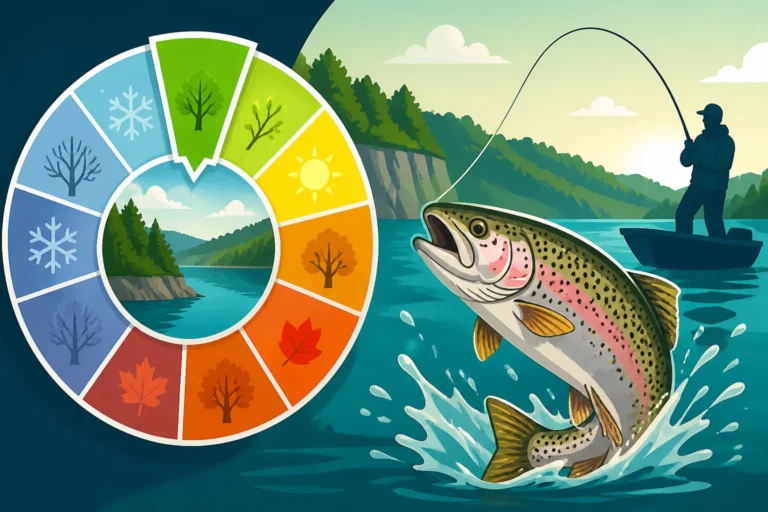
It's a common misconception that fish just "hibernate" or stop eating entirely in winter. While their activity certainly slows down, they're still out there, and they're still eating. The reason you can't find them in their usual haunts is purely a matter of survival. As cold-blooded creatures, their body temperature directly mirrors the water temperature, and that dictates everything about their behavior.
Temperature Is King
Think of it like us trying to function in extreme heat or cold. We bundle up or seek shade. Fish do something similar, but they're constrained by their aquatic environment. As water temperatures plummet, a fish's metabolism slows drastically. It’s like their internal engine goes from a roaring V8 to a gentle hum. This reduced metabolic rate means they need less food to sustain themselves, and they become far less active. They're not chasing down fast-moving prey; they're looking for easy meals that require minimal energy expenditure.
Imagine trying to run a marathon in freezing mud compared to a cool, crisp autumn day. The fish are feeling that slowdown, making them sluggish and less inclined to burn precious energy chasing a flashy lure across shallow flats. Their priority becomes finding the most thermally stable water possible, where they can conserve energy and stay comfortable. This thermal preference drives almost all of their winter movements, leading them away from the rapidly cooling shallows and towards the more consistent temperatures found in deeper waters.
Food Scarcity and Survival Instincts
Beyond just staying warm, fish also have to contend with a significant drop in available food during the colder months. Many insect larvae become dormant, aquatic vegetation dies back, and smaller baitfish, like shad or minnows, also seek refuge in more stable environments. This means the entire food chain tightens up. Predatory fish, like bass and crappie, will follow these dwindling baitfish populations, often congregating in large schools.
When food is scarce, fish become even more selective about when and how they feed. They're not going to expend a lot of energy on a risky chase. Instead, they'll position themselves strategically where they can ambush an easy meal with minimal effort. This often means finding cover near deep-water access points or suspending just below schools of baitfish. Their survival instincts tell them to conserve energy, find reliable food sources, and avoid areas where they'd be exposed to colder temperatures or increased predation risk. Understanding this fundamental shift is crucial for any angler hoping to find success during the winter months in Kentucky.
Deep Water Dominance: Where Most Fish Seek Refuge
When the mercury drops, the general rule of thumb for finding fish in Kentucky is simple: go deep. This isn't just a guess; it's based on the physics of water and the biological needs of fish. Deep water provides the most stable and often the warmest environment during winter, making it a natural haven for a wide array of species.
Thermal Stratification and Lake Basins
In the winter, lakes undergo a process called inverse stratification (or sometimes no stratification in very shallow lakes). While it sounds fancy, it just means that the coldest water, which is less dense when it hits freezing, is at the surface, eventually forming ice. However, water is densest at about 39.2 degrees Fahrenheit (4 degrees Celsius). So, in deeper lakes, the water at the very bottom, in the deepest basins and old creek channels, will often settle at this slightly warmer, denser temperature. This creates a relatively stable thermal refuge from the brutally cold surface water and frigid air temperatures.
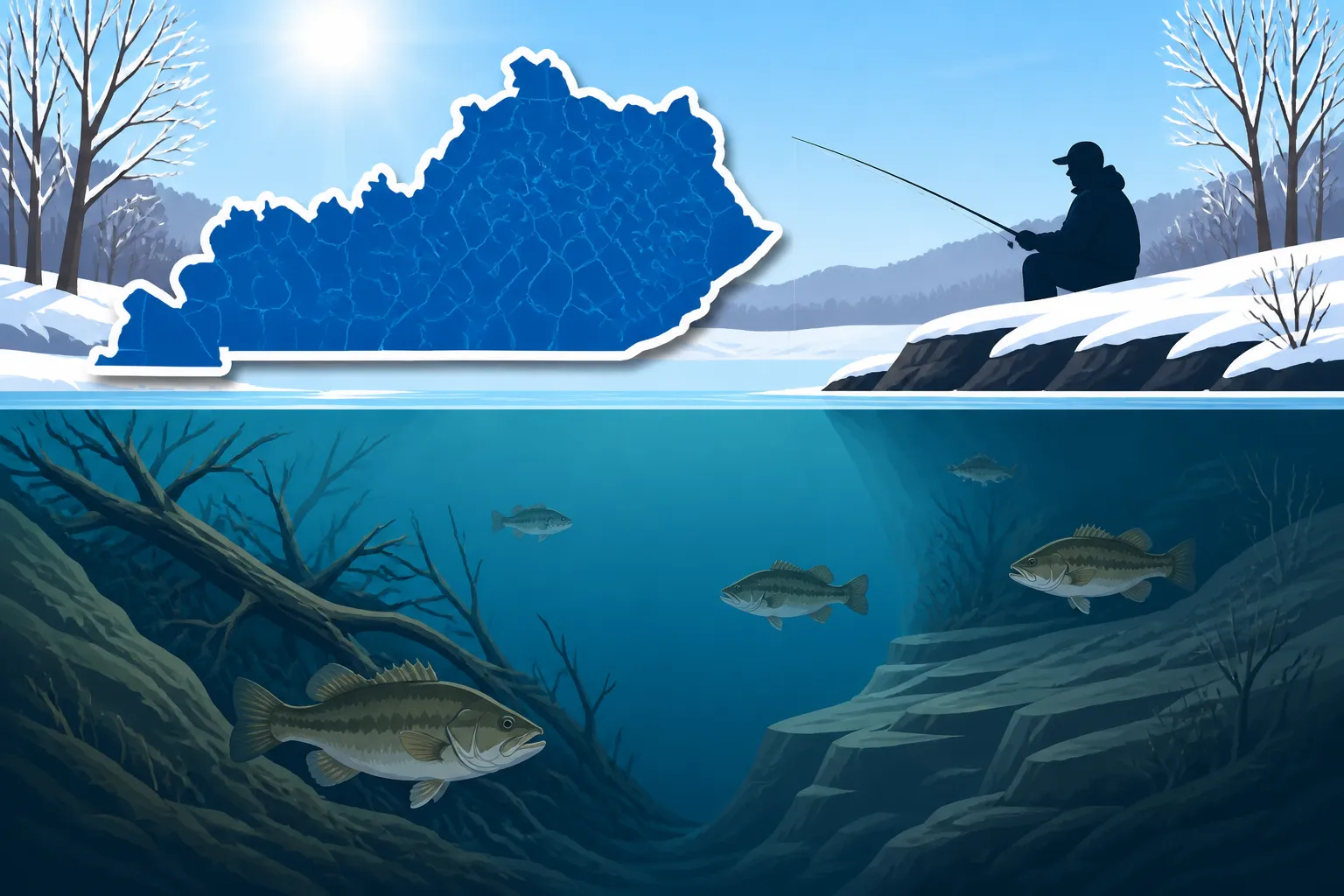
Fish, especially larger game fish, will seek out these deeper zones where the temperature remains more consistent. Main lake basins, river channels that cut through reservoirs, deep creek beds, and offshore humps become prime real estate. On massive bodies of water like Kentucky Lake: The State's Top Bass Fishing Destination or Lake Cumberland: Kentucky's Best All-Around Fishing Lake, these deep-water havens can be extensive. Anglers need to focus their efforts on these submerged highways and low-lying areas, often looking for depth changes of 15 feet or more, depending on the specific lake and species. Think of it as the "basement" of the lake – it's where fish go to escape the harsh weather conditions above.
Structure and Cover in the Depths
Just because fish are deep doesn't mean they're just aimlessly swimming in open water. They still rely heavily on structure and cover for protection, ambush points, and comfort. Only now, that structure is submerged and often overlooked by fair-weather anglers. Submerged river or creek channels with steep drops, old standing timber (especially common in many of Kentucky's man-made reservoirs), rock piles, ledges, and even artificial fish habitats become magnets for wintering fish.
These deep-water structures offer several critical advantages:
- Protection: They provide a sense of security from predators (including humans) and strong currents.
- Ambush Points: Even sluggish fish need to eat. Structure offers a place to hide and ambush passing baitfish without expending much energy.
- Thermal Retention: Rock piles and thick timber can sometimes hold heat just a touch longer, offering minuscule but significant thermal advantages.
Imagine a submerged brush pile on Herrington Lake; it's no longer just a snag hazard but a multi-story apartment complex for crappie and bass. Similarly, a sheer rock wall dropping into a deep channel on the Ohio River becomes a prime location for catfish. Identifying these deep-water structural elements is paramount. Your electronics become invaluable tools for literally painting a picture of these underwater features and the fish holding on them.
Species-Specific Winter Retreats in Kentucky
While "go deep" is a solid general guideline, different fish species have their own subtle preferences when the water turns cold. Understanding these nuances can help you fine-tune your approach and increase your chances of a successful winter outing in Kentucky.
Bass Largemouth & Smallmouth
Largemouth and Smallmouth bass both respond to cold water by seeking stable, deeper environments, but their preferred structures can differ slightly.
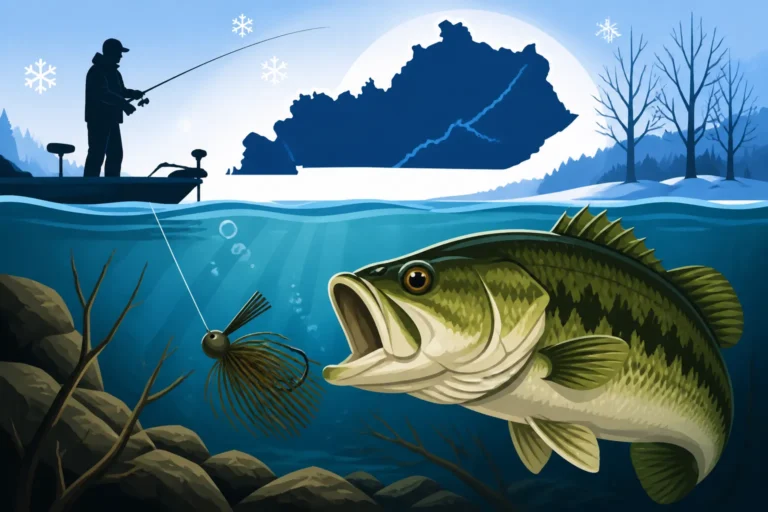
- Largemouth Bass: In winter, largemouth bass often gravitate towards deep breaks, ledges, and creek channels, especially those with some form of vertical cover like standing timber, brush piles, or isolated rock formations. They like to hug these structures tightly, often positioning themselves just off the bottom or suspended directly within the cover itself. In lakes like Kentucky Lake or Lake Barkley, focusing on the main lake channels where old creek beds run, particularly where they intersect with points or humps, can be incredibly productive. A distinct depth change from, say, 15 feet down to 30 feet, combined with submerged wood, is a classic winter largemouth setup. They aren't going to chase much, so presenting a lure right in their face is key.
- Smallmouth Bass: Kentucky's clear, deep reservoirs, like Dale Hollow Lake and Lake Cumberland, are prime smallmouth territory, even in winter. These bronze bombers often prefer rocky points, deep humps, and steep bluff walls. They'll relate to these hard structures in deeper water, sometimes suspending just above a depth change or hugging the bottom in 30-60 feet of water. They might be found in large schools, especially if they're following schools of baitfish like shad. Their winter behavior is often less about dense cover and more about rocky transitions and depth. You can often find them on your sonar relating to these offshore structures, making Fish Finders and Electronics for Kentucky Lake Fishing an essential tool.
Crappie
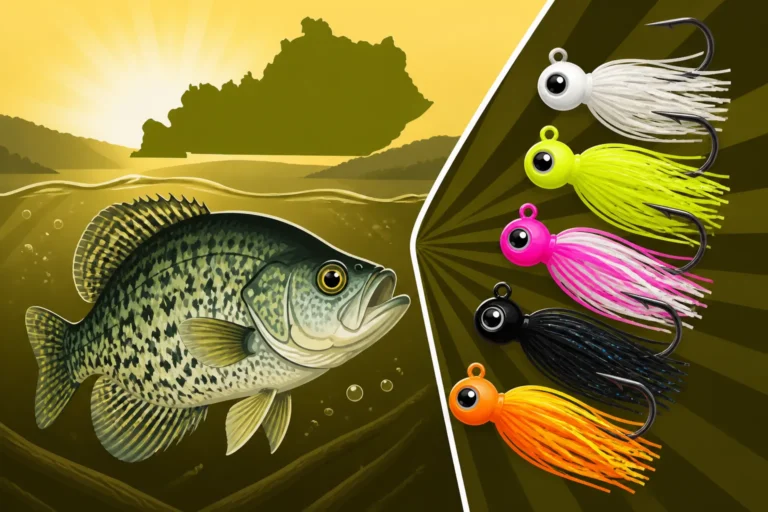
Crappie are notorious for schooling up tightly in winter, and they often become a favorite target for cold-weather anglers due to their catchability when found. When the water gets cold, crappie typically move to deeper water, often suspending over main lake channels or congregating in large brush piles and standing timber.
In lakes across Kentucky, from Lake Barkley to Barren River Lake, you'll find crappie suspending in schools in the middle of deep coves or over main lake river channels. They're often found at the same depth as schools of baitfish, usually shad, which they follow as a food source. They might be 20 feet down over 40 feet of water. Vertical cover, such as large brush piles, submerged trees, or standing timber, also acts as a powerful magnet. These structures offer them shelter and ambush points. Anglers often use electronics to locate these dense schools or brush piles, then present small jigs or minnows vertically right into the heart of the school. You might find some excellent Kentucky Crappie Fishing: Spring Spawn Run Guide information useful later in the year, but for winter, think deep and vertical.
Catfish Channel, Blue, Flathead
Catfish, particularly the robust blues and channels, are incredibly active in Kentucky's cold waters, especially on major river systems like the Ohio River or large reservoirs such as Kentucky Lake.
- Blue and Channel Catfish: In rivers, blue and channel catfish will often congregate in massive schools in deep holes, scour holes, and strong current breaks. These are typically found on the outside bends of major river channels, downstream of dams, or near major confluences. The current breaks offer them a place to rest out of the main flow while still being close to drifting food. In lakes, they'll seek out deep main lake channels, often gathering in depressions or old riverbeds. You can find more detail on Kentucky Catfish Fishing: Ohio River and Kentucky Lake Guide. When fishing for these, presenting cut bait or prepared baits on the bottom in these deep areas is a proven tactic.
- Flathead Catfish: Flatheads, known for their preference for live bait, also move deep but tend to be more solitary and relate more directly to heavy cover within those deep holes. Large logs, root balls, rocky crevices, or other substantial structure within a deep river bend or lake channel will hold flatheads. They’re less likely to be in massive schools like blues and channels. Anglers targeting flatheads in winter will typically anchor up current from suspected deep-water structure and present a live baitfish, like a sunfish or shad, directly into the cover.
Knowing these species-specific preferences helps you zero in on the most likely areas, even when the water is frigid.
Adapt Your Approach for Winter Success
Finding where fish go in winter is only half the battle; the other half is adjusting your fishing techniques to entice these cold, lethargic fish to bite. Winter fishing demands patience, precision, and a willingness to slow things down.
Slow Down and Go Small
Remember how we talked about fish having a slower metabolism in cold water? This directly translates to how they feed. They're not going to chase down a fast-moving, flashy lure with the same aggression they would in warmer months. Instead, they're looking for an easy, high-calorie meal that requires minimal energy expenditure. This means your presentation needs to match their mood: slow, subtle, and often smaller.
Forget your power fishing tactics for a while. Instead, opt for finesse. Small jigs, blade baits, spoons, and slowly presented soft plastics become your best friends. A tiny hair jig twitched gently, a spoon fluttered vertically, or a soft plastic worm dragged painstakingly slow across the bottom can be deadly. The key is to keep the bait in the strike zone for as long as possible and present it in a way that appears effortless for the fish to capture. A slowly retrieved grub on a jig head can sometimes be the only thing they'll touch. You can find a fantastic selection of these winter-specific baits and other essential tackle on Amazon, making it easy to stock up before your next cold-weather trip.
Technology Is Your Friend
In the winter, your eyes above the water won't tell you much about what's happening below. This is where modern fishing electronics truly shine. A good fish finder with down imaging and side imaging capabilities can be an absolute game-changer, allowing you to effectively "see" the underwater world and locate those elusive wintering fish.
Use your sonar to identify deep-water structure like submerged creek channels, rock piles, ledges, and standing timber. More importantly, look for baitfish schools. Where there's bait, there are usually predatory fish. Your side imaging can help you scan wide areas to find brush piles or schools of fish you might otherwise miss. Once you locate a promising area, use your down imaging to pinpoint individual fish or tight schools holding on or near that structure. High-definition mapping chips are also invaluable for navigating large reservoirs and identifying subtle depth changes that could hold fish. Investing in quality electronics and learning how to interpret what they're telling you is crucial for finding winter fish. For advanced navigation and fish-finding capabilities, consider exploring options from brands like Garmin or Humminbird, which you can easily research and purchase on Amazon. Learning how to effectively use your Fish Finders and Electronics for Kentucky Lake Fishing will drastically improve your winter success rate.
Safety First on Cold Waters
While winter fishing can be incredibly rewarding, it comes with inherent risks due to the cold temperatures and potentially icy conditions. Your safety should always be your top priority. Hypothermia and frostbite are serious concerns, and cold water immersion can be life-threatening in minutes.
Always dress in layers, with waterproof and insulated outer shell. A quality insulated jacket and bibs (many excellent options are available on Amazon from brands like Carhartt or Frogg Toggs) can make a huge difference in comfort and safety. Wear a hat, gloves, and warm, waterproof boots. Always tell someone where you're going and when you expect to return. Check the weather forecast rigorously, paying attention to wind chill, and be prepared for rapidly changing conditions. If you're fishing from a boat, ensure all your safety gear is up to date, including properly fitting life jackets for everyone on board – remember, Life Jacket Rules for Boats in Kentucky are strictly enforced. Carrying a fully charged cell phone in a waterproof case, a first aid kit, and even a change of clothes in a dry bag are all smart precautions. Don't take unnecessary risks, especially when fishing alone. The fish aren't worth putting your life in danger.
Winter Fish Location and Technique Overview
Here's a quick reference table to help you visualize where different popular Kentucky fish species tend to go in winter and what techniques might work best.
| Fish Species | Typical Winter Location | Best Techniques | Key Considerations |
|---|---|---|---|
| Largemouth Bass | Deep creek channels, ledges, submerged brush piles | Slow jigging, crankbaits, spoons | Present slowly, target vertical cover. |
| Smallmouth Bass | Deep rocky points, humps, bluff walls, main lake | Drop shot, tubes, blade baits | Focus on hard structure in clear, deep water. |
| Crappie | Suspended over deep channels, standing timber, brush | Vertical jigging, slow-trolling minnows | Use electronics to find schools, go small and slow. |
| Channel/Blue Catfish | Deep river holes, current breaks, main lake channels | Bottom fishing with cut bait/prepared bait | Often school up, target scour holes and bends. |
| Flathead Catfish | Deep holes with heavy cover (logs, rock crevices) | Live bait on bottom | Solitary, precise placement in heavy cover. |
| Sauger | Below dams, deep river pools, major current seams | Vertical jigging, three-way rigs | Look for them near dams and on river channels. How to Jig for Sauger in Cold Water is key. |
| Trout (stocked) | Deep sections of lakes (Lake Cumberland), cold streams | Small jigs, minnows, corn, PowerBait | Check stocking schedules, target depth. Winter Trout Fishing at Kentucky's Lake Cumberland is a must-read. |
This article is for general informational purposes only and does not constitute professional advice. Laws, prices and regulations vary by location and change over time. Consult a qualified professional for guidance on your specific situation.