What Water Temperature Triggers the Crappie Spawn in Kentucky
There's nothing quite like the anticipation of the crappie spawn, is there? You've heard the whispers, seen the early signs of spring, and you know those slabs are about to move shallow. But the frustrating truth is, catching them during this magical window often feels like chasing a ghost if you don't understand one crucial element: water temperature. Miss the right temps by a few degrees, and you might find yourself casting into empty water. This guide is here to demystify the crappie spawn in Kentucky, zeroing in on exactly what water temperatures trigger that exciting annual event, so you can be right there when the bite turns on.
Understanding the Crappie Spawn Cycle
The crappie spawn isn't a single event but rather a progression, a dance choreographed by the warming waters of spring. It's a critical time for these popular panfish, driven by instinct and environmental cues. Knowing where they are in this cycle based on temperature can drastically improve your chances of success. It's not just about finding them on the beds; it's about anticipating their movements.
Pre-Spawn Movements: The Staging Phase
Before the actual spawning activity begins, crappie start to shake off their winter lethargy. As water temperatures begin to climb from the chilly 40s into the low to mid-50s (around 45-55°F), these fish begin a significant migration. They'll move from their deeper wintering holes towards shallower staging areas. Think of it like a pre-game warm-up. They're not on the beds yet, but they're getting ready, often congregating in brush piles, old creek channels, or submerged timber near prime spawning flats.
During this pre-spawn period, the crappie are actively feeding, trying to pack on energy for the intense spawning period ahead. This can be an excellent time to target them, as they're often aggressive. You'll find them suspended in slightly deeper water, maybe 8-15 feet deep, adjacent to the shallower areas they'll eventually move to. This is where a good fish finder really shines, helping you locate those baitfish schools and the crappie holding nearby. Understanding these pre-spawn habits is key, because if you hit the water too early and the temps aren't quite right, you might think the fish aren't there when they're just in a different, slightly deeper spot.
The Ideal Spawning Window: When the Action Heats Up
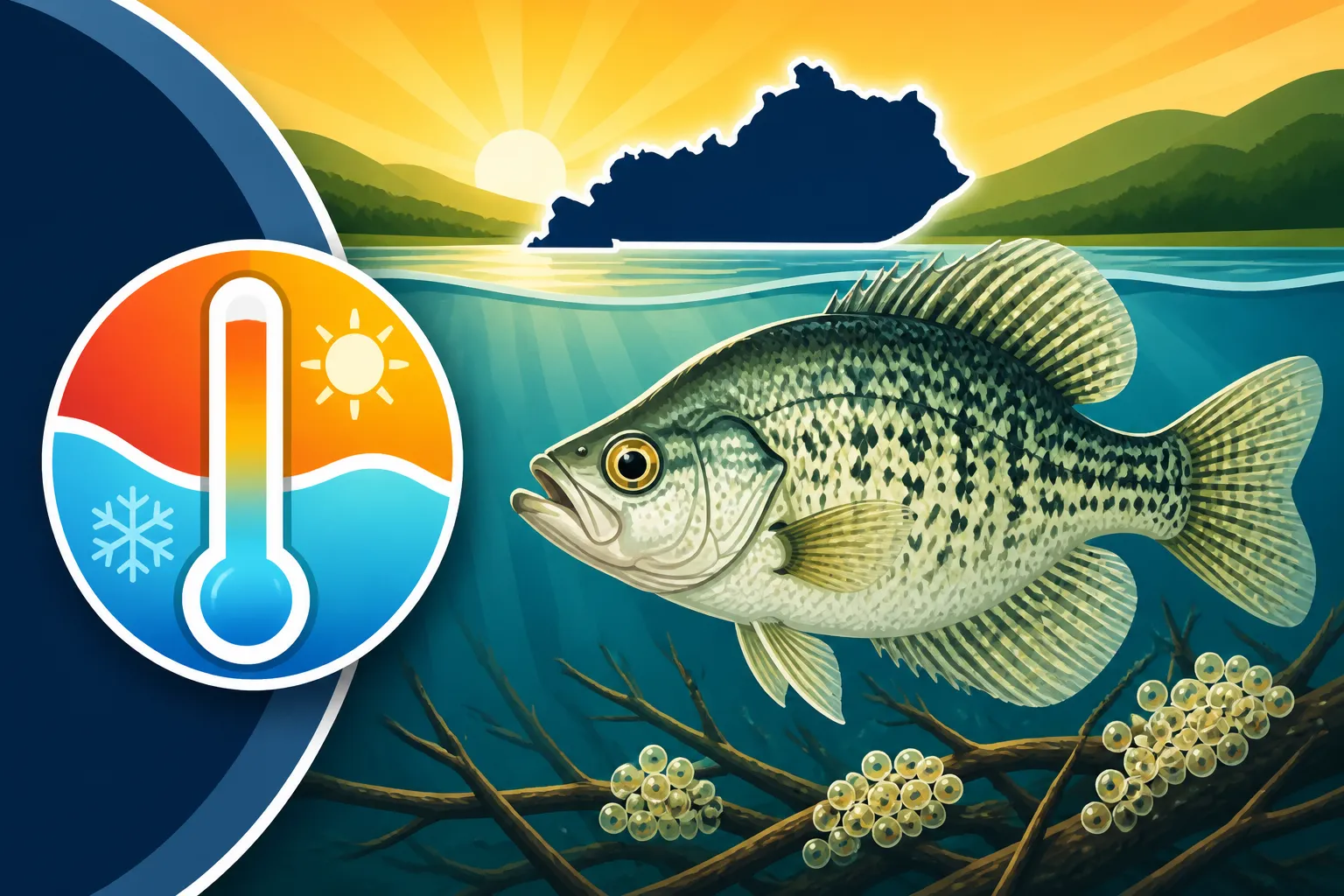
This is the moment every crappie angler dreams of. The main crappie spawn in Kentucky typically kicks into high gear when water temperatures consistently reach the upper 50s and, more ideally, settle into the 60-70°F range. This golden window is when both black and white crappie feel the undeniable urge to reproduce. While both species follow similar thermal cues, white crappie tend to spawn slightly shallower and can tolerate slightly warmer water, sometimes pushing into the low 70s. Black crappie often prefer slightly cooler, clearer water and deeper beds.
When the water hits these critical temperatures, crappie move right onto the banks, into shallow coves, around submerged brush, beneath boat docks, and among emergent vegetation like lily pads or cattails. They're looking for firm bottoms, often gravel or sand, where they can fan out their nests. In many Kentucky lakes, you can literally see their dark backs flashing in the shallow water, especially on sunny days. This is when they become highly concentrated, making them easier to target, though they can also be very spooky in clear, shallow water. The males will guard the nests fiercely, striking at anything that comes too close, making them very susceptible to a well-placed jig or minnow. For more insights on this prime period, check out our guide on Kentucky Crappie Fishing: Spring Spawn Run Guide.
Post-Spawn Behavior: Dispersal and Recovery
Once the intense spawning activity winds down, usually when water temperatures climb above 70-72°F, crappie begin to transition into their post-spawn phase. This is often the trickiest time to catch them, and it's a common frustration for anglers who miss the peak. The fish will move off their shallow beds, retreating to slightly deeper water to recover from the strenuous act of spawning. They'll often seek out shaded areas, submerged brush piles, or deeper weed lines.
During this period, their feeding patterns can be a bit more erratic. They're not as aggressively protecting nests, and they're not yet in their full summer patterns. They might be a little sluggish, requiring a more subtle presentation. You'll often find them suspended, holding in the water column over structure, or scattered. While some might still be caught shallow, the majority will be migrating back towards deeper summer haunts. Understanding this dispersal is crucial; if you're still fishing the shallow spawning beds a week or two after the peak, you'll likely come up empty-handed.
Key Temperature Ranges for Kentucky Crappie
Knowing the numbers isn't just trivia; it's your cheat sheet to finding fish. Kentucky's diverse waterways mean these temperatures can hit at slightly different times in different regions, but the crappie's internal thermometer is pretty consistent.
Early Spring Warm-Up: The Search Begins (45-59°F)
As winter loosens its grip, usually in late February and throughout March in Kentucky, water temperatures are gradually on the rise. We're talking about those crisp mornings and warming afternoons that slowly nudge the water from the low 40s up through the 50s. At around 45-50°F, crappie are still pretty deep, but they're starting to become more active. They'll hold in creek channels, around standing timber, or on main lake points. They might rise in the water column during warm spells to feed on baitfish.
Once the water hits the mid-50s (around 55-59°F), it's game on for pre-spawn. This is when you'll see a noticeable shift. Crappie will start moving into those transitional staging areas, often suspending just outside of coves or along primary points. They're still not on the beds, but they're positioned for the move. They'll be hungry, actively feeding to bulk up for the spawn. This means you can often catch good numbers using small jigs or live minnows fished around structure at depths of 8-15 feet. Many anglers swear by this "staging" bite as it can be incredibly productive, sometimes even more so than the actual spawn, because the fish are concentrated and feeding aggressively.
Peak Spawning Temperatures: The Shallow Frenzy (60-70°F)
The absolute sweet spot for crappie spawning in Kentucky is when the water temperature consistently hits 60°F and climbs to about 70°F. This is the prime time, usually spanning from late March through April and sometimes into early May, depending on the year and the specific lake.
- 60-64°F: This is often when the first wave of crappie, particularly black crappie, moves onto shallow beds. They'll be looking for protected, sun-warmed areas, often in 1-4 feet of water.
- 65-68°F: This is the peak, the big show! Both black and white crappie will be heavily engaged in spawning. You'll find them in incredibly shallow water, sometimes less than a foot deep, especially on protected north-facing banks that get direct sunlight. Lakes like Kentucky Lake, Lake Barkley, and Barren River Lake are renowned for their crappie populations during this period. For specific regulations during this time, refer to the Kentucky Fishing Regulations Explained article.
- 68-70°F: As temperatures creep higher, especially toward the upper end of this range, spawning activity might begin to slow down for some fish, and the last wave will be finishing up. White crappie might still be actively spawning, often tolerating these warmer temps a bit better.
It’s important to remember that this isn't a hard stop. If a sudden cold front moves through and drops the water temperature a few degrees, spawning activity can temporarily cease or slow down, only to resume once the water warms back up. This push and pull with the weather is a common frustration, making it essential to monitor conditions daily.
Monitoring Water Temperatures: Your Essential Tool
So, how do you know what the water temperature is? You don't just guess! Investing in a reliable water thermometer is perhaps the single most important piece of gear for crappie fishing during the spring.
- Boat-Mounted Electronics: Most modern fish finders and chartplotters, especially brands like Humminbird or Lowrance, come with transducers that provide real-time surface water temperature readings. This is incredibly valuable as you move around the lake.
- Handheld Thermometers: Simple, inexpensive, and effective. You can get a good quality digital or analog thermometer for just a few dollars. Just clip it to your boat, or even your waders if you're bank fishing, and check the temperature frequently as you move into different coves or depths. You can find several reliable options on Amazon for this.
- Fishing Reports and Apps: While not as precise as checking it yourself, local fishing reports from bait shops or online forums can give you a general idea of what the main lake temperatures are running. Just be aware that water temperature can vary significantly between the main lake and a shallow, sunny cove.
By consistently checking the water temperature, you can fine-tune your approach, spending your time in areas where the crappie are most likely to be active in their spawn cycle. This eliminates a lot of guesswork and helps you avoid those frustrating days when you can't seem to find a bite.
Factors Influencing Crappie Spawning Beyond Temperature
While water temperature is undoubtedly the primary trigger for the crappie spawn, it's not the only factor at play. Many other environmental elements influence when, where, and how successfully crappie reproduce. Overlooking these can lead to missed opportunities, even if the thermometer reads perfectly.
Water Clarity and Depth Preferences
Crappie, like many fish, have preferences regarding water clarity during the spawn, and this often dictates their spawning depth.
- Clear Water: In very clear lakes or reservoirs, crappie tend to spawn deeper to protect their nests from predators and bright sunlight. You might find them in 4-8 feet of water, even when the temperature is ideal. This makes them a bit trickier to spot and target, requiring more reliance on electronics and careful presentation. Think about lakes like Lake Cumberland, which can be quite clear; crappie might not be right up on the very edge.
- Stained or Murky Water: In contrast, crappie in stained or murky waters, common in many of Kentucky's larger impoundments or river systems like the Ohio River tributaries, will often spawn much shallower. The reduced light penetration makes them feel more secure closer to the surface, sometimes in just a foot or two of water. This can be great for visual fishing and targeting brushy areas. However, heavy rains that dump significant sediment can temporarily disrupt spawning, as fish prefer stable conditions. You might need to adjust your Best Crappie Jigs for Kentucky Waters based on clarity as well, opting for brighter colors in murky conditions.
Lunar Cycles and Weather Fronts
Believe it or not, the moon and the weather can play a significant role in dictating the exact timing and intensity of the crappie spawn.
- Lunar Cycles: Many experienced crappie anglers believe that the full moon or new moon phases can concentrate spawning activity, leading to particularly strong bites. While not scientifically proven across the board for all species, anecdotal evidence suggests that the stronger gravitational pull during these phases might influence fish movement and behavior, including spawning. This could mean a more intense bite around those specific moon phases within the broader temperature window.
- Cold Fronts: This is the bane of many spring anglers. A sudden drop in air temperature, accompanied by clear, blue skies and high pressure, can dramatically slow down crappie spawning. Even if the water temperature was in the prime zone, a severe cold front can make crappie temporarily retreat to deeper water, become lethargic, and stop biting. They might suspend just off their beds, waiting for conditions to stabilize. The key here is patience; once the weather moderates and the water warms back up, they’ll usually resume spawning. It's a common scenario in early spring when weather can be notoriously fickle in Kentucky.
Habitat and Structure: Where They Lay Their Eggs
Crappie are particular about where they build their nests. Understanding their preferred habitats is just as important as knowing the temperature.
- Brush Piles and Submerged Timber: These are classic crappie magnets, offering protection for eggs and fry, and cover for spawning adults. Fish often congregate around the branches.
- Boat Docks and Piers: In many public and private lakes, docks provide excellent overhead cover and vertical structure, attracting spawning crappie. The pilings and shaded areas can be prime spots.
- Lily Pads and Aquatic Vegetation: Once these begin to emerge in late spring, they create perfect, protected spawning grounds, especially in shallower coves. The stems provide anchors for eggs and cover for the adult fish.
- Gravel or Sand Bottoms: Crappie prefer firm bottoms for their nests, often fanning out small depressions in gravel, sand, or even hard clay. They avoid soft, muddy bottoms.
Knowing these preferred locations helps you narrow down your search even when the temperatures are ideal. If you're fishing a new body of water, focus your efforts on coves and shallow flats that offer these types of structures. The exact depth these features are found in will also influence how you approach the fishing, for instance, whether you're sight fishing or using a slip bobber in slightly deeper water.
Gearing Up for the Crappie Spawn
Once you've got the temperature dialed in and you understand the crappie's behavior, having the right gear is the next piece of the puzzle. You don't need a boatload of expensive equipment, but a few key items will make your spring crappie adventures much more productive.
Essential Baits and Lures for Spawning Crappie
Crappie, especially during the spawn, can be surprisingly selective, but they also have predictable favorites.
- Live Minnows: The undisputed king of crappie baits. A small live minnow (typically 1-2 inches), hooked lightly through the back or lips, suspended under a bobber or fished vertically, is incredibly effective. Crappie can rarely resist a struggling baitfish near their beds. For suspending minnows, try a simple slip bobber rig, which allows you to adjust your depth easily.
- Small Jigs: Soft plastic jigs in sizes 1/32 to 1/16 ounce are incredibly versatile. Paddle tails, grub bodies, and tube jigs are all excellent choices.
- Colors: During the spawn, bright colors like chartreuse, pink, and white often work well, especially in stained water. In clearer water, more natural colors like smoke, clear with glitter, or small shad imitations can be deadly. Many anglers will keep a variety of colors and styles on hand, often buying multi-packs or assortments from Amazon to experiment with what the fish prefer on any given day.
- Technique: A slow, steady retrieve, or simply letting the jig hang vertically and subtly twitching it, can entice strikes from territorial crappie. You can also try casting beyond a bed and slowly working the jig through it. Our guide on How to Jig for Crappie in Shallow Water has some excellent pointers here.
- Jig Heads: Pair your soft plastics with light jig heads (1/32 oz for very shallow water, 1/16 oz for slightly deeper or windy conditions). Keep a selection of lead and even tungsten jig heads.
Rods, Reels, and Line: The Sensitive Setup
Crappie have soft mouths, and their bites can be incredibly subtle, especially when they're "thumping" a lure rather than aggressively striking it. A sensitive setup is paramount.
- Rods: Look for ultralight or light action spinning rods, typically 5 to 7 feet long. A fast or moderate-fast tip is ideal, giving you the sensitivity to detect light bites and the backbone to fight a decent crappie. Many anglers prefer longer rods (up to 9-10 feet) for spider rigging or single-pole jigging from a boat, as it allows for better boat control and reaching out to distant cover.
- Reels: Pair your sensitive rod with a small, lightweight spinning reel (500 or 1000 series). Smooth drag is essential to avoid tearing hooks out of those soft mouths.
- Line: Light line is key for natural presentation and sensitivity.
- Monofilament: 4 to 6-pound test monofilament is a classic choice. It has a bit of stretch, which can act as a shock absorber.
- Fluorocarbon: Offers more sensitivity and is nearly invisible underwater, but has less stretch.
- Braided Line: While highly sensitive, braid has no stretch and can be too unforgiving for crappie's soft mouths unless paired with a fluorocarbon leader. Generally, 6-10 pound braid with a 4-pound mono/fluoro leader is a good option for boat fishing.
For a deep dive into setting up your tackle, consider checking out How to Set Up a Crappie Jig Pole to optimize your presentation.
Techniques for Spawning Crappie: Presentation is Everything
Once you've located the crappie and have your gear ready, your technique will make all the difference.
- Vertical Jigging: This is incredibly effective, especially when crappie are tightly bunched around brush piles or under docks. Simply drop your jig or minnow straight down to their depth and gently bounce or twitch it. This is a very common approach in many Kentucky reservoirs.
- Casting to Beds: If you can spot crappie fanning their beds in shallow, clear water, a long cast with a small jig or minnow can be deadly. Cast beyond the fish and retrieve slowly, allowing the bait to pass directly over or into the bed. Be stealthy! Loud noises or shadows can easily spook these shallow fish.
- Slip Bobber Rigging: Perfect for suspending a live minnow or jig at a precise depth, especially when crappie are holding slightly off the bottom or in brush. The slip bobber allows for easy casting and depth adjustment, ensuring your bait stays in the strike zone. You can learn more about finding the right depth in Best Depth to Fish for Crappie in Spring.
- Spider Rigging: For boat anglers, spider rigging (using multiple rods extended out from the boat) is a popular method, particularly in larger open waters like Kentucky Lake or Lake Barkley. It allows you to cover more water and present multiple baits at varying depths, increasing your chances of finding actively feeding fish.
Regardless of your chosen technique, patience and observation are your best friends. Pay attention to what's working, what colors or retrieves they prefer, and don't be afraid to experiment. The crappie spawn is fleeting, but incredibly rewarding if you're prepared.
Here's a quick summary of crappie behavior during the spring in Kentucky, based on water temperature:
| Water Temperature Range | Crappie Behavior | Recommended Fishing Strategy | Prime Locations |
|---|---|---|---|
| 45-55°F | Pre-Spawn Staging: Fish move from deep wintering holes to adjacent staging areas. Actively feeding to bulk up. | Vertical jigging, slow retrieves with minnows or small jigs. Fish deeper cover (8-15 ft). | Deep creek channels, main lake points, submerged brush piles near shallow flats. |
| 56-59°F | Transition to Spawning: Crappie move closer to spawning grounds, often suspended just outside coves. More aggressive feeding. | Focus on slightly shallower depths (4-10 ft) with minnows, jigs, or slow-rolled spinnerbaits. | Mouths of coves, secondary points, submerged timber adjacent to spawning flats. |
| 60-70°F | Peak Spawning: Crappie move onto beds in shallow water. Males guard nests. Highly territorial and aggressive. | Sight fishing with jigs or minnows, vertical jigging around cover, slip bobbers. Fish very shallow (1-4 ft). | Shallow coves, lily pads, emergent vegetation, brush piles, boat docks. |
| 70°F+ | Post-Spawn Recovery: Fish disperse from beds, moving deeper to recover. Less aggressive, erratic feeding. | Target slightly deeper cover (6-12 ft) with slow presentations, smaller jigs, or suspended minnows. | Deeper brush piles, shaded areas, main lake points, deeper weed lines. |
Disclaimer
The information provided in this guide is for general informational purposes only. Fishing conditions, regulations, and fish behavior can vary greatly depending on specific locations, weather patterns, and time of year. Always consult the most current Kentucky Department of Fish and Wildlife Resources regulations before heading out on the water. Stay safe, be aware of your surroundings, and practice responsible angling.