How to Find Sauger in Cold Water
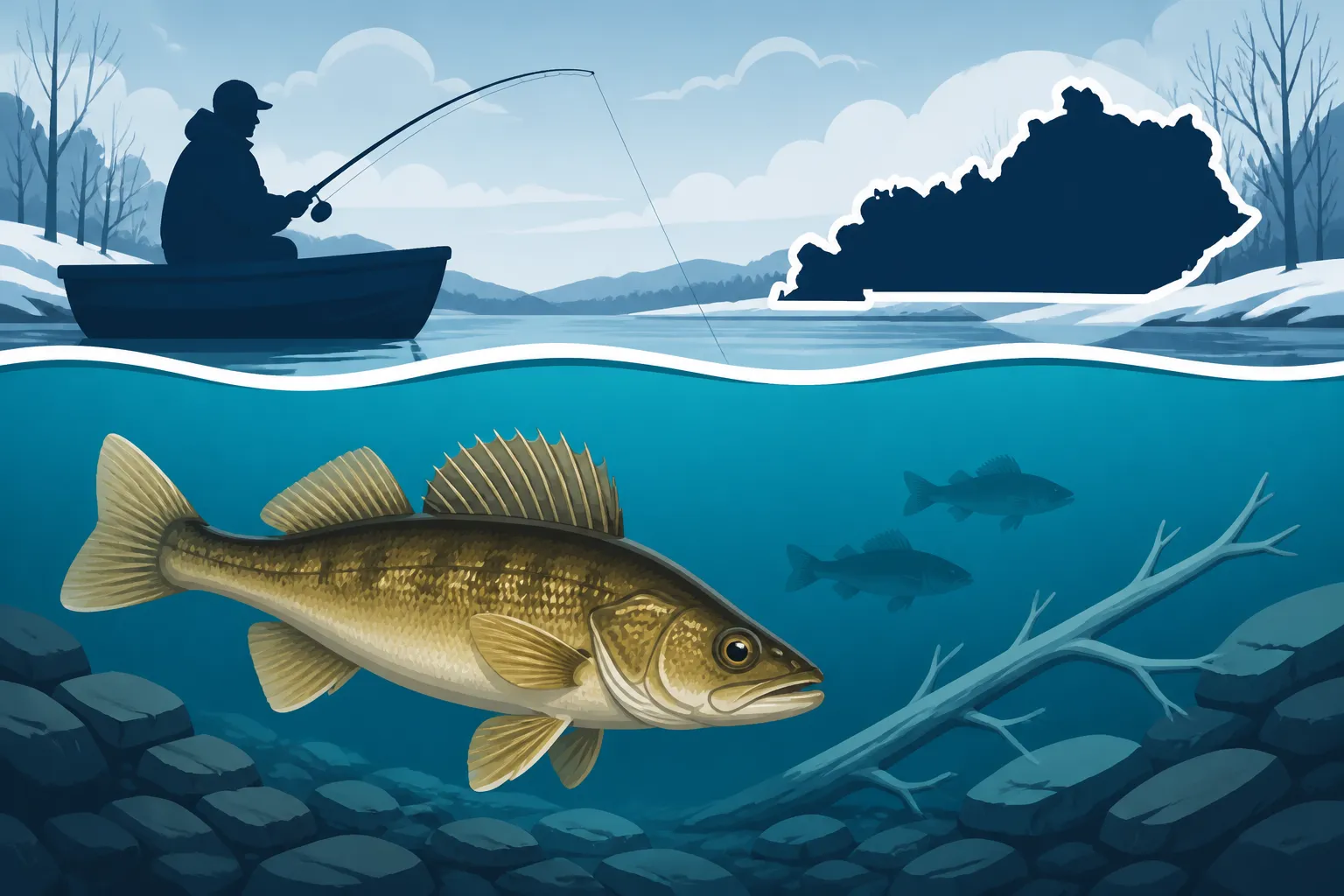
The chill of winter often sends many anglers into hibernation, believing the fish have simply vanished. But if you’re one of those determined folks who refuse to let a little cold keep you off the water, you've probably noticed that some species, like the elusive sauger, actually thrive when the temperatures drop. This guide is here to walk you through exactly how to pinpoint these fantastic fighters in the frigid waters of Kentucky, helping you turn those challenging cold-weather outings into successful and rewarding experiences.
Understanding Sauger Behavior in Cold Water
When the mercury dips and winter truly sets in across Kentucky, sauger don't just disappear; they simply adjust their behavior to conserve energy and find comfortable conditions. Unlike some other game fish that become incredibly lethargic, sauger remain active feeders, often congregating in predictable patterns. Understanding these patterns is your first step to consistently finding them.
Sauger's Cold-Water Comfort Zones
Sauger are true cold-water enthusiasts. They actually prefer water temperatures ranging from the low 40s to low 50s Fahrenheit, which means they are in their prime during the late fall, winter, and early spring months. As surface waters cool, sauger will often seek out areas where the water temperature is more stable. This often means deeper sections of lakes and rivers. They aren't necessarily looking for the warmest water, but rather water that isn't fluctuating wildly with air temperature changes. Imagine trying to sleep in a room where the temperature keeps swinging from hot to cold; fish feel the same way. They want stability.
During these colder periods, their metabolism slows down, but not to the point of dormancy. They still need to eat, but they might not chase a lure as aggressively or as far as they would in warmer months. This is why a slower, more deliberate presentation is often key. You'll frequently find them schooling up tightly, sometimes in very large numbers. This schooling behavior is a survival mechanism, but it's also fantastic for anglers, because if you find one sauger, you’re very likely to find a whole bunch more right there with it. They’re basically having a winter party, and you’re invited, provided you know where to look.
Why Sauger Go Deep (or Hug Structure)
In cold water, especially in large reservoirs and river systems, sauger typically move to deeper parts of the water column. There are a few compelling reasons for this. First, deep water generally offers more stable temperatures. The extreme cold of winter air doesn't penetrate as quickly or as deeply into the main body of a lake or river. Second, deeper areas, particularly those with current, often concentrate baitfish. Whether it's shad, shiners, or other forage, sauger will follow their food source.
Sauger are also notorious for holding tight to structure. This isn't just about ambush points, though that certainly plays a role. It's also about finding current breaks and areas that offer them a place to rest and expend less energy while still having access to passing food. Think about a strong current in a river; if you were a fish, you wouldn't want to fight that all day. You'd find a rock, a log, or a drop-off that breaks the current, allowing you to relax while dinner drifts by. Common structures they'll hug include:
- River Channels: The main thoroughfares of river systems are often prime sauger highways.
- Ledges and Drop-offs: Changes in depth provide excellent ambush points and current breaks.
- Humps and Submerged Islands: These offshore structures can be magnets for baitfish and, consequently, sauger.
- Bridge Pilings and Riprap: Man-made structures that break current and offer shelter.
- Dam Tailwaters: The churning waters below dams often concentrate baitfish and provide excellent oxygenation, making them hot spots, especially during winter.
For more on seasonal movements, you might find our guide on Kentucky Fishing Seasons: What to Catch Each Month helpful for planning your trips.
Prime Locations for Cold Water Sauger in Kentucky
Kentucky boasts some truly fantastic sauger fisheries, especially when the temperatures drop. Knowing where to focus your efforts can make all the difference in connecting with these exciting fish.
River Systems and Dam Tailwaters
When it comes to cold-water sauger, river systems and the tailwaters below major dams are often the absolute best places to start. The constant flow of water provides several advantages:
- Concentrated Baitfish: Current sweeps baitfish, like shad and minnows, into predictable areas, making them easy targets for sauger. Below dams, baitfish are often stunned or disoriented by the turbulence, creating a literal buffet for sauger.
- Oxygenation: Moving water is usually well-oxygenated, which is crucial for active fish, even in cold conditions.
- Temperature Stability: While the surface might be frigid, the sheer volume of water in a large river system or below a dam can offer more consistent temperatures than shallower, stagnant areas.
The Ohio River is perhaps the undisputed king for sauger fishing in Kentucky. From the pools near Louisville to the stretches near Paducah, the river’s deep channels, rocky banks, and the turbulent waters below its numerous dams create ideal sauger habitat. Anglers often find success drifting jigs or bouncing lures off the bottom in these areas.
Another fantastic option is Lake Barkley Sauger Fishing in Kentucky. The waters below its dam, where it connects with Kentucky Lake, are legendary for their winter sauger runs. You'll often see boats lined up, all targeting the same species, a testament to the productivity of these tailwaters. If you're looking for the absolute best time, check out our insights on the Best Time to Catch Sauger at Kentucky's Lake Barkley.
Deep Channels and Ledges
Away from the immediate influence of dams, sauger in large reservoirs like Kentucky Lake and Lake Barkley will retreat to deep channels and follow distinct underwater ledges. These topographical features act as highways and holding areas for fish. Imagine an underwater canyon or a steep cliff face; sauger will often position themselves along the bottom edge or suspended just above the breaks in these structures.
When you're out on the water, pay close attention to your depth finder. Look for sudden changes in depth, especially where a flat bottom drops off into a deeper channel. Sauger often relate to these contour lines, especially on the down-current side where they can ambush prey with less effort. Targeting these ledges requires precision boat control and an understanding of how current flows over underwater terrain. Sometimes, it's not the deepest part of the channel that holds them, but the transition zone, the very edge where the flat meets the drop. They might be nestled right against the bottom or suspended a few feet up, watching for an easy meal. Many anglers find using quality electronics, which can be found readily on sites like Amazon, helps immensely in identifying these subtle features.
Main Lake Basins and Humps
While river systems and ledges are prominent, don't overlook main lake basins and offshore humps, especially in larger bodies of water. In some scenarios, sauger might suspend over deeper main lake basins, particularly if there's a thermocline (a distinct temperature layer) in play, or if baitfish are suspending there. This is less common in the dead of winter when water temperatures are more uniform, but it can happen.
More reliably, offshore humps and submerged islands in the middle of large lake basins can be sauger magnets. These structures act as congregating points for baitfish, which in turn attract sauger. These humps often rise up from a deeper flat, providing current breaks and vertical relief that sauger adore. You'll need good electronics to locate these subtle underwater features, and then a keen eye to interpret what you're seeing. Sometimes, sauger will be right on top of the hump, while other times they'll be on the edges, or even suspended in the water column just off the sides. A good sonar unit, available from many retailers including Amazon, is invaluable for mapping these out.
| Location Type | Typical Depth Range | Sauger Position | Key Attraction Factors |
|---|---|---|---|
| Dam Tailwaters | 20-50 feet+ | Bottom, just out of strongest current | Concentrated baitfish, high oxygen, turbulence |
| River Channels/Ledges | 15-40 feet | Along bottom edges, current breaks | Stable temperatures, ambush points, current |
| Offshore Humps/Basins | 25-60 feet | Top, edges, or suspended near bait | Baitfish congregation, structure, temperature |
Effective Techniques and Baits for Cold Water Sauger
Catching sauger in cold water isn't about power fishing; it's about finesse, patience, and precise presentations. Their metabolism is slower, so they're less likely to chase a fast-moving bait.
Vertical Jigging is Key
Without a doubt, vertical jigging is one of the most effective techniques for cold-water sauger. This method involves positioning your boat directly over a school of fish or a promising piece of structure, then dropping your lure straight down and working it vertically.
Here’s why it works so well:
- Precision: You can keep your bait exactly in the strike zone, especially when sauger are tightly schooled or holding close to the bottom.
- Controlled Movement: You dictate the action, allowing for the slow, subtle movements that entice cold-water fish.
- Sensitivity: You can feel even the lightest taps when your line is straight up and down, which is crucial when bites are soft.
Common lures for vertical jigging include lead head jigs tipped with plastics (grubs, curly tails, or small swimbaits), blade baits, and minnow-imitating spoons. The color can be important; often, natural colors like white, chartreuse, or pearl work well, but sometimes a brighter color can trigger a reaction strike. The weight of your jig needs to match the current and depth; you want just enough weight to maintain bottom contact without getting swept away. For a deeper dive into this, check out our guide on How to Jig for Sauger in Deep Water. Many specialized jigs and blade baits designed for sauger fishing can be found on Amazon, often with helpful reviews from other anglers.
Slow and Deliberate Presentations
Remember that slower metabolism? It means you need to slow down your presentation considerably. Forget the aggressive snaps and fast retrieves you might use for bass in summer. For sauger, think subtle lifts, gentle drops, and extended pauses.
- "Lift and Drop": A classic jigging technique where you gently lift your rod tip a foot or two, then slowly let the jig fall back to the bottom on a semi-slack line. The bite often occurs on the fall.
- "Deadsticking": Sometimes, simply holding your bait perfectly still, or with very minimal movement, is what it takes. Imagine the baitfish just sitting there, barely moving – that's what a sauger might prefer.
- "Slight Jigging": Tiny twitches of the wrist, just enough to make the tail of a plastic grub undulate, can be incredibly effective without over-powering the presentation.
Patience is a virtue here. You might have to work a specific area for a while before a sauger decides to commit. When temperatures are really low, the fish might just "mouth" the bait, so a sensitive rod and good line are crucial for detecting those soft bites. More on cold-water jigging can be found in our detailed article, How to Jig for Sauger in Winter.
Live Bait and Scent
While artificial lures are highly effective, live bait can sometimes be the ultimate sauger enticing tool, especially when they are particularly finicky. Minnows, especially shiners or fatheads, are a perennial favorite. Rigged on a plain hook or a small jig head, a live minnow offers natural action and scent that artificials can't fully replicate.
When using live bait, consider a slow-drift rig or a drop-shot setup to present the minnow naturally at the desired depth. Allow the minnow to do most of the work, but periodically lift and drop your rod to impart a little extra action and ensure your bait is staying in the strike zone.
For artificials, adding scent can provide that extra edge. Many anglers use commercial fish attractants or even natural scents like garlic or an Anise oil to make their plastics more appealing. This can mask human scent and encourage a sauger to hold onto the lure a moment longer, giving you time to set the hook.
Trolling for Suspended Fish
While vertical jigging dominates, don't completely discount trolling, especially if you're marking suspended fish over open water or along extensive ledges. Long-lining crankbaits or even pulling jigs behind your boat can cover more water and help you locate scattered schools of sauger.
When trolling for cold-water sauger, speed is paramount – you'll want to move at a very slow pace, sometimes barely faster than idle. Choose crankbaits that dive to the desired depth and have a tight, subtle wobble rather than an aggressive thumping action. Often, the best colors mimic the local baitfish. Using your fish finder to stay on top of the depth and track your lures is crucial. This technique is often effective in larger reservoirs where sauger might spread out more than in tight river channels.
Gearing Up for Success in Cold Water
Cold-water sauger fishing requires specific gear, not just for catching fish, but for your comfort and safety too. Being prepared makes the experience much more enjoyable.
Rods, Reels, and Line
For sauger fishing, especially with jigs, sensitivity is paramount.
- Rods: Look for medium-light to medium power spinning or casting rods, typically in the 6-foot 6-inch to 7-foot range, with a fast or extra-fast action. This combination provides enough backbone to fight a sauger but a sensitive tip to detect those subtle bites. A good quality graphite rod is ideal for transmitting those light taps right to your hand.
- Reels: A smooth, reliable spinning reel in the 2000-2500 size or a baitcasting reel with a good drag system will suffice. Focus on durability and a smooth retrieve.
- Line: Many sauger anglers prefer a braided main line (10-15 lb test) for its sensitivity and lack of stretch, especially when fishing deep water. Pair this with a fluorocarbon leader (6-10 lb test) for invisibility and abrasion resistance. Fluorocarbon also sinks, which can help your jig get down faster. If you prefer mono, use a low-stretch variety in the 8-12 lb test range. You can learn more about specific setups in our guide on Best Rods for Sauger Fishing on Kentucky's Lake Barkley and Best Line and Leader Setup for Lake Barkley Sauger.
Electronics are Your Friend
Modern marine electronics are indispensable for cold-water sauger fishing.
- Fish Finders/Sonar: A quality fish finder is critical for locating deep channels, ledges, humps, and most importantly, the schools of sauger themselves. Look for units with good down imaging and side imaging capabilities to help you visualize underwater structure and identify fish. You'll want to be able to clearly distinguish schools of baitfish from sauger.
- GPS/Chartplotter: Integrated GPS allows you to mark waypoints on productive spots, follow contour lines, and navigate safely, especially in large, unfamiliar waters. Being able to return to a precise spot where you caught fish earlier is invaluable. These devices are critical when navigating larger bodies of water like Kentucky Lake or Lake Barkley. For specific recommendations, our article on Best Fish Finders for Kentucky Lake and Lake Barkley offers great insights.
These tools, often available from brands like Humminbird, Lowrance, or Garmin, help you stay efficient on the water, spending less time searching and more time fishing. You'll find a wide selection of these essential electronics on platforms like Amazon, often with comprehensive specifications to help you choose the right one for your needs.
Essential Cold Weather Gear
Your personal comfort and safety are just as important as your fishing tackle. Cold weather can turn a fun day into a miserable one, or even a dangerous one, if you're not properly dressed.
- Layering: Dress in layers. Start with a moisture-wicking base layer, add insulating layers (fleece or down), and finish with a waterproof and windproof outer shell. You can always shed layers if you get too warm.
- Head, Hands, and Feet: These are critical areas for heat loss. A warm hat, insulated gloves, and waterproof, insulated boots are non-negotiable. Consider chemical hand warmers for extra comfort.
- Life Vest: Always wear a Coast Guard-approved life vest, especially in cold water. Even strong swimmers can be quickly incapacitated by the shock of falling into frigid water.
- Warm Drinks and Snacks: Pack a thermos with hot coffee, tea, or cocoa, and high-energy snacks to keep your core temperature up.
Staying warm and dry will allow you to focus on fishing, detect those subtle bites, and enjoy your time on the water chasing cold-water sauger. Investing in good quality cold-weather gear, easily found on Amazon, will make all the difference in turning a potentially uncomfortable outing into a truly memorable one. Remember to check local regulations, as well as the Kentucky Fishing License Guide, before heading out.
Disclaimer
This article is for general informational purposes only and does not constitute professional advice. Laws, prices and regulations vary by location and change over time. Consult a qualified professional for guidance on your specific situation.