Best Line Weight for Crappie Jigging
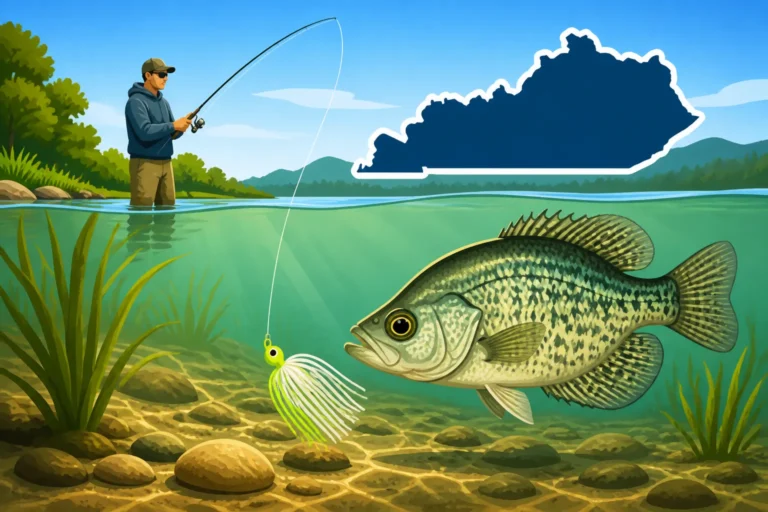
It’s a common frustration, isn't it? You've got your favorite crappie jig tied on, you’re out on the water, and you're just not feeling those delicate bites, or worse, your line keeps breaking at the worst possible moment. Choosing the right fishing line for crappie jigging in Kentucky can feel like a guessing game, impacting everything from your bait's action to your ability to detect a subtle strike. This comprehensive guide will pull back the curtain on fishing line choices, helping you pick the perfect line weight to land more of those papermouths.
Understanding the Impact of Line Weight on Crappie Jigging
When you're chasing crappie, especially with those tiny jigs, every single detail matters. The line connecting you to your lure is arguably one of the most critical, yet often overlooked, pieces of your setup. It's not just about how strong it is; it's about how it interacts with the water, your jig, and ultimately, the fish.
Why Line Weight Matters More Than You Think
Think about it: crappie are known for their incredibly light bites. Sometimes it's barely a twitch, a slight pause in your line, or just a feeling of "heaviness" that signals a strike. If your line is too heavy, too thick, or too stiff, it acts like a dampener, absorbing those subtle signals before they ever reach your fingertips. This lack of sensitivity means missed bites, which quickly leads to frustration.
Furthermore, line weight directly influences how your tiny crappie jig performs in the water. A heavier line has more diameter, creating more drag in the water. This can cause your jig to fall unnaturally, slow down its descent, or even prevent it from reaching the desired depth with those ultra-light presentations. Crappie are often suspended at precise depths or holding tight to structure, and getting your jig to them naturally is key. On the flip side, too light a line might give you incredible sensitivity and natural action, but it comes at a cost, especially when you hook into a slab crappie or accidentally snag a brush pile. Finding that perfect balance is truly where the magic happens.
The Trade-offs of Heavy vs. Light Line
Every decision in fishing involves trade-offs, and line weight is no exception. Let's break down what you gain and lose with each end of the spectrum.
When you opt for a heavier line, say 8 or 10 lb test, you immediately gain in terms of raw strength and abrasion resistance. This can be a huge advantage if you're fishing around gnarly submerged timber, rock piles, or dense brush where snags are inevitable. You'll have a better chance of pulling your jig free or, if you do hook a larger fish, of preventing a break-off. For anglers who prefer a bit more security, especially when targeting larger crappie or fishing in stained, cover-rich waters like parts of Lake Barkley, the peace of mind can be worth it. However, this extra strength comes at the expense of sensitivity and natural lure action. The thicker diameter creates more drag, making your jig seem less lively and harder to control. You'll feel fewer of those subtle takes, which can significantly reduce your catch rate, especially on tough days.
Conversely, embracing a lighter line, perhaps in the 2 to 4 lb test range, unlocks a world of sensitivity and ultra-natural lure presentation. These thin lines allow your tiny jigs, often 1/32 or 1/64 oz, to flutter and fall with incredible realism, mimicking natural forage. The reduced diameter means less water resistance, so your jig gets to depth quicker and you feel every little bump and tic. This is absolutely crucial when the crappie are finicky, biting softly, or holding in extremely clear water. Places like Lake Cumberland, with its deep, clear waters, often demand this kind of finesse. The major drawback, though, is fragility. A light line is much more prone to breaking from abrasion against structure, a sudden powerful run from a larger fish, or even an improperly set hook. It demands a delicate touch on the reel, a smooth drag, and frequent line checks. It's a high-reward, high-risk game, but for many dedicated crappie anglers, the increased catch rate makes it worthwhile.
The Sweet Spot: Recommended Line Weights for Kentucky Crappie Jigging
Alright, let's get down to the brass tacks: what line weight should you be using for crappie jigging here in Kentucky? The truth is, there's no single "best" answer, as it truly depends on the conditions you're fishing. However, we can narrow it down to a few sweet spots that will cover almost every situation you'll encounter on our diverse lakes and rivers.
Ideal Line Weights for Different Conditions
Crappie fishing in Kentucky takes you from the vast open waters of Kentucky Lake to the deep, clear reservoirs, and even smaller, brushy ponds. Each environment might call for a slight adjustment in your line choice.
-
2-4 lb Test: The Finesse Edge
This ultra-light line weight is for the angler who lives for finesse and maximum sensitivity. If you're using tiny jigs, perhaps 1/32 oz or even smaller, this is your go-to. It excels in super clear water, where crappie can be incredibly spooky and visual. Imagine fishing the gin-clear depths of Lake Cumberland in winter, or targeting suspended crappie in open water. The delicate presentation allows your jig to sink naturally, and the incredible sensitivity lets you feel the slightest breath on your lure. This is also fantastic for vertical jigging directly over brush piles in deeper water, where you want minimal line drag. The downside, as we discussed, is the increased risk of breaking off. You'll need a very limber, ultra-light action rod, a reel with a super smooth drag, and you'll need to be mindful of any nicks or abrasions on your line. For those light-biting days, especially when you're after those elusive "papermouths" in high-pressure areas, this is often the key to unlocking the bite. You can find quality 4 lb test fluorocarbon fishing line on Amazon that works wonders here. -
4-6 lb Test: The Versatile Workhorse
For most crappie jigging scenarios across Kentucky, the 4 to 6 lb test range is the gold standard. This is your versatile workhorse, offering an excellent balance of strength, castability, and sensitivity. It's strong enough to handle jigs from 1/16 oz to 1/8 oz with confidence and provides enough backbone to manage a respectable crappie. If you're fishing popular spots like Taylorsville Lake or Green River Lake, this line class will serve you well for 80% of your jigging needs. It's forgiving enough for occasional contact with submerged timber or stumps, yet still thin enough to provide a natural presentation. For example, if you're casting small jigs to visible cover or dipping them into brush piles, 6 lb test offers a good blend of confidence and feel. It’s also a great choice for beginner crappie anglers, as it's less prone to frustrating break-offs than ultra-light lines, but still sensitive enough to teach you what a crappie bite feels like. This line weight is often featured in guides like "Best Rods and Reels for Kentucky Crappie Fishing" because of its broad applicability. -
6-8 lb Test: The Heavy Hitter
While some might consider this heavy for crappie, there are definitely situations where 6 to 8 lb test line shines. This is your choice when you're targeting larger crappie, fishing in heavily stained or muddy water where line visibility is less of a concern, or when you're absolutely pounding heavy cover. Think of pitching a 1/8 oz jig into dense brush piles in Barren River Lake, or when you know those slabs are tucked deep into thickets. The added strength and abrasion resistance can be a lifesaver, allowing you to horse a fish out of cover or free a snagged jig more easily. It's also suitable for slightly larger jigs or when fishing with heavier bobbers. While you'll sacrifice some sensitivity and finesse compared to lighter lines, the confidence of being able to land that trophy crappie from a tough spot is a huge advantage. Just remember to compensate with a more sensitive rod to detect those subtle bites through the heavier line.
Choosing Line Material: Mono, Fluoro, or Braid
Beyond just weight, the material of your fishing line plays a massive role in its performance. Each type has distinct characteristics that make it suitable for different crappie jigging styles.
-
Monofilament (Mono): The Classic All-Rounder
Monofilament is probably what most of us started fishing with, and for good reason. It's incredibly affordable, easy to tie knots with, and has a good amount of stretch. This stretch can be a double-edged sword: it acts as a shock absorber, helping to prevent crappie's delicate mouths from tearing, but it also reduces sensitivity. Mono is buoyant, which can be an advantage when you want your jig to fall slower or suspend near the surface, but a disadvantage if you need to get deep quickly. For general crappie jigging, particularly if you're casting small jigs or using a slip bobber, monofilament in 4-6 lb test is a perfectly viable and economical choice. Look for brands that offer low memory to minimize coiling. You can often find great value bulk spools of mono on Amazon. -
Fluorocarbon (Fluoro): The Stealthy and Sensitive Option
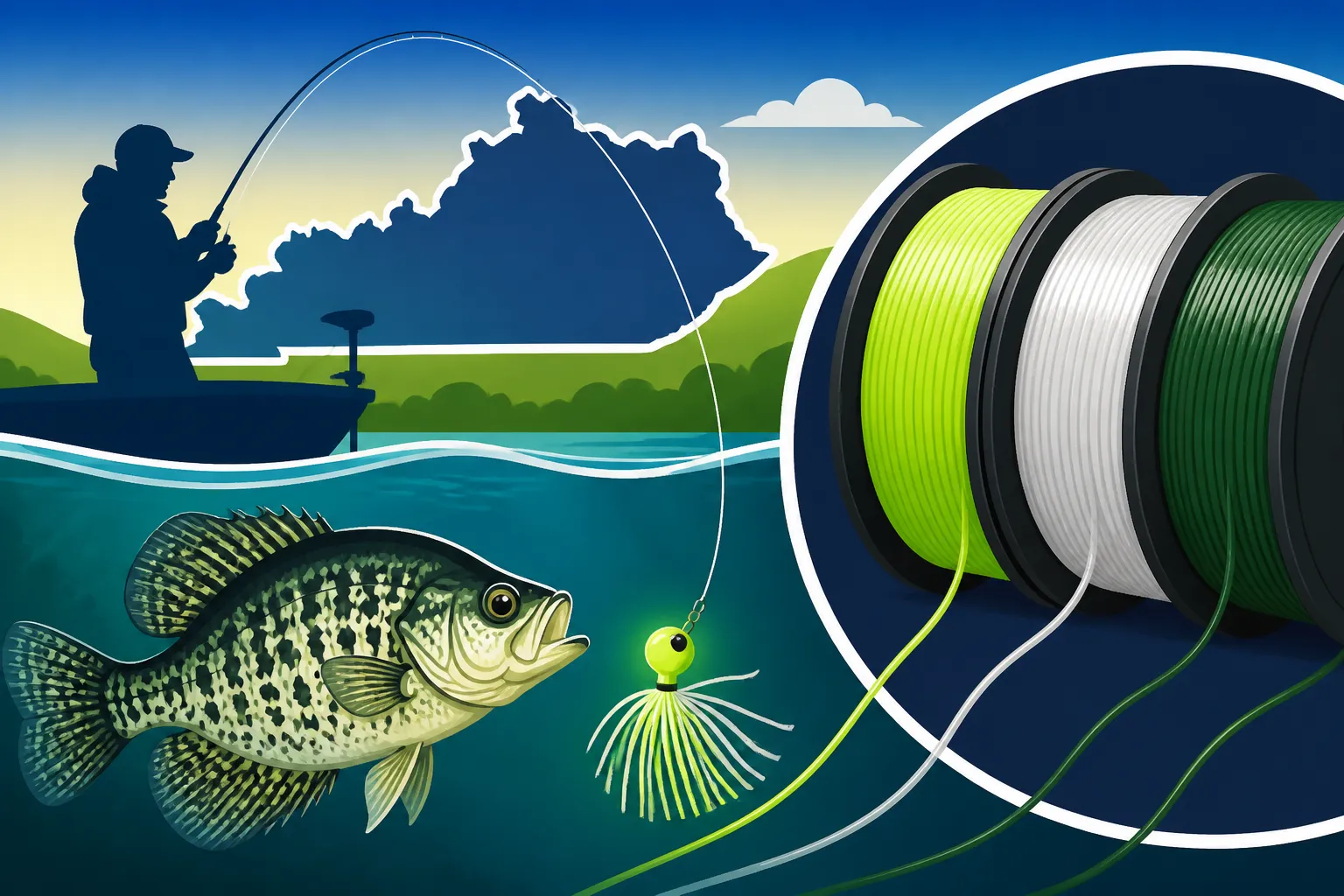
Fluorocarbon line has gained immense popularity, and it's a fantastic choice for crappie jigging. Its main advantage is its near-invisibility underwater, making it ideal for clear water conditions where crappie are easily spooked. Unlike mono, fluorocarbon sinks, which helps your jig get to depth faster and stay there, a huge plus for vertical presentations. It also has much less stretch than monofilament, giving you significantly better sensitivity to detect those faint bites. The trade-offs? It's generally more expensive, can be a bit stiffer (which impacts casting on ultralight setups), and some anglers find certain brands more difficult to tie reliable knots with. However, for serious crappie jigging, especially with small jigs in clear water, a 4-6 lb fluorocarbon main line or a fluorocarbon leader on braid is a top-tier choice. -
Braided Line (Braid): Maximum Sensitivity, With a Twist
Braided line offers unparalleled strength-to-diameter ratio and virtually no stretch, making it the most sensitive option available. You'll feel everything your jig touches. For some anglers, particularly those vertical jigging in deep water or pitching into thick cover, this sensitivity is a game-changer. However, braid is highly visible to fish, and its lack of stretch can rip hooks out of crappie's soft mouths if you set the hook too aggressively. Because of its visibility, most crappie anglers using braid will tie a fluorocarbon or monofilament leader to the end of their main line. This gives you the sensitivity of braid with the stealth of fluoro or the forgiveness of mono. A common setup might be 8-10 lb braid as your main line, tied to a 4-6 lb fluorocarbon leader. This combination allows you to feel the faintest tap while still presenting your jig discreetly. For heavy cover situations or when fishing a lake like Lake Barkley, this setup can give you the advantage you need to extract those slabs from the thick stuff.
Practical Tips for Maximizing Your Crappie Jigging Success in Kentucky
Choosing the right line weight and material is a huge step, but it's just one piece of the crappie fishing puzzle. To truly maximize your success, you need to consider how your line choice integrates with your entire setup and your fishing techniques.
Matching Line to Your Rod, Reel, and Jig Size
Think of your fishing setup as a finely tuned instrument; each component needs to harmonize with the others. Your line weight should always be in sync with your rod's power and action, your reel's drag system, and the size of the jig you're presenting.
If you're using an ultra-light rod with a fast action, designed for tiny 1/32 oz jigs, pairing it with 2-4 lb test line is crucial. The rod's delicate tip will load properly, allowing for precise casts and absorbing the shock of a fish strike, preventing line breaks. Conversely, putting 8 lb test line on such a rod would make it feel stiff, overpower the rod's intended action, and hinder casting those light lures. The reel is equally important. A smooth, reliable drag system is paramount, especially with lighter lines. When a feisty crappie makes a run, that drag needs to give line smoothly to prevent a snap. Cheap reels with jerky drags are a recipe for heartbreak, particularly when you've got a slab on a 4 lb test fluorocarbon line. When selecting jigs, like the ones often discussed in "Best Crappie Jigs for Kentucky Waters", remember that their weight directly influences the line you should choose. A 1/16 oz jig is probably ideal for 4-6 lb line, while a 1/8 oz jig might be more comfortable on 6-8 lb test, especially if you're pitching it. The goal is balance: a setup where the line, rod, reel, and jig all complement each other for optimal performance and sensitivity.
Line Maintenance and Techniques for Delicate Bites
Even the perfect line weight won't save you if your line is in poor condition or your technique isn't up to par. Crappie bites can be incredibly subtle, and good line maintenance combined with refined techniques will drastically improve your hook-up ratio.
First, line maintenance is non-negotiable. Constantly check your line, especially the last few feet near your jig, for any nicks, abrasions, or signs of wear. Fishing around submerged brush, rocks, or even bumping against your boat or dock can create tiny weaknesses that will lead to break-offs. It's far better to re-tie your jig every hour or after every few fish than to lose a trophy crappie due to a preventable line failure. Monofilament lines also develop "memory" over time, causing coils and twists that reduce sensitivity and casting distance. Regularly replacing your monofilament line, especially at the start of the "Kentucky Fishing License Year Explained" in March, can make a huge difference.
Second, learn to read your line. Crappie bites often don't feel like a definitive "thump." Instead, you might see your line twitch slightly, jump a little, or just go slack when it should be tight. Sometimes, it's just a feeling of "nothing there" when you lift your rod, indicating a crappie picked up your jig on the fall. Using a high-visibility line (like a bright braided main line with a clear leader) can help you visually detect these subtle takes.
Finally, master the gentle hook set and proper drag. With crappie's papery mouths, a violent hook set is often overkill and can tear the hook right out. Instead, a gentle, sweeping hook set is usually all that's needed. Ensure your drag is set light enough to allow line to peel off when a fish runs, but tight enough to apply pressure. You're aiming for a controlled fight, especially when you're using those lighter 2-4 lb test lines. By paying attention to these details, you'll not only preserve your line but also dramatically increase your chances of putting more crappie in the livewell. For more specific guidance on different times of the year, checking out resources like "Kentucky Crappie Fishing: Spring Spawn Run Guide" can offer valuable seasonal insights on how to adapt your techniques.
| Line Weight (lb test) | Line Material | Typical Jig Size (oz) | Primary Application | Key Benefits | Considerations |
|---|---|---|---|---|---|
| 2-4 | Fluorocarbon | 1/64 – 1/32 | Clear water, Finicky Bites, Vertical Jigging | Max sensitivity, Natural fall, Stealth | Prone to break-offs, Requires gentle touch & smooth drag |
| 4-6 | Mono / Fluoro | 1/32 – 1/8 | All-around, Versatile, General purpose | Good balance of strength & sensitivity, Forgiving | May lack ultimate finesse in very clear water |
| 6-8 | Mono / Braid w/ leader | 1/16 – 1/4 | Heavy Cover, Stained Water, Larger Crappie | Strength, Abrasion resistance, Pulling from cover | Less sensitivity, Thicker diameter, May spook fish |
Disclaimer
The information provided in this guide is for general informational purposes only and does not constitute professional advice. Fishing regulations and conditions in Kentucky can change, and it is the angler's responsibility to stay informed of all current rules, licenses, and safety guidelines published by the Kentucky Department of Fish and Wildlife Resources. Always prioritize safety and ethical fishing practices.