Kentucky Fishing License Year Explained
There’s nothing quite as frustrating as heading out for a peaceful day on the water, only to realize you’re not entirely sure if your fishing license is still valid. The rules around annual license renewals can feel like a tangled line, leading to confusion and unnecessary stress. This guide is here to clear the waters, thoroughly explaining the Kentucky fishing license year, how it works, and everything you need to know to stay compliant and enjoy your time fishing across the Bluegrass State.
Understanding the Kentucky Fishing License Year Cycle
Navigating the nuances of fishing regulations can be a bit like trying to read a river current – it looks straightforward until you're in it. One of the most common sources of confusion for Kentucky anglers, both seasoned and new, revolves around the actual "year" of their fishing license. It's not always a simple 365 days from your purchase date, and understanding this is crucial to avoid any unexpected run-ins with a game warden.
The March 1st to February 28th Standard
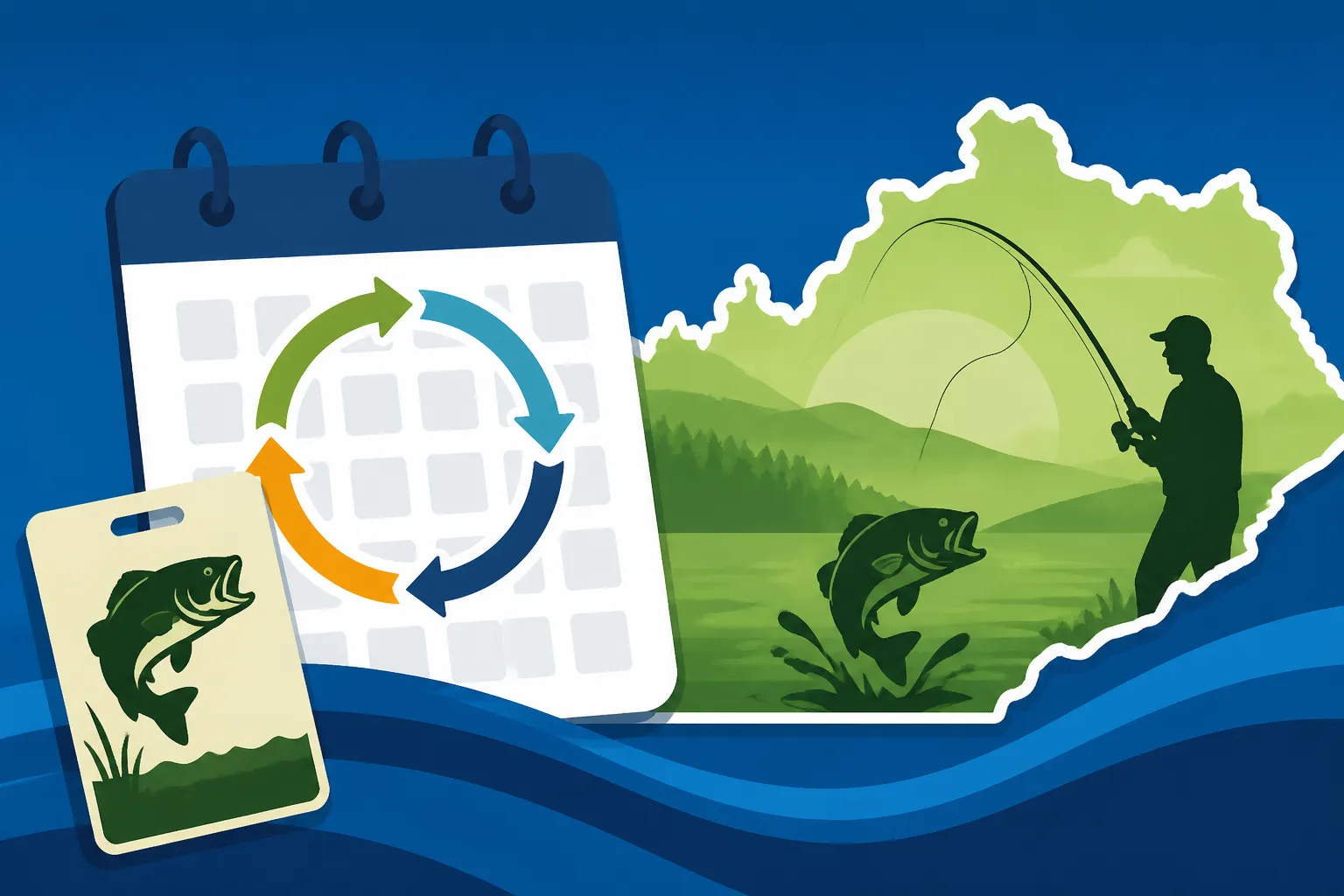
The cornerstone of Kentucky’s fishing license system is its fixed annual cycle. Unlike some subscriptions or permits that might expire exactly one year from the day you buy them, Kentucky's annual fishing licenses operate on a consistent schedule: they are valid from March 1st of one year through the last day of February (February 28th or 29th in a leap year) of the following year. This means that whether you purchase your annual license on March 2nd, the first day of the new license year, or even in January, nearly eleven months into the cycle, it will still expire on February 28th (or 29th) of that same license year.
This consistent annual cycle is designed to streamline the administrative process for the Kentucky Department of Fish and Wildlife Resources (KDFWR) and provide a predictable framework for anglers. It helps synchronize regulations and stocking schedules with the start of the traditional spring fishing season. So, if you bought your license in, say, November, it wouldn't be valid for a full 12 months. It would still expire at the end of February, just like a license purchased the previous March. This is a common point of confusion, and it's essential to keep that February 28th (or 29th) date firmly in mind.
Why This Specific Window?
You might wonder why Kentucky, and many other states, choose this specific March 1st to February 28th window. The rationale often ties into the biological cycles of fish and the operational calendar of wildlife agencies. March typically marks the onset of spring, a period when many fish species, like crappie and bass, begin their spawning migrations and become more active. This natural rhythm kickstarts the busiest fishing seasons, making it a logical time for a new licensing year to begin. It allows KDFWR to align their data collection, revenue allocation, and resource management efforts with the most active periods of angler participation.
Furthermore, a fixed date simplifies enforcement and communication. Imagine if everyone’s license expired on a different day throughout the year – it would be an administrative nightmare for KDFWR and incredibly confusing for anglers and wardens alike. By having a universal expiration, everyone knows exactly when it's time to renew. This system also allows for clearer transitions for new regulations or changes that might come into effect with the new license year. It’s about creating order and predictability in a system that governs a beloved outdoor activity for hundreds of thousands of people.
Impact on Anglers: Planning Your Fishing Season
For anglers, understanding this fixed license year is paramount for effective trip planning and financial optimization. If you're someone who fishes year-round, purchasing your annual license as close to March 1st as possible ensures you get the maximum value for your money. For example, buying your license in mid-July means you're only getting about seven months of coverage before it's time to renew again. This doesn't mean it's a bad deal if you only fish for a few months, but it certainly impacts the cost-per-day analysis.
This annual cycle also influences when most anglers start thinking about their fishing season seriously. You'll often see a surge in license purchases and renewals around late February and early March as people prepare for spring fishing. It's a natural cue for anglers to check their gear, review regulations, and get ready for the season ahead. Knowing this schedule helps you avoid that last-minute scramble or, worse, arriving at your favorite fishing hole only to discover your license expired days ago. Being proactive about understanding the Kentucky Fishing License Year is truly the best way to ensure uninterrupted enjoyment of Kentucky’s abundant waters.
What Happens When the License Year Changes?
The transition from one license year to the next is a critical period for all Kentucky anglers. It's when those March 1st to February 28th dates truly come into play, and understanding the renewal process and potential pitfalls is key to staying legal and prepared on the water. No one wants their fishing trip cut short because of an expired license.
The Transition Period: Renewing Your License
As the end of February approaches, it's time to start thinking about renewing your Kentucky fishing license. The KDFWR makes this process quite straightforward, offering several convenient ways to ensure you're covered for the upcoming season. You can choose to renew online, a popular option for its speed and ease, or visit a local vendor, such as a sporting goods store or county clerk's office. Many anglers prefer the online method because it allows them to purchase their license from the comfort of their home, print a temporary copy, or simply save the digital version to their phone. The system is usually ready for renewals a few weeks before the March 1st start date, allowing you to get ahead of the game.
If you don't renew by March 1st, your old license becomes invalid. This might seem obvious, but it's a detail that trips up many anglers, especially those who only fish occasionally or haven't been out since the previous summer. The KDFWR doesn't typically send out physical renewal reminders for standard fishing licenses, so it's up to you to keep track. For a detailed walkthrough of the online process, check out our guide on How to Renew Your Kentucky Fishing License Online. It walks you through each step, making it easy even if you're not the most tech-savvy angler.
Consequences of Fishing with an Expired License
Fishing with an expired license in Kentucky is a serious offense, and it's not something you want to experience firsthand. While penalties can vary depending on the specific circumstances and the discretion of the enforcing officer, getting caught without a valid license typically results in a fine. More importantly, it can lead to a significant disruption of your fishing day, a summons to court, and the confiscation of your catch or even your fishing gear. Game wardens in Kentucky are routinely out on the water and along the banks, checking licenses to ensure compliance and protect the state's natural resources. They're not there to ruin your day, but they are there to enforce the rules.
The financial cost of a fine for fishing without a license almost always far exceeds the cost of purchasing an annual license. It’s a simple calculation: a resident annual fishing license is a modest investment, while a fine can easily run into the hundreds of dollars, not to mention court costs and the hassle of dealing with the legal system. To understand more about the potential repercussions, take a look at our article on the Penalties for Fishing Without a License in Kentucky. It's a stark reminder of why it's always best to be prepared and double-check your license validity before heading out.
Buying a License Right Before vs. After the Change
This is a strategic decision many anglers face, particularly if they are considering a trip around the late winter or early spring. If you buy an annual license in February, for example, it will only be valid for a few short weeks until February 28th, when the new license year begins. You'd then need to purchase a brand new license for the upcoming March 1st – February 28th cycle. This scenario effectively means you're paying for an annual license but only getting a fraction of the usage.
On the other hand, if you wait until March 1st or later to purchase your license, you're buying into the new license year, which will then be valid until the end of the following February. This is often the most cost-effective approach for those who plan to fish regularly throughout the year. For a quick trip in late February, a short-term license (like a 1-day or 7-day) might be more economical than an annual license that's about to expire. We dive deeper into this specific dilemma and offer advice in our piece, Buying a License Right Before vs After the License Year Change, helping you make an informed decision for your fishing plans.
Different License Types and Their Expiration
While the core annual license year follows the March 1st to February 28th standard, Kentucky offers a variety of license types, each designed to meet different angler needs. Understanding how these various licenses, and any additional permits, align with the overall license year is essential for compliance and ensuring you have the right credentials for your specific fishing adventures.
Annual Fishing Licenses
For most resident and non-resident anglers who plan to fish regularly throughout the year, the annual fishing license is the go-to option. As we've thoroughly discussed, these licenses strictly adhere to the statewide license year, running from March 1st through the last day of February. There’s no pro-rating or extension based on your purchase date; an annual license bought in October still expires the following February 28th/29th. This fixed cycle simplifies things in the long run, as you only have one main date to remember for renewal each year.
Kentucky offers different annual licenses for residents and non-residents, with varying costs to reflect residency status. For instance, a Kentucky Resident Annual Fishing License Cost is typically much lower than the Nonresident Annual Fishing License Cost in Kentucky. Both, however, operate under the same March 1st to February 28th annual cycle. This means if you're a Kentucky resident who fishes all year, this is probably the most economical and straightforward option for you. Just mark that late February/early March renewal date on your calendar!
Short-Term Licenses (1-Day, 7-Day)
For anglers visiting Kentucky for a quick trip, or residents who only fish a couple of times a year, short-term licenses are a fantastic, flexible solution. Unlike the annual licenses, these specific-duration licenses are valid for a set number of consecutive days from the date of purchase, regardless of the overarching March 1st to February 28th license year. For example, a 1-day license purchased on a Friday will be valid only for that Friday. A 7-day non-resident license bought on a Monday will be valid for that Monday through the following Sunday.
This distinction is crucial. It means you don't have to worry about the annual renewal cycle if you're just popping in for a weekend of fishing. These licenses are perfect for tourists, those trying out fishing for the first time, or for a spontaneous last-minute outing. The Kentucky Resident 1-Day Fishing License Price is quite affordable, offering a low-commitment option. Similarly, non-residents have options like the Nonresident 7-Day Fishing License Cost in Kentucky, which provides excellent value for a longer fishing vacation without needing to commit to a full annual non-resident license. This flexibility ensures that anyone can enjoy Kentucky's waters, whether for a day or a full week, without needing to invest in a year-long commitment.
Special Permits (e.g., Trout Permit)
Beyond the basic fishing license, Kentucky sometimes requires additional permits for certain species or specific activities. The most common example is the Kentucky Trout Permit. If you plan to fish for trout in designated trout waters, such as the tailwaters below Wolf Creek Dam on Lake Cumberland or specific trout streams, you absolutely need this permit in addition to your base fishing license.
It's important to note that special permits like the Kentucky Trout Permit align with the standard March 1st to February 28th fishing license year. This means if you purchase your annual fishing license and then add a trout permit in July, both will expire the following February 28th/29th. You can't buy a trout permit that lasts a full year from its purchase date if your underlying fishing license expires sooner. They are essentially add-ons to your primary fishing license and follow its annual cycle. Our comprehensive Kentucky Trout Permit Guide provides all the details you need to ensure you're properly licensed for trout fishing, including how to obtain this essential add-on.
Here’s a quick overview of how the different license types align with the Kentucky fishing license year:
| License Type | Validity Period | Aligns with March 1st – Feb 28th Cycle? | Notes |
|---|---|---|---|
| Annual Resident Fishing | March 1st to Feb 28th/29th | Yes | Most common for regular resident anglers. |
| Annual Nonresident Fishing | March 1st to Feb 28th/29th | Yes | For non-residents fishing regularly in KY. |
| 1-Day Resident Fishing | 24 hours from selected start date | No | Great for quick, spontaneous trips. |
| 1-Day Nonresident Fishing | 24 hours from selected start date | No | Ideal for non-residents visiting for a single day. |
| 7-Day Nonresident Fishing | 7 consecutive days from selected start date | No | Good value for non-residents on a week-long trip. |
| Trout Permit | March 1st to Feb 28th/29th (must have base license) | Yes | Required in addition to a fishing license for trout waters. |
| Lifetime Sportsman's | Valid for life from purchase | N/A | Comprehensive bundle, exempts wearer from annual renewals. |
| Senior Annual Sportsman's | March 1st to Feb 28th/29th | Yes | Discounted annual bundle for eligible seniors. |
Maximizing Your License Value Throughout the Year
Understanding the Kentucky fishing license year isn't just about compliance; it's also about being smart with your purchase to get the most out of your investment. There are strategic ways to approach buying your license and leveraging special opportunities throughout the year to maximize your fishing time.
Planning Purchases Around the License Year
For dedicated anglers, purchasing your annual license early in the new cycle, specifically around March 1st, is usually the most economical approach. This ensures you have a full 12 months (or as close to it as possible, given the fixed February end date) of legal fishing before needing to renew. If you know you'll be fishing consistently from spring through winter, getting your license in March means you’re covered for peak bass season, summer catfishing, and even fall crappie bites. This avoids the scenario of buying an annual license in, say, November, only to have it expire in a few short months.
However, if your fishing plans are more sporadic, especially later in the license year, it's worth considering whether a short-term license might make more sense. For a quick weekend trip in January or February, a 1-day license offers a cost-effective alternative to an annual license that's nearly expired. Always take a moment to assess your upcoming fishing schedule. Will you be out enough over the next few months to justify an annual pass, or is a daily or weekly option more appropriate? The KDFWR website is always the best place to check the exact dates and current costs, helping you make that informed decision.
Utilizing the Kentucky Free Fishing Weekend
One of the fantastic opportunities Kentucky offers to both seasoned and budding anglers is the annual Kentucky Free Fishing Weekend. This special event typically falls on the first full weekend of June each year, allowing anyone, resident or non-resident, to fish Kentucky's public waters without needing a fishing license. It's a truly brilliant initiative designed to encourage people to try fishing, introduce kids to the sport, and simply enjoy Kentucky’s incredible aquatic resources without the barrier of a license fee.
This weekend is not just for beginners; it's also a great opportunity for experienced anglers to introduce friends and family to the joys of fishing. While no license is required, it’s crucial to remember that all other fishing regulations, such as size limits and creel limits, remain in effect. It's not a free-for-all, but rather a chance to experience fishing without the initial license hurdle. Our comprehensive Kentucky Free Fishing Weekend Guide provides all the details on when it occurs and what to expect, and you can also find specific eligibility rules in Kentucky Free Fishing Weekend Eligibility for All Anglers. It’s a perfect time to take a child on their first fishing adventure or reconnect with the sport yourself.
Combining Licenses and Permits for Year-Round Fishing
For those who are serious about their Kentucky fishing and perhaps even hunting, combining licenses and permits can sometimes offer a streamlined and value-driven approach. The Kentucky Department of Fish and Wildlife Resources offers a variety of bundled licenses, such as the Resident Sportsman's License or the Senior Sportsman's License. These bundles typically include an annual fishing license, a hunting license, and a trout permit, among other things, all rolled into one convenient package that follows the same March 1st to February 28th license year.
Purchasing a bundle can often be more cost-effective than buying each license and permit separately, especially if you participate in multiple outdoor activities. It also simplifies the renewal process, as everything is tied to that single annual expiration date. Before you head out to purchase new lures or a new rod and reel from a store or even online on Amazon, take a moment to consider whether a bundled option fits your entire year's outdoor plans. It's a smart way to ensure you're fully covered for all your intended activities without having to track multiple expiration dates for different permits.
Electronic vs. Physical Licenses and Proof of Purchase
In today’s digital age, carrying your fishing license isn't limited to a folded paper card in your wallet. Kentucky has embraced technology to make things easier for anglers, offering both electronic and physical options. However, each has its advantages and disadvantages, and knowing how to manage them is key to a smooth fishing experience.
The Convenience of Digital Licenses
One of the biggest conveniences for modern anglers is the ability to carry their fishing license electronically on a smartphone. When you purchase your license online through the KDFWR website, you're usually provided with a digital copy that can be stored on your phone. This means no more worrying about forgetting your wallet or losing a paper license when you're out on the water. A quick tap on your screen, and your license is displayed for a game warden if requested. Many anglers appreciate this minimalist approach, reducing clutter and ensuring they always have their proof of purchase.
However, relying solely on a digital license does come with some considerations. What happens if your phone battery dies while you're in a remote area? What if you drop your phone in the lake? These scenarios, while hopefully rare, highlight potential pitfalls. While highly convenient, it's always wise to have a backup plan, especially if you're venturing far from civilization. For more details on this modern convenience, you can refer to our article on Digital vs Printed Kentucky Fishing License on the Water, which compares the pros and cons of each method.
The Reliability of Printed Copies
Despite the rise of digital options, a good old-fashioned printed copy of your fishing license still offers unbeatable reliability. You can easily print your license at home after purchasing it online, or receive a physical copy if you buy it from a license vendor. Many anglers choose to print multiple copies: one to laminate and keep in their wallet, one to keep in their tackle box, and perhaps one in their vehicle. This redundancy ensures that even if one copy gets lost or wet, you still have proof of your valid license readily available.
When printing at home, consider using durable paper or even laminating it. You can find laminating pouches on Amazon or at any office supply store that will help protect your paper license from water and wear. A physical license doesn't rely on battery life or cell service, making it a robust backup. It’s a simple, low-tech solution that can save you a lot of headache in a pinch, especially when fishing remote areas where cell service might be spotty at best.
What to Do If You Lose Your License
It happens to the best of us: you're out fishing, reach for your license, and it's simply gone. Whether it fell out of your pocket, blew out of your boat, or simply got misplaced, losing your fishing license can be stressful. The good news is that replacing it is generally a straightforward process. If you purchased it online, you can usually log back into your KDFWR account and print another copy. This is another major benefit of using the online system.
If you purchased your license in person or are having trouble accessing your online account, you can typically visit any license vendor, such as a local Walmart, tackle shop, or county clerk's office, and they can look up your record and issue a reprint for a small fee. It’s always a good idea to act quickly to replace a lost license, as you don't want to be caught fishing without proof of your valid permit. Our guide, What to Do If You Lose Your Kentucky Fishing License, offers step-by-step instructions to get you back on track without too much fuss.
Common Misconceptions and FAQs
The world of fishing licenses and regulations can sometimes feel like a maze of rules and exceptions. There are a few common misunderstandings about the Kentucky fishing license year and related regulations that frequently trip up anglers. Let's clear up some of these widespread myths to ensure you're always on the right side of the law.
"My License Expires Exactly One Year From Purchase"
This is perhaps the most pervasive and often costly misconception among anglers in Kentucky, especially those new to the state's licensing system or who are used to different rules in other states. Many people naturally assume that an annual license, regardless of when it's purchased, will be valid for 365 days from that specific transaction date. However, as we've already clarified, this is simply not true for annual licenses in Kentucky.
Kentucky annual fishing licenses operate on a fixed annual cycle: March 1st to February 28th (or 29th in a leap year). This means if you buy your annual license in August, it will still expire the following February, not the next August. While short-term licenses (1-day, 7-day) do expire based on their purchase date, the annual license does not. It’s a crucial distinction that can lead to an expired license if you're not aware, potentially interrupting your fishing trip and leading to unnecessary fines. Always remember that hard February 28th/29th expiration date for your annual pass.
"Free Fishing Weekend Waives All Rules"
The Kentucky Free Fishing Weekend is a fantastic initiative, encouraging more people to try fishing by waiving the license requirement for two designated days, usually in early June. It truly is a generous gift to anglers. However, another common misconception is that this special weekend also waives all other fishing regulations. This is a potentially problematic assumption.
While you don't need a license during the Free Fishing Weekend, all other regulations remain in full effect. This includes size limits for specific fish species (like bass or crappie), daily creel (bag) limits, and any site-specific rules for particular lakes or rivers. For example, if you're fishing a lake with a 15-inch minimum size limit for bass and a 6-fish daily limit, those rules still apply on Free Fishing Weekend. The intent is to encourage participation, not to allow unregulated harvesting of fish. Always consult the KDFWR fishing guide for the current regulations, especially for the body of water you plan to visit. Our article, Do Bag Limits Still Apply on Kentucky's Free Fishing Weekend?, explains this in greater detail and is a must-read before you head out.
"I Can Fish on Private Land Without a License"
Many anglers believe that if they are fishing on private property, especially a pond or small lake owned by a friend or family member, they don't need a fishing license. While there's a kernel of truth to this, it's often misunderstood and can lead to unintentional violations. The rule is more nuanced than a blanket "no license needed."
Generally, if you are fishing in a privately owned lake or pond that is entirely enclosed on private land and has no public access or connection to public waters, you may not need a fishing license. This often applies to small farm ponds or private community lakes. However, if that private water body is stocked with fish by the state (KDFWR), or if it's connected to a public waterway (like a stream, river, or larger lake), then a license is usually required, even if you have permission from the landowner. The distinction lies in whether the water is considered "public water" due to stocking or connectivity. Always err on the side of caution and check with KDFWR or purchase a license if there's any doubt, especially for larger private lakes. You can find more clarity on this complex topic in our discussion on License-Required Waters Versus Private Ponds.
Staying Informed and Compliant
The best way to enjoy Kentucky fishing without a hitch is to stay well-informed and proactive about compliance. The regulations are designed to protect our natural resources and ensure fair fishing for everyone, and a little bit of knowledge goes a long way.
The Kentucky Department of Fish and Wildlife Resources (KDFWR) as Your Go-To Source
When it comes to fishing regulations, license requirements, or any changes to the Kentucky fishing license year, the Kentucky Department of Fish and Wildlife Resources (KDFWR) website is your definitive and most reliable source of information. Think of it as your official fishing bible. While blogs like ours strive to provide clear and helpful information, the KDFWR site will always have the most up-to-date and legally binding regulations. Their annual fishing and boating guide, available both online and in print at license vendors, is an invaluable resource.
Before planning any significant fishing trip, especially if you're visiting a new body of water or targeting a specific species, make it a habit to check the KDFWR website. Regulations can sometimes change, and there are often site-specific rules for certain lakes or rivers that differ from statewide limits. A quick check can save you from potential fines or misunderstandings. Don't rely solely on word-of-mouth; get it straight from the source to ensure you're fully compliant.
Seasonal Reminders and Notifications
Given the fixed March 1st to February 28th license year, it's easy to forget about renewal until you're just about to hit the water in March. One effective strategy is to set a personal reminder on your phone or calendar for late February each year. A simple "Renew KY Fishing License" alert can prevent a lot of last-minute stress. Many anglers also appreciate signing up for KDFWR's email newsletters or following their social media channels, as they often send out reminders and updates about license renewals, Free Fishing Weekend dates, and any changes in regulations.
When you're browsing for new fishing gear on platforms like Amazon, perhaps a new tackle box or a set of fishing pliers, take a moment to double-check your license status. It's a natural mental trigger to think about your upcoming trips and, by extension, your legal standing to fish. This habit ensures you're never caught off guard and can enjoy your time on the water without any lingering doubts about your license's validity.
The Role of Game Wardens and License Checks
Game wardens play a crucial role in protecting Kentucky’s wildlife and ensuring that everyone adheres to fishing and boating regulations. They are officers of the law, and their job is to enforce those rules, not just issue citations. They are often out on the water and patrol the banks, performing routine license checks to ensure anglers are properly licensed and following all other regulations.
During a license check, a game warden will typically approach you, identify themselves, and politely ask to see your fishing license. They may also ask about your catch, check your livewell, and ensure your gear complies with regulations. It’s important to be courteous, cooperative, and have your license readily accessible, whether it’s a physical copy or on your smartphone. They are simply doing their job to preserve the integrity of Kentucky's fisheries. Being prepared and knowing what to expect during a routine check, as detailed in our guide on Game Warden Enforcement and License Checks While Fishing, can make the interaction smooth and hassle-free, allowing you to get back to enjoying your day on the water.
Disclaimer
The information provided in this guide is for general informational purposes only and does not constitute legal advice. Fishing regulations in Kentucky are subject to change by the Kentucky Department of Fish and Wildlife Resources (KDFWR). Always consult the official KDFWR website and current fishing and boating guide for the most accurate and up-to-date regulations before engaging in any fishing activities.