How to Find Bluegill Beds in Spring
Finding those prime bluegill bedding areas in the spring can feel like searching for a needle in a haystack, leaving many anglers scratching their heads and their coolers empty. It’s frustrating when you know the fish are there, but you just can't seem to pinpoint where they've set up shop for the spawn. This comprehensive guide is designed to cut through that confusion, helping you understand the tell-tale signs and best strategies for locating bluegill beds in Kentucky's diverse waters, ensuring your next fishing trip is a memorable one.
Understanding the Bluegill Spring Spawn
Bluegill are among Kentucky's most beloved panfish, and their spring spawning ritual is a highly anticipated event for anglers of all skill levels. Knowing when and why they choose certain spots is the first step in finding those honey holes. It's not just about luck; it's about understanding their instinctual behaviors.
Water Temperature Triggers and Timing
The bluegill spawn is primarily driven by water temperature, much like their larger bass cousins. Generally, bluegill start to get active and move towards spawning areas when water temperatures consistently reach the upper 60s, typically between 67 to 72 degrees Fahrenheit. This usually kicks off in late April and can extend through May and even into early June, depending on how quickly the spring warmth settles in across Kentucky's lakes and ponds. If you're tracking the water temperature, either with a boat's electronics or a simple thermometer, you're already ahead of the game. A sudden cold front can put a temporary halt to the action, pushing fish back to slightly deeper water, but they'll return once conditions stabilize. Keep an eye on those sunny, calm days following a warm spell – that's often when the magic happens.
Male bluegill are the primary architects and guardians of these nests, diligently fanning out shallow depressions in the substrate. Their dedication is truly remarkable, and it’s why understanding this instinct is so crucial for anglers. They are literally preparing the nursery. When the females arrive, they lay their eggs in these prepared nests, and the males then guard them fiercely against predators until the fry hatch. This protective instinct makes them particularly aggressive and easier to catch when you find their beds.
Ideal Bluegill Bed Characteristics
When bluegill are ready to bed, they look for specific conditions that maximize the survival rate of their offspring. They're not just picking any random spot; there's a method to their madness. Think of it from a fish's perspective: where would you feel safe, get plenty of sun, and have a good escape route if needed?
They prefer shallow, hard-bottom areas. This means you'll often find them over gravel, sand, or even firm clay. Soft, mucky bottoms are generally avoided because silt can smother eggs. Sunlight penetration is another huge factor, as warmer, sun-drenched areas help incubate the eggs. This is why you'll rarely find beds in deep, shady pockets in early spring. Protection from strong currents and heavy wave action is also key. This means tucked-away coves, protected points, and inside bends of creeks or embayments are prime real estate. You might even find them along relatively calm main lake shorelines, especially where there's some sort of break from the wind. These fish are looking for stability and safety for their young, and knowing this helps narrow down your search considerably.
Key Locations for Finding Bluegill Beds
Once you understand the "why" of bluegill bedding, the "where" becomes much clearer. Bluegill aren't shy about their bedding locations, but they do have preferences that can guide your search.
Shallow Water Habitats
Bluegill beds are almost exclusively found in shallow water, typically ranging from a mere six inches to about three feet deep, though in very clear lakes, they might venture slightly deeper. The key is that these areas warm up quickly in the spring sun. As you scout the banks of a Kentucky lake or pond, focus on these skinny waters. Look for expansive flats in the backs of coves or along long, gradually sloping shorelines. These areas offer a large surface area for sunlight to penetrate and warm the water, creating an inviting environment for spawning. Remember, the males need enough room to fan out multiple nests, so a broad, shallow flat is often preferred over a steep drop-off. Sometimes, if you're fishing a smaller farm pond, the entire perimeter might be one big bluegill bed.
Structure and Cover
While bluegill prefer open, hard-bottom areas for the actual nests, they often situate their beds near some form of cover or structure. This provides nearby refuge for both the spawning fish and the fry once they hatch. Think about docks, fallen trees, brush piles, or the edges of lily pad fields. A dock, for example, offers shade and a sense of security from overhead predators, while a brush pile provides countless nooks and crannies for young bluegill to hide. In reservoirs like Lake Barkley or Kentucky Lake, you might find beds around old submerged roadbeds or gentle points that have some gravel or shell beds. Even a simple rock pile or a clump of cattails can be enough to attract bedding bluegill. Using sonar or even just observant eyes while driving a boat can help you identify these subtle structural elements that indicate prime bedding zones. When fishing from the bank, look for similar features; a small indentation in the shoreline with a few submerged branches can be a hotspot.
Protected Coves and Sun-Exposed Banks
The most productive bluegill bedding areas are typically found in protected coves, particularly those on the north or west side of a lake that get maximum sun exposure throughout the day. These coves are sheltered from prevailing winds, which means less wave action disturbing the nests, and they act as natural solar collectors, warming the water faster than exposed areas. Imagine a calm, sunny cove on a Kentucky reservoir, perhaps with a few boat docks or some deadfall timber along the edges. This is classic bluegill bedding territory. When you approach such an area, move slowly and observe. Sometimes, the bluegill beds will be visible from a distance if the water is clear enough. In contrast, very windy, wave-battered points or deep, heavily shaded banks are less likely to hold active beds. For more ideas on where to find these fish, check out our guide on the Best Bluegill Fishing Spots on Barren River Lake, Kentucky or Best Ponds for Bluegill Fishing in Kentucky.
Visual and Olfactory Cues for Bed Identification
Finding bluegill beds isn't just about knowing where to look; it's also about tuning into your senses. The fish themselves leave clear indicators, both visual and sometimes even aromatic, that can betray their presence.
Spotting the "Dinner Plates"
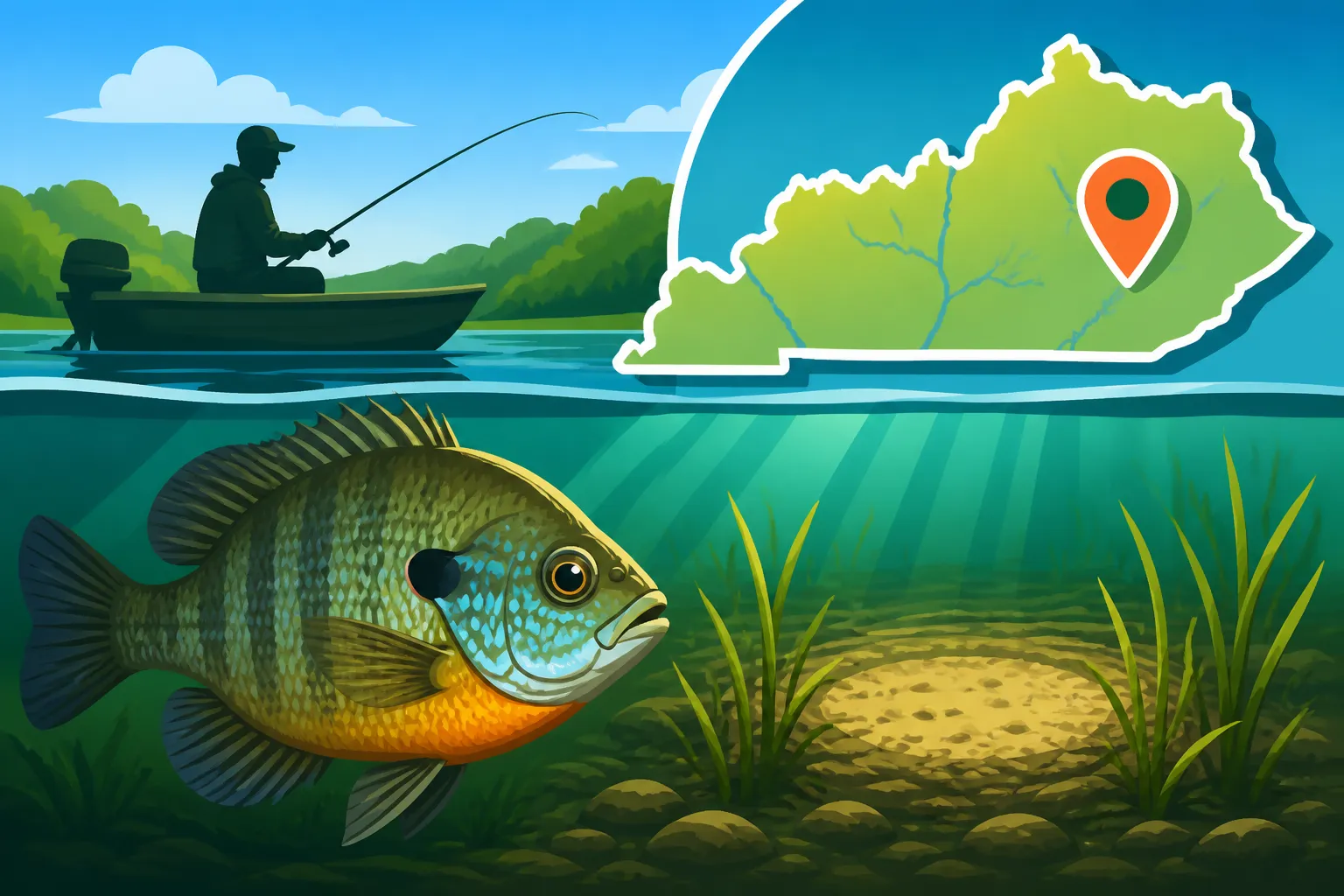
The most unmistakable visual cue is the beds themselves. Male bluegill fan out circular depressions in the substrate, removing silt and debris to expose the cleaner, harder bottom beneath. These nests, often referred to as "dinner plates" or "saucer-shaped depressions," are typically 6 to 12 inches in diameter, though they can be larger for bigger bluegill. What makes them stand out is their lighter color against the darker surrounding bottom. In clear water, from a boat or even standing on the bank, you can often see dozens, if not hundreds, of these beds clustered together in a "colony" – sometimes so tightly packed that their edges almost overlap.
The males guarding these beds also give them away. They'll often appear darker in coloration during the spawn, and you'll see them actively hovering over the nests, fanning their fins to keep the eggs clean and aerated. If you spook them, they might dart away for a moment but will typically return quickly to their post. Wearing a good pair of polarized sunglasses (you can find many excellent options on Amazon) is absolutely crucial for cutting through the water's glare and allowing you to spot these subtle but obvious signs from a distance. Without them, you're essentially fishing blind in the shallows.
The Distinct "Cucumber" Smell
This might sound strange, but many experienced panfish anglers swear by it: bluegill beds often emit a unique, subtle scent, often described as smelling like fresh cucumbers or sometimes a slightly stronger, earthy "fishy" aroma. This scent is believed to be pheromones released by the spawning fish. While not always present, especially on windy days or in heavily diluted water, on a calm, warm spring morning, as you slowly ease your boat or walk along the bank, take a moment to smell the air over those shallow coves. If you catch a whiff of that distinctive "cucumber" smell, you're likely right on top of a bluegill bed. This olfactory cue is often strongest when the beds are packed tightly together and activity is high. It’s one of those subtle, old-timer tricks that genuinely works and adds an extra layer to the fishing experience, especially for those who want to hone their fish-finding instincts. If you're struggling to identify the scent, try to smell the water immediately after catching a bluegill – that can help train your nose!
Techniques and Gear for Approaching Bluegill Beds
Once you've identified those bustling bluegill beds, how you approach and present your bait makes all the difference between a full stringer and an empty bucket. Bluegill, despite their feisty nature, can be surprisingly wary when guarding their nests.
Stealth and Presentation
Stealth is paramount when approaching bedding bluegill. Whether you're in a boat, a kayak, or fishing from the bank, loud noises, sudden movements, or casting shadows over the beds can spook the fish. If you're in a boat, use your trolling motor sparingly and at low speeds, or better yet, drift quietly into position. Kayak anglers have a natural advantage here, as they can often paddle silently into prime areas. For bank anglers, walk softly and stay low, using any available cover to conceal your presence. Avoid casting directly onto the beds initially, as a heavy splash can send fish scattering. Instead, cast slightly beyond the beds and retrieve your bait through them.
Small, natural baits are often the most effective. Live crickets, red worms, or wax worms are classic bluegill magnets. Small jigs, typically 1/32 to 1/16 ounce, tipped with a small plastic grub or tube bait, also work wonders. The key is to present these baits slowly and subtly. A lightweight rod and reel combo, like those recommended in our Best Rod and Reel Combo for Beginners guide, paired with light line (2-4 pound test fluorocarbon or monofilament), will give you the finesse needed. A small bobber, just large enough to suspend your bait, will help you control your depth and detect bites. For more specifics on rigging, check out How to Rig a Bobber for Bluegill Fishing.
Ethical Angling and Conservation
While bluegill are plentiful and make for excellent table fare, it's important to practice responsible angling, especially when fishing active spawning beds. These fish are at their most vulnerable during this time, and over-harvesting can negatively impact future populations. Consider keeping only what you plan to eat, and release the larger breeding fish to ensure continued strong spawns.
Using barbless hooks or gently de-barbing your hooks can also make releasing fish easier and less stressful for them. Try to handle fish as little as possible, and get them back in the water quickly. It's a fantastic experience to catch a mess of bluegill, especially with kids (they're definitely a Kid-Friendly Fish to Catch in Kentucky), but we want to ensure future generations of Kentucky anglers can enjoy the same abundance. Teaching conservation practices, like selective harvesting and careful release, to young anglers is a valuable lesson that lasts a lifetime. Plus, a little respect for the resource means more fantastic bluegill fishing for everyone for years to come.
Here's a quick reference for ideal bluegill bed characteristics:
| Characteristic | Description | Why it Matters |
|---|---|---|
| Water Temperature | 67-72°F (consistently) | Optimal for egg development and fry survival. |
| Depth | 6 inches to 3 feet (deeper in very clear water) | Allows for quick warming by the sun and provides light for egg incubation. |
| Bottom Composition | Hard bottom (sand, gravel, firm clay) | Prevents eggs from being smothered by silt; easier for males to fan nests. |
| Sun Exposure | Full sun exposure throughout the day | Maximizes water temperature and aids in egg incubation. |
| Current/Wave Action | Minimal (protected areas) | Prevents disruption of nests and protects delicate eggs and fry. |
| Nearby Cover | Docks, fallen trees, brush piles, lily pads, weed lines | Provides security for spawning fish and refuge for newly hatched fry. |
| Location Type | Backs of coves, protected points, expansive shallow flats, creek mouths in larger bodies of water | Sheltered areas warm up faster and offer ideal conditions for large bedding colonies. |
With these tips, you'll be well-equipped to scout and successfully fish for bluegill during their exciting spring spawn. Good luck out there, and happy fishing!
Disclaimer
This article is for general informational purposes only and does not constitute professional advice. Laws, prices and regulations vary by location and change over time. Consult a qualified professional for guidance on your specific situation.