Does Wind Direction Affect Fishing?
Oh, the wind! It's one of those elements that can make or break a fishing trip, and many an angler has stood on the bank of a Kentucky lake, eyes scanning the ripples, wondering if the breeze is a friend or foe. It’s frustrating when you’ve got your gear ready, your bait picked out, and then the wind kicks up or dies down, leaving you wondering if you should even bother. This guide is here to untangle the mystery of wind direction and its profound impact on your fishing success in the Bluegrass State, helping you understand how to use it to your advantage.
How Wind Shapes the Water and Fish Behavior
It's easy to think of wind as just an annoyance – making casting difficult, blowing your hat off, or rocking your boat. But for fish, especially game fish like bass, crappie, and catfish that we love to chase in Kentucky, wind is a powerful force that dictates their feeding patterns, where they hide, and how accessible they are to us anglers. Ignoring the wind is like ignoring the weather; it's a huge piece of the puzzle.
Stirring Up the Food Chain
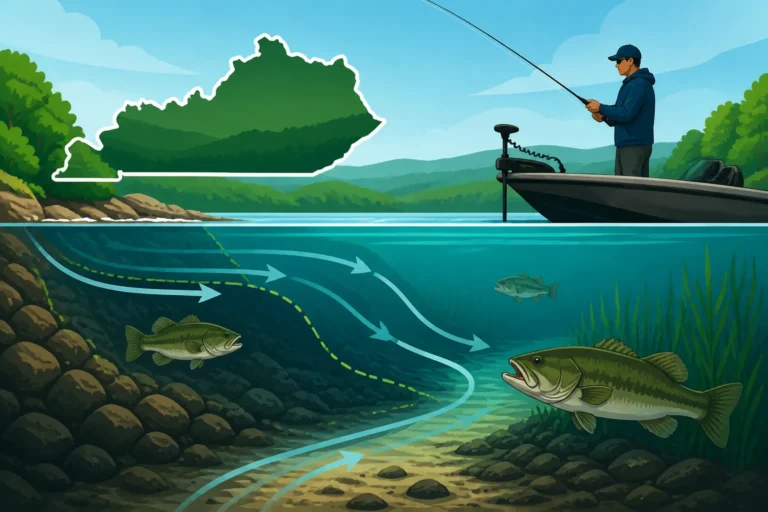
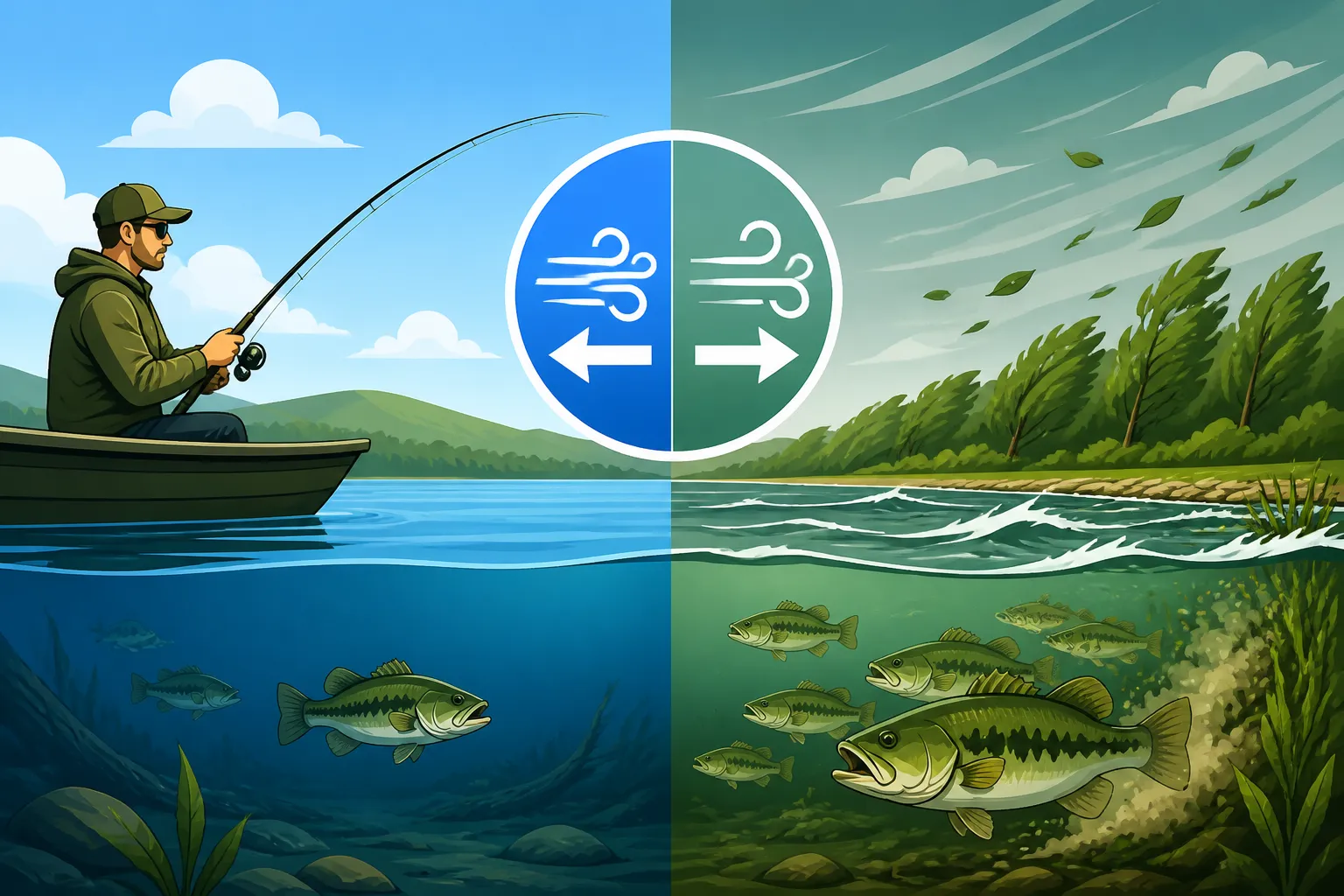
Think about what happens when the wind really starts to whip across the surface of a big lake like Kentucky Lake or Lake Barkley. It creates currents and waves, even in seemingly still water. These movements aren't just for show; they actively dislodge baitfish, insects, and other small organisms from submerged vegetation, rocks, and structure. It's like ringing the dinner bell! These smaller creatures become disoriented or simply easier targets as they're pushed around by the water movement. This often draws predatory fish into these wind-blown areas, as they know a buffet is being served.
Furthermore, these currents can push plankton and other microscopic food sources into specific areas, which in turn attracts baitfish, which then attracts the larger game fish we're after. It’s a chain reaction, and the wind is often the initial spark. If you can identify the "dirty side" or the "wind-blown bank" of a lake, you're likely on the path to finding an active feeding zone.
Oxygenation and Water Temperature
Wind plays a crucial role in mixing the water column, especially in shallower areas. On warmer days, a good breeze can help oxygenate the water, which is vital for fish health and activity. Stagnant, hot water holds less oxygen, making fish lethargic and less likely to bite. A healthy chop on the water surface increases the contact area with the air, allowing more oxygen to dissolve. This can really turn on a bite, especially in the heat of summer.
Conversely, wind can also affect water temperature. A persistent wind from a certain direction can push warmer surface water to one side of a lake, creating a "thermal barrier" where fish might congregate. Or, if it's a cold wind, it can cool surface waters, potentially driving fish deeper during transitional periods like fall or early spring. Understanding how these subtle temperature shifts occur and how to read water for fish location can give you a significant edge.
Cover and Ambush Points
Beyond food and comfort, wind also provides cover for fish. A choppy surface breaks up light penetration, making it harder for fish to be seen by aerial predators (like osprey) and even by us anglers. This sense of security can make fish bolder, moving into shallower areas or more open water to feed than they might on a calm, bright day.
For ambush predators like bass, the wind-blown side of a point, a weed line, or a submerged hump can become an ideal hunting ground. The current from the wind pushes baitfish past these structures, allowing the bass to sit in wait, expending minimal energy while waiting for an easy meal to come by. It’s all about efficiency in the fish world, and wind can create those efficient hunting scenarios.
Deciphering Wind Directions and Their General Effects
Experienced anglers often talk about "North winds are bad," or "South winds are good." While there's certainly some truth to these old adages, it's more nuanced than a simple good or bad. The actual impact often depends on the season, the local geography of the water body, and what other weather patterns are associated with that wind direction. Let's break down some common wind scenarios you might encounter while fishing in Kentucky.
North Winds: The Challenging Ones
A North wind often brings with it colder, drier air. In Kentucky, this usually means a drop in temperature, especially if it's a strong, sustained North wind. This often happens after a cold front has pushed through. Fish, being cold-blooded creatures, are highly sensitive to temperature changes. A sudden drop in temperature can make them lethargic and shut down their feeding activity. They might move to deeper, more stable water to escape the cold surface temperatures.
When a North wind blows, fishing can be tough. The fish might be scattered, holding tight to cover, or simply not interested in chasing a meal. It's not impossible to catch them, but it usually requires a slower presentation, smaller baits, and a lot of patience. If you’re out during a North wind, you might find more success exploring areas that are sheltered from the direct wind, where the water might be slightly warmer and less turbulent. For more on this, you might want to read our guide on how to fish after a cold front.
East Winds: Often Fickle and Unpredictable
The old saying goes, "Wind from the East, fish bite the least." There's often some truth to this, but it's not a hard-and-fast rule. East winds in Kentucky can be tricky because they often precede or accompany unstable weather patterns, like rain or storms. Barometric pressure changes associated with these systems can make fish uneasy and less inclined to feed aggressively.
An East wind often brings a general shift in weather stability. It might be accompanied by rising humidity or even a misty, drizzly day. Fish tend to be less active during these transitional periods when the weather is unsettled. You might find fish holding tighter to cover or simply suspending in open water, waiting for the weather to stabilize. When an East wind blows, it’s a good time to slow down your presentation and focus on known holding areas.
South Winds: Typically a Good Sign
South winds generally bring warmer, more humid air, especially here in Kentucky. This often translates to stable or rising barometric pressure, which fish usually respond positively to. A steady South wind can create good fishing conditions, especially during spring and fall, when it helps to warm the water and stimulate activity.
On a typical South wind day, you can expect fish to be more active and willing to chase baits. The warmer water and stable pressure usually mean better feeding. This is a great time to focus on wind-blown banks, points, and coves where baitfish are likely being pushed. These are the kinds of days when you can really hit that spring spawn run guide for crappie or experience the april-may peak season for bass.
West Winds: Generally Productive
A West wind often follows a weather system, pushing lingering clouds out and bringing in clearer, but not necessarily colder, air. In many cases, a West wind is associated with stable barometric pressure and decent fishing conditions. It's often a bit like a South wind in its potential to create active feeding scenarios, though it might be slightly cooler.
West winds can be excellent for concentrating baitfish and driving them into specific areas, making it easier for game fish to ambush them. Look for banks or points that have a steady West wind blowing into them. This is often where you’ll find active fish. The consistent current created by a West wind can also be great for current-loving fish like sauger and walleye.
Strategies for Fishing in Windy Conditions
So, the wind is blowing. Instead of packing up and heading home, embrace it! With a few adjustments to your approach, you can turn a challenging day into a productive one. It's all about adapting to what Mother Nature throws at you.
Adjusting Your Boat and Position
First things first, controlling your boat is paramount in windy conditions. If you're drifting, use a drift sock or even multiple drift socks to slow your pace. This allows your lures to stay in the strike zone longer and gives you more control over your presentation. For boaters with trolling motors, don’t be afraid to keep that motor on a higher setting to hold your position or move slowly against the wind. It might chew through your battery faster, but it's worth it for boat control. Some modern trolling motors, like those from Minn Kota or Motorguide, have "anchor" or "spot-lock" features that are absolute game-changers in windy situations, holding your boat precisely in place with GPS.
If you’re fishing from the bank, position yourself so the wind is at your back or at least angling away from your casting arm. This will help you cast further and more accurately. Don't be afraid to move around the lake or pond to find a spot where the wind is more manageable, or where it’s blowing directly into an area you want to fish. When fishing from a kayak, wind can be particularly challenging. Always prioritize safety, and consider using a small anchor or drift sock. Make sure you have appropriate kayak fishing safety gear for Kentucky waters, especially on big lakes like Kentucky Lake where winds can kick up quickly.
Lure Selection and Presentation
Windy conditions often call for specific types of lures and presentations. Heavier baits are your friends. Think about using jigs, spinnerbaits, or heavier crankbaits that can cut through the wind and reach the desired depth without getting blown off course. If you’re fishing soft plastics, consider adding a heavier weight to your Texas rig or Carolina rig. The added weight not only helps with casting but also keeps your bait on the bottom where fish might be holding in the current. If the water is getting muddy from the wind, consult our guide on best lures for muddy water.
Vibration and flash also become more important in choppy or stained water caused by wind. Spinnerbaits, chatterbaits, and lipless crankbaits that put off a lot of vibration can attract fish that are relying more on their lateral line than their eyesight. Bright, contrasting colors can also be effective. Don't be afraid to experiment with your retrieve speed. Sometimes a faster, more erratic retrieve works best to trigger reactionary strikes, while other times a slow, deliberate presentation is key, especially if fish are hunkering down.
Target Wind-Blown Areas
This is perhaps the most crucial strategy: actively seek out areas where the wind is blowing into the bank, a point, or a flat. These are often called "wind-blown banks" or "blow-in areas." As we discussed, the wind pushes baitfish and nutrients into these zones, creating prime feeding opportunities for game fish.
Look for signs of activity: gulls diving, baitfish flickering on the surface, or even just a general "churn" to the water that indicates current. Pay close attention to points, secondary points, and the edges of weed lines or submerged structure on these wind-blown shores. These are natural ambush points for fish. Don't neglect main lake points and humps either; if the wind is hitting them, they can be phenomenal. However, remember that wind can also push fish deeper if the surface becomes too turbulent or cold. So, always be ready to adjust your depth if you’re not getting bites.
Reading the Wind Like a Pro for Kentucky Fishing
Becoming proficient at reading the wind and understanding its implications for fishing takes time on the water, but by paying attention to a few key details, you can significantly shorten the learning curve and improve your overall success while fishing in Kentucky.
Using Technology to Your Advantage
In today's world, we have access to incredible tools that can help us predict and understand wind patterns. Before you even head out, check a reliable weather app on your phone. Look beyond just the wind speed; pay attention to the forecasted wind direction for the entire day. Many apps provide hourly wind direction and gust forecasts, which can be invaluable for planning your trip. For example, if you're planning a trip to Lake Cumberland, knowing if a strong North wind is expected can help you decide which side of the lake to target or whether to even go at all.
Beyond basic weather apps, some more advanced marine weather apps offer detailed insights into sustained winds, gusts, and even wave heights, which are critical for safety and planning on larger bodies of water. You can find many of these apps on platforms like Amazon, and they can be a worthy investment for dedicated anglers. This information allows you to anticipate conditions and make informed decisions about where to launch your boat, which areas to fish, and what gear to bring.
Observing Local Microclimates and Topography
While general wind directions give us a good starting point, every body of water, especially in Kentucky with its diverse terrain, has its own unique microclimates and topographical features that influence how the wind impacts the water. A strong West wind might be brutal on one side of a ridge-lined lake but almost nonexistent in a sheltered cove on the other side.
Pay attention to hills, bluffs, and tree lines. These can create wind blocks or funnels, concentrating the wind in certain areas while completely sheltering others. When you arrive at your fishing spot, take a moment to observe the water. Look for wind lanes, ripples, calm pockets, and areas where the wind is directly pushing water. Often, these visible clues will tell you more about where the fish might be holding than any general forecast. Even how the waves are breaking against the shore can give you hints about the strength and direction of the currents below. Learning to read water for fish location is an ongoing process, and wind is a huge part of that.
Practical Tips for Anglers
- Dress for the Wind: Even on a warm day, a strong wind can make it feel much cooler, especially on the water. Bring extra layers and consider wind-resistant clothing.
- Secure Your Gear: Nothing is more frustrating than losing a hat, a tackle box lid, or even a rod overboard because of a sudden gust. Make sure everything is tied down or stowed securely.
- Eyes on the Water: Constantly observe the water surface. Changes in wind speed or direction can happen quickly, and observing them allows you to adjust your presentation or location in real time.
- Practice Casting: Windy days are great for practicing your casting accuracy and learning to cast into or across the wind effectively. It’s a skill that will serve you well.
- Consider Safety: Strong winds can make boating hazardous, especially on large, open waters like Kentucky Lake or Lake Barkley. Always check the forecast, know your boat's limits, and wear your life jacket. If conditions look too rough, it’s always better to reschedule or find a more sheltered location. Sometimes, a quiet afternoon bank fishing might be the best option when the big waters are too wild.
| Wind Direction | Typical Effect on Kentucky Weather | Common Fishing Impact | Strategic Response |
|---|---|---|---|
| North | Colder, drier air, often post-cold front, falling temps. | Fish often lethargic, move deeper, scattered. | Slow down, smaller baits, target sheltered spots. |
| East | Unstable, humid, pre-frontal, often bringing rain/storms. | Fish can be uneasy, less active, finicky. | Slow, deliberate presentation, focus on cover. |
| South | Warmer, humid air, stable or rising pressure. | Fish generally active, good feeding stimulated. | Target wind-blown banks, points; aggressive retrieves. |
| West | Clearer air, stable pressure, can be moderate to strong. | Good activity, concentrates baitfish. | Focus on wind-beaten shores, main lake points. |
Understanding how weather fronts affect fishing times, including wind, is a continuous learning process for every angler. Don't be discouraged by a windy day; instead, see it as an opportunity to sharpen your skills and learn to read the water more intimately.
Disclaimer
This article is for general informational purposes only and does not constitute professional advice. Laws, prices and regulations vary by location and change over time. Consult a qualified professional for guidance on your specific situation.