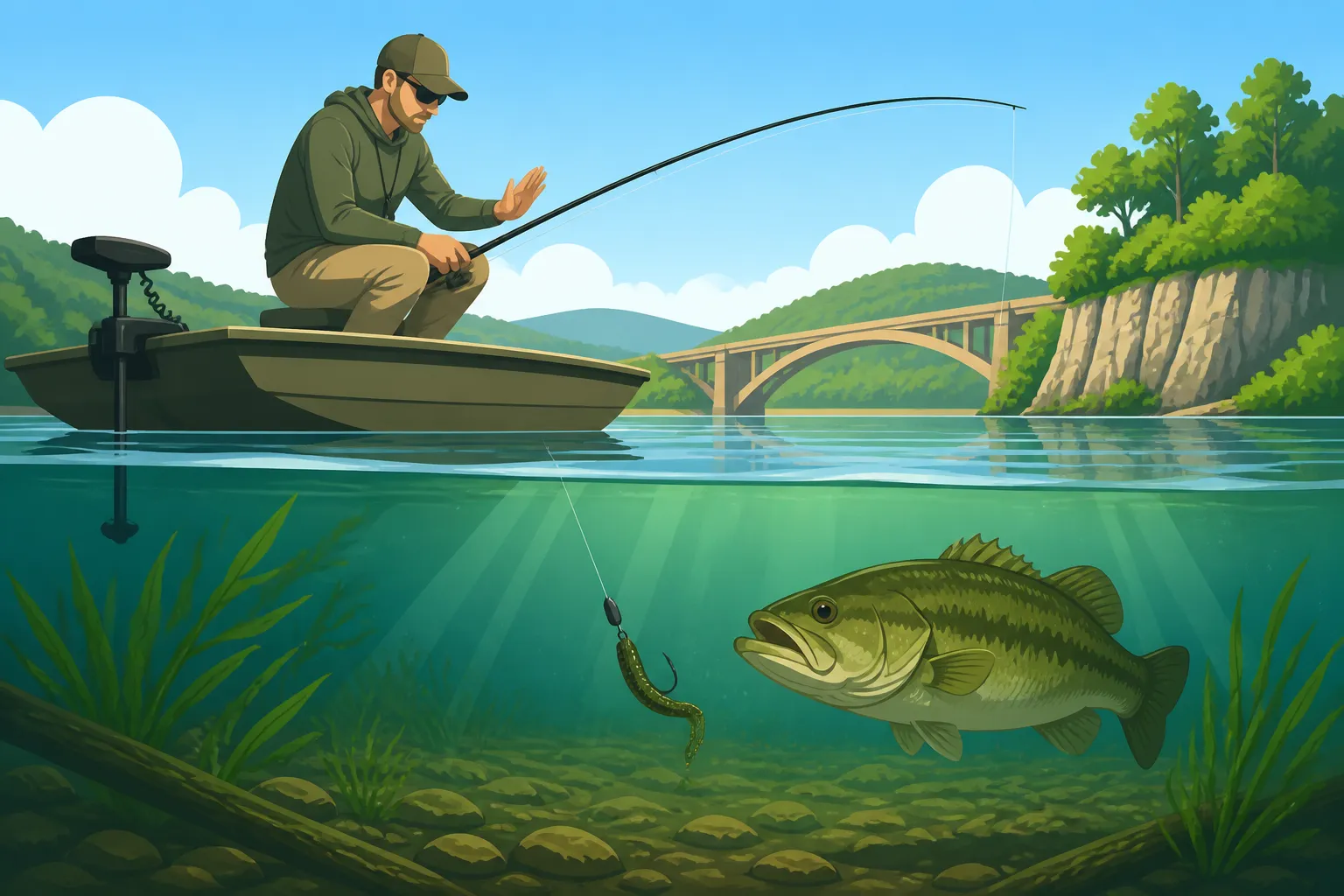
How to Fish From a Boat Without Spooking Fish
Ever been out on a beautiful Kentucky lake, spotting that perfect cover, only to have your boat engine or clumsy approach send every fish scattering before you even get a cast in? It's a tale as old as time, and incredibly frustrating. This guide is all about helping you understand why fish spook and, more importantly, how to refine your boat handling and on-water techniques to approach your target spots like a stealthy predator, not a noisy intruder, maximizing your chances of a successful day on the water.
Understanding Why Fish Spook: Their World Through Our Noise
Fish live in a world where senses are finely tuned to survival. While we often think about what they see, their perception of vibrations and sounds traveling through water is far more acute than many anglers realize. What might seem like a minor bump or hum to us can be a blaring alarm bell for a fish, sending them fleeing for cover. Understanding these sensory inputs is the first step to becoming a more effective, and quieter, angler.
How Fish Perceive Sound and Vibration
Think about it: water is an incredibly efficient conductor of sound and vibration. Unlike air, where sound dissipates fairly quickly, in water, vibrations travel much faster and further. Fish have evolved to detect these subtle changes. Their lateral line system, a series of sensory organs running along their sides, is specifically designed to pick up pressure changes and low-frequency vibrations in the water. This is their early warning system, telling them a predator is approaching, or perhaps, in our case, a big, noisy boat.
Beyond the lateral line, their inner ears also pick up sound waves. These aren't just for hearing in the way we understand it, but for detecting subtle nuances in the underwater environment. A dropped tackle box, the clang of an anchor chain, or even the hum of a two-stroke engine can create a distinct acoustic signature that fish associate with danger. Even a simple stomp on the boat deck can send vibrations radiating through the hull and into the water, signaling your presence long before your lure ever hits. For many species, especially wary ones like largemouth bass or skittish crappie in clear water, any unusual disturbance is a cue to bolt.
Visual Cues and Shadows
While noise and vibration are huge factors, visual disturbances are equally important, especially in clear water or during bright conditions. A large, dark shadow passing over a shallow flat or a weed bed can instantly alert fish. Imagine being a fish, perfectly camouflaged in the reeds, when suddenly a massive, dark shape blocks out the sun. Your first instinct would likely be to hide or flee, right? It's no different for them.
The silhouette of your boat, your body movements, and even the glint of sunlight off a shiny object on your deck can be perceived from a surprising distance. This is why many experienced anglers wear drab clothing and move slowly, minimizing abrupt motions. When you're drifting silently, but your buddy is waving his arms around like a madman, you're still creating a visual disturbance that can put fish on edge. Especially in calm, clear conditions, the combination of visual and vibrational cues can make a spot un-fishable if you're not careful. This is particularly true when you're targeting shallow water species like bass hiding in lily pads or crappie suspended just under a dock.
Stealthy Boat Approaches and Positioning
Mastering the art of a silent approach is perhaps the most critical skill for boat anglers. It's not just about turning off your engine; it's a holistic strategy that involves reading the water, understanding the wind, and using your trolling motor effectively. Each decision you make about how you position and move your boat impacts your success.
Using the Wind and Current to Your Advantage
One of the oldest tricks in the book is letting Mother Nature do the work. Instead of powering into a spot, try to approach with the wind or current. This allows you to drift silently into casting range. Position your boat well upwind or upstream from your target area, cut your main engine, and let the elements gently guide you. You can use your trolling motor sparingly to make small course corrections, keeping it on the lowest possible setting.
This technique is fantastic for covering long stretches of shoreline or expansive flats where fish might be scattered. As you drift, you're presenting a much smaller, less intrusive profile. If you have a shallow cove with brush piles you want to hit, start your drift a hundred yards out. You'll enter the prime fishing zone with minimal disturbance, giving you several productive casts before you need to adjust. This also helps mask any subtle noises you might still make, as the natural movement of the water creates its own ambient sound. Just be mindful of your anchor if you decide to stop the drift; deploying it quietly is key to not undoing your stealthy approach.
Strategic Trolling Motor Use
The trolling motor is your best friend for stealth, but even these quiet giants can spook fish if misused. The key is to run it at the lowest possible thrust setting needed to maintain your position or direction. Instead of constantly adjusting the speed and creating a surging noise, try to find a consistent, low speed. Many modern trolling motors, like those available on Amazon from brands like Minn Kota or MotorGuide, are designed to be incredibly quiet, but operator error can still negate their benefits.
When approaching a spot, use your trolling motor to push you into the area rather than pull you. This keeps the prop wash and motor hum behind you, moving away from the fish you're trying to target. If you're fishing a specific piece of structure, approach it from a direction that allows you to make your first casts before your boat is directly over or beside it. For example, if you're targeting a submerged hump, approach from the deeper side and cast towards the shallower peak, then slowly move over it once you've worked the prime areas. Learning how to effectively use your trolling motor's spot-lock or anchor mode can also be a game-changer for holding position silently once you've arrived. This minimizes constant corrections and keeps the noise to a minimum.
Planning Your Casting Angles
Before you even start your approach, visualize your target and plan your casting angles. Your goal is to get your lure to the fish before they even know your boat is there. This often means making long, accurate casts that land softly. If you're fishing a laydown or a brush pile, cast past it and retrieve your lure into the target zone, rather than having your lure plop down right on top of it.
Consider the sun's position. Casting with the sun at your back can sometimes project your boat's shadow ahead of you, but it also allows you to see better into the water. Conversely, casting into the sun can make your boat less visible but can make it harder for you to see subtle bites. Experiment with different angles. If you're fishing alongside a weed line, try casting parallel to it, keeping your boat a good distance away. For a dock, cast under or past it, retrieving your lure through the strike zone. The idea is to always present your bait in a natural way, minimizing the impact of your boat's presence. Remember, the fish are almost always looking up, so any unnatural movement or shadow from above will grab their attention instantly.
Minimizing Noise and Vibration Onboard
Even with a perfect approach, internal boat noise can ruin your efforts. Everything from your gear to your livewell pump can create vibrations that travel through the hull and into the water. Developing good habits and investing in a few key items can make a world of difference.
Controlling Gear Noise
One of the biggest culprits of spooking fish is inadvertently dropping things on the deck or having loose gear clatter around. A tackle box clanking, pliers hitting the aluminum, or even a rod butt thumping against the fiberglass can send vibrations far and wide. The solution is simple: organize your gear and secure it. Use soft-sided tackle bags instead of hard plastic boxes. Lay tools down gently, or better yet, have designated spots for them with some sort of dampening material underneath. Many anglers use rubber mats or carpet scraps in their compartments to absorb sound. You can find all sorts of boat organization solutions on Amazon that help keep things tidy and quiet.
When moving around the boat, try to shuffle your feet rather than stomping. If you have a partner, communicate the need for silence. Think of it like hunting: sudden, loud noises alert game. The same applies to fish. If you need to retrieve something from a storage compartment, do it slowly and deliberately. If you're changing lures, have your tools ready to minimize fumbling. Even reeling in a heavy fish and letting it flop on the deck can send alarm signals to nearby fish, so try to net them smoothly or bring them aboard with minimal fuss.
Managing Engine and Livewell Noise
While your main engine should be off during your stealthy approach, there are times you'll need to use it. When moving from spot to spot, try to run at a consistent, moderate speed rather than constantly revving and decelerating, which creates more noise. When you do approach a fishing area, cut the engine well in advance and switch to your trolling motor. The further you are from your target when the big engine shuts down, the better.
Livewells can also be surprisingly noisy. The constant hum of the pump, or the sloshing of water and fish inside, can create a continuous, low-frequency vibration. If your livewell is particularly loud, consider adding some foam insulation around the pump or inside the well to dampen the sound. Some anglers will even turn off the livewell for short periods if they're in a highly sensitive area, especially if they're targeting species that are known to be easily spooked. Of course, always prioritize the health of your catch, but be mindful of how long you keep it off.
Here's a quick table summarizing common noise sources and their solutions:
| Noise Source | Description | Solution |
|---|---|---|
| Dropped Gear | Tackle boxes, pliers, rods hitting deck. | Soft-sided bags, rubber mats, designated quiet spots, slow movements. |
| Engine Noise | Main engine starting/running too close to spot. | Cut engine well in advance, use trolling motor for final approach. |
| Trolling Motor Hum | High thrust, constant speed changes, prop wash. | Low, consistent thrust, approach with prop wash behind, use spot-lock. |
| Footsteps/Movement | Stomping, shuffling, sudden movements on deck. | Soft-soled shoes, deliberate movements, communicate with partners. |
| Livewell Pump/Slosh | Constant hum, water/fish sloshing inside well. | Insulate pump, consider temporary shut-off in critical areas. |
| Anchor Drop | Anchor chain clanging, heavy anchor splash. | Controlled descent, chain mufflers, silent anchor systems. |
Using Electronics Wisely
Modern fish finders and sonar units are incredible tools, but even they can create subtle noise or visual disturbance. Your transducer pings constantly, sending out sound waves. While most fish are accustomed to these pings in heavily fished waters, highly pressured or wary fish might still react. Keep your transducer settings appropriate for the depth and clarity of the water; excessively high sensitivity can sometimes be more noticeable.
More importantly, the display itself can be a source of light, especially during low-light conditions like dawn or dusk. If you're fishing in near darkness, the bright glow of your screen can act like a beacon. Dim your screen brightness as much as possible, or use a "night mode" if your unit has one. When moving over a potential fishing spot, try to glance at your screen quickly rather than staring at it, and be mindful of your shadow if the screen is casting light on the water. Properly interpreting what you see on your Fish Finders and Electronics for Kentucky Lake Fishing can help you avoid driving directly over fish you're trying to target, allowing for a quieter approach.
Advanced Tactics for Difficult Fish
Sometimes, even with the best stealth, fish are just plain lock-jawed or hyper-sensitive. This is where you need to pull out a few extra tricks from your bag and truly adapt to the conditions and the fish's mood.
Long Casts and Light Tackle
When fish are skittish, distance is your friend. Practice making long, accurate casts that drop your lure softly into the strike zone. This minimizes your boat's proximity to the fish, giving them less reason to spook. Pair this with lighter tackle, which inherently makes less splash and disturbance. A lighter line, a sensitive rod, and a well-tuned reel for your Best Rods and Reels for Kentucky Fishing can make all the difference. Think about using fluorocarbon line, which is less visible underwater, and choosing lures that create minimal splash upon entry.
For example, when targeting finicky crappie in clear water, a tiny jig on light line with a long, parabolic cast can often draw strikes where a heavier, splashier presentation would send them scattering. The same goes for bass: sometimes a weightless worm that gently sinks into a pocket of cover is far more effective than a jig and pig that lands with a loud "plop." Remember, the further away your boat is from the actual strike zone, the less likely the fish are to associate your offering with a threat. This is especially vital in lakes known for their clear water and pressured fish, like parts of Lake Cumberland.
Utilizing Shallow Water and Deep Water Strategies
Fish often use changes in depth and cover as a refuge from perceived threats. Understanding how they use these areas can help you approach them more effectively. In shallow water, especially in clear conditions, fish are highly sensitive to overhead shadows and vibrations. This is where long casts, a quiet trolling motor, and keeping the sun at your back can be paramount. Approach shallow cover like lily pads, stumps, or docks from a distance, allowing your casts to reach the target before your boat's shadow ever gets close. For example, when fishing for bass in the shallows of Kentucky Lake The State's Top Bass Fishing Destination, a 50-foot cast can make all the difference.
For fish in deeper water, visual cues become less of an issue, but sound and vibration still travel. Here, your sonar and mapping capabilities become critical. Instead of driving directly over a submerged hump or a deep brush pile, use your electronics to identify its exact location, then approach from upwind or upstream, stopping your boat a comfortable casting distance away. You can then make repeated casts to the structure without ever positioning your boat directly above it. This means you need to understand your electronics well enough to pinpoint structure before you're on top of it. Remember that while fish in deep water may not see you, they'll certainly feel the vibrations of an anchor dropping or a prop beating the water. When dealing with deep structure, consider using your Fish Finders and Electronics for Kentucky Lake Fishing to identify fish before moving into a casting position, and then use your trolling motor's anchor feature to hold quietly. If you're fishing a kayak, your inherently stealthy nature makes these deep-water approaches much easier, which is why Best Fishing Kayaks for Kentucky Lakes and Rivers are so popular.
Patience and Observation
Ultimately, the best advice for not spooking fish from a boat comes down to patience and observation. Take your time. Don't rush into a spot. Observe the water for signs of fish activity – subtle rises, baitfish scattering, or even the flick of a tail near cover. These are all clues that fish are present and potentially active. If you approach too quickly, you might miss these vital signals.
Once you've made a stealthy approach, pause. Listen. Look. Sometimes, just sitting quietly for a few minutes after cutting the engine can allow any disturbed fish to resettle. Pay attention to how the wind and current are affecting your boat, and how they might carry your scent or vibrations. Becoming a truly stealthy angler isn't about one magic trick; it's about combining all these techniques into a seamless, natural approach that respects the fish's environment. The more you practice, the more intuitive these actions will become, and the more successful your fishing trips will be. So, take a deep breath, slow down, and become one with the water.
Disclaimer
This article is for general informational purposes only and does not constitute professional advice. Laws, prices and regulations vary by location and change over time. Consult a qualified professional for guidance on your specific situation.