Best Crappie Jig Colors for Stained Water
There’s nothing quite as frustrating as heading out for a promising day of crappie fishing in Kentucky, only to arrive at your favorite spot and find the water looking like a murky cup of coffee. That stained or muddy water can make even the most seasoned angler scratch their head, wondering if their go-to jigs will even be seen. But don't throw in the towel just yet! This guide is all about navigating those challenging conditions, helping you pick the absolute best crappie jig colors that will shine – literally – when the water isn't perfectly clear.
Understanding Stained Water and Its Impact on Crappie Fishing
Before we dive into specific colors, let's chat about what "stained water" actually means and why it changes the game for crappie. It's not just about visibility for us; it's about how the fish perceive their world and, more importantly, how they find their next meal.
What Makes Water "Stained" in Kentucky?
In Kentucky, stained water is a pretty common occurrence, and it can be caused by a variety of factors. Often, it's the result of heavy rainfall, especially after a dry spell, which washes sediment, soil, and organic matter from the surrounding land into our lakes and rivers. Think of the Cumberland River after a spring deluge, or one of the shallower coves on Kentucky Lake following a thunderstorm. This runoff gives the water a cloudy, often brown or reddish tint.
Algae blooms can also contribute to stained conditions, giving the water a greenish or yellowish hue, particularly in warmer months. Then you have natural tannin stains from decaying leaves and wood, which can make the water look like iced tea, especially in areas with a lot of cypress trees or slow-moving backwaters. The bottom line is, stained water isn't always the same shade of murky, and understanding its source can sometimes give you a clue about what's going on beneath the surface.
How Stained Water Affects Crappie Behavior and Visibility
Crappie, like most fish, rely heavily on their eyesight to hunt for food. In clear water, they can easily spot a small minnow or a subtle jig from a distance. But when the water gets stained, that visual advantage goes right out the window. Their field of vision shrinks dramatically, meaning they have to get much closer to your bait to even detect it. This is where your choice of jig color becomes absolutely critical.
Beyond sight, crappie also use their lateral line system to detect vibrations in the water, which helps them locate prey in low visibility. While we're focusing on color, it's important to remember that presentation and subtle movements still play a big role. However, if they can't see or feel your jig, you're essentially fishing in the dark. The goal in stained water is to present a jig that offers the best possible visual contrast, making it as easy as possible for that crappie to zero in on your offering. It's a bit like trying to find a needle in a haystack, and our job is to make that needle glow.
The Science Behind Crappie Jig Colors in Stained Water
Choosing the right color isn't just guesswork; there's a bit of science involved. Light behaves differently as it penetrates water, and certain colors are simply more visible under adverse conditions. Understanding this can give you a significant edge when the bite is tough.
Light Penetration and Color Visibility
Water absorbs and scatters light, and different wavelengths (colors) of light are absorbed at different rates. Red light, for instance, is the first to be absorbed, disappearing quickly even in relatively clear water. That's why deep-sea creatures are often red – they appear black at depth. Orange and yellow follow. Blues and greens penetrate much deeper. However, this is for clear water.
When water is stained or muddy, particulate matter in the water significantly reduces light penetration across the entire spectrum. This means that even colors that normally penetrate deep in clear water will struggle. The key here isn't necessarily which color penetrates deepest, but which color creates the most contrast against the murky background, reflecting what little light is available, or even glowing. This is why bright, artificial colors often outperform natural hues in stained conditions.
High-Contrast vs. Fluorescent Colors
In stained water, you generally want to lean towards colors that offer high contrast or possess fluorescent properties. High-contrast colors, like a stark black, create a strong silhouette against any ambient light, making them easier for a crappie to see from below, even if the overall visibility is poor. Think of a black silhouette against a slightly lighter, murky sky.
Fluorescent colors, on the other hand, contain pigments that absorb ultraviolet (UV) light and re-emit it as visible light, often making them appear to "glow" or be much brighter than they actually are. Even if the water filters out most visible light, some UV light can still penetrate. This is why colors like chartreuse, certain greens, and hot pinks can be incredibly effective in stained water, even when they look "too bright" to our eyes above the surface. These colors are essentially maximizing the available light, however dim, to stand out. Many excellent crappie jigs, which you can find readily on platforms like Amazon, leverage these fluorescent properties to great effect.
Top Crappie Jig Colors for Stained Water in Kentucky
Now that we understand the 'why,' let's get down to the 'what.' Based on experience and what the fish tell us, some colors consistently outperform others when the water is murky.
Chartreuse and Bright Greens
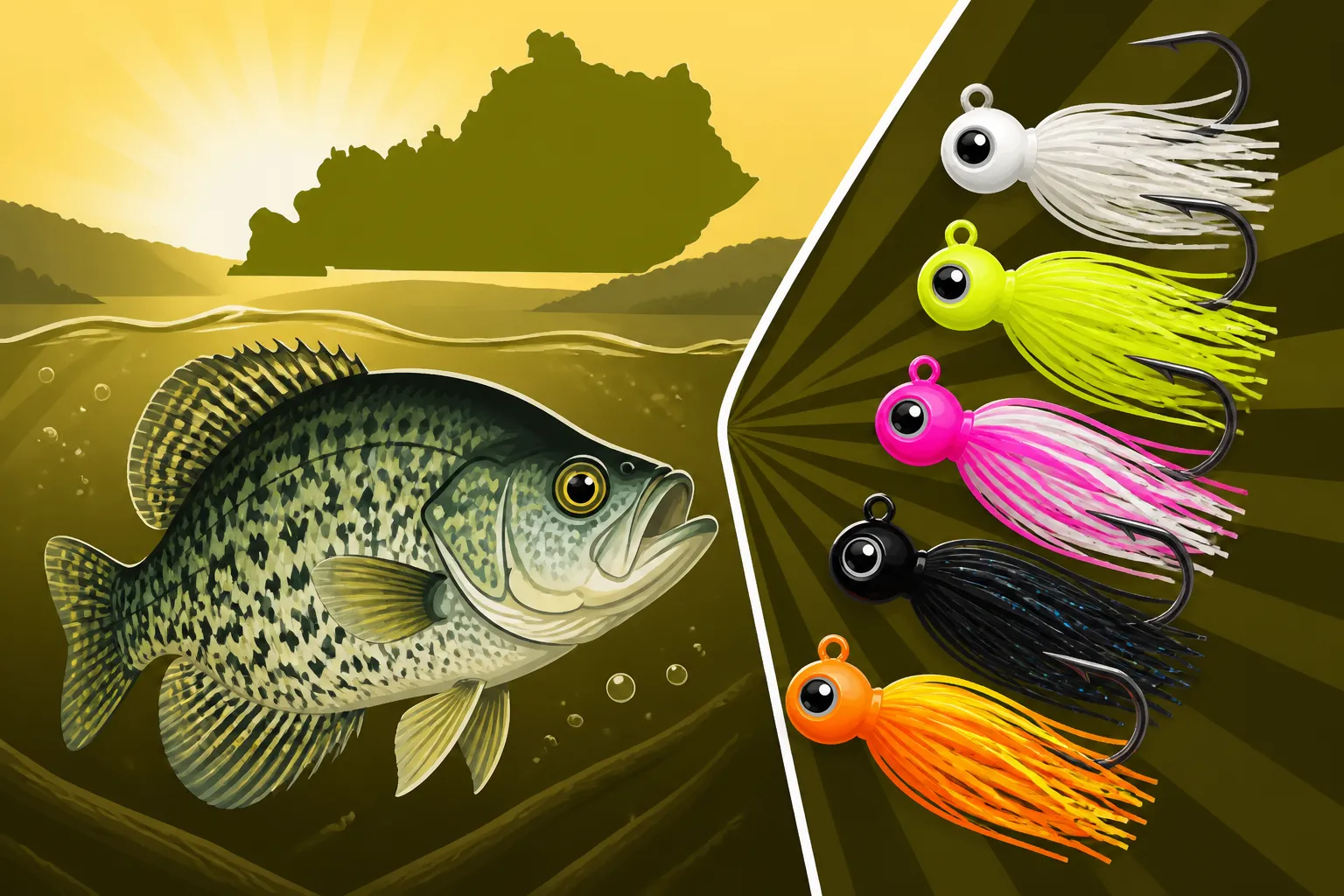
If there's one color that screams "stained water crappie magic," it's chartreuse. This bright, almost neon yellow-green is a perennial favorite for a reason. Its intense fluorescent properties allow it to absorb and re-emit light, making it incredibly visible even in heavily clouded water. When you're fishing a tributary off the Ohio River after a rain, and the water is chocolate milk, a chartreuse jig is often the first one you should tie on. It literally glows in those dim conditions, providing a beacon for crappie that are trying to home in on a meal.
Beyond pure chartreuse, bright lime green and even some electric green variations work wonders. These colors can mimic juvenile baitfish that might be struggling in adverse conditions, making them an easy target. Don't be afraid to go with vibrant, almost unnatural shades; natural colors tend to disappear quickly in murky water. It's also a fantastic choice when targeting crappie that might be hunkered down deep in stained water, where light penetration is minimal.
Orange, Red, and Hot Pinks
While red is the first color to disappear in clear water, in stained water, particularly those with a brownish tint, variations of orange and red can actually perform exceptionally well. Think about it: a brownish stain already absorbs a lot of the blue and green light. In these conditions, orange and red can sometimes provide a surprising contrast, especially if there's still some diffuse sunlight. A fire-tiger pattern, which often incorporates orange and black, is a testament to this principle.
Hot pinks are another excellent, often overlooked, choice. Like chartreuse, hot pinks often have strong fluorescent properties that help them stand out in low-light conditions. They offer a unique color profile that crappie might not see as often, triggering an aggressive strike. When you're fishing those slightly off-color pockets on Lake Barkley, trying a hot pink jig, perhaps a small tube jig or a curly tail, could be the difference-maker. These colors can be particularly effective during overcast days or in the low light of dawn and dusk, when the overall light levels are reduced.
Black and Darker Hues
This might seem counterintuitive when we're talking about visibility, but black jigs can be incredibly effective in stained water due to the silhouette effect. Against any ambient light, however dim, a black jig creates a stark, distinct profile. Crappie, seeing from below, will perceive a clear outline of a potential meal moving through the water. This is especially true on brighter, overcast days where there's still light filtering through the clouds, or when crappie are positioned looking upwards.
Beyond solid black, darker shades like deep purple or even a dark blue can work on the same principle, offering a strong contrast. These darker colors are often paired with a bright accent, like a black and chartreuse jig, which combines the silhouette appeal with a bit of flash. Don't underestimate the power of a simple black jig, especially in heavily muddied waters where bright colors might just blend into the general cloudiness. Sometimes, less is more, and a strong, dark profile is all it takes.
Two-Tone Combinations
Often, the magic happens when you combine colors. Two-tone jigs are incredibly popular for a reason, and they truly shine in stained water. The combination allows you to leverage multiple visibility principles at once. A jig with a bright head (like chartreuse) and a darker body (like black or dark blue) can provide both the glowing attraction and a strong silhouette. Consider a black and chartreuse jig. The chartreuse tail might flutter and flash, while the black body provides a solid, easy-to-track profile.
Another excellent combination is pink and chartreuse, or orange and chartreuse. These vibrant pairings really pop in murky conditions, offering a level of visual appeal that a single color might not achieve. When exploring different options, you can find a vast array of two-tone crappie jigs available from various retailers, including a wide selection on Amazon, making it easy to experiment with different combinations. Always keep a variety of these dual-color options in your tackle box, ready to adapt to whatever shade of stained water you encounter.
Matching Jig Colors to Specific Stained Water Conditions
Not all stained water is created equal. The degree of murkiness can dictate which colors will perform best. Let's break down how to choose based on the specific conditions you're facing.
Heavily Stained (Muddy) Water Strategies
When the water is truly muddy – often looking like chocolate milk after significant rainfall or strong winds churning up the bottom – visibility is at its absolute worst. In these conditions, you need colors that are loud and proud. This is where chartreuse truly becomes your best friend. Its intense fluorescent properties cut through the murk better than almost anything else.
Hot pinks and bright oranges also shine here, again, because of their ability to stand out and reflect what little light is present. Often, you'll want to pair these bright colors with a larger jig profile to displace more water and provide more visual bulk. Consider a chartreuse and black jig combination, where the black provides a strong silhouette against the extreme murk, and the chartreuse adds that critical pop. You'll likely need to fish slower and closer to cover, giving crappie ample time to locate your offering. This is also a good time to consider adding scent to your jigs, as other senses become more important when sight is impaired.
Slightly Stained (Dingy) Water Approaches
Slightly stained or "dingy" water is a bit different. It's not crystal clear, but it's not completely opaque either. This might be water with a light tannin stain, or water that's just starting to clear up after being muddy. In these conditions, you have a bit more flexibility, but the principles of contrast and visibility still apply. Chartreuse and bright greens are still excellent choices. However, you might find that less intense versions, or even colors with subtle glitter, can be very effective.
This is a great scenario for black and chartreuse, or even a white and chartreuse combo. White can surprisingly pop in dingy water, creating good contrast. You might also experiment with lighter oranges or even some pearl-colored jigs, as they can reflect diffuse light well without being overly aggressive. Think about the water in a slightly murky creek on a bright, sunny day—you want something that stands out without being so bright it spooks fish in conditions where they can still see a little. This also might be a good time to revisit your Kentucky Fishing Regulations Explained to ensure you're compliant with any specific rules for the water you're fishing.
Factor in Cloud Cover and Time of Day
The ambient light conditions above the water's surface also play a huge role in how visible your jig color will be. On bright, sunny days, even in stained water, there's more light available for your fluorescent jigs to absorb and re-emit. So, your chartreuse, hot pinks, and bright oranges will really pop. This is especially true for crappie holding in slightly deeper water, where some sunlight might still penetrate.
Conversely, on heavily overcast days or during the low light periods of dawn and dusk, the overall light levels are significantly reduced. In these scenarios, the silhouette effect becomes even more crucial. While bright fluorescents can still work, a black or dark-colored jig, or a dark-bright combination, might be more effective. The goal is to provide the most distinct visual cue possible with the limited light available. When you're fishing for crappie during these times, especially in those slightly off-color waters, remember that sometimes a strong dark outline is more important than a vibrant color.
Beyond Color: Other Factors for Stained Water Crappie Success
While color is undeniably important, it's just one piece of the puzzle. In stained water, you often need to adjust other aspects of your presentation to entice those finicky crappie.
Jig Size and Profile
When visibility is low, crappie often rely more on their lateral line to detect vibrations. This means a slightly larger jig or one with a more substantial profile can be more effective. A bigger jig displaces more water, sending out stronger vibrations that crappie can feel from a greater distance. Instead of your tiny 1/32 oz jig, consider bumping up to a 1/16 oz or even a 1/8 oz in extremely murky conditions.
Curly-tail grubs are excellent in stained water because the tail creates a lot of action and vibration, even on a slow retrieve. Paddle-tail swimbaits also have a great thumping action that crappie can feel. Sometimes, just increasing the size of your bait or choosing one with a more active tail can significantly increase your strike rate when fish can't see as well. Experiment with different shapes and sizes from your tackle box to see what gets their attention.
Scent and Noise
Since their vision is compromised, crappie in stained water often rely more heavily on their sense of smell and their ability to detect sound and vibration. This makes adding scent to your jigs a powerful tactic. There are many commercial crappie attractants available, often in gel or liquid form, that you can apply directly to your jigs. Scents like garlic, shad, or crawfish can provide an irresistible aroma that leads crappie right to your bait. Many jigs even come pre-infused with scent.
You can also consider jigs with built-in rattles. These small chambers contain tiny beads that create subtle clicking sounds as the jig moves through the water. While too much noise can sometimes spook fish, a subtle rattle can be just enough to draw attention in murky conditions. When you're trying to figure out What Can You Catch During Kentucky's Free Fishing Weekend in stained water, don't forget to pack some scented jigs or rattles!
Presentation and Depth
Your presentation style and the depth you're fishing are just as crucial as color in stained water. Crappie in low visibility conditions are typically less willing to chase. They're more likely to hold tight to cover – brush piles, fallen trees, dock pilings – and ambush prey that comes directly into their strike zone. This means you need to slow down your retrieve significantly. A slow, steady retrieve with occasional pauses often works best, giving the crappie more time to react.
Furthermore, you often need to fish closer to the structure and at the precise depth where the crappie are holding. Using your fish finder, if you have one, becomes even more important to locate those schools. If you're bank fishing, focus on visible cover or drops-offs. Crappie in stained water might be shallower, seeking warmer water or the best light penetration, or they might be tucked deeper into cover. Vertical jigging directly over structure or slowly trolling can be highly effective strategies to keep your bait in the strike zone longer. This might involve techniques covered in our guide on How to Jig for Crappie in Shallow Water or even exploring deeper water tactics.
Table: Crappie Jig Color Guide for Stained Water
To help you quickly reference the best choices, here's a handy table summarizing our recommendations for different stained water conditions:
| Water Clarity Level | Best Jig Colors Recommended | Key Reason for Effectiveness | Best Scenarios | Considerations Beyond Color |
|---|---|---|---|---|
| Heavily Stained/Muddy | Chartreuse, Hot Pink, Bright Orange, Black, Chartreuse/Black | Extreme fluorescence, strong silhouette, high contrast | Post-rain runoff, turbid rivers (e.g., Ohio River tributaries), windy conditions | Larger profile, slower retrieve, add scent, fish tight to cover |
| Slightly Stained/Dingy | Chartreuse, Lime Green, White, Pearl, Orange, Pink/Chartreuse | Good contrast, reflect diffuse light, moderate fluorescence | Light tannin stains, clearing water after a rain, cloudy days | Standard profile, varied retrieve, focus on active fish |
| Low Light (Dawn/Dusk/Overcast) | Black, Dark Purple, Chartreuse, Two-Tone (Dark/Bright) | Strong silhouette effect, high fluorescence in dim light | Early morning, late evening, heavily overcast skies, deep water | Consider jig with rattles, precise depth, slow-rolling retrieve |
Keep this table in mind, but always be willing to experiment. What works one day might not work the next, even in similar conditions. That’s the beauty and the challenge of crappie fishing!
Final Thoughts on Conquering Stained Water Crappie
Fishing for crappie in stained water doesn't have to be a frustrating experience. By understanding how low visibility affects these fish and arming yourself with the right jig colors and techniques, you can turn a challenging day into a successful one. Remember, it’s all about helping those crappie find your bait when their natural instincts for visual hunting are hampered.
Always have a good selection of chartreuse, hot pink, orange, and black jigs in various sizes and two-tone combinations in your tackle box. Explore options you can order from Amazon to ensure you're well-stocked. Don't forget to combine your color choice with the right jig profile, perhaps some added scent or subtle noise, and a slow, deliberate presentation. Adapting to the conditions is what makes a great angler, and mastering stained water crappie fishing is a rewarding skill to add to your repertoire. And always be sure to check the specific Kentucky Fishing Regulations Explained for your chosen water body, as rules can vary. Good luck out there, and tight lines!
Disclaimer
Please remember that fishing regulations and conditions can change. Always consult the most current Kentucky Department of Fish and Wildlife Resources guidelines before heading out on the water. This article provides general information and recommendations, but local conditions, weather, and fish behavior can vary greatly. Stay safe and fish responsibly.