Longear Sunfish and Redbreast Sunfish in Kentucky Waters
Have you ever spent a peaceful afternoon on a Kentucky lake or stream, casually reeling in fish after fish, only to realize you're not quite sure what kind of beautiful sunfish you've just caught? It's a common scenario! While many anglers chase the big bass or trophy catfish, the truth is, some of the most accessible and enjoyable fishing in our state involves the vibrant, feisty panfish, especially the lovely Longear Sunfish and the strikingly colorful Redbreast Sunfish. This guide is here to help you not only identify these fantastic species but also understand where to find them, how to catch them, and why they're such a cherished part of Kentucky's aquatic ecosystem.
Distinguishing Kentucky's Colorful Sunfish: Longear vs. Redbreast
It's easy to lump all sunfish together, especially when you're just starting out or if you're primarily focused on larger game fish. But once you get a closer look, you'll find that Longear and Redbreast sunfish, while sharing some common "sunfish" traits, have distinct characteristics that make them unique. Knowing these differences can enhance your fishing experience, helping you appreciate the diversity in your catch and target specific species more effectively.
Key Physical Characteristics of Longear Sunfish
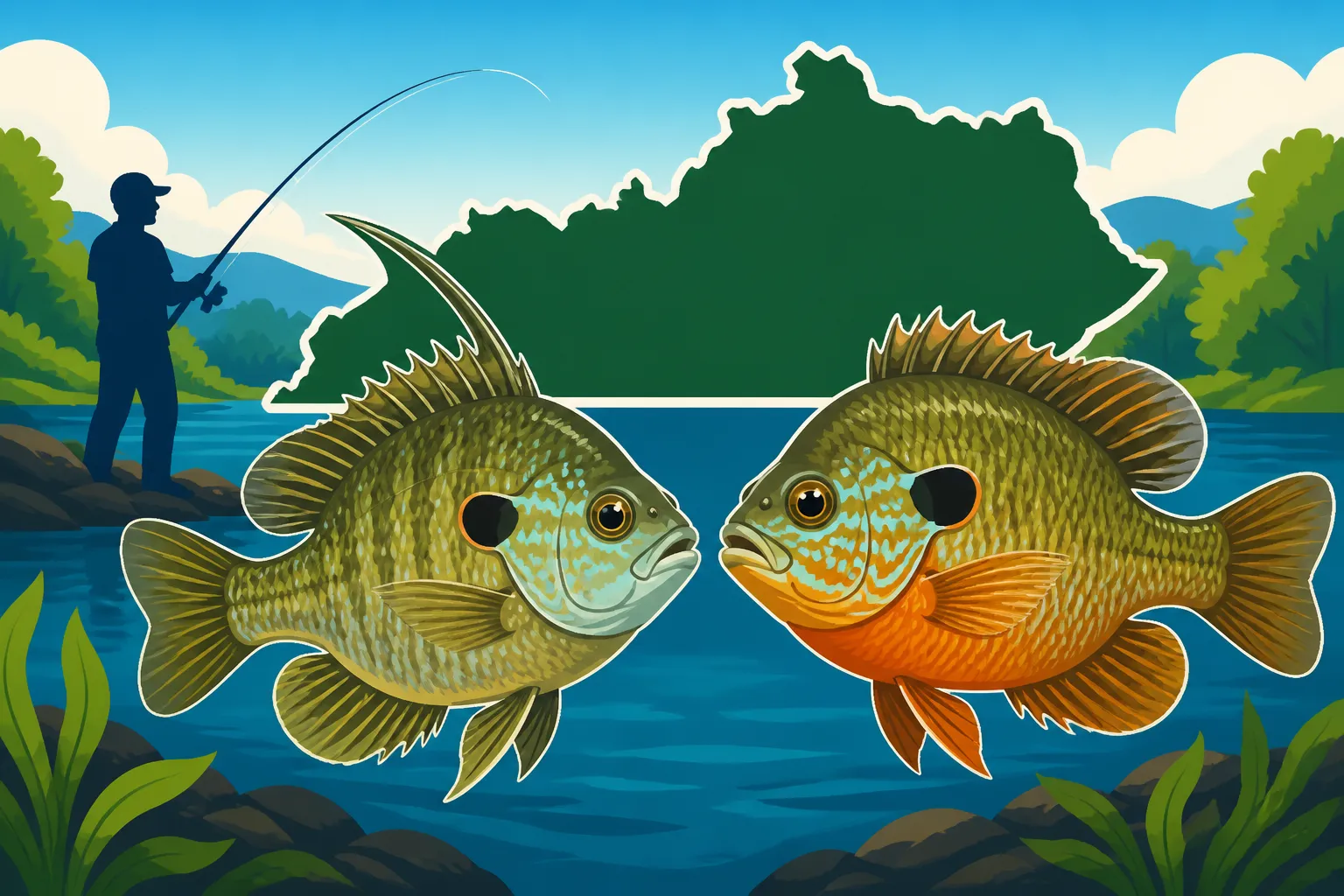
The Longear Sunfish is aptly named for its most prominent feature: the elongated, dark opercular flap, often edged in a contrasting color like orange or red. Think of it as a "long ear" extending from the gill plate. These fish are absolute gems, boasting a dazzling array of iridescent colors. Their sides are typically olive to greenish-gold, adorned with wavy blue or turquoise lines, particularly on the head and gill covers. Their belly and breast might range from yellow to a deep orange-red, especially in spawning males who really "color up" during the breeding season.
Their body shape is generally deep and compressed, giving them that classic sunfish profile. You'll also notice their mouths are relatively small, which is a good clue when you're selecting tiny hooks. The dorsal fin has spines that transition into soft rays, and the caudal (tail) fin is slightly forked. Young Longears might not display the vibrant colors as prominently as mature adults, but that distinctive long ear flap is usually a dead giveaway.
Identifying Features of Redbreast Sunfish
The Redbreast Sunfish, another stunner, might at first glance look similar to a Longear, but a closer inspection reveals clear distinctions. As its name suggests, the defining characteristic is its striking, often fiery, red-orange to deep brick-red breast and belly. This coloration is usually more intense and covers a larger area than what you'd typically see on a Longear.
While Redbreasts also have an elongated opercular flap, it tends to be longer and narrower than the Longear's, and it’s usually uniformly dark, without the prominent colorful edging. Their body coloration is generally olive to brownish-gold on the back, fading to lighter flanks. You might also spot some faint blue-green spots or streaks on their head and cheeks, though these are less pronounced than the Longear's wavy lines. They have a more slender body profile compared to the Longear and a slightly larger mouth. Both species are beautiful, but once you learn what to look for, telling them apart becomes a fun part of the angling adventure.
Visual Comparison of Longear and Redbreast Sunfish
To help solidify your understanding, here's a quick comparison table outlining the primary differences between these two gorgeous Kentucky sunfish species. This can be a handy reference next time you're out on the water!
| Feature | Longear Sunfish | Redbreast Sunfish |
|---|---|---|
| Opercular Flap | Broad, often with red/orange margin | Long, slender, uniformly dark |
| Breast/Belly Color | Yellow to orange-red, especially in males | Fiery red-orange to deep brick-red, prominent |
| Body Color | Olive to greenish-gold, wavy blue lines on head | Olive to brownish-gold, faint spots on head |
| Body Shape | Deep, compressed, robust build | More slender, somewhat elongated |
| Mouth Size | Relatively small | Slightly larger than Longear |
| Typical Habitat | Clear, rocky streams, small rivers, ponds | Slower moving streams, rivers, vegetated lake shores |
Where to Find Longear and Redbreast Sunfish in Kentucky
Understanding the preferred habitats of Longear and Redbreast Sunfish is crucial for successful fishing trips. While they can sometimes overlap, each species generally gravitates toward specific types of water and cover within Kentucky's diverse aquatic landscapes. Knowing where to focus your efforts means less time searching and more time enjoying the tug of a feisty panfish on your line.
Longear Sunfish Habitats and Preferences
Longear Sunfish tend to favor clearer, warmer waters, particularly in streams, small to medium-sized rivers, and even larger ponds or the upper reaches of some reservoirs. They have a real affinity for areas with rocky bottoms, gravel, or sandy substrates, often seeking out sections with moderate current or gentle flows. You'll frequently find them hanging around submerged logs, rock piles, aquatic vegetation beds, or undercut banks – anything that offers them a bit of cover from predators and a place to ambush small insects and crustaceans.
Think about those picturesque, clear-water creeks winding through the rolling hills of Kentucky. If there are sunfish there, chances are you'll find Longears. They're often less common in the deep, open waters of very large reservoirs, preferring the shallower, more structured zones. They are quite adaptable, which is why you can encounter them in a variety of settings across the state. Remember to check out areas where creeks feed into larger bodies of water; these transition zones often hold a good population of Longears.
Redbreast Sunfish Preferred Waters
Redbreast Sunfish, while also enjoying clear waters, tend to prefer slightly different environments compared to their Longear cousins. You'll primarily encounter Redbreasts in the slower-moving sections of rivers, larger streams, and the vegetated margins of lakes and reservoirs. They have a strong preference for areas with plenty of aquatic vegetation – lily pads, submerged grass beds, and weed lines are prime real estate for these colorful fish. They also appreciate overhanging trees and brush that provide shade and cover.
In Kentucky, this means you might find Redbreasts abundant in the backwaters of larger river systems, oxbow lakes, and the quieter coves of big reservoirs like parts of Lake Cumberland: Kentucky's Best All-Around Fishing Lake or Green River Lake Fishing Guide and Best Spots. They're often found in slightly deeper water than Longears, but still within the shallows where sunlight penetrates and vegetation thrives. If you're fishing a slower section of the Best Catfish Fishing Spots on Kentucky's Ohio River, for instance, near dense shoreline cover, you stand a good chance of encountering Redbreasts.
Effective Fishing Strategies for Panfish
Catching Longear and Redbreast Sunfish doesn't require specialized, expensive gear, which makes them perfect targets for beginners, kids, or anyone just looking for a relaxing day on the water. These feisty little fighters are eager to bite, and a few simple techniques can lead to a stringer full of colorful panfish.
Best Baits and Lures for Sunfish
When it comes to bait, simplicity often reigns supreme for Longear and Redbreast sunfish. Live bait is almost always a winner. Small worms, like red wigglers or pieces of nightcrawlers, are incredibly effective and universally appealing. Crickets are another top choice, especially in late summer and fall, when they mimic natural insects falling into the water. Small minnows, especially if you're targeting larger sunfish, can also produce good results. The key with live bait is to use a small enough hook (sizes #8 to #12 are usually ideal) to match their small mouths.
For artificial lures, tiny jigs (1/32 to 1/16 ounce) tipped with a small plastic grub or a piece of Berkley PowerBait are highly effective. Colors like chartreuse, white, and black often work well. Small spinners, such as a Rooster Tail or Mepps Aglia, can also entice a strike, especially when retrieved slowly near cover. These smaller lures are readily available at most tackle shops and on sites like Amazon, making it easy to stock your tackle box. Don't forget tiny topwater poppers in the early morning or late evening – watching a sunfish smack a popper is pure joy!
Simple Rigs and Techniques for Consistent Catches
The beauty of fishing for Longear and Redbreast sunfish lies in the straightforward rigging. A simple bobber rig is incredibly effective and perfect for anglers of all skill levels. Attach a small bobber a foot or two above your hook (depending on the water depth you're targeting), add a small split shot weight a few inches above the hook to help your bait sink, and you're good to go. This setup allows you to present your bait naturally while also clearly indicating bites when the bobber dips.
Another excellent technique, especially in rivers or when fishing near the bottom, is a simple bottom rig. Just a small split shot weight crimped a few inches above your hook, allowing your bait to drift near the bottom. For a more active approach, try tightlining with a small jig – simply cast it out and slowly retrieve it, adding a slight twitch to impart action. This is great for exploring different depths and feeling those subtle bites.
Consider using ultralight spinning gear for the most fun and sensitivity. A light rod and reel with 4-6 pound test line will make even a small sunfish feel like a trophy. For those nostalgic moments, a simple cane pole with a line, bobber, and hook can be just as effective, especially when introducing kids to fishing. How to Catch Bluegill With a Cane Pole principles apply perfectly here, ensuring a fun and easy experience. If you're looking to upgrade your setup, there are many highly-rated options available on Amazon that won't break the bank.
The Angling Appeal of Longear and Redbreast Sunfish
Beyond their stunning colors, Longear and Redbreast Sunfish offer a multitude of reasons why they are beloved by anglers across Kentucky. From their feisty nature to their culinary appeal, these panfish provide a rewarding experience for everyone, from seasoned veterans to first-time fishers.
Great for Beginners and Families
One of the biggest draws of Longear and Redbreast sunfish is their accessibility, making them ideal targets for beginners and families. They are abundant in many easily accessible waters, often found close to shore, making Best Shore and Bank Fishing Spots in Kentucky prime locations. You don't need a boat or fancy equipment to catch them; a simple rod, reel, bobber, and some worms are usually all it takes. This low barrier to entry means more people can experience the joy of fishing without a significant investment.
Their willingness to bite also ensures a higher chance of success, which is incredibly encouraging for new anglers, especially children. Nothing hooks a kid on fishing faster than feeling that first tug on the line and reeling in a vibrant fish. These species are truly Kid-Friendly Fish to Catch in Kentucky, providing consistent action and building confidence in young fishers. Plus, spending a day targeting panfish creates lasting memories, whether it's teaching a grandchild to cast or simply enjoying a peaceful afternoon outdoors. If you're outfitting a beginner, basic tackle kits for sunfish are readily available on Amazon, making it super easy to get started.
Sporting Qualities and Culinary Delights
Don't let their small size fool you; Longear and Redbreast sunfish are surprisingly feisty fighters! When hooked, they put up a spirited battle, tugging hard and making quick runs, especially on light tackle. This makes them a blast to catch and a rewarding challenge for anglers who appreciate a good fight, regardless of the fish's dimensions. For many, the sheer volume of catches and the consistent action outweigh the desire for a single, larger fish.
And let's talk about the table fare! Both Longear and Redbreast sunfish are absolutely delicious. Their white, flaky meat is mild-flavored and perfect for frying, baking, or grilling. Many anglers consider panfish to be among the finest eating fish in freshwater. A fresh mess of fried sunfish fillets, lightly breaded and served with hushpuppies, is a quintessential Kentucky outdoor meal. Just be sure to check the Statewide Bag and Size Limits by Fish Species for any regulations that might apply, though sunfish typically have generous limits to encourage harvest.
Conservation and Ecological Role in Kentucky
While Longear and Redbreast sunfish are plentiful, understanding their ecological role and the general principles of responsible angling is important for maintaining healthy fish populations and vibrant aquatic ecosystems in Kentucky. These small fish play a much larger role than you might think!
Ecological Importance in Aquatic Systems
Longear and Redbreast sunfish are vital components of Kentucky's freshwater ecosystems. As omnivores, their diet primarily consists of aquatic insects, small crustaceans, and some plant matter. This helps control insect populations and contributes to the overall health of the food web. In turn, they serve as a crucial food source for larger predatory fish, such as largemouth bass, channel catfish, and even wading birds and other wildlife. They are essentially the foundation of a healthy aquatic community, transferring energy up the food chain.
Their presence and abundance are often indicators of good water quality, as they tend to prefer cleaner, less polluted environments. Protecting their habitats, which often include shoreline vegetation and clear water, benefits countless other species as well. When you see a healthy population of these colorful sunfish, it's a good sign that the local waterway is thriving.
Regulations and Responsible Angling Practices
Like all fish species in Kentucky, Longear and Redbreast sunfish are subject to the state's fishing regulations, even if these often involve generous limits. It's always a good idea to consult the Kentucky Fishing Regulations Explained before heading out, as rules can vary by water body. While there usually aren't strict size limits for these panfish, daily creel limits are in place to ensure sustainable populations. You don't need a special trout permit, like you would for species in Kentucky Trout Permit Guide, but a valid Kentucky fishing license is a must for anyone age 16 and older when fishing in public waters.
Practicing responsible angling means more than just following the rules. It also involves catch and release practices when appropriate, minimizing stress on the fish, and properly disposing of any trash or discarded fishing line. If you're keeping fish for the table, only take what you need and can realistically consume. Using barbless hooks can also make releasing fish easier and less harmful. By being mindful of our impact, we can ensure that future generations can continue to enjoy the fantastic fishing opportunities for Longear and Redbreast sunfish that Kentucky waters provide. If you need a good field guide to help identify your catch, you can often find excellent regional fish identification books on Amazon.
Disclaimer
This article is for general informational purposes only and does not constitute professional advice. Laws, prices and regulations vary by location and change over time. Consult a qualified professional for guidance on your specific situation.