Best Catfish Rigs for the Ohio River
The Ohio River is a powerhouse for catfish, but it presents a unique challenge for anglers: strong currents, diverse bottom structures, and a variety of catfish species mean that a simple hook and sinker often won't cut it. Many folks get frustrated trying to hold bottom or keep their bait in the strike zone, especially when targeting those monstrous blue cats or elusive flatheads. This guide will walk you through the very best catfish rigs specifically designed for the Ohio River, helping you understand how to assemble them, when to use them, and why they'll boost your chances of landing that trophy fish.
Understanding the Ohio River Catfish Challenge
Fishing the Ohio River for catfish isn't like casting into a placid pond. It's a dynamic, ever-changing environment that demands specific strategies and robust gear. If you've ever felt your bait quickly swept away or snagged almost immediately, you know exactly what I'm talking about. Success here hinges on understanding the river's character and the habits of its whiskered residents.
The Unique Environment of the Ohio River
Imagine a river that flows over a thousand miles, picking up speed, depth, and character along the way. The Ohio River is a busy highway for both commercial barges and countless fish, including some truly colossal catfish. It's characterized by strong currents, especially in the main channel and below dams, which can easily move lighter tackle. The bottom can vary wildly, from smooth mud flats to rocky stretches, submerged timber, and deep holes. These varied conditions mean you can't rely on a one-size-fits-all approach. You need rigs that can effectively present your bait where the fish are holding, whether that's tight to a current break, on a muddy flat, or deep within a snag-filled channel. Understanding these complexities is the first step to mastering river catfishing. You can learn more about specific tactics in our Kentucky Catfish Fishing: Ohio River and Kentucky Lake Guide.
Another factor is the river's depth and structure. The Ohio River has deep navigation channels, but also shallower flats, tributaries, and countless wing dams and rock piles that act as natural ambush points for catfish. These structures provide cover and break the current, creating ideal feeding lies. Knowing how to present your bait in these diverse areas, without constantly losing your rig, is paramount. Heavy currents can quickly lead to line twists and tangles if your terminal tackle isn't properly balanced, adding another layer of challenge for the unprepared angler.
Common Catfish Species and Their Habits
Kentucky's stretch of the Ohio River is home to three primary catfish species: channel, blue, and flathead catfish. Each has distinct habits that influence the best rig choices and bait selections. Channel catfish are perhaps the most common, known for their abundance and willingness to bite a variety of baits. They often cruise shallower flats and edges of channels, feeding on anything from cut bait to prepared stink baits. They're strong fighters but generally don't reach the immense sizes of their blue and flathead cousins.
Blue catfish are the true giants of the Ohio. They prefer deeper, faster-moving water and often congregate in large schools in the main river channel or below dams. Blues are primarily piscivores, meaning they eat other fish, so fresh cut bait is almost always the ticket for these monsters. They are incredibly powerful, capable of stripping line and testing your gear to its limits. Targeting them requires stout tackle and rigs designed to hold in heavy current. If you're hoping to catch a record-breaker, the Ohio River is definitely the place, and our guide on Where to Catch a Trophy Blue Catfish on the Ohio River in Kentucky might be useful.
Flathead catfish are ambush predators, preferring live bait and often hiding in or near heavy cover like log jams, brush piles, or rock crevices. They are solitary and territorial, making them a bit more challenging to locate, but incredibly rewarding to catch. Because they live in snaggy areas, rigs designed to minimize hang-ups while presenting live bait effectively are crucial. Understanding these species-specific preferences, outlined further in our Catfish Species in Kentucky: Channel, Blue, Flathead and White article, will guide your rig selection and improve your overall success on the Ohio River.
Essential Components of a Great Catfish Rig
Before we dive into specific rigs, let's talk about the foundational components that make any Ohio River catfish setup effective. Skimping on quality here will lead to lost fish, lost tackle, and a whole lot of frustration. Investing in the right gear means your rig performs as intended, even against the toughest currents and strongest fish.
Rods and Reels for River Catfishing
When you're battling the currents and the heavyweight catfish of the Ohio River, you need gear that can take a beating. For rods, think heavy power and a moderate-fast action. A rod in the 7 to 9-foot range is ideal. The length helps with casting heavier weights, absorbing shock from powerful runs, and providing leverage to steer big fish away from snags. Shorter rods can make it tough to handle big fish in strong current, while excessively long rods can be cumbersome from a boat or tight bank spots. Look for rods with a strong backbone, often rated for line weights between 20-50 pounds and lure weights up to 8 ounces or more, depending on the current you expect to fish. Brands like Ugly Stik have long been favorites for their durability, while many dedicated catfishing brands offer specialized rods with the right blend of power and sensitivity.
For reels, a robust baitcasting reel is almost always the best choice for Ohio River catfishing, especially if you're targeting blue and flathead catfish. These reels offer superior cranking power, larger line capacities, and often more durable drag systems compared to spinning reels. Look for models with a smooth, powerful drag that can be set to handle heavy runs without locking up or failing. A good retrieve ratio (around 4.1:1 to 5.3:1) provides enough torque for battling big fish and reeling in heavy weights. Make sure the reel is rated for heavy monofilament or braided line. Popular choices often come from brands like Penn, Abu Garcia, or Daiwa. For more options, check out our guide on Best Reels for Catfish Fishing.
Line Selection: Mono, Fluoro, or Braid?
Choosing the right fishing line is critical for Ohio River catfishing. Each type of line has its pros and cons, and the best choice often depends on the specific rig and conditions you're fishing.
-
Monofilament (Mono): This is a traditional choice and still has its place. It's more affordable, has good abrasion resistance, and offers stretch, which can be a benefit when a large catfish makes a powerful run, absorbing some of the shock. However, mono's stretch can also reduce sensitivity, making it harder to feel subtle bites, especially in deeper water or strong current. Its larger diameter for a given breaking strength also means more current resistance. For many general catfishing situations, a 20-30 pound test monofilament main line works well.
-
Braided Line: Braided line has become incredibly popular for catfishing, and for good reason. Its main advantage is its near-zero stretch, which provides incredible sensitivity. You can feel even the lightest tap, even in deep water or strong currents, and it offers much better hook sets. Braided line also has a much smaller diameter for its breaking strength, meaning less current resistance and the ability to use lighter sinkers in some situations. Its superior abrasion resistance is another huge plus around the Ohio River's snags. However, braid can be more expensive, and its lack of stretch means you need to be more careful with your drag settings to prevent hooks from pulling out. A 50-80 pound test braid is common for main lines when targeting trophy catfish.
-
Fluorocarbon (Fluoro): While often used as a leader material due to its near invisibility underwater and excellent abrasion resistance, fluorocarbon isn't typically used as a main line for heavy-duty catfishing. Its stiffness can lead to memory issues, and it can be expensive. However, a fluorocarbon leader (e.g., 50-80 lb test) is an excellent choice when paired with braided main line, offering the best of both worlds: sensitivity from the braid and stealth/abrasion resistance from the fluoro near the bait.
Many experienced Ohio River anglers opt for braided main line (50-80 lb) tied to a heavy-duty swivel, followed by a robust monofilament or fluorocarbon leader (30-80 lb) of appropriate length. This combination provides strength, sensitivity, and abrasion resistance right where you need it most.
Hooks, Swivels, and Leaders
These small but mighty components are where many anglers cut corners, and it almost always leads to heartbreak.
-
Hooks: For Ohio River catfish, forget tiny hooks. You need strong, sharp, and appropriately sized hooks. Circle hooks are a non-negotiable for most catfishing, especially if you're practicing catch-and-release or if local regulations require them. They dramatically reduce gut hooking, leading to better survival rates for released fish. For channel cats, a 3/0 to 6/0 circle hook is usually sufficient. For blue and flathead catfish, especially with larger baits, sizes from 7/0 to 12/0 are common. Brands like Gamakatsu and Owner make excellent, strong hooks. When using live bait for flatheads, a sturdy J-hook is sometimes preferred by some anglers for better hookup ratios, but always check local regulations.
-
Swivels: Heavy-duty swivels are essential for preventing line twist, especially when your bait spins in the current. Barrel swivels or, even better, high-quality ball-bearing swivels (size 2/0 or larger) are crucial. They serve as a connection point between your main line and leader, allowing your rig to move naturally without tangling your main line. A good swivel also protects your main line knot from constant friction against the sinker in sliding rigs.
-
Leaders: Your leader is the section of line directly connecting your hook to your main line or swivel. It's often subjected to the most abuse from fish teeth, snags, and abrasive bottom structures. Using a heavy monofilament or fluorocarbon leader (30-80 lb test) offers excellent abrasion resistance. The length of your leader will vary depending on the rig and presentation you choose, which we'll cover next. For specific examples, check out Best Rigs for Catfish Fishing in Current.
Top Catfish Rigs for Ohio River Success
Now that we've covered the essential components, let's get into the bread and butter: the specific rigs that will give you the edge on the Ohio River. Each rig is designed for different conditions and catfish behaviors, so having a few in your arsenal is key.
The Carolina Rig (Sliding Sinker Rig)
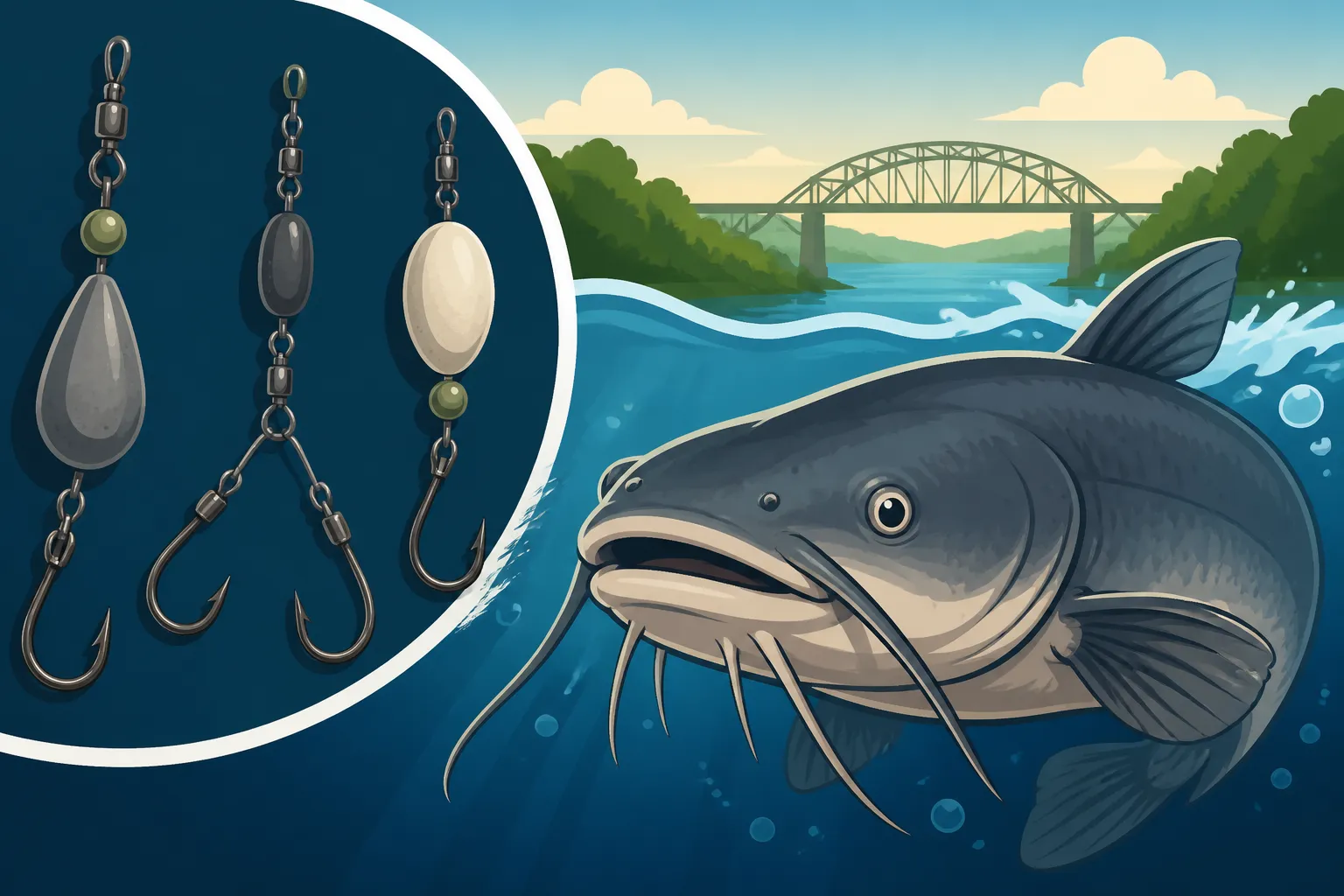
The Carolina Rig is arguably the most popular and versatile catfish rig, and for good reason. It’s excellent for presenting bait on the bottom while allowing the fish to pick up the bait and run without feeling the full weight of the sinker. This rig minimizes resistance, which can be crucial for enticing wary catfish.
How to Tie It:
- Thread your main line (braid or mono) through a sturdy egg sinker or a no-roll sinker. The weight will vary greatly depending on the current, from 2 ounces in mild currents to 8 ounces or more in strong flows below dams. Always use enough weight to hold bottom.
- Next, slide a plastic bead onto your main line. This bead protects the knot from the heavy sinker slamming into it.
- Tie on a heavy-duty barrel or ball-bearing swivel to the main line, below the bead.
- To the other end of the swivel, tie your leader (2-4 feet of heavy mono or fluoro, 30-80 lb test).
- Finally, tie your circle hook (7/0-12/0) to the end of the leader.
When to Use It:
This rig is fantastic for fishing on relatively clean bottom areas, such as sand, gravel, or mud flats, where there aren't too many snags. It’s perfect for targetting blue and channel catfish that are cruising the bottom. The sliding sinker allows your bait to move somewhat naturally in the current, and when a fish picks up the bait, it can swim away with the leader freely, making it less likely to drop the bait due to sinker resistance. It’s also a great choice for fan-casting across a flat from shore or boat. You can find all the components you need for this rig at Bass Pro Shops or even through retailers like Amazon.
The Santee Cooper Rig
The Santee Cooper rig is a variation of the Carolina rig, specifically designed to keep your bait slightly off the bottom, making it more visible and less prone to snagging in moderately cluttered areas. It's especially effective when fish are suspended just above the bottom, or when you want to keep your bait out of soft mud.
How to Tie It:
- Start exactly like a Carolina rig: main line, then a sinker (egg, no-roll, or pyramid), then a bead.
- Tie a heavy-duty swivel to the main line.
- Now, the key difference: to your leader (2-4 feet of heavy mono or fluoro), tie a small foam float or a peg float (e.g., a "cigar" shaped float) about 6-12 inches above your circle hook.
- Attach this leader to the swivel.
When to Use It:
This rig shines in areas with moderate snags, such as scattered rocks, small log jams, or vegetation, where you want to prevent your bait from burying itself in the debris or mud. The float lifts your bait a few inches to a foot off the bottom, making it dance enticingly in the current. This can be deadly for both blue and channel catfish, particularly when they are a bit more active and willing to look up for a meal. It's a great choice for fishing river bends, current seams, and the edges of drop-offs on the Ohio River. It’s also often chosen when fishing over a mucky bottom where your bait might otherwise get lost or covered.
The Three-Way Swivel Rig (Controlled Drift Rig)
The three-way swivel rig, sometimes called a controlled drift rig or bottom bouncer, is a powerhouse for fishing in strong currents or targeting specific depths while drifting. It offers excellent control over bait presentation.
How to Tie It:
- Tie your main line to one eye of a three-way swivel.
- To the second eye, attach a short leader (6-12 inches of heavy mono or fluoro) with a heavy sinker (bank sinker or pyramid) on the end. The sinker needs to be heavy enough to hold bottom in the current, but ideally, one that will break off if snagged, sparing your main line and fish.
- To the third eye, tie a longer leader (2-5 feet of heavy mono or fluoro) with your circle hook on the end.
When to Use It:
This rig is ideal for fishing in very strong currents, like those found directly below dams on the Ohio River, or when you want to slowly drift your bait along the bottom contour from a boat. The short sinker leader ensures the weight maintains bottom contact, while the longer leader allows your bait to waft naturally just above the bottom, enticing catfish that are hunkered down in the current. It's particularly effective for targeting flatheads near structure, as you can control your drift to present live bait precisely. It can also be very useful when trying to get your bait down into deep holes or scour marks where trophy blue catfish might be hiding. If you're looking for Bottom Fishing Techniques for Channel Catfish in specific areas, this rig provides excellent control.
The Slip Bobber Rig for Structure
While often associated with shallower water, a heavy-duty slip bobber rig can be incredibly effective on the Ohio River for presenting bait at a precise depth near vertical structure or in current breaks. It’s perfect for fishing standing timber, bridge pilings, or riprap banks.
How to Tie It:
- Slide a bobber stop onto your main line, then a small bead.
- Thread on a large, heavy-duty slip bobber (foam or weighted plastic, often 1-3 ounces).
- Add another bead below the bobber.
- Tie a barrel swivel to the end of your main line.
- To the swivel, attach a leader (1-3 feet of heavy mono or fluoro) with an appropriate sinker (often a split shot or small egg sinker) to balance the bobber, followed by your circle hook. The weight might be fixed just above the hook, or you might use a small sinker on the leader and add more weight to the hook.
When to Use It:
This rig excels when catfish are holding at a specific depth around cover that's hard to fish directly on the bottom due to snags. It’s great for fishing bridge pilings, submerged trees, or rock ledges. The slip bobber allows you to set your bait depth precisely, keeping it above the snags but in the strike zone. You can also use it to suspend live bait for flatheads near their ambush points. The key is to use a bobber heavy enough to support your bait and any added weight, and a bobber stop that won’t slip on your line. It's a prime choice for bank anglers wanting to fish vertically near cover, and also very useful for precise boat positioning.
Here's a quick comparison of these popular Ohio River catfish rigs:
| Rig Type | Best For | Current Strength | Snag Susceptibility | Bait Presentation | Primary Catfish Species |
|---|---|---|---|---|---|
| Carolina Rig | Clean bottoms, general bottom fishing | Moderate to Heavy | Low to Moderate | On bottom, natural drift | Blue, Channel |
| Santee Cooper Rig | Moderate snags, slightly off-bottom presentation | Moderate to Heavy | Low to Moderate | Slightly off bottom, floats | Blue, Channel |
| Three-Way Swivel | Very heavy current, drifting, precise depth | Heavy to Extreme | Moderate to High | Near bottom, controlled | Blue, Flathead |
| Slip Bobber Rig | Vertical structure, suspending bait | Light to Moderate | Low (if set correctly) | Suspended, precise depth | Flathead, Channel |
Baiting Strategies and Presentation Tips
Having the right rig is only half the battle; knowing what bait to use and how to present it effectively completes the picture. The Ohio River's catfish are often opportunistic, but their preferences can shift with the season and the species you're targeting.
Best Baits for Ohio River Catfish
When it comes to catfish, bait is king. What you put on your hook can make all the difference, and it varies by species.
-
For Blue Catfish: Fresh cut bait is usually the absolute best choice. Shad, skipjack herring, carp, or even small drum cut into chunks are irresistible to big blues. The fresher, the better. You want bait that bleeds and emits a strong scent into the current. Blues are scavengers by nature, but they prefer a "fresh kill" scent over something that's been sitting around too long. When chasing trophy blue catfish on the Ohio River, you'll find that many anglers go to great lengths to acquire fresh skipjack or shad. Learn more in our Best Bait for Blue Catfish Fishing guide.
-
For Flathead Catfish: Live bait is almost universally preferred for flatheads. They are ambush predators that key in on movement. Live bluegill, sunfish, shad, or even small carp are excellent choices. Ensure your live bait is healthy and hooked in a way that allows it to swim naturally and stay alive for as long as possible. Hooking them through the back (above the lateral line, avoiding the spine) or through the lips are common methods. Remember to check local regulations on using live baitfish and their source. You need something lively enough to attract attention but not so big it overwhelms your hook and leader. Many local tackle shops near the Ohio River, and certainly big box stores like Bass Pro Shops, will stock the necessary live bait equipment.
-
For Channel Catfish: Channels are less picky. While cut bait and live bait work, they are also avid consumers of prepared "stink baits," chicken livers, shrimp, worms, and even hot dogs. If you're on a casual fishing trip or introducing kids to catfishing, a container of punch bait or a tub of chicken livers can lead to a lot of action. However, for bigger channels, fresh cut bait will still outperform most prepared baits.
Always bring a variety of baits if you're unsure what the fish might be biting or if you're hoping to target multiple species. The Ohio River is vast, and what works best in one section might be different just a few miles downriver.
Reading the River and Positioning Your Rig
Understanding where catfish hold and how to position your rig to intercept them is a skill developed over time. The Ohio River constantly offers clues if you know how to read them.
-
Current Seams and Eddies: Look for areas where fast current meets slower water. This often occurs behind wing dams, bridge pilings, large rocks, or in deep bends. Catfish will sit in the slack water, waiting for food to be washed into the current seam. Position your rig so your bait drifts naturally into or along these seams. How to Anchor for Catfish on a River provides more specific advice on this.
-
Drop-offs and Ledges: Catfish love to patrol depth changes. Use your electronics or simply fan-cast to find where the bottom drops from a shallow flat into a deeper channel. Fish will often hold along the edge of these drop-offs.
-
Submerged Structure: Woody debris, rock piles, and old bridge remnants all offer cover and ambush points. Flatheads, in particular, will relate heavily to these features. Use rigs that allow you to fish close to, but ideally not directly in, the heaviest snags. This is where the Santee Cooper rig or a well-placed slip bobber rig comes in handy.
-
Anchor or Drift: For heavy current, anchoring strategically upstream from your desired fishing spot allows your bait to settle into the zone. For covering more water and searching for fish, controlled drifting with a three-way swivel rig can be highly effective. The key is to keep your sinker making intermittent contact with the bottom, letting your bait waft just above it. Don't be afraid to move if you're not getting bites; catfish are often concentrated in specific areas.
By combining the right rig, the perfect bait, and a keen understanding of the river's dynamics, you'll be well on your way to consistent success catching catfish on the mighty Ohio River. Good luck out there, and remember to fish safely!
Disclaimer
This article is for general informational purposes only and does not constitute professional advice. Laws, prices and regulations vary by location and change over time. Consult a qualified professional for guidance on your specific situation.