Best Fire Extinguishers for Boats
Nobody wants to imagine a fire breaking out while they're enjoying a peaceful day of fishing on Kentucky Lake or cruising the Ohio River. But the reality is, boat fires are a serious, often rapidly escalating threat, whether from electrical shorts, fuel leaks, or even cooking mishaps on board. This guide is designed to walk you through the critical importance of marine fire extinguishers, helping you understand the different types, what the law requires in Kentucky, and how to choose the best one to keep yourself, your passengers, and your vessel safe.
Why a Fire Extinguisher is Essential on Your Kentucky Boat
It's easy to get caught up in the excitement of planning your next fishing trip or leisurely cruise across Lake Cumberland, but overlooking safety gear can have dire consequences. A fire extinguisher isn't just another item on a checklist; it's a first line of defense that can prevent a minor incident from becoming a full-blown catastrophe.
The Real Danger of Boat Fires on the Water
Imagine you're miles from shore, enjoying the serenity of the water, when suddenly you smell smoke or see a flicker of flames. On land, you might call 911 and wait for firefighters, but on a boat, you are your own first responder. Fires on boats can ignite rapidly due to several factors. Fuel leaks, whether gasoline or diesel, can create highly flammable vapors that are easily ignited by a stray spark from an electrical wire, an overheated engine component, or even an improperly stored battery. Electrical systems, especially in older vessels, can short out and generate intense heat. Beyond the engine compartment, galley fires from cooking, discarded cigarettes, or even spontaneous combustion of oily rags pose significant risks.
The confined space of a boat means a fire can spread at an alarming rate, quickly engulfing cabins, wiring, and even fuel tanks. Unlike a house fire, escaping a boat fire often means jumping into cold water, potentially far from shore or assistance. Having an accessible and effective fire extinguisher can mean the difference between quickly dousing a small flame and a complete loss of your vessel – or worse, serious injury or fatality. It's a sobering thought, but one that underscores the absolute necessity of preparedness.
Legal Requirements and Safety Regulations
When it comes to boating in Kentucky, safety isn't just good practice; it's the law. The U.S. Coast Guard (USCG) sets federal regulations for fire extinguishers on recreational boats, and Kentucky largely adheres to these guidelines, adding its own layer of enforcement. Most recreational vessels are required to carry USCG-approved portable fire extinguishers. The specific number and type depend on your boat's length and whether it has certain features that increase fire risk, such as an enclosed engine compartment, permanent fuel tanks, or spaces where flammable or combustible materials are stored.
For example, a small open boat under 26 feet with no enclosed engine might not be required to carry an extinguisher by law, but it's still a massively smart idea. However, if that same boat has a permanently installed fuel tank or an enclosed storage area where flammables might be kept, then at least one B-I type extinguisher is usually required. Larger boats, especially those over 26 feet or with multiple enclosed engine compartments, will need more and/or larger B-II rated extinguishers. These regulations are in place for a good reason: to give every boater a fighting chance against a fire. Ignoring them not only puts you at risk but can also lead to fines if a Kentucky Fish and Wildlife Resources game warden performs a Game Warden Enforcement and License Checks While Fishing and finds your vessel non-compliant.
Peace of Mind for You and Your Passengers
Beyond the legal obligations, having the right fire extinguisher brings an immeasurable sense of security. Knowing that you're prepared for an unexpected emergency allows you to truly relax and enjoy your time on the water, whether you're chasing bass on Lake Barkley or enjoying a sunset cruise on the Ohio River. Your passengers, too, will feel safer knowing that you've taken every precaution.
Think of it as an insurance policy you hope to never use, but are immensely grateful for if you ever need it. The moment you detect smoke or a small flame, that accessible fire extinguisher becomes your immediate tool to prevent escalation. It buys you precious time to assess the situation, potentially extinguish the fire, and ensure everyone's safety, rather than being paralyzed by panic. It’s part of a comprehensive safety approach, alongside Life Jacket Rules for Boats in Kentucky, proper Kentucky Boat Safety Certificate Requirements, and a well-stocked Best First Aid Kits for Boaters.
Understanding Fire Extinguisher Classes and Types for Boats
Choosing the "best" fire extinguisher isn't just about grabbing the first red cylinder you see. You need to understand what kind of fires they tackle and how their agents work, especially in a marine environment where fuel and electrical fires are common.
Classifications: A, B, C, and Why B is Key for Boats
Fire extinguishers are categorized by the type of fire they are designed to put out. These classifications are denoted by letters:
- Class A: For ordinary combustible materials like wood, paper, cloth, and plastics. Think of campfires or burning trash.
- Class B: For flammable liquids such as gasoline, oil, grease, paint, and propane. This is the crucial class for boats, as fuel and oil fires are among the most common and dangerous on the water.
- Class C: For electrical fires involving energized electrical equipment. Short circuits, faulty wiring, or overheated batteries fall into this category.
Many marine fire extinguishers are rated as "B-C" or "A-B-C." An A-B-C rated extinguisher is versatile and can handle most common boat fires. However, the "B" rating is paramount for marine use because of the prevalence of fuel and oil. You want an extinguisher that can effectively smother a gas fire without reigniting or spreading.
In addition to these classes, the USCG further categorizes portable marine extinguishers by size and capacity using Roman numerals: B-I and B-II.
- B-I Extinguishers: These are the smallest USCG-approved extinguishers, typically containing about 1.25 pounds of dry chemical agent. They are suitable for most smaller recreational boats.
- B-II Extinguishers: These are larger, usually holding 2.5 pounds of dry chemical agent, and are required for larger vessels or those with multiple enclosed fire risk areas.
Here's a quick look at common USCG classifications and their minimum capacities:
| USCG Classification | Minimum Capacity (Equivalent) | Typical Application on Boats |
|---|---|---|
| B-I | 1.25 lbs. (dry chemical) | Most smaller recreational boats (under 26 ft) with internal combustion engines, permanently installed fuel tanks, or enclosed compartments. |
| B-II | 2.5 lbs. (dry chemical) | Larger recreational boats (26-40 ft), or those with multiple enclosed engine compartments or fuel tanks, even if under 26 ft. |
Remember, it's about prevention and rapid response. While regulations specify minimums, carrying more fire suppression capacity than required is always a good idea, especially on a larger vessel or one frequently used for overnight trips.
Different Types of Extinguishers: Dry Chemical, CO2, and Halotron
The fire extinguisher agent is what actually does the work. On boats, you'll most commonly encounter a few types, each with its pros and cons:
-
Dry Chemical (DCP) Extinguishers: These are by far the most common type found on recreational boats and are typically rated A-B-C or B-C. They use a fine powder, usually monoammonium phosphate or sodium bicarbonate, to smother fires by interrupting the chemical reaction of the fire.
- Pros: They are effective on a wide range of fires, relatively inexpensive, and readily available. They work quickly to knock down flames.
- Cons: The powder is messy and can be corrosive, potentially damaging sensitive electronics and engine components. Cleanup is a major headache. Once used, even partially, they lose pressure and should be replaced or professionally recharged.
- Marine Relevance: Excellent for fuel, oil, and electrical fires. Their mess is a small price to pay for putting out a dangerous blaze.
-
Carbon Dioxide (CO2) Extinguishers: These work by displacing oxygen around the fire, effectively suffocating it. They are primarily rated B-C.
- Pros: They leave no residue, making them ideal for areas with sensitive electronics or engines, as there's no messy cleanup or corrosive damage.
- Cons: CO2 displaces oxygen, so using it in a confined space (like a boat cabin) can pose a risk of asphyxiation to the operator. They are less effective outdoors or in windy conditions where the CO2 can dissipate quickly. They are also heavier and generally more expensive than dry chemical extinguishers.
- Marine Relevance: Good for engine compartments if the space can be sealed, but less practical for open deck fires or general use by an untrained operator.
-
Halotron/Clean Agent Extinguishers: These extinguishers use a "clean agent" like Halotron I (a halon replacement) that disrupts the fire's chemical reaction without leaving residue. They are rated B-C or A-B-C.
- Pros: Like CO2, they leave no residue, making them safe for sensitive equipment. They are less toxic than older halon agents and less likely to cause asphyxiation in confined spaces than CO2.
- Cons: They are significantly more expensive than dry chemical extinguishers.
- Marine Relevance: An excellent choice for boaters who want minimal collateral damage from the extinguishing agent, particularly in engine rooms or near electronics. They offer a great balance of effectiveness and clean operation.
For most Kentucky boaters, a good quality, USCG-approved dry chemical A-B-C or B-C extinguisher is the practical and cost-effective choice. However, if you have a high-tech fishing vessel with lots of electronics, investing in a Halotron extinguisher for critical areas might be worth considering. You can usually find a good selection of all these types at marine supply stores like Bass Pro Shops or online through retailers like Amazon, allowing you to compare options.
Key Factors When Choosing a Boat Fire Extinguisher in Kentucky
Selecting the right fire extinguisher goes beyond just knowing the types; it involves practical considerations specific to boating and adherence to regulations. Making an informed choice ensures you're truly prepared.
USCG Approval and Labeling
This is non-negotiable. Any fire extinguisher you purchase for your boat in Kentucky must be U.S. Coast Guard (USCG) approved. How do you know if it's approved? Look for the USCG approval stamp or label directly on the extinguisher. This label will typically include:
- "USCG Approved" or a similar phrase.
- Type and Size Designation: Such as "Type B:C Size I" or "Type B:C Size II."
- Bracket Requirement: It will state "Marine Type USCG, Type B:C Size I (or II) for use with bracket P/N…" indicating that it must be stored in a specific type of bracket to maintain its approval. This is crucial because a loose extinguisher can become a dangerous projectile in rough waters or during a sudden stop, and it won't be there when you need it most.
- Manufacturer Information and Approval Number.
Without this specific USCG approval, the extinguisher is considered non-compliant, regardless of its extinguishing power. A game warden checking your vessel's Kentucky Boating Safety Gear Checklist will specifically look for this stamp. Don't compromise on this detail; your safety and compliance depend on it. When browsing for options, check the product descriptions carefully, especially when purchasing from online retailers like Amazon, to ensure explicit USCG approval.
Mounting and Accessibility on Your Vessel
Even the best fire extinguisher is useless if you can't get to it quickly in an emergency. Proper mounting and accessibility are critical considerations for any boat.
- Placement: Extinguishers should be mounted in easily accessible locations, away from potential fire hazards but close enough to reach within seconds. Common spots include near the helm, in the galley, and in the engine compartment (for permanently installed systems, or a portable one mounted near the access point). If you have an enclosed cabin, one should be inside.
- Secure Mounting: As mentioned earlier, the USCG approval often specifies a bracket. Ensure the bracket is robust and securely fastened to a bulkhead or other sturdy surface. The extinguisher should snap firmly into place, yet be quick to release with one hand. Avoid stowing extinguishers in lockers or compartments that might be blocked or difficult to open in a hurry. Imagine your boat heeling hard in a chop; you don't want your extinguisher tumbling around.
- Visibility: While not strictly required, mounting your extinguisher in a visible spot can save precious seconds during an emergency. If it's stored behind a panel, make sure the panel is clearly marked.
- Multiple Extinguishers: For larger boats, having multiple extinguishers strategically placed around the vessel is a smart move. A fire might block access to one, making a second extinguisher crucial. Consider your Boat Size Guide for Kentucky Lake and Lake Barkley when determining how many you might need.
Maintenance and Inspection Considerations
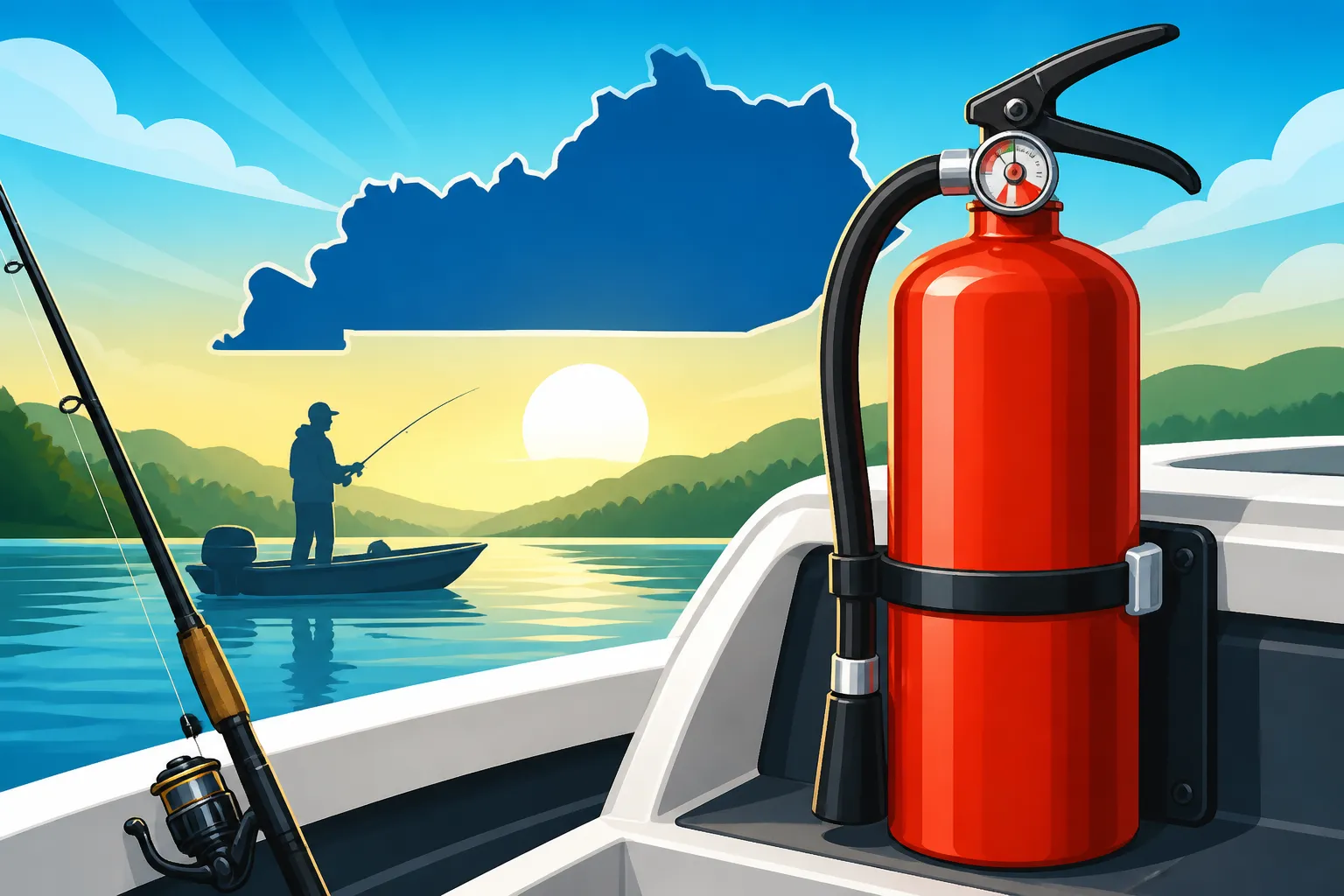
A fire extinguisher is only effective if it's in working order. Regular inspection and maintenance are paramount. Most portable dry chemical extinguishers are "stored pressure" types, meaning they have an internal pressure gauge.
- Pressure Gauge Check: The most important visual check is the pressure gauge. The needle should be firmly in the "green" zone. If it's in the red, the extinguisher has lost pressure and needs to be replaced or recharged.
- Physical Condition: Inspect the extinguisher for any signs of damage, corrosion, or a broken seal. The nozzle should be clear of obstructions, and the hose (if applicable) should not be cracked or degraded.
- Shake It Up: For dry chemical extinguishers, it's a good practice to turn them upside down and shake them periodically (a few times a year). This prevents the powder from compacting at the bottom, which could make it less effective when discharged.
- Recharge/Replacement: Unlike those in a commercial building, most portable marine fire extinguishers are not designed for easy home recharging. If the pressure drops, if it's been used (even for a second), or if it's past its expiration date (usually stamped on the cylinder), it needs to be replaced immediately. Don't try to "save" an old or partially discharged unit; your life might depend on its full capacity.
Make these checks a part of your pre-trip routine, or at least a monthly check when your boat is in storage or on its lift. A quick glance at the gauge and the overall condition takes mere seconds but can save you from a disaster.
Where to Buy and How to Equip Your Boat
Now that you know what to look for, the next step is getting the right gear and making sure it's properly deployed on your vessel.
Reputable Retailers and Online Options
You don't want to buy a fire extinguisher from a questionable source. Stick with reputable retailers that specialize in marine or safety equipment.
- Dedicated Marine Stores: These are often your best bet. Stores like Bass Pro Shops, West Marine, or local independent marine supply shops will have staff who understand USCG requirements and can help you select the correct type and size for your boat. They also typically stock the necessary USCG-approved mounting brackets. Their inventory is usually geared towards marine conditions, meaning the products are designed to withstand the humidity and vibrations common on boats.
- Online Retailers: Websites like Amazon offer a vast selection, often at competitive prices. The key here is diligence. Read product descriptions carefully to verify USCG approval, check for inclusion of a marine bracket, and read customer reviews for feedback on quality and function. It's easy to accidentally buy a non-marine rated extinguisher online, so pay close attention to the details.
- Big Box Stores with Marine Sections: Some larger chain stores with sporting goods or automotive sections might carry basic marine fire extinguishers. Again, ensure the USCG approval and bracket requirements are clearly met.
Wherever you purchase, don't just grab the cheapest option. Invest in a quality extinguisher that you can trust when it matters most. Remember, this isn't just a purchase; it's an investment in your safety.
Proper Placement and Securing on Board
Once you have your USCG-approved extinguisher, proper placement and securing are critical. Imagine trying to fight a fire while fumbling for a loose extinguisher or trying to pry it from a jammed compartment.
- Mounting Location:
- Helm Area: Essential for immediate access by the operator.
- Galley/Cooking Area: If your boat has a stove or grill, an extinguisher nearby is a must.
- Engine Compartment Access: Place an extinguisher close to the access hatch or door of your engine compartment, but not inside the compartment itself, where you couldn't reach it if the fire was already raging.
- Sleeping Quarters: If your boat has a cabin where people sleep, having an extinguisher inside provides an added layer of safety.
- Secure Bracketing: Always use the USCG-approved marine bracket that either comes with the extinguisher or is specified for it. Mount it to a sturdy, flat surface using appropriate marine-grade fasteners (stainless steel screws, bolts, or rivets). Ensure it's not in a walkway where it could be kicked or snagged, but also not so hidden that it's difficult to locate or access.
- Accessibility: Practice releasing the extinguisher from its bracket quickly and smoothly. Make sure there are no obstructions around it. If it's behind a door, ensure that door isn't locked or jammed. Consider adding a small, reflective decal or label near the extinguisher's location, especially if it's not immediately obvious.
Think through fire scenarios on your boat. If a fire starts in the engine, can you reach an extinguisher without exposing yourself to the flames? If it starts in the galley, is one within arm's reach? These considerations are vital to effective fire suppression.
Training and Readiness: Knowing How to Use It
Having the extinguisher is only half the battle; knowing how to use it correctly is the other. Panic can set in during an emergency, so a basic understanding of extinguisher operation can make all the difference.
-
P.A.S.S. Method: This is the universal method for using a portable fire extinguisher:
- Pull the pin: This unlocks the operating lever.
- Aim low: Point the nozzle or hose at the base of the fire.
- Squeeze the lever: This discharges the extinguishing agent.
- Sweep side-to-side: Move the nozzle back and forth, covering the area of the fire.
-
Practice (Without Discharging): While you can't practice discharging a real extinguisher (unless you have a training unit or an old one you're replacing), you can practice pulling it from its bracket and holding it in the proper stance. This familiarity can reduce hesitation in a real emergency.
-
Consider a Boating Safety Course: Many organizations offer boating safety courses that cover fire prevention and basic fire suppression techniques. These courses, often required for younger boaters to obtain their How to Get a Kentucky Safe Boating Certificate, are invaluable for all experience levels. They often delve into topics like What Safety Equipment Is Required on a Kentucky Boat? and other Essential Safety Gear for Every Boat in Kentucky.
-
Know When to Evacuate: While an extinguisher can tackle small fires, know your limits. If the fire is too large, spreading too quickly, or involves explosions, your priority must shift to evacuating the vessel and getting everyone into the water with life jackets on.
Equipping your boat with the right fire extinguishers and knowing how to use them is a crucial part of responsible boating in Kentucky. Don't leave it to chance; prepare for the worst, so you can enjoy the best that Kentucky's beautiful waters have to offer.
Disclaimer
This article is for general informational purposes only and does not constitute professional advice. Laws, prices and regulations vary by location and change over time. Consult a qualified professional for guidance on your specific situation.