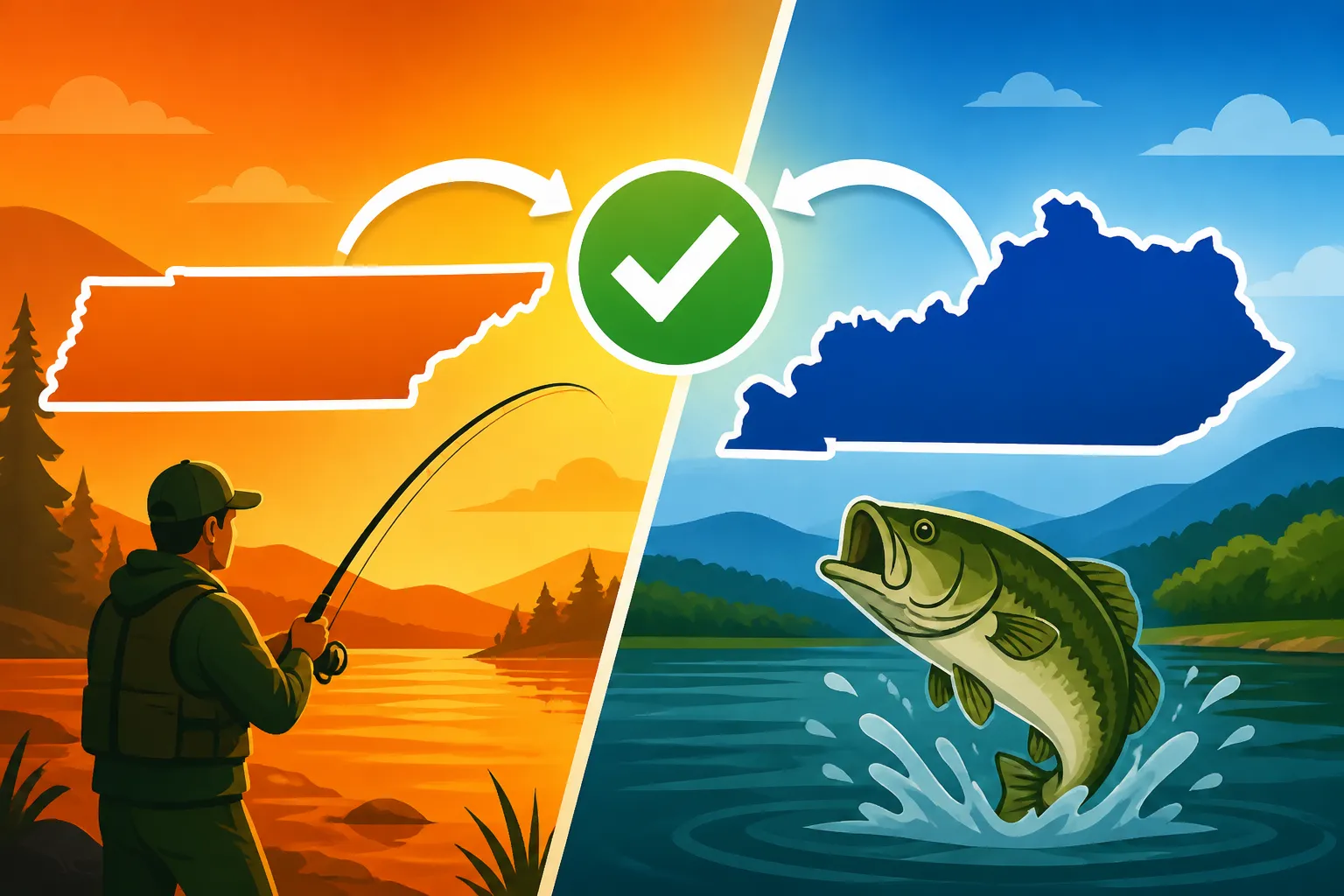
Does a Tennessee Fishing License Work in Kentucky?
It’s a tale as old as time, or at least as old as state lines themselves: you’re an avid angler, eager to explore new waters, but that invisible border looms large, making you wonder if your trusty fishing license will still hold up. This common frustration is especially true for those of us who live near the Kentucky-Tennessee border, looking out at sprawling lakes and winding rivers that seem to defy state boundaries. This comprehensive guide will untangle the often-confusing rules around whether your Tennessee fishing license is valid in Kentucky, helping you stay compliant and focus on what truly matters: catching fish.
Understanding Interstate Fishing License Reciprocity
Let’s get right to it because this is where many folks get tripped up. The idea of fishing across state lines can be a bit of a head-scratcher, especially when you’re dealing with magnificent bodies of water that are shared by two states.
The General Rule: No Automatic Reciprocity
The general principle is pretty straightforward: a fishing license issued by one state is typically only valid within the boundaries of that state. It doesn't automatically grant you the right to fish in another state, even if you’re standing on one side of a river and the other side is just a stone's throw away. This isn't some arbitrary rule meant to make your life harder; it's rooted in the way states manage their natural resources. Each state has its own wildlife agencies, like the Kentucky Department of Fish and Wildlife Resources (KDFWR), which are responsible for the conservation, management, and regulation of their fish populations.
These agencies fund their efforts – things like stocking fish, habitat restoration, law enforcement, and research – largely through the sale of fishing licenses. If a Tennessee license worked everywhere in Kentucky without a specific agreement, Kentucky wouldn't collect any revenue from those Tennessee anglers, even as they enjoy Kentucky's resources. So, while it might feel like a hassle to potentially need multiple licenses, it's how each state ensures it can continue to provide quality fishing opportunities. For a broader overview of what's generally expected, check out our guide on the Kentucky Fishing License Guide.
Specific Agreements or Lack Thereof Between Kentucky and Tennessee
Now, to directly answer the burning question: Does a Tennessee fishing license work in Kentucky? Generally speaking, no, it does not. If you are fishing in any water body that lies entirely within the borders of Kentucky, you absolutely must possess a valid Kentucky fishing license. This includes fantastic fisheries like Lake Cumberland, Herrington Lake, and Green River Lake, to name just a few. Your Tennessee license is valid for Tennessee waters only. If you're a Tennessee resident planning a fishing trip to Kentucky, you'll need to learn How to Get a Fishing License in Kentucky that's appropriate for your visit.
However, and this is where the crucial exceptions come in, Kentucky and Tennessee do have specific, limited reciprocity agreements for certain shared border waters. These agreements are not universal and only apply to the main bodies of particular lakes and rivers that form the physical border between the two states. This is a vital distinction, and misunderstanding it can lead to an unexpected visit from a Kentucky Game Warden.
Navigating Shared Border Waters: Kentucky Lake and Dale Hollow Lake
When it comes to two of our most beloved and iconic fisheries, Kentucky Lake and Dale Hollow Lake, things get a little more flexible for anglers crossing the state line. These lakes are true bi-state treasures, and the wildlife agencies have worked out special rules to make fishing them more accessible.
Kentucky Lake's Unique Reciprocity Agreement
For anyone planning a trip to Kentucky Lake, you'll be glad to hear there's a special arrangement. Anglers holding either a valid Kentucky fishing license or a valid Tennessee fishing license can fish the main stem of Kentucky Lake. This means if you have your Tennessee license in your pocket, you can legally fish the expansive open waters of Kentucky Lake, even on the Kentucky side, without needing an additional Kentucky license. It’s a huge convenience for anglers who might launch on one side and drift to the other while pursuing bass or crappie.
But here’s the critical detail, and it’s one that gets missed a lot: this reciprocity only applies to the main body of the lake. It does not extend into the numerous embayments, creeks, or tributaries that push deep into either state's dry land. For instance, if you venture up a long creek arm on the Kentucky side of Kentucky Lake, you might quickly find yourself in waters that are considered solely Kentucky territory, and your Tennessee license will no longer be valid. Always carry a current map, or better yet, a GPS with state line overlays if you plan to explore these areas. Kentucky Lake is truly a premier destination, often considered Kentucky Lake: The State's Top Bass Fishing Destination, so understanding these rules is key to enjoying it without worry.
Dale Hollow Lake's Bi-State License Option
Much like Kentucky Lake, Dale Hollow Lake also enjoys a special agreement between Kentucky and Tennessee. This beautiful, clear-water reservoir, renowned for its smallmouth bass, allows anglers to use either a Kentucky fishing license or a Tennessee fishing license while fishing the main body of the lake. This reciprocal agreement simplifies things immensely for anglers who frequent both sides of Dale Hollow, eliminating the need to buy two separate annual licenses just to cross an imaginary line on the water.
Again, the same caveat applies: this reciprocal agreement generally covers the main lake body. If you decide to explore the many picturesque coves and stream inputs that extend significantly into one state or the other, you must be absolutely sure of your location. It's always best to consult the most current regulations from the KDFWR or the Tennessee Wildlife Resources Agency (TWRA) to understand the precise boundaries of these agreements. You can find excellent resources, including maps that often show these boundaries, on the KDFWR website or even by searching for fishing maps on platforms like Amazon. Our article on Dale Hollow Lake's Best Smallmouth Bass Spots is a great resource for exploring this lake, but always verify your license validity.
When You Absolutely Need a Kentucky Fishing License
Even with the specific reciprocity agreements on certain border waters, there are many scenarios where a Kentucky fishing license is an absolute must, regardless of where you call home. Don't risk a fine by assuming your out-of-state license covers all bases.
Fishing Entirely Within Kentucky Waters
This might seem obvious, but it's worth reiterating: if your fishing trip takes place on any body of water that is wholly contained within the geographical boundaries of Kentucky, you must have a valid Kentucky fishing license. This includes the vast majority of lakes, rivers, streams, and ponds across the Commonwealth. Think of places like the serene Taylorsville Lake, the productive Green River Lake, or the muskie-filled Cave Run Lake. If you're fishing these spots, even if you’re a proud Tennessee resident, your Tennessee license simply won't cut it.
The rules don't care where you launched your boat or where your primary residence is; they care about the jurisdiction of the water you're fishing. So, if you're venturing north into Kentucky for a specific fishing expedition, be prepared to purchase a Kentucky license. You might find that a Kentucky Nonresident Fishing License Guide is exactly what you need to understand your options, including annual or short-term licenses.
Fishing Tributaries or Embayments of Shared Waters
This is perhaps the most nuanced and frequently misunderstood aspect of border water fishing. As mentioned earlier, while the main bodies of Kentucky Lake and Dale Hollow Lake have reciprocity, this often doesn't extend to their tributaries or large embayments. Imagine you're fishing the main lake channel of Kentucky Lake with your Tennessee license, perfectly legal. But then you decide to follow a promising-looking creek arm upstream, deeper and deeper into what is unequivocally Kentucky soil. At some point, you've crossed an invisible line where the reciprocal agreement no longer applies.
A Kentucky Game Warden enforcing Kentucky Fishing Regulations Explained will expect you to have a Kentucky license once you've entered these state-specific waters, even if they're technically connected to a reciprocal lake. The line can be blurry, and it's up to you, the angler, to know where you are. This is why having a detailed map, perhaps one you picked up from a local bait shop or ordered from Amazon, can be invaluable. It's a small investment compared to the potential headache of a citation. When in doubt, it’s always better to err on the side of caution and get the proper Kentucky license, especially if you plan on exploring extensively.
How to Ensure You're Compliant and Avoid Penalties
Nobody wants their peaceful day of fishing interrupted by a ticket, especially when it could have been easily avoided. Being prepared and informed is your best defense against inadvertently breaking the rules.
Always Carry the Correct License
The easiest way to avoid problems is to always have the correct license for the waters you intend to fish. If you regularly fish both the Kentucky and Tennessee sides of border lakes, considering an annual license for both states might be the most practical approach. For those just making an occasional trip into Kentucky, a Kentucky Resident 1-Day Fishing License Price might be a better fit than a full annual one. You can typically purchase a license online in minutes through the KDFWR website, which is incredibly convenient. Many anglers simply save a digital copy on their phone, but it's always a good idea to have a printed copy tucked away in your tackle box just in case your phone battery dies or you lose signal. Think of it like your fishing passport – without it, you can’t fully enjoy the adventure. The process for How to Buy a Kentucky Fishing License Online is straightforward and fast.
Double-Checking Regulations and Maps
Fisheries regulations are not static; they can and do change. Species limits, size restrictions, and even reciprocal agreements can be updated from year to year. Before any trip, especially to new or border waters, make it a habit to check the current year’s regulations on the Kentucky Department of Fish and Wildlife Resources website. Don't rely on outdated information you found in an old forum post or heard from a friend's friend.
Pay close attention to any site-specific rules, as these can vary greatly from statewide limits. For example, some lakes have specific slot limits for bass, or different crappie size limits. Understanding the exact geographical boundaries for reciprocal agreements, often outlined in the regulations, is also crucial. A good quality fishing map or a reliable mapping app on your phone can clarify where state lines fall on the water, helping you stay in compliant waters. These maps are often readily available at local sporting goods stores or through online retailers like Amazon.
Consequences of Fishing Without a Valid License
Let's be realistic: getting caught fishing without the proper license in Kentucky can put a real damper on your day, and your wallet. The consequences can range from a significant fine to, in some cases, the confiscation of your fishing gear. No one wants to deal with a stern game warden when they're out trying to relax. Our article on What Happens If You Fish Without a License in Kentucky? goes into more detail, but suffice it to say, it's not a pleasant experience.
Kentucky Game Wardens conduct regular patrols, and they are well-versed in the nuances of border water regulations. They’re not out to ruin your day, but they are serious about enforcing the rules that protect our fish populations and ensure fair play. By taking a few moments to understand the specific license requirements for your chosen fishing spot, you can avoid this entirely and enjoy your time on the beautiful waters of Kentucky. When they do a Kentucky Game Warden Checks: What to Have on Hand is critical.
Kentucky and Tennessee Fishing License Reciprocity Summary
To help you keep track of the nuances, here's a quick summary of the reciprocal agreements between Kentucky and Tennessee for shared waters:
| Water Body | Reciprocity Status | Key Considerations |
|---|---|---|
| Kentucky Lake | Yes, for the main body of the lake. Anglers with a valid Kentucky or Tennessee fishing license may fish this section. | Does not apply to tributaries, creeks, or embayments that extend into dry land within a single state. Know your location. |
| Dale Hollow Lake | Yes, for the main body of the lake. Anglers with a valid Kentucky or Tennessee fishing license may fish this section. | Does not apply to tributaries or deep embayments belonging solely to one state. Always refer to KDFWR or TWRA maps for exact boundaries. |
| Ohio River | Generally No direct reciprocity with Tennessee. If you are fishing the Ohio River from Kentucky's side or in its main channel within Kentucky's jurisdiction, a Kentucky license is required. | The Ohio River forms the border with Ohio and Indiana, not Tennessee. Reciprocity rules with those states are separate. |
| Any Water Body Entirely Within Kentucky | No. A Tennessee fishing license is not valid. A Kentucky fishing license is always required. | This includes lakes like Cumberland, Herrington, Taylorsville, Green River, Barren River, and all smaller ponds, streams, and rivers fully within Kentucky. |
| Mississippi River | Yes, for the main channel. Residents of Kentucky or Tennessee may fish with either a valid Kentucky or Tennessee license in the main body of the Mississippi River. | Similar to Kentucky Lake, this applies to the main river channel, not necessarily extensive backwaters or tributaries deep into either state. |
| Big Sandy River | Yes, for the main stem. Residents of Kentucky or Tennessee may fish with either a valid Kentucky or Tennessee license in the main stem of the Big Sandy River. | This river forms a border primarily with West Virginia, but the agreement also extends to Tennessee residents in the main stem if it forms any shared border. |
Ultimately, understanding where you're fishing and what license is required for that specific spot is the key to a stress-free and successful day on the water.
Disclaimer
Please remember that fishing regulations can change. While every effort has been made to provide accurate and up-to-date information, it is your responsibility as an angler to always verify the most current regulations directly with the Kentucky Department of Fish and Wildlife Resources (KDFWR) or the Tennessee Wildlife Resources Agency (TWRA) before engaging in any fishing activity. This guide is for informational purposes only and should not be considered legal advice.