Kentucky Fishing License Requirements for Out-of-State Guests
Planning a fishing trip to a new state can be both exciting and a little bit nerve-wracking, especially when it comes to figuring out all the rules and regulations. One of the biggest headaches out-of-state anglers face is understanding whether they need a special license, if their home state license is valid, or what permits they truly need to avoid a costly fine. This comprehensive guide is here to clear up all that confusion about Kentucky fishing license requirements for our guests from outside the Commonwealth, ensuring your next angling adventure in the Bluegrass State is smooth sailing.
Understanding Kentucky's Non-Resident Fishing License Rules
First things first, let's talk about what makes you a non-resident in the eyes of Kentucky's fish and wildlife authorities and what that means for your fishing plans. It’s not always as straightforward as you might think, and a clear understanding can save you a lot of grief on the water.
Who is Considered a Non-Resident?
When you’re an out-of-state guest looking to cast a line in Kentucky, the primary factor determining your residency status for licensing purposes is your permanent legal residence. If your primary home, where you pay taxes and hold your driver's license, is outside of Kentucky, then you are, without a doubt, considered a non-resident. This holds true even if you own property in Kentucky, have family here, or spend extended periods visiting. Your actual legal domicile is what matters.
Think of it this way: if a Kentucky Department of Fish and Wildlife Resources (KDFWR) game warden were to ask for your identification, they'd be looking for proof of your permanent address. If that address is in Ohio, Indiana, Tennessee, or any other state, you’re in the non-resident category, plain and simple. It's a common misconception that owning a cabin on Kentucky Lake or having a relative's address you sometimes use might make you a resident, but unfortunately, that's not the case for licensing purposes. You'll need to adhere to the Kentucky Fishing License Requirements for Out-of-State Guests to fish legally.
The Basic Non-Resident Fishing License
So, you’ve established you’re a non-resident. Now, what kind of license do you need? Kentucky offers a few options tailored specifically for visitors, giving you flexibility depending on how long you plan to fish. You definitely won’t be able to rely on a Kentucky Resident Annual Fishing License Cost because that’s just for our own folks.
- Nonresident Annual Fishing License: This is your most comprehensive option if you plan multiple trips throughout the year or one very long one. The Nonresident Annual Fishing License Cost in Kentucky is typically higher than a resident license, but it covers you from March 1st through the last day of February the following year. It’s perfect for the dedicated angler who knows they’ll be back for the spring crappie run, the summer bass bite, and maybe even some fall catfishing.
- Nonresident 7-Day Fishing License: If your trip is a week-long vacation, this is often the most economical choice. The Nonresident 7-Day Fishing License Cost in Kentucky covers you for seven consecutive days from the date of purchase. It’s a fantastic option for those family vacations down to Lake Cumberland or a focused bass tournament on Kentucky Lake.
- Nonresident 1-Day Fishing License: For those quick weekend getaways or if you're just passing through and want to spend a single day on the water, the Nonresident 1-Day Fishing License Price in Kentucky is your go-to. It’s a convenient, low-cost option that ensures you’re legal for a specific 24-hour period.
Each of these licenses is designed to give you legal access to Kentucky's public waters. Choosing the right one depends entirely on your travel plans and how much time you intend to spend fishing.
Additional Permits You Might Need
While the basic fishing license covers most species, there are specific instances where you'll need an additional permit, particularly if you're targeting certain fish or participating in specific activities. The most common one for many visitors is the trout permit.
If you’re dreaming of catching rainbow, brown, or brook trout in Kentucky’s beautiful cold-water streams or at specific lakes like Lake Cumberland which are regularly stocked, you must purchase a Kentucky Trout Permit. This isn't optional; it's a legal requirement on top of your standard fishing license, regardless of whether you're a resident or non-resident. The Kentucky Trout Permit Cost and Requirements are the same for everyone. It's a small additional fee, but skipping it can lead to fines, even if you have your regular fishing license. You can even learn How to Add a Trout Permit to Your Kentucky Fishing License when you make your initial purchase.
Beyond trout, there aren't many other common "add-on" permits for recreational fishing for most species like bass, crappie, or catfish. However, it's always wise to briefly check the latest KDFWR regulations for any special permits related to unique fishing methods (like commercial fishing or specific netting techniques) or for species that might have very limited seasons or take methods. For most recreational anglers, though, the standard fishing license plus a trout permit if you’re trout fishing, will cover your bases.
Navigating License Purchase Options for Out-of-Staters
Okay, you know what kind of license you need. Now, how do you actually get your hands on one before you hit the water? Kentucky has made it pretty convenient, offering both online and in-person options to suit every traveler’s preference.
Buying Your License Online
This is by far the easiest and most recommended method for out-of-state guests. You can purchase your Kentucky fishing license from the comfort of your home, days or even weeks before your trip. The official Kentucky Department of Fish and Wildlife Resources (KDFWR) website is the primary portal for this.
The process is generally straightforward:
- Visit the KDFWR Website: Navigate to the licensing section.
- Select Non-Resident Options: You'll be prompted to choose your residency status and then the type of license you need (annual, 7-day, 1-day).
- Provide Personal Information: You'll need details like your name, address, date of birth, and typically a driver's license or state ID number from your home state. This is how they verify your non-resident status.
- Complete Payment: Use a credit or debit card to finalize the purchase.
- Print or Save: Once purchased, you'll receive a confirmation and a printable copy of your license. You can either print it out and keep it with you, or save a digital copy on your phone. Most wardens are fine with a digital display, but having a physical backup is never a bad idea, especially if you're in an area with spotty cell service.
This method means no last-minute scrambling when you arrive in Kentucky. You’re good to go the moment you step out of your car and head to the lake. While you’re planning, it's a good idea to check out the full How to Get a Fishing License in Kentucky guide for all the nitty-gritty details. You can even check out various fishing gear and tackle on Amazon beforehand, making sure you have everything you need when your license is secured.
In-Person Purchase Locations
If you prefer the old-fashioned way or find yourself spontaneously deciding to fish once you're already in Kentucky, there are plenty of physical locations where you can purchase a license.
- County Clerk Offices: Most county clerk offices across the state are authorized to issue fishing licenses. This can be a reliable option, especially if you're doing other business there.
- Authorized Vendors: This is probably the most common in-person route. Many bait and tackle shops, sporting goods stores (like a Bass Pro Shops or Cabela's, if one is nearby), and even some Walmart locations act as authorized license vendors. Look for signs indicating "Kentucky Fishing Licenses Sold Here."
When purchasing in person, remember to bring a valid photo ID from your home state, preferably your driver's license. This is essential for proving your non-resident status and ensuring you get the correct license type. The staff at these locations are usually very helpful and can guide you through the process, but it's good to know exactly what you need beforehand.
What Information You'll Need to Provide
Whether online or in person, gathering your information before starting the purchase process will make things much smoother. You'll generally need:
- Full Legal Name
- Date of Birth
- Physical Address (from your home state)
- Driver's License or State ID Number (from your home state)
- Social Security Number (sometimes required for federal reporting or to verify eligibility, especially for certain combined licenses, though less common for basic non-resident fishing)
- Height, Weight, Eye Color (standard identifying information)
Having this information readily available, perhaps even noted on a sticky note or in your phone, will save you time and prevent any frustrating delays, especially if you’re trying to purchase your license quickly at a busy tackle shop on a Saturday morning.
Reciprocity and Border Water Considerations
This is where a lot of out-of-state anglers get tripped up. The concept of "reciprocity" – where a license from one state is valid in another, especially on shared border waters – is often misunderstood. Let’s clarify how it works (or mostly doesn't work) in Kentucky.
Fishing Shared Waters with Neighboring States
Kentucky shares significant waterways with several neighboring states, including the Ohio River with Ohio, Indiana, and Illinois; the Mississippi River with Missouri; and major lakes like Dale Hollow and Lake Barkley with Tennessee. The general rule of thumb, and this is critical, is that Kentucky does not have full reciprocal licensing agreements with most of its neighboring states for fishing.
This means if you're an angler from Tennessee, you cannot use your Tennessee fishing license to fish in Kentucky waters, even if you’re fishing on Lake Barkley, which spans both states. You will need a valid Kentucky fishing license, such as the ones discussed in Kentucky Fishing License Costs and Types, to legally fish on the Kentucky side of these shared waters. The same applies to Ohio Anglers Fishing in Kentucky Waters, and anglers from Indiana, Illinois, Missouri, Virginia, and West Virginia.
There can be very specific, limited agreements on certain bodies of water (like a small, isolated border lake), but these are exceptions, not the rule. Always, always assume you need a Kentucky license if you’re fishing in Kentucky waters unless you have explicitly verified a specific, current reciprocal agreement directly with the KDFWR. It’s far better to be safe than sorry.
When a Kentucky License is Absolutely Required
To reiterate, a Kentucky fishing license is almost always required for out-of-state guests. Here are clear scenarios where you absolutely need one:
- Any public water entirely within Kentucky’s borders: This includes all of Kentucky’s inland lakes, rivers, streams, and reservoirs like Lake Cumberland, Herrington Lake, Barren River Lake, or Taylorsville Lake.
- Fishing on the Kentucky side of border waters: This is the big one. If you launch your boat from a Kentucky ramp on the Ohio River, or if you’re casting from the Kentucky shoreline of Lake Barkley, you need a Kentucky fishing license. Even if you're just drifting from the Tennessee side into Kentucky waters, you're expected to have the proper Kentucky credentials. This is often where anglers face the most confusion and potential trouble.
- Any time you are harvesting fish from Kentucky waters: Even if you started your day on a shared lake from a different state, if you land fish from Kentucky's side and possess them, you need that Kentucky license.
It’s about respecting the state’s resources and funding conservation efforts. Your fishing license fees go directly to managing fish populations, habitat restoration, and ensuring healthy fisheries for everyone. Don’t risk it by assuming your home state license covers you. Take a moment to read the full Tennessee-Kentucky Fishing License Reciprocity Rules if you plan to fish near that border.
Common Pitfalls and How to Avoid Them
Even with the best intentions, out-of-state anglers sometimes make common mistakes that can lead to frustration or, worse, fines. A little bit of foresight can save you a lot of trouble.
Forgetting About the License Year
One common oversight, especially for those who visit Kentucky at different times of the year, is forgetting that Kentucky's fishing license year doesn't necessarily align with the calendar year. The Kentucky Fishing License Year and Renewal Dates run from March 1st through the last day of February of the following year.
Imagine this scenario: you bought an annual license in June of last year for a fantastic summer trip. You decide to come back in early March the following year, thinking your "annual" license is still good because it hasn't been a full 12 months since you bought it. Wrong! By March 1st, a new license year has begun, and your old one is expired. This is a crucial detail to remember. Always check the valid dates on your license, or simply plan to purchase a new one if your trip falls near that March 1st transition. Many anglers simply set a reminder on their phone or calendar to check the new license year dates.
Ignoring Site-Specific Regulations
While Kentucky has statewide bag and size limits for common species like bass, crappie, and catfish, many individual lakes and rivers have specific regulations that override the statewide rules. This is incredibly important, especially for popular fishing destinations that might have unique management goals.
For example, a lake might have a slot limit for bass (e.g., you can only keep fish under 12 inches and over 16 inches, with everything in between needing to be released) or a different daily creel limit for crappie than the statewide 20-fish rule. Ignoring these hyper-local rules, even accidentally, can still result in a citation. Before you head out, do a quick search for "fishing regulations [name of lake/river in Kentucky]" or consult the KDFWR fishing guide which details these exceptions. It's a small extra step that can prevent a big headache and ensure you're fishing responsibly. I often buy a laminated pocket guide to fishing knots and regulations from Amazon to keep in my tackle box for quick reference.
Consequences of Fishing Without a Valid License
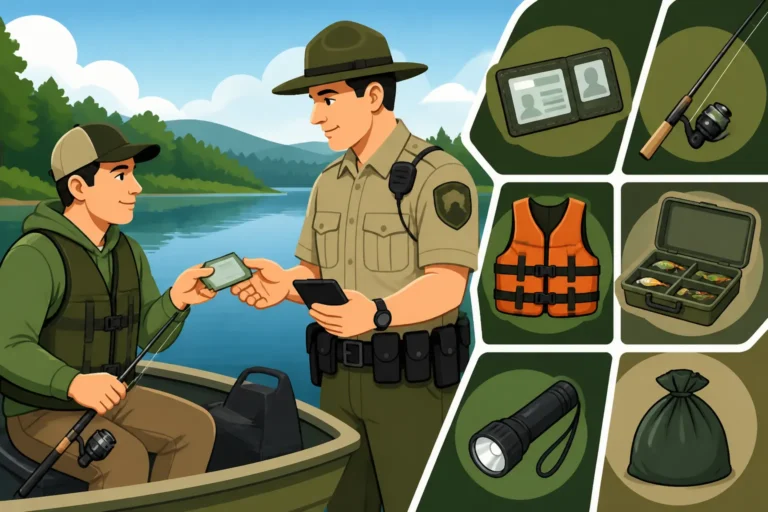
Let's be blunt: fishing without a valid Kentucky fishing license as an out-of-state guest is simply not worth the risk. Game wardens in Kentucky are vigilant, and they patrol all public waters, from large reservoirs to small streams.
If you are caught fishing without the appropriate license or permits, you can face:
- Fines: These can be substantial, often much higher than the cost of the license itself.
- Court Appearances: Depending on the severity or if it's a repeat offense, you might be required to appear in court.
- Confiscation of Gear: In some cases, your fishing gear or even your catch could be confiscated.
- Loss of Future Privileges: Serious violations could impact your ability to purchase licenses in Kentucky or even other states in the future.
It's an avoidable situation. The small cost and minimal effort to secure a proper license before your trip are a tiny investment compared to the potential legal and financial repercussions of being caught without one. Just get the license. The system makes it easy to purchase a Kentucky Fishing License Guide online or at a local vendor, so there’s really no excuse.
Here's a quick overview of non-resident license costs to help you plan:
| License Type | Cost (Approximate) | Duration | Ideal For |
|---|---|---|---|
| Nonresident Annual Fishing | $58.14 | March 1 – February 28 | Multiple trips or extended stays within a license year |
| Nonresident 7-Day Fishing | $37.00 | 7 consecutive days | Week-long vacations |
| Nonresident 1-Day Fishing | $15.86 | 1 calendar day | Short trips or spontaneous fishing days |
| Kentucky Trout Permit | $10.57 | Valid with primary license | Required for targeting trout |
Note: Prices are approximate and subject to change by the KDFWR. Always check the official KDFWR website for the most current pricing.
Remember, a little preparation goes a long way when fishing in Kentucky. Enjoy the beautiful waters and the fantastic fishing opportunities!
Disclaimer
The information provided in this guide is for general informational purposes only and is subject to change. While we strive to keep the content up-to-date and accurate, it is the angler's responsibility to verify all current Kentucky fishing license requirements, regulations, and fees directly with the Kentucky Department of Fish and Wildlife Resources (KDFWR) before engaging in any fishing activities. This guide does not constitute legal advice.