Safety Gear Checklist for Kentucky Boaters
Heading out on Kentucky's beautiful lakes and rivers is a quintessential experience, whether you're chasing trophy bass on Kentucky Lake or simply enjoying a peaceful afternoon paddle on a quiet creek. But with all the excitement of prepping your gear and plotting your course, it's incredibly easy to overlook one of the most critical aspects of any trip: safety. No one wants to imagine an emergency, but being truly prepared means understanding exactly what safety gear you need to have on board, not just for compliance, but for peace of mind. This guide will walk you through the essential safety items every Kentucky boater should consider, from life jackets to communication tools, ensuring your next outing is as safe as it is enjoyable.
Essential Life Jackets: Keeping Everyone Afloat
When it comes to boating safety, life jackets are undoubtedly the first line of defense, and rightfully so. It's not just about meeting regulations; it's about protecting yourself and everyone else on board. Even the strongest swimmers can be caught off guard by a rogue wave, a sudden mechanical issue, or an unexpected fall overboard in cold water. Having properly fitted, Coast Guard-approved life jackets readily accessible is non-negotiable for any responsible boater.
Understanding Life Jacket Types and Requirements
Life jackets aren't one-size-fits-all, and understanding the different types and their intended uses is crucial. The U.S. Coast Guard classifies life jackets into various "Types," each designed for specific boating conditions and activities. For instance, Type I life jackets offer the most buoyancy and are designed to turn an unconscious person face-up in the water, making them ideal for offshore adventures. Type II jackets are suitable for calmer inland waters, providing less bulk. Many recreational boaters will find Type III vests, often worn for water sports, to be comfortable and practical for active use, though they may not turn an unconscious person over. There are also specialized Type V jackets designed for specific activities like kayaking or personal watercraft (PWC) operation, but these often require active use to count towards carriage requirements.
Beyond the types, Kentucky has specific rules regarding who needs to wear a life jacket and when. For example, all children under a certain age are legally required to wear a Coast Guard-approved life jacket at all times while on the open deck of a moving vessel. This isn't just a recommendation; it's a law designed to save lives, as young children are particularly vulnerable. Failing to adhere to these rules can not only put lives at risk but also result in fines from game wardens or other law enforcement officers on the water.
Ensuring Proper Fit and Accessibility
Having life jackets on board is one thing, but making sure they fit correctly and are easily accessible is another critical layer of safety. A life jacket that's too loose can ride up and hinder buoyancy, while one that's too tight can be uncomfortable and restrict movement, making people less likely to wear it. Each person on your boat should have a life jacket that fits them properly. This means taking the time to try them on before you even leave the dock. For kids, always choose a jacket specifically designed for their weight range and test its fit by lifting them by the shoulders of the vest to ensure it doesn't slip over their chin or ears. Kentucky Life Jacket Rules for Kids Under 12 provides more specific details on these requirements.
Accessibility is just as important as fit. In an emergency, every second counts. Life jackets should never be stowed away in a locked compartment under a pile of gear. They need to be in a visible, easily reachable spot where anyone on board can grab one without delay. Think about the layout of your boat: are they hanging on rails, stowed in an open locker, or neatly stacked in a dedicated compartment that's clearly marked? Make it a point to show all passengers where the life jackets are and how to put them on correctly, especially if you have new guests aboard. Remember, Life Jacket Requirements for Every Boat Occupant in Kentucky means having one for everyone, including any furry friends you might bring along (though pet life jackets aren't legally mandated, they're a smart choice!). You can find a wide range of options, from traditional foam vests to inflatable models, at retailers like Bass Pro Shops or online at Amazon, ensuring you have the right fit and style for every member of your crew.
Fire Safety Afloat: Extinguishers and Prevention
The thought of a fire on a boat is terrifying, especially when you're surrounded by water that can't be used to put out a fuel-based blaze. However, boat fires do happen, often due to electrical issues, engine malfunctions, or even carelessness with cooking equipment or smoking materials. Being prepared with the right fire safety gear and understanding preventative measures can make all the difference in containing a small incident before it becomes a catastrophe.
Marine-Rated Fire Extinguishers
Just like life jackets, fire extinguishers on boats aren't optional; they're a legal requirement for most vessels in Kentucky, particularly those with enclosed engine compartments or areas where flammable liquids might be stored. But not just any fire extinguisher will do. You need a marine-rated extinguisher, identifiable by its "B-I" or "B-II" classification, which indicates its effectiveness against flammable liquids and electrical fires – the most common types of boat fires. The size and number of extinguishers required depend on the length of your boat and whether it has fixed systems. Fire Extinguisher Requirements for Kentucky Boats With Enclosed Engines outlines these specific regulations.
It's crucial to check your extinguishers regularly. Look at the pressure gauge to ensure it's in the green, inspect the hose for cracks or damage, and verify that the safety pin is intact. Many boaters forget this simple check, only to find their extinguisher useless when an emergency strikes. Keep your extinguishers mounted in accessible locations, away from direct sunlight, and make sure everyone on board knows where they are and how to use them. Just like with life jackets, a quick demonstration before you leave the dock can be invaluable. You can typically pick up reliable marine-rated fire extinguishers at any reputable marine supply store or online through platforms like Amazon.
Preventing Fires and Fueling Safety
The best defense against a boat fire is prevention. A significant number of boat fires start during or immediately after refueling. Always turn off your engine, close all ports and hatches, and ensure there are no open flames or smoking materials when fueling up. Portable fuel tanks should be filled on the dock, not inside the boat, to avoid spills and the accumulation of dangerous fumes in confined spaces. After fueling, always open your engine compartment, if applicable, and run your bilge blower for at least four minutes to vent any lingering fumes before starting your engine.
Beyond fueling, regular maintenance of your boat's electrical system, engine, and fuel lines is paramount. Frayed wires, leaky fuel connections, or an overheating engine are all potential fire hazards. A thorough pre-trip inspection should always include checking for any unusual odors (especially gasoline), fluid leaks, or exposed wiring. If something looks or smells off, address it before you leave the dock. Carrying a small basic toolkit can help with minor repairs, but for anything significant, it's always best to consult a professional marine mechanic. A well-maintained boat is a safer boat, and that regular attention dramatically reduces the risk of a fiery emergency.
Sound, Light, and Signals: Getting Noticed on the Water
Imagine being caught out on the water after dark, or in a sudden dense fog rolling across Lake Barkley, and realizing you have no way to signal your presence or communicate with other vessels. It's a terrifying scenario that can easily be avoided with proper sound-producing devices, navigation lights, and visual signaling equipment. These tools are crucial for both preventing collisions and calling for help when needed.
Audible and Visual Signaling Devices
Every vessel is required to carry some form of sound-producing device. For smaller boats, this might be a simple handheld air horn or a whistle, while larger vessels typically have a permanently installed horn. The purpose is to signal your intentions to other boats, especially in low visibility, or to alert them to danger. For instance, a short blast might signal a turn, while a prolonged blast could indicate distress. Knowing the basic sound signals is an important part of safe boating, and it’s something covered in most boating safety courses.
Visual distress signals (VDS) are another essential component, especially for boats operating on coastal waters or large inland lakes like Kentucky Lake. While some smaller, unpowered boats might be exempt, most powered vessels must carry VDS suitable for day and night use. These can include pyrotechnic devices like flares (which have expiration dates and must be replaced regularly) or non-pyrotechnic signals like an orange distress flag for daytime and an electronic distress light for nighttime. These signals can be the difference between being quickly found by search and rescue teams or being adrift for hours. Always check the expiration dates on pyrotechnic devices, and ensure you have fresh batteries for electronic signals.
Navigation Lights and Reflectors
When operating between sunset and sunrise, or during periods of restricted visibility like heavy rain or fog, proper navigation lights are absolutely mandatory. These lights inform other boaters of your vessel's position, size, and direction of travel, significantly reducing the risk of collision. Different types of boats have different light configurations. For example, a powerboat typically needs a white all-round light or a masthead light and stern light, along with red and green sidelights. Unpowered vessels, even canoes and kayaks, need to show a white light (like a flashlight) to prevent collisions if they are out after dark.
Beyond active lights, reflective tape or materials on your boat, especially on life jackets and paddles, can also enhance visibility, particularly if your primary lights fail or if you end up in the water. For kayaks and smaller crafts, consider investing in a visible flag with reflective strips that can be mounted high. Even if you only plan to boat during the day, unexpected mechanical issues or weather changes can extend your trip into the night, making working navigation lights indispensable. Regularly check your lights before heading out, ensuring all bulbs are working and wiring is secure.
Anchoring and Mooring: Staying Put and Secure
It's easy to think of an anchor simply as a way to stop and fish, but it's much more than that. A properly sized and deployed anchor can be a critical safety device, allowing you to hold your position in an emergency, prevent drifting into hazards, or even act as a distress signal if you're unable to move. Similarly, having appropriate mooring lines is essential for securing your vessel safely at a dock or to another boat.
Choosing and Deploying Your Anchor
The type and weight of anchor you need depend heavily on the size of your boat, the type of bottom you'll be anchoring in (mud, sand, rock), and the conditions you expect to encounter. A small kayak might get by with a folding grapple anchor, but a larger powerboat on Kentucky Lake will need a much more substantial plow or fluke-style anchor. Beyond the anchor itself, you need adequate rode (the anchor line, which can be chain, rope, or a combination). A good rule of thumb is to have at least 7:1 scope – meaning for every foot of water depth, you need seven feet of rode paid out for the anchor to properly set and hold. For example, in 10 feet of water, you'd need 70 feet of rode.
Knowing how to properly deploy and retrieve your anchor is also a safety skill. Never simply toss the anchor overboard; it can foul the line or, worse, catch on something and flip your boat. Instead, slowly lower it, allowing the rode to pay out steadily. When retrieving, use your boat's power to pull directly over the anchor, breaking it free from the bottom, rather than trying to winch it up manually, which can strain your equipment and yourself. In an emergency, a properly set anchor can prevent your boat from being pushed into shallow water, rocks, or other dangerous areas by wind or current, giving you time to address the problem.
Mooring Lines and Fenders
While anchoring is for stopping in open water, mooring lines are for securing your boat to a dock, buoy, or another vessel. You should always have at least two strong, appropriately sized mooring lines on board, preferably three, to secure your boat safely. The length and diameter of the lines should match the size of your boat and the expected conditions. Having extra line is never a bad idea, as it can be used for towing, emergency repairs, or as a makeshift anchor rode extender.
Fenders, also known as bumpers, are another crucial item for mooring. These inflatable cushions protect your boat's hull from damage when docking or rafted up with other boats. Always position fenders between your boat and the dock or another vessel to absorb impact and prevent scrapes and dings. When docking, approach slowly, have your lines and fenders ready, and ensure you understand how to cleat off your lines securely. Knowing how to properly tie off a boat can prevent it from banging against the dock in choppy conditions or drifting away if improperly secured. These simple items contribute significantly to the overall safety and longevity of your vessel.
Emergency and First Aid: Prepared for the Unexpected
Even with the best planning and precautions, emergencies can happen on the water. From minor cuts and scrapes to more serious injuries or medical issues, being prepared to handle health crises is paramount. Furthermore, having a way to deal with common boat breakdowns can prevent a minor inconvenience from turning into a dangerous situation.
Comprehensive First Aid Kit
A well-stocked, waterproof first aid kit is an absolute must-have for any boat, regardless of its size or how short your trip might be. Accidents can happen quickly and unexpectedly. Think about what you might need if someone cuts themselves on a fish hook, gets a nasty scrape from a slip and fall, or suffers a severe allergic reaction. Your kit should include basic items like bandages, antiseptic wipes, pain relievers, and allergy medication, but also consider items specific to the marine environment: motion sickness medication, waterproof tape, sunscreens, and after-bite creams for insect stings.
Regularly check your first aid kit to ensure all medications are within their expiration dates and that you haven't used up essential items without replacing them. Keep it stored in a dry, easily accessible location, clearly labeled. It's also incredibly helpful if at least one person on board has basic first aid and CPR knowledge. Even knowing how to properly apply a pressure bandage or recognize symptoms of heatstroke can be lifesaving until professional medical help can be reached. For specific guidance on what to include, check out Best First Aid Kits for Boaters.
Essential Repair and Bailout Gear
Beyond medical emergencies, mechanical failures or unforeseen damage can leave you stranded. A basic repair kit can often get you out of a bind and back to shore safely. This might include items like duct tape (a boater's best friend!), zip ties, spare fuses, a multi-tool, a patch kit for inflatables or kayaks, and even some spare hose clamps. For engine-powered boats, having extra fuel, a spare prop, and the tools to change it can save a lot of headaches.
For any boat, especially smaller vessels like kayaks or jon boats, having a bailout device is critical. This could be a hand-operated bilge pump, a bucket, or a large sponge. If you take on water from a leak, a large wave, or heavy rain, you need a way to remove it to prevent capsizing or swamping. Even on larger boats with automatic bilge pumps, a backup manual system is a smart idea in case of electrical failure or an overwhelmed pump. These simple tools, while often overlooked, are fundamental to addressing common on-water problems and ensuring you can either fix the issue or at least safely manage the situation until help arrives.
Navigation and Communication: Staying on Course and Connected
In the vastness of Kentucky's larger lakes or along winding river systems, it's surprisingly easy to get disoriented, especially in adverse weather or at night. Having reliable navigation tools and effective communication devices isn't just a convenience; it's a safety imperative that keeps you on track and ensures you can call for assistance if you ever find yourself in trouble.
GPS, Charts, and Local Knowledge
Modern GPS devices, whether standalone units, chartplotters integrated into your boat's console, or even reliable smartphone apps, are invaluable for navigation. They show your current position, track your course, and can help you find your way back to the launch ramp or a safe harbor. However, technology can fail, so it's always wise to have a backup. Traditional paper charts of the waters you'll be traversing are excellent complements to electronic navigation, as they provide an overview of depths, hazards, and aids to navigation that might not be as obvious on a small screen.
Beyond the tools, having local knowledge is a huge asset. This means understanding common currents, identifying shallow areas, knowing where submerged structures might pose a risk, and being aware of weather patterns specific to that body of water. Talk to other local anglers and boaters, consult fishing reports, and pay attention to navigational markers. Knowing the "rules of the road" for boating – such as who has the right of way and how to safely pass other vessels – is also a fundamental part of preventing accidents and ensuring smooth travel on shared waterways.
Marine Radios and Cell Phones
A reliable means of communication is paramount for safety on the water. While most people rely on cell phones these days, their coverage can be spotty or non-existent in remote areas of some Kentucky lakes or rivers. A marine VHF (Very High Frequency) radio is a much more dependable communication device for boaters. These radios are designed for marine use, offering clear communication with other boats, bridges, and emergency services (like the Coast Guard on larger waterways, or local marine patrols). Channel 16 is the international hailing and distress frequency, constantly monitored by authorities. Having a VHF radio, especially on larger boats or when venturing further offshore, gives you a robust safety net that a cell phone simply can't match.
Even if you have a VHF radio, keep your fully charged cell phone in a waterproof bag as an additional backup. Make sure you have emergency contact numbers saved, including local marine patrol, your marina, and a trusted friend or family member who knows your float plan. A float plan, by the way, is a simple document you leave with someone on shore, detailing where you're going, who's with you, and when you expect to return. It's a simple, free safety measure that ensures help knows where to look if you don't check in on time. Between your navigation tools and robust communication devices, you'll be well-equipped to stay safe and connected on your Kentucky boating adventures. Kentucky Boating Safety Gear Checklist provides a great overview of all the items you should consider.
Pre-Trip Checks and General Safety Awareness
Before you even think about pushing off from the dock, a thorough pre-trip check of your vessel and equipment is arguably one of the most important safety procedures you can perform. It's not just about what gear you have, but ensuring that gear is in working order and that your boat itself is ready for the conditions ahead. A few minutes spent before launching can save hours of trouble, or even prevent a serious accident, out on the water.
The Importance of a Pre-Launch Checklist
Every seasoned boater knows the value of a checklist. It's easy to forget something when you're excited to hit the water. This checklist should cover everything from checking your fuel levels and engine oil to ensuring your battery is charged, your bilge pump is working, and all your navigation lights illuminate. Confirming that your life jackets are accounted for and easily accessible, that your fire extinguisher is charged, and that your sound-producing device is functional are non-negotiables. Don't just glance at these items; actually test them. Give the air horn a blast, turn on the lights, and make sure the drain plug is securely in place. You wouldn't drive your car without checking the tires and gas, so don't launch your boat without a similar level of scrutiny.
This pre-launch routine should also include a quick look at the weather forecast. Conditions on Kentucky's large lakes, like Lake Cumberland, can change rapidly. A clear morning can quickly turn into an afternoon of thunderstorms and high winds. Knowing what to expect allows you to dress appropriately, secure loose items, and decide if it's even safe to go out. If the forecast looks iffy, it's always better to err on the side of caution and postpone your trip. The fish will still be there tomorrow!
Operating Your Boat Safely
Beyond the gear, safe boating ultimately comes down to the operator. This includes adhering to speed limits, especially in no-wake zones, maintaining a safe distance from other vessels, swimmers, and shorelines, and understanding the "rules of the road" as mentioned earlier. Awareness of your surroundings is key. Always designate a sober operator and ensure everyone on board understands the importance of responsible behavior. Alcohol and boating simply do not mix, and impaired operation is a leading cause of boating accidents.
Educating yourself and your passengers on basic safety procedures can make a huge difference. Show everyone where the emergency kill switch is located, how to use the VHF radio, and where the first aid kit is stored. If you're new to boating or operating a larger vessel, consider taking a boating safety course. Many states, including Kentucky, offer free or low-cost courses that cover everything from navigation and collision avoidance to emergency procedures and legal requirements. For example, Kentucky Safe Boating Certificate Requirements Explained details who needs a certificate. These courses not only make you a safer boater but can sometimes even qualify you for insurance discounts. The more informed and prepared you are, the more enjoyable and secure your time on the water will be for everyone.
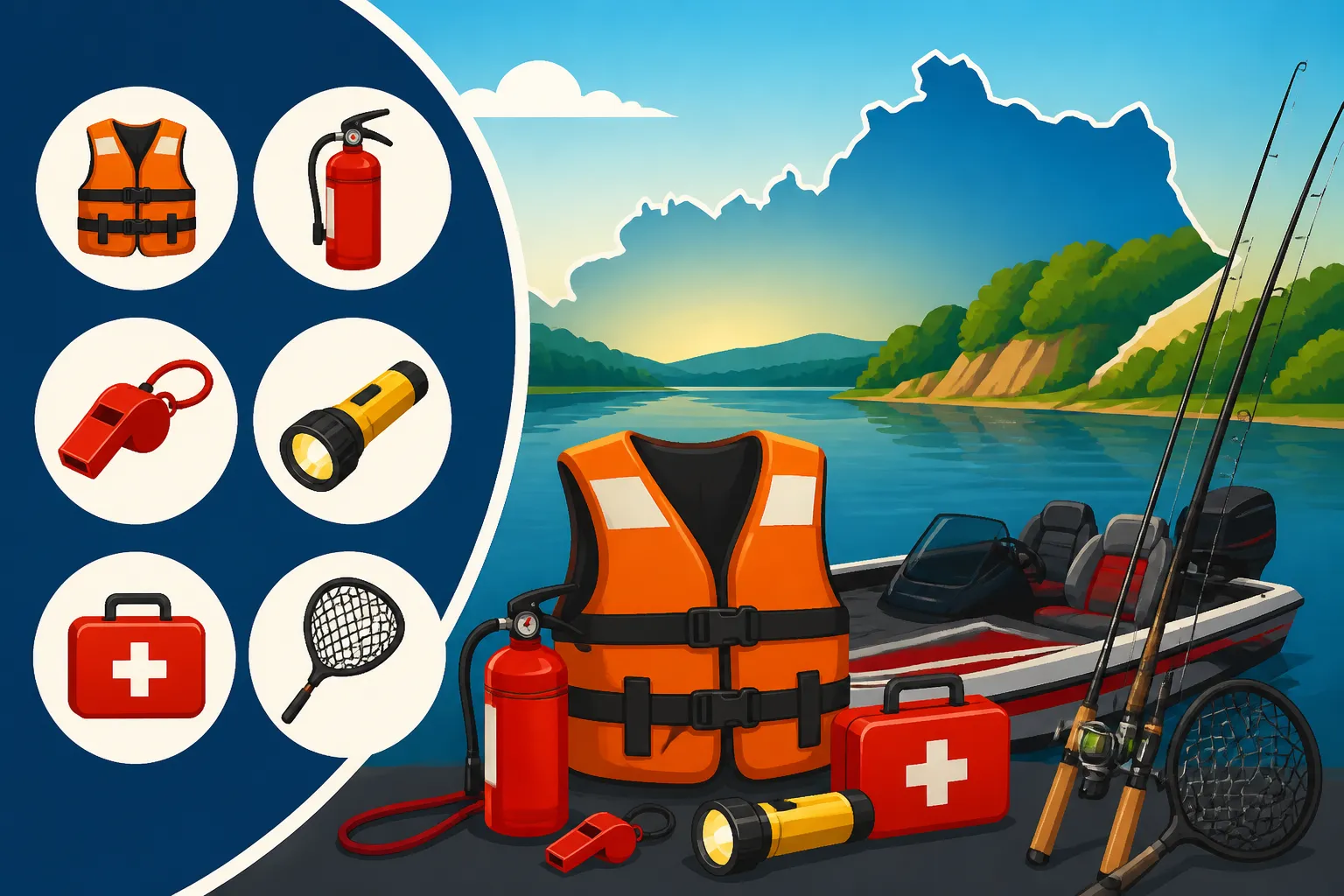
Below is a helpful table summarizing key safety gear for Kentucky boaters:
| Category | Essential Items | Recommended Additions | Notes |
|---|---|---|---|
| Life Saving | Coast Guard-approved Life Jackets (1 per person) | Throwable Flotation Device (e.g., ring buoy, cushion) | Check fit, accessibility, and condition. Kids often have specific wear rules. |
| Fire Safety | Marine-rated Fire Extinguisher | Engine Compartment Fixed Extinguishing System (larger boats) | Check gauge, pin, and expiration date regularly. |
| Signaling | Sound-Producing Device (horn, whistle) | Visual Distress Signals (flares, electronic light, flag) | Required for night operation, check expiration dates for flares. |
| Anchoring/Mooring | Anchor & Rode (appropriate for boat size/bottom) | Spare Anchor, Dock Lines, Fenders | Ensure proper scope for anchoring. Protect hull at docks. |
| Emergency Prep | Waterproof First Aid Kit | Basic Tool Kit, Duct Tape, Zip Ties, Spare Parts, Bailout Device (bucket, pump) | Tailor kit to potential needs. Essential for minor repairs and taking on water. |
| Navigation/Comm. | Navigation Lights (for night/low visibility) | GPS/Chartplotter, Paper Charts, VHF Radio, Cell Phone (waterproof) | GPS/charts help stay on course. VHF for emergencies, cell as backup. |
| General Safety | Kill Switch Lanyard (if applicable) | Sunscreen, Bug Spray, Drinking Water, Extra Layers | Always wear kill switch. Stay hydrated and protected from elements. |
Disclaimer
This article is for general informational purposes only and does not constitute professional advice. Laws, prices and regulations vary by location and change over time. Consult a qualified professional for guidance on your specific situation.