Tightlining Techniques for Crappie Fishing
Let's be honest, there's nothing quite as frustrating as watching your bobber sit perfectly still, yet you know crappie are lurking just below. Traditional float fishing can sometimes feel like a guessing game, missing those incredibly subtle "thump" or "tick" bites that signal a hungry crappie. If you're tired of missed opportunities and want to feel every whisper of a bite, then mastering tightlining techniques for crappie fishing is about to revolutionize your approach on Kentucky's waters. This guide will dive deep into everything you need to know to become a tightlining pro.
Understanding the Essence of Tightlining for Crappie
Tightlining is more than just a technique; it's a philosophy of constant connection. Unlike fishing with a bobber, where you wait for visual cues, tightlining puts you in direct, tactile contact with your lure and, more importantly, with the fish. It’s about feeling the subtle nuances of the water and the lightest of strikes, which crappie are infamous for. This method truly shines when crappie are hesitant, feeding lightly, or positioned deep in cover where a float might get hung up.
Why Tightlining Excels Over Traditional Methods
When you're chasing crappie, especially those notoriously finicky slabs, every advantage counts. Traditional bobber fishing relies on a visible indicator to signal a bite. While effective in many situations, especially with aggressive fish, it often fails to register those soft, almost imperceptible bites that don't pull the float down decisively. Imagine a crappie just mouthing your jig, perhaps inhaling and exhaling it quickly – a bobber might not even twitch. With tightlining, you become the bobber, your rod tip and your hand registering even the slightest displacement of water or change in pressure.
This direct connection is invaluable when crappie are staging in thick brush piles or submerged timber. A bobber would constantly snag, making precise presentations difficult, if not impossible. Tightlining allows you to vertically drop a jig with pinpoint accuracy right into a small opening in the cover, keeping maximum control over its descent and positioning. It's about surgical precision rather than broad strokes, which makes a huge difference on pressured fish or in challenging conditions.
The Principles of Maximizing Sensitivity
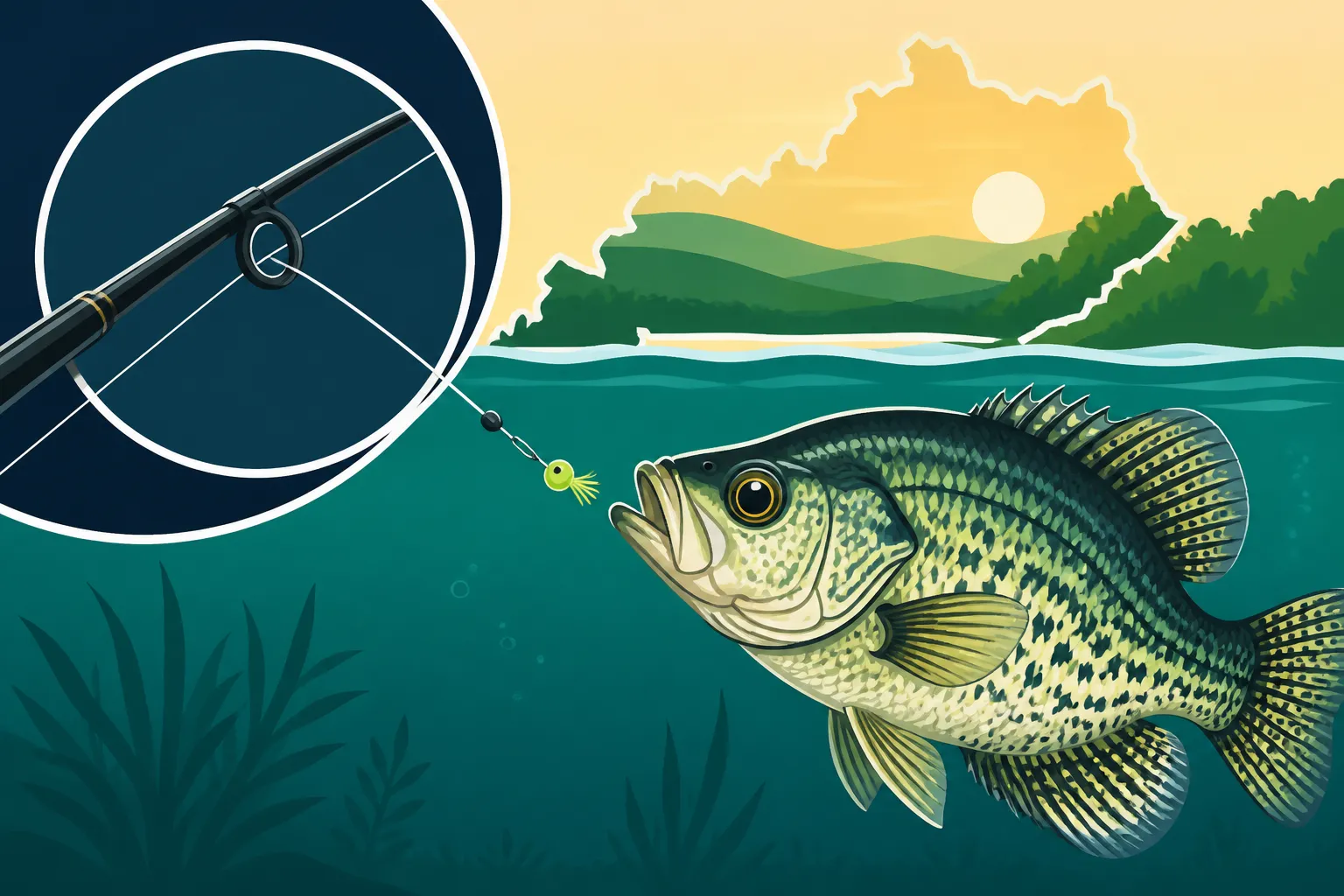
The core of tightlining is sensitivity. To truly excel, you need to understand how to optimize your setup and technique to feel everything happening at the end of your line. It starts with minimizing slack in your line, maintaining a direct, taut connection between your rod tip and your jig. This isn't about pulling hard on the line, but rather taking up any excess that would dampen feel. When your line is tight, the slightest vibration or change in weight is transferred directly up your rod blank and into your hand.
Beyond line tension, the principle extends to your choice of gear. A fast-action rod, for instance, has a tip that bends easily but quickly transitions into a stiffer backbone, allowing for both sensitivity and the power needed for a quick hookset. The type of line you use also plays a monumental role, with some materials offering far better vibration transmission than others. Ultimately, maximizing sensitivity is about eliminating anything that could absorb or delay the signal of a bite, turning your fishing rod into an extension of your nervous system. It's a skill that takes practice, but the rewards are well worth the effort.
Essential Gear for Successful Crappie Tightlining in Kentucky
The right gear can make or break your tightlining success. You don't necessarily need the most expensive equipment, but understanding how each component contributes to sensitivity and control is crucial. From the flex of your rod to the visibility of your line, every choice impacts your ability to detect those subtle crappie bites that often go unnoticed by less sensitive setups.
Rod and Reel Combinations for Optimal Feel
For tightlining, your rod is your primary sensor. You want something lightweight, with a fast action, meaning the tip bends easily, but the rest of the rod stays relatively stiff. This setup transmits even the lightest tap directly to your hand. A light or ultralight power spinning rod, typically in the 6-foot to 7-foot range, is ideal. Brands like St. Croix, Ugly Stik, or even some of the more affordable options available on Amazon, offer great sensitivity. The fast action allows for a quick, responsive hookset without having to reel up a lot of slack, which is often the downfall of slower action rods when tightlining. A longer rod can also help with reach and shock absorption, especially important when fishing deeper waters or with larger crappie.
Pair your sensitive rod with a small, lightweight spinning reel (size 1000 or 2000). The key here isn't power, but smooth operation and minimal weight to maintain the overall balance and feel of the setup. A smooth drag is always a plus, even for crappie, as it helps prevent break-offs when a feisty slab decides to make a run. Remember, the goal is to feel everything, so a heavy or unbalanced setup will work against you. For an in-depth look at what works best, check out our guide on the "Best Rods and Reels for Kentucky Crappie Fishing".
Line Selection: Mono, Fluoro, or Braid?
Choosing the right fishing line is paramount for tightlining crappie. Each type of line—monofilament, fluorocarbon, and braided—has distinct characteristics that affect sensitivity, stretch, and visibility.
| Line Type | Pros | Cons | Best Use for Tightlining Crappie |
|---|---|---|---|
| Monofilament | Affordable, good knot strength, floats, some stretch (shock absorption) | High stretch (reduced sensitivity), higher visibility, absorbs water | General purpose, when a little stretch is desired, lighter bites in less pressured waters |
| Fluorocarbon | Low stretch (high sensitivity), nearly invisible underwater, sinks | More expensive, can be stiffer, more prone to memory, knot strength can be tricky if not tied correctly | Clear water, deep water, when maximum sensitivity and stealth are crucial, often used as a leader |
| Braided | No stretch (maximum sensitivity), extremely strong for its diameter, floats | Highly visible, no abrasion resistance, can be expensive, difficult to cut, can dig into spools | Dingy or muddy water, fishing heavy cover, as a main line with a fluorocarbon leader for ultimate feel |
Monofilament (Mono): Often the most budget-friendly, monofilament line has some stretch, which can act as a shock absorber but also reduces sensitivity. It's a decent choice for beginners or when crappie are less finicky. However, for true tightlining, its stretch can mask those subtle bites. If you use mono, opt for 4-6 pound test.
Fluorocarbon (Fluoro): This is where tightlining really starts to shine. Fluorocarbon has very low stretch, offering excellent sensitivity, and it's nearly invisible underwater, making it a stealthy choice. It also sinks, which can be an advantage when trying to get your jig down quickly to the strike zone. Many anglers will use a 4-6 pound fluorocarbon main line or use it as a leader tied to braided line. The reduced stretch means every bump, tick, and slight pressure change is transmitted directly to your rod.
Braided Line: For ultimate sensitivity and strength in heavy cover, braided line is hard to beat. It has virtually no stretch, allowing you to feel everything, and its thin diameter for its breaking strength is remarkable. However, braid is highly visible and can be abrasive to fish mouths if not handled carefully. A common setup is to use 6-10 pound braided line as your main line, tied to a 4-6 pound fluorocarbon leader (18-36 inches long) using an Albright or FG knot. This gives you the best of both worlds: the sensitivity of braid and the invisibility of fluorocarbon. When fishing heavily oxygenated or stained waters, you might even get away with just straight braid, which you can often find on Amazon.
Jigs and Baits: The Business End of Your Rig
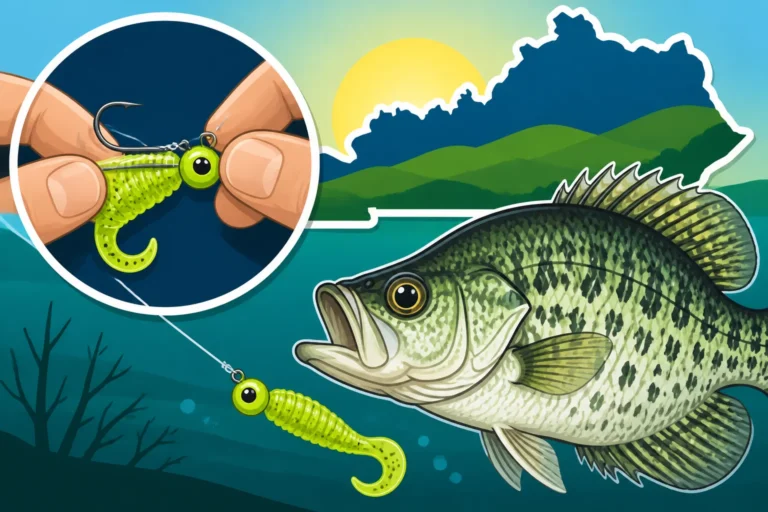
When tightlining for crappie, the jig is your direct point of contact with the fish, so its size, weight, and presentation are critical. Generally, you'll be using small jigs, typically ranging from 1/32 to 1/16 ounce. Lighter jigs allow for a slower, more natural fall, which can be irresistible to crappie. However, if you're battling wind or current, or fishing deeper water, you might need to bump up to a 1/8 ounce jig to maintain that crucial tight line connection.
As for the jig types, soft plastic bodies on lead heads are classic crappie killers. Think tiny tubes, grubs, and creature baits in a variety of colors. Natural colors like white, chartreuse, and clear with glitter are always good starting points, but don't be afraid to experiment. Sometimes, a bright pink or orange can trigger a bite when nothing else will. Crappie jigs with small, sharp hooks are key; a dull hook will lead to missed opportunities, even with a perfect hookset. For more ideas on what works in Kentucky, our article on the "Best Crappie Jigs for Kentucky Waters" has some fantastic recommendations.
Beyond artificial jigs, live minnows are another fantastic option for tightlining. You can rig a small minnow on a plain hook or a light jig head. The natural movement of a live minnow can be exactly what it takes to entice a hesitant crappie. When fishing with minnows, the same principles of line sensitivity apply, allowing you to feel when a crappie gently mouths or swims off with the bait. This technique often works wonders during colder months when fish are less active.
Mastering Tightlining Techniques: From Presentation to Hookset
Tightlining isn't just about the gear; it's about the dance between you, your rod, and the water. It demands focus, patience, and a refined sense of touch. The beauty of it is that once you master these techniques, you'll be able to detect bites that other anglers simply miss, especially when fishing for crappie who are known for their subtle strikes.
Vertical Presentation: The Key to Precision
The cornerstone of tightlining for crappie is a precise, controlled vertical presentation. This means dropping your jig or bait straight down into the strike zone, directly above or next to the cover where crappie are holding. It's not about casting and retrieving horizontally like many other fishing methods; it's about surgical drops. Whether you're peering into the depths of a brush pile or targeting suspended fish in open water, the goal is to keep your offering as vertical as possible beneath your rod tip.
To achieve this, position your boat or yourself (if bank fishing) directly over or slightly upwind/upcurrent from your target. Gently lower your jig, using your thumb to feather the spool on a spinning reel to control the descent. You want a slow, natural fall. As it descends, maintain a slight bow in your line (not slack!) so that your jig falls unimpeded but you can still feel its weight. This allows you to feel any interruptions in the fall, which is often a bite. Once you reach your desired depth, lightly twitch your rod tip, moving the jig just enough to make it dance enticingly without pulling it too far from the strike zone. This subtle movement is often enough to trigger a reluctant crappie. For more specific advice on where to target, check out our guide on "How to Jig for Crappie in Shallow Water".
Detecting the Subtlest Bites
This is where the rubber meets the road with tightlining. Crappie bites can be incredibly subtle, often feeling like nothing more than a slight "tick," a spongy resistance, or even just the weight of your jig feeling "different" than it did a second ago. It might not be a dramatic tug, but a momentary lightness, as if your jig simply stopped falling a little prematurely. Sometimes, the only indication is a slight twitch or straightening of your line where it enters the water. Your eyes play as much a role as your hands here, constantly watching the line for any unnatural movement.
Practice is key. The more you tightline, the more attuned you'll become to these minute signals. Try closing your eyes for a moment after you've lowered your jig to the target depth and are lightly twitching it. Focus purely on the feel in your hand. What does a normal twitch feel like? How does it feel when your jig taps a branch? That baseline understanding will help you recognize when something isn't normal – and that's usually a crappie. Don't second-guess yourself; if it feels different, assume it's a bite and react quickly.
The Art of the Crappie Hookset
Once you've detected that subtle bite, the hookset needs to be swift and decisive, but not overpowering. Crappie have relatively soft mouths, and a violent hookset can tear the hook out or rip through their delicate lip, especially with the smaller hooks typically used for crappie jigs. Instead of a massive, sweeping motion, think of it as a firm, upward snap of the wrist and forearm.
You want to apply just enough pressure to embed the hook firmly in the crappie's mouth. Because you're maintaining a tight line and using a sensitive, fast-action rod, very little movement is actually needed to drive that hook home. A good rule of thumb is to lift the rod tip from 9 o'clock to 11 o'clock rapidly, reeling down quickly to maintain pressure if the fish moves towards you. With low-stretch lines like fluorocarbon or braid, this subtle snap is usually all it takes. Once the hook is set, keep constant pressure on the fish and reel it in steadily. Remember, the goal is to land the fish, not to launch it over your head!
Adapting Tightlining to Kentucky's Diverse Crappie Habitats
Kentucky offers an incredible variety of crappie fishing environments, from vast reservoirs like Kentucky Lake and Lake Barkley to smaller, clearer impoundments and winding rivers. Tightlining is incredibly versatile, but your approach will need to shift slightly depending on where and when you're targeting these tasty panfish. Understanding these adaptations will significantly improve your catch rates.
Fishing Brush Piles and Submerged Timber
This is arguably where tightlining shines brightest for crappie. Brush piles, submerged trees, and other woody cover are crappie magnets, offering both shelter and ambush points for forage. However, these areas are also notorious for snags, making traditional casting and retrieving a headache. With tightlining, you can delicately work your jig in and around the cover with surgical precision.
Approach the brush pile slowly and quietly, using your electronics to pinpoint the densest parts and any fish holding within or around them. Position your boat directly over the cover or slightly downwind/downcurrent if you're drifting. Drop your jig straight down, watching your line and feeling for light taps as it descends. When you feel your jig contact a branch, stop its descent, lift it slightly over the obstacle, and let it fall again. This "yo-yo" motion is incredibly effective at triggering strikes from crappie hiding deep within the structure. Sometimes the bite comes on the fall, other times when you lift it clear of a branch. Patience is key here, as you might need to work multiple drops into a single brush pile before finding the fish. For more on this, check out "Crappie Fishing Around Brush Piles."
Open Water and Channel Edge Strategies
While brush piles are prime real estate, crappie also frequent open water, especially when suspended over deeper channels or along ledges. This can be more challenging for tightlining if you're not equipped with good electronics. Your fish finder becomes your best friend here, helping you locate schools of suspended crappie or define the edges of old creek channels.
When targeting suspended crappie in open water, drift fishing or slow trolling can be effective. If drifting, simply let the wind or current move your boat slowly over the areas where you've marked fish. Keep your jig vertical beneath your rod tip, constantly adjusting your depth to match where the crappie are holding. If slow trolling, use your trolling motor to maintain a slow, controlled speed, dragging multiple tightline rigs at varying depths until you find the productive zone. Along channel edges and ledges, tightlining allows you to meticulously work your jig down the slope, feeling every contour change and bounce. This is particularly effective during colder months when crappie often relate to these deeper structures.
Seasonal Adjustments for Crappie Movement
Crappie behavior, and thus effective tightlining strategies, changes dramatically with the seasons in Kentucky. In the early spring, as water temperatures rise, crappie begin to move shallow, staging near spawning grounds. This is a prime time for tightlining in very shallow cover, like emergent grass or shallow brush. Our "Kentucky Crappie Fishing: Spring Spawn Run Guide" details this period perfectly. You might even find success working jigs just a few feet deep.
As spring transitions to summer, crappie often retreat to deeper, cooler waters. This is when tightlining suspended fish over creek channels or deeper brush piles becomes more productive. You'll need to pay close attention to your depth finder and be willing to fish 15-30 feet deep, sometimes even more. In the fall, crappie transition back to feeding heavily, often schooling up in predictable locations like channel bends or submerged humps, making them excellent targets for tightlining. And in winter, while slower, tightlining remains effective by targeting deep, vertical cover or structure where sluggish crappie congregate. Knowing the "Best Time of Year to Catch Crappie on Lake Barkley" can also help tailor your seasonal approach.
Common Tightlining Challenges and How to Overcome Them
No fishing technique is without its quirks, and tightlining for crappie, while incredibly effective, can present its own set of frustrations. The good news is that most common challenges have practical solutions that can keep you on the water and catching fish.
Dealing with Wind and Current
Wind and current are arguably the biggest adversaries of tightlining. They make it incredibly difficult to maintain that crucial vertical presentation and can significantly dampen your ability to feel subtle bites. When the wind picks up, it creates a "bow" in your line, adding slack and reducing sensitivity. Strong currents can sweep your jig away from your target zone, making precise drops a nightmare.
One of the first steps is to use a slightly heavier jig. If you're typically fishing a 1/32 ounce jig, bump up to a 1/16 or even a 1/8 ounce. This increased weight will help your jig cut through the water and maintain a more vertical path. Positioning your boat is also key: if you're in a boat, use your trolling motor to "hold" yourself against the wind or current, minimizing your drift. Spot-Lock features on modern trolling motors (like those from Minn Kota or Motorguide, often found on Amazon) are absolute game-changers for tightlining in challenging conditions. If you're bank fishing, try to find sheltered coves or areas where the wind is blocked. Finally, choosing braided line with a fluorocarbon leader can help, as braid has a thinner diameter for its strength, offering less resistance to wind and current.
Snags and Line Management
Fishing heavy cover, while productive for crappie, inevitably leads to snags. It's just part of the game. However, tightlining can actually help reduce snags if done correctly, as you have direct feel of the cover. When you feel your jig contact a branch, don't just pull harder. Instead, try to gently lift it over the obstruction. If it does get stuck, try giving slack for a moment, then snapping your rod tip sharply upwards. Sometimes, the jig will pop free.
Good line management is crucial. Avoid letting out too much slack line, as this increases the chances of it getting wrapped around branches or other submerged objects. Always check your line for frays or nicks after retrieving your jig from cover; even the slightest damage can lead to a break-off on your next fish. Using a sturdy knot like a Palomar or improved clinch knot will also help prevent issues. Keep a pair of clippers handy for retying frequently. It’s better to re-tie proactively than to lose a trophy crappie because of a weak knot or damaged line.
When Crappie Are Finicky: Troubleshooting Your Approach
We've all been there: you know the crappie are there, you see them on the sonar, but they just won't bite. When crappie are finicky, it's time to troubleshoot and make subtle adjustments to your tightlining approach. First, consider slowing down your presentation even more. A slower fall, achieved with lighter jigs (if conditions allow) or by feathering your spool more carefully, can be the ticket. Sometimes, an almost imperceptible quiver of the jig is all it takes to trigger a strike from a hesitant fish.
Next, experiment with different colors and sizes of jigs. If you're using a 1/16 ounce jig, try dropping down to a 1/32 ounce. If you're using a chartreuse grub, switch to a white tube or a natural shad pattern. Sometimes, it's not the technique, but the specific bait that makes the difference. Also, consider adding a scent to your jig. Crappie have a keen sense of smell, and a little added attractant can make them hold onto your bait longer, giving you more time to detect the bite and set the hook. Don't forget the power of live bait; a small minnow on a light jig head can often tempt the most stubborn crappie when artificials fail. And if all else fails, consider changing locations or waiting for a different time of day, as crappie bite patterns can change quickly. Our guide on "Best Depth to Fish for Crappie in Spring" might offer some insights into depth adjustments based on the time of year.
Disclaimer
Fishing regulations and safety guidelines can change. Always consult the latest Kentucky Department of Fish and Wildlife Resources (KDFWR) regulations before heading out on the water. Be mindful of weather conditions, practice safe boating, and always wear a life jacket. This content is for informational purposes only.