How to Rig a Trotline for Catfish
There's a special satisfaction that comes from catching a mess of catfish, but let's be honest, sometimes sitting by the bank with a single pole just doesn't cut it when you're aiming for volume or a real challenge. For many Kentucky anglers, the traditional method of a trotline offers an incredibly effective and efficient way to put plenty of delicious catfish on the dinner table, but rigging one properly and legally can feel like a daunting task. This guide will walk you through everything you need to know, from understanding the regulations to the nitty-gritty of setting up, baiting, and retrieving your very own catfish trotline.
Understanding Trotlines in Kentucky Waters
Before you even think about buying rope and hooks, it's absolutely critical to understand what a trotline is, why it's such a popular method for catfish in Kentucky, and most importantly, the specific rules and regulations that govern its use. There’s nothing worse than putting in all that effort only to find out you’re operating outside the law or, even worse, creating a hazard for wildlife.
What is a Trotline and Why Use One?
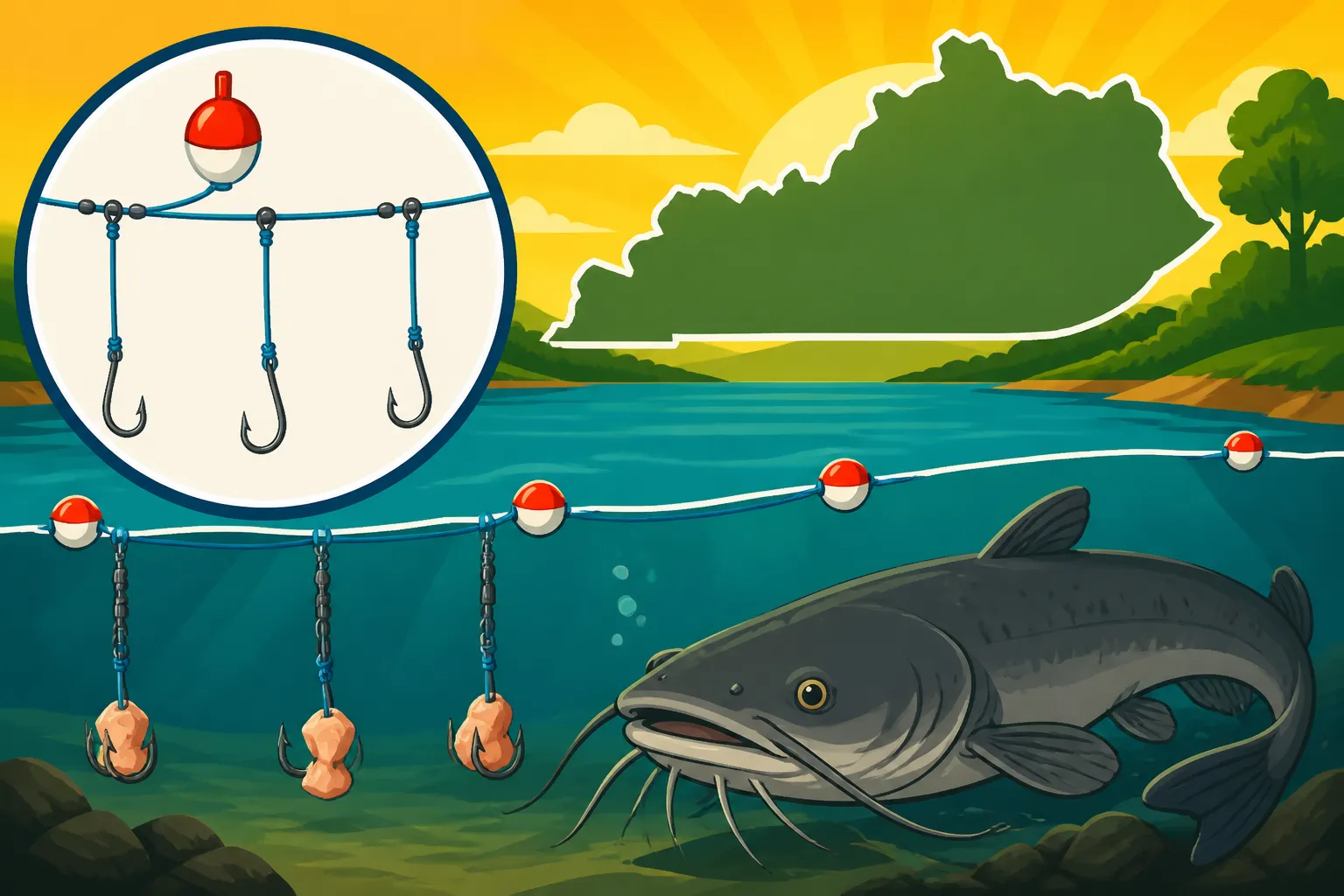
A trotline is essentially a long, heavy fishing line with multiple baited hooks attached at intervals, anchored at both ends, and typically suspended horizontally in the water. Think of it as a set of many fishing poles all working simultaneously. Instead of actively holding a single rod and waiting for a bite, a trotline allows you to set multiple baits in prime catfish territory and let them do the work while you focus on other things or simply relax. This passive fishing method is incredibly efficient for catching larger quantities of fish, especially bottom-dwelling species like catfish that are drawn to stationary baits. For many folks in Kentucky, trotlining is a time-honored tradition, a way to provide for their families and truly experience the bounty of our local waterways. It’s also a fantastic way to target those elusive trophy catfish that might be too wary for a typical rod and reel setup.
Kentucky's Trotline Regulations and Legalities
Navigating fishing regulations can feel like deciphering ancient texts, and trotlines are no exception. Kentucky has very specific rules designed to ensure fair chase, prevent overfishing, and protect other aquatic life. First and foremost, you absolutely need a valid Kentucky fishing license to set a trotline, just like any other fishing method. You can find comprehensive details about this in our guide on the Kentucky Fishing License Guide. Beyond that, the number of trotlines you can set is limited. Generally, each angler is allowed a maximum of five trotlines. Each trotline itself also has restrictions: it cannot exceed 150 feet in length and can have no more than 50 hooks. It's crucial that your trotline is clearly marked with floats that display your name and address or your Kentucky Fish & Wildlife customer ID number. This isn't just a suggestion; it’s a legal requirement that helps wildlife officers identify responsible anglers and prevents abandonment. These rules are in place to make sure everyone is accountable for their gear and its impact.
Furthermore, there are rules about where you can set trotlines. They are generally permitted in public waters, but there might be specific lakes or sections of rivers where they are prohibited or have additional restrictions. For instance, many state-managed lakes or smaller public fishing areas might have blanket bans on set lines. Always, always check the current Kentucky Department of Fish and Wildlife Resources (KDFWR) regulations before deploying any gear. It’s worth noting that if you're fishing a private pond, the rules might be different, but for public waters, adherence is non-negotiable. Ignoring these rules can lead to significant penalties for fishing without a license in Kentucky or for violating gear restrictions.
Ethical Considerations and Responsible Use
Beyond the letter of the law, there's a strong ethical component to trotlining. Responsible anglers understand that this powerful tool comes with responsibility. The primary concern is preventing "ghost fishing" – where abandoned or lost trotlines continue to catch fish, leading to unnecessary mortality and waste. This is why proper marking and secure anchoring are so important. Always retrieve your trotline, even if it feels like a hassle or you didn't catch anything.
Another ethical consideration is the impact on non-target species. While trotlines are great for catfish, they can sometimes hook other fish or even wildlife if not set carefully. Using appropriate bait and setting lines in locations primarily frequented by catfish can help mitigate this. For instance, avoiding areas with high concentrations of waterfowl or known migratory paths is a good practice. Always check your trotlines frequently (which is also often a legal requirement, as we’ll discuss later) to minimize the suffering of any hooked fish and to release non-target species promptly. Respect for the resource means more than just following the rules; it means actively striving to minimize harm and waste.
Essential Components of a Catfish Trotline
Rigging a trotline isn't about just tying some string to a hook. The strength, durability, and effectiveness of your trotline depend heavily on the quality and type of materials you choose. Skimping on these components can lead to lost fish, lost gear, and a whole lot of frustration. Let's break down what you'll need to gather before you start assembling.
Choosing the Right Main Line Material
The backbone of your trotline is, well, the main line. This needs to be incredibly strong and durable to withstand the pull of powerful catfish, the abrasion from underwater structures, and the forces of currents. The most common and recommended material is braided nylon rope or tarred trotline twine. Braided nylon is exceptionally strong, has good abrasion resistance, and doesn't stretch excessively, which helps keep your hooks properly spaced and your line taut. Tarred twine offers similar benefits but with added protection against rot and UV degradation, making it even more long-lasting in water.
You'll typically want a main line with a test strength of at least 200-400 pounds. This might seem like overkill for a 10-pound catfish, but remember, the line needs to hold multiple fish, resist snags, and be strong enough for you to retrieve it, potentially with a heavy catch. Avoid cheap polypropylene ropes; they degrade quickly in sunlight, are prone to kinking, and don't hold knots well. You can find excellent quality braided nylon rope for trotlines on platforms like Amazon, often in bulk spools, which is great for building several lines or replacing sections. Consider a diameter that's easy to handle but robust, usually around 1/4 inch or 3/8 inch.
Selecting Hooks and Leaders
Your hooks are where the magic happens, so choose them wisely. For catfish, you'll generally want strong, sharp, and appropriately sized hooks. Circle hooks are highly recommended for trotlines because they significantly reduce gut-hooking, leading to healthier catch-and-release of non-target species and easier hook removal. They are designed to hook fish in the corner of the mouth, which is ideal for both the fish's survival and for an easier unhooking process. Sizes can vary, but for general catfish trotlining in Kentucky, a 5/0 to 8/0 circle hook is a good starting point. If you're specifically targeting trophy blue catfish, you might even go up to a 10/0 or 12/0.
The hooks should be attached to leaders, sometimes called "droppers" or "snoods," which are shorter lengths of line tied to the main line. These leaders should be slightly lighter in test strength than your main line but still incredibly strong, typically 80-150 pound test monofilament or braided line. The idea is that if a hook snags irretrievably, you might only lose the leader and hook, not the entire trotline. Each leader should be around 12-18 inches long to allow the bait to move naturally in the current without tangling the main line. Attach each leader to the main line using a heavy-duty barrel swivel to prevent line twist, which can weaken your line and make fish detection difficult. You can often find pre-rigged snoods with swivels and hooks, or you can build your own using bulk materials.
Anchors, Floats, and Swivels
To keep your trotline stationary and accessible, you'll need robust anchors and clearly visible floats. For anchors, heavy objects like bricks, sash weights, concrete blocks, or specialized mushroom anchors work well. The weight required depends on the current and the length of your line, but typically you'll want at least 10-20 pounds at each end, especially in river systems like the Ohio River or the Cumberland River where currents can be strong. You might even consider attaching a rope from your main anchor to a secondary, slightly lighter anchor to create a "double anchor" system for added stability.
Floats are essential for marking your trotline and keeping it suspended. You'll need at least two primary floats, one at each end of the main line, and they must be large and brightly colored enough to be easily seen by other boaters and to display your identification information. Standard jug floats, crab pot floats, or even empty plastic bottles (though less durable) can work. Just ensure they're robust and won't get waterlogged. Intermediate floats can also be added along the main line, especially if it's very long or if you want to keep the hooks at a specific depth off the bottom. Remember, the key is visibility and stability. Heavy-duty snap swivels (like those found on Amazon for marine use) are also invaluable for attaching droppers to the main line and for connecting the main line to the anchor ropes, allowing for quick and secure connections.
Step-by-Step Guide to Rigging Your Trotline
Now that you have all your components ready, it's time to put it all together. Rigging a trotline is a process that benefits from careful planning and execution. A well-rigged line is easier to deploy, maintain, and ultimately, more successful at catching fish.
Preparing the Main Line and Droppers
First, unspool your main line. A good working length for many Kentucky waters is between 50 and 100 feet, allowing you to stay within the 150-foot legal limit once anchor ropes are added. Lay it out straight and clear on the ground to avoid tangles. Next, you'll prepare your droppers. For each dropper, cut a 15- to 20-inch length of leader material. Tie a strong knot, such as a Palomar knot or an improved clinch knot, to secure a circle hook to one end of the leader. On the other end of the leader, tie a heavy-duty barrel swivel. Make sure these knots are tight and secure; a loose knot is a lost fish. You’ll be making quite a few of these, so a consistent knot-tying technique will speed things up and ensure reliability.
Once your droppers are ready, it's time to attach them to the main line. You'll want to space your hooks evenly along the main line to prevent tangling and give each bait a good presentation. A common spacing is every 3-5 feet. To attach the droppers, you can use a snell knot directly onto the main line, but a more common and often preferred method for trotlines is to use a strong dropper loop knot on the main line itself, and then simply clip your pre-rigged dropper (with its swivel) onto this loop using a heavy-duty snap swivel. This method allows you to quickly change out droppers if a hook gets snagged or dull. Alternatively, you can tie the barrel swivel directly onto the main line using an appropriate knot like a double uni-knot, but this makes changing droppers more cumbersome. The key is to ensure each attachment point is robust enough to handle a fighting catfish. For instance, if you're targeting big channel catfish, strong knots and swivels are paramount.
Attaching Hooks and Leaders Securely
The integrity of your trotline hinges on how well you attach your hooks and leaders. As mentioned, using pre-tied droppers with barrel swivels is highly efficient. When attaching the leader to the main line, you're looking for strength and minimal interference. One excellent method is to tie a loop in your main line at each desired dropper interval, using a surgeon's loop or a figure-eight loop. Then, you can simply use a large, robust snap swivel on your leader to clip onto this loop. This design offers flexibility: if a hook gets bent or lost, you can quickly unclip that dropper and replace it with a fresh one without having to re-tie anything to the main line.
The length of your leaders is also important. Too short, and your bait might not move naturally, making it less appealing to fish. Too long, and it's prone to tangling with adjacent hooks or the main line itself. The 12-18 inch range strikes a good balance for most catfish applications. Ensure all knots are lubricated before tightening (with saliva or water) to prevent friction from weakening the line. Double-check every knot for security; a single failure can compromise your entire setup. This diligent approach is especially important when you consider the potential for powerful fish, like those found during the Kentucky Lake Summer Catfish Bite, to test your gear.
Setting Up Anchors and Floats for Optimal Placement
Finally, you need to ensure your trotline stays put and is easy to find. At each end of your main trotline, you'll attach an anchor rope. These ropes should be at least as strong as your main line, preferably a bit stronger, and long enough to reach from your trotline's depth to the surface, plus some extra for slack and securing to the anchor. Tie one end of an anchor rope securely to one end of your main trotline, using a strong knot like a bowline or a fisherman's bend. Then, attach your chosen anchor (brick, concrete block, etc.) to the other end of this anchor rope. Repeat this process for the other end of the main line.
Next, attach your identification floats. A large, brightly colored float should be tied to the anchor rope at each end of the trotline, ensuring it will remain clearly visible on the surface. These floats must have your name and address or KDFWR customer ID number clearly legible. You might consider writing this information with a permanent marker directly on the float or attaching a waterproof tag. If you’re using intermediate floats to keep the main line suspended, position them evenly along the line, ensuring they don't interfere with the droppers. The goal is a trotline that sits horizontally in the water at your desired depth, is firmly anchored against current and fish, and is easily locatable and identifiable from the surface.
| Component | Recommended Material/Size | Purpose | Notes |
|---|---|---|---|
| Main Line | Braided Nylon or Tarred Twine (200-400 lb test, 1/4" – 3/8" diameter) | Provides core structure for hooks. | Strong, abrasion-resistant, UV stable. Avoid polypropylene. |
| Hooks | Circle Hooks (5/0 – 12/0) | Catches fish efficiently and ethically. | Reduces gut-hooking, safer for fish and easier to remove. |
| Leaders | Monofilament or Braided (80-150 lb test, 12-18 inches long) | Connects hooks to main line, provides flexibility. | Lighter than main line, allows for natural bait movement. |
| Swivels | Heavy-Duty Barrel or Snap Swivels | Prevents line twist, allows dropper changes. | Essential for leader attachment and main line connections. |
| Anchors | Bricks, Concrete Blocks, Sash Weights (10-20 lbs each) | Secures trotline in place against current/fish. | Weight depends on current strength and trotline length. |
| Floats | Jug Floats, Crab Pot Floats (Brightly colored) | Marks trotline location, displays ID. | Must be visible and display name/ID. Intermediate floats optional. |
| Anchor Ropes | Braided Nylon (200-400 lb test) | Connects anchors to main line. | Same or stronger than main line, long enough for depth. |
Baiting and Deploying Your Trotline Effectively
Rigging the trotline is only half the battle; knowing what to put on those hooks and where to put the whole setup is what truly makes a difference in your catch rates. Catfish are opportunistic feeders, but they do have preferences, and certain locations are far more productive than others.
Best Baits for Kentucky Catfish on Trotlines
When it comes to baiting a trotline for catfish in Kentucky, variety is often your best friend. Different catfish species and even individual fish can have varied preferences. Cut bait is a classic and highly effective choice. Freshly cut shad, skipjack herring, or even bluegill can be potent, especially for larger blue and flathead catfish. The oil and scent trail that cut bait releases in the water is irresistible to catfish. Just make sure any cut bait comes from legal sources and adhere to baitfish regulations.
Live bait is another phenomenal option, particularly for targeting flathead catfish, which often prefer live prey. Small bluegill, green sunfish, or large shiners can be rigged on the circle hooks, ensuring they stay lively. When using live bait, make sure your hook placement allows the bait to swim naturally without harming it excessively. Another very popular option, especially for channel catfish, is prepared stink bait or chicken livers. These can be purchased at most tackle shops or even on Amazon and offer a potent, long-lasting scent. The key with these softer baits is to ensure they stay on the hook, sometimes requiring a small piece of nylon stocking or a bait holder spring on the hook. Experimentation is crucial; what works best on Kentucky Lake might be different from the Ohio River. Don't be afraid to mix and match baits on different hooks along your trotline to see what the fish are hitting. Our guide on the Best Bait for Channel Catfish Fishing provides even more detailed options.
Finding the Right Location for Catfish Trotlines
Location, location, location! This adage holds true for trotlining. Catfish, especially larger ones, are often structure-oriented and prefer areas with current or deep holes. In river systems like the Ohio River, look for deep river channels, eddy currents behind islands or sandbars, and areas with submerged timber or rock piles. These structures provide ambush points and cover, as well as holding areas where baitfish congregate. Remember to consult detailed maps or use a fish finder to locate these features. When targeting specific species, understanding their habitat preferences is key. For example, blue catfish often prefer deeper, open water with current, while flatheads are more associated with heavy cover like logjams.
In larger lakes such as Kentucky Lake or Lake Barkley, focus on main lake channels, old river beds, points, ledges, and creek channels. Catfish will often follow these contours, especially during warmer months. During cooler periods, they might gravitate towards deeper holes. Regardless of whether you’re on a river or a lake, ensure that your chosen location allows for legal and safe deployment of your trotline without obstructing navigation for other boaters. Avoid areas with heavy recreational traffic or known swimming zones. The best spots are often those less pressured but still offer prime catfish habitat. Knowing the patterns during the Summer Catfish Fishing on the Ohio River in Kentucky can give you a significant advantage.
Proper Deployment and Marking Techniques
Deploying your trotline safely and effectively is crucial. It’s usually easiest with two people, especially on a boat. Start by slowly motoring to your desired starting point. One person begins dropping the first anchor and its attached float. As you slowly motor along your intended line path, the second person carefully pays out the main line, ensuring the droppers and hooks don't tangle or snag. It's critical to wear heavy-duty gloves when handling a trotline with baited hooks; nobody wants a hook in the hand! Keep the line clear of propellors and anything that could snag.
Once you’ve reached the end of your desired length, the second anchor and its float are deployed. Ensure both floats are clearly visible and that your identification information is prominent. The line should be taut enough to prevent excessive slack but not so tight that it can't settle to the bottom or desired depth. If you're fishing in a high-current area, deploying against the current can help prevent tangles as the line settles. If you're setting intermediate floats, position them as you go to maintain your desired depth. Remember the legal requirement to mark your line: this isn't just for enforcement; it's a safety measure for other boaters and helps you locate your gear easily. These guidelines are fundamental to proper How to Rig a Trotline for Catfish.
Checking, Maintaining, and Retrieving Your Trotline
Setting a trotline is just the beginning; the real work (and reward!) comes from checking it regularly, safely handling your catch, and properly maintaining your gear for future trips. This phase requires attention to detail and a commitment to responsible angling practices.
How Often to Check Your Trotline
The frequency with which you check your trotline is vital for several reasons: maximizing your catch, ensuring the welfare of hooked fish, and adhering to regulations. In Kentucky, trotlines must be checked at least once every 24 hours. However, for optimal results and ethical considerations, many experienced anglers check their lines more frequently, often at dawn and dusk, or even multiple times throughout the day, especially in warmer weather.
Frequent checks mean that any caught fish are removed promptly, reducing stress and mortality. It also means your baits are fresh and actively attracting more fish. If you leave baits out too long, they can deteriorate, become less appealing, or attract scavengers like turtles or crawfish, which you'd rather not deal with. Checking often also allows you to re-bait hooks that have been stripped, fix any tangles, or address issues with your anchors or floats that might have shifted due to current or boat traffic. Ignoring your trotline for extended periods not only risks losing fish but can also lead to citations from game wardens who regularly patrol Kentucky's waters.
Safe Retrieval and Fish Handling
Retrieving a trotline, especially one laden with actively fighting catfish, requires care and a systematic approach. Again, wearing heavy-duty gloves is non-negotiable to protect your hands from hooks and sharp fins. Start at one end, retrieving the anchor and float first. Slowly pull the main line into your boat, hand-over-hand, being mindful of the hooks. As you encounter a fish, carefully remove it from the hook. For fish you intend to keep, have a livewell or a large cooler with ice ready. For fish you want to release, handle them gently, remove the hook quickly (circle hooks make this much easier), and return them to the water as fast as possible. Be aware of the Kentucky Catfish Daily Limit and Trophy Fish Rule to ensure you're only keeping legal fish.
When dealing with a lively catfish, especially larger ones, be cautious of their sharp pectoral and dorsal fins. Many anglers use a pair of long-nosed pliers or a de-hooking tool for added safety. If you encounter a particularly large fish, like a potential trophy blue catfish, be prepared for a strong fight even on the line. It's always a good idea to have a net or a gaff (if legal for your target species and size) to help safely bring larger fish into the boat. This careful approach not only ensures your safety but also minimizes stress on the fish, whether you're keeping them or releasing them.
Post-Fishing Maintenance and Storage
After a successful day of trotlining, proper maintenance is key to prolonging the life of your gear and ensuring it’s ready for the next adventure. First, thoroughly clean your trotline, hooks, and leaders. Remove any remaining bait, mud, algae, or debris. A good rinse with fresh water, especially if you’ve been fishing in brackish or dirty water, is beneficial. Inspect all components for wear and tear: check the main line for frayed spots, hooks for sharpness and bends, and swivels for corrosion or damage. Replace any compromised components immediately. Hooks can be sharpened with a small file or stone if they're still in good condition, or simply swapped out if they're too dull or bent.
Once clean and inspected, coil or spool your trotline neatly. Many anglers use a five-gallon bucket or a specialized trotline reel for storage to prevent tangles. Store your trotline in a cool, dry place away from direct sunlight, which can degrade nylon and other synthetic materials over time. Taking a little extra time after each trip to clean and organize your gear will save you a lot of headaches and expense in the long run. A well-maintained trotline is a reliable trotline, ready to catch more fish on your next Kentucky fishing excursion.
Disclaimer
Fishing regulations and best practices can change. Always consult the most current Kentucky Department of Fish and Wildlife Resources (KDFWR) regulations before engaging in any fishing activities. This guide is for informational purposes only and should not replace official legal documentation.