Best Bass Lures for Muddy Water
Oh, the heartbreak of showing up at your favorite Kentucky fishing hole after a heavy rain, only to find the water resembling a cup of muddy coffee! It’s a common frustration for anglers across the Bluegrass State, where sudden downpours can turn pristine waters into murky messes. But don't despair! Muddy water doesn't mean the bass have vanished; it just means you need to adjust your strategy. This comprehensive guide will walk you through the very best bass lures and techniques to use when the water gets murky, helping you turn a potentially frustrating day into a successful one.
Understanding Bass Behavior in Murky Water Conditions
When the clear, inviting waters of your favorite Kentucky lake or river turn a murky brown, it can feel like the fish have packed up and moved away. But bass are still there, they've just adapted their behavior to the challenging conditions. Understanding these changes is the first step toward choosing the right lures and techniques.
First and foremost, reduced visibility is the primary factor. Bass, like most predatory fish, rely heavily on their sight to hunt. In clear water, they can spot a subtle baitfish flicker from a distance. In muddy water, their vision is severely limited, often to just a few inches or a foot. This means they can't effectively chase down fast-moving prey or see small, subtle presentations. Their world shrinks, and they become more reactive to things they can feel and smell.
Because of this reduced visibility, bass will often hold much tighter to cover. Instead of cruising open flats or suspended over structure, they'll bury themselves in dense brush piles, cling to boat docks, or hug the edges of fallen trees. They use this cover not only for ambush points but also for security, feeling more vulnerable in the open. They’re less likely to roam and more likely to wait for an easy meal to come to them. Think about it: if you couldn't see well, would you wander around in a busy area, or would you stick close to a wall? Bass are no different. They become more aggressive in a short strike zone, waiting to ambush anything that dares to venture too close.
Their metabolism might also slow down a bit, especially if the muddy water is also accompanied by a drop in temperature or a strong current. This means they might not be as willing to chase a lure a long distance. You need to put your bait right in their face, or at least very close to their strike zone, and give them ample time to react. The key is to appeal to their other senses: lateral line (vibration), hearing (rattles, thumps), and smell (scent). This shift in behavior from sight-hunting to ambush-hunting and sensory-dependent reactions is fundamental to choosing your muddy water arsenal.
Essential Lure Categories for Muddy Water Bass
When the water clarity drops, your lure selection needs a serious overhaul. Forget those subtle, natural-colored baits you usually throw; now it's all about making a statement. You need lures that scream "I'm here!" through vibration, noise, profile, and color. These are the core categories that consistently produce in murky conditions:
Vibrating Jigs and Spinnerbaits: Making a Scene
These are often the first baits many seasoned anglers reach for when facing muddy water, and for good reason. Vibrating jigs, like the ever-popular ChatterBait, are designed to displace a lot of water and create a distinct thumping vibration that bass can easily detect with their lateral line, even if they can't see it. The blade on the front provides an erratic action and a strong vibration, mimicking a distressed baitfish or crawfish. Pairing them with a bulky soft plastic trailer enhances the profile and adds to the overall commotion.
Spinnerbaits, on the other hand, offer a combination of flash and vibration. The spinning blades create a pulse in the water that bass can feel, while the flash, even in muddy water, can still catch what little light penetrates, appearing as a quick, bright flicker. For muddy water, the general rule is to opt for larger, more rounded blades, such as Colorado or Indiana blades, because they create more vibration than thinner Willowleaf blades. Tandem blade configurations (e.g., one Colorado and one Willowleaf) offer a nice balance of flash and thump. The bigger the thump, the better, especially when visibility is at an absolute minimum. Many anglers find high-quality spinnerbaits and vibrating jigs on Amazon to keep their tackle box stocked.
Crankbaits: Loud Rattles and Wide Wobbles
Crankbaits are fantastic search baits in any condition, but in muddy water, you need specific types that excel at getting noticed. The best crankbaits for murky conditions are those that feature loud internal rattles and a wide, aggressive wobble. That wide wobble pushes a lot of water, sending out strong vibrations that bass can home in on. The rattles provide an auditory cue, acting like a dinner bell in the silent, dark underwater world.
Squarebill crankbaits are particularly effective in shallow, muddy water around cover. Their blunt lip allows them to deflect off wood and rocks without snagging, creating an erratic, reaction-inducing action that bass can't resist. For deeper water, you'll want a deeper-diving crankbait that still has those loud rattles and a strong wobble, making sure it gets down to where the bass are holding tight to cover. Focus on slow-rolling these baits, letting their natural action do the work, and occasionally bumping them into submerged structure to trigger strikes.
Jigs and Soft Plastics: Scent and Bulk
When bass are hunkered down and less willing to chase, a slow-moving, bulky, and scented presentation can be incredibly effective. This is where jigs and large soft plastics truly shine. A jig, especially a football jig or a flipping jig, paired with a substantial soft plastic trailer like a creature bait or a bulky craw, presents a large profile that's easy for bass to locate. The skirt and trailer provide subtle action even with minimal movement, and the overall bulk feels like a hearty meal to a cautious bass. Dark colors like black and blue, or green pumpkin, often create a strong silhouette against the slightly lighter water, making the bait stand out.
Scent is a huge factor here. Since bass can’t rely on sight, they turn to their olfactory senses. Many soft plastic baits come pre-scented, or you can add your own scent attractant. This helps bass track the bait even if they don't see or feel it immediately, giving them a clear path to your lure. When bass aren't actively feeding but are reacting to nearby intrusions, a slow-crawling, scented jig-and-plastic combo can coax them into striking. You can learn more about how bass behave during different seasons in our guide on "Kentucky Bass Fishing: The April-May Peak Season".
Specific Lures That Shine When Water is Murky
Now that we’ve covered the general categories, let’s get down to the nitty-gritty of specific lure types and characteristics that have proven themselves time and again in Kentucky’s muddy waters.
Spinnerbaits: The Muddy Water Workhorse
For spinnerbaits, focus on blade type and size. As mentioned, Colorado blades offer maximum thump and vibration. In tandem configurations, a large Colorado blade on the front and a smaller Colorado or Indiana blade on the back create a powerful pulse. Consider blade sizes ranging from #4 to #6. For colors, chartreuse, white, or a combination of both (like chartreuse/white skirt with silver or gold blades) are classic choices. These brighter colors stand out better in stained water. The flash from silver or gold blades, depending on water tint and light penetration, can also be crucial. You can often find a wide array of these specialized spinnerbaits on Amazon, making it easy to experiment with different blade combinations and skirt colors. When you’re looking to cover water and locate active fish, few baits are as effective as a well-chosen spinnerbait. Our guide on "How to Fish a Spinnerbait for Bass" provides even more detail on presentation.
Bladed Jigs (Chatterbaits): Aggressive Vibration
These baits, often generically called ChatterBaits (after the Z-Man original), are phenomenal in muddy water. The unique hexagonal blade vibrates intensely, creating a loud chatter and an erratic, darting action. This vibration is very distinct and travels well through murky water, acting as a beacon for bass. For colors, stick to dark and bright. Black and blue is a perennial favorite, creating a strong silhouette. Chartreuse, white, or green pumpkin are also excellent. Pair your bladed jig with a bulky soft plastic trailer like a craw or a swimbait-style plastic to increase its profile and action. Heavier weights (3/8 oz to 1/2 oz) are often preferred to help maintain contact with the bottom and penetrate cover effectively, especially if there's any current.
Crankbaits: The Thump and Wobble Factor
When it comes to crankbaits, the noise and water displacement are paramount.
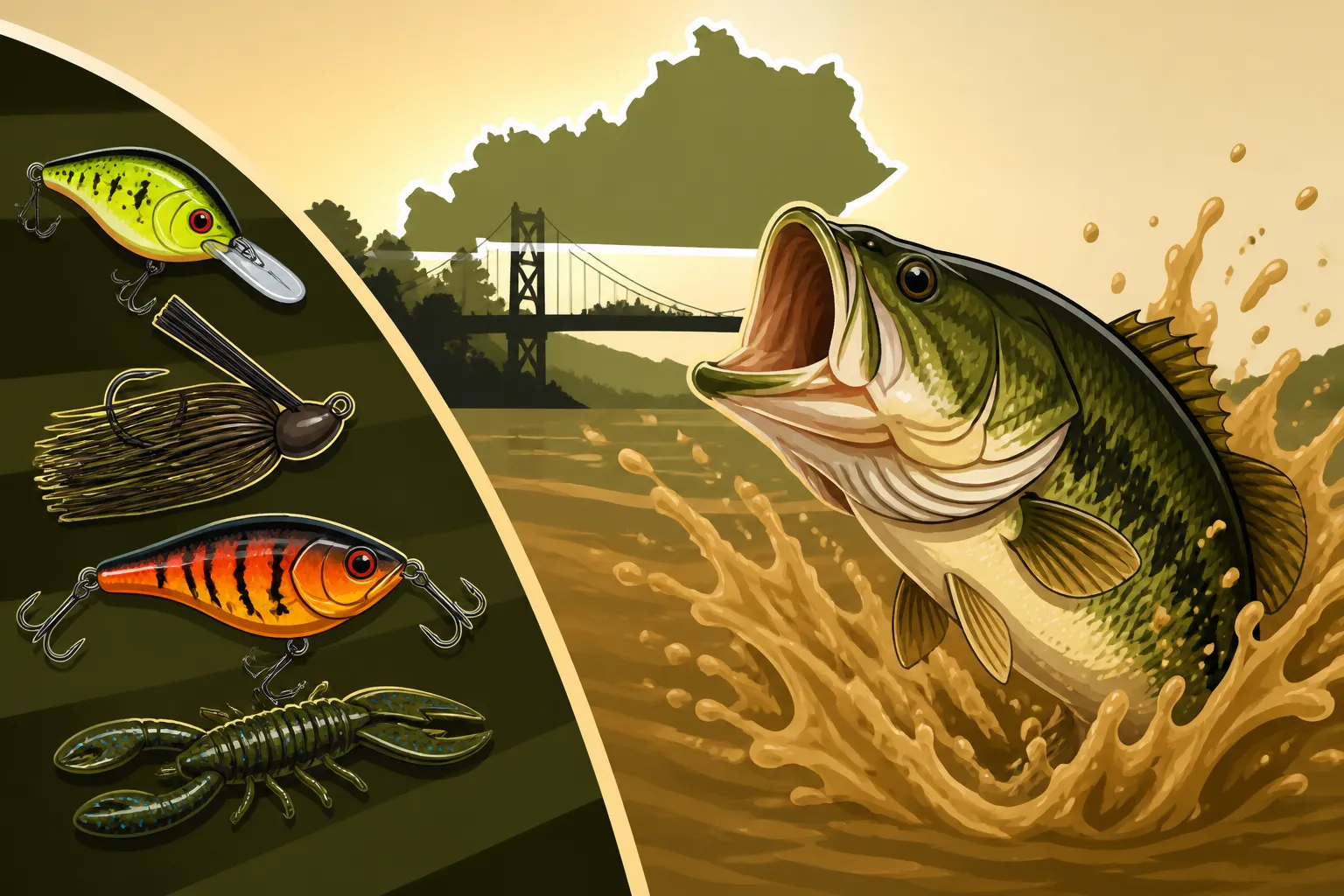
- Squarebill Crankbaits: For shallow water, look for squarebills with a wide, aggressive wobble and loud rattles. Brands like Strike King's KVD 1.5 or the Rapala BX Brat are popular choices that deliver strong vibration and can crash through cover. Color choices should lean towards opaque patterns like chartreuse with black back, red craw, or solid black. These colors absorb and reflect light differently, often appearing more distinct in murky conditions.
- Deep-Diving Crankbaits: If bass are holding deeper, choose crankbaits designed to reach those depths but still possess a significant wobble and audible rattle. Fat-bodied crankbaits generally displace more water. Again, dark and bright colors are key. You can also explore specific techniques in our "How to Fish a Crankbait Around Cover" article.
Jigs and Bulky Soft Plastics: Slow and Scented
For jigs, whether flipping, pitching, or dragging, always opt for a bulky presentation. A 1/2 oz or 3/4 oz jig paired with a large creature bait or craw trailer will offer a substantial profile. Colors like black and blue, junebug, or green pumpkin are staples. The darkness creates a clear silhouette, while the hint of blue or purple can add a subtle attraction. For soft plastics, consider Texas-rigged creature baits, large craws, or even bigger worms. The key is scent. Many soft plastics come impregnated with salt or fish attractant, and adding extra scent is highly recommended. PowerBait, Gulp!, or other scent-infused options can make a real difference in tempting a hesitant bass that can’t see well.
Topwater Lures: When Conditions Align
While less conventional for muddy water, there are specific scenarios where topwater can be deadly. If the water is muddy but calm, particularly in low light conditions (dawn, dusk, or overcast days), and bass are feeding shallow, a noisy topwater lure can provoke violent strikes. Buzzbaits are excellent due to their constant commotion and visible wake. Large poppers or walking baits that move a lot of water and create a distinct "blooper" sound can also work. The key is the sound and disturbance they create on the surface, which bass can key in on from below. Just don't expect them to track it from afar; they need to be close to the surface and ready to ambush.
Here’s a quick overview of some top muddy water lure characteristics:
| Lure Type | Key Feature | Best Colors (Muddy Water) | Retrieval Speed | Best Scenario |
|---|---|---|---|---|
| Spinnerbait | Vibration, Flash | Chartreuse, White, Black/Blue | Slow-Medium Roll | Covering water, locating active fish |
| Bladed Jig | Intense Thump | Black/Blue, Green Pumpkin, Chartreuse | Slow Roll, Erratic | Around sparse cover, ambush points |
| Crankbait | Loud Rattle, Wide Wobble | Red Craw, Chartreuse, Black/Blue | Slow, Bumping Cover | Shallow cover (squarebill), deeper breaks |
| Jig (Skirted) | Bulk, Scent | Black/Blue, Green Pumpkin, Junebug | Slow Crawl, Flip | Dense cover, pitching, lethargic bass |
| Soft Plastic | Bulk, Scent, Subtle Action | Black/Blue, Green Pumpkin, Watermelon Red | Slow Drag, Pitch | Texas/Carolina rig, flipping, punching |
| Topwater (Buzzbait) | Surface Commotion | Black, White, Chartreuse | Steady, Fast | Low light, calm, shallow bass (reaction) |
Retrieval Techniques and Key Considerations for Muddy Water
Having the right lures is only half the battle; knowing how to present them effectively in muddy water is just as crucial. Your approach needs to be more deliberate and focused on triggering reaction strikes from bass that aren't actively hunting visually.
Slow Down Your Retrieve
This is perhaps the most critical adjustment you can make. When visibility is poor, bass need more time to locate and react to your lure. A fast retrieve might pull the bait out of their limited strike zone before they even know it's there. Whether you're reeling a spinnerbait, cranking a squarebill, or dragging a jig, a slow and steady pace is key. You want to give the bass ample opportunity to feel the vibration, hear the rattle, or pick up the scent. Don't be afraid to pause your retrieve, letting the bait fall or suspend for a moment, which can often trigger a strike from a curious but hesitant bass. This slower pace allows the fish to hone in on the disturbance your lure is creating.
Target Cover and Structure with Precision
In muddy water, bass will often hug the tightest cover they can find. This includes submerged timber, rock piles, boat docks, laydowns, and thick weed lines. Instead of making long casts into open water, focus on pinpointing these high-percentage areas. Make multiple casts to each piece of cover, approaching it from different angles. You need to put your lure right in their living room. Flipping and pitching techniques become incredibly valuable here, allowing you to quietly and accurately present your bait into dense cover where a bass might be waiting in ambush. Think about it: if you can barely see, you'd want to stick close to home, right? Bass do too. Understanding where bass generally hold is also covered in our "Largemouth Bass Fishing in Kentucky: The Complete Guide".
Focus on Sound, Scent, and Vibration
Since sight is compromised, you must appeal to a bass’s other senses.
- Vibration: This is why spinnerbaits, bladed jigs, and wide-wobbling crankbaits are so effective. The thump and pulse they create in the water column are signals that bass can detect through their lateral line.
- Sound: Loud rattles in crankbaits and jigs are like a dinner bell. The distinct clicking of a bladed jig or the squeal of a buzzbait can draw attention from a distance.
- Scent: Don't underestimate the power of scent in muddy water. Using soft plastics that are pre-scented with fish attractants or adding your own scent to any lure can provide that extra edge. This gives the bass a trail to follow, helping them find your bait even if it's not directly in their path.
- Profile: Ensure your lure presents a bulky silhouette. Dark colors are often preferred as they create a more defined shape against the murky background.
Experiment with Line Choice
While not a direct lure technique, your line choice can impact lure presentation. In muddy water, line visibility is less of a concern, so you can often get away with heavier line. Many anglers opt for fluorocarbon or monofilament in the 15-20lb range for crankbaits and spinnerbaits, and even heavier (20-25lb or braid) for jigs and soft plastics in heavy cover. The added strength helps when battling bass in dense snags, and the heavier line can sometimes help your lure run a bit shallower or create a slightly different action. Fluorocarbon, with its lower stretch, offers good sensitivity, which is crucial for detecting subtle bites in murky conditions where visual cues are non-existent.
Identify Transition Areas and Inflows
Muddy water often isn't uniform. Look for areas where clearer water might be mixing with muddy water, or where runoff is entering a main body of water. These "transition zones" can concentrate baitfish and, consequently, bass. Sometimes, after a heavy rain, the muddiness settles faster in certain areas, leaving a slightly clearer pocket that bass will gravitate towards. Pay attention to inflowing creeks or ditches; while they might initially bring in mud, they also bring in fresh oxygen and often wash in forage, attracting bass to their mouths.
Ultimately, patience and persistence are your greatest allies when fishing in muddy water. It’s about putting in the time, making precise presentations, and trusting that the right lure, presented correctly, will eventually draw a strike from a quality Kentucky bass. Understanding how weather fronts affect fishing times, especially after a heavy rain, is also critical information for success. You might also want to consult our guide on "How to Fish After a Cold Front", as muddy water conditions often coincide with such changes.
Disclaimer
The information provided in this guide is for general informational purposes only. Fishing regulations, license requirements, and local conditions can change frequently. Always consult the official Kentucky Department of Fish and Wildlife Resources (KDFWR) website or local authorities for the most current and accurate information before planning any fishing trip. Adhere to all safety guidelines and practice responsible angling.