Boat Fishing Techniques for Crappie
There’s nothing quite like the freedom of fishing for crappie from a boat in Kentucky, but sometimes, it feels like those papermouths vanish the moment you fire up the engine. It can be incredibly frustrating to motor out, full of hope, only to spend hours staring at an empty livewell while other anglers seem to be hauling them in hand over fist. This guide is all about cutting through that frustration, equipping you with the proven boat fishing techniques to consistently find and catch crappie across Kentucky's diverse waters, turning those unproductive days into triumphant ones.
Understanding Crappie Behavior from a Boat
Crappie are notoriously nomadic fish, and their movements can seem random if you don't understand their fundamental behaviors. From a boat, you have the incredible advantage of mobility, but that also means you need to know where to go and why. It's not just about covering water; it's about understanding the crappie's preferences and seasonal patterns.
Reading the Water and Structure
Before you even drop a line, start "reading" the water. Crappie are structure-oriented fish, meaning they love to hang out around anything that offers cover, shade, or ambush points. Think about what's beneath the surface – submerged timber, brush piles, rock piles, creek channels, old roadbeds, and even bridge pilings. In many Kentucky lakes, these structures can be abundant, making it a crappie paradise.
When you're out on the lake, look for visual cues that might indicate submerged structure. Sometimes, a slight change in water color can signal a drop-off or a shift in bottom composition. Pay attention to how the wind is hitting the water; a ripple on one side and calm on the other might point to a protected cove or a submerged point. Crappie will often position themselves on the "downwind" side of structure, where plankton and baitfish are concentrated, offering them an easy meal. During bright, sunny days, they'll seek shade, often tucking tight into the densest cover. On cloudy days or during low light, they might roam a bit more openly, but still usually close to some form of cover. Understanding these subtle visual clues can give you a significant head start before your electronics even come into play.
Interpreting Sonar and Electronics
Modern boat electronics are absolute game-changers for crappie anglers, and if you're not using them effectively, you're missing out on a huge advantage. Your sonar unit isn't just a fancy depth finder; it's your window into the underwater world. Start by identifying the depth and contour lines on your lake maps, then use your sonar to confirm and locate specific structures. Side-imaging is incredible for scanning wide areas to pinpoint brush piles or timber that might be off to the side of your boat, while down-imaging gives you a clearer, more photographic view directly beneath you.
When you spot a blob or an arc on your screen, it could be a school of crappie. Learning to distinguish between baitfish and crappie is key. Crappie typically appear as larger, more distinct arcs or blobs compared to the smaller, tighter clusters of baitfish. Pay attention to their position relative to the structure. Are they right in the middle of a brush pile? Are they suspended just above it? Are they holding tight to a ledge? This information dictates how you'll present your bait. Many of Kentucky's popular crappie lakes like Kentucky Lake and Lake Barkley are filled with submerged cover, and a good fish finder is essential for success, especially when targeting crappie in deep water during summer. Don't forget about features like GPS, which allow you to mark productive spots, making it easy to return to those honey holes on future trips.
Essential Boat Gear and Setup for Crappie
Having the right gear isn't just about comfort; it's about efficiency and effectiveness on the water. Crappie fishing from a boat often involves specialized setups that maximize your chances of success, whether you're covering vast flats or picking apart intricate timber.
Rods, Reels, and Line Choices
When it comes to crappie fishing from a boat, you’re often dealing with delicate bites and relatively light tackle. For general crappie fishing, many anglers prefer ultralight to light action spinning rods, typically ranging from 5 to 7 feet in length. These rods offer the sensitivity needed to detect subtle crappie bites and enough backbone to handle a decent-sized slab. However, if you're planning on How to Spider Rig for Crappie or long-lining multiple baits, you’ll want to invest in longer rods, sometimes up to 12-16 feet or even longer, that allow you to spread out your presentation and cover a wider area. These specialized crappie rods are often built with a lighter tip for sensitivity but a sturdy mid-section.
For reels, small spinning reels in the 500 to 1000 size range are perfect. They balance well with light rods and offer smooth drag, which is crucial for fighting crappie without tearing the hook out of their papery mouths. When it comes to line, 4-6 pound test monofilament or fluorocarbon is a common choice for its low visibility and good knot strength. Braided line, in 6-10 pound test, is also an excellent option, especially for vertical jigging, due to its incredible sensitivity and lack of stretch, which helps you feel those faint bites even in deep water. You can then add a short fluorocarbon leader for stealth. Many anglers find great deals on these specialized crappie setups on online retailers like Amazon, ensuring they have the right tool for the job.
Livewells, Coolers, and Storage
A dedicated livewell is a huge asset for crappie anglers, especially if you plan to keep your catch. Crappie are delicate, and a good livewell with aeration will keep your fish healthy until you’re ready to clean them or if you're participating in a tournament. Ensure your livewell is clean and well-maintained. On a hot Kentucky summer day, you might even consider adding a frozen water bottle or two to keep the water temperature down, reducing stress on the fish.
Beyond the livewell, a quality cooler is indispensable for drinks, snacks, and any fish you decide to put on ice immediately. Brands like YETI or RTIC are popular for their insulation, keeping contents cold for extended periods. For general storage, consider tackle management systems that keep your crappie jigs, minnows, and other small tackle organized and easily accessible. Compartmentalized boxes, often found on Amazon, are perfect for keeping those tiny jig heads and soft plastics separated. Having everything neatly stowed away not only keeps your boat clutter-free but also makes your fishing more efficient. No one wants to waste precious fishing time digging for a specific jig color!
Trolling Motors and Anchoring Systems
Effective boat control is paramount for crappie fishing. A reliable trolling motor, especially one with GPS spot-lock capabilities, can be a game-changer. Imagine being able to precisely hold your boat over a submerged brush pile in windy conditions without constantly manning the helm. Brands like Minn Kota's Ulterra or MotorGuide's Xi5 are highly regarded for their spot-lock features, allowing you to focus entirely on fishing. When long-lining or spider rigging, a bow-mounted trolling motor allows you to control your speed and direction with precision, slowly pulling your baits through productive areas.
Even with a great trolling motor, don't overlook a good anchoring system. Sometimes, you need to stay absolutely still, especially if you're fishing a small, isolated piece of cover. Shallow water anchors like a Power-Pole or Talon are fantastic for quick deployments in depths up to 10-15 feet. For deeper water or situations where you don't have those fancy toys, a traditional anchor with plenty of rope is still essential. Depending on the bottom composition, a grappling anchor for brush or a traditional mushroom anchor for soft bottoms will do the trick. Knowing how to effectively use both your trolling motor and anchor will keep you on the fish, no matter the conditions.
Mastering Different Boat Fishing Techniques
Crappie anglers from a boat have an arsenal of techniques at their disposal, each suited to different conditions, depths, and crappie moods. Becoming proficient in several of these will make you a much more versatile and successful angler.
Spider Rigging and Long Lining
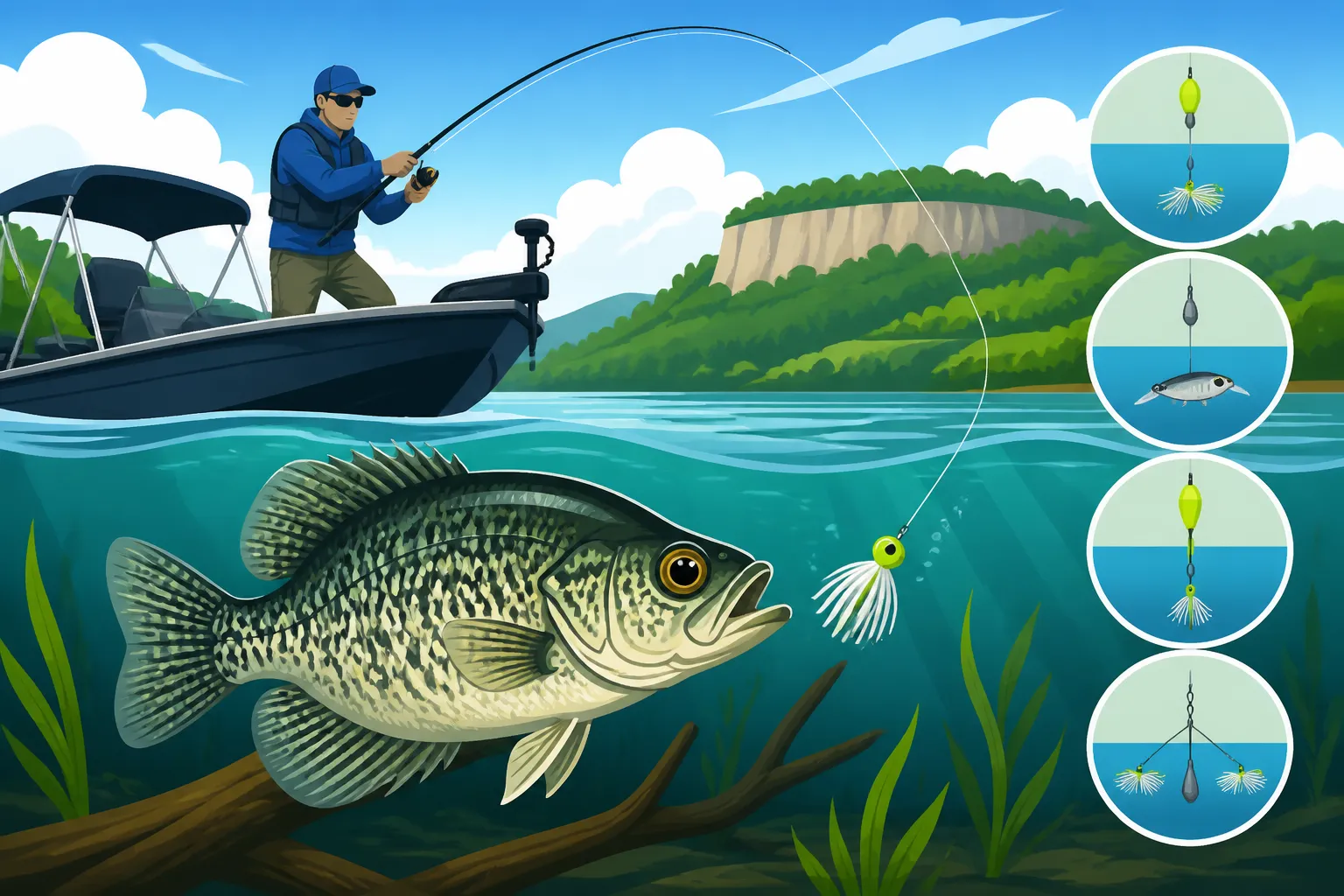
Spider rigging, sometimes called "pushing," is a highly effective technique for covering water and presenting multiple baits simultaneously, making it a staple for many serious crappie anglers in Kentucky. This involves using multiple long rods (often 8 to 16 feet or more) spread out around the bow of the boat, creating a "spider web" of lines. Each rod typically has a jig or a minnow rig, or both, presented at different depths. You then use your trolling motor to slowly push the boat forward, usually at speeds between 0.3 and 0.8 mph. This allows you to explore different depths and present a wide array of offerings to crappie. It's particularly effective when crappie are scattered or when you're trying to locate schools of fish on large flats or along creek channels.
Long lining, on the other hand, is a trolling technique where you let out a considerable amount of line behind the boat while moving at a slow speed, often 0.8 to 1.5 mph. The amount of line out, combined with the weight of your jig and the speed of your boat, determines the depth your bait runs. This technique is excellent for targeting crappie suspended over open water or along contours that drop off gradually. It’s also fantastic for covering a lot of water quickly, especially when you suspect crappie are spread out over a large area, such as a major creek arm on Lake Cumberland. Both techniques require careful attention to boat speed and line management, but they can be incredibly rewarding. If you're looking for more specific guidance, check out our guide on How to Spider Rig for Crappie.
Vertical Jigging and Drop Shotting
Vertical jigging is perhaps the most direct way to present a bait to crappie when you've pinpointed them directly beneath your boat using sonar. This technique involves dropping a jig or a minnow-tipped jig straight down to the depth where you're seeing fish. The key here is precision. Once your bait is at the right depth, you impart subtle movements to the rod tip, making the jig dance and enticing a bite. This is particularly effective when crappie are schooling tightly around a brush pile or suspended in a specific depth range. Many anglers prefer braided line for vertical jigging due to its superior sensitivity, allowing them to feel even the lightest "tap" of a crappie inhaling the bait.
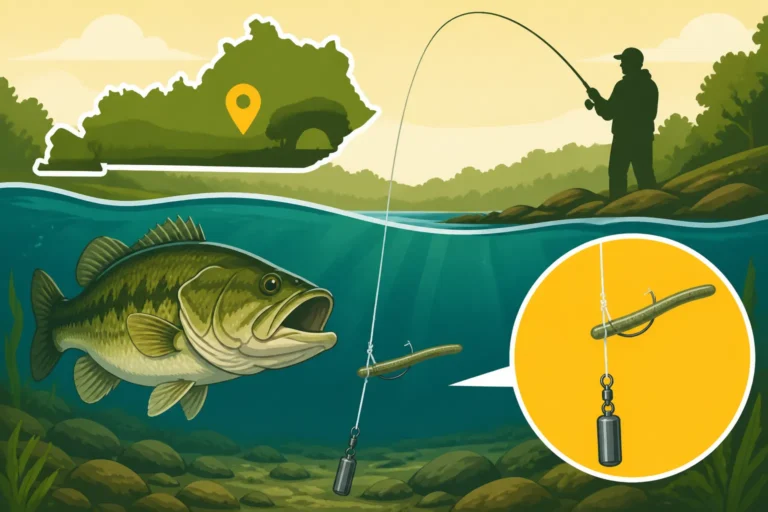
Drop shotting, while more commonly associated with bass fishing, has also found a place in the crappie angler's playbook, especially when fish are finicky or heavily pressured. With a drop shot rig, your weight is at the very bottom of the line, and your hook (often a small jig head or a bare hook with a minnow) is tied directly to the main line a foot or two above the weight. This presentation keeps your bait suspended precisely in the crappie's strike zone, allowing for subtle, natural movements without the weight interfering. It's fantastic for targeting individual crappie or small schools holding tight to vertical structure like bridge pilings or standing timber, where you need to hold your bait still in a specific depth. When you see crappie hugging the bottom on your fish finder, a drop shot can be invaluable.
Drifting and Trolling with Baits
Drifting is a wonderfully passive yet effective way to cover water, especially on windy days. Instead of actively powering your boat, you let the wind and current carry you across productive flats, points, or along channel edges. This technique often employs simple minnow rigs under slip bobbers or jigs cast out and allowed to drift. The key is to monitor your drift speed and adjust your bait presentation accordingly. If you're drifting too fast, your baits might not stay in the strike zone long enough. A drift sock or sea anchor can be deployed to slow your drift, giving crappie more time to find your offerings. This method is fantastic when crappie are scattered over a broad area, or when you want a relaxed day on the water without constantly operating the trolling motor.
Trolling with baits, often a combination of jigs and minnows, is similar to long-lining but can involve more varied presentations. You might be trolling crankbaits designed for crappie, or jigs at specific depths, using your main motor or a dedicated kicker motor at very slow speeds. This is an excellent way to locate schools of fish in large bodies of water. The key to successful trolling is consistency in speed and knowing the dive curve of your lure. Using multiple rods with different lure types and depths can help you figure out what the crappie are hitting on any given day. On bigger lakes like Kentucky Lake, trolling motor speeds between 1-3 mph with crappie-sized crankbaits can be incredibly productive for locating schools of active crappie. Our article on Tightlining Techniques for Crappie Fishing might offer some additional insights that could be adapted for trolling scenarios.
Seasonal Strategies for Boat Crappie Fishing
Crappie behavior changes dramatically throughout the year, and adapting your boat fishing techniques to the season is crucial for consistent success. What works in spring won't necessarily work in the dead of winter.
Spring Spawn Tactics
Ah, spring crappie! This is arguably the most anticipated time of year for many anglers. As water temperatures begin to rise in early spring, crappie start their migration from deeper wintering grounds to shallower spawning areas. Once the water hits the mid-50s, the real action begins. You'll find crappie congregating in shallow coves, along protected shorelines, and in areas with brush, stumps, or weeds, typically in 2 to 6 feet of water. This is when a boat really shines, allowing you to access these prime spawning grounds that bank anglers might struggle to reach.
For spring crappie, light jigs (1/32 to 1/16 ounce) in bright colors like chartreuse, pink, or white, tipped with a small plastic grub or a live minnow, are incredibly effective. A slip bobber rig is also a go-to, allowing you to present a minnow or jig at a precise depth above cover. Use your trolling motor to slowly navigate these shallow areas, casting to visible cover or using your fish finder to locate submerged brush piles. The Kentucky Crappie Spawn Timing by Water Temperature is a great resource to help you dial in exactly when to hit your favorite lake. Don't be afraid to keep moving until you find an active school; once you do, you can often catch several fish from a single brush pile.
Summer Deep Water Patterns
When the hot Kentucky summer arrives, crappie typically retreat from the shallow spawning grounds and move to deeper, cooler water. This is where your boat and electronics truly become invaluable. During summer, crappie will suspend over deep creek channels, gather around main lake points, or hold tight to extensive brush piles and standing timber at depths ranging from 10 to 30 feet, sometimes even deeper, depending on the lake's thermocline. They are often found in large schools, so once you find one, you can often find many.
Vertical jigging or drop shotting becomes the primary technique in summer. Use your sonar to locate those deep schools and then drop your baits directly into them. Slightly heavier jigs (1/8 to 1/4 ounce) might be necessary to get down quickly. Live minnows are incredibly effective, either tightlined or fished on a drop shot rig. Slow trolling with jigs or small crankbaits can also work, especially if the crappie are suspended over open water. Our guide on How to Find Crappie in Deep Water in Summer offers more specific tips for this challenging but rewarding season. Remember that early mornings and late evenings can still produce bites in shallower areas as crappie temporarily move up to feed.
Fall Migration and Winter Holds
Fall crappie fishing is another fantastic time to be on the water. As water temperatures cool, crappie become increasingly active, feeding heavily in preparation for winter. They often move from their deep summer haunts to structure that is somewhat shallower than summer, but not as shallow as the spring spawn. Look for them on the edges of creek channels, main lake points, and around brush piles in 8 to 20 feet of water. They will often relate to the baitfish, which are also moving into shallower bays and creek arms.
Jigging, casting small crankbaits, or slow trolling with minnows are all productive fall techniques. As winter truly sets in, crappie will once again move to their deepest wintering grounds. This typically means suspending over very deep creek channels, in large brush piles at the bottom of steep bluffs, or around standing timber in 20 to 40 feet of water. Winter crappie are often lethargic, so a slow, subtle presentation is key. Vertical jigging small jigs or presenting a tiny minnow with minimal movement is often the most effective. Even in winter, you can find active schools, and your boat gives you the access to locate them.
Navigating Kentucky Waters: Locating Crappie Hotspots
Kentucky is blessed with an abundance of fantastic crappie fishing lakes and rivers. Knowing how to efficiently navigate these waters and identify prime crappie real estate from your boat is a skill that develops over time, but there are some definite shortcuts.
Identifying Productive Structures
As we've touched on, crappie love structure. But not all structures are created equal. From your boat, you have the advantage of being able to systematically search for the best structures. Start by studying maps (paper or electronic) of your chosen lake. Look for major creek channels that run through the main body of water, and especially where those channels make sharp bends or intersect with other channels. These are often crappie highways. Identify main lake points, humps, and submerged islands. Then, look for man-made structures: bridge pilings, submerged roadbeds, old foundations, and fish attractors placed by the Kentucky Department of Fish and Wildlife Resources.
Many crappie anglers also deploy their own brush piles. These can be incredibly productive, often holding large schools of crappie for extended periods. If you know of an existing brush pile, use your GPS to mark it precisely. When exploring new waters, drive slowly over promising areas with your sonar on, actively searching for these hidden gems. Pay particular attention to the "break lines" – where shallow water drops off into deeper water. Crappie will often stage along these edges, especially during transitions between seasons. Don't forget that many anglers share tips for productive spots on forums and social media, often leading to hidden treasures on lakes like Lake Barkley, one of Kentucky's top crappie destinations.
Using Maps and GPS for Precision
Your boat's mapping capabilities, whether on a standalone GPS unit or integrated into your fish finder, are indispensable for crappie fishing. Before you even launch, spend time studying contour maps of the lake. Identify potential crappie holding areas based on depth changes, creek channels, and submerged features. Mark these as waypoints on your GPS. When you're on the water, use your GPS to navigate directly to these spots. This saves an immense amount of time and fuel compared to blindly searching.
Once you find an active school of crappie or a particularly productive piece of structure, use your GPS to mark that exact location. This allows you to return to it later, sometimes even during the same fishing trip if the bite slows down elsewhere. Precision is key in crappie fishing; being able to position your boat within feet of a brush pile or a submerged hump can be the difference between a full livewell and an empty one. For example, if you're fishing a submerged creek channel in Kentucky's Lake Barkley Crappie Fishing Guide, marking specific bends or log jams on your GPS will significantly improve your chances of success. Having a backup power source for your electronics or even a portable GPS unit can be a lifesaver in case your main system encounters an issue.
Troubleshooting Common Crappie Boat Fishing Challenges
Even with the best gear and techniques, crappie can sometimes be elusive. It's a part of fishing! But knowing how to diagnose and address common challenges can turn a frustrating day into a productive one.
Dealing with Finicky Bites
We've all been there: your fish finder is lit up with crappie, but they just won't bite. This is a classic finicky bite scenario, and it can be incredibly frustrating. The first thing to consider is your presentation. Are your baits too large? Sometimes, downsizing your jig to a 1/32 or even 1/64 ounce, or using a smaller minnow, can make all the difference. Crappie have relatively small mouths, and in colder water or under high pressure, they can be very selective.
Next, think about color. While bright colors often work, sometimes a natural color like clear with glitter, smoke, or a subtle brown can be more effective, especially in clear water or on bright days. Experiment with different jig head colors too – a black or red jig head might be the subtle change needed. Finally, and perhaps most importantly, is your retrieve or presentation speed. When crappie are finicky, slowing down your retrieve to an almost imperceptible crawl is often the ticket. Let your bait sit motionless for a few seconds, then impart a tiny twitch. Sometimes, even the smallest vibrations from your trolling motor can put them off, so consider backing off slightly or shutting it down for short periods to see if it makes a difference. Remember, crappie often just "inhale" the bait, so a super sensitive rod helps you detect those barely-there bites.
Overcoming Wind and Current Challenges
Wind and current are two of a boat angler's biggest adversaries, making precise boat positioning and bait presentation incredibly difficult. A strong wind can blow your boat off course, making it impossible to hold over a brush pile, and even a gentle current can sweep your light crappie jigs away from the strike zone. The key is to acknowledge these forces and work with them, not against them.
If you're dealing with wind, deploy a drift sock (or two, off the bow and stern) to slow your drift. This allows your baits to stay in the strike zone longer and gives you more control. Your GPS-enabled trolling motor is also a lifesaver here, allowing you to "spot-lock" or maintain a specific course against the wind. If the wind is too strong, consider moving to a more protected cove or fishing a bank that's sheltered from the main wind direction. For current, especially on rivers or where current runs through a lake, position your boat upcurrent from your target. This allows your baits to drift naturally down into the crappie's holding area. You'll likely need to use slightly heavier jigs to combat the current and ensure your bait gets down to the desired depth. Practice makes perfect when it comes to boat control in challenging conditions, but with the right tools and approach, you can still have a successful day.
| Crappie Boat Fishing Technique | Best Application | Key Gear | Advantages | Considerations |
|---|---|---|---|---|
| Spider Rigging | Scattered fish, covering large flats, locating schools | Multiple long rods (8-16ft+), trolling motor | Covers wide area, multiple depths, multiple baits | Requires specialized rod holders, can be tangled in tight spots |
| Vertical Jigging | Pinpointed schools over structure, deep water | Sensitive rod (5-7ft), sonar, light jigs (1/16-1/4oz) | Precise presentation, effective for finicky fish | Requires accurate boat positioning, limited coverage |
| Long Lining / Trolling | Suspended fish, covering open water, locating schools | Medium action rods, small crankbaits/jigs, trolling motor | Covers large areas quickly, effective for active fish | Can be challenging to maintain depth, requires understanding lure dive curves |
| Drifting | Scattered fish, windy conditions, relaxed fishing | Slip bobbers, minnows/jigs, drift sock (optional) | Passive, covers area without constant boat control | Dependent on wind/current, slower to locate precise spots |
| Drop Shotting | Finicky fish, precise depth control over vertical structure | Sensitive spinning rod, drop shot weights, small hooks/jigs | Presents bait naturally, excellent for holding still | Can be slower to rig, less efficient for covering water |
Disclaimer
Fishing conditions and regulations in Kentucky can change rapidly. Always consult the most current Kentucky Department of Fish and Wildlife Resources (KDFWR) regulations before heading out on the water. This guide is for informational purposes only and does not supersede official KDFWR rules and guidelines.