Why Blue and Channel Catfish Count Toward the Same Kentucky Limit
Many anglers hitting the waters in Kentucky have scratched their heads over this one: you're out there, having a blast catching some feisty channel catfish, and then you land a massive blue cat. Suddenly, you're wondering, "Do these count towards the same limit?" It's a common point of confusion that can leave you second-guessing your creel. This guide is here to clear up that mystery once and for all, explaining why Kentucky groups blue and channel catfish together in its daily harvest limits and what that means for your next fishing adventure.
Understanding Kentucky's Statewide Catfish Regulations
It can be a little perplexing when you're on the water, pulling in some fantastic fish, and then you remember there are rules. Kentucky's fishing regulations, set by the Kentucky Department of Fish and Wildlife Resources (KDFWR), are designed to ensure sustainable fish populations for everyone, but sometimes the specifics, like aggregate limits, aren't immediately intuitive. For catfish, the rules specifically lump blue catfish and channel catfish together, which can catch new anglers off guard.
The Aggregate Daily Creel Limit for Catfish
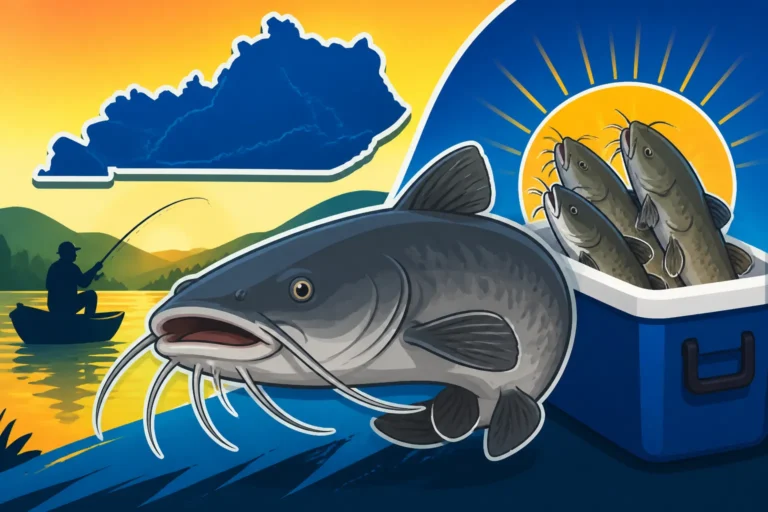
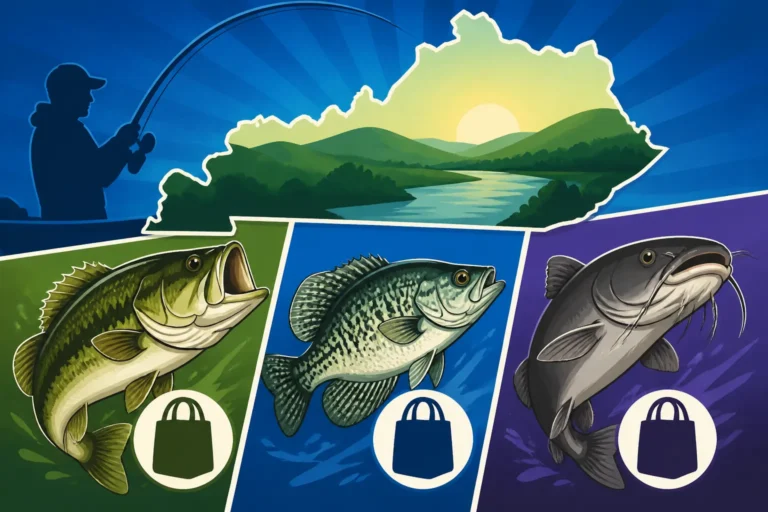
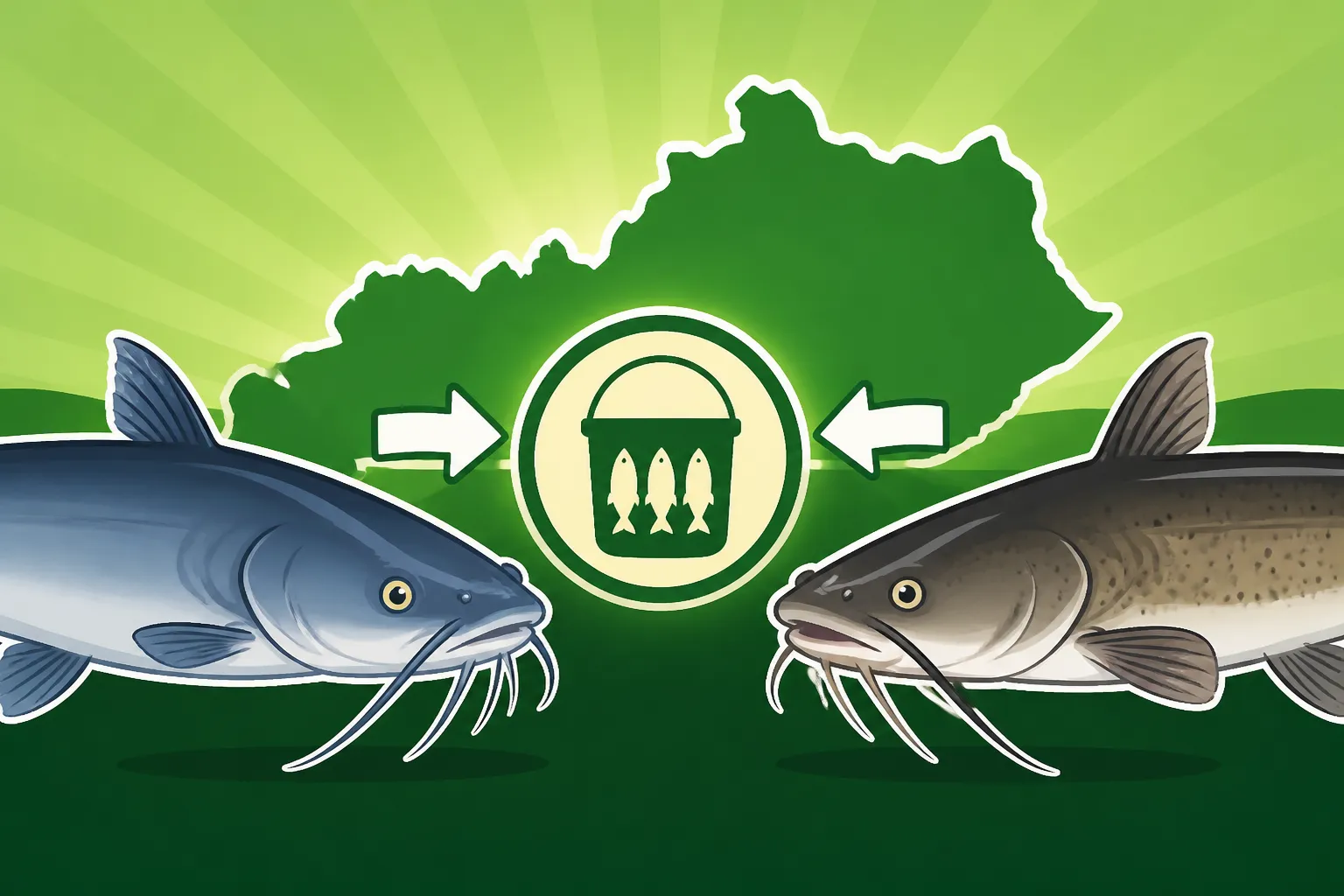
In Kentucky, when you're out chasing those whisker-mouthed beauties, you're looking at a combined, or "aggregate," daily creel limit for blue and channel catfish. Currently, the statewide rule generally allows anglers to keep a total of 15 catfish per day. This means your 15 fish can be all channel cats, all blue cats, or any combination of the two. It's not 15 of each; it's 15 total. Beyond that, there's another crucial part to remember: of those 15 fish, only one can be 25 inches or longer. This "one over 25 inches" rule applies to both blue and channel catfish collectively as well. It’s a regulation that aims to protect the larger, more mature breeding fish, especially the trophy-sized blue catfish that Kentucky is becoming famous for. You can dive deeper into these specifics by checking out our guide on the Kentucky Catfish Daily Limit and Trophy Fish Rule.
Imagine you've had an incredible morning on the Ohio River. You've boated 12 robust channel catfish, all under 25 inches. You're feeling pretty good, thinking you still have plenty of room for those big blue cats. Then, boom! You hook into a magnificent 30-inch blue catfish. You can keep that trophy, but now you only have two more spots left in your 15-fish aggregate limit. Any additional blue or channel catfish you catch must be released, unless you decide to release some of your smaller channel cats to make room for another keeper under 25 inches. It’s a strategic game of numbers, and knowing the aggregate limit beforehand is key to avoiding disappointment or, worse, a citation.
Navigating Lake-Specific Catfish Rules
While the 15-fish aggregate limit with one over 25 inches is the general statewide rule for blue and channel catfish, it's absolutely vital to remember that Kentucky, like many states, has site-specific regulations. These special rules can apply to certain lakes or river stretches, often in an effort to manage fish populations unique to those bodies of water. For instance, a particular lake might have a slot limit for channel catfish, or a different daily limit for all catfish species combined. This is a common practice you can learn more about in our article explaining Why Kentucky Fishing Limits Vary From Lake to Lake.
It’s easy to get caught up in the excitement of a fishing trip, especially if you're exploring new waters. You might be fishing a local pond one weekend, then hitting a major reservoir like Kentucky Lake or Lake Barkley the next. Don't assume the rules are identical everywhere. Before you even pack your tackle box, make it a habit to consult the latest Kentucky Fishing and Boating Guide. You can usually pick up a physical copy at most bait shops, Walmart, or sporting goods stores, or simply download the most current version from the KDFWR website. This small step can save you a lot of grief and ensure you're fishing legally and responsibly.
The Biological Reasoning Behind Combined Catfish Limits
It might seem counterintuitive to group two distinct species under one limit, especially when blue catfish can grow so much larger than channel catfish. However, the KDFWR doesn't make these decisions lightly. There are sound biological and practical reasons for managing blue and channel catfish populations with an aggregate limit.
Shared Habitats and Ecological Niches
Blue and channel catfish, while distinct species, often inhabit similar environments across Kentucky's diverse waterways. They're both found in major rivers, large reservoirs, and even some smaller lakes and ponds. In many cases, they're competing for the same food sources, utilizing similar depths, and reacting to similar environmental cues. For example, in large bodies of water like the Ohio River or Kentucky Lake, you'll find both species thriving. They're both opportunistic feeders, although blue cats tend to prefer a more carnivorous diet as they grow larger, while channel cats are more omnivorous.
Because of this overlap in their ecological niches, it becomes very challenging for wildlife managers to set separate, precise harvest limits that would effectively manage each species independently without impacting the other. If you heavily reduce one population through harvest, the other might expand to fill that void, or both might suffer if there's insufficient prey. Managing them as a "catfish" group allows for a more holistic approach to ecosystem health and sustainable fishing. Think about it: if you're fishing a deep hole on the Best Catfish Fishing Spots on Kentucky's Ohio River, you're just as likely to pull out a channel cat as you are a blue cat on the same bait.
Simplified Management and Enforcement
From a resource management perspective, aggregate limits simplify the complex task of monitoring fish populations and enforcing regulations. The KDFWR has a vast network of lakes, rivers, and streams to manage. Trying to track the population dynamics and harvest rates of every single species individually across all these different water bodies would be an astronomical undertaking. By grouping similar species like blue and channel catfish, biologists can focus on the overall health of the catfish fishery.
For game wardens and law enforcement officers, aggregate limits also make their job significantly easier. Imagine a warden trying to verify if an angler with a cooler full of catfish has 15 channel cats and 15 blue cats, or 15 total. Distinguishing between a smaller blue cat and a larger channel cat, especially if they’re similar in size or if they’ve been iced down for a while, can be tricky. By having a combined limit, it removes much of the ambiguity and potential for misidentification or deliberate misrepresentation by anglers. This streamlines enforcement, ensuring that the regulations are both understandable and consistently applied. Anglers should be familiar with how to tell the difference between these species, which you can learn about in Channel Catfish Vs Blue Catfish How to Tell Them Apart.
Protecting Spawning Potential
The "one over 25 inches" rule for blue and channel catfish, applied collectively, is a clear indication that conservation is at the heart of these regulations. Larger fish, especially the big blue catfish, are often the most prolific spawners. They contribute significantly to the genetic diversity and future health of the population. By limiting the harvest of these larger individuals, the KDFWR aims to ensure that plenty of healthy, mature fish remain in the system to reproduce. This helps maintain a strong, self-sustaining fishery for generations of anglers to enjoy.
If there were separate limits, say, 15 channel cats and 15 blue cats over 25 inches, it could inadvertently lead to a higher harvest of larger, breeding-stock fish. The aggregate limit forces anglers to make choices, often encouraging the release of larger fish once that single trophy slot is filled, which directly benefits the long-term sustainability of both species.
Practical Implications for the Kentucky Angler
Understanding that blue and channel catfish fall under a single aggregate limit changes how many seasoned anglers approach their trips. It's not just about what you catch, but how you manage your catch throughout the day. This knowledge can genuinely enhance your fishing strategy and ensure you're always on the right side of the law.
Planning Your Catfishing Strategy
Knowing the aggregate limit means you have to be more strategic. If you're heading out to a hotspot on the Cumberland River, for instance, specifically hoping to land a monster blue cat, you might decide to release any smaller channel cats you catch early in the day. This keeps your limit open for that one potential trophy fish over 25 inches, and allows you room for other eating-sized blues or channels under that length. Conversely, if your goal is simply to fill your freezer with delicious eating-sized catfish, you might prioritize keeping smaller channel and blue cats, knowing that once you hit 15, your day is done, regardless of what's still biting.
Consider a hypothetical trip to Barren River Lake. You're set up with a How to Rig a Trotline for Catfish overnight, and you wake up to several nice channel cats on the line. If you keep ten of them, that only leaves five slots for blue cats later in the day, and still only one of those five can be over 25 inches. It's not just about the numbers; it's about the quality of the fish you decide to keep. For those truly after a wall-hanger, you might focus your efforts on techniques and locations known for bigger fish, and be prepared to release everything else until that one special fish comes along. The detailed rules for that trophy fish are explained in How Many Catfish Over 25 Inches Can You Keep?.
Gear and Technique Adjustments
While the aggregate limit doesn't necessarily dictate what gear you use, it might influence your approach. If you're primarily targeting channel catfish, lighter tackle might be sufficient. You can pick up reliable medium-heavy catfish rods and reels on Amazon that handle most channel cats with ease. However, if you're also hoping for a big blue cat, you'll want to beef up your tackle considerably. Think heavy-action rods, robust baitcasting reels, and strong braided line. This heavier gear is ideal for the Best Rigs for Catfish Fishing in Current found in Kentucky's large rivers.
Using different baits can also play a role. While many baits will attract both species, certain baits might be more effective for one over the other. For instance, chicken livers or cut bait might be irresistible to channel cats, but a whole shad or large piece of cut skipjack might be more appealing to a trophy blue cat. Your choice of bait, like the Best Bait for Channel Catfish Fishing, might subtly influence your catch and thus your management of the aggregate limit. The bottom line is to be prepared for both, knowing that whatever you catch, it all counts towards that single 15-fish aggregate.
Avoiding Penalties and Game Warden Encounters
The most serious implication of not understanding the aggregate limit is facing penalties for violating fishing regulations. Game wardens in Kentucky are well-versed in these rules and regularly patrol lakes and rivers. When they check your cooler or livewell, they're counting total blue and channel catfish, and looking for that single fish over 25 inches. Ignorance of the law is never a valid defense. Fines, confiscation of gear, and even loss of fishing privileges are real possibilities for those who don't adhere to the regulations. If you're ever concerned about what constitutes a violation, it's worth reviewing our guide on Penalties for Fishing Without a License in Kentucky (which touches on enforcement in general).
It's always best to be transparent and cooperative if a game warden approaches you. Have your valid Kentucky Fishing License Guide readily available and be prepared to show them your catch. Having a simple mental tally or even a small notepad to track your catfish count can prevent misunderstandings. Remember, wardens are there to protect the resource, and by understanding and following the rules, you're doing your part to ensure great fishing for everyone.
Staying Informed and Fishing Responsibly
The world of fishing regulations can seem overwhelming, with new rules and exceptions popping up from time to time. But staying informed is perhaps the most important thing an angler can do, not just for compliance, but for contributing to the health of Kentucky's fisheries.
The Importance of Current Information
Kentucky's fishing regulations are not static; they can change annually based on biological surveys, angler feedback, and conservation needs. What was true last year might have a slight modification this year. This is why always checking the most current Kentucky Fishing and Boating Guide is paramount. This comprehensive guide covers everything from statewide limits to specific rules for individual lakes and rivers, and even details on special permits like the Kentucky Trout Permit Guide. The KDFWR website is an excellent, always-up-to-date resource, and many local bait shops will have printed copies or know where to direct you.
You might be thinking, "Do I really need to check every time?" For statewide rules, perhaps not every single trip, but certainly at the start of each new license year, which typically runs from March 1st to the end of February. For any new body of water you visit, absolutely check the local regulations. A quick check of Kentucky Fishing Regulations Explained will get you started, but always cross-reference with the official guide.
Catch and Release Considerations
Even with an aggregate limit of 15 catfish, many anglers choose to practice selective harvest or catch-and-release, especially for larger blue catfish. While it's perfectly legal to keep your 15 fish (with that one over 25 inches), releasing some of the larger, breeding-sized blue cats helps ensure that the gene pool for trophy fish remains strong. These big fish are crucial for future generations.
If you're going to release fish, handle them with care. Minimize their time out of the water, use wet hands, and support their body weight properly. If you do land that prized blue cat over 25 inches and already have your one trophy fish, practicing a responsible release means that fish gets to swim away and potentially produce more offspring, or offer another angler the thrill of a lifetime. This balance of harvesting for food and releasing for conservation is a hallmark of responsible angling. Ultimately, the choice of what to keep up to your limit, beyond that single big one, is yours.
Catfish Aggregate Limit Table
To help visualize Kentucky's statewide aggregate catfish limit, here's a quick table:
| Catfish Species Combination | Total Daily Limit | Max Fish Over 25 Inches | Notes |
|---|---|---|---|
| All Channel Catfish | 15 | 1 | Total count includes all channel catfish. |
| All Blue Catfish | 15 | 1 | Total count includes all blue catfish. |
| Mixed Channel & Blue Catfish | 15 | 1 | Total count of both species combined. |
| Example: 14 Channel Cats, 1 Blue Cat | 15 Total | 1 (if any are over 25") | If the blue cat is 26 inches, no other fish can be 25+ inches. |
| Example: 7 Channel Cats, 8 Blue Cats | 15 Total | 1 (if any are over 25") | Same rule applies, only one overall can be over 25 inches. |
Note: Always consult the current KDFWR Fishing and Boating Guide for any updates or site-specific exceptions.
Disclaimer
Always consult the official Kentucky Department of Fish and Wildlife Resources (KDFWR) regulations before engaging in any fishing activities. This guide is for informational purposes only and does not supersede state laws or official regulations. Fishing laws can change, and it is the angler's responsibility to stay informed and compliant.