Brown Trout and Brook Trout in Kentucky’s Cold-Water Streams
Finding and catching brown trout and brook trout in Kentucky's cold-water streams can feel like chasing a ghost, especially if you're used to the big lake bass fisheries. These elusive fish thrive in specific, often hard-to-reach habitats, demanding a different approach and a deeper understanding of their world. This comprehensive guide will walk you through everything you need to know, from identifying these beautiful fish to finding their hidden havens and mastering the techniques to bring them to hand.
The Unique Appeal of Kentucky Trout Fishing
When most people think of fishing in Kentucky, they often picture reeling in a monster largemouth bass from Kentucky Lake or a trophy catfish from the Ohio River. But for a select group of anglers, the real magic happens in the state's cooler, quieter waters, pursuing the vibrant, challenging, and often native trout species. This isn't just about catching fish; it's about connecting with nature in some of Kentucky's most pristine environments.
Why Brown and Brook Trout Stand Out
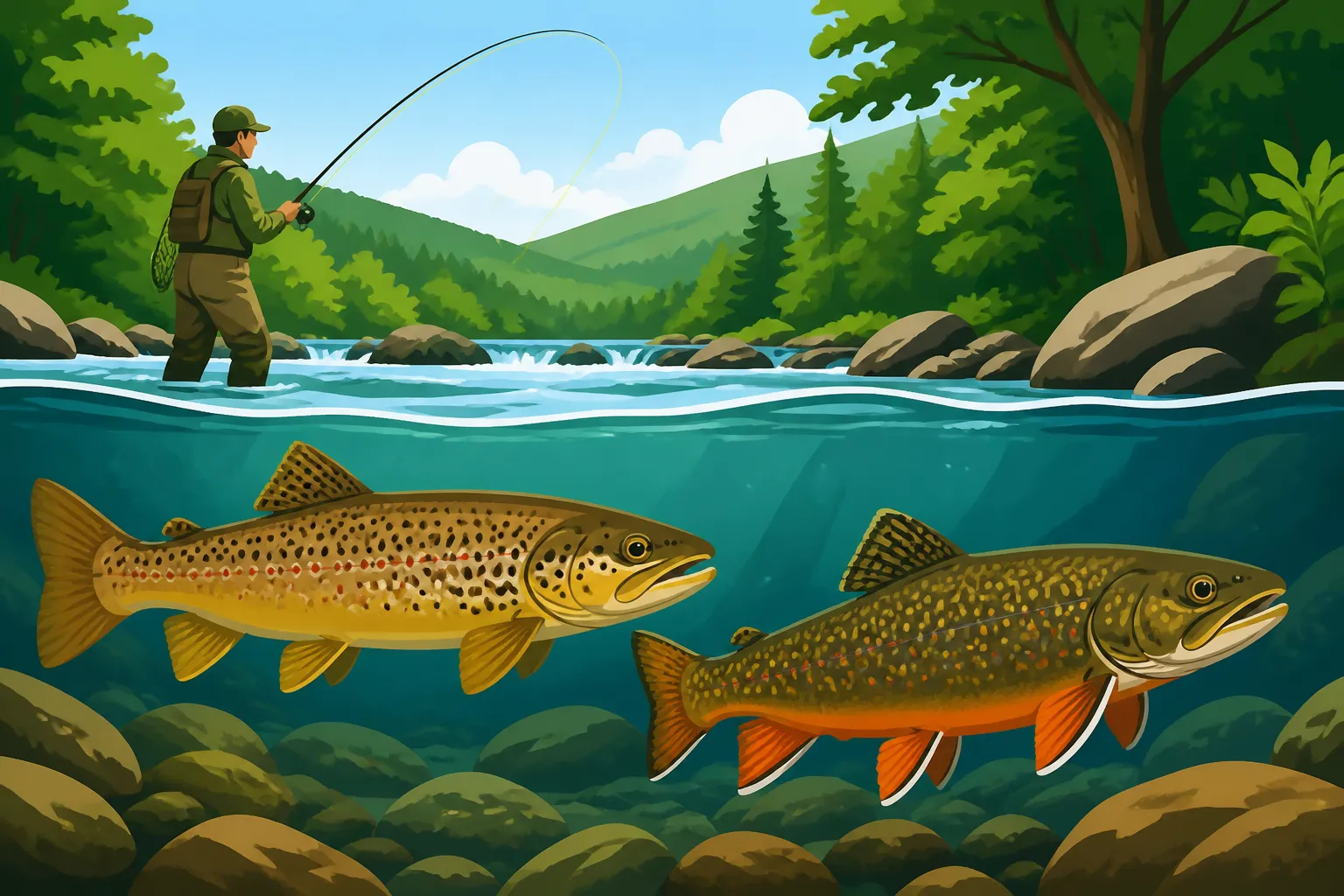
Brown trout and brook trout hold a special place in the hearts of many Kentucky anglers, and for good reason. Brown trout, with their striking golden flanks adorned with red and black spots, are renowned for their intelligence and fighting spirit. They can be incredibly wary, making each catch a testament to an angler's skill and patience. These fish are often stocked in Kentucky, providing robust fishing opportunities in designated trout waters. On the other hand, brook trout are Kentucky's only native trout species, true gems of the Appalachian region. Their exquisite vermiculation (worm-like markings) on their backs, combined with vibrant red fins tipped with white, make them undeniably beautiful. Catching a native brook trout in its natural, untouched habitat is a profound experience, a connection to Kentucky's wild heritage that simply can't be replicated elsewhere. Both species thrive in specific, clean, cold-water conditions, which dictates where and how we approach them.
The Challenge of Cold-Water Streams in Kentucky
Kentucky isn't exactly famous for its mountainous, fast-flowing trout streams like some of its neighboring states. This makes finding and fishing for brown and brook trout a unique challenge, one that many anglers relish. The state's cold-water resources are limited, typically confined to the headwaters of streams originating in the eastern mountains or spring-fed creeks that maintain low temperatures year-round. These environments are often small, overgrown, and require a good deal of hiking and bushwhacking to access. It's not uncommon to spend more time navigating dense rhododendron thickets or scrambling over slippery rocks than actually casting. The water itself can be crystal clear, making stealth absolutely crucial. Any misstep, heavy footfall, or clumsy cast can send fish scattering, often for good. This demanding nature is precisely what draws many anglers; it's a test of physical endurance, observation skills, and fishing finesse, offering solitude and immense satisfaction when successful.
Understanding Brown Trout in Kentucky
Brown trout are incredibly popular in Kentucky's trout fisheries, primarily due to their hardiness and ability to adapt to a wider range of conditions than their brook trout cousins. They offer a fantastic challenge for anglers seeking a rewarding stream fishing experience, but you need to know how they tick to consistently catch them.
Identifying Brown Trout: Key Features
Identifying a brown trout is usually pretty straightforward once you know what to look for. They typically have a brownish-gold body, sometimes appearing more olive or bronze depending on the water they inhabit. The most distinctive feature is their scattering of dark spots, often haloed with a lighter ring, and bright red or orange spots, particularly on their flanks. These red spots are a dead giveaway. Their caudal fin (tail) is usually square or slightly forked and lacks the worm-like markings you'd see on a brook trout. They have a relatively large mouth extending past the eye. On average, brown trout caught in Kentucky's streams might range from 8 to 15 inches, though larger, trophy-sized fish are certainly present in some waters, especially those with good food sources and structure.
Preferred Habitats and Behavior
Brown trout are opportunistic feeders and incredibly territorial. They love to hold in areas where they can ambush prey while remaining hidden from predators (including anglers!). This means you'll often find them tucked under undercut banks, behind large boulders, submerged logs, or in deep pools where currents converge. They appreciate good overhead cover and shaded areas, especially during brighter parts of the day. In Kentucky's smaller streams, this often means focusing on bends, log jams, and any significant change in depth or flow. Their behavior is notoriously wary; they have excellent eyesight and can detect vibrations from afar. A heavy step on the bank or a shadow cast over the water can send them bolting. They are also primarily nocturnal feeders, meaning early morning, late evening, or even night fishing (where permitted) can be highly effective, especially for larger individuals. Understanding their need for cover and their cautious nature is paramount to approaching their lies without spooking them.
Best Techniques and Baits for Brown Trout
When targeting brown trout in Kentucky's streams, stealth and presentation are your best friends. These fish are smart and won't tolerate sloppy casts or unnatural drifts. For those who love the finesse of fly fishing, small nymph patterns (like Prince Nymphs, Hare's Ears, or Pheasant Tails), dry flies (Caddis, Mayflies, or Terrestrials depending on the hatch), and small streamers are all highly effective. Matching the hatch is always a good strategy, but often, a general attractor pattern will get the job done. If you're a spin angler, ultralight gear is key. Small inline spinners (Mepps, Panther Martin), tiny crankbaits, and soft plastic grubs or worms rigged on a light jig head can be deadly. Live bait, like small worms or minnows, fished under a bobber or drift-fished naturally, also has a long history of success. Remember, keep your line light – 2 to 4-pound test is ideal – and make your casts subtle and accurate. Longer rods (6-7 feet) can help with line control and keeping your distance from the stream edge. You might want to check out the selection of quality ultralight rods and reels on Amazon before your next trip. Always remember that a Kentucky Fishing License Guide is your first step, followed by the Kentucky Trout Permit Guide.
Discovering Brook Trout in Kentucky
Kentucky's brook trout are a true treasure, the only trout species native to our state. Finding and catching these beautiful fish offers a glimpse into Kentucky's pristine, wilder side, a stark contrast to the state's larger, more developed fishing destinations.
Identifying Brook Trout: Native Beauty
Brook trout are easily distinguishable and undeniably beautiful. Their bodies are typically an olive-green to dark brown, fading to white on the belly. What truly sets them apart are the intricate, worm-like markings called "vermiculation" on their backs and dorsal fin, along with scattered red spots (some with blue halos) on their sides. Their lower fins (pelvic, anal, and caudal) often have a vibrant orange-red hue, tipped with a crisp white leading edge and a black stripe. This "white leading edge" is a classic brook trout identifier. Their mouths are generally smaller than a brown trout's, not extending past the eye. In Kentucky's small streams, brook trout are often much smaller than brown trout, typically ranging from 5 to 10 inches. Catching one, regardless of size, is a moment to savor, a connection to a truly wild, native species.
Ideal Stream Conditions for Brook Trout
Brook trout are incredibly sensitive to water temperature and quality, requiring the coldest, cleanest, and most oxygenated waters available. This means you'll find them almost exclusively in the headwaters of mountain streams, often at higher elevations, where springs feed the creeks and dense canopy cover keeps sunlight at bay. They thrive in stream sections with plenty of riffles, runs, and small plunge pools, always seeking out pockets of cooler water and protective cover. Overhanging vegetation, downed trees, and undercut banks are prime real estate. These are often tiny, intimate streams, sometimes no wider than a car, where casting can be a challenge in itself. The presence of brook trout is a strong indicator of a healthy, undisturbed aquatic ecosystem. These streams are delicate, and wading must be done carefully to avoid disturbing the stream bed and stirring up silt.
Effective Strategies for Catching Brook Trout
Catching brook trout is less about power and more about finesse and persistence. Given their preference for small, often overgrown streams, shorter ultralight spinning rods (4.5 to 5.5 feet) or short fly rods (2 to 4-weight, 6 to 7.5 feet) are ideal for navigating tight quarters and brush. For fly anglers, small dry flies (such as a Parachute Adams, Elk Hair Caddis, or small Stimulator) are often irresistible, especially when drifted naturally through plunge pools or along current seams. Small bead-head nymphs or soft hackles can also work wonders. Spin anglers should opt for tiny inline spinners (size 0 or 1), micro-jigs, or a simple worm under a small float. The key is to be stealthy; approach the stream quietly, keep a low profile, and make your first cast count, as these fish can spook easily. Often, you'll only get one shot at a particular hole. Consider using a pair of polarized sunglasses, available on Amazon, to spot fish or subtle changes in the water. Remember, you'll need a Kentucky Trout Permit Cost and Requirements alongside your fishing license to target these beautiful fish.
Where to Find Cold-Water Trout Streams in Kentucky
Kentucky might not be known as a trout fishing mecca, but that only adds to the adventure of finding these unique cold-water havens. It requires a bit of research and a willingness to explore, but the reward of a pristine stream and a beautiful trout is well worth the effort.
Identifying Prime Trout Water
Identifying prime trout water in Kentucky primarily comes down to temperature, oxygenation, and habitat. You're looking for streams that remain consistently cold, ideally below 65 degrees Fahrenheit, even in the heat of summer. These are typically spring-fed creeks or the headwaters of larger river systems originating in the higher elevations of Eastern Kentucky. Good oxygenation is provided by riffles, rapids, and cascades, which are common in these mountainous areas. Habitat includes plenty of structure like large rocks, downed timber, undercut banks, and deep pools. Beyond these natural indicators, the Kentucky Department of Fish and Wildlife Resources (KDFWR) is your best resource. They stock various streams with trout, and these waters are often clearly marked and managed for trout fishing. Check their publications and online resources for designated "trout streams" or "put-and-take" waters, as well as any special regulations. Many of these require a Kentucky Trout Permit in addition to your regular fishing license.
Notable Kentucky Streams and Regions
While Kentucky doesn't boast hundreds of trout streams, there are several key areas where anglers can find success. The Daniel Boone National Forest in Eastern Kentucky is home to many of the state's true cold-water gems, particularly the headwater streams that support native brook trout populations. Here, you'll find creeks with names like Swift Camp Creek or Rock Bridge Fork, requiring significant hiking and a keen eye for subtle water features. These are often wilderness experiences, far from easy access.
For stocked trout, popular destinations include Clear Creek in Bath County, Cane Creek in Laurel County, or sections of the Middle Fork of the Red River. These streams often receive regular stockings of brown and rainbow trout, providing more consistent action. Lake Cumberland, while a lake, also has a renowned trout fishery in its tailwaters, which behave much like a cold-water river. Each of these locations offers a distinct fishing experience, from rugged backcountry exploration to more accessible put-and-take opportunities. It's always a good idea to research Kentucky Fishing Rules by Lake and Water for any specific regulations unique to the area you plan to visit.
Accessing Remote and Stocked Waters
Accessing these trout streams can be half the adventure. For the remote, native brook trout waters, expect to hike. Trails might be minimally maintained, and navigating dense undergrowth is common. Carrying a good map or GPS device (like those available on Amazon) is essential, as cell service can be spotty. Always let someone know your itinerary. Parking might be limited to small pull-offs along forest roads. For stocked waters, access is generally easier, with designated parking areas and more defined trails or bank access points. However, even these streams can become overgrown, requiring careful footing and a willingness to get a little wet. Always be respectful of private property and adhere to posted signs. The solitude and natural beauty of these less-traveled areas are a huge part of the appeal, making the extra effort worthwhile. For more information on trout stocking, consult the Kentucky Trout Stocking Schedule Explained.
Essential Gear and Techniques for Stream Trout
Trout fishing in Kentucky's cold-water streams, particularly for brown and brook trout, demands a specific approach to gear and technique. Forget the heavy bass tackle; precision, lightness, and stealth are your watchwords here.
Recommended Rods, Reels, and Line
For stream trout, lighter is always better.
Rods:
- Spinning: An ultralight or light-action spinning rod, typically 4.5 to 6.5 feet in length, is ideal. Shorter rods (4.5-5.5 ft) excel in overgrown, brushy streams where casting room is limited, while longer rods (6-6.5 ft) offer better line control and casting distance on wider streams.
- Fly Fishing: A 2 to 4-weight fly rod, 6.5 to 7.5 feet long, is perfect for the delicate presentations required. Again, shorter lengths are great for tight quarters.
Reels:
- Spinning: Match your ultralight rod with a small, lightweight spinning reel (size 1000 or 2000). Smooth drag is critical for protecting light lines against a spirited trout.
- Fly Fishing: A lightweight fly reel that balances your chosen rod and holds your fly line and backing is all you need. The drag system isn't as critical as with spinning gear, as you'll often be fighting fish on the rod itself.
Line:
- Spinning: 2 to 4-pound test monofilament or fluorocarbon line is the standard. Fluorocarbon offers lower visibility and better abrasion resistance, which can be a huge advantage in clear water and around abrasive stream features.
- Fly Fishing: A weight-forward floating fly line matching your rod weight (e.g., WF3F for a 3-weight rod) is versatile for most stream applications. A lighter leader and tippet (5X or 6X, sometimes even 7X for very wary fish) are essential for natural presentation. Ultralight Spinning Gear for Trout Fishing can provide more details on specific setups.
Lures, Baits, and Flies for Success
Having the right selection of presentations is crucial.
Lures (Spinning):
- Inline Spinners: Sizes 0 and 1 in silver, gold, or brass blades, often with a hint of red or orange, are perennial favorites. Brands like Mepps and Panther Martin are popular.
- Tiny Crankbaits/Jerkbaits: Micro-sized crankbaits (1 to 2 inches) that imitate small minnows can be deadly in deeper pools.
- Soft Plastics: Small grubs, tube baits, or micro-worms on 1/32 to 1/16 oz jig heads. White, chartreuse, and natural colors work well.
Baits (Natural):
- Worms: Small red wigglers or garden worms are classic trout baits. Fish them on a small hook (size 10-14) with minimal weight.
- Minnows: Live or dead small minnows, fished naturally, can entice larger brown trout.
- Corn/Cheese: These are often effective in stocked, put-and-take waters, especially for recently stocked fish.
Flies (Fly Fishing):
- Dry Flies: Elk Hair Caddis, Parachute Adams, Stimulator, Royal Wulff (sizes 14-20). Carry a range to match potential hatches.
- Nymphs: Pheasant Tail Nymph, Hare's Ear Nymph, Prince Nymph, Squirmy Wormy (sizes 12-20). Often fished under a dry fly or an indicator.
- Streamers: Woolly Buggers (black, olive, brown, white) in smaller sizes (8-12) can be effective for aggressive browns.
For a deeper dive into bait choices, check out Best Bait for Trout Fishing in Streams or Best Lures for Rainbow Trout Fishing (which often apply to brown trout too).
Stealth and Presentation: Key to Success
No matter what gear or bait you choose, success hinges on two things: stealth and presentation.
- Stealth: Trout in clear, small streams are incredibly wary. Approach stream banks slowly and quietly, avoiding heavy footsteps or disturbing rocks. Keep a low profile, even crouching or crawling into position. Avoid casting your shadow over the water. Wear subdued clothing that blends with the surroundings. A good pair of waders (check out options on Amazon) can allow you to move through the water with less disturbance than walking the bank.
- Presentation: Make your casts accurate and delicate. For fly fishing, aim for a natural, drag-free drift. For spinning, cast upstream and retrieve just fast enough to impart action to your lure, allowing it to tumble naturally with the current. Avoid splashing your lure or bait on the water. Often, shorter casts with pinpoint accuracy into feeding lanes or cover are more effective than long, haphazard casts. The goal is to make your offering look like a natural food item, not a clumsy intruder. Many anglers find the peace and challenge of Best Spots for Fly Fishing on Kentucky's Trout Streams particularly rewarding.
Conservation and Responsible Angling Practices
Fishing for brown and brook trout in Kentucky's delicate cold-water streams is a privilege, and with that privilege comes a responsibility to protect these fragile ecosystems and ensure healthy fish populations for future generations.
Catch and Release for Future Generations
While Kentucky has "put-and-take" trout fisheries where harvesting is encouraged within legal limits, many anglers, particularly those targeting native brook trout or larger brown trout in wilder streams, practice catch and release. This isn't just a philosophy; it's a vital conservation strategy. To ensure a fish's survival after release:
- Minimize Handling: Touch the fish as little as possible. Use wet hands to avoid removing the protective slime coat.
- Barbless Hooks: Crimp down the barbs on your hooks or use barbless hooks. This makes hook removal quick and easy, minimizing damage to the fish's mouth.
- Quick Release: Don't play the fish to exhaustion. Bring it in quickly, unhook it, and release it gently.
- Keep Fish in Water: If possible, unhook the fish while it's still in the water. If you must remove it for a quick photo, do so quickly, keeping it submerged as much as possible, and support its body horizontally.
- Revival: If a fish seems sluggish, hold it gently in the current, facing upstream, until it swims away under its own power. Don't pump it back and forth; this pushes water the wrong way through its gills.
These practices significantly increase the chances of a released fish surviving to spawn and grow, sustaining the fishery for everyone.
Protecting Fragile Stream Ecosystems
The cold-water streams that host brown and brook trout are incredibly sensitive ecosystems. Their health is paramount to the survival of these fish.
- Stay on Trails: Where trails exist, use them. Avoid trampling streamside vegetation, which helps prevent erosion and provides crucial habitat.
- Wade Carefully: If wading, move slowly and deliberately to avoid stirring up sediment from the stream bed, which can smother insect eggs and harm fish gills. Be mindful of where you step to avoid crushing aquatic life.
- Pack It In, Pack It Out: Leave no trace. This means taking out everything you bring in, including fishing line, lure packaging, and any trash.
- Respect Wildlife: You're a guest in their home. Observe wildlife from a distance and avoid disturbing nesting areas or sensitive habitats.
- Prevent Invasive Species: Clean your waders, boots, and gear thoroughly between different water bodies to prevent the spread of invasive aquatic species or diseases. A quick scrub with a stiff brush and a spray of diluted bleach can make a big difference.
Our actions on and off the water directly impact these precious resources. By being good stewards, we ensure these streams remain vibrant for future generations of anglers.
Understanding Regulations for Kentucky Trout
Kentucky has specific regulations for trout fishing that anglers must understand and follow. These regulations are in place to manage fish populations, protect fragile species, and ensure sustainable fishing.
- Fishing License and Trout Permit: First and foremost, you need a valid Kentucky fishing license. If you plan to fish for trout, you also need a Kentucky Trout Permit. These are separate, and not having the correct permit can result in penalties. You can easily find information on How to Add a Trout Permit to Your Kentucky Fishing License and the Kentucky Trout Permit Guide.
- Season Dates: While many waters are open year-round for trout, some specific streams or sections may have seasonal closures, particularly around stocking events or during critical spawning periods. Always check the current KDFWR fishing guide for specific dates.
- Size and Creel Limits: Trout streams often have specific size and creel (bag) limits that can vary by water body and species. For example, some streams might have a slot limit (only allowing harvest of fish within a certain size range), while others might have a simple daily limit. Native brook trout streams are often catch-and-release only. These limits are designed to protect larger, spawning fish and ensure a healthy population structure.
- Gear Restrictions: Certain streams, especially those managed for wild trout or catch-and-release, may have gear restrictions, such as artificial lures only, or single, barbless hooks. Always verify these rules before you go.
Before heading out, take the time to review the most current KDFWR regulations. Ignorance of the law is not an excuse, and game wardens do conduct Game Warden Enforcement and License Checks While Fishing. Being prepared means having the right licenses and knowing the rules, ensuring your day on the water is both enjoyable and responsible.
Brown Trout vs. Brook Trout: A Quick Comparison
To help you distinguish between these two beautiful species, here's a handy comparison table.
| Feature | Brown Trout | Brook Trout |
|---|---|---|
| Native to Kentucky? | No (introduced) | Yes (native, state's only native trout) |
| Body Color | Brownish-gold, olive, or bronze | Olive-green to dark brown, white belly |
| Spots | Dark spots (often haloed), red/orange spots | Red spots (some with blue halos) on sides |
| Back Pattern | Generally plain, some dark spots | Distinctive "vermiculation" (worm-like markings) |
| Lower Fins | Plain or slightly dusky | Vibrant orange-red, with white leading edge & black stripe |
| Mouth Size | Relatively large, extends past eye | Generally smaller, does not extend past eye |
| Typical Size | 8-15 inches in streams (can be larger) | 5-10 inches in streams (smaller than brown trout) |
| Preferred Water | Cold to cool, adaptable | Very cold, clean, highly oxygenated |
| Habitat | Undercut banks, boulders, logs, deep pools | Headwaters, spring-fed, riffles, plunge pools, dense cover |
Disclaimer
This article is for general informational purposes only and does not constitute professional advice. Laws, prices and regulations vary by location and change over time. Consult a qualified professional for guidance on your specific situation.