Flathead Catfish Fishing Tips for Kentucky Anglers
Flathead catfish are truly in a league of their own. They're notoriously elusive, preferring to ambush prey from heavy cover, which can make them incredibly challenging for anglers who are used to the more aggressive bites of channel catfish. But for those willing to put in the effort, the reward of wrestling with one of these powerful, whiskered giants in Kentucky's waters is absolutely unmatched. This comprehensive guide will equip you with the knowledge and tactics you need to successfully target and land flathead catfish across the Bluegrass State.
Understanding the Flathead Catfish in Kentucky
Before you can hope to catch a flathead, you've got to understand what makes them tick. These aren't your typical channel cats that will gobble up a glob of stink bait. Flatheads are apex predators, built for ambush, and their preferences for habitat and diet reflect that. Knowing these fundamental differences is the first step in putting more of them on your line.
Distinguishing Flatheads from Other Catfish Species
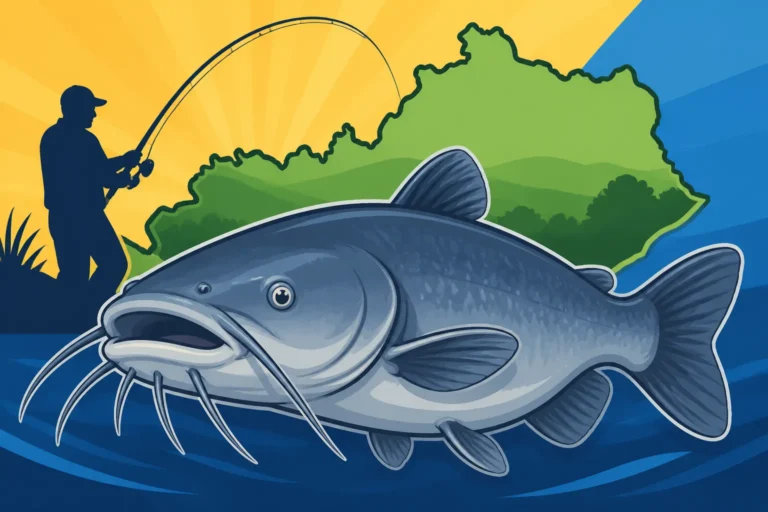
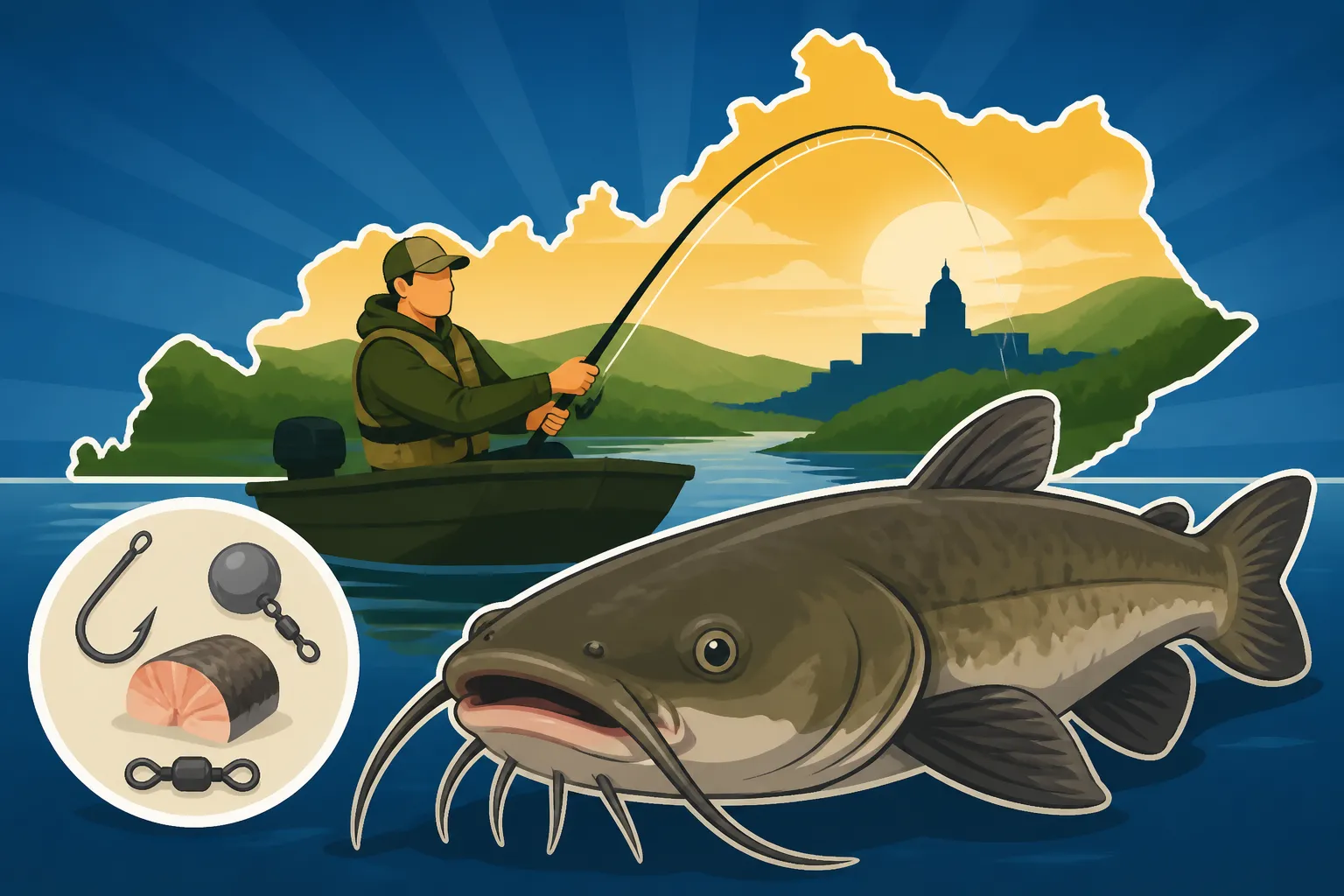
One of the first things you'll notice about a flathead, as its name suggests, is its distinctive flattened head. But there are other key characteristics that set them apart from their blue and channel catfish cousins. Their lower jaw protrudes beyond the upper, giving them a determined, almost scowling look. Unlike the forked tails of channel and blue catfish, the flathead sports a square or slightly rounded tail. Their bodies are typically mottled, a mix of yellows, browns, and olive green, offering excellent camouflage against the woody debris and rocky bottoms they inhabit. This coloration helps them blend into their surroundings, making them practically invisible to unsuspecting prey. You can really get into the nitty-gritty of these distinctions by checking out Flathead Catfish Vs Channel Catfish: How to Tell Them Apart.
Another crucial identifier is their diet. While channel cats are opportunistic scavengers and blue cats are primarily piscivores (fish-eaters) with a taste for mussels and crustaceans, flatheads are almost exclusively live bait specialists. They prefer fresh, living fish over anything else, which is why your strategy for catching them has to be completely different. Forget the processed baits you might use for other catfish species; for flatheads, it's all about the freshest, liveliest presentation you can offer. Their predatory nature means they're less likely to be attracted by scent trails from dead bait and more likely to strike at something actively swimming and struggling.
Their Unique Behavior and Diet
Flatheads are solitary creatures for much of their lives, especially the larger ones. They are nocturnal hunters, typically becoming most active from dusk through dawn, though they will feed during the day in low light conditions or if a prime feeding opportunity arises. During daylight hours, they often retreat to the deepest, darkest, and most heavily structured areas they can find. This means submerged logs, rock piles, bridge pilings, deep holes, and undercut banks are their preferred daytime haunts. They use these locations as ambush points, patiently waiting for an unsuspecting fish to swim by. This behavior dictates that anglers often have the best success targeting them at night or focusing on these dense cover areas.
Their diet, as mentioned, is almost entirely live fish. They are not scavengers. They prefer to eat what they catch themselves. Common prey items include various species of sunfish like bluegill and green sunfish, carp, suckers, shad, and even smaller catfish. The size of the bait often corresponds to the size of the flathead you're targeting; bigger flatheads prefer bigger meals. This selective diet is a key reason why fresh, lively bait is paramount. A flathead isn't just looking for food; it's looking for a challenge, something that triggers its predatory instinct. The movement and vibrations of live bait are irresistible to these formidable hunters.
Where to Find Flathead Catfish in Kentucky Waters
Kentucky is blessed with an abundance of waters that hold flathead catfish, from sprawling river systems to large impoundments. Knowing where to focus your efforts is just as important as knowing what bait to use. Flatheads aren't just anywhere; they have specific preferences that anglers need to learn to identify.
River Systems: Ohio River and Tributaries
Without a doubt, Kentucky's major river systems are prime flathead territory. The Ohio River, in particular, is renowned for its trophy-sized flatheads. These massive fish thrive in the river's deep, often turbid waters, finding sanctuary in the countless snags, log jams, and rock piles that line its banks and pepper its depths. Tributaries feeding into the Ohio, like the Green River, Cumberland River, and Kentucky River, also offer excellent opportunities, especially in their lower stretches where they meet the main river and present similar habitat. The constant current in these rivers helps distribute food, keeping flatheads active and in prime ambush positions. Many anglers head to specific stretches of the Ohio with heavy current breaks to find success, and if you're chasing truly massive fish, checking out Where to Catch Trophy Catfish on the Ohio River is a must-read.
When fishing rivers, focus on areas with significant current breaks. This includes the downstream side of islands, large rock formations, bridge pilings, and any significant log jams or downed trees. Flatheads will position themselves just out of the main current, waiting for baitfish to be swept past them. Look for deep holes adjacent to shallow flats, especially where there's overhead cover from fallen trees or undercut banks. These spots provide both a comfortable resting place and a strategic ambush point. Areas near dams can also be highly productive, as the turbulence and oxygenated water attract baitfish, which in turn attract hungry flatheads. The sheer size and dynamic nature of the Ohio River system mean understanding where these fish hold can be a lifelong pursuit, but a rewarding one. You'll find that How the Ohio River Produces Kentucky's Biggest Catfish also offers some fantastic insights.
Lake Hotspots and Structure
While rivers might be the first thought for many flathead anglers, Kentucky's large reservoirs also hold impressive populations of these whiskered predators. Lakes like Kentucky Lake, Lake Barkley, Lake Cumberland, and Taylorsville Lake all have healthy flathead fisheries. In lakes, flatheads tend to gravitate towards significant underwater structure that offers both cover and access to deep water. This means submerged timber, old creek channels, deep rock piles, and points that drop off sharply into deeper water. They love to hide within the branches of sunken trees or nestle into crevices among large boulders.
When you're out on a lake, use your electronics to scout for these features. A good fish finder can be your best friend in locating prime flathead habitat. Look for dense brush piles, standing timber, and abrupt depth changes. Often, flatheads will hold on the edges of these structures, ready to dart out and snatch a passing baitfish. During the warmer months, they might move a bit shallower at night to feed, but during the day, they will almost always be associated with deep water and heavy cover. Targeting these specific structural elements is crucial, as flatheads will rarely be found just suspended in open water. They are homebodies, sticking close to their chosen ambush points.
Best Baits and Rigs for Kentucky Flatheads
Catching flathead catfish isn't just about finding them; it's about presenting the right bait on the right rig. Since flatheads are so particular about what they eat, your bait choice and terminal tackle setup are absolutely critical for success. Skimping on either will likely leave you empty-handed.
Live Bait is Key
This cannot be stressed enough: live bait is supreme for flathead catfish. As natural predators, flatheads respond overwhelmingly to the vibrations, movement, and scent of a struggling live fish. The best baits are often forage fish that are native to the waters you're fishing. In Kentucky, this typically includes bluegill, green sunfish, suckers, carp (smaller ones), and shad. A good rule of thumb is to use bait fish that are 4-8 inches long; bigger flatheads often prefer larger meals, sometimes up to a foot long! Make sure your bait is healthy and lively, as a sluggish baitfish won't attract the attention of a wary flathead. Keeping your bait fresh can mean storing them in an aerated baitwell or a large cooler with a battery-operated aerator. When searching for specialized bait containers or aeration systems, many anglers find a good selection on Amazon.
Presenting your live bait effectively is just as important as choosing the right one. You want your bait to appear as natural as possible, swimming freely and attracting attention without getting tangled. Hook your bait through the back, just behind the dorsal fin, being careful not to hit the spine, or through the lips. This allows the fish to swim naturally and stay alive longer. Avoid hooking them in a way that impedes their movement or kills them quickly, as a dead baitfish will drastically reduce your chances. The livelier the bait, the better your chances of enticing a flathead. Best Bait for Flathead Catfish on the Ohio River offers even more specific recommendations for that renowned waterway.
Heavy-Duty Rigs and Terminal Tackle
Flathead catfish are incredibly powerful fish, and a proper rig is essential to handle their size and fighting ability. You'll need stout rods, reels with strong drag, and heavy line. For terminal tackle, think strong, durable, and reliable. A common setup is a Carolina rig or a three-way swivel rig. The Carolina rig involves a heavy egg sinker (often 2-8 ounces, depending on current and depth) above a swivel, followed by a heavy monofilament or fluorocarbon leader (30-80 lb test) and a large, strong circle hook (sizes 5/0 to 10/0). The three-way swivel rig uses a dropper line for the sinker and a separate leader for the hook, keeping the bait off the bottom while the sinker holds it in place.
Your hooks should always be wide-gap circle hooks. Circle hooks are crucial because flatheads have powerful jaws, and these hooks are designed to set themselves in the corner of the fish's mouth as it pulls away, minimizing gut-hooking and making for easier, safer releases. They are also incredibly strong and less likely to bend or break under the pressure of a trophy flathead. When you're building your tackle box for flatheads, it's wise to invest in quality components. You can find durable swivels, heavy-duty line, and specialized flathead hooks on Amazon or at any well-stocked local tackle shop. Don't skimp on quality; a broken line or bent hook often means losing the fish of a lifetime.
Flathead Catfish Fishing Techniques
Once you've got your bait and tackle sorted, it's time to talk tactics. Flathead fishing requires patience, stealth, and a keen understanding of how these fish behave. It's not always about casting and reeling; sometimes, it's about positioning and waiting.
Anchor Fishing and Current Seams
One of the most effective ways to target flatheads, especially in river systems, is by anchor fishing. This involves positioning your boat upstream of a likely flathead spot – like a log jam, a deep hole, or a current seam – and anchoring securely. Then, cast your live bait rigs downstream, allowing the current to carry your bait naturally into the strike zone. The key here is to present the bait right where the flathead is likely to be ambushing prey. Make sure your anchor holds firm, even in strong currents, because a big flathead can put a lot of strain on your boat once hooked. This method is particularly effective at night when flatheads move out of their daytime sanctuaries to feed more actively.
Current seams are critical areas to target. These are the lines where faster water meets slower water, creating a buffet line for predators as baitfish get disoriented and swept along. Flatheads will sit just on the slower side of the seam, conserving energy while waiting for an easy meal to pass. Positioning your bait right on that seam, or slightly into the slower water, can be incredibly productive. You'll often need heavy sinkers (think 4-8 ounces or more) to ensure your bait stays put in the current. A stout rod with a sensitive tip can help you detect the subtle "thump" of a flathead taking your bait, which is often less aggressive than the typical run of a channel cat.
Drift Fishing and Jugging
While anchor fishing is effective for stationary targets, drift fishing can be a great way to cover more water, especially in larger lakes or slower river sections. This involves allowing your boat to drift slowly with the current or wind, trailing several live bait rigs behind you. The movement of the boat presents your baits to a wider range of potential flathead hideouts. You can use drift socks or a trolling motor to control your speed and direction, ensuring you're covering promising areas effectively. This method is excellent for scouting new spots or when fish are scattered across a wider area.
Another popular and often highly effective method, particularly in Kentucky's large reservoirs, is jug fishing. This involves attaching baited hooks to lines suspended from floating devices (jigs or noodles), which are then deployed and allowed to drift. Jug fishing covers vast amounts of water and can be incredibly productive for flatheads, as they will often pick up the bait and swim off, taking the jug with them. Regulations for jug fishing vary by state and even by specific water body, so always check the Kentucky Fishing Regulations Explained before deploying jugs. It's a method that requires monitoring but can yield impressive results, especially for anglers targeting multiple flatheads in a single outing. Jug Fishing for Catfish: A Beginner's Guide will give you a great starting point if you're curious about this unique technique.
Night Fishing for Flatheads
If there's one golden rule for flathead fishing, it's this: nighttime is prime time. As mentioned earlier, flatheads are predominantly nocturnal hunters. They use the cover of darkness to move out of their deep, heavy cover and actively patrol shallower flats, creek mouths, and river bends in search of food. The low light gives them an advantage over their prey, and they are generally much more aggressive after the sun sets. Many of the biggest flatheads are caught between dusk and dawn. This means planning your fishing trips to coincide with the overnight hours is paramount for serious flathead anglers.
When night fishing, safety is key. Always have proper navigation lights on your boat, wear a life jacket, and bring headlamps or spotlights. Fishing at night adds a layer of challenge, but the rewards can be immense. Look for areas where flats transition into deeper water, or where baitfish are congregating under the moonlight. The calmer waters of night often mean fish are more willing to move and feed. Using glowing bobbers or reflective tape on your jug lines can help you track your setup in the dark. Being prepared for the unique challenges of night fishing will greatly increase your success rates when targeting these elusive, nocturnal predators. For more in-depth knowledge on this, check out Night Fishing Techniques for Catfish.
Seasonal Strategies for Flathead Catfish
Just like any other fish, flatheads change their behavior with the seasons. Understanding these seasonal patterns can help you predict where they'll be and what they'll be doing, allowing you to adapt your tactics for year-round success in Kentucky.
Spring and Early Summer Patterns
Spring is a fantastic time for flathead fishing, especially as water temperatures begin to rise. As the water warms, flatheads become more active after a sluggish winter. In early spring, they might still be in deeper holes, but they will start to move shallower to feed. By late spring and early summer, they enter their spawning period. During the pre-spawn, flatheads are often at their most aggressive, feeding heavily to build up energy for spawning. They can be found moving into creek channels, along river bends, and near shallow flats adjacent to deep water. This is a prime time to target them with large live baits.
During the actual spawn, typically when water temperatures are consistently in the mid-70s Fahrenheit, flatheads become less interested in feeding and are more focused on reproduction. They will seek out secluded areas with hard bottoms, often in hollow logs, undercut banks, or rock crevices, to lay their eggs. Fishing can be tougher during this period, but patience can still pay off if you target their spawning areas. After the spawn, they will once again become very active, aggressively feeding to recover. This post-spawn period in early summer offers some of the best fishing of the year, as flatheads are hungry and less wary.
Late Summer and Fall Tactics
As summer progresses and water temperatures hit their peak, flatheads will often move back to deeper, cooler water during the day. They'll still utilize heavy cover and structure, but you might find them in deeper holes or along deeper channel edges. Night fishing remains incredibly productive, as they'll move into shallower areas to feed when the surface water cools slightly. Look for areas with good oxygenation, such as creek mouths, areas with current, or places where cooler springs might feed into the main body of water. During this period, their feeding can be quite consistent, but locating them can require more effort and attention to detail, especially during daylight hours.
Fall is another excellent season for targeting flatheads, as they begin to feed heavily in preparation for winter. As water temperatures start to drop, flatheads will become very active, trying to pack on calories. They often congregate in deeper holes and channels, especially those with good overhead cover. They might not be as widely dispersed as in spring, making them easier to locate if you can find their fall staging areas. The cooler temperatures mean baitfish are also schooling up, creating prime feeding opportunities. Using large, lively baits remains the most effective strategy. As winter approaches and water temperatures drop further, their metabolism slows, and they become less active, though a persistent angler can still find them in the deepest holes, where they tend to overwinter. You can definitely learn more about general catfish behavior with Best Baits for Summer Catfish Fishing.
Essential Gear for Flathead Catfish Anglers
Flathead catfish are not for the faint of heart, or for flimsy gear. To consistently catch these powerful fish, you need tackle that can stand up to their raw strength. Investing in the right equipment will save you frustration and lost fish.
Rods, Reels, and Line for Flatheads
When it comes to flathead fishing, your rod and reel setup needs to be robust. For rods, think heavy action or extra-heavy action, typically 7 to 9 feet long. This length gives you leverage for casting heavy baits and sinkers, and for fighting large fish. A strong backbone is essential for muscling big flatheads out of heavy cover. Many flathead anglers prefer specialized catfish rods, which are built to withstand immense pressure. When looking for these rods, it's worth checking out the wide selection available on Amazon.
Your reel should be a heavy-duty baitcasting reel, often with a level wind feature, or a large, durable spinning reel with an excellent drag system. The drag is perhaps the most critical component; it needs to be smooth and powerful to handle the long, powerful runs of a flathead without snapping your line. Spool your reel with strong monofilament (25-50 lb test) or braided line (50-100 lb test). Braided line offers superior strength-to-diameter ratio, zero stretch for better sensitivity, and excellent abrasion resistance, which is vital when fishing around snags. However, it can be less forgiving than mono for beginners. Regardless of your choice, ensure you have plenty of line capacity. For more specific recommendations, take a look at Best Reels for Catfish Fishing.
| Feature | Flathead Catfish | Channel Catfish | Blue Catfish |
|---|---|---|---|
| Head Shape | Flattened, wide | Rounded, tapered | Slightly rounded, tapered |
| Jaw | Lower jaw protrudes | Upper jaw protrudes | Upper jaw protrudes |
| Tail Shape | Square/Slightly rounded | Deeply forked | Deeply forked |
| Coloration | Mottled yellow/brown/olive | Silver-blue/Olive, spots | Slate blue/Silver |
| Primary Diet | Live fish | Omnivorous (scavenger) | Fish, mussels, crustaceans |
| Habitat | Heavy cover, deep holes | Wide range, moderate cover | Deep channels, open water |
Safety and Essential Accessories
Beyond your rod and reel, there are several other pieces of gear that are absolutely essential for flathead fishing, both for success and for safety. First, a heavy-duty net or a large lip gripper is crucial for landing big flatheads. These fish are powerful, and trying to hoist a 50-pounder into the boat by hand can be dangerous for both you and the fish. A good set of long-nose pliers or a hook remover is also vital for safely extracting hooks from their tough jaws. Flatheads have tiny, rasp-like teeth that can quickly wear through your skin, so avoid reaching into their mouths.
Other accessories include a good headlamp or spotlight for night fishing, a sturdy cooler for your bait (and eventually, your catch if you plan to keep it), and a first-aid kit. If you're fishing from a boat, ensure all required safety gear, such as life jackets and fire extinguishers, are on board and in good working order. Additionally, a pair of heavy-duty gloves can be a lifesaver when handling flatheads, protecting your hands from their sandpaper-like teeth and sharp pectoral fins. When gearing up, remember that you're dealing with potentially large and powerful animals, and being prepared means a safer, more enjoyable, and ultimately more successful fishing experience.
Disclaimer
This article is for general informational purposes only and does not constitute professional advice. Laws, prices and regulations vary by location and change over time. Consult a qualified professional for guidance on your specific situation.