Northern Pike Fishing in Kentucky
Let's be honest, when most folks think of fishing in Kentucky, their minds usually jump straight to big bass, feisty crappie, or even those monster catfish lurking in the Ohio River. But there's a lesser-known, toothy predator that offers a truly exhilarating fight and a unique challenge: the Northern Pike. If you've been curious about targeting these aggressive fish or have perhaps even stumbled upon one by accident, this guide is here to shed some light on what it takes to successfully pursue Northern Pike in the Bluegrass State.
The Northern Pike in Kentucky: A Unique Challenge
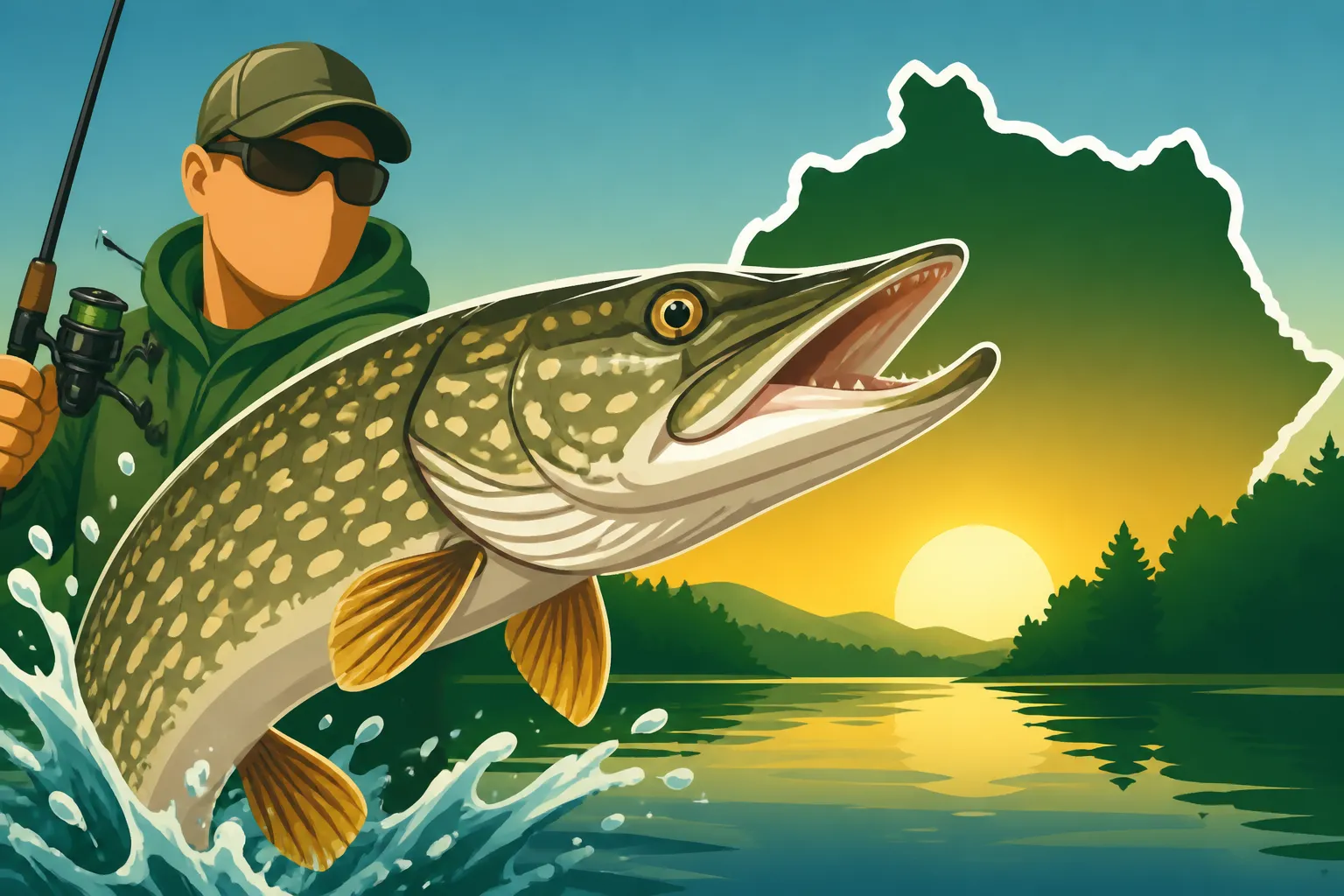
The Northern Pike is a fascinating creature, often recognized by its long, torpedo-shaped body, duck-bill snout, and razor-sharp teeth. While not as widespread or abundant as some of our other popular game fish, their presence in certain Kentucky waters offers a thrilling experience for anglers looking for something a bit different. They're ambush predators, perfectly designed to lie in wait among submerged vegetation or structure, then explode with incredible speed to capture their prey.
Identifying Northern Pike: Distinguishing Features
When you hook into something that feels like a freight train, it's natural to wonder, "What is this thing?" Northern Pike have some very distinct characteristics that make them stand out. Their coloration is typically dark green to olive green along their back, fading to a lighter, yellowish-white belly. What really sets them apart are the light, bean-shaped spots scattered along their sides – not dark spots on a light background like a muskie, but the reverse. They also have fully scaled cheeks and opercles (gill covers), unlike muskellunge which have scales only on the upper half of their opercles. Their dorsal fin is set far back on their body, almost directly above their anal fin, which helps in their explosive bursts of speed.
It’s easy to get them confused with other esocids like muskellunge, especially since both are found in some of the same waters. However, those light spots and fully scaled cheeks are your best bet for a quick ID. Plus, pike tend to have a more elongated, slender body compared to the bulkier muskie. Knowing what you’ve caught is important, not just for bragging rights, but for understanding the specific regulations that apply to each species. If you're ever in doubt, it's always best to practice catch and release and consult a reliable Kentucky Fish Species Guide: 265 Types You Can Catch.
A Brief History of Pike in Kentucky
Northern Pike aren't native to Kentucky; they were introduced into some of our waters over the years, primarily in the latter half of the 20th century, to provide additional sport fishing opportunities. The Kentucky Department of Fish and Wildlife Resources (KDFWR) stocked them in certain reservoirs with suitable habitat, hoping they would establish self-sustaining populations. In some areas, they took hold fairly well, while in others, their populations have remained more limited or even dwindled over time.
Their presence here adds a unique flavor to Kentucky's fishing scene, offering anglers a chance to target a species usually associated with more northern latitudes. These fish can tolerate a range of water conditions, but they truly thrive in clear, cool waters with abundant aquatic vegetation, which provides both ambush points and forage for their diet. While they may not be in every major lake, the areas where they do exist are cherished by those who enjoy the challenge and excitement they bring.
Where to Find Pike: Preferred Habitats
Northern Pike are masters of camouflage and ambush, which means they prefer habitats that offer plenty of cover. Think shallow, weedy bays, submerged timber, lily pad fields, and the edges of sharp drop-offs near cover. They love areas where they can hide and wait for an unsuspecting baitfish to swim by. During the cooler months, they might move slightly deeper, but they still gravitate towards structure and cover.
In Kentucky, this often means focusing your efforts on larger reservoirs that have extensive shallow flats with good weed growth or plenty of standing timber. Rivers with slow-moving backwaters and oxbows can also hold pike, especially those with good vegetation. Understanding these habitat preferences is key to narrowing down your search and increasing your chances of a successful encounter. Without suitable cover and a healthy forage base, pike simply won't thrive, which is why their distribution in Kentucky is somewhat specific rather than statewide.
Top Spots for Northern Pike Action in Kentucky
While Kentucky might not be famous for its Northern Pike fisheries like some northern states, there are certainly places where you can consistently find them and experience that thrilling fight. Identifying these spots is the first step in planning a successful pike trip. You won't find them everywhere, but where they are, they can offer some fantastic action.
Known Pike Hotbeds: Lakes and Reservoirs
Historically, several Kentucky lakes have been known to hold Northern Pike. One of the most prominent is Cave Run Lake, located in eastern Kentucky within the Daniel Boone National Forest. This lake, already famous for its muskellunge, also has a respectable pike population. Its expansive standing timber, numerous coves, and varying depths provide excellent habitat. Another lake worth exploring is Herrington Lake, known for its deep, clear waters and steep banks, though pike here might be found in shallower, less typical pike-like spots compared to other lakes.
Additionally, some smaller lakes and even sections of larger river systems might occasionally yield pike, especially those with good aquatic vegetation and cooler temperatures in their upper reaches. While these lakes are where most anglers focus their pike efforts, it’s always a good idea to check the latest KDFWR fishing reports, as conditions and populations can shift. Remember, patience is a virtue when targeting less common species! If you're already familiar with Muskie, Pike and Pickerel Fishing in Kentucky, you'll find that many of the same principles for locating muskie apply to pike.
Accessing Pike Waters: Public vs. Remote Locations
Once you've identified a promising lake, the next step is figuring out how to get to those prime pike spots. Most major lakes in Kentucky, like Cave Run and Herrington, offer numerous public boat ramps and access points. These are generally well-maintained and provide easy entry for boats of all sizes. For pike, you'll often want to launch in an area that gives you quick access to weedy flats, submerged timber, or large coves.
However, sometimes the best pike fishing is found in more remote or less-frequented sections of a lake or river. These might require a smaller boat, a kayak, or even bank fishing with some hiking involved. For example, some of the less-pressured coves or backwaters on a large reservoir might hold bigger, less wary pike. Using satellite imagery or detailed contour maps can help you identify these hidden gems. Don't be afraid to put in a little extra effort to explore areas that aren't right next to a busy marina; that's often where the most rewarding fishing happens. For more general advice on finding good spots, check out Best Fishing Spots in Kentucky.
Seasonal Movements and Prime Locations
Northern Pike, like most predatory fish, are heavily influenced by water temperature and the availability of their prey. Understanding their seasonal movements can dramatically improve your success.
- Spring (Post-Spawn): After the ice thaws and waters begin to warm (typically late March to May in Kentucky), pike become very active and hungry. They'll often be found in shallow, spawning areas, or slightly deeper edges near those areas, recovering and feeding aggressively. Look for them around new weed growth and submerged wood in 3-10 feet of water. This is a fantastic time for casting large spoons and spinnerbaits.
- Summer: As water temperatures rise, pike tend to seek out cooler, deeper water, often near submerged structure, deep weed lines, or cool-water springs. They might also suspend in the water column over open water if there's a thermocline. Early morning and late evening bites are often best, as they'll move shallower to feed under lower light conditions. Trolling deeper diving crankbaits or fishing live bait on the edges of deep cover can be effective.
- Fall: This is arguably the best time of year for trophy pike fishing in Kentucky. As water temperatures drop, pike enter a "feeding frenzy" to bulk up for winter. They'll move back into shallower areas, especially around dying weed beds and rocky points. Look for active fish aggressively chasing baitfish. Large jerkbaits, swimbaits, and spoons can be incredibly effective during this period.
- Winter: If Kentucky experiences a truly cold winter with safe ice, ice fishing for pike can be an option. Otherwise, open-water fishing in winter means targeting them in deeper sections of lakes, often near drop-offs or deep points where they'll congregate. Slow-moving baits or live bait presented patiently are key.
| Season | Typical Depth (Approx.) | Preferred Habitat | Effective Lure Types |
|---|---|---|---|
| Spring | 3-10 feet | Shallow weeds, wood, spawning flats | Spoons, spinnerbaits, shallow crankbaits |
| Summer | 10-30+ feet | Deep weed lines, submerged structure, thermocline | Deep diving crankbaits, jigs, live bait (suckers) |
| Fall | 5-20 feet | Dying weeds, rocky points, shallow structure | Large jerkbaits, swimbaits, spoons, large soft plastics |
| Winter | 15-40+ feet | Deep holes, drop-offs, bottom structure | Slow jigs, dead baits (ice fishing), deep trolling |
Gearing Up for Northern Pike: Rods, Reels, and Tackle
Targeting Northern Pike isn't like panfishing; these fish are aggressive, powerful, and come equipped with a mouthful of sharp teeth. Using the right gear isn't just about making the catch, it's about making sure your equipment can handle the fight and that you can safely land the fish. Skimping on tackle can lead to lost fish, broken lines, and even damaged rods.
Rod and Reel Combinations for Pike
For Northern Pike, you'll want to step up your tackle considerably. Think medium-heavy to heavy power rods, typically 6'6" to 7'6" in length. A fast or extra-fast action is usually preferred, as it provides the backbone for powerful hooksets and the sensitivity to detect subtle bites, even from these aggressive eaters.
- Casting Rods (Baitcasting): These are often favored by experienced pike anglers, especially when throwing larger, heavier lures. A good 7-foot medium-heavy casting rod with a robust baitcasting reel spooled with 20-30 lb braided line is a fantastic all-around setup. This combination offers excellent casting distance and accuracy for big baits, plus the torque to winch in a strong fish from heavy cover.
- Spinning Rods: If you're more comfortable with spinning gear or prefer to throw slightly lighter lures, a heavy-power spinning rod (7' to 7'6") paired with a large spinning reel (4000-5000 series) will do the trick. Spool it with 20-30 lb braided line. This setup is a bit more versatile for throwing a wider range of baits and can be easier for beginners to manage.
Regardless of your chosen setup, the most crucial element is a strong, reliable drag system on your reel. Pike make powerful runs, and you need a drag that can handle the pressure without binding or slipping. For more details on choosing the right gear, check out Best Rods and Reels for Kentucky Fishing.
Lures and Baits That Pike Can't Resist
Pike are opportunistic predators, and they're usually not too picky, but certain lures consistently produce better results. The key is often size and presentation.
- Spoons: Classic spoon lures, like the Daredevl or Little Cleo, are deadly for pike. Their wobbling action mimics injured baitfish, and they can be cast a mile. Silver, gold, or red and white patterns are perennial favorites. You can find a great selection of these on Amazon at various price points.
- Spinnerbaits: Large inline spinnerbaits with big blades create a lot of flash and vibration, irresistible to pike. Chartreuse, white, or black skirts with silver or gold blades are excellent choices, especially in weedy areas where their weedless design shines.
- Crankbaits: Both shallow-diving and deep-diving crankbaits can be highly effective. Look for baits in baitfish patterns (perch, shiner, bluegill) or bright, attention-grabbing colors. During the summer, deep-divers trolled along thermoclines can be incredibly productive.
- Jerkbaits/Glide Baits: These baits require an active retrieve, but they can be incredibly rewarding. The erratic, darting action often triggers an aggressive strike from a following pike.
- Soft Plastics: Large swimbaits and paddle-tail plastics rigged on heavy jig heads can imitate larger baitfish. They offer a versatile presentation and can be fished at various depths.
- Live Bait: If legal in your chosen waters, large shiners, suckers, or even bluegill (check regulations for using game fish as bait) fished under a bobber or on a quick-strike rig can be incredibly effective, especially for larger, more finicky pike.
When buying lures, especially online, look for reputable brands. Amazon carries a vast array of fishing tackle from companies known for making durable, effective lures for predatory fish.
Essential Accessories for Pike Anglers
Beyond your rod, reel, and lures, a few crucial accessories will make your pike fishing experience safer and more successful:
- Steel Leaders: This isn't optional. Pike have incredibly sharp teeth that can easily cut through monofilament or fluorocarbon lines. Always use a steel or heavy fluorocarbon (80-100 lb test) leader, at least 12-18 inches long, to prevent bite-offs.
- Long-Nose Pliers: For safely removing hooks from a pike's mouth. Their teeth are no joke.
- Jaws Spreader or Boca Grip: A jaws spreader can hold a pike's mouth open for safer hook removal, while a fish gripper like a Boca Grip can help you control a thrashing fish without putting your hands near its teeth. You can often find durable options for these tools on Amazon, which is handy for getting your gear together before a trip.
- Cutting Tools: Wire cutters or heavy-duty scissors are useful for trimming leaders and line.
- Landing Net: A large, rubberized landing net is ideal. The rubber coating protects the fish's slime coat and prevents hooks from getting tangled.
- First Aid Kit: Accidents happen, especially when dealing with toothy fish. Always have a basic first aid kit on hand.
Having the right accessories ensures not only your safety but also the health and successful release of any pike you catch, which is vital for the long-term sustainability of the fishery. Consider compiling a dedicated tackle box for pike fishing to keep all your specialized gear organized, as described in Best Tackle and Gear for Bank Fishing.
Proven Techniques for Catching Kentucky Pike
Northern Pike are aggressive, but they're not always easy to catch. Their ambush predator nature means you need to present your bait in a way that triggers their strike reflex. Different situations call for different techniques, and being versatile will increase your chances of success.
Casting and Retrieving Strategies
Casting is perhaps the most common and versatile way to target pike. The key is to cover water and present your lure in a way that imitates injured or fleeing prey.
- Fan Casting: When you approach a new area, start by fan-casting to cover the entire zone. Cast your lure to different angles and distances, working it back to you. This helps you locate active fish or determine preferred ambush points.
- Targeting Structure: Once you identify potential pike habitat—a weed line, a submerged log, a rock pile, or a dock—make precise casts to these areas. Often, the pike will be holding just outside the main cover, ready to dart out.
- Varying Your Retrieve: Don't just reel in at a constant speed. Experiment with different retrieve speeds, pauses, and jerks. Pike often strike when a lure changes direction or speed. For spoons and spinnerbaits, a steady retrieve with occasional quick jerks can be deadly. For jerkbaits, a "twitch, twitch, pause" retrieve is standard. Sometimes, a faster retrieve is needed to trigger a reaction strike, while other times a slower, more deliberate presentation is required.
- The "Figure-8": This is a classic muskie and pike trick that also works in Kentucky. If a pike follows your lure all the way to the boat and doesn't strike, smoothly sweep your rod tip into a figure-8 motion directly beside the boat, keeping the lure in the water. This can often trigger a strike from a hesitant fish right at the boat. It takes practice, but it's incredibly effective when those follows occur.
Trolling for Deep-Water Pike
Trolling can be an incredibly effective technique, especially when pike are scattered over larger areas or holding in deeper water during the warmer months. It allows you to cover a lot of water and present a lure at a consistent depth for an extended period.
- Equipment: For trolling, you'll want a sturdy rod with a moderate action to absorb the shock of a strike and the pull of a large lure. Line counter reels are a huge advantage, allowing you to replicate successful depths accurately.
- Lure Selection: Deep-diving crankbaits are the go-to for trolling. Choose lures that are rated to run at the depth where you expect pike to be. Color patterns that mimic local baitfish are usually a good bet, but don't shy away from bright, contrasting colors to attract attention.
- Speed and Depth: Experiment with trolling speeds. Sometimes a slow, steady pace is best, while other times a slightly faster speed will trigger more strikes. Pay attention to your fish finder to identify thermoclines, submerged structure, or baitfish schools, and adjust your lure depth accordingly. Side planers can be used to spread your lures out and cover an even wider swath of water.
- Structure and Edges: Focus your trolling efforts along prominent structural features like long points, humps, creek channels, and the edges of deep weed beds. Pike will often position themselves along these features to ambush passing baitfish.
Winter and Ice Fishing Tactics
While Kentucky doesn't always have reliable ice for safe ice fishing, during colder winters, some lakes can freeze over enough to allow it. If you're fortunate enough to experience safe ice conditions for Northern Pike, it's a completely different ballgame.
- Tip-Ups: This is the most popular method for ice fishing pike. Set up multiple tip-ups (check local regulations for the number allowed) rigged with large live minnows or dead bait (like smelt or sucker minnows) suspended just off the bottom or midway through the water column. When a pike takes the bait, the flag on the tip-up pops up, signaling a bite.
- Jigging: While not as common for pike as tip-ups, jigging large spoons or lipless crankbaits can also entice strikes, especially if you're actively searching for fish. Use your fish finder to locate pike and present your jig directly to them.
- Hole Placement: Drill holes in areas where you'd typically find pike in open water: along deep weed lines, near submerged points, or over humps. Remember, ice fishing success often hinges on drilling enough holes to find where the active fish are concentrated.
- Safety First: Ice fishing, especially for big fish like pike, carries inherent risks. Always check ice thickness before venturing out, go with a buddy, and carry safety equipment like ice picks and a throw rope.
Keep in mind that Kentucky Fishing Seasons: What to Catch Each Month will give you a broader overview of seasonal patterns, but for pike specifically, these tactics are tailored to their unique behaviors throughout the year.
Navigating Kentucky's Pike Fishing Regulations
Before you even think about hitting the water for Northern Pike, it is absolutely crucial to understand the regulations in place. Kentucky's fishing laws are designed to protect fish populations and ensure fair chase, and they can vary not only by species but also by specific water body. Ignorance of the law is never an excuse, and a run-in with a game warden can quickly ruin a fishing trip.
License Requirements and Statewide Limits
First and foremost, you must have a valid Kentucky fishing license to fish for Northern Pike, just like any other game fish in public waters. This isn't just a suggestion; it's a legal requirement. Whether you're a resident or a non-resident, annual or short-term, make sure your license is up to date before you cast a line. For comprehensive information on how to obtain one, refer to the Kentucky Fishing License Guide.
Regarding Northern Pike specifically, it's vital to consult the current Kentucky Fishing & Boating Guide published by the KDFWR. While statewide regulations often apply, there can be exceptions. As of this writing, there generally isn't a statewide size limit for Northern Pike in Kentucky, but there is usually a daily creel limit. This limit dictates how many pike you can legally keep in a single day. Always double-check the latest guide for these numbers, as they can change. For a general overview of limits, consult Statewide Bag and Size Limits by Fish Species.
Site-Specific Rules and Exceptions
This is where things can get a bit tricky. While there might be a general statewide regulation for Northern Pike, specific lakes or rivers might have their own unique rules that supersede the statewide limits. This often happens in waters where management goals are different, such as trying to grow trophy fish or managing specific predator-prey dynamics.
For example, a lake known for its muskie and pike might have a "no harvest" rule for certain sizes, or a slot limit, to protect mature breeding fish. Always, always check the site-specific regulations for the body of water you intend to fish. These are usually listed in the Kentucky Fishing & Boating Guide under the specific lake or river name. If you're fishing a major body of water like Cave Run Lake or Herrington Lake, don't assume statewide rules apply; look up those specific entries. Failure to do so could result in fines, confiscation of your catch, or even more severe penalties, as detailed in What Happens If You Fish Without a License in Kentucky?.
Conservation and Ethical Angling Practices
Beyond just following the rules, ethical angling plays a massive role in maintaining healthy pike populations for future generations. Northern Pike are a valuable sport fish, and treating them with respect is paramount.
- Catch and Release: Many pike anglers, especially those targeting larger fish, practice catch and release. If you plan to release a pike, handle it with care. Minimize its time out of the water, support its body, and use appropriate tools (long-nose pliers, jaw spreaders) to quickly and safely remove hooks.
- Barbless Hooks: Consider crimping down the barbs on your hooks. This makes hook removal much easier and reduces stress and injury to the fish, especially when dealing with those sharp teeth.
- Responsible Disposal: Never leave trash, fishing line, or discarded bait on the bank or in the water. Pack out everything you pack in.
- Reporting Poaching: If you witness illegal fishing activity, report it to the KDFWR. Conservation is a collective effort.
By being mindful of regulations and practicing ethical angling, we can ensure that the unique thrill of Northern Pike fishing continues to be a part of the Kentucky fishing experience for years to come.
Mastering the Pike Fight and Handling Your Catch
Hooking into a Northern Pike is an experience you won't soon forget. They're known for their explosive strikes, powerful runs, and often acrobatic jumps. Knowing how to handle these feisty fish, both during the fight and once they're boat-side, is essential for a successful and safe outing.
The Thrill of the Strike: Fighting a Pike
When a Northern Pike hits, it's usually not a subtle tap. It's often a jarring strike that can rip the rod right out of your hands if you're not ready. Their initial run can be incredibly strong and fast, especially if they've ambushed your lure from cover.
- Solid Hookset: When you feel that strike, set the hook hard! Pike have tough, bony mouths, and a weak hookset often results in the hook pulling out. Use your rod's backbone and a powerful sweep to drive the hook home.
- Maintain Pressure: During the fight, keep constant pressure on the fish. Avoid giving them slack line, as this can allow them to throw the hook, especially during head shakes or jumps. However, don't try to horse them in too quickly; let your rod and reel's drag do the work.
- Be Ready for Runs: Pike often make multiple strong runs. Let the drag do its job, and slowly gain line back when the fish pauses. Be prepared for sudden changes in direction.
- Watch for Jumps and Rolls: Pike will sometimes jump clear of the water or roll on the surface in an attempt to dislodge the hook. Keep your rod tip down during jumps to maintain tension and prevent the hook from tearing free.
- Fight to the Net: Don't consider the fight over until the fish is safely in your net. Pike are notorious for last-minute surges or head shakes right at the boat.
A well-fought pike battle is truly one of fishing's great thrills, testing both your tackle and your angling skills.
Safe Handling and Release Techniques
This is arguably the most important section when dealing with Northern Pike. Their teeth are not to be underestimated; they are razor-sharp and can cause serious injury. Protecting yourself and the fish is paramount.
- Netting: Use a large, rubberized landing net. Once the fish is in the net, keep its head submerged if possible, as this keeps it calmer.
- Controlling the Fish: Never grab a pike by its mouth with bare hands. Use a fish gripper or get one hand firmly under its belly while supporting its head with your other hand (if using gloves). A jaw spreader can be used to hold the mouth open for safer hook removal.
- Hook Removal: With long-nose pliers, or better yet, a specialized de-hooking tool, carefully remove the hook. If the hook is deeply embedded or the fish is severely injured, it's sometimes best to cut the line as close to the hook as possible rather than prolonging the struggle.
- Minimize Air Time: If you plan to release the fish, minimize its time out of the water. Pike need to be in water to breathe, and prolonged air exposure can be detrimental to their survival.
- Revival: Hold the pike gently in the water, supporting its belly, and face it into any current until it revives and swims away under its own power. Don't just toss it back; make sure it's strong enough to survive.
Practicing careful catch-and-release ensures these magnificent predators can be caught again and contribute to the health of the fishery.
Preparing Your Pike: Culinary Considerations
While many pike anglers practice catch and release, Northern Pike can be excellent table fare if properly prepared. Their flesh is white, flaky, and has a mild flavor. However, they are known for having a significant number of "y-bones" which can be off-putting to some.
- Filleting Technique: The key to enjoying pike is mastering a specific filleting technique that removes these pesky y-bones. There are numerous tutorials available online that demonstrate how to cut around the y-bones to yield boneless fillets. It involves making a cut along the backbone, then a cut above and below the y-bone line, essentially creating a "boneless strip" from the side.
- Cooking Methods: Once you have boneless fillets, pike can be prepared in a variety of ways. They are excellent fried, baked, grilled, or pan-seared. Their firm flesh holds up well to different cooking methods. Some people also enjoy smoking pike.
- Freshness: Like any fish, pike are best consumed fresh. If you plan to keep a pike, make sure to dispatch it quickly and humanely, then get it on ice immediately to preserve the quality of the meat.
Don't let the reputation of y-bones deter you from trying pike. With a little practice in filleting, you'll discover that these hard-fighting fish can also provide a delicious meal.
Disclaimer
This article is for general informational purposes only and does not constitute professional advice. Laws, prices and regulations vary by location and change over time. Consult a qualified professional for guidance on your specific situation.