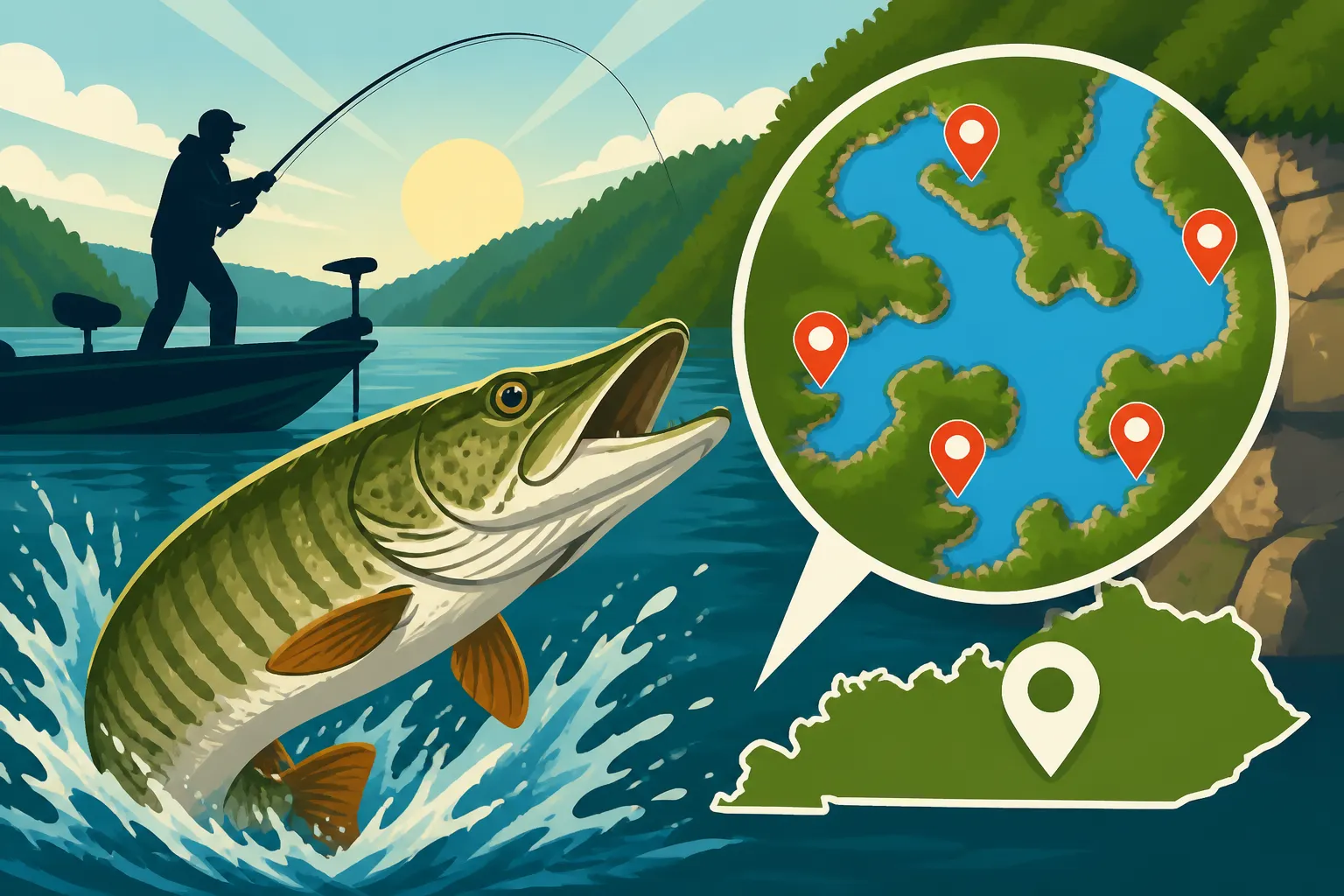
Cave Run Lake’s Best Muskie Fishing Spots
There’s nothing quite like the heart-stopping moment a muskie explodes on your lure, and for anglers chasing this apex predator, Cave Run Lake in Kentucky is practically hallowed ground. If you’ve spent countless hours casting, reeling, and hoping, only to come up short, you know the frustration. This guide is dedicated to helping you unlock the secrets of Cave Run Lake, revealing the best spots and strategies to improve your chances of hooking into one of these magnificent "fish of 10,000 casts."
Understanding Muskie Behavior on Cave Run Lake
Muskie are unique creatures, known for their elusive nature and aggressive strikes. To consistently find them on a lake as large and complex as Cave Run, you need to understand their preferred hangouts and hunting strategies throughout the year. It's not just about throwing a big bait; it's about putting that bait in the right place at the right time.
Preferred Habitats and Structure
Muskie, like many apex predators, are ambush hunters. This means they're often found lurking near structure that provides cover and a strategic advantage for ambushing baitfish. On Cave Run Lake, this translates to specific types of underwater terrain. Look for areas with dense timber, large rock formations, weed lines, and sharp drop-offs. These features offer concealment and allow them to dart out quickly to intercept prey. Think about how a muskie would hide – not just out in the open water, but tucked away, waiting. The clear to moderately clear waters of Cave Run also mean they can see prey from a distance, making ambush points even more critical.
During different seasons, their preferred depth and type of structure might shift. In warmer months, they might be shallower, closer to weed beds or submerged timber, while in colder periods, they tend to move deeper, relating more to main lake points or creek channel bends. Understanding these nuances is key. You might find a spot that’s hot in October but completely barren in July, simply because the muskie have relocated to more comfortable water or different feeding grounds. Remember to always consider the entire food chain – if you find healthy populations of baitfish, muskie are usually not far behind.
Feeding Patterns and Forage
Muskie are voracious eaters, but their feeding patterns can be somewhat unpredictable. They often feed in bursts, followed by periods of inactivity. Their primary forage in Cave Run Lake includes gizzard shad, alewives, suckers, and various panfish. Matching the hatch, or at least presenting lures that mimic these prey items, can be incredibly effective. Sometimes, it’s not just about the size of the bait, but the profile and action that triggers a strike.
What you'll notice on Cave Run is that muskie often relate to schooling baitfish. If you can locate large schools of shad or alewives, especially near structure, you're likely in a prime muskie hunting zone. Keep an eye on your fish finder for bait balls and watch for surface activity like shad flickering or birds diving – these are all indicators that dinner is being served. Don't be afraid to experiment with retrieve speeds and lure colors until you find what they're keying in on that particular day. Sometimes a slow, methodical retrieve is best, while other times a fast, erratic burn is what ignites their predatory instinct. Knowing when to switch it up comes from experience and paying close attention to every detail on the water.
Top Muskie Hotspots on Cave Run Lake
Cave Run Lake is a substantial body of water, covering over 8,270 acres, and it can feel overwhelming trying to pinpoint muskie. However, certain areas consistently produce better results due to their habitat features and strategic location. While the "fish of 10,000 casts" can appear almost anywhere, these spots offer higher probabilities.
The Dam Area and Spillway
The area around the Cave Run Lake Dam is a perennial favorite for muskie anglers, and for good reason. The deep water, strong currents, and varied structure here create an ideal environment for muskie. The presence of the dam itself creates unique current breaks and eddies, which muskie love to use as ambush points. It's also a significant pinch point for migrating baitfish, concentrating them into a smaller area, making it a prime feeding ground for big predators.
Anglers often focus on the rocky outcroppings, submerged timber near the old river channel, and the deep ledges. Casting large crankbaits, swimbaits, or even vertical jigging spoons in this area can be highly effective, especially when muskie are holding deeper. The spillway below the dam, when active, can also be a fantastic spot, attracting a wide variety of fish, including muskie, drawn by the churned water and abundant food sources. Just be mindful of safety and any specific regulations pertaining to fishing directly below the dam. This area can get crowded, so practicing good etiquette is a must. If you're wondering about general Kentucky Fishing Regulations Explained, that's always a good resource to review before hitting any water.
Lick Fork and Minor Creek Arms
Moving into the large creek arms like Lick Fork and Minor Creek, you'll find a different but equally productive environment. These areas tend to be shallower than the main lake, featuring extensive submerged timber, standing timber, and often well-defined creek channels that wind through the flooded forest. This labyrinth of cover is a muskie paradise, providing endless ambush points and a rich ecosystem for baitfish.
Target the edges of standing timber, especially where a creek channel swings close to a timbered flat. Casting bucktails, jerkbaits, and soft plastics through these areas, working them meticulously around the wood, can draw powerful strikes. Pay close attention to subtle depth changes and any areas where the timber transitions to open water or a rock bluff. These transitions are often where muskie will hold. Also, consider the water temperature here compared to the main lake; creek arms often warm up faster in spring and cool down quicker in fall, influencing muskie movement. Exploring these areas can be tricky with a larger boat, so understanding Best Boat Ramps on Cave Run Lake, Kentucky that provide access to these specific areas is crucial for efficient fishing.
North Fork and Beaver Creek Junction
The North Fork area, particularly where it converges with Beaver Creek, presents another excellent opportunity for muskie. This confluence creates a funnel effect for baitfish and a diverse range of habitat features, including rock bluffs, gravel points, and extensive submerged timber. The deeper water combined with accessible cover makes it a high-percentage zone for muskie throughout the year.
Focus your efforts on the points and deeper pockets where the creek channels meet. Trolling large crankbaits or casting heavy jerkbaits along the bluff walls can be productive, especially during periods when muskie are suspended. The sheer amount of structure here means you'll need to be patient and thorough, covering water methodically. Don't overlook smaller coves and secondary points within these larger areas, as they can hold individual fish looking for isolated feeding opportunities. Understanding the Kentucky Fishing Seasons: What to Catch Each Month can help you refine your approach here, as muskie patterns shift significantly with the seasons.
Secondary Points and Isolated Cover
Beyond the major creek arms and the dam area, muskie will often relate to less obvious, but equally productive, secondary points and isolated cover scattered across the main lake. These are often overlooked by anglers focusing solely on the "known" hotspots, which can make them even better, as fish may face less pressure. Look for points that extend far out into the lake, especially those with some form of submerged structure like rock piles, stumps, or brush.
These spots act as natural travel corridors and feeding stations for muskie. Isolated cover, such as a solitary tree stump on a flat or a small rock pile, can hold a trophy muskie that is waiting to ambush unsuspecting prey. This is where good electronics really shine. Your Fish Finders and Electronics for Kentucky Lake Fishing (which are just as useful for Cave Run) will help you pinpoint these subtle nuances in the underwater topography. FishingBooker data often shows that anglers who take the time to explore these less-pressured, isolated areas often report surprisingly good catches. Don't be afraid to veer off the beaten path and explore new water – sometimes the best muskie spots are the ones you discover yourself.
Seasonal Strategies for Cave Run Muskie
Muskie fishing on Cave Run Lake is a year-round endeavor, but your tactics need to adapt to the changing seasons. The behavior of muskie is heavily influenced by water temperature, forage availability, and spawning cycles. What works in spring will likely not yield the same results in winter, so having a diversified approach is essential.
Spring Muskie: Post-Spawn Recovery and Feeding
As the waters begin to warm in early spring, muskie will start to stir, but their primary focus will shift from spawning to recovery and feeding. Often, the spawn on Cave Run occurs when water temperatures reach the upper 40s to low 50s. After the spawn, muskie are often exhausted and will look for easy meals in shallower, warming waters. This period, usually from late April through May, can be a fantastic time to target them.
Focus on shallow flats, creek channel edges, and new weed growth in the major creek arms like Lick Fork and Beaver Creek. These areas will warm up first and attract baitfish, making them prime feeding grounds. Slow-moving baits like large glide baits, soft plastics, and spinnerbaits can be highly effective. The muskie might still be somewhat lethargic, so a slower presentation that gives them an easy target can trigger strikes. Look for stained water near clear water, as these transition zones offer both comfort and ambush opportunities. Remember, post-spawn muskie can be delicate, so practice careful catch-and-release.
Summer Muskie: Deep Water and Thermocline
Summer fishing for muskie on Cave Run Lake can be challenging due to high water temperatures and increased recreational boat traffic. During the hottest months, muskie often move to deeper, cooler waters, usually relating to the thermocline if one forms. They might also become more nocturnal, feeding heavily during low-light conditions.
During the day, target main lake points, deep-water humps, and the edges of creek channels that hold cooler water. Trolling large crankbaits or working deep-diving jerkbaits can be effective. Night fishing with topwater lures or large spinnerbaits around shallower cover that muskie move into after dark can also produce exciting action. Don't be afraid to experiment with different depths; your Fish Finders and Electronics for Kentucky Lake Fishing will be invaluable for locating fish and understanding the thermocline. Pay attention to early morning and late evening bites when the sun isn't as intense.
Fall Muskie: The Prime Time Power Feed
Ask any muskie angler in Kentucky, and they'll likely tell you fall is prime time for trophy fish on Cave Run Lake. As water temperatures begin to drop, muskie enter a "power feed" mode, actively gorging themselves in preparation for winter. This is when they are at their most aggressive and willing to chase down large baits.
Focus your efforts on main lake points, rocky shorelines, and the deeper edges of weed beds. Large bucktails, jerkbaits, and topwater lures can be incredibly effective during this period. The muskie will be actively hunting, often following baits right to the boat, so be ready for the "figure-eight" retrieve at the boat side. FishingBooker guides often highlight late fall as offering the best chances for truly massive muskie. This is also when you're most likely to break your personal best. For those specifically wondering about the Best Time of Year for Muskie Fishing in Trophy Lakes, fall is absolutely it.
Winter Muskie: Slow and Deep
While not as popular as fall, winter muskie fishing on Cave Run Lake can still yield rewards for the dedicated angler. As water temperatures drop into the low 40s and below, muskie become much more lethargic. They'll move to deeper water, often suspending over creek channels or near major depth changes.
Your approach needs to slow down significantly. Vertical jigging large spoons, glide baits, or heavy soft plastics over deep structure can entice strikes. Live bait, if permitted, can also be highly effective, offering a slow, natural presentation. Focus on patience and persistence. Strikes will be less frequent, but often, the fish you do connect with will be significant. Layer up, bring warm drinks, and understand that success in winter muskie fishing comes to those who brave the elements and meticulously work the deep water.
Essential Gear for Cave Run Muskie Anglers
Chasing muskie on Cave Run Lake isn't like panfishing; it requires specialized gear built to handle powerful strikes and massive fish. Skimping on tackle can lead to heartbreak when you finally get that trophy on the line. Having the right tools for the job will not only increase your success rate but also make the experience more enjoyable.
Rods, Reels, and Line Selection
For muskie fishing, you need robust equipment. Rods typically range from 7'6" to 9' in length, with heavy power and fast action to handle large lures and powerful fish. A longer rod provides better casting distance and leverage during a fight, which is crucial when muskie are making strong runs. Many anglers opt for specialized muskie rods from brands like St. Croix or Thorne Bros, known for their durability and sensitivity.
Reels should be baitcasting models, specifically designed for muskie or heavy-duty saltwater use, with high line capacity and a strong drag system. Gear ratios around 5.0:1 or 6.0:1 offer a good balance of power and retrieve speed, allowing you to effectively work large baits. Braided line, typically in the 80-100 lb test range, is standard. Its no-stretch properties provide maximum sensitivity for detecting subtle bites and immense strength for fighting big fish and pulling through heavy cover. Always use a heavy-duty fluorocarbon or steel leader (100-150 lb test) to prevent bite-offs, as muskie teeth are incredibly sharp. If you're looking for more general guidance, check out our guide on Best Rods and Reels for Kentucky Fishing.
Muskie Lure Arsenal for Cave Run
The array of muskie lures available can be overwhelming, but a well-rounded tackle box for Cave Run should include a variety to cover different depths, conditions, and retrieve styles. Matching the forage and current conditions is key.
- Bucktails: These are perhaps the most iconic muskie lures. Double-bladed bucktails (e.g., Mepps Musky Killer, Musky Mania Lure Company's Jake) are staples for their flash and vibration. Vary colors and blade sizes to find what the fish prefer.
- Crankbaits: Deep-diving crankbaits (e.g., Bagley Baits, Rapala Super Shad Rap) are excellent for trolling or casting over deeper structure, while shallow-running versions work well over weed beds.
- Jerkbaits/Glide Baits: Hard jerkbaits (e.g., Suick Thriller, Sucker Punch Lures) require a specific retrieve but can be deadly. Glide baits (e.g., Salmo Slider, Hellhound) have an erratic, side-to-side action that muskie find irresistible.
- Soft Plastics/Swimbaits: Large soft plastics (e.g., Bondy Bait, Medussa) offer a more subtle presentation and can be very effective when fish are finicky or holding deeper. Swimbaits mimic natural prey almost perfectly.
- Topwater Lures: Prop baits (e.g., Whopper Plopper, Drifter Tackle) and walk-the-dog style baits create a commotion on the surface that can trigger explosive strikes, especially during low-light conditions.
Always have a diverse selection ready, as muskie can be incredibly particular about what they'll hit on a given day. Trying out different lures can often be the difference between a skunk and a trophy.
| Lure Type | Best Conditions / Retrieve | Target Depth (Approx.) | Key Features |
|---|---|---|---|
| Bucktails | Steady retrieve, casting, fast burn | Shallow to Mid | Flash, vibration, high speed |
| Crankbaits | Trolling, casting, varied retrieves | Mid to Deep | Diving depth, erratic wobble |
| Jerkbaits | Twitch-pause retrieve, casting | Mid | Erratic darting motion |
| Glide Baits | Steady retrieve with pauses, casting | Shallow to Mid | S-shaped swimming action |
| Soft Plastics | Slow retrieve, jigging, subtle action | All depths | Natural profile, subtle movement |
| Topwater | Fast retrieve, erratic surface commotion | Surface | Noise, splash, surface action |
Other Essential Accessories
Beyond the basics, a few other accessories are non-negotiable for muskie fishing on Cave Run Lake. A large, long-handled net specifically designed for muskie is absolutely crucial for safe landing and handling. These nets have rubberized, knotless mesh to protect the fish's slime coat and reduce tangles.
Long-nosed pliers or jaw spreaders are essential for removing hooks safely from a muskie's toothy maw. Muskie are known for their sharp teeth and powerful jaws, so direct contact with your hands is dangerous for both you and the fish. A good pair of bolt cutters might seem extreme, but it's a wise precaution for cutting hooks if they're deeply embedded and cannot be removed otherwise, preventing unnecessary stress on the fish. Finally, a bump board or measuring tape is vital for accurately documenting your catch before a quick and safe release. Respecting these magnificent creatures through proper handling ensures they continue to thrive in Cave Run Lake. Anglers looking to understand general Statewide Bag and Size Limits by Fish Species should definitely consult those regulations, but remember that muskie fishing often comes with strict catch-and-release practices.
Accessing Cave Run Lake's Muskie Waters
Getting your boat, kayak, or even just yourself to the prime muskie spots on Cave Run Lake is the first step to success. Understanding the various access points and their suitability for different types of fishing can save you time and frustration. FishingBooker often emphasizes planning your trip to include convenient access, ensuring you spend more time fishing and less time worrying about logistics.
Public Boat Ramps and Marinas
Cave Run Lake offers several public boat ramps that provide excellent access to the main lake and its various arms. These ramps are generally well-maintained and can accommodate larger bass boats and muskie rigs. Key access points include the main ramp at the Cave Run Lake Marina, Alfrey Boat Ramp, and Bangor Boat Ramp. These locations typically have ample parking, restrooms, and sometimes even bait and tackle shops.
The larger marinas, such as Cave Run Lake Marina or Scott Creek Marina, also offer fuel, boat rentals, and often have local fishing reports from anglers and guides. Knowing the local conditions and what's biting can give you a significant advantage. If you're bringing a larger boat, these are usually your best bet for smooth launching and retrieving. For those curious about all the possible places to launch, you can check out the guide on Best Boat Ramps on Cave Run Lake, Kentucky.
Kayak and Smaller Boat Access
For anglers preferring kayaks or smaller jon boats, there are often more secluded access points that can get you into tighter areas where larger boats cannot easily navigate. Many smaller creek mouths or less-developed sections of the shoreline might have informal launch spots. These can be ideal for targeting muskie in the timber-filled creek arms or quieter coves.
Kayaks, in particular, offer the advantage of stealth and maneuverability, allowing you to quietly paddle into shallow, heavily timbered areas that hold big muskie. When using smaller craft, always prioritize safety. Wear your life jacket, inform someone of your float plan, and be aware of weather conditions, as Cave Run can get choppy quickly. While not muskie-specific, our general guide on Best Fishing Kayaks for Kentucky Lakes and Rivers offers great insights into choosing the right vessel and essential safety gear.
Bank Fishing Opportunities
While muskie fishing is predominantly a boat-based activity due to the expansive nature of Cave Run Lake and the need to cover significant water, there are limited bank fishing opportunities, particularly around the dam and certain public access points. Anglers willing to put in the effort can sometimes intercept muskie from shore, especially during periods when they move shallower.
Look for areas with deep water access close to the bank, such as rocky points or along the dam structure. Casting large spoons, crankbaits, or even big swimbaits from shore can, on rare occasions, hook into a muskie. It's more of a low-percentage game from the bank, but the possibility is always there. This is especially true after a heavy rain when water levels might rise and push muskie closer to the shore, or during the fall power feed when they are actively cruising shallower feeding grounds. For any kind of fishing in Kentucky, remember that a valid Kentucky Fishing License Guide is a must.
Conservation and Responsible Angling
Catching a muskie is an incredible achievement, and because of their elusive nature and the effort it takes, most muskie anglers are passionate about conservation. These fish are slow-growing and highly prized, making responsible angling practices absolutely critical for ensuring healthy populations in Cave Run Lake for generations to come.
Catch and Release Best Practices
Muskie are almost exclusively a catch-and-release fishery in Kentucky, and adhering to proper handling techniques is paramount to their survival. When you land a muskie, keep it in the water as much as possible. A quick photo is fine, but minimize its time out of the water. Support the fish horizontally, never vertically by the jaw or gill plates, as this can cause internal damage.
Use your large muskie net to control the fish, then employ your long-nosed pliers to remove hooks quickly. If the hooks are too deep, use bolt cutters to snip them. Once the hooks are out, hold the fish gently in the water, facing into any current, until it regains its strength and swims away on its own. Never "throw" a muskie back; gently release it. Understanding that How Big Do Muskie Get in Kentucky? also means understanding their fragility when removed from water. Every successfully released muskie contributes to the fishery.
Following Regulations and Ethical Angling
Beyond catch-and-release, it's vital to know and follow all specific regulations for muskie on Cave Run Lake. The Kentucky Department of Fish and Wildlife Resources (KDFWR) sets these rules to manage the fishery responsibly. These can include minimum size limits (typically a high minimum like 30 or 40 inches), daily creel limits (often just one fish), and specific season dates. Always consult the current KDFWR fishing guide before your trip, as regulations can change.
Ethical angling also extends to respecting other anglers and the environment. Keep noise down, especially in popular spots. Don't crowd other boats. Pack out everything you pack in, leaving no trash behind. Muskie fishing can be intense, but it's also about enjoying the peace and beauty of the outdoors. By adhering to these practices, we ensure that Cave Run Lake remains a premier muskie destination, supported by a community of responsible anglers.
Disclaimer
Please be aware that fishing conditions, regulations, and access points can change. Always consult the latest official Kentucky Department of Fish and Wildlife Resources (KDFWR) regulations before planning your fishing trip. This guide is for informational purposes only and should not be considered a substitute for official legal or safety advice.