How to Find Crappie in Deep Water in Summer
That summer crappie bite can be a real head-scratcher, can't it? You spend all spring catching slabs in the shallows, and then the dog days hit, and it feels like the fish just vanished into thin air. It’s frustrating when you know they're somewhere but can't quite pinpoint where. This guide is all about demystifying summer crappie, helping you locate those elusive schools holding tight in deeper water in Kentucky's lakes and reservoirs.
Understanding Summer Crappie Behavior in Deep Water
When the scorching Kentucky summer sun starts beating down, crappie, like a lot of other fish, don't just disappear; they move. They're seeking refuge from the heat and searching for more stable, oxygen-rich environments, which usually means heading to the depths. It’s a common scenario that can leave many anglers scratching their heads, wondering where their springtime honey holes went. But with a little understanding of their seasonal movements, you can turn that frustration into fantastic fishing.
Why Crappie Go Deep When the Heat Hits
Think about it from a crappie's perspective: shallow water heats up quickly, and while crappie can tolerate a decent range of temperatures, they prefer cooler, more stable conditions. As surface temperatures climb into the high 80s or even 90s, the deeper water becomes a much more comfortable environment. This is where the concept of a "thermocline" comes into play – a distinct layer in the water column where the temperature changes rapidly. Above the thermocline, the water is warm and less oxygenated; below it, it's cooler and holds more oxygen. Crappie will often position themselves right at, or just below, this thermocline, especially if there’s structure present.
Beyond temperature, the availability of oxygen is critical. Warm water holds less dissolved oxygen than cold water. In shallow, stagnant areas, oxygen levels can plummet in summer, forcing crappie to seek out areas with better respiration conditions. These deeper haunts also offer a consistent food supply. As baitfish like shad and minnows look for cooler water and plankton blooms, they too migrate deeper, pulling the crappie right along with them. So, when you're fishing in July and August, don't expect to find crappie hugging the banks in two feet of water like you might during the Kentucky Crappie Fishing: Spring Spawn Run Guide. They’ve got a whole new neighborhood they're exploring.
Identifying Key Deep Water Structures
Crappie in deep water aren't just suspended randomly; they're almost always associated with some form of structure. These submerged features provide them with cover, ambush points for feeding, and a sense of security. Knowing what to look for is half the battle.
- Brush Piles: These are classic crappie magnets. Whether they're natural fallen trees, submerged stumps, or artificial structures placed by anglers or the Kentucky Department of Fish and Wildlife Resources, brush piles offer dense cover where crappie can hide and ambush passing bait. They’ll hold tight to the branches, often suspended within the brush itself.
- Ledges and Drop-offs: These underwater contours act like highways for fish. Crappie will often patrol the edges of ledges, moving up and down the water column as needed to feed or escape predators. A sharp drop-off from a flat to a deep creek channel is an absolute prime location.
- Humps and Points: Submerged humps (underwater hills) and points extending out into the main lake or river channel are excellent deep-water crappie spots. These features often concentrate baitfish, and the crappie will position themselves on the sides or tops, depending on current and sunlight.
- Standing Timber: In lakes formed by damming rivers, you'll often find vast forests of standing trees that were never cleared. These submerged trees provide vertical structure from the bottom all the way up through the thermocline, offering crappie multiple depth options.
- Creek and River Channels: These old creek and river beds, now submerged, provide deeper pathways through the lake. Crappie will use these channels for travel and often hold on the edges or in bends where structure like brush or stumps has accumulated. Identifying these on a lake map is a crucial first step.
Focusing your efforts on these types of structures in depths typically ranging from 15 to 30 feet, or even deeper in very large reservoirs like Lake Cumberland or Kentucky Lake, will significantly increase your chances of finding those summertime crappie.
Essential Gear and Electronics for Deep Water Crappie
Successfully finding crappie in deep water in the summer isn't just about knowing where they should be; it’s about having the right tools to find them and then effectively catch them. This often means upgrading your electronics and adapting your tackle.
The Importance of a Quality Fish Finder
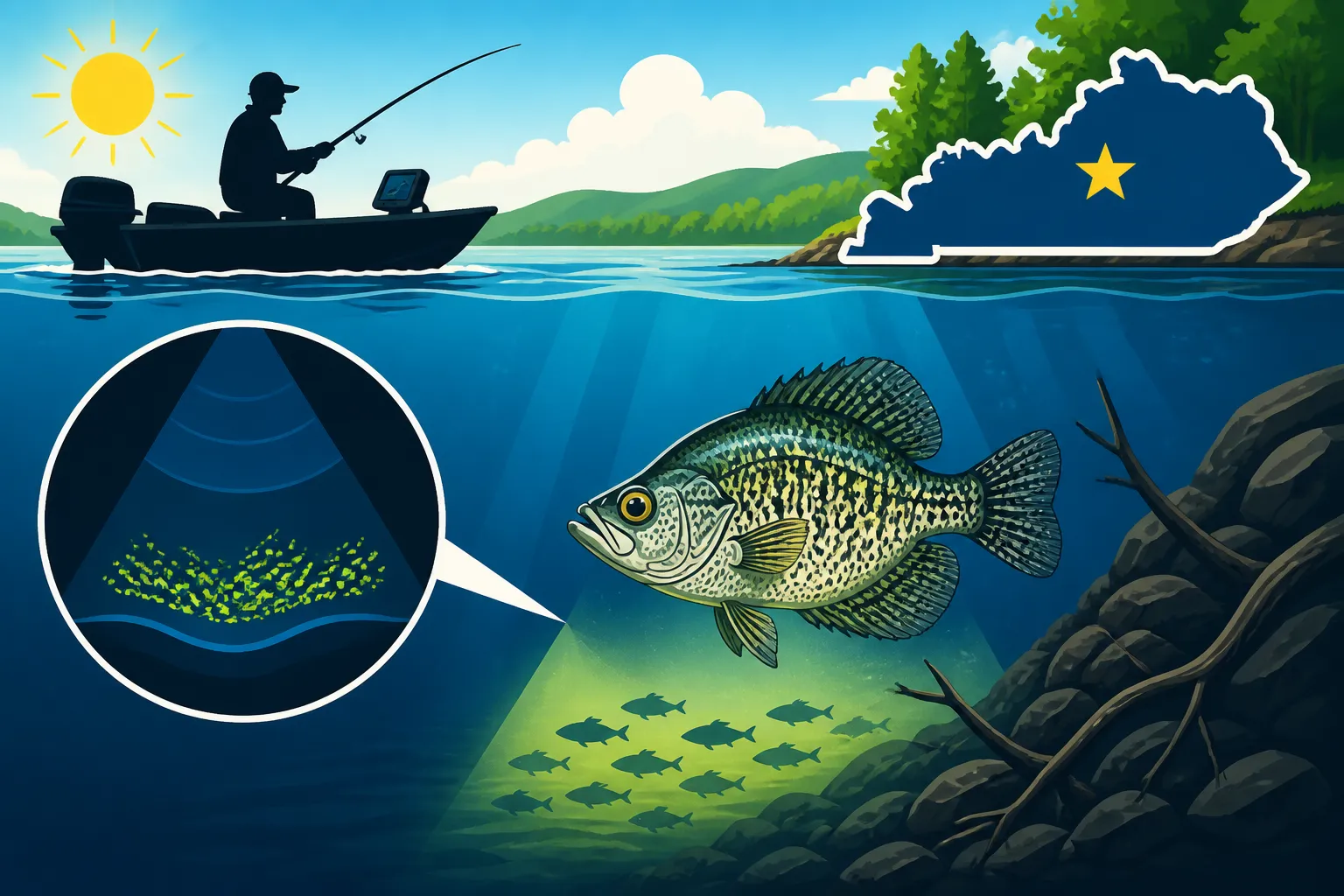
If you're serious about deep water crappie, a modern fish finder isn't just a luxury; it's practically a necessity. Forget the old flasher units that just showed you blobs; today's technology can paint a remarkably clear picture of the underwater world.
- 2D Sonar: This is your bread and butter. It shows you the water column directly beneath your boat, revealing structure, baitfish, and individual crappie. Learning to interpret the arches (or "hooks") for fish and the bottom contours is fundamental. You'll want a unit with good target separation to distinguish individual fish in a tight school.
- Down Imaging (DI): This technology provides a photo-like view directly below your boat, making it much easier to differentiate between a brush pile, a rock pile, or a school of fish. It excels at showing vertical structure and fish holding tightly to it. When you mark what looks like a Christmas tree on your screen, that's your cue to drop a line!
- Side Imaging (SI): This is a game-changer for covering water and locating hidden structure. Side imaging sends sonar beams out to the sides of your boat, revealing a wide swath of the bottom. You can literally "see" brush piles, rock formations, and even schools of fish off to your left or right without having to drive directly over them. This saves immense amounts of time, allowing you to quickly scan a large area of a creek channel or a long ledge for crappie-holding spots. Many anglers find great deals on quality fish finders from brands like Humminbird, Lowrance, or Garmin through online retailers like Amazon.
Learning to read your fish finder takes practice, but it's an invaluable skill. Look for irregular shapes on the bottom that indicate structure, then zoom in to see if you can identify fish suspended within or just above that structure. If you see dense clouds of baitfish, crappie are likely lurking nearby.
Rods, Reels, and Line for Vertical Jigging and Trolling
Your everyday ultralight setup might work for shallow crappie, but when you're targeting fish 20+ feet down, you need gear that can handle the specific demands of deep water.
- Rods: Look for rods in the 6-foot to 8-foot range, with a medium-light or light power and a fast action tip. The longer length helps with leverage, line control, and making longer casts if needed, while the fast action tip allows you to feel those incredibly subtle crappie bites at depth. A sensitive graphite blank is key. For spider rigging or slow trolling with multiple lines, specialized long rods (often 10-16 feet) are used to spread baits out. You can find a wide array of options for these specific applications on Amazon.
- Reels: Spinning reels are generally preferred for deep water crappie due to their ease of use, ability to cast light jigs, and smooth drag. A 1000 or 2000 series reel is typically sufficient, spooled with plenty of line. The smooth drag is important when fighting a good crappie on light line, preventing hook pulls.
- Line:
- Monofilament (Mono): Still a solid choice for its stretch, which can act as a shock absorber, and its affordability. However, the stretch can also make it harder to feel light bites in deep water. Use 4-6 lb test.
- Fluorocarbon (Fluoro): Offers less stretch than mono, providing better sensitivity, and it's nearly invisible underwater, which can be a huge advantage in clear water. It sinks faster, helping your baits get down. Again, 4-6 lb test is usually ideal.
- Braided Line: The ultimate in sensitivity, with virtually no stretch. This means you’ll feel every tick and tap, even at significant depths. The downside is it's highly visible, so you'll almost always want to tie a 4-6 lb fluorocarbon leader (3-6 feet long) to your braid. Braided line in 8-10 lb test with a lighter fluoro leader is a very effective combination for deep water crappie.
The goal is to have a setup that lets you feel what's happening at the end of your line, manage your bait at depth, and effectively land fish.
Deep Water Crappie Baits and Rigs
Forget the tiny bobbers and micro jigs you might use in spring; deep water crappie often require a different approach to presentation.
- Jigs: Small soft plastic jigs are king. Think 1/32 to 1/8 ounce, sometimes even 1/4 ounce if you need to get down fast or deal with current. Colors can vary, but generally, chartreuse, white, black, and various greens (like "pumpkinseed" or "junebug") are staples. Don't be afraid to experiment with brighter colors in stained water or more natural hues in clear water. Hair jigs and tube jigs are also very effective.
- Live Minnows: Never underestimate the power of a live minnow. A frisky minnow hooked through the lip or back and presented properly at depth is often irresistible to crappie.
- Rigging for Depth:
- Vertical Jigging: This is simply tying a jig directly to your main line (or leader) and dropping it straight down. You’ll vary the jig weight to match the depth and current.
- Drop Shot Rig: A fantastic option for deep, clear water. The hook is tied directly to the main line, with the weight below it. This allows your bait (jig or minnow) to suspend horizontally at a precise depth, often just above the weight, making it highly visible to crappie holding off the bottom or in brush.
- Tandem Rigs: Also known as a "double jig rig," this involves tying two jigs (or a jig and a minnow) at different depths on the same line. This allows you to present two different baits or cover two different depths simultaneously, increasing your chances of finding the crappie's preferred zone. Just make sure it complies with local regulations, as some areas have limits on the number of hooks. When putting together your tackle box for deep water, specialized hooks, sinkers, and jig heads can be easily found on Amazon to ensure you’re rigged for success.
Having a variety of these baits and knowing how to rig them effectively will give you a significant advantage when chasing deep water crappie.
Effective Techniques for Targeting Deep Water Crappie
Once you’ve got your gear dialed in and you're marking fish on your screen, it's time to put those techniques to work. Deep water crappie fishing often requires patience and precision, but the rewards are well worth it.
Vertical Jigging Over Structure
This is perhaps the most direct and effective way to target crappie you've located on your fish finder. It’s all about putting your bait right on their nose.
First, use your electronics to pinpoint the exact location of the crappie or the brush pile they're holding in. Maneuver your boat directly over the top of the structure using your trolling motor. This might mean using your "spot lock" or anchor feature on your trolling motor if you have one, to hold your position precisely.
Next, open your bail and let your jig or minnow rig drop straight down. Pay close attention to your line; a sudden slackening or twitch could indicate a bite on the fall. Once your bait reaches the depth where you've marked fish, close the bail and begin a very subtle retrieve. Think small, gentle lifts and falls, just enough to impart action to your lure. Crappie in deep water are often less aggressive than their shallow-water counterparts and will simply "suck in" the bait. This can feel like a slight weight, a spongy resistance, or even just your line going slack. It's not always a violent thump! Set the hook with a gentle but firm sweep of the rod.
Experiment with different jig colors and sizes. Sometimes, a slight change in presentation – a slower fall, a different jigging cadence – can make all the difference. Remember, the fish are often suspended within the brush, so you need to get your bait right in their zone without getting snagged constantly. This is where a good fish finder really shines, showing you exactly where the fish are in relation to the structure.
Slow Trolling and Spider Rigging
When crappie are scattered over a larger area of deep water, or when you're looking to cover expansive flats or channel edges, slow trolling or "spider rigging" can be incredibly effective. This method involves deploying multiple rods (up to the legal limit, which is often three per angler in Kentucky), typically out of the front of the boat, but sometimes also off the sides and back.
With spider rigging, you'll have long rods (10-16 feet) extending out from your boat, often in specialized rod holders. Each rod will have a different bait (jigs, minnows, or a combination) set at varying depths. You then use your trolling motor to slowly propel the boat forward, typically at speeds between 0.5 to 1.5 miles per hour. This allows you to cover a broad swath of water, dragging your baits through potential crappie holding areas.
The key here is varying your depths, colors, and bait types until you figure out what the crappie are responding to. Once you get a bite on a specific rod and depth, you can then try to replicate that setup on your other rods. This technique is particularly popular on large reservoirs like Kentucky Lake where crappie might be spread out along extensive creek channels or over large submerged flats. It’s a great way to locate active schools and can be incredibly efficient once you get the hang of it. For those looking to try this method, ensure you have the appropriate Kentucky Fishing Regulations Explained regarding the number of lines you can legally use.
Using Live Bait on Sinking Rigs
While jigs are highly effective, sometimes live bait, specifically minnows, is the undeniable key to unlocking a deep water crappie bite. There are a few ways to present minnows effectively at depth.
One classic method is to simply use a weighted hook (like a minnow jig head or a hook with a split shot a foot or so above it) and drop a lively minnow down to the desired depth. You can lightly hook the minnow through the back, just behind the dorsal fin, being careful not to hit the spine, or through both lips. This allows the minnow to swim naturally, attracting attention.
Another excellent deep water rig is a slip bobber setup. While typically associated with shallower water, a properly weighted slip bobber can be used to suspend a minnow or jig at a precise depth, even 20-30 feet down. The beauty of the slip bobber is that it lets you easily adjust your fishing depth by sliding the bobber stop up or down your line. This is great for when crappie are suspended at a consistent depth over a brush pile or along a channel edge. The buoyancy of the bobber will indicate the subtlest of bites, even if you’re fishing a significant distance from your boat.
Remember that crappie are often schooling fish. If you catch one in deep water, chances are there are more nearby. Mark the spot on your GPS, and be prepared to drop your bait back down quickly. Don't be afraid to try different depths if the bite slows down; crappie can move up or down the water column throughout the day. Getting the right size hooks and sinkers for these deep water live bait rigs is something many anglers frequently turn to Amazon for.
Advanced Tips and Seasonal Adjustments
Chasing deep water crappie in summer isn't just about the right gear and techniques; it's also about understanding the subtle nuances of their environment and adapting to those changes. The more you pay attention to the details, the more consistent your success will be.
Reading Water Temperature and Oxygen Levels
As mentioned earlier, the thermocline is your best friend when looking for summer crappie. Many modern fish finders have a built-in temperature gauge that can show you the water temperature at different depths, allowing you to identify this crucial layer. Crappie will often be found in or just below the thermocline, especially if there's sufficient oxygen.
In addition to temperature, oxygen levels are paramount. During periods of prolonged heat or drought, some lakes can experience low oxygen levels (hypoxia) in the deepest sections, especially below the thermocline. If your fish finder shows a distinct thermocline but you're not seeing fish below it, it might be due to a lack of oxygen. In these cases, crappie will usually suspend higher in the water column, often just above the thermocline where there's still cooler water but sufficient oxygen. Observing the water quality and clarity can also provide clues; very clear water might mean crappie are even deeper, while stained water can sometimes hold them a bit shallower if oxygen is good. This knowledge is key to understanding where the fish will be during different times of year, something you can learn more about in a comprehensive guide like Kentucky Fishing Seasons: What to Catch Each Month.
Adapting to Changing Conditions
Fishing conditions are rarely static, and summer crappie fishing is no exception. Be prepared to adapt.
- Cold Fronts: A sudden cold front can shut down a bite instantly. After a strong front passes, crappie often become lethargic and might move even deeper or hold tighter to cover. You'll need to slow down your presentation, use smaller baits, and be extremely subtle with your jigging.
- Heavy Rain: While a summer rain shower can sometimes invigorate a bite by cooling the surface and adding some fresh oxygen, prolonged heavy rain can muddy up the water. In stained or muddy conditions, crappie might move shallower to areas where they can feed by sight or feel, or they might hold even tighter to deep cover. Brighter jig colors (like chartreuse or orange) often work better in these situations.
- Current: If you're fishing a river system like the Ohio River or a reservoir with significant current, crappie will orient themselves facing into the current, often behind structure to break the flow. You'll need to adjust your boat position and jig weight to maintain vertical control of your bait.
The best crappie anglers are those who can quickly diagnose changing conditions and modify their approach. Don't be afraid to experiment with different depths, retrieve speeds, and bait colors until you find what the fish want on any given day. Remember, sometimes the difference between a good day and a tough day is just a matter of a few feet of depth or a slightly different jigging motion. For more specific insights on lake-specific behaviors, consider checking out resources like the Kentucky Crappie Daily Limit Rules and articles on particular lakes such as the Barren River Lake Crappie Size Limit in Kentucky or Best Crappie Lakes in Kentucky to understand local nuances.
Here's a quick comparison of popular deep water crappie techniques:
| Technique | Best for | Key Gear | Pros | Cons |
|---|---|---|---|---|
| Vertical Jigging | Pinpointing fish on specific structures | Sensitive rod, fish finder, jigs | Precise presentation, great for active fish, subtle bites | Can be slow if fish are scattered, requires boat control |
| Slow Trolling | Covering large areas, locating scattered fish | Long rods, multiple lines, trolling motor | Efficient for searching, varied depths/baits simultaneously | Less precise, can spook shallow fish, gear intensive |
| Spider Rigging | Very scattered fish, wide coverage, finesse | Specialized long rods, multiple holders, live bait/jigs | Maximizes coverage, high bait presentation flexibility | Requires specific setup, can be cumbersome for single angler |
| Drop Shot | Suspended fish over structure, clear water | Sensitive rod, fluorocarbon leader, light weight | Excellent bait presentation, high sensitivity, natural look | Can be slow to re-tie, tangles easily with heavy cover |
Remember, while the crappie behavior is consistent, the nuances of each lake can vary, so always check for any site-specific regulations before heading out.
Disclaimer
Fishing regulations and conditions can change rapidly. Always consult the latest Kentucky Department of Fish and Wildlife Resources (KDFWR) guidelines and local advisories before planning any fishing trip. This guide is for informational purposes only and does not supersede official regulations.