How to Fish for Crappie at Night
Let's be real: sometimes, finding those elusive crappie during the bright daylight hours can feel like a genuine challenge. They get spooky, they hide deep, and you spend more time wondering where they went than actually reeling them in. But what if I told you that the best crappie bite often happens when the sun goes down? This guide is all about diving deep into the art and science of how to fish for crappie at night in Kentucky, turning those frustrating daytime struggles into exciting, productive nocturnal adventures.
Why Night Fishing for Crappie is a Game Changer
There’s something truly magical, and often incredibly effective, about being out on a Kentucky lake after dark. The world quiets down, the stars come out, and for crappie anglers, a whole new world of opportunity opens up. If you've ever felt like you're constantly chasing crappie during the day, struggling to get a consistent bite, then embracing the night might just be the pivot your fishing strategy needs.
The Crappie's Nighttime Behavior Shift
Crappie, much like many other fish species, undergo a significant behavioral shift when the sun dips below the horizon. During the day, especially in clear water, they can be incredibly wary. They'll often retreat to deeper, cooler waters or bury themselves in dense cover to avoid predators and bright light. This is why you might find yourself casting endlessly into what looks like perfect structure only to come up empty-handed – they're there, but they're just not active or receptive to your offerings.
At night, however, it's a completely different story. Crappie become less skittish and far more active. They're often drawn out of their deep-water sanctuaries and into shallower feeding grounds. Why? Well, two main reasons: comfort and food. The water surface cools down, making those shallower zones more hospitable, and more importantly, the low light conditions make them apex predators in their own right. They can ambush baitfish more effectively without being easily spotted themselves. This is when they really start to move and feed aggressively, providing you with a much better chance of a consistent bite.
Beating the Heat and the Crowds
Anyone who’s spent a summer day fishing on a popular Kentucky reservoir like Kentucky Lake or Lake Barkley knows the drill: scorching heat, relentless sun, and what feels like endless boat traffic. Ski boats zoom by, jet skis crisscross the water, and every prime fishing spot seems to have another angler already camped out. It's not just uncomfortable for us, it's stressful for the fish, pushing them further into hiding.
Night fishing completely sidesteps these issues. First off, it’s just plain more comfortable, especially during the sweltering Kentucky summers. The cooler nighttime air is a welcome relief, allowing you to focus on your fishing rather than sweating through your gear. Secondly, the crowds virtually disappear. You’ll have vast stretches of water, including prime crappie real estate, all to yourself. This reduction in fishing pressure and boat noise means the crappie are far more relaxed, making them more likely to respond to your baits. Imagine having your favorite brush pile all to yourself, with nothing but the sounds of nature and the splash of a hooked crappie to interrupt the peace. It's a truly serene and often more productive experience.
Essential Gear for Your Kentucky Night Crappie Trip
Embarking on a night crappie adventure isn't just about showing up after dark with your regular rod and reel. There are some crucial pieces of gear that will dramatically increase your success and ensure your safety. Think of it as preparing for a different kind of hunt, one where light and subtle senses become your most important tools.
Lighting Up Your Crappie Hole
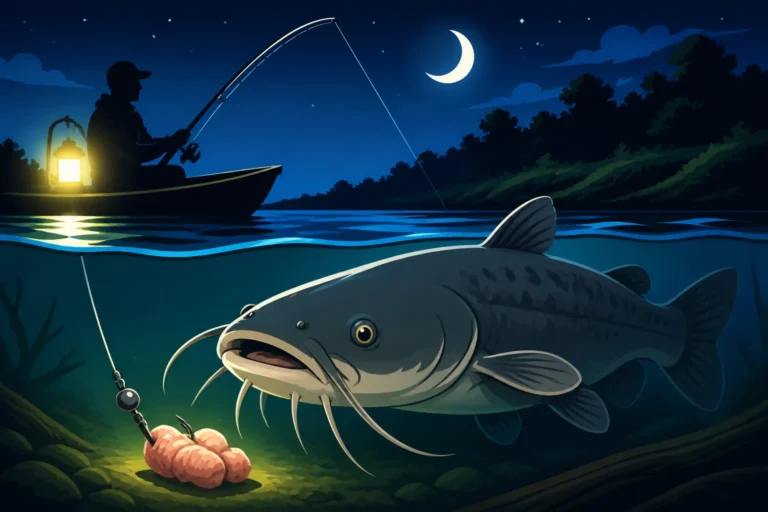
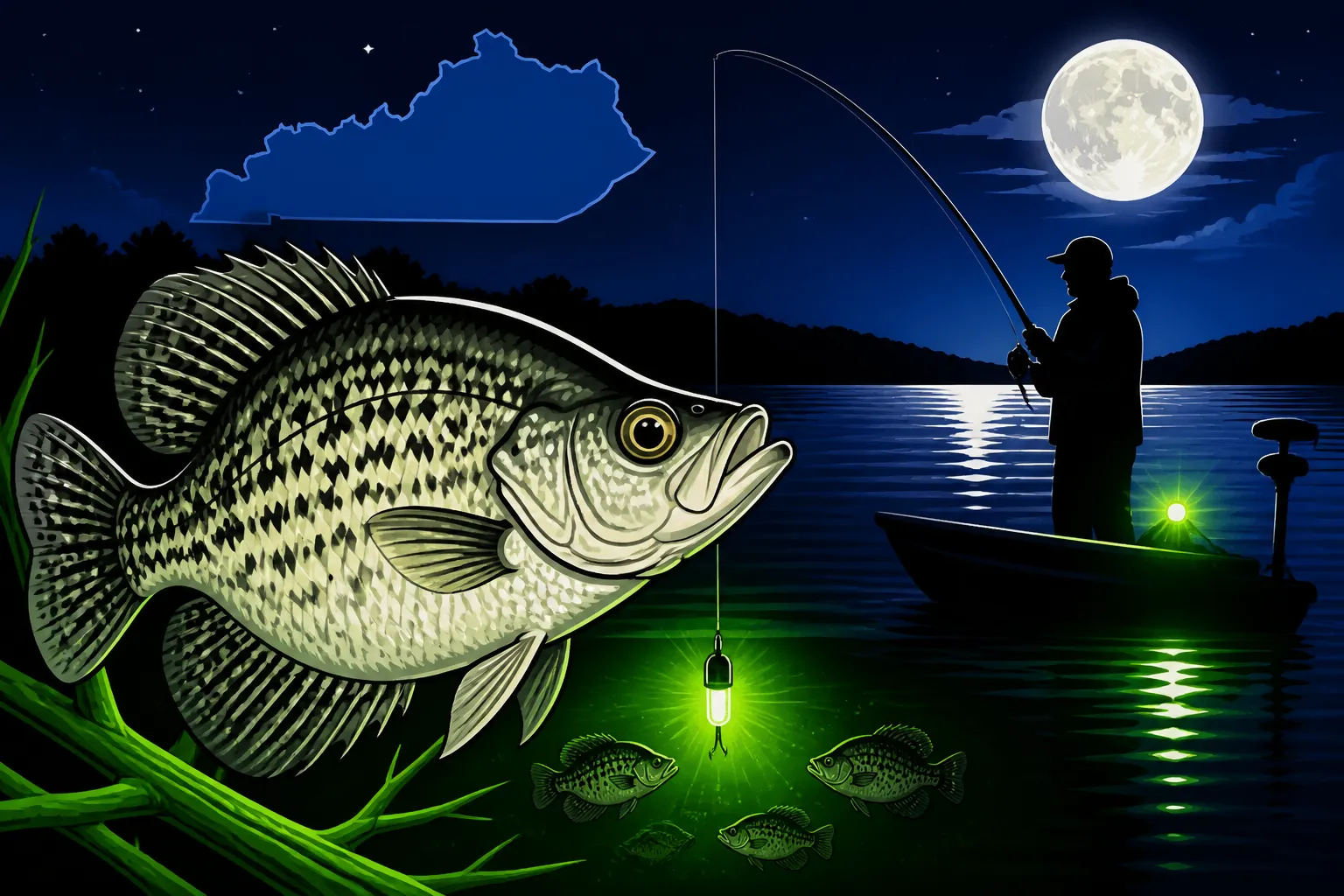
This is perhaps the most critical component of successful night crappie fishing. Fishing lights are not just for you to see; they are your primary fish attractant. They work on a simple, yet incredibly effective, principle: light attracts plankton, plankton attracts small baitfish (like shad and minnows), and a congregation of baitfish is an irresistible beacon for crappie.
You've got a few options when it comes to fishing lights, and many are readily available on Amazon.
- Submersible Lights: These are weighted lights that you drop directly into the water, typically green or white. Green lights are particularly popular because the green spectrum penetrates water most effectively and is highly visible to plankton and baitfish. A good submersible light will create a glowing column of light under your boat.
- Floating Lights: These lights sit on the surface, casting a glow downwards. While they illuminate the water, they don't penetrate as deeply as submersible lights. They can be great for illuminating a wider area or if you prefer not to have a cord running into the water.
- LED Lights: Modern LED fishing lights are incredibly efficient, drawing less power from your battery and offering bright, long-lasting illumination. You’ll find them in both submersible and floating designs.
When setting up, you'll want to deploy your light and then typically wait anywhere from 30 minutes to an hour. This gives the entire food chain time to assemble. First, you'll see tiny specks of plankton, then small minnows darting in and out of the light, and finally, those tell-tale crappie shadows lurking just outside the brightest zone, waiting for an easy meal. Experiment with how deep you drop your light; sometimes suspending it just above the thermocline (a layer where water temperature changes rapidly) can be particularly effective.
| Light Type | Pros | Cons | Best For |
|---|---|---|---|
| Submersible | Deep water penetration, attracts baitfish directly underneath, less glare | Requires deeper water, can get snagged, more complex to deploy/retrieve | Targeting deeper crappie, clear water, attracting tight schools |
| Floating | Easy to deploy, illuminates surface area, good for shallow water | Less deep penetration, can be affected by wind/current, more surface glare | Shallow coves, docks, illuminating a wider fishing area |
| Green LED | Excellent water penetration, highly attractive to baitfish, efficient | Can be more expensive initially | All-around best choice for attracting crappie and baitfish |
| White LED | Bright, good for general visibility, decent fish attraction | Can be too harsh in very clear water, less specific to crappie feeding | General night fishing, angler visibility, secondary light source |
Rods, Reels, and Line for Nighttime Success
While you can technically use your daytime setup, optimizing your rod, reel, and line can significantly enhance your night crappie experience. Remember, without the visual cues of daylight, you're relying heavily on feel.
- Rods: Sensitivity is king. Look for a lightweight, sensitive rod, typically in an ultralight to medium-light power with a fast or extra-fast action. A rod around 6 to 7 feet is ideal for most situations, allowing for good control around the light. Fiberglass rods, known for their sensitivity, are a fantastic choice for detecting those subtle crappie bites that feel more like a slight pressure than a distinct thump. You might even consider a dedicated "jig pole" for crappie fishing; these long, flexible rods (often 9-12 feet) are excellent for vertical jigging around the light and precisely dropping baits into fish schools. For more on optimizing your setup, check out our guide on the Best Rods and Reels for Kentucky Crappie Fishing.
- Reels: A small, smooth spinning reel (like a 1000 or 2000 series) that balances well with your sensitive rod is perfect. It should have a good drag system, even though crappie aren't massive fighters, a smooth drag prevents line breaks on hooksets or when an unexpected catfish decides to join the party.
- Line: Many anglers prefer a monofilament line in 4 to 6-pound test for crappie. Its stretch can act as a shock absorber for light bites, and its lower visibility can be an advantage. However, some prefer a low-stretch fluorocarbon or even a thin braided line (like 6-10lb test, with a fluorocarbon leader) for maximum sensitivity, allowing them to feel the faintest nibbles in the dark. If using braid, a bright-colored line can sometimes help you detect movement against the dark water, though you'll still need to rely mostly on feel.
Baits and Lures That Shine After Dark
What you tie onto the end of your line is just as important as your lighting setup. Crappie are opportunistic feeders, and at night, they're often looking for an easy meal attracted to your light.
- Live Minnows: There's a reason why live minnows are a classic crappie bait – they're incredibly effective, especially at night. Their natural movement and scent are irresistible. Hook them lightly through the lips or dorsal fin and suspend them under a slip bobber or simply tight-line them at various depths around your light source. Keeping a lively supply of minnows can often be the difference between a slow night and a full livewell.
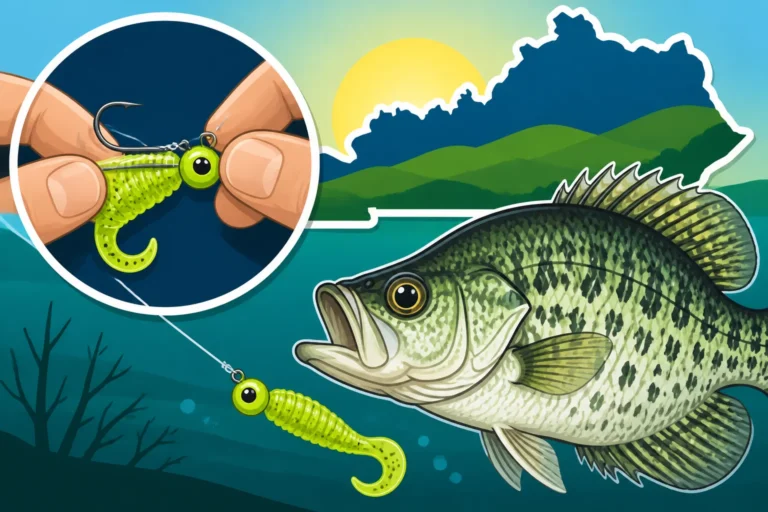
- Jigs: Soft plastic crappie jigs are another go-to. At night, focus on dark colors like black, blue, or purple, which create a strong silhouette against the light. Jigs with some sort of glow-in-the-dark feature or reflective Mylar can also be incredibly effective. Small marabou jigs, tube jigs, or curly-tail grub jigs in sizes ranging from 1/32 to 1/8 ounce are perfect. The key is a slow, subtle presentation. You're trying to mimic a stunned or injured baitfish. For more ideas on how to present these effectively, our How to Jig for Crappie in Shallow Water guide has some great tips that can be adapted for night fishing. You can find a huge variety of crappie jigs and minnow buckets on Amazon.
- Scent: Don't underestimate the power of scent at night. Adding a crappie attractant scent to your jigs can make a big difference, especially when visibility is limited. It gives the crappie something extra to home in on.
- Variety: Always bring a variety of baits and lures. What works one night might not work the next. Be prepared to switch up colors, sizes, and even bait types until you find what the crappie are keying in on.
Mastering Night Fishing Techniques for Crappie
Knowing your gear is one thing, but knowing how to use it effectively after dark is where the real magic happens. Night fishing requires a different approach, a keen sense of observation (even without clear sight), and a whole lot of patience.
Finding the Right Spots After Sundown
While crappie will move into shallower water at night, they still rely on structure. The trick is to identify where they'll move to, often following their daytime patterns but with a nighttime twist.
- Brush Piles and Submerged Timber: These are perennial crappie magnets. If you have GPS waypoints for brush piles you fish during the day, those are excellent starting points for night fishing. Crappie will often move up into the canopy of these piles after dark. Your fishing light will illuminate the area, drawing baitfish to the cover, and subsequently, the crappie will move in.
- Docks and Bridge Pilings: Man-made structures often hold crappie, especially if they have some depth or brush underneath. The pilings themselves can hold algae and small organisms, attracting baitfish. If these structures have lights, even better – crappie will already be accustomed to feeding in that light cone.
- Channel Edges and Flats: Crappie will often move from deeper channels onto adjacent flats or shelf areas to feed at night. Use your sonar to find these transition zones during the day, or simply experiment with different depths around your light at night. Kentucky lakes often have great channel swings and submerged roadbeds that act as highways for fish moving to and from feeding areas.
- Creek Mouths: Where smaller creeks enter larger lakes, these areas often offer a combination of current breaks, structure, and baitfish concentration, making them prime night fishing locations.
When you arrive at your chosen spot, anchor quietly and deploy your fishing light. Give it time – sometimes up to an hour – for the baitfish to gather and the crappie to move in. Rushing this process is a common mistake. Patience is a virtue, especially in the dark.
Setting Up Your Crappie Light & Fishing Spread
Once you've anchored and your light is deployed, the real setup begins. You're creating an entire ecosystem under your boat, and how you present your baits within that ecosystem is crucial.
- Light Placement: Generally, you want your light positioned to draw fish to your boat, but not necessarily directly under your boat where you'll be fishing. Often, placing the light off to one side or slightly behind your boat, allowing the light to extend under your hull, works best. Crappie will often hang on the edges of the brightest light, ambushing prey that strays too far.
- Vertical Presentation: Night fishing often lends itself well to vertical presentations. This means dropping your bait straight down, right into the illuminated zone where the crappie are feeding. This minimizes line twist and allows for precise depth control.
- Spider Rigging: If you're fishing from a boat, "spider rigging" can be incredibly effective at night. This technique involves deploying multiple long rods (often 4 to 8, or even more) from different angles around the boat, each with a different bait or at a different depth. This allows you to cover a wide range of water columns and present various offerings simultaneously. You might have one rod with a minnow at 10 feet, another with a chartreuse jig at 8 feet, and so on. This method is particularly popular for crappie fishing and can really help you pinpoint where the active fish are holding.
- Single Pole Focus: Even with a single rod, you can be effective. Drop your bait to the bottom, then slowly reel it up a foot or two, pausing to see if you get a bite. Repeat this process until you find the depth where the crappie are most active. Once you catch a fish, remember that depth – chances are, more crappie are holding at that same level.
- Maintain Silence: Crappie are less spooky at night, but they're not deaf. Avoid banging around in the boat, dropping tackle, or loud conversations. Sound travels incredibly well through water, and sudden noises can still send fish scattering.
Interpreting Bites and Hooksets in the Dark
This is where the sensitivity of your rod and your heightened senses come into play. Without visual cues, detecting a crappie bite at night can be challenging for beginners.
- Feel the "Weight": Often, a crappie bite won't be a dramatic tug. It might feel like your bait suddenly gets "heavy," or a slight slackening of your line. It's a subtle change in pressure.
- Rod Tip Watch: Even in the dark, you can often see the subtle twitch or bend of your rod tip if you have a sensitive setup. A headlamp with a low-light red setting can help illuminate your rod tip without scaring fish.
- Line Watch (Against the Light): If you're fishing with a light-colored monofilament line, sometimes you can see a slight "jump" or "swim" of the line against the glow of your fishing light, indicating a fish has picked up your bait.
- The "Tap": Sometimes, especially with jigs, you'll feel a very faint "tap." This is usually a crappie mouthing the jig. Set the hook! Don't wait for a huge pull. Crappie have soft mouths, so a gentle, upward sweep of the rod is usually all it takes. Practice makes perfect here. The more you fish at night, the better you'll become at discerning what's a bite and what's just your bait bumping against structure.
Safety and Comfort for Your Nocturnal Adventure
Night fishing is exhilarating, but it also carries unique risks. Prioritizing safety and ensuring your comfort are paramount for a successful and enjoyable trip. Never underestimate the challenges of navigating and operating on water in the dark.
Essential Safety Gear and Practices
Even on familiar Kentucky waters, things look different at night. Having the right safety gear isn't optional; it's absolutely necessary.
- Navigation Lights: If you're in a boat, your navigation lights (red/green bow lights and an all-around white stern light) must be operational and on at all times after sunset and before sunrise. This is not just a good idea; it's the law. This ensures other boaters can see you.
- Anchor Light: If you're anchored, you still need an all-around white light visible from all directions. This is distinct from your fishing lights, which might be submerged.
- Life Jackets: This cannot be stressed enough: wear your life jacket, or at the very least, have it easily accessible. The rules about Life Jacket Rules for Boats in Kentucky are especially important to follow at night. If you were to fall overboard in the dark, even in calm water, disorienting yourself or finding your way back to the boat can be incredibly difficult. Ensure everyone on board has a Coast Guard-approved life jacket that fits properly.
- Multiple Light Sources: Beyond your main fishing light and boat lights, carry spare flashlights and headlamps. Headlamps are fantastic because they leave your hands free for fishing, tying knots, or handling fish. Make sure they have fresh batteries, and perhaps carry a spare set.
- First-Aid Kit: A well-stocked first-aid kit is essential for any fishing trip, but even more so at night when medical help might be further away or take longer to reach you.
- Communication: Always tell someone where you're going, when you expect to be back, and who you're with. A fully charged cell phone (in a waterproof case) is also a must, though service can be spotty in some remote areas. Consider a marine radio for added safety if you're on larger bodies of water like Lake Cumberland or the Ohio River.
- Weather Check: Always check the weather forecast before heading out. Night conditions can change rapidly, and being caught in a storm after dark is a dangerous situation.
Staying Comfortable and Prepared
Beyond safety, a comfortable angler is a patient and successful angler.
- Layered Clothing: Even on a warm summer day, temperatures can drop significantly after dark. Dress in layers so you can add or remove clothing as needed. A waterproof outer shell is also a good idea in case of unexpected rain or heavy dew.
- Bug Spray: Kentucky summers, especially near water, come with their fair share of mosquitoes and other biting insects. Don't forget the bug spray!
- Snacks and Drinks: Bring plenty of water and easy-to-eat snacks. Night fishing trips can extend for many hours, and staying hydrated and fueled will keep your focus sharp.
- Comfortable Seating: A comfortable boat seat or a folding chair for bank fishing can make a huge difference over several hours in the dark.
- Cooler: You're hoping for a good catch, so make sure you have a quality cooler with plenty of ice to keep your crappie fresh. Always adhere to the Kentucky Crappie Daily Limit Rules to ensure sustainable fishing.
- Patience: Lastly, and perhaps most importantly, bring your patience. Night fishing requires a different mindset. Enjoy the tranquility, the stars, and the anticipation. The fish will come.
Night fishing for crappie in Kentucky can be an incredibly rewarding experience, offering not only a unique challenge but also often more productive fishing than during the day. Just remember to respect the water, prioritize safety, and enjoy the peaceful solitude that only a nocturnal fishing adventure can provide. Make sure you've got your Kentucky Fishing License Guide sorted before you head out!
Disclaimer
Fishing regulations, license requirements, and safety guidelines can change. Always consult the latest Kentucky Department of Fish and Wildlife Resources (KDFWR) official publications or website before heading out on any fishing trip to ensure you are in compliance with current laws and have the most up-to-date information.