Best Lures for Sauger Fishing Below Dams
There's nothing quite like the thrill of fishing below a dam for sauger, but let's be honest, it can also be incredibly frustrating. The powerful currents, the constantly changing water levels, and the sheer volume of water can make it feel like finding a needle in a haystack. You're trying to figure out what lures will cut through the chaos and actually get in front of a hungry sauger, rather than just getting swept downstream. This guide is all about cutting through that confusion, helping you understand what lures are most effective in those challenging dam environments in Kentucky, and how to use them to put more sauger in your cooler.
Understanding Sauger Behavior Below Dams
Fishing below dams presents a unique challenge, but also a fantastic opportunity for sauger. These areas are veritable sauger magnets, and once you understand why and how to approach them, you'll be well on your way to success.
Why Dams Attract Sauger
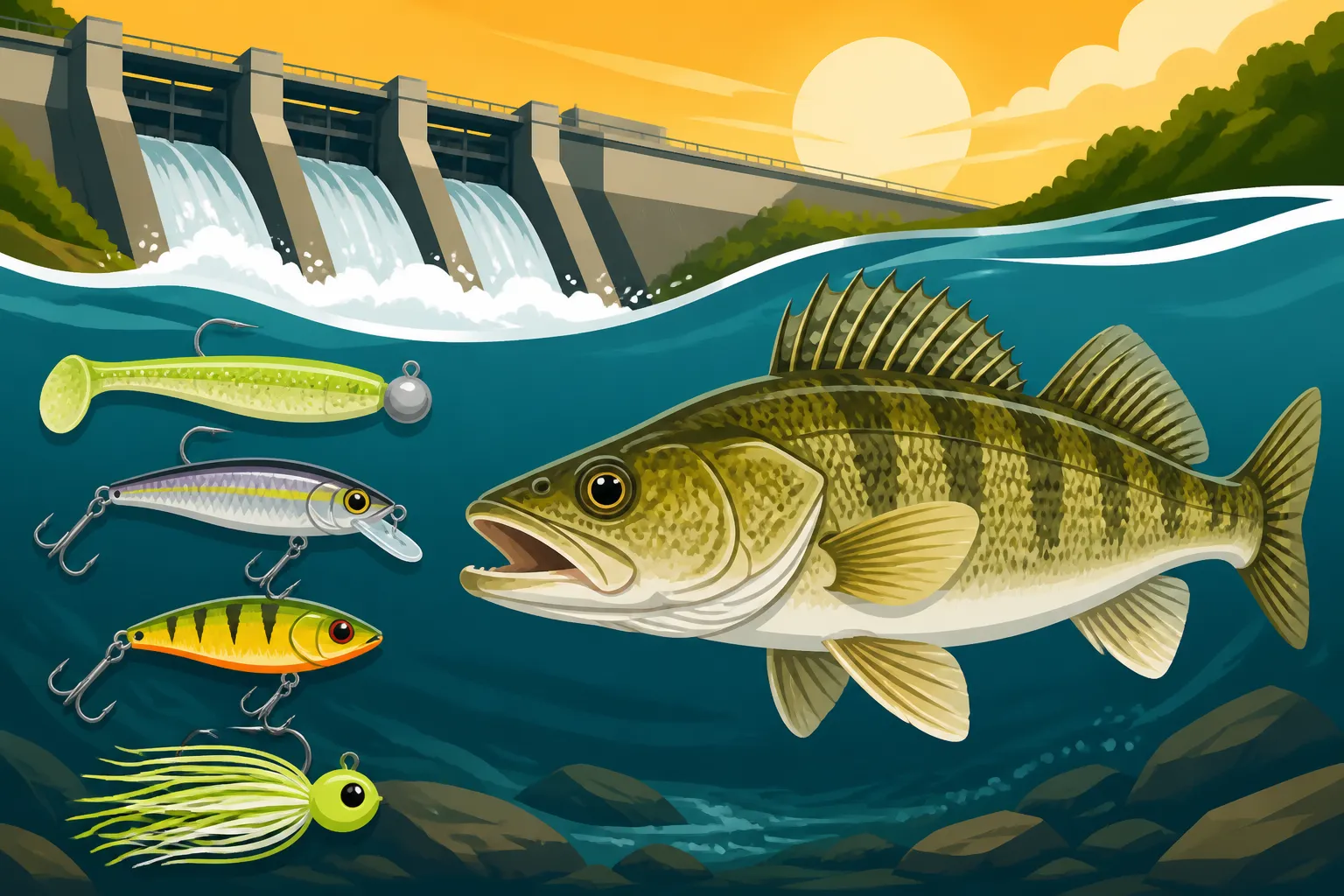
Dams create an artificial ecosystem that perfectly suits sauger, especially during certain times of the year. Think about it: the dam structure itself creates turbulent water, which disorients baitfish and makes them easy targets. It’s like a never-ending buffet line for predatory fish. The current sweeps food downstream, concentrating it in specific areas where sauger can lie in wait without expending too much energy.
Beyond the food supply, dams also offer crucial habitat. The rocky rip-rap, scour holes, and sudden depth changes below a dam provide excellent ambush points and protection from the strongest currents. Sauger are often found congregated in these seams and eddies, just out of the main flow, ready to dart out and grab a meal. They're not going to be fighting the full force of the current unless they absolutely have to; they're smart fish. Understanding these hiding spots is key to presenting your lure correctly. You need to get your offering into their strike zone, which is often a smaller window than you might expect.
Key Water Conditions to Monitor
The conditions below a dam are rarely static, and sauger react strongly to changes. Water discharge, for instance, is a massive factor. When the generators are running and water is being released, the current intensifies, and the water often becomes more turbid. This might sound intimidating, but it can actually trigger a feeding frenzy. The increased flow dislodges more baitfish, and the sauger become more active. Conversely, when the water is low and the current is minimal, sauger might retreat to deeper holes or become less aggressive, requiring a different approach.
Water temperature also plays a critical role, particularly when considering When Is Sauger Season at Lake Barkley Kentucky. Sauger are a cold-water species, so they tend to be more active in cooler months. Below dams, the water temperature can fluctuate less dramatically than in open lake areas, providing a more stable environment during seasonal transitions. Always check local dam discharge schedules and recent reports before you head out. A quick check can save you hours of fruitless casting into the wrong conditions. Knowing when they're running water and for how long will give you a huge advantage in figuring out Best Time of Day to Catch Sauger.
Top Lure Categories for Dam Fishing
When you're fishing for sauger below a dam, you're not just throwing any old lure. You need baits that can handle the current, get down to the fish, and trigger those strikes. It's about efficiency and effectiveness in a demanding environment.
Jigs: The Dam Fishing Staple
If there's one lure that every sauger angler fishing below a dam should have tied on, it's a jig. Jigs are incredibly versatile and can be fished effectively in almost any current condition. The beauty of a jig is its ability to imitate a wide range of baitfish or crustaceans that sauger feed on. For sauger specifically, you're often looking at lead-head jigs weighing anywhere from 1/4 ounce to a full ounce or more, depending on the current strength and depth. You need something heavy enough to get to the bottom and stay there, even with significant flow.
Pairing your jig head with the right soft plastic or hair dressing is where the magic happens. Paddle-tail swimbaits in white, chartreuse, or natural baitfish colors are incredibly popular. The vibrating tail provides an irresistible action in the current. Grub tails, tube jigs, and bucktail jigs are also phenomenal choices. The key is to present these jigs close to the bottom, often with a slow, controlled retrieve or a vertical jigging motion right below the boat. The natural drift and wobble of a jig in the current is often all it takes to entice a strike from a sauger hunkered down on the bottom. If you're looking for where to start, an array of jig heads and soft plastics from brands like Strike King or Z-Man can be found easily on Amazon, giving you plenty of options to experiment with color and size.
Crankbaits: Diving Deep and Deflecting
While jigs dominate, don't underestimate the power of crankbaits, especially when sauger are actively feeding or you're covering broader areas. The right crankbait can dive quickly, run true in current, and deflect off structure—a highly effective action that often triggers aggressive reaction bites. For dam fishing, you'll want deep-diving crankbaits that can reach depths of 10 to 20 feet or more, depending on the river channel. Look for models with a short, stout bill that can take a beating against rocks without breaking.
Colors again lean towards natural baitfish patterns like shad, perch, or crawfish, but don't shy away from brighter, more aggressive colors like firetiger or chartreuse, especially in murkier water or when the current is really ripping. The unique wobbling action of a crankbait combined with its ability to bump off the bottom or submerged timber mimics a struggling baitfish perfectly. This deflection is absolutely critical; it's often that sudden change in action that causes a sauger to commit. Retrieve your crankbait at a steady pace, allowing it to dig and occasionally tick the bottom or ricochet off rocks. This erratic movement is often what gets the sauger to strike.
Blade Baits and Soft Plastics: Versatility in Current
Blade baits and soft plastics offer fantastic versatility when sauger fishing below dams. Blade baits, like those from Johnson or Silver Buddy, are thin metal lures that vibrate intensely on the retrieve or on the fall, creating a huge amount of flash and commotion. They're excellent for vertical jigging directly below the boat, especially when sauger are tightly schooled in deeper holes. The vibration calls fish from a distance, and their compact profile makes them easy to cast and retrieve even in strong currents.
Soft plastics, beyond those used on jigs, also have their place, particularly in situations where a more subtle presentation is needed. Think about finesse worms, small grubs, or paddle-tail swimbaits rigged on a weighted swimbait hook or a drop shot rig. These can be particularly effective when sauger are finicky or when fishing in clearer water where a more natural look is preferred. The beauty of soft plastics is their incredible life-like action with minimal effort from the angler. They undulate and quiver in the current, mimicking small baitfish. You can find a huge variety of these on Amazon, allowing you to match the hatch perfectly to whatever baitfish are prevalent in the Kentucky waterways you're fishing. Experiment with different retrieves, from slow-rolling to short hops, to see what triggers the most strikes.
Here’s a quick overview of these dam-fishing lure types:
| Lure Type | Key Characteristics | Ideal Conditions | Presentation Strategy | Target Depth |
|---|---|---|---|---|
| Jigs | Lead head, soft plastic/hair body, versatile | All currents, especially strong flow | Vertical jigging, slow retrieve near bottom | Bottom |
| Crankbaits | Hard body, diving bill, strong wobble | Moderate to strong current, active fish | Steady retrieve, deflect off structure | Mid-to-Deep |
| Blade Baits | Metal, high vibration, flash | Deep water, schooling fish, vertical jigging | Lift-and-drop, steady retrieve | Bottom to Mid |
| Soft Plastics | Finesse worms, swimbaits, grubs (on weighted hooks) | Clearer water, finicky fish, subtle approach | Slow retrieve, twitching, drop shot | Bottom to Mid |
Rigging and Presentation Techniques
Having the right lure is only half the battle. Knowing how to present it effectively in the dynamic environment below a dam is what truly separates successful anglers from those just enjoying a boat ride.
Vertical Jigging for Precise Strikes
Vertical jigging is perhaps the most effective technique for sauger directly below dams, especially when you've located schools of fish on your electronics. The idea is to position your boat directly over the fish, or slightly upstream from them, and drop your jig straight down. This technique allows for pinpoint accuracy, getting your lure right into the strike zone without fighting too much current. The key here is maintaining contact with the bottom. You want your jig to occasionally tap the bottom, stirring up a little puff of silt, which can attract curious sauger.
Once your jig hits bottom, simply lift your rod tip a foot or two, then let the jig fall back down on a semi-slack line. The bite often occurs on the fall, so pay close attention to any slack line jumping or your rod tip twitching. Sometimes it’s a subtle tap; other times, it’s a solid thud. Mastering the feel of the bite in current takes practice, but it's incredibly rewarding. This method is exceptionally effective for How to Jig for Sauger in Deep Water when you mark fish on sonar. Remember, sauger will often hug the bottom, so getting that lure right where they are is crucial.
Casting and Retrieving in Current
While vertical jigging is king, casting and retrieving can be highly effective, especially for covering broader areas or when fishing from the bank. The challenge is managing the current. You want your lure to swing naturally with the flow, but still maintain enough control to get it to the desired depth and retrieve it effectively. For crankbaits and certain soft plastics, casting upstream or quartering upstream and allowing your lure to swing through the current seams can be deadly. As the lure swings, it picks up speed and depth, mimicking a baitfish swept downstream.
When casting jigs or blade baits, you might cast slightly downstream and let the lure sink to the bottom, then slowly retrieve it with short hops or a steady drag, letting the current impart action. The goal is to keep your lure in the "strike zone"—that area just above the bottom where sauger are likely to be feeding—for as long as possible. Experiment with different casting angles and retrieve speeds. Sometimes a faster retrieve is needed to keep the lure above snags, while other times a slower, more deliberate action will trigger more bites. You might find a great selection of casting rods and reels suitable for this technique on Amazon, allowing you to maximize your casting distance and control in varying conditions.
The Importance of Line Choice and Weight
Your choice of fishing line and lure weight is paramount when fishing below dams. The relentless current will make light lines unmanageable and light lures impossible to control. For sauger below dams, most anglers opt for a heavier monofilament or fluorocarbon line, typically in the 8- to 12-pound test range. Some even go higher, especially when targeting larger fish or fishing in areas with heavy snags. Monofilament offers a bit of stretch, which can be forgiving with aggressive headshakes, while fluorocarbon provides superior abrasion resistance and less stretch for better sensitivity. Many seasoned anglers will use a braided main line for sensitivity, then attach a fluorocarbon leader for stealth and abrasion resistance. Choosing a good quality leader line, like those available on Amazon, can make a significant difference.
Equally important is selecting the correct lure weight. You need just enough weight to get your lure to the bottom and keep it there, without being so heavy that it's unnatural or constantly snagging. In strong currents, this often means heavier jigs, blade baits, or crankbaits with aggressive diving capabilities. As the current lessens, you can scale down your weight. Always err on the side of slightly heavier rather than too light; a light lure will simply be swept away before it ever gets to the fish. A good rule of thumb is to use the lightest weight that allows you to maintain consistent bottom contact. This balance is critical to presenting your lure naturally and effectively to sauger. For specific recommendations, check out a guide on Best Line and Leader Setup for Lake Barkley Sauger to help refine your choices.
Essential Tips for Success Below the Dam
Fishing below a dam isn't just about the lures; it's about preparation, safety, and smart angling. These waters can be productive, but they also demand respect and careful consideration.
Safety First: Navigating Dam Waters
The currents below a dam can be incredibly powerful and unpredictable, making safety your absolute top priority. Always be aware of your surroundings and the dam's operational schedule. Rapid increases in water discharge can quickly turn calm water into a raging torrent, creating dangerous conditions. Always wear a Coast Guard-approved life jacket, even if you're an experienced boater. It's not just a recommendation; it's a non-negotiable rule in these conditions. Ensure your boat is properly equipped with all required safety gear, including throw cushions, sound-producing devices, and a fire extinguisher.
Maintain a safe distance from the dam structure itself, respecting all warning signs and buoy lines. These areas are not only dangerous due to current but can also hide submerged hazards. If you're new to dam fishing, consider going with an experienced angler or hiring a local guide who knows the specific nuances and dangers of the water you plan to fish. Never underestimate the power of moving water, and always have an escape plan should conditions suddenly change. Your safety and the safety of anyone with you should always come before catching a fish. You can find excellent quality life jackets and other safety gear on Amazon, ensuring you're well-prepared for any situation.
Timing Your Trip for the Best Bite
Timing is everything when fishing for sauger below a dam. As mentioned earlier, water discharge schedules heavily influence sauger activity. Often, the bite will pick up significantly during periods of increased water flow, as baitfish are disoriented and sauger become more aggressive. Checking the dam's generation schedule beforehand can give you a massive advantage. Many dams post their schedules online, or you can call the power company.
Beyond generation schedules, consider the time of day and year. While sauger are known to bite throughout the day, low light conditions—dawn, dusk, and even night fishing—can be particularly productive, especially for larger fish. During these times, sauger often move shallower or become less wary. Seasonally, sauger fishing really heats up in the cooler months, from late fall through early spring. This is when they are most active and congregate in predictable areas below dams. So, bundle up, pack a thermos of hot coffee, and get ready for some fantastic cold-water action. Planning your trip around optimal conditions, and being aware of Best Time to Catch Sauger at Kentucky's Lake Barkley, will significantly increase your chances of success.
Disclaimer
This article is for general informational purposes only and does not constitute professional advice. Laws, prices and regulations vary by location and change over time. Consult a qualified professional for guidance on your specific situation.