How to Jig for Sauger in Winter
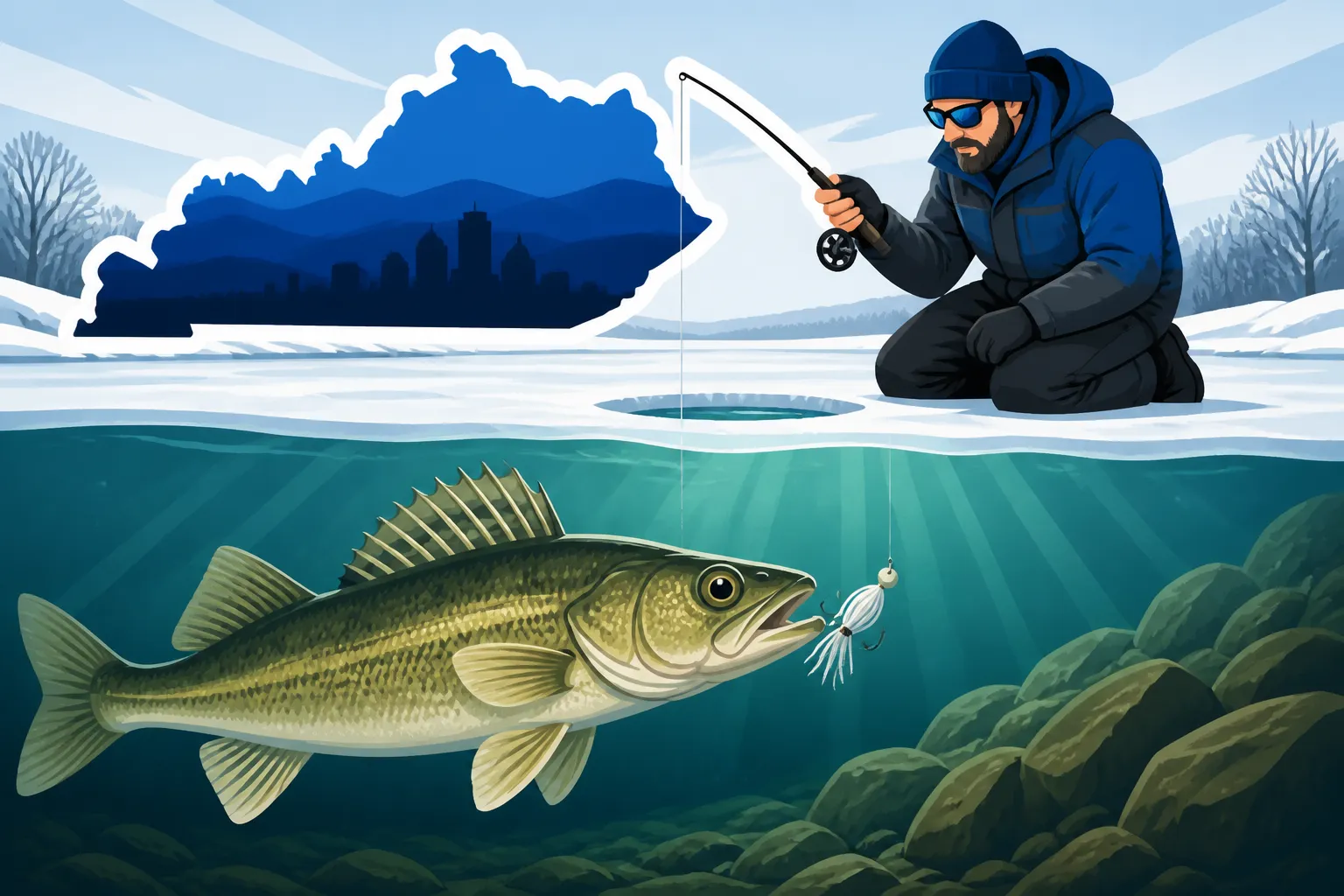
Winter can feel like a tough time for fishing in Kentucky, especially when the temperatures drop and many fair-weather anglers pack it in. But for those of us who know the secret, winter is prime time for chasing sauger! These toothy predators actually thrive in colder water, congregating in predictable patterns, making them a fantastic target if you know how to approach them. This guide is all about equipping you with the knowledge and techniques to effectively jig for sauger when the mercury plunges, turning those chilly days into productive fishing excursions.
Understanding Winter Sauger Behavior
Catching sauger in winter isn't just about showing up; it's about understanding what makes them tick when the water gets cold. Their behavior shifts dramatically from the warmer months, and if you can tap into those patterns, you'll be well on your way to a successful day on the water.
Where Sauger Go When It Gets Cold
When the water temperatures really start to plummet, typically into the 30s and low 40s, sauger tend to migrate to deeper, more stable environments. They're not going to be cruising the shallow flats like bass in the spring. Instead, think about main river channels, deep holes, old creek beds, and abrupt ledges where they can find consistent temperatures and ambush points. On a big lake like Lake Barkley, for instance, you'll often find them congregating along the original river channel or deep points. They prefer areas with some current, even if it's subtle, as it brings food to them and helps concentrate baitfish. This is why many anglers focus on fishing below dams or in areas where current is funneled. The key is to look for structure in deeper water, often 20 to 50 feet deep, sometimes even deeper depending on the body of water. They're looking for thermal stability and easy access to meals without expending too much energy.
Understanding these deep-water haunts is critical, and often involves using your electronics to locate these features. Once you find a significant drop-off or a deep channel, especially one with baitfish present, you've likely found a sauger honey hole. Remember, sauger are schooling fish, so where you find one, you're often likely to find many. This makes them incredibly fun to target in winter once you dial into their location. If you want to dive deeper into specific locations, our article on Best Time to Catch Sauger at Kentucky's Lake Barkley offers some great insights into where these fish hold.
Prime Times for Winter Sauger Bites
While sauger are active in cold water, they're not always biting furiously. Their activity can be heavily influenced by factors like current, light penetration, and even barometric pressure. Generally, sauger can bite throughout the day in winter, but there are definitely prime windows. Often, periods of slack current – like the hour or two before and after a dam stops generation – can be incredibly productive. The fish might spread out a bit more and become more active feeders as the current subsides, making it easier for them to ambush prey.
Overcast days can also be a huge advantage for winter sauger fishing. Sauger have excellent low-light vision, and cloud cover helps diffuse the sunlight, making them feel more comfortable moving and feeding throughout the day. Bright, sunny days can sometimes push them deeper or make them more lethargic. Early mornings and late afternoons, as is often the case with many predatory fish, can also be productive periods, especially when combined with favorable current conditions. The article Best Time of Day to Catch Sauger expands on these principles, giving you a comprehensive look at when these fish are most likely to bite. Don't be afraid to experiment with different times, but always keep an eye on current generation schedules if you're fishing river systems.
Essential Gear for Winter Sauger Jigging
Having the right equipment is paramount when you're targeting sauger in the bitter cold. The fish's subtle bite and the need for precision in deep water demand specific rod, reel, line, and lure choices. Skimping on quality here can mean the difference between a successful outing and a frustrating one.
Rods, Reels, and Line Choices
When it comes to rods for winter sauger jigging, sensitivity is king. You're often detecting very light "thunks" or simply a feeling of added weight, especially in deeper water. Look for a fast or extra-fast action rod, typically in the 6'6" to 7'6" range. A medium-light or medium power rod is usually ideal, providing enough backbone to handle a sauger's fight but sensitive enough to feel those delicate bites. Graphite rods are excellent for this because of their superior sensitivity. Many anglers prefer a specific type of tip, such as a solid carbon or glass tip, which provides extra finesse and makes those subtle bites more visible. You can find a great selection of high-performance graphite rods that fit this description on sites like Amazon, ready to enhance your feel on the water.
Pair your sensitive rod with a quality spinning reel in the 1000 to 2500 size range. It should be smooth, with a good drag system, and handle cold temperatures without seizing up. As for line, many sauger anglers swear by braided line for its zero stretch and incredible sensitivity. A 6 to 10-pound test braided line is usually sufficient, allowing you to feel every bump and tick on the bottom. However, since sauger often feed in clear water or around sharp structure, tying a 6 to 10-pound fluorocarbon leader (2-4 feet long) to your braid is highly recommended. Fluorocarbon is nearly invisible in water and more abrasion-resistant than braid, giving you a stealthy presentation and reducing break-offs. This combination offers the best of both worlds: sensitivity from the braid and stealth from the fluorocarbon. If you're looking for more general advice on setups, check out our guide on Best Rods and Reels for Kentucky Fishing.
The Best Jigs and Baits
The core of winter sauger fishing revolves around jigs. These aren't just any jigs; they are specifically designed to be worked vertically in deep water to entice a sauger's cold-water strike.
Jig Types:
- Lead Head Jigs (Ball Heads or Bullet Heads): These are foundational. Typically, 1/4 ounce to 1/2 ounce are popular sizes, but you might go heavier (up to 3/4 or 1 ounce) if you're in very deep water or strong current. The head style helps them sink quickly and maintain contact with the bottom.
- Blade Baits: These vibrating metal lures are deadly for sauger. Brands like Heddon Sonar or Rapala Rippin' Rap are excellent. They emit a strong vibration that sauger can detect from a distance, even in murky water. Sizes typically range from 1/4 ounce to 1/2 ounce.
- Hair Jigs/Feather Jigs: These classic jigs, often tied with bucktail or marabou, offer a lifelike pulsating action in the water. They are usually tipped with bait (more on that below).
- Soft Plastic Jigs (Grubs, Paddle Tails): A simple jig head paired with a small (2-4 inch) grub or paddle tail can be incredibly effective. Color choices vary, but natural colors like green pumpkin, brown, or black are reliable, along with brighter colors like chartreuse or orange for stained water.
Tipping Your Jigs:
This is where you often gain a significant edge. Tipping your jig with natural bait adds scent and extra visual appeal that can be irresistible to sauger.
- Minnows: Live or dead minnows are perhaps the most popular tipping choice. A small shiner or fathead minnow hooked through the lips or back provides natural action and scent.
- Crawler Pieces: A piece of a nightcrawler can also work wonders, especially when fish are finicky.
- Scented Soft Plastics: Some anglers use small, scented soft plastic baits as a tip, like a Berkley Gulp! Minnow or a crappie Nibbler, particularly if they prefer not to deal with live bait.
The exact jig weight and color will depend on the depth, current, and water clarity you're fishing. It's always a good idea to have a variety on hand. You can stock up on these versatile jigging options through Amazon, ensuring you have the right tools for any situation. Our guide on Best Gear for Kentucky Sauger Fishing on Lake Barkley also has some excellent specific recommendations for lures.
| Jig Type | Weight Range (oz) | Typical Use | Tipping Options |
|---|---|---|---|
| Lead Head Jigs | 1/4 – 1 | Deep water, strong current, vertical jigging | Minnow, crawler piece, scented plastic |
| Blade Baits | 1/4 – 1/2 | Attracting fish from a distance, vibrating action | None (self-sufficient lure) |
| Hair/Feather Jigs | 1/8 – 1/2 | Finesse presentation, natural movement | Minnow, crappie nibbler |
| Soft Plastic Jigs | 1/8 – 1/2 | Versatile, various profiles (grubs, paddle tails) | Scented plastic (pre-scented), minnow |
Mastering Winter Sauger Jigging Techniques
Okay, you've got the gear and you know where the sauger should be. Now comes the art of getting them to bite. Winter sauger jigging is all about precision, presentation, and patience.
Vertical Jigging in Deep Water
Vertical jigging is the quintessential technique for winter sauger. This isn't casting and retrieving; this is about keeping your lure directly beneath your boat and working it through the fish's strike zone.
- Locate the Fish/Structure: Use your fish finder to locate schools of baitfish, sauger themselves, or significant bottom structure (like ledges, humps, or channel edges). Mark these spots on your GPS.
- Position Your Boat: Position your boat directly over or slightly upcurrent from the target area. If there's current, you'll want to drift slowly over the spot. Maintaining boat control with a trolling motor is crucial here.
- Drop Your Jig: Let your jig free-spool until it hits the bottom. You should feel a distinct "thump." Reel up the slack until your line is taut, and you can feel the weight of the jig.
- The Jigging Motion: This is where the magic happens.
- Lift and Drop: Lift your rod tip sharply about 6-12 inches, then immediately drop it back down, letting the jig fall back to the bottom on a semi-slack line. The bite often occurs on the fall.
- Light Bounces: Sometimes, very subtle bounces or quivers of the rod tip, just enough to make the jig "dance" on the bottom, are all it takes.
- Pause: After a few lifts and drops, let the jig sit still on the bottom for a few seconds. Sauger are often sluggish in cold water and might inspect a stationary bait before striking.
- Detecting a Bite: This is the trickiest part. A sauger bite in winter is often very subtle. It might feel like a slight "tick," a sudden heaviness on the line, or simply your line going slack when it shouldn't. If anything feels different, set the hook! The article Vertical Jigging Technique for Sauger offers even more nuanced advice on this critical aspect of winter fishing.
Controlling Your Drift and Presentation
Boat control is often as important as the jigging motion itself. In river systems, current can be your friend or your foe.
- Using Your Trolling Motor: A bow-mounted trolling motor is invaluable for maintaining a slow, controlled drift. Use it to keep your boat moving at roughly the same speed as the current, or just slightly slower, allowing your jig to remain vertical and in the strike zone. If you're drifting too fast, your line will scope out too much, making it harder to feel bites and keep contact with the bottom.
- Anchoring (Carefully): In very specific spots with predictable current, you might choose to anchor. However, anchoring requires careful consideration, especially in strong current, and can be dangerous if not done properly. Always use two anchors (bow and stern) in current to keep your boat stable and prevent it from swinging.
- Fan Casting (Limited): While vertical jigging is primary, sometimes a short, controlled "fan cast" a few feet away from the boat can probe slightly different areas, especially if you're marking fish just off to the side. Immediately bring the lure back to a vertical position once it hits bottom.
The goal is to present your jig naturally, making it look like an easy meal drifting by. This controlled presentation in cold water is often what triggers a hesitant sauger.
Reading Your Electronics for Sauger
Your fish finder is your best friend when targeting winter sauger. Without it, you're essentially fishing blind in deep water.
- Locating Structure: Use your chartplotter and sonar to identify those deep channels, ledges, humps, and old creek beds that sauger love. Mark these waypoints so you can return to them.
- Identifying Baitfish and Predators: Look for schools of baitfish (often appearing as large, dense clouds). Sauger will often be lurking below or on the edges of these bait schools, appearing as distinct arches or thick lines. Pay attention to suspended fish or fish tight to the bottom.
- Down Imaging/Side Imaging: If your unit has these features, they are incredibly powerful for seeing what's directly beneath and to the sides of your boat. You can often identify brush piles, rock formations, and even individual fish. For a deeper dive into these tools, our guide on Fish Finders and Electronics for Kentucky Lake Fishing is an excellent resource.
- Adjusting Depth: Once you start catching fish, note the depth. Use your fish finder to stay at that precise depth, or to adjust if you see fish holding shallower or deeper. Remember, a common mistake is to retrieve your jig too far up the water column. Sauger are often bottom-oriented, especially in cold water.
Safety and Comfort on the Winter Water
Winter fishing for sauger can be incredibly rewarding, but it comes with a unique set of challenges and risks. The cold water and air temperatures demand extra vigilance regarding safety and personal comfort. Never underestimate the dangers of cold weather on the water.
Cold Weather Gear Essentials
Staying warm and dry is non-negotiable for an enjoyable and safe winter fishing trip. Hypothermia is a real threat, and discomfort can quickly ruin your day.
- Layering is Key: Don't just throw on one thick coat. Dress in multiple layers that you can add or remove as conditions change.
- Base Layer: A moisture-wicking synthetic or merino wool base layer against your skin is crucial to pull sweat away and keep you dry.
- Mid-Layers: Fleece jackets, down vests, or wool sweaters provide insulation.
- Outer Layer: A waterproof and windproof jacket and bibs or pants are essential. Look for insulated options. Brands like Cabela's or Simms offer excellent cold-weather fishing gear, but even more accessible options can be found on Amazon.
- Extremities: Your head, hands, and feet lose heat quickly.
- Hat: A warm, insulated hat (wool or fleece) is a must.
- Gloves: Waterproof and insulated gloves are critical. Consider fingerless gloves for dexterity when tying knots, with an overmitt for warmth.
- Socks/Boots: Wool or synthetic socks (avoid cotton!) paired with insulated, waterproof boots will keep your feet warm and dry. Hand and foot warmers are also small wonders that can make a huge difference.
- Warm Drinks and Snacks: A thermos of hot coffee, tea, or cocoa can do wonders for morale and core temperature. High-energy snacks like granola bars or nuts help keep your metabolism going.
Boating Safety in Icy Conditions
Operating a boat in cold weather and potentially icy conditions adds significant risks. Your safety should always be your top priority.
- Life Jackets: This is not optional. Always wear a Coast Guard-approved life jacket when on the water in cold weather. If you fall in, the sudden shock of cold water can incapacitate you almost instantly, and a life jacket will keep you afloat. Even if you're a strong swimmer, cold water drains energy incredibly fast. Our article on Life Jacket Rules for Boats in Kentucky covers the specifics.
- Check Weather Forecasts: Before you even leave the house, check the detailed weather forecast for wind, temperature, and precipitation. A sudden drop in temperature or increase in wind can quickly make conditions dangerous. Be aware of potential ice formation on boat ramps or in sheltered coves.
- Tell Someone Your Plan: Always let someone know where you're going, when you expect to return, and who is with you.
- Check Your Boat: Ensure your battery is fully charged, your motor is running well, and all safety equipment (fire extinguisher, whistle/horn, navigation lights) is onboard and working.
- Avoid Solo Trips: Whenever possible, fish with a buddy in winter. Two heads are better than one in an emergency.
- Emergency Kit: Have a fully stocked emergency kit, including a first-aid kit, spare clothes (in a dry bag), a communication device (fully charged phone, marine radio), and a tow rope.
- Be Aware of Hypothermia Symptoms: Shivering, confusion, clumsiness, slurred speech, and a slow, shallow breath are all signs of hypothermia. If you or your fishing partner experience these, get to shore immediately, get warm, and seek medical attention if necessary.
By prioritizing safety and comfort, you can ensure your winter sauger jigging adventures are both productive and safe, allowing you to fully enjoy the thrill of catching these fantastic cold-water fish.
Disclaimer
This article is for general informational purposes only and does not constitute professional advice. Laws, prices and regulations vary by location and change over time. Consult a qualified professional for guidance on your specific situation.