What Time of Year Is Best for Night Catfishing on Kentucky Lake
Trying to figure out the absolute best time to hit Kentucky Lake for some serious night catfishing can feel like a guessing game, leaving many anglers frustrated and wondering if they're missing out on prime action. You're out there in the dark, hoping for that epic bite, but sometimes it just doesn't happen. This comprehensive guide is here to unravel the mystery, showing you exactly when those trophy catfish are most active after sunset and how to maximize your success on Kentucky Lake.
Understanding the Seasonal Shift for Kentucky Lake Catfish
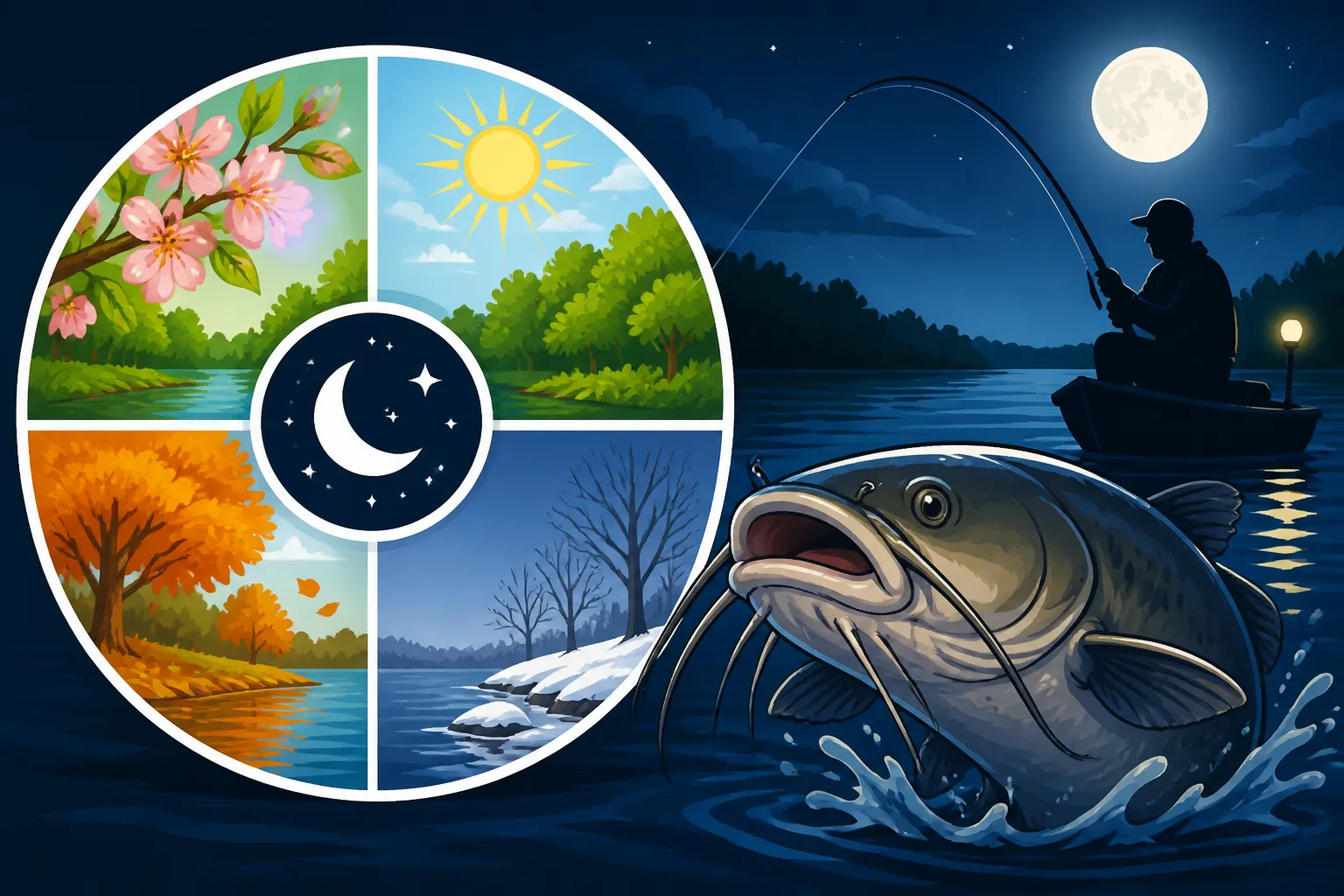
Catfish on Kentucky Lake, much like anywhere else, are heavily influenced by the seasons and, more specifically, by water temperature. Their behavior, feeding patterns, and where they hold in the water column all change dramatically throughout the year. Knowing these seasonal nuances is the first step to pinpointing the best time for successful night catfishing.
Spring's Awakening: Late April to Early June
As Kentucky Lake sheds its winter chill, usually from late April through early June, the water begins to warm up. This period sees a gradual increase in catfish activity, especially during the day and early evening. The smaller channel catfish will often be the first to get active, moving into shallower waters to feed on newly hatched baitfish and other easy meals. Blue catfish also start to shake off their winter lethargy and begin to explore shallower flats and creek channels as the spawn approaches.
While you can catch catfish at night during this period, it’s often more about catching the tail end of their daytime feeding frenzy or capitalizing on their pre-spawn movements. The water temperatures are typically in the 60s, which is comfortable for them, but the intense heat that truly drives them to nocturnal habits hasn't fully set in yet. This is a good time to target them in depths of 10-25 feet, often near structural elements like stumps and ledges as they transition from deeper wintering holes. If you're looking for a good resource on where to find these fish, our guide on the Kentucky Lake Summer Catfish Bite can provide some crossover insights.
Summer's Peak Action: June to August
Hands down, the absolute prime window for night catfishing on Kentucky Lake stretches from June through August. This is when the Kentucky summer really kicks in, pushing water temperatures into the 80s and sometimes even higher. During the scorching daylight hours, catfish, especially the larger blues and flatheads, become more sluggish and seek deeper, cooler water. But as the sun dips below the horizon and the air begins to cool, the lake transforms into a bustling cafeteria for these whiskered predators.
This nocturnal shift is driven by a few key factors: cooler water temperatures near the surface, less boat traffic, and the increased activity of baitfish. The catfish, feeling more comfortable and less pressured, move into shallower areas, onto flats, and along ledges to actively hunt. This is the period when you have the best chance of landing those truly monumental blue catfish and elusive flatheads that Kentucky Lake is famous for. When considering the Kentucky Catfish Daily Limit and Trophy Fish Rule, remember that summer nights offer your best shot at hitting those trophy sizes.
Fall's Cooling Waters: September to October
As summer transitions into fall, usually around September and October, the water temperatures on Kentucky Lake gradually begin to cool again. This signals a change in catfish behavior, but it's still a fantastic time for night fishing, just with a slightly different approach. Catfish are often in a transitional phase, feeding heavily to pack on weight for the colder months ahead. They’ll still feed at night, but their movements might be more predictable, often relating to baitfish moving into creek arms and pockets.
You might find them congregating in depths of 20-40 feet during the day, then moving shallower onto flats or along channel edges at night. The bite can still be strong, especially in early fall, but as temperatures drop further into the 60s and 50s by late October, the nocturnal frenzy starts to diminish. The activity often shifts back to a more balanced day-and-night bite, rather than the exclusive nighttime dominance seen in summer.
Winter's Chill: November to March
From November through March, Kentucky Lake experiences its coldest water temperatures, often dipping into the 40s. During these months, catfish become much less active, seeking out deep holes, river channels, and other thermal refuges where water temperatures are more stable. While you can still catch catfish in winter, particularly blue cats that remain somewhat active even in cold water, night fishing becomes significantly more challenging and less productive than in other seasons.
The fish are lethargic, their metabolism slows down, and they feed much less frequently. If you do venture out at night during winter, you'll need to focus on very slow, subtle presentations in those deep wintering holes. Most dedicated catfishermen will shift their focus to daytime efforts or other species during this period, recognizing that the juice isn't usually worth the squeeze for night catfishing in the dead of winter on Kentucky Lake.
Why Summer Nights Reign Supreme for Kentucky Lake Catfish
It's not just a feeling; there are concrete biological and environmental reasons why summer nights offer the absolute best opportunities for catfishing on Kentucky Lake. Understanding these factors can help you refine your strategy and put more fish in the boat.
The Heat-Driven Nocturnal Shift
During the sweltering Kentucky summer, the surface water of Kentucky Lake can get uncomfortably warm for catfish, especially the larger, oxygen-loving blue and flathead species. These fish, being cold-blooded, thrive in cooler, more stable temperatures. As the sun beats down all day, the shallow waters heat up, forcing the catfish to retreat to deeper, cooler sanctuaries.
However, once the sun sets, the water temperature, particularly in the shallower areas, begins to drop. This change, even by a few degrees, triggers a metabolic shift in catfish. They become more active, venturing out of their deep-water hiding spots to exploit the cooler, more oxygenated shallows. The combination of thermal comfort and reduced light is a powerful stimulant, making them more inclined to feed aggressively under the cloak of darkness. It's their prime time to cruise the flats and ledges, making them significantly more accessible to anglers.
Abundant Baitfish Movement and Reduced Pressure
Think about it: during the day, Kentucky Lake is a hub of activity. Boats zoom around, jetskis crisscross the water, and swimmers splash. This constant disturbance can put many fish, especially wary trophy catfish, on edge. But at night, the lake quiets down dramatically. The boat traffic diminishes, and the overall pressure on the fish is significantly reduced. This tranquility makes catfish feel safer to roam and feed more openly.
Furthermore, many baitfish species, like shad, also become more active at night, often moving closer to the surface or into shallower coves and creek mouths. This nocturnal baitfish movement creates an irresistible feeding opportunity for hungry catfish. They follow the bait, making them easier to locate for anglers who know where to look. It's a natural cycle where predator and prey converge under the cover of darkness, offering fantastic opportunities for anglers. For those keen on exploring different options, some of the Best Catfish Fishing Spots on Kentucky's Ohio River also see similar nocturnal feeding patterns.
Targeting Trophy Blues and Flatheads
While channel catfish are always a fun catch, many anglers come to Kentucky Lake dreaming of a true trophy blue cat or a formidable flathead. These larger species are notoriously shy and can be incredibly difficult to fool during daylight hours. They often hold in very specific, deep, and heavily structured areas, making them challenging to pinpoint and entice.
However, at night, these behemoths become significantly more accessible. The biggest blue catfish will often move up onto flats or along major river channel ledges, while flatheads will move into shallower woody cover or rocky areas to ambush prey. Their territorial nature and aggressive feeding instincts kick into high gear under the cover of darkness. This means that a carefully presented cut bait or live bait in a prime location has a much higher chance of being intercepted by one of these giants, making summer nights the ultimate trophy catfishing experience on Kentucky Lake.
Key Factors for Successful Night Catfishing on Kentucky Lake
Knowing when to go is only half the battle. To truly succeed at night catfishing on Kentucky Lake, you need to understand the nuances of water temperature, lunar cycles, and the right gear.
Water Temperature is King
We've touched on it already, but it bears repeating: water temperature is perhaps the single most critical factor for catfish activity. For optimal night catfishing on Kentucky Lake, you're generally looking for surface water temperatures in the 70s and 80s Fahrenheit.
- 70-75°F: This range, typically found in late spring and early fall, can offer good night bites, especially for channel and smaller blue cats. The fish are active but not yet driven exclusively to nocturnal feeding.
- 76-85°F: This is the sweet spot for summer night catfishing. The warmer daytime temperatures push fish deep, but the slight cool-down at night brings them shallow and makes them extremely aggressive feeders. This is prime time for trophy blues and flatheads.
- Below 70°F: As temperatures dip below this, the night bite starts to slow down, and catfish activity can become more sporadic. You'll still catch fish, but the intense, consistent feeding frenzies of summer nights will be less common.
Always try to monitor the lake's water temperature. Many modern fish finders provide accurate temperature readings, or you can use a simple water thermometer. This information will guide your choice of fishing spots and even your bait presentation.
Moon Phases and Cloud Cover
While not as critical as water temperature, moon phases and cloud cover can subtly influence the night bite. Many experienced catfishermen swear by certain moon phases, though opinions vary.
- New Moon (Darker Nights): Some anglers prefer the darkest nights of the new moon phase, believing that the lack of ambient light makes catfish less wary and more likely to feed aggressively. The low light can also concentrate baitfish.
- Full Moon (Brighter Nights): Conversely, other anglers find success during a full moon. The increased light can allow catfish to see and hunt more effectively, but it might also make them a bit warier in shallower waters. Some believe the brighter nights can spread fish out more.
- Cloud Cover: Overcast skies, regardless of moon phase, can often enhance night fishing. Clouds block out moonlight, creating darker conditions that can encourage catfish to move and feed more freely. A heavy overcast night, especially after a hot day, can be phenomenal.
The general consensus is that darker nights tend to be better for active, aggressive feeding, as catfish use their sense of smell and lateral lines more in low light. However, don't let a bright moon deter you entirely; simply adjust your approach by maybe moving to slightly deeper edges or targeting shaded areas.
Best Baits and Rigs for Night Fishing
Choosing the right bait and rig is paramount for night catfishing success on Kentucky Lake.
- Cut Bait: For blue and channel catfish, fresh cut bait is king. Shad, skipjack herring, or even commercially prepared baits like those found on Amazon (though local bait shops often have fresher options) are highly effective. Cut bait emits a strong scent trail that catfish can easily detect in the dark.
- Live Bait: Flathead catfish are ambush predators that almost exclusively prefer live bait. Bluegill, shad, or small carp are excellent choices. Ensure your live bait is vigorous to attract attention.
- Prepared Baits: Stink baits and punch baits can work wonders for channel catfish, especially in warmer water.
- Rigs:
- Carolina Rig (Santee Cooper Rig Variation): This is a staple for bottom fishing. Use a heavy lead sinker (2-8 oz depending on current and depth) to hold your bait on the bottom, followed by a swivel, a leader (2-4 feet of heavy mono or fluorocarbon), and a strong circle hook (8/0 to 12/0 for big cats). The Santee Cooper variation adds a small float to the leader, lifting the bait off the bottom, which can be great in soft mud or to make bait more visible to fish looking slightly up.
- Suspension Rigs: For active fish suspended over deeper channels or humps, a slip bobber rig can be effective. This allows you to present live or cut bait at a precise depth.
Make sure your tackle is up to snuff. Heavy-duty rods, reels with strong drags, and tough line are essential when you're hooking into a Kentucky Lake monster in the dark. Our guide on the Best Reels for Catfish Fishing will give you some excellent options to consider.
Essential Night Fishing Gear
Night fishing requires some specialized gear to ensure safety and efficiency.
- Headlamps/Spotlights: Hands-free illumination is crucial. Choose a headlamp with red light options to preserve your night vision. A powerful spotlight can help with navigation or identifying distant markers. You can find excellent, waterproof options on Amazon.
- Rod Holders: Sturdy rod holders are non-negotiable for boat or bank fishing. They keep your rods secure and allow you to fish multiple lines comfortably.
- Glow Sticks/LEDs: Attaching small glow sticks or clip-on LED lights to your rod tips makes it easy to detect subtle bites in the dark. This is often more effective than staring at your line.
- Navigation Lights: If you're fishing from a boat, ensure all your navigation lights are fully functional and in compliance with regulations. Safety first!
- First Aid Kit: Always a good idea, but especially at night when visibility is limited.
- Cutting Board and Knife: For preparing cut bait, you’ll want a dedicated, well-lit area.
- Bug Spray: Don't forget this during summer nights on Kentucky Lake – mosquitoes can be relentless!
- Cooler with Ice: To keep your bait fresh and your catch prime for the dinner table.
Having these essentials organized and easily accessible will make your night fishing experience much more enjoyable and productive. If you're interested in learning more about setting up your gear, check out our piece on Night Fishing Techniques for Catfish.
Strategic Locations and Techniques for Night Fishing on Kentucky Lake
Successfully catching catfish at night on Kentucky Lake involves more than just showing up after dark. You need a strategy to identify prime locations and employ effective techniques.
Identifying Prime Nighttime Catfish Haunts
Kentucky Lake's vastness means you can't just drop a line anywhere and expect results. Catfish, especially the big ones, are creatures of habit and will frequent certain types of areas at night.
- River Channels and Ledges: The old Tennessee River channel that winds through Kentucky Lake is a highway for catfish. At night, big blues will often move up onto the shallower ledges and flats adjacent to these deep channels. Look for sharp drops, humps, and submerged points along these channels.
- Creek Channels and Mouths: Where major creeks flow into the main lake, you'll often find a smaller creek channel. Catfish use these as travel corridors, especially at night when baitfish move into the shallower creek arms.
- Submerged Timber and Brush Piles: Flathead catfish, in particular, love heavy cover. At night, they’ll often move out of the densest timber to ambush prey along the edges of these submerged forests. Blue catfish will also relate to structure. These areas can be tricky to fish due to snags, but they hold big fish.
- Open Water Flats with Bottom Irregularities: Especially in summer, large blue catfish will roam expansive, shallower flats (10-25 feet) that have subtle bottom contours, shell beds, or scattered rock piles. These areas attract baitfish, and the catfish will follow.
- Dam Areas: Below the Kentucky Dam, the current and deep water create excellent habitat for catfish year-round, including at night. Always be aware of current changes and safety around dams.
Before heading out, spend some time studying a good lake map or using your sonar to mark potential hotspots during the day. This reconnaissance will save you valuable time and effort in the dark. For a broader perspective on regulations, consult the Kentucky Fishing Regulations Explained.
Anchoring vs. Drifting
Both anchoring and drifting can be effective night catfishing techniques on Kentucky Lake, and the best choice often depends on the specific conditions and target species.
- Anchoring: This is ideal when you've identified a very specific spot where fish are holding, such as a hump, a brush pile, or a significant drop-off.
- Pros: Allows you to precisely present multiple baits in a small, productive area. Reduces boat movement, which can be advantageous on calm nights or when fish are skittish. Great for flathead fishing in woody cover, as you can work specific log jams.
- Cons: Limits your ability to cover water quickly. If the fish aren't in that exact spot, you might be out of luck.
- Technique: Use a sturdy anchor system. Position your boat slightly upwind or upstream from your target spot, allowing your baits to settle directly where you expect the fish to be. Have multiple rods out, fanned around the boat.
- Drifting: This technique is excellent for covering large areas, especially open flats or long channel ledges, when you're trying to locate actively feeding fish.
- Pros: Allows you to present baits to a wide range of territory, increasing your chances of finding scattered fish. Can be highly effective for blue catfish roaming open water.
- Cons: Can be challenging in strong winds or currents, which can make precise bait presentation difficult. Requires more active boat control.
- Technique: Use a drift sock or sea anchor to slow your boat's drift speed, allowing your baits to stay in the strike zone longer. Use multiple rods with different bait depths to find the fish. Monitor your sonar for changes in depth, baitfish, and catfish presence. This can be combined with techniques for How to Rig a Trotline for Catfish, though trotlining itself is a static technique.
Many anglers will start a night by drifting to locate active fish, and once a pattern or a specific hotspot is identified, they will then anchor down to thoroughly work that area. It's a flexible approach that allows you to adapt to what the fish are telling you.
Safety First During Night Operations
Night fishing is exhilarating, but it inherently carries more risks than fishing in daylight. Safety must always be your top priority, especially on a large body of water like Kentucky Lake.
- Know Your Water: Only fish areas at night that you are intimately familiar with from daylight hours. Submerged hazards, stump fields, and shallow bars are much harder to see in the dark.
- Proper Lighting: As mentioned, robust navigation lights, a bright spotlight, and headlamps are non-negotiable. Ensure your boat's lights are operational and visible from all directions.
- GPS and Charts: Rely on your GPS and electronic charts to navigate safely, especially when moving between spots. Mark all hazards during the day.
- Life Jackets: Always wear a Coast Guard-approved life jacket, especially when moving the boat or if you're alone. Even experienced boaters can have accidents in the dark. For details, refer to the Kentucky Fishing License Guide.
- Communication: Tell someone your float plan – where you're going, when you expect to return, and who is with you. Carry a fully charged cell phone and, if possible, a marine radio.
- Weather Monitoring: Check the weather forecast meticulously before heading out and throughout the night. Storms, strong winds, or sudden cold fronts can be dangerous on the water after dark.
- Alcohol Consumption: Avoid alcohol entirely when boating or fishing at night. Your senses are already diminished, and alcohol only exacerbates the risk.
Night fishing can be incredibly rewarding, offering a peaceful solitude and the chance at truly impressive catches. By combining seasonal knowledge, the right gear, strategic techniques, and an unwavering commitment to safety, you'll significantly increase your chances of a memorable night catfishing experience on Kentucky Lake.
Seasonal Catfishing Opportunities on Kentucky Lake
Let's break down the optimal conditions for night catfishing on Kentucky Lake in a quick summary for easy reference.
| Season | Months | Water Temperature (F) | Primary Catfish Species | Night Fishing Activity | Notes |
|---|---|---|---|---|---|
| Spring | Late April – Early June | 60s – Low 70s | Channel, Blue | Moderate, increasing towards June | Pre-spawn movements, good for active smaller fish. |
| Summer | June – August | Mid 70s – Mid 80s | Blue, Flathead, Channel | Peak Activity – Best Time! | Catfish go nocturnal to avoid heat/traffic, aggressive feeding. |
| Fall | September – October | Low 70s – Low 60s | Blue, Channel | Moderate, tapering off by late October | Fish fattening up for winter, still good but less intense than summer nights. |
| Winter | November – March | 50s – 40s | Blue (less active) | Very Low, challenging | Fish in deep holes, lethargic. Night fishing generally unproductive. |
Ultimately, if you're looking for the absolute best time to experience the thrill of night catfishing on Kentucky Lake, set your sights on those warm summer nights from June through August. That's when the lake truly comes alive after dark, offering the best chance at landing a Kentucky Lake monster.
Disclaimer
Fishing conditions and regulations can change. Always consult the latest Kentucky Department of Fish and Wildlife Resources (KDFWR) regulations before your trip. This article is for informational purposes only and does not constitute official legal advice.