How to Fish a Crankbait Around Cover
It's incredibly frustrating, isn't it? You spend good money on a killer crankbait, cast it out to that perfect-looking brush pile or rock seam where you know a big bass is hiding, only to feel that sickening thud as it snags, followed by the inevitable loss of your lure. We've all been there. It feels like you have to choose between catching fish in prime cover or keeping your tackle box stocked. But I'm here to tell you, you don't have to make that choice! This guide is all about mastering the art of fishing a crankbait around cover in Kentucky waters, turning those potential snags into strike-triggering deflections.
The Irresistible Allure of Crankbaits in Kentucky's Prime Cover
Let's be honest, there's just something about a crankbait that screams "big fish." Its erratic movement, its ability to cover water, and that undeniable thumping vibration it sends through the rod make it a go-to lure for many anglers. But the magic truly happens when you throw a crankbait into the messiest, fish-holding cover you can find. Those submerged trees, rock piles, and thick weed lines aren't just hazards; they're the homes of trophy bass and other predatory species. The key is understanding why crankbaits are so effective here and how to use them to your advantage.
Why Fish in Cover? It's Where the Fish Live
Think about it: fish, especially larger game fish, are ambush predators. They love to hide, waiting for an unsuspecting meal to swim by. Cover provides them with protection from the sun, current, and other predators, making it a comfortable and strategic spot to hang out. Whether you're targeting largemouth bass around fallen timber in Kentucky Lake or smallmouth bass near rocky ledges in Lake Cumberland, the best fish are almost always found nestled right up against structure.
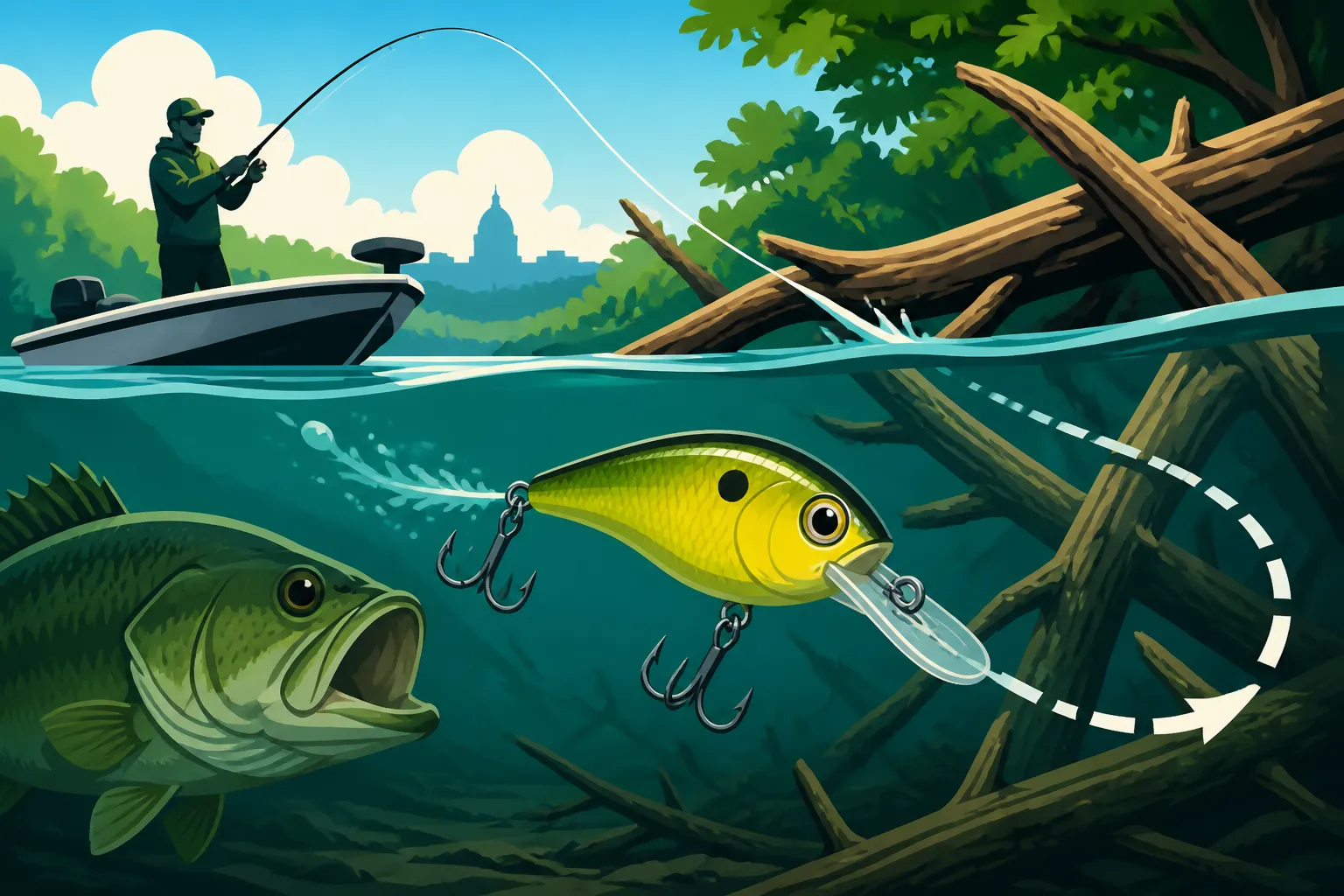
When you cast a crankbait near or, even better, into this cover, you're doing a few things that really get a fish's attention. First, you're mimicking natural baitfish. Shad, bluegill, and other forage fish often school up around these structures. Your crankbait, especially one with a realistic pattern you might find on Amazon, looks like an easy meal. Second, and perhaps most importantly, is the "deflection." When your crankbait bumps, bounces, or grinds off a piece of wood or rock, it creates an erratic, darting action. This sudden, unpredictable movement often triggers an instinctual reaction strike from a nearby fish, even if they weren't actively feeding. It's like a predator seeing a wounded or confused prey, and they just can't resist.
Understanding Different Crankbait Personalities
Not all crankbaits are created equal, and understanding their individual personalities is crucial for fishing them effectively around cover. Different bill shapes, body designs, and buoyancy characteristics make them suitable for various types of structure and depth ranges.
For instance, you have the venerable squarebill crankbait. These baits are designed with a wide, often blunt, square-shaped bill. This unique bill deflects off objects incredibly well. When it hits a branch or a rock, it doesn't just dig in; it actually "kicks out" to the side, then quickly reorients itself. This action is pure magic for triggering reaction strikes. They generally run shallower, making them perfect for fishing stumps, laydowns, and shallow rock piles.
Then there are the round-billed or coffin-billed crankbaits, often referred to as medium or deep divers. These baits have narrower, longer bills that allow them to dive deeper and often track straighter through the water. While they can still deflect, they're generally designed to "grind" through cover rather than kick off it dramatically. They're excellent for fishing deeper timber, submerged brush piles, or along rocky ledges where you need to get down to 8-15 feet or more.
And let's not forget lipless crankbaits, like a trusty Bill Lewis Rat-L-Trap or a similar vibrating bait. These don't have an external bill but rely on their body shape to create a tight, high-frequency wobble and rattle. While not typically thought of for "banging" off hard cover, they are absolutely dynamite for fishing grass beds. Their profile allows them to rip free from vegetation with a sharp snap of the rod, often eliciting vicious strikes as they do. When considering your Best Lures for Kentucky's April-May Bass Peak, a variety of crankbaits should definitely be on your list.
Mastering the Art of the Bump and Grind
Fishing crankbaits around cover isn't just about throwing and reeling; it's a nuanced dance between feeling your lure, anticipating contact, and reacting instinctively. It’s a technique that requires practice and a keen sense of what your bait is doing beneath the surface.
Reading the Water and Approaching Cover
Before you even make your cast, take a moment to "read" the water and the cover. Look for transitions – where a flat bank drops off into deeper water, where a mud bottom meets rock, or where a weed line ends. These transition zones are often hotspots. Consider the angle of your approach. If you're fishing a fallen tree (a "laydown"), casting parallel to the trunk or slightly over the branches will often yield better results than casting straight into it. The goal is to bring your lure into contact with the cover in a way that allows it to deflect naturally, rather than getting irrevocably hung up. For specific locations, our guide on the Best Fishing Spots in Kentucky can give you some excellent ideas.
- Observation is Key: Pay attention to current, wind, and water clarity. These factors can influence how fish relate to cover and how your crankbait behaves.
- Stealth Matters: Approaching too quickly or making too much noise can spook fish. If you're in a boat, use your trolling motor sparingly and keep movements smooth.
- Anticipate the Strike: Often, a strike will occur just after your bait deflects off cover. Be ready!
The Deflection Principle: Your Secret Weapon
This is the golden rule of crankbait fishing in cover: make contact. You want your crankbait to actually hit the wood, rock, or grass. But the trick isn't just hitting it; it's how you react to that contact.
When your crankbait bumps into cover, immediately stop reeling for a split second. This slack in the line allows the crankbait to do one of two things, depending on its buoyancy:
- Floating Crankbaits: If you stop reeling, a floating crankbait will slowly back up and rise over the obstruction. This looks incredibly natural, like a startled baitfish trying to escape. Many strikes occur on this pause as the lure ascends.
- Suspending Crankbaits: A suspending crankbait will simply hang there, motionless, after the deflection. This can be equally effective, as a fish might follow the erratic movement and then see an easy, vulnerable meal just hanging in front of them.
After that brief pause, give your rod a slight twitch or a slow, deliberate reel turn to get the bait moving again. This sudden change in direction or speed often triggers the reaction strike. It's not about muscling the bait through the cover; it's about letting the bait's design work for you, bouncing and deflecting, creating that irresistible "wounded baitfish" action.
The Right Gear Makes a Difference
Your rod, reel, and line are more than just tools; they're an extension of your senses. Choosing the right setup will significantly improve your ability to feel subtle deflections, minimize snags, and successfully land those aggressive strikes. If you're just starting out, a good Best Rod and Reel Combo for Beginners is a great foundation.
- Rod Selection: For crankbait fishing around cover, a medium to medium-heavy power rod with a moderate-fast action is usually ideal. The "moderate" action means the rod will bend more parabolically (further down the blank), which acts like a shock absorber. This helps prevent hooks from tearing out when a fish strikes hard, and it gives you a little extra give when your lure hits a snag, often allowing it to bounce free. A faster action rod can be too stiff, causing the bait to get hung up more easily.
- Reel Choice: A baitcasting reel with a gear ratio between 5.3:1 and 6.4:1 is often preferred. This slower retrieve allows you to work the bait more deliberately, feeling the bottom and cover without overpowering the retrieve. A smooth drag system is also paramount for handling big fish runs.
- Line Options:
- Fluorocarbon: This is a fantastic choice for most crankbait applications. It has low stretch, which gives you excellent feel for what your lure is doing. It's also virtually invisible underwater and sinks, helping your crankbait reach its maximum running depth. The abrasion resistance of fluorocarbon is a huge plus when fishing around rough cover like rocks or zebra mussel-encrusted timber. Brands like Seaguar and Berkley offer excellent options you can find on Amazon.
- Monofilament: While it has more stretch than fluorocarbon, mono can be a good choice for shallow-running crankbaits, especially squarebills. Its buoyancy can help the lure rise over cover more easily after a deflection, and its stretch can be forgiving, preventing fish from tearing off.
- Braided Line: Braid offers incredible strength and no stretch, giving you maximum feel. However, its high visibility can be an issue in clear water, and it's less abrasion resistant than fluorocarbon against sharp edges. If you use braid, consider a fluorocarbon leader (e.g., 10-15 feet) to maintain stealth and some abrasion resistance. Just remember to use a strong knot, perhaps one outlined in our How to Tie a Fishing Knot for Beginners guide.
Matching the Crankbait to the Cover
The right tool for the right job, as they say! Just like you wouldn't use a hammer to drive a screw, you wouldn't throw a deep-diving crankbait into 3 feet of water with thick weeds. Understanding which crankbait shines in specific types of cover is paramount to success and minimizing lost lures.
Squarebills: Kings of Shallow Wood and Rock
When you're targeting shallow water (say, 1 to 6 feet deep) and the cover consists of stumps, laydowns, brush piles, or scattered rocks, the squarebill crankbait is your absolute best friend. Their wide, flat bills are engineered for impact. They deflect with an aggressive kick-out, making them surprisingly snag-resistant in situations where other baits would quickly get hung up.
Imagine fishing along the shallow banks of Kentucky Lake, where fallen trees line the shoreline. You cast your squarebill, maybe a bright chartreuse color, parallel to a submerged log. You feel it bump the wood, stop reeling, let it float up for a second, then gently begin your retrieve again. WHAM! A big bass hammers it on the pause. The key here is to keep that retrieve steady enough to maintain depth, but slow enough to react to every tap and tick. Brands like Strike King KVD 1.5 or Rapala DT-Fat are popular choices, often available at competitive prices on Amazon.
Medium Divers for Deeper Timber and Rock Piles
As you move into slightly deeper water, perhaps 6 to 12 feet, where you might encounter larger submerged timber, rock piles, or transition zones, a round-billed or coffin-billed medium diver comes into play. These baits have a more streamlined profile and a bill that allows them to dive efficiently and track true. While they don't kick out as dramatically as a squarebill, their ability to "grind" through cover is effective.
Let's say you're exploring a humpy area in Lake Barkley with scattered rock and deep-lying brush. You cast a crankbait like a Strike King 5XD or a Berkley Dredger. You feel it ticking along the bottom, occasionally bumping a rock. When you feel a heavier thud, indicating a larger obstruction, you might just briefly pause, letting the bait wobble slightly before continuing your retrieve. This subtle hesitation and change in action can be all it takes to convince a wary bass to strike. Remember that these deeper zones often hold larger fish, so make sure your knots are solid!
Lipless Wonders for Grass and Suspended Cover
While not traditional "bill" crankbaits, lipless crankbaits are invaluable for fishing specific types of cover, primarily submerged grass beds and situations where fish are suspended. Their compact, heavy design allows for long casts, and their tight vibration can call fish from a distance.
Picture yourself fishing a vast flat in Kentucky with abundant hydrilla or milfoil. You cast a lipless crankbait, like a Rat-L-Trap or a Strike King Red Eye Shad, over the top of the grass. As soon as you feel it start to bog down in the vegetation, give your rod a sharp, upward snap. This "ripping" action tears the bait free from the grass, creating a sudden burst of speed and vibration. This is often when a bass will pounce. This technique is also fantastic for quickly locating active fish in vast stretches of grass. If you’re fishing during the Kentucky Bass Fishing: The April-May Peak Season, lipless crankbaits are a must-have for grassy areas. Don't forget to check out our guide on Best Lures for Fall Bass Fishing as crankbaits are highly effective then too!
The Dance of the Retrieve: Enticing Bites and Evading Snags
Once you've made your cast and chosen your bait, the retrieve becomes the most dynamic part of fishing a crankbait around cover. It's a continuous process of feeling, reacting, and adjusting to what's happening under the water. This isn't just a matter of reeling; it's about coaxing fish out of their hiding spots and keeping your lure out of trouble.
Varying Your Retrieve Speed and Adding Pauses
Fish don't always want the same presentation. Sometimes they want a fast, aggressive chase, and other times they prefer a slow, subtle approach. When fishing a crankbait around cover, experimenting with your retrieve speed is crucial.
Start with a steady, moderate retrieve that keeps your bait running true. Pay close attention to what you're feeling. Is it bumping cover frequently? Is it running clean? Once you've established this baseline, start to introduce variations.
- Speed Bursts: Occasionally, give the reel handle a quick turn or two, speeding up the bait for a moment before returning to your original pace. This sudden burst can make the bait look like it's trying to escape, triggering a predatory response.
- The Power of the Pause: As mentioned earlier, pausing your retrieve is perhaps the most effective trick in the book, especially when your bait makes contact with cover. Let it sit, rise, or wobble for a count of one or two before resuming. This vulnerability is often irresistible. This is particularly effective with shallow-running squarebills around wood, or with suspending crankbaits over rock piles.
- The "Rip and Pause" for Lipless Baits: When fishing lipless crankbaits in grass, the "rip and pause" is paramount. Let the bait fall into the grass, feel it load up, then rip it free with a sharp snap of your rod. Let it fall again briefly, then repeat. This mimics a baitfish fleeing a predator and is incredibly effective.
By constantly changing things up, you increase your chances of finding what the fish want on any given day. Remember, fish behavior can change rapidly after a cold front or even just a cloud cover, so staying adaptable is key.
The Inevitable Snag: What to Do
No matter how skilled you become, fishing crankbaits around cover means you will get snagged. It's part of the game. But don't despair and just start pulling! There are several techniques you can try to free your lure before resorting to breaking it off.
- Slack Line & Twitch: The first thing to try when you feel a snag is to give immediate slack. Drop your rod tip towards the lure and let the line go completely slack. Often, the lure will float up or simply dislodge itself. After a few seconds, gently twitch your rod tip. Sometimes the trebles will just pop free.
- The "Bow and Arrow" Pull: If slack doesn't work, point your rod tip directly at the snag. Open your bail (or disengage your reel) and pull firmly on the line, like drawing a bowstring. Then, release the line like an arrow. The sudden snap back often knocks the lure free. Repeat this a few times.
- Change Your Angle: If you're in a boat, try moving to the other side of the snag or changing your casting angle. Pulling the lure from a different direction can often free a hook that was lodged straight in.
- Use a Plug Knocker: These are invaluable tools for serious crankbait anglers. A plug knocker is a heavy weight, often with chains, that you clip onto your line. You slide it down the line until it hits your snagged lure, then you use its weight and the chains to dislodge the lure. Many anglers have saved countless dollars worth of crankbaits with these simple devices, easily found on Amazon.
- Be Patient: Don't just yank! A slow, steady pull can sometimes work, but a hard, continuous pull will often bury the hooks deeper. Take your time, try a few methods, and you'll be surprised how often you can save your lure.
The Importance of Sharp Hooks
This might seem obvious, but it's often overlooked. When fishing around cover, your hooks are going to take a beating. They'll dull, bend, and even break. Dull hooks mean missed fish. Always check your hooks regularly throughout the day. If they're not needle-sharp, either sharpen them with a hook file or replace them. Many anglers even replace the stock hooks on new crankbaits with higher-quality, stronger, and sharper treble hooks, especially when fishing for hard-fighting bass in dense cover. You can find excellent replacement treble hooks from brands like Gamakatsu or Mustad on Amazon.
Putting It All Together: A Typical Kentucky Scenario
Let's walk through a hypothetical fishing trip to illustrate how these techniques come together on the water. Imagine you're fishing a popular reservoir like Lake Cumberland, known for its diverse cover and big bass.
You arrive in the morning, the air is crisp, and you decide to target a long point that extends into the lake, featuring a mix of rock and submerged brush piles at about 8-10 feet. You start with a medium-diving crankbait in a crawfish pattern, perhaps a deep diving Strike King KVD.
Your first few casts are probing the edges of the point. You feel the bait ticking along the bottom, occasionally bumping a small rock. No bites. You notice some sonar readings indicating a larger brush pile further out on the point, sitting in about 9 feet of water.
You make a long, accurate cast that sends your crankbait well past the brush pile. As you retrieve, you mentally count down to ensure it reaches depth. Thump! You feel a distinct hit. Instead of yanking, you stop reeling instantly, dropping your rod tip. The bait hangs there for a moment, then you feel a slight wobble as it bounces off the submerged branches. You twitch your rod, and BAM! A solid 3-pound smallmouth hammers the bait. You fight it carefully, keeping your rod tip up, letting the moderate action absorb the head shakes, and eventually boat the fish.
After releasing it, you cast again, this time trying a slightly different angle. You feel the bait grind over the brush, and again, you pause. This time, nothing. You resume your retrieve, speeding it up for a few cranks, then slowing down. You repeat this pattern, varying the retrieve. Suddenly, the line goes slack – not a snag, but a fish picked it up on the fall! You reel down quickly and set the hook into another feisty smallmouth.
Later in the day, you move to a shallow cove with visible laydowns and stumps in 3-5 feet of water. You switch to a squarebill crankbait, perhaps a bright chartreuse bluegill pattern. You cast directly at a large, gnarly stump. Your squarebill bangs hard off the side of the stump, kicking violently. You pause, letting it float up. As it clears the obstacle, a powerful largemouth explodes on it, pulling drag. The wide bill and the deflection saved your lure from snagging, and the pause triggered the aggressive strike. This is the essence of effective crankbait fishing around cover in Kentucky! Remember to check Kentucky Statewide Bass Limit: 12 Inches, 6 Fish a Day and other Kentucky Fishing Regulations Explained before heading out.
Table: Crankbait Choices for Kentucky Cover
| Crankbait Type | Ideal Cover Type(s) | Key Features for Cover | Typical Running Depth | Common Brands/Examples |
|---|---|---|---|---|
| Squarebill | Shallow Wood (stumps, laydowns), Riprap, Scattered Rocks | Aggressively deflects off hard cover, kicks out, rises quickly | 1-6 feet | Strike King KVD 1.5, Rapala OG Tiny, Berkley SquareBull |
| Medium Diver | Deeper Wood (submerged brush), Rock Piles, Ledges, Transition Areas | Streamlined bill for deeper dives, "grinds" through cover, less dramatic deflection | 6-12 feet | Strike King 5XD, Rapala DT Series, Bandit 200/300 |
| Deep Diver | Deep Ledges, River Channels, Off-Shore Humps | Very long bill for maximum depth, reaches deep structure, often slower retrieves | 12-25+ feet | Norman DD22, Berkley Dredger, Strike King 6XD/8XD |
| Lipless | Submerged Grass/Weeds, Suspended Baitfish, Open Water | Vibrating action, rips free from grass, good for covering water | Variable (retrieve speed) | Bill Lewis Rat-L-Trap, Strike King Red Eye Shad, Yo-Zuri Rattl'n Vibe |
Note: Specific running depths can vary based on line size, retrieve speed, and casting distance.
Final Thoughts on Tackling Kentucky's Cover
Fishing a crankbait around cover is one of the most exciting and rewarding ways to fish in Kentucky. It demands attention, quick reflexes, and a willingness to put your lure in harm's way. But with the right techniques, gear, and a bit of practice, you'll be turning those dreaded snags into memorable catches. Don't let the fear of losing a lure keep you from fishing the best spots where the biggest fish are often hiding. Embrace the bumps, master the deflections, and get ready for some exhilarating strikes! For more information on fishing in specific Kentucky locations, be sure to read our guide to Best Bass Fishing Spots on Kentucky Lake.
Disclaimer
Always consult the latest Kentucky Department of Fish and Wildlife Resources regulations before heading out on the water. Fishing conditions, regulations, and fish behavior can change, and it is the angler's responsibility to stay informed and adhere to all applicable laws.