Best Lures for Striped Bass in Deep-Water Reservoirs
Oh, the allure of striped bass in Kentucky's deep-water reservoirs! It’s a challenge many of us anglers face, trying to figure out what lures will actually get down to where these powerful fish lurk and entice them to strike. It can feel like you're fishing in a black box sometimes, especially when you're targeting those elusive deep-water stripers. This guide is here to unravel some of that mystery, providing you with a comprehensive look at the best lures and techniques to tackle the formidable task of catching striped bass in these vast, deep waters.
Understanding Striped Bass Behavior in Deep Reservoirs
Before we even talk about specific lures, it's absolutely crucial to understand what makes a striped bass tick, especially when they're hiding out in the deep. These are not your typical shallow-water ambush predators all the time; they're often roaming in open water, chasing baitfish in the profound depths of lakes like Lake Cumberland or Lake Barkley. Knowing their habits is half the battle when it comes to lure selection and presentation.
The Deep-Water Residence of Stripers
Striped bass, often simply called "stripers" by us regulars, are unique in that they prefer cooler, oxygen-rich water. In deep-water reservoirs, this usually means they'll suspend at certain depths, especially during the warmer months, seeking out that thermal refuge. They don't just hang out on the bottom like a catfish; they're often suspended over deep channels, submerged timber, or along old creek beds. Think of them like underwater cruise missiles, constantly on the move, but generally staying within a comfortable temperature range. This makes finding them a real puzzle, but once you do, the action can be incredible.
Sometimes, you might find them congregated around areas where baitfish like threadfin or gizzard shad are schooling up. These baitfish are their primary food source, and stripers will follow them relentlessly. If you can locate the bait, you're usually not far from the stripers. Their preference for deeper, cooler water is a key characteristic that dictates how we approach fishing for them, particularly with the types of lures we choose and how we present them. Forget shallow presentations when they're deep; you need to get your offerings right into their strike zone.
Seasonal Movements and Feeding Habits
Striped bass behavior changes quite a bit with the seasons, which directly impacts their depth and feeding patterns. In the spring and fall, when surface temperatures are more agreeable, stripers might venture shallower, sometimes even hitting topwater lures during low-light conditions. But as summer heats up, they're driven into the deeper thermocline, sometimes 30 to 60 feet down, or even deeper in some reservoirs. This is when deep-water lures truly shine.
Their feeding habits are often characterized by aggressive, opportunistic strikes. They are schooling fish, and when they find a bait ball, they can create a feeding frenzy. Understanding these seasonal shifts and feeding frenzies means you need to be prepared to adapt your lure choice and fishing technique. For instance, a lure that mimics a dying shad might work wonders when they're just casually feeding, but a fast-moving, flashy lure might be better for an active schooling situation. Keep an eye on water temperature and recent reports to get a better read on their current mood and location. This knowledge will set you up for success more than any single lure ever could. To learn more about where these fish reside, check out Striped Bass Fishing in Kentucky's Big Lakes.
Top Lure Categories for Deep-Water Stripers
When you're chasing striped bass in those vast, deep Kentucky reservoirs, your tackle box needs to be equipped for the challenge. These fish are powerful, and they demand lures that can not only reach their deep-water haunts but also withstand their ferocious strikes. We're talking about heavy-duty stuff that gets noticed in the gloom and holds up to a serious fight.
Heavy Jigs and Spoons for Vertical Jigging
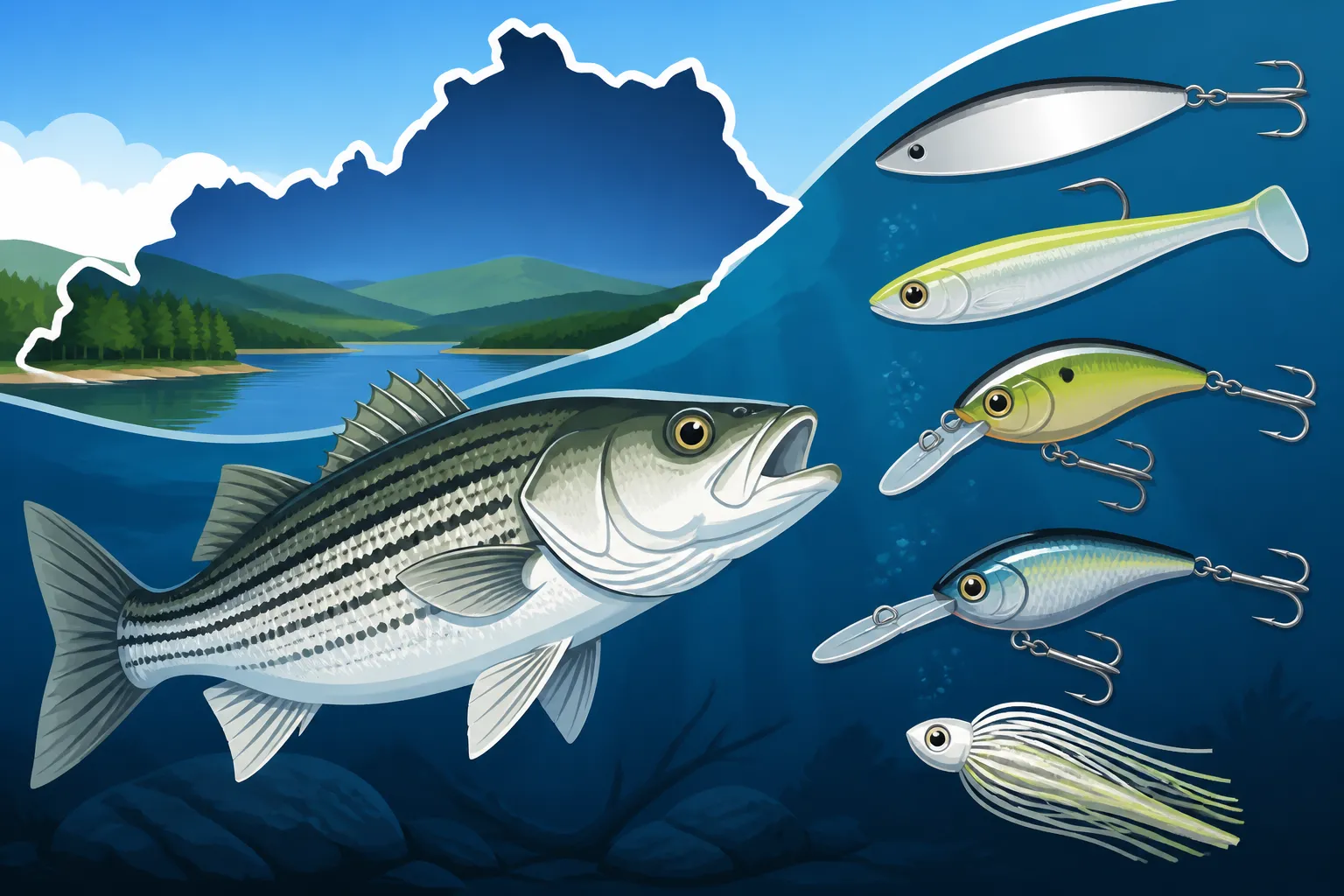
When stripers are holding deep, often suspended over open water or submerged structure, vertical jigging with heavy jigs and spoons is an absolutely deadly technique. The key here is weight – you need something that gets down quickly and stays in the strike zone without too much line bow. Metal spoons, often in chrome, gold, or white, mimic dying baitfish perfectly as they flutter on the drop. Think about jigging spoons in the 1 to 3-ounce range, sometimes even heavier depending on current and depth. Just drop them straight down to the depth where you're seeing fish on your electronics, then jig them with aggressive rips followed by controlled drops. The strikes often happen on the fall, so a keen eye on your line is essential.
Another fantastic option in this category is a heavy bucktail jig. These jigs, often tipped with a soft plastic trailer or a piece of cut bait, provide a bulkier profile that can attract bigger stripers. The hair and trailer create a pulsating action that's hard for a hungry striper to resist. For both spoons and bucktails, experiment with different jigging cadences. Sometimes they want a sharp, erratic movement; other times, a more subtle lift-and-fall is the ticket. You'll find a wide selection of these heavy jigs and spoons on platforms like Amazon, making it easy to stock up before your next deep-water adventure.
Deep-Diving Crankbaits and Jerkbaits
While jigs and spoons are great for vertical presentations, sometimes stripers are more scattered or actively cruising at a consistent deep depth. That's when deep-diving crankbaits and jerkbaits come into their own. These lures are designed to get down quickly and stay at specific depths, allowing you to cover more water horizontally. Look for crankbaits with large bills that are rated to dive 20, 30, or even 40 feet or more. Trolling these can be incredibly effective, especially when you're trying to locate schools of fish. Different retrieve speeds will make them dive to varying depths, so playing with your presentation is crucial.
Jerkbaits, while often associated with shallower fishing, also come in deep-diving models that can reach impressive depths. These typically have a longer, slender profile and are designed to be retrieved with a "jerking" or "ripping" motion, followed by a pause. This erratic action often triggers a reaction strike from predatory stripers. Colors should mimic local baitfish – shad patterns are always a good bet. When buying, ensure the lure is well-constructed; a powerful striper can easily destroy a flimsy bait. Many anglers start their search for quality deep-diving crankbaits and jerkbaits on Amazon, where reviews can help guide your choice.
Umbrella Rigs and Live Bait Setups
For many serious striper anglers, especially those targeting trophy fish in deep reservoirs, umbrella rigs and live bait setups are non-negotiable. Umbrella rigs, often called "spreaders," are designed to mimic a school of baitfish. They typically consist of a main wire or bar with multiple teaser baits (often small swimbait bodies or spoons) attached, culminating in a larger chase bait or hook at the end. These are almost always trolled, often with significant weight to get them down to the desired depth. They cover a massive amount of water and present a very realistic "school" target, which is incredibly appealing to schooling predators like stripers.
Live bait, however, often remains the ultimate weapon. Shad, bluegill, or other local baitfish, properly presented on a downrigger or a weighted free line, are incredibly effective. The natural movement and scent of live bait can entice even the most finicky stripers. When targeting deep-water stripers with live bait, a robust circle hook and appropriate weight to get the bait down to the thermocline are essential. Make sure your live bait is healthy and lively, as this is what makes it so irresistible. Whether you're trolling umbrella rigs or slow-trolling live bait, precision with your depth and boat speed is paramount.
| Lure Category | Best Use Case | Key Characteristics | Retrieve Style | Pros | Cons |
|---|---|---|---|---|---|
| Heavy Jigs/Spoons | Vertical jigging over deep structure or bait schools | Dense, metal, 1-3+ oz, chrome/white/gold colors, hooks on bottom | Vertical rips and drops, fast or slow | Reaches extreme depths, mimics dying bait, versatile | Requires precise depth control, can snag easily |
| Deep-Diving Crankbaits | Trolling or casting to cruising fish at consistent depths | Large bill, dives 20-40+ ft, shad/minnow patterns, strong hooks | Steady retrieve, varied speed for depth | Covers wide areas, good for locating fish, durable | Can be expensive, limited by max dive depth |
| Jerkbaits (Deep) | Casting to suspended fish, active retrieve | Long, slender profile, deep-diving lip, baitfish colors, suspending | Erratic jerks and pauses | Triggers reaction strikes, realistic baitfish profile | Can be tiring to work, may not reach extreme depths |
| Umbrella Rigs | Trolling to mimic schools of baitfish in open water | Multi-arm spreader with teaser baits, heavy lead head, main hook | Slow, steady troll | Attracts aggressive schools, covers wide areas | Bulky, can be cumbersome, specialized gear needed |
| Live Bait | Targeting wary or large stripers in any deep scenario | Live shad, bluegill, herring; circle hooks, leader, sinker | Slow troll, free line, downrigger | Most natural presentation, highly effective | Requires bait acquisition/storage, less active fishing |
Techniques for Presenting Lures Effectively
Having the right lures is only half the battle; knowing how to present them effectively to deep-water striped bass is where the real skill comes in. These fish aren't always easy to fool, and they often demand a precise presentation that mimics their natural prey. Mastering these techniques will significantly increase your hook-up rates.
Locating Stripers with Electronics
Before you even think about dropping a lure, you need to find the fish! Modern fish finders and sonar units are absolutely invaluable for deep-water striper fishing. You're looking for arches or clusters of marks, often suspended at specific depths, and equally important, you're looking for baitfish. Stripers are almost always found near their food source. Use your down imaging, side imaging, and traditional 2D sonar to scan the water column. Look for subtle changes in the bottom contour, humps, ledges, or submerged timber that might concentrate baitfish. Once you mark fish, pay close attention to the depth.
It's not just about seeing the fish; it's about interpreting what you see. Are they tightly schooled or scattered? Are they actively chasing bait or just holding? This information helps you decide on your lure choice and presentation. If they're tightly schooled and active, an aggressive jigging spoon might be perfect. If they're scattered and lethargic, a slow-trolled live bait might be more effective. Don't be afraid to circle back over productive areas, and always mark waypoints when you find a school. Knowing How to Read a Fish Finder for Bass Fishing can be incredibly beneficial, as many of the principles apply directly to finding stripers.
Mastering the Retrieve
The way you retrieve your lure is just as important as the lure itself. For deep-water stripers, a "slow and steady" approach often works wonders, especially when trolling crankbaits or umbrella rigs. Maintain a consistent boat speed that allows your lures to run at their intended depth. However, when vertical jigging with spoons or bucktails, an erratic retrieve is usually preferred. Aggressive rips followed by a free-fall or controlled drop often imitate a wounded baitfish, which stripers can't resist.
Experimentation is key. Some days, they want a fast, aggressive retrieve; other days, they prefer a slower, more deliberate action. Pay attention to how the fish react to different cadences on your fish finder. Are they moving towards your lure, or ignoring it? Remember that stripers are strong, so be prepared for a hard strike the moment you feel a change in your line. A proper hook set with these fish is crucial, as they have tough mouths.
Understanding Current and Structure
Even in deep reservoirs, current can play a significant role in where stripers hold and how they feed. Dam releases or strong winds can create current, which stripers often use to their advantage, positioning themselves to ambush baitfish being swept past them. Fishing the "current breaks" or eddies created by submerged structure can be highly productive. This means looking for areas like old river channels, submerged islands, or deep points where current might concentrate bait.
Structure, even deep structure, provides ambush points and cover for both baitfish and stripers. Don't just focus on open water; spend time scanning deep humps, brush piles, or old roadbeds. These are prime locations where stripers might congregate. When you find these areas, make sure your lures can get down to them. Heavy jigs and spoons are excellent for probing these depths, allowing you to feel the structure as you fish. Always consider how current might be affecting your lure's depth and action, and adjust your presentation accordingly.
Essential Gear and Considerations
Tackling deep-water striped bass isn't just about lures and techniques; it also demands the right equipment to handle these powerful fish. If your gear isn't up to snuff, you'll quickly learn that a big striper can easily snap lines, straighten hooks, or break rods. Investing in quality gear pays off immensely when you're targeting these freshwater titans.
Rods, Reels, and Line for Striped Bass
For striped bass, you're going to need robust gear. Forget your ultralight panfish setups; we're talking about heavy-duty equipment that can withstand a serious fight. A medium-heavy to heavy action spinning or baitcasting rod, typically 6'6" to 7'6" in length, is a great choice. This provides the backbone to handle heavy lures and the power to control a surging striper. You'll want a reel with a strong drag system and ample line capacity. Many anglers prefer baitcasting reels for trolling or vertical jigging with heavier lures, as they offer more control over the drop. Spinning reels, especially larger models, are also popular for their ease of use and ability to cast lighter baits if the stripers come up shallower.
As for line, braided line is a game-changer for deep-water striper fishing. Its lack of stretch provides incredible sensitivity, allowing you to feel even the slightest tap, and its thin diameter for its strength means less water resistance, helping your lures get deeper. A 30 to 50-pound test braid is a common choice. Always tie on a fluorocarbon leader of 20 to 40-pound test. Fluorocarbon is nearly invisible underwater and offers excellent abrasion resistance, which is crucial around sharp structure or the striper's rough mouth. Checking out Best Fishing Line for Big Lake Bass can offer some transferable insights for selecting appropriate line for stripers.
Terminal Tackle and Accessories
Your terminal tackle needs to be just as tough as your main line. High-quality swivels, snap swivels, and split rings are essential. Stripers are notorious for twisting lines, and strong swivels help prevent frustrating tangles. When choosing hooks, make sure they are heavy-gauge and sharp. Many lures come with decent hooks, but it's often a good idea to upgrade them, especially on deep-diving crankbaits or umbrella rigs, to ensure they can handle the immense power of a large striper. Circle hooks are particularly effective when fishing with live bait, as they tend to hook the fish in the corner of the mouth, reducing gut hooks and making for easier releases.
Don't forget the accessories! A good pair of pliers or braid cutters, a heavy-duty net with a large hoop, and a reliable scale are all important. A quality pair of polarized sunglasses will help you spot subtle changes in the water and potentially even baitfish near the surface during those rare shallow moments. Remember, deep-water fishing often means dealing with heavy weights and strong fish, so having the right tools for the job makes the experience much smoother and more enjoyable. You can often find durable and affordable terminal tackle options on Amazon, which is great for stocking up. Also, always remember to have your Kentucky Fishing License Guide readily available when you're out on the water.
Disclaimer
This article is for general informational purposes only and does not constitute professional advice. Laws, prices and regulations vary by location and change over time. Consult a qualified professional for guidance on your specific situation.