Kentucky’s Record Blue Catfish Weighed 106 Pounds 14 Ounces
For many of us who cast a line in the beautiful waters of Kentucky, there's a certain fascination with the giants that lurk beneath the surface, especially the legendary blue catfish. It's not just about the fight; it's about the sheer awe of landing a fish that could rival a small human in size and weight. If you've ever heard whispers of the state record blue cat and wondered about its immense proportions and where such a monster could come from, you're not alone. This guide will dive deep into the story behind Kentucky's gargantuan blue catfish record, explore why our waters, particularly the mighty Ohio River, produce such incredible specimens, and arm you with the knowledge to perhaps chase your own trophy.
The Legend of Kentucky's Record Blue Catfish
When we talk about true giants in the angling world, the Kentucky state record blue catfish stands out as a colossal achievement. This isn't just a big fish; it's a testament to the rich, fertile waters of our state and the sheer dedication of anglers. For years, folks have known that Kentucky harbors some truly impressive catfish, but this particular catch solidified our place on the map for trophy blue cats.
The Mammoth Catch: 106 Pounds, 14 Ounces
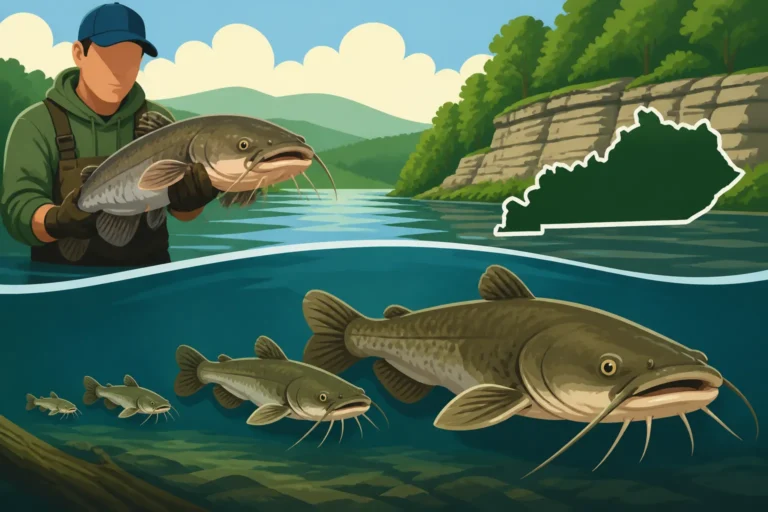
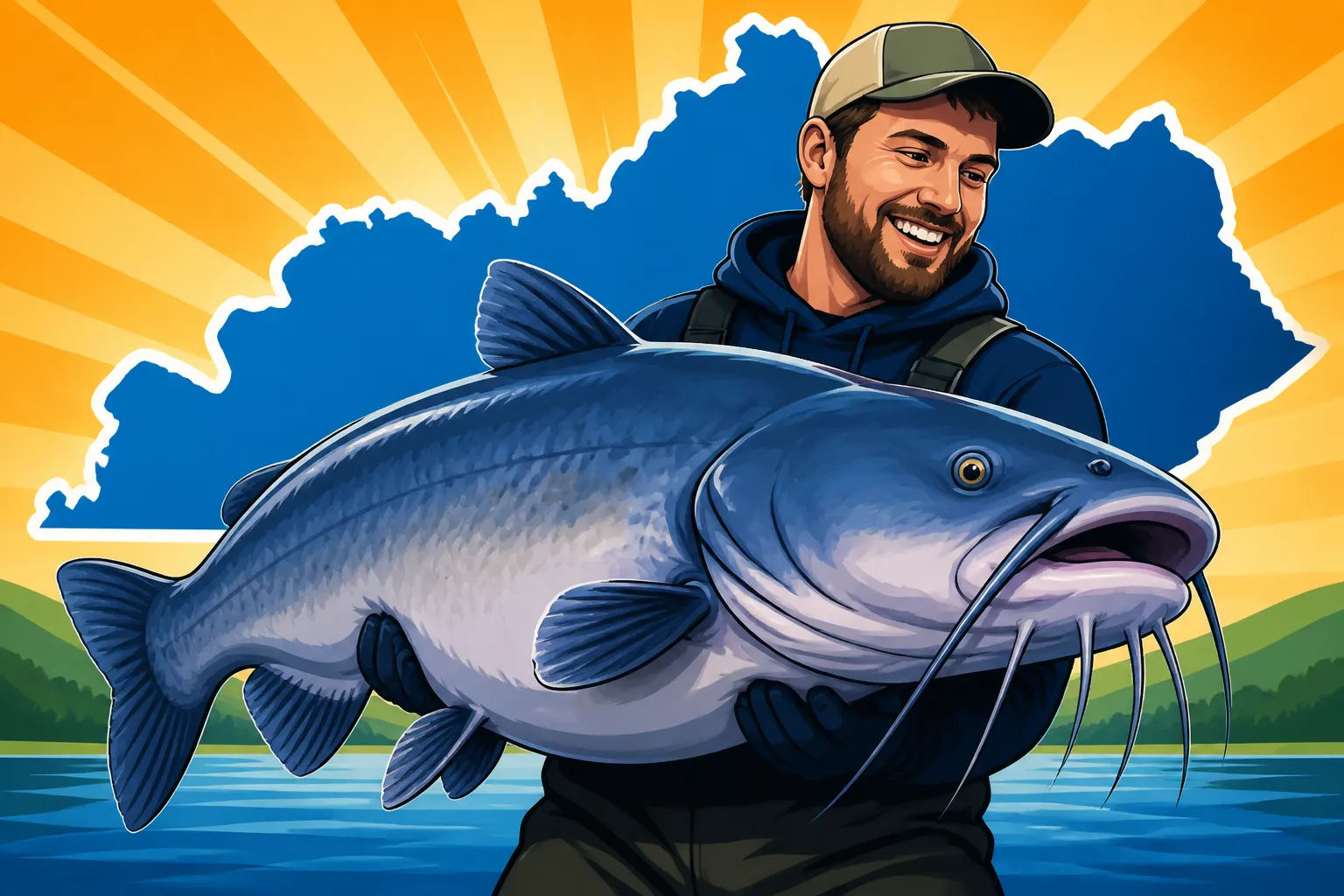
Imagine the scene: a tug on your line unlike any you've ever felt, a battle that tests every fiber of your being and every inch of your gear, and then, slowly, a massive shadow emerges from the depths. That's the reality behind Kentucky's record blue catfish, weighing in at an incredible 106 pounds and 14 ounces. This isn't just a number; it represents a fish of truly epic proportions, a creature that has spent years, even decades, growing to such an immense size, evading countless dangers, and feeding prolifically. It's a marvel of nature and a dream catch for any serious catfish angler.
Catching a fish of this magnitude isn't just luck; it often involves meticulous preparation, the right bait, a deep understanding of fish behavior, and equipment that can withstand unimaginable pressure. The record itself serves as an inspiration, proving that these incredible giants are not just stories from faraway places, but real, tangible possibilities right here in our own backyard.
Where the Monster Lurked: The Ohio River's Deep Waters
It's no surprise to seasoned anglers that the record-breaking blue catfish called the Ohio River home. This massive waterway, stretching along Kentucky's northern border, is a known hotbed for trophy-sized catfish. Its vast expanse offers everything a blue cat needs to thrive: deep channels, abundant food sources, varied bottom structures, and plenty of sanctuary from both predators and fishing pressure.
The Ohio River's powerful currents and its role as a natural boundary between several states mean it sees a lot of fishing activity, but also holds countless hidden gems. Below dams, in deep holes, and along current breaks, these leviathans lie in wait, ready to ambush prey. The river’s immense size and complexity contribute to the health and growth of its fish populations, especially the long-lived and fast-growing blue catfish species. When you consider How Big Do Blue Catfish Get in Kentucky?, the Ohio River is almost always the answer when talking about true monsters.
What Makes a Blue Catfish a Trophy
So, what exactly elevates a blue catfish from a nice catch to a true trophy? For most anglers, it's about breaking a personal best, but for the serious pursuit of state records, it's about the combination of weight, length, and girth. A fish pushing over 100 pounds is truly exceptional, displaying a life history of successful foraging and survival.
Trophy blue catfish are typically very old, often living for many years, sometimes several decades. Their diet, which includes smaller fish, mussels, and crayfish, is abundant in the Ohio River, allowing them to pack on pounds rapidly. These aren't your average pan-sized cats; they have broad heads, thick bodies, and powerful tails built for navigating strong currents and fighting relentlessly once hooked. The thrill of landing one of these magnificent creatures isn't just the size, but the incredible power they exhibit, making for a truly memorable angling experience.
Why the Ohio River is a Blue Catfish Powerhouse
The Ohio River isn't just any river; it's an ecological marvel, a vast system that perfectly caters to the needs of blue catfish, allowing them to reach truly monumental sizes. Its unique characteristics create an ideal environment for these whiskered giants.
The Ideal Habitat for Giant Catfish
The sheer scale of the Ohio River provides an incredible amount of diverse habitat. We're talking about miles upon miles of varying depths, from shallow flats to incredibly deep holes and channels that can be 50 feet or more. Blue catfish, especially the larger ones, love these deep, current-swept areas. They use the current to their advantage, conserving energy while waiting for food to drift by.
Beyond depth, the river offers extensive cover. Sunken logs, rock piles, bridge pilings, and even subtle changes in the riverbed create natural ambush points and resting areas. These features are crucial, particularly for trophy fish that need solitude and protection. The Ohio River also boasts a healthy oxygen content throughout its waters, which is vital for large, active fish, especially during warmer months. Understanding these habitat preferences is key to finding Best Catfish Fishing Spots on Kentucky's Ohio River.
Food Sources That Fuel Massive Growth
A fish can only grow as large as its food supply allows, and the Ohio River is an all-you-can-eat buffet for blue catfish. They are opportunistic feeders with a varied diet, and the river provides an abundance of their preferred prey. This includes a healthy population of baitfish like shad and skipjack herring, which thrive in the river's currents and congregating areas. Mussels and other invertebrates also make up a significant portion of their diet.
The presence of these high-protein food sources in vast quantities allows blue catfish to grow rapidly and maintain impressive size. The river's ecosystem is robust, meaning there's a constant renewal of prey species, supporting a healthy population of large predators like blue catfish. This rich larder is undoubtedly a major factor in How the Ohio River Produces Kentucky's Biggest Catfish.
River Dynamics and Prime Fishing Spots
The dynamic nature of the Ohio River, with its locks and dams, also plays a critical role. Below these structures, the churning water creates powerful currents, deep scour holes, and oxygenated water that attracts baitfish, and in turn, big blue cats. These areas are prime fishing grounds for those targeting trophy fish. The current concentrates bait and creates distinct seams and eddies where catfish can hold without expending too much energy.
Understanding the river's currents, structure, and depth changes is paramount. Using sonar to locate these deep holes, ledges, and debris fields can give you a significant advantage. Fish often position themselves just out of the main current, in slacker water directly adjacent to the fast-moving river, waiting for an easy meal to be swept past them. This is where mastering techniques like anchoring your boat precisely can make all the difference, as discussed in How to Anchor for Catfish on a River.
Targeting Your Own Kentucky Trophy Blue Catfish
Chasing a monster blue catfish on the Ohio River isn't for the faint of heart, but it's an incredibly rewarding pursuit. It requires the right mindset, the right gear, and a solid understanding of blue cat behavior.
Essential Gear for Battling Giants
You simply cannot go after triple-digit catfish with flimsy tackle. These fish are powerful, and they will test your equipment to its absolute limits.
Here’s a breakdown of what you’ll need:
- Heavy-Duty Rods: Look for stout, Ugly Stik-type rods or specialized catfish rods in the 7 to 9-foot range with a heavy power and moderate-fast action. This gives you the leverage to fight a big fish and the backbone to absorb powerful runs. You can find excellent options on Amazon, often with reviews from other trophy catfish anglers to guide your choice.
- Large, Durable Reels: A high-quality conventional reel or a large spinning reel with a strong drag system is non-negotiable. It needs to hold a lot of heavy line and handle immense pressure. Brands like Penn, Shimano, or Abu Garcia are popular choices among serious catfishermen. Make sure it's spooled with at least 50-80 lb braided line, or heavy monofilament. Best Reels for Catfish Fishing goes into more detail.
- Heavy Line: Forget your bass fishing line. You need braided line in the 50 to 100-pound test range for its strength and sensitivity, often paired with a heavy monofilament or fluorocarbon leader to absorb shock and resist abrasion from rocks and debris.
- Strong Hooks: Circle hooks are essential for catfish, especially when using larger baits. Sizes from 8/0 to 12/0 are common for trophy blue cats. They ensure a solid hookset in the corner of the fish's mouth, protecting the fish if you plan to release it and making for a more secure fight. Stock up on sturdy circle hooks; you can often find great deals on bulk packs on Amazon.
- Heavy Sinkers: Depending on the current, you'll need pyramid or flat sinkers ranging from 3 ounces to 10 ounces, or even heavier, just to hold your bait in place on the bottom.
- Landing Net or Gaff: A large, sturdy landing net designed for big fish, or a strong gaff, is crucial for safely bringing a monster blue cat into the boat.
| Gear Type | Description | Key Features |
|---|---|---|
| Rods | Heavy-duty, 7-9 ft, fiberglass or composite | Heavy power, moderate-fast action, strong backbone |
| Reels | Large conventional or heavy spinning | High line capacity, powerful, smooth drag |
| Line | Braided (50-100 lb test) or heavy mono/fluoro (30-50 lb test) | High breaking strength, abrasion resistance, low stretch (braid) |
| Hooks | Circle hooks, 8/0 to 12/0 | Strong gauge wire, wide gap, promotes corner-of-mouth hooksets |
| Sinkers | Pyramid, flat, or no-roll sinkers, 3-10+ oz | Heavy enough to hold bottom in strong current |
| Leader Material | Heavy monofilament or fluorocarbon (80-150 lb test) | Abrasion resistance, shock absorption, heavy breaking strength |
| Landing Device | Large, heavy-duty net or gaff | Strong frame, deep net bag, secure grip |
Best Baits and Rigging Strategies
Blue catfish are primarily piscivores, meaning they love fish. Fresh cut bait is almost always the go-to for trophy blues. Skipjack herring, shad, carp, and even fresh chunks of perch are excellent choices. Using fresh, oily bait is often the most effective way to entice these giants. Best Bait for Blue Catfish Fishing provides excellent insights.
When it comes to rigging, simple is often best for these powerful fish:
- Carolina Rig (Santee Cooper Rig): This is a classic and highly effective rig for blue catfish. It consists of a heavy sinker, a bead, a swivel, and a leader (typically 12-24 inches) with a large circle hook. The bead protects the knot, and the leader allows your bait to float or drift naturally off the bottom, making it more appealing.
- Three-Way Swivel Rig: Ideal for presenting multiple baits or fishing in areas with varied current. One eye of the swivel attaches to your main line, another to a short dropper line with a sinker, and the third to your leader with the bait.
- Float Rig (for controlled drifts): While less common for the absolute biggest fish in deep current, a large float can be used in certain situations to suspend bait at a specific depth, especially when targeting fish holding off the bottom.
Always ensure your knots are strong and your bait is presented naturally. Fishing multiple rods with different baits and at varying depths can help you identify what the fish are biting on that day. These rigging strategies are further detailed in Best Catfish Rigs for the Ohio River.
Seasonal Considerations for Big Blues
While blue catfish can be caught year-round, certain seasons offer better opportunities for targeting the largest fish:
- Spring (Pre-spawn): As water temperatures begin to rise in late spring, blue catfish become very active and feed heavily in preparation for spawning. They can often be found in shallower areas near deeper water, making them more accessible.
- Summer: During the heat of summer, large blue cats often retreat to the deepest, coolest, and most oxygenated parts of the river. Night fishing can be particularly productive as they move into shallower feeding areas under the cover of darkness. What Is the Best Time of Day to Fish Kentucky Lake in Summer also applies to big rivers like the Ohio.
- Fall: As water temperatures drop, blue catfish again become highly active, feeding aggressively to build up fat reserves for winter. They can be found in a variety of depths, often moving between shallow and deep water.
- Winter: Don't count out winter fishing! While slower, this can be an excellent time for trophy blue cats. They tend to congregate in deep holes and channels, making them easier to locate once you find a concentration. They'll still eat, just often less aggressively. Check out Best Time of Year to Catch Catfish on the Ohio River for more detailed seasonal patterns.
Protecting Kentucky's Trophy Fishery
Part of being a responsible angler, especially when pursuing incredible fish like a 100+ pound blue catfish, is understanding and respecting the regulations and the need for conservation. These giants are a precious resource.
Understanding Blue Catfish Regulations
Kentucky has specific regulations designed to manage its diverse fish populations, including catfish. While blue catfish are generally abundant, trophy fish are a different story. Regulations typically involve daily creel limits and sometimes size restrictions. For blue catfish, it's particularly important to be aware of the daily limit on larger fish. For example, Kentucky's statewide rule for catfish is a daily limit of 15 fish in total, but only one of those can be over 25 inches. This kind of regulation is designed to protect the breeding stock and allow those huge, older fish to continue to contribute to the fishery.
Always check the current Kentucky Department of Fish and Wildlife Resources regulations before you head out, as they can change. Understanding rules like Kentucky Catfish Limit: 15 Fish, Only 1 Over 25 Inches is crucial, especially if you're lucky enough to hook into a potential record breaker.
Practicing Catch and Release for Large Fish
While the dream of a record catch is real, the vast majority of trophy blue catfish, especially those over 50-60 pounds, are often released by ethical anglers. These massive fish are the primary spawners and vital to the genetic health of the population. Catching and releasing them ensures they can continue to breed and contribute to the next generation of giants.
If you do catch a truly massive blue catfish, handle it with extreme care. Support its body fully, especially when lifting it for a quick photo, to avoid damaging its internal organs. Get your measurements and photos quickly, and then gently release it back into the water, ensuring it swims away strongly. Minimizing its time out of the water and handling it gently greatly increases its chances of survival. This practice not only protects the resource but also ensures that other anglers can one day experience the same thrill of battling a magnificent Kentucky blue cat.
Disclaimer
This article is for general informational purposes only and does not constitute professional advice. Laws, prices and regulations vary by location and change over time. Consult a qualified professional for guidance on your specific situation.