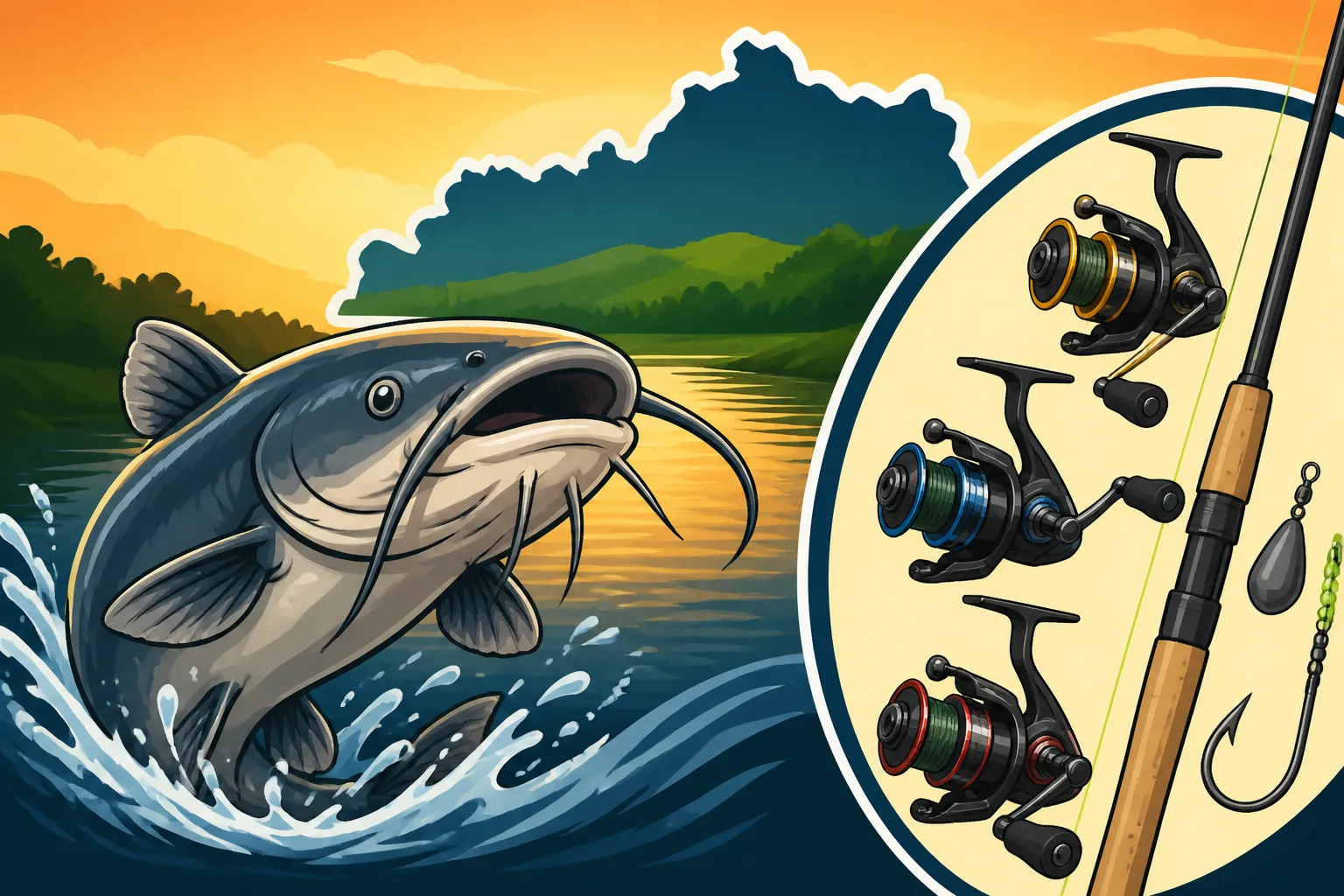
Best Reels for Catfish Fishing
There's nothing quite like the powerful tug of a big catfish on your line, but if you've ever hooked into a true monster only to feel your reel grind, slip, or fail, you know the frustration of inadequate gear. Choosing the right fishing reel for catfishing isn't just about catching fish; it's about having the confidence that your equipment can handle the brute force these incredible fish are known for. This guide will walk you through everything you need to know to select the best reels for chasing whiskered giants in Kentucky's diverse waters.
Understanding Catfish Fishing Styles and Their Reel Demands
Catfishing isn't a one-size-fits-all endeavor. The type of reel you need can vary wildly depending on whether you're relaxing on the bank, battling current on a major river, or setting up more passive fishing methods. Each style presents its own set of challenges and, consequently, its own demands on your equipment.
Bank Fishing and Still Fishing
For many anglers, catfishing means setting up on a quiet bank, perhaps on a lake or a slow-moving river, and letting bait soak. This style, often called "still fishing," usually involves fishing with multiple rods spread out, waiting for a bite. You might be targeting smaller channel cats for a fish fry or hoping for a surprise flathead. Here, the emphasis is often on durability, line capacity, and a smooth, reliable drag system that can withstand sudden, powerful runs. You're not casting constantly, so casting distance isn't always the absolute top priority, but having enough line to let a big one run is crucial.
Think about those lazy summer evenings by Kentucky Lake or a local pond. You cast your lines out, set them in rod holders, and relax. When that rod tip suddenly doubles over, you need a reel that can quickly go from dormant to full battle mode. A reel with a baitrunner or free-spool feature can be incredibly useful in these scenarios, allowing the fish to take line without feeling resistance before you engage the drag and set the hook. This prevents the fish from snapping your line or pulling your rod into the water.
River Fishing and Current Challenges
Fishing for catfish in rivers, especially giants like the Ohio River, presents an entirely different challenge. The relentless current puts immense pressure on your line and tackle, even before a fish bites. You'll often need heavier weights to hold bottom, which means you need a reel capable of casting and retrieving these heavier loads repeatedly. Big blue catfish and flatheads thrive in these environments, and they use the current to their advantage once hooked.
When you're fighting a substantial fish in a strong current, your reel's drag system isn't just a luxury; it's a necessity. It needs to be incredibly smooth and consistent to prevent line breaks from sudden surges. Additionally, a reel with a robust retrieve system and powerful gearing will help you gain line against both the fish and the current, a feat that a lesser reel simply can't accomplish. Consider that trophy blue cat that decides to run downstream with the current – you need a reel that gives you the leverage to turn its head and bring it back upstream, or at least keep it from spooling you entirely. For more on targeting these giants, check out our guide on Kentucky Catfish Fishing: Ohio River and Kentucky Lake Guide.
Trotlines and Jug Fishing
While trotlines and jug fishing don't rely on traditional rod-and-reel setups for the actual act of catching, the reels you use for managing these methods are still important. When you're running a trotline or deploying multiple jugs, you're still doing a lot of casting of baits, retrieving lines, and battling hooked fish once you pull them up. Often, a sturdy spinning reel or a smaller baitcaster can be handy for setting baits or even for light conventional rod and reel fishing between checking your jugs.
For those deep dives into passive methods, you might not be directly using a "catfish reel" in the same way, but having a reliable utility reel on hand is invaluable. These methods are fantastic for covering larger areas and often yield impressive catches, particularly for species like channel, blue, and flathead catfish. Learning How to Rig a Trotline for Catfish or understanding Jug Fishing for Catfish: A Beginner's Guide shows you how effective these traditional methods can be, but don't forget the importance of having a good reel for any supplementary rod work or even just for baiting up.
Key Features to Look for in a Catfish Reel
When you're standing in an aisle at a tackle shop or scrolling through options on Amazon, it can be overwhelming to decide which reel is genuinely "best" for catfishing. It's not just about the biggest or the most expensive; it's about understanding the core features that contribute to a reel's effectiveness and longevity when battling powerful, often muddy, catfish.
Durability and Construction Materials
Catfishing is often a tough, gritty business. You're not always fishing from a pristine boat; sometimes you're on a rocky bank, in a muddy river, or even in rough weather. Your reel needs to be built like a tank to withstand the abuse. Look for reels constructed with robust materials. Aluminum frames and side plates are a common choice for their strength and corrosion resistance. Graphite is lighter but can flex under extreme pressure, so if you're chasing truly massive fish, a metal frame is often preferred.
Beyond the frame, consider the internal components. Stainless steel gears, bearings, and shafts are critical for handling the immense torque and pressure that a hard-fighting catfish can exert. A reel with sealed bearings and a sealed drag system is also a huge plus, especially if you fish in sandy, muddy, or brackish waters, as it helps prevent grit and grime from infiltrating and degrading performance. A reel that can take a beating and keep on performing is worth its weight in gold when you're far from home or in the middle of a big fight.
Gear Ratio and Retrieval Speed
The gear ratio tells you how many times the spool rotates with one full turn of the handle. This directly translates to retrieval speed. For catfishing, you'll generally find reels ranging from lower ratios (around 4.0:1) to higher ratios (6.0:1 or even higher). Each has its advantages:
- Lower Gear Ratios (e.g., 4.0:1 – 5.0:1): These reels are torque monsters. They provide immense cranking power, making it easier to pull heavy weights off the bottom in current and to turn the head of a large, stubborn fish. If you're using heavy sinkers, big baits, or targeting giant blue cats, a lower gear ratio gives you the leverage you need. The trade-off is a slower retrieve, meaning it takes longer to bring in slack line or retrieve a bait that hasn't been picked up.
- Higher Gear Ratios (e.g., 5.5:1 – 6.5:1): These reels retrieve line much faster. They are excellent for quickly picking up slack, reeling in empty rigs to check bait, or for tactics where you need to present a bait quickly. While they offer less raw cranking power than lower ratios, modern high-ratio reels are still surprisingly strong. They might be a good choice if you're primarily targeting channel cats or smaller flatheads, or if you prefer a faster retrieve for checking multiple lines efficiently.
Ultimately, a mid-range ratio (around 4.5:1 to 5.5:1) often strikes a good balance for general catfishing, offering both decent power and reasonable speed. However, serious anglers often keep both higher and lower ratio reels on hand for different situations.
Drag System Strength and Smoothness
The drag system is arguably the single most critical component of a catfish reel. It's what allows line to pay out under pressure, preventing breaks while exhausting the fish. You need a drag system that is:
- Strong: Catfish are incredibly powerful. A reel needs to have enough maximum drag pressure to tire out these fish, especially the larger ones. Look for reels that boast a high maximum drag rating, often measured in pounds.
- Smooth: This is perhaps even more important than brute strength. A jerky or sticky drag system will create sudden spikes in tension, leading to snapped lines or pulled hooks. When a big cat makes a sudden run, you want the line to peel off smoothly and consistently, without hesitation. Carbon fiber drag washers are widely favored for their heat dissipation and smooth performance under heavy loads.
When inspecting a reel, manually pull line off the spool against the drag to feel its smoothness. It should feel consistent from the start of the pull to the end, without any hiccups or sudden increases in resistance. A quality drag system is your best friend when battling a trophy catfish and will save you from countless heartbreaks. This is particularly vital when battling a powerful fish that’s running with the current on the Ohio River.
Types of Reels Best Suited for Catfishing
Just like there are different ways to catch catfish, there are different types of reels designed to handle various fishing scenarios. Understanding the pros and cons of each will help you choose the workhorse that best fits your style and target fish.
Baitcasting Reels Conventional Reels
When most experienced catfishermen talk about their "go-to" reel for big fish, they're often talking about a conventional baitcasting reel. These reels are designed for heavy-duty applications and offer incredible power and line capacity, making them ideal for pursuing trophy catfish.
Pros:
- Power and Torque: Baitcasting reels are built with robust gearing that provides superior cranking power, essential for reeling in large fish and heavy sinkers, especially in strong currents. The line comes straight off the spool, which is in line with the rod, reducing torque and stress on the rod and reel foot during a fight.
- Line Capacity: They typically hold much more heavy monofilament or braided line than comparable spinning reels, which is crucial for letting big cats make long runs without spooling you.
- Durability: Generally constructed with more metal components, they are built to withstand the rigorous demands of catfishing.
- Control: With a thumb bar or button, you can engage and disengage the spool for controlled casting and easy free-spooling. Many come with bait clickers (audible alarms) that notify you when a fish is taking line, an invaluable feature for passive bait fishing.
Cons:
- Learning Curve: Casting a conventional reel requires practice to avoid "backlashes" or "bird's nests," where the line tangles on the spool. This can be frustrating for beginners.
- Cost: Quality baitcasters designed for heavy catfishing can be more expensive than spinning reels.
- Versatility: While excellent for heavy bait fishing, they are less versatile for other light tackle applications.
For serious catfishing, particularly on large bodies of water like Kentucky Lake or the Ohio River, a sturdy baitcasting reel is often the top choice. Brands like Abu Garcia and Penn make excellent conventional reels favored by catfish anglers. You can often find a great selection, including heavy-duty options, at Bass Pro Shops.
Spinning Reels for Lighter Catfish Applications
While conventional reels might dominate the heavy-duty catfish scene, spinning reels certainly have their place, especially for targeting smaller channel catfish, for beginner anglers, or in situations where lighter tackle is preferred.
Pros:
- Ease of Use: Spinning reels are much easier to cast, especially for beginners. Backlashes are virtually non-existent, making them very forgiving.
- Versatility: They are highly versatile and can be used for a wide range of fishing applications, from panfish to smaller bass, in addition to catfish.
- Cost-Effective: Good quality spinning reels are generally more affordable than their conventional counterparts.
- Better for Lighter Baits: If you're fishing with lighter baits or smaller pieces of cut bait, a spinning reel can often cast them further and more accurately.
Cons:
- Less Power: Compared to baitcasters of similar size, spinning reels generally offer less cranking power. The retrieve mechanism puts more stress on the gears during a heavy fight.
- Line Twist: Spinning reels are prone to line twist, which can weaken line and cause tangles over time, especially with heavy mono.
- Limited Line Capacity: While larger spinning reels exist, they typically hold less heavy line than a conventional reel of similar overall size.
- Drag Placement: The drag is often located at the front or rear of the spool, which can be less convenient to adjust during a heated battle than a conventional reel's star drag.
For those just getting into catfishing, or if you're primarily targeting channel cats in smaller ponds or creeks, a robust spinning reel in a 4000-6000 size can be a great starting point. Just be sure to choose one with a good, smooth drag system.
Specialty Catfish Reels
Beyond the general categories, some reels are specifically marketed and designed with catfishing in mind. These often blend features from both conventional and spinning reels or enhance certain aspects crucial for the sport.
One prominent example is the "baitrunner" or "free-spool" style spinning reel. These reels have two drag systems: a primary drag for fighting the fish and a secondary, lighter drag (the baitrunner) that allows the fish to take line freely after it picks up the bait. When you're ready to set the hook, simply flip a lever or turn the handle, and it engages the main fighting drag. This feature is incredibly popular for still fishing, particularly when you're using circle hooks, as it allows the fish to fully commit to the bait before you apply pressure.
Another example can be oversized conventional reels built for truly colossal catfish. These might have extra-large handles, super-heavy-duty gears, and massive line capacities, sometimes specifically designed to handle braided lines in excess of 100 pounds. These are specialized tools for specialized anglers chasing state-record fish. While you might not find these on every shelf, online retailers like Amazon or dedicated tackle shops will often carry these niche but highly effective reels. If you're dreaming of a record-breaking blue cat, such a reel might be your ticket. For insights into what makes a trophy, check out Kentucky's Blue Catfish State Record Explained.
Matching Your Reel to Your Line and Rod
Choosing the perfect reel is just one part of the equation. To create a truly effective and balanced catfishing setup, you need to consider how your reel interacts with your fishing line and rod. These three components work in synergy, and a mismatch can lead to frustration and lost fish.
Line Capacity and Type Considerations
Your reel's line capacity dictates how much line it can hold, which is crucial for catfishing where long runs are common. Most reels will list their capacity based on specific line diameters, often in pounds of monofilament (e.g., 200 yards of 20 lb mono).
- Monofilament Line: Many traditional catfishermen prefer mono for its stretch, which acts as a shock absorber against powerful runs, and its abrasion resistance. If you're using 20-40 lb mono, ensure your reel can comfortably hold at least 150-200 yards.
- Braided Line: Braided line has virtually no stretch, incredible strength-to-diameter ratio, and excellent sensitivity. This means you can use a thinner diameter line for its breaking strength, allowing your reel to hold much more line. For example, a reel rated for 200 yards of 20 lb mono might hold 300+ yards of 50 lb braid. Braid's lack of stretch is great for feeling subtle bites in current and setting hooks firmly, but it puts more strain directly on your rod and reel, so ensure your reel's components are robust enough to handle it.
When selecting a reel, think about the pound test of line you typically use for the catfish you're targeting. If you're after monsters, ensure the reel has sufficient capacity for heavy braid, which is often preferred for its strength. Always check the reel's specifications and consider what types of fish you'll be pursuing. A smaller reel might suffice for channel cats, but a larger one is essential for trophy blue cats.
Rod Power and Action Synergy
The rod and reel should complement each other perfectly. A reel that's too heavy for a light rod will feel unbalanced and awkward to cast, while a reel that's too small for a powerful rod won't provide the necessary leverage or line capacity.
- Rod Power: This refers to the rod's lifting strength (e.g., medium, medium-heavy, heavy). For most catfishing, you'll be using medium-heavy to heavy power rods. Your reel should be able to handle the stress that these powerful rods will put on it. A heavy power rod paired with an appropriate reel gives you the backbone needed to haul in big fish.
- Rod Action: This describes where the rod bends (fast, moderate, slow). A fast action rod bends mostly at the tip, offering sensitivity and quick hooksets, often paired with baitcasters. A moderate or slow action rod bends further down the blank, providing a more parabolic bend that's great for fighting large fish and absorbing shock, often paired with spinning reels.
Matching the reel's size and weight to the rod is crucial for balance and comfortable fishing. A well-balanced setup reduces fatigue, enhances casting accuracy, and makes fighting a fish much more efficient. Many anglers prefer a medium-heavy to heavy action rod, usually 7 to 9 feet in length, paired with a sturdy baitcasting reel for most significant catfishing scenarios. For some recommendations, you might want to look into Best Rod and Reel Combo for Catfish Fishing.
Balancing Your Setup for Optimal Performance
Achieving a balanced setup means that when you hold the rod just above the reel seat, it feels neither tip-heavy nor butt-heavy. It should feel naturally level or slightly tip-heavy. This balance minimizes arm fatigue, especially during long days of casting and retrieving, or when holding the rod during a fight.
To check for balance, simply attach your chosen reel to your rod. Close your eyes and hold the rod grip where your hand would normally be. Does it feel comfortable? Does the tip want to drop or rise excessively? If it feels off, consider a different size or weight reel, or a different rod. Sometimes, even adding a small counterweight to the butt of the rod can make a noticeable difference. A perfectly balanced setup doesn't just feel better; it makes you a more effective angler because you can maintain control and finesse with less effort, which is critical when a powerful blue cat decides to challenge you to a tug-of-war.
Maintenance and Care for Longevity
Investing in a quality catfish reel is a significant step, but ensuring its longevity means committing to proper maintenance and care. Catfishing often takes place in demanding environments – muddy banks, sandy rivers, and varying weather conditions – all of which can take a toll on your gear. A well-maintained reel will perform better, last longer, and save you money in the long run.
Cleaning and Lubrication Schedule
After every fishing trip, especially if your reel has been exposed to mud, sand, or heavy rain, a quick wipe-down is essential. Use a damp cloth to remove any external dirt and grime, and then dry it thoroughly. Pay special attention to the reel foot, handle, and any exposed moving parts.
For a deeper clean and lubrication, a schedule of once or twice a season (or more frequently if you're fishing heavily) is a good rule of thumb. This involves:
- Disassembly (Partial): Carefully remove the spool, handle, and any side plates that allow access to the gears. Refer to your reel's manual for specific instructions.
- Cleaning: Use a soft brush and a reel cleaner spray (specifically designed for fishing reels) to remove old grease, dirt, and salt residue from gears, bearings, and other moving parts. Avoid harsh chemicals that can damage plastic or rubber components.
- Lubrication: Apply a thin layer of reel grease to the main gears and worm gear (if present). Place a small drop of reel oil on bearings, pivots, and shafts. Less is more when it comes to lubrication; over-greasing can actually hinder performance.
- Drag Washers: Inspect drag washers for wear. If they're carbon fiber, a light coating of specific drag grease can improve smoothness. Felt washers may need a different type of lubrication or replacement if compressed.
- Reassembly: Put the reel back together, ensuring all screws are tightened appropriately but not overtightened.
Consistent cleaning prevents corrosion and ensures smooth operation, which is critical when a big fish suddenly hits your line.
Winter Storage and Off-Season Prep
As the Kentucky fishing season winds down for some, proper winter storage is key to preventing damage and ensuring your reels are ready to go come spring.
- Thorough Cleaning and Lubrication: Before putting your reels away for several months, give them a meticulous clean and lubrication. Address any minor issues or worn parts.
- Loosen Drag: Back off the drag star or knob completely. Leaving the drag engaged for extended periods can compress the drag washers, reducing their effectiveness and smoothness over time.
- Remove Line: While not strictly necessary for every reel, removing old fishing line is a good practice. Monofilament can develop "memory" and lose strength, and braid can degrade. Starting fresh with new line next season is always a good idea, or at least inspecting it thoroughly.
- Storage Environment: Store reels in a cool, dry place, away from direct sunlight and extreme temperature fluctuations. A tackle box or a dedicated reel case works well. Avoid damp basements or hot attics.
- Protection: Many anglers use small reel covers or soft bags to protect their reels from dust and accidental bumps during storage.
Taking these steps ensures that when you're eager to get back out during the spring crappie run or the summer catfish bite, your reels are in prime condition.
Common Problems and Troubleshooting
Even with the best care, reels can sometimes develop issues. Knowing how to diagnose and address common problems can save you a trip to the repair shop or prevent a ruined fishing day.
- Sticking or Jerky Drag: This is often caused by dirty, corroded, or compressed drag washers. Disassemble the drag system, clean the washers, and apply appropriate drag grease. If they are severely compressed or grooved, it might be time for new washers.
- Grinding or Rough Handle Turn: This usually points to issues with the main gears or bearings. It could be dirt ingress, lack of lubrication, or worn components. A full internal clean and re-lubrication is the first step. If the problem persists, specific gears or bearings may need replacement.
- Line Twist (Spinning Reels): This is common with spinning reels. To prevent it, always spool new line correctly (spinning the spool as you wind it onto the reel), and avoid excessively "spinning" lures. If you notice severe twist, let out a long length of line behind your boat with no tackle attached and troll it for a few minutes to let the line untwist itself.
- Backlashes (Baitcasting Reels): The infamous bird's nest! Usually, this is due to improper casting technique, incorrect brake/spool tension settings, or casting into the wind. Practice, proper adjustments, and a good thumb are the best cures. Sometimes, a severely backlashed spool might need to have all the line removed and respooled.
Many common reel problems can be prevented with regular maintenance. Consider the time spent caring for your gear as an investment in countless future successful fishing trips on Kentucky's abundant waters. You can find many useful tutorials and replacement parts, including specific drag washers or bearings, online at places like Amazon or dedicated fishing tackle sites, which makes DIY maintenance much easier.
Budgeting for Your Catfish Reel
Let's be realistic, not everyone has an unlimited budget for fishing gear, and that's perfectly okay! You absolutely do not need the most expensive reel on the market to catch plenty of catfish. What you do need is a reel that's reliable, durable, and suited to the type of fishing you'll be doing. Understanding the different price points can help you make an informed decision without breaking the bank.
Entry-Level Options for Beginners
If you're just starting out in catfishing, or if you only plan to hit the local pond a few times a year for channel cats, an entry-level reel will serve you well. These reels typically range from about $30 to $70.
What to expect:
- Materials: You'll likely find more graphite components in the frame and side plates, which keeps the cost down.
- Bearings: Fewer bearings, usually 2-4, but they should still be sufficient for smooth operation for lighter use.
- Drag: A decent, though perhaps not butter-smooth, drag system made with basic felt or oiled composite washers.
- Brands: Many reputable brands offer excellent entry-level options. Look for trusted names that prioritize durability even in their budget lines.
These reels are fantastic for learning the ropes, handling channel cats up to 10-15 pounds, and getting comfortable with casting and fighting fish. You can often find great value bundles that include an entry-level rod and reel combo, which is perfect for new anglers. Just remember that while they're capable, they might not hold up to years of continuous abuse or battling truly massive fish. Don't go after a 50-pound blue cat on the Ohio River with a $30 spinning reel you picked up last minute!
Mid-Range Workhorses
This is often the sweet spot for many dedicated catfishermen. Mid-range reels, typically priced from $70 to $150, offer a significant step up in quality, durability, and features without venturing into the high-end boutique price points.
What to expect:
- Materials: You'll start seeing more aluminum frames and side plates, providing greater rigidity and strength.
- Bearings: More bearings (4-7 or more), often stainless steel, leading to smoother retrieves and longer lifespan.
- Drag: A much smoother and more powerful drag system, frequently incorporating carbon fiber washers for better heat dissipation and consistency.
- Features: You'll find popular features like bait clickers on conventional reels, more refined gearing, and better anti-reverse systems.
A mid-range reel is often the best investment for anglers who fish regularly and want a reel that can handle a wider range of catfish sizes, from pan-sized eaters to those occasional 20-30 pound brutes. These are the reels that many experienced anglers consider their "daily drivers" – reliable, powerful, and built to last several seasons with proper care. You can find excellent selections for these "workhorse" reels at retailers like Bass Pro Shops, where you can often compare models side-by-side.
Premium Reels for Serious Anglers
For the angler who chases trophy catfish, fishes aggressively in challenging conditions, or simply demands the absolute best performance and durability, premium reels are the answer. These reels typically start around $150 and can go significantly higher.
What to expect:
- Materials: Top-of-the-line corrosion-resistant alloys, meticulously machined frames, and often lightweight but incredibly strong construction.
- Bearings: A high count of precision stainless steel ball bearings (7+) for unmatched smoothness and performance under load.
- Drag: Extremely powerful, buttery-smooth, and highly consistent drag systems, often with oversized carbon fiber washers and micro-click adjustments.
- Features: Advanced gearing, sealed components for maximum water and dirt resistance, oversized power handles, and sometimes specialized coatings for added durability.
These reels are built to handle the biggest fish, the toughest fights, and the most demanding conditions Kentucky's waters can throw at them. They are an investment designed for years of heavy use and superior performance. While the price tag is higher, the reliability and fighting power they offer can be invaluable when you're connected to a true giant. Brands specializing in heavy-duty conventional reels are often found in this category, and you might consider exploring options on Amazon for specific models that aren't always available in local shops. Regardless of the price point, remember that the most expensive reel isn't necessarily the best for you if it doesn't match your fishing style and the size of the catfish you're typically pursuing.
Here’s a quick comparison of common reel types for catfishing:
| Reel Type | Primary Use Case | Key Strengths | Potential Weaknesses | Recommended Target Catfish | Typical Price Range ($) |
|---|---|---|---|---|---|
| Baitcaster | Heavy bait fishing, river fishing, big fish | Power, line capacity, durability | Learning curve (backlashes), less versatile | Blue, Flathead (large) | 70 – 300+ |
| Spinning | Light bait, smaller fish, beginner-friendly | Easy to cast, versatile, affordable | Less power, line twist, lower capacity | Channel (small to medium) | 30 – 150 |
| Baitrunner | Still fishing, passive bait soaking | Free-spool feature, good drag | Can be heavier, slightly more complex | All species (passive) | 60 – 200 |
Whether you’re setting up for a quiet afternoon of still fishing or preparing to battle a monster on the Ohio, having the right reel makes all the difference. Remember, the best reel for you is the one that fits your budget, your fishing style, and the species of catfish you love to pursue. Happy fishing, and may your drag sing!
Disclaimer
This article is for general informational purposes only and does not constitute professional advice. Laws, prices and regulations vary by location and change over time. Consult a qualified professional for guidance on your specific situation.