Boat Trailer Tips for Kentucky Boat Ramps
Anyone who's ever tried to launch or retrieve a boat in Kentucky knows the struggle is real. From crowded ramp conditions on a busy summer Saturday to navigating steep, algae-covered concrete, boat ramps can be a source of major stress and even embarrassment. This guide is here to take the mystery and the fear out of the process, offering practical tips and a comprehensive walkthrough for confidently handling your boat trailer on Kentucky's diverse waterways.
Understanding Kentucky Boat Ramps: What to Expect
Kentucky boasts an incredible array of lakes, rivers, and smaller waterways, and with them, a wide variety of boat ramps. No two ramps are exactly alike, and understanding what you might encounter can save you a lot of grief. Being prepared for different conditions is half the battle when you're looking to get your boat in or out of the water.
Different Types of Ramps You'll Encounter
You'll find everything from pristine, multi-lane concrete ramps at major state parks and recreation areas to rustic, single-lane gravel access points tucked away on smaller rivers. The larger, well-maintained ramps, often found at popular destinations like Best Boat Ramps on Kentucky Lake or those around Lake Cumberland, are generally wide, relatively shallow-sloped, and offer plenty of maneuvering space. These are usually your best bet, especially if you're still getting the hang of things. They often have designated parking areas and even courtesy docks to help with loading and unloading passengers and gear.
Then there are the less-developed ramps. These might be paved, but older and cracked, or entirely gravel, sometimes with only enough room for one boat at a time. You'll often find these on smaller lakes, lesser-known river access points like some stretches of the Ohio River, or even at county parks. These can present unique challenges, such as tighter turns for backing, softer surfaces, or steeper grades that require more caution. Always scope out a new ramp on foot before attempting to launch, paying attention to the surface condition, depth, and any obstacles like submerged rocks or shallow drop-offs.
Common Challenges at Busy Ramps
Picture this: it's a beautiful Saturday morning, the sun is shining, and everyone in Kentucky wants to be on the water. You pull up to a popular ramp, like one you might find on Lake Barkley, and it's already a beehive of activity. This isn't just a minor inconvenience; it can be genuinely stressful. People are often in a hurry, patience can wear thin, and the pressure to perform a perfect launch or retrieval while others wait can be immense. One of the biggest frustrations is seeing someone take ten minutes to do something that should take two, simply because they aren't prepared.
Another challenge is navigating the queue. Many popular ramps have a designated staging area for boats waiting to launch. Understanding the flow of traffic and knowing when it's your turn is crucial. Don't pull down the ramp until it's clear, and definitely don't try to "cut" the line. This is where a little courtesy goes a long way. Beyond the traffic, consider physical challenges like crosswinds that can push your boat sideways during launch or retrieval, making it harder to keep it aligned with the trailer. Strong currents on rivers, especially near dams or bridges, can also turn a simple launch into a wrestling match.
Pre-Launch Checklist: Getting Your Boat Trailer Ready
Before you even think about backing down a ramp, a little preparation can save you a whole lot of headaches. This isn't just about efficiency; it's about safety, too. Skipping steps here can lead to frustrating delays, damage to your boat or trailer, or even dangerous situations on the road or at the ramp. Trust me, I've seen it all, and it usually starts with someone rushing this crucial stage.
Essential Maintenance Before You Hit the Road
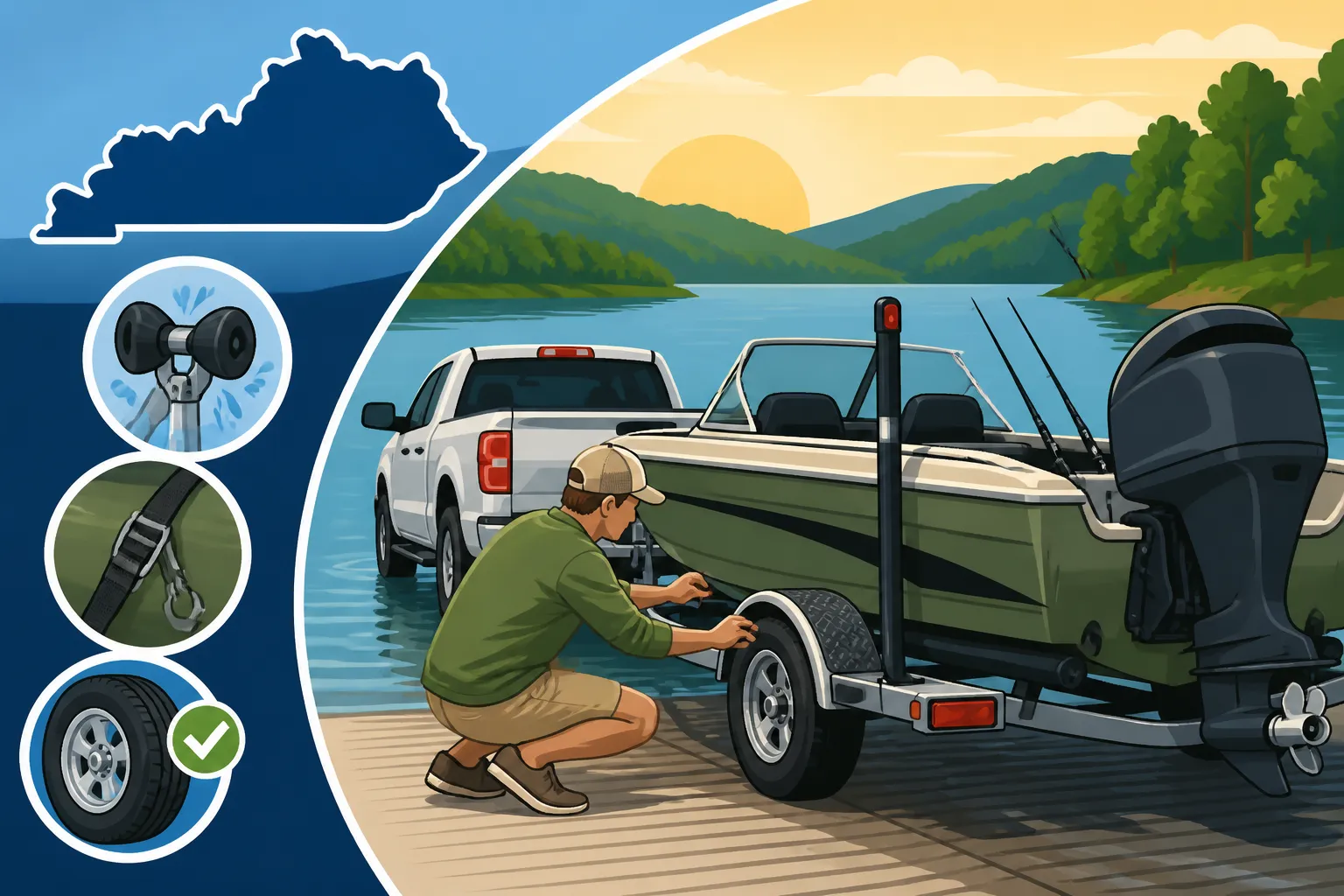
Your boat trailer is more than just a frame with wheels; it's a vital piece of equipment that endures a lot of abuse from road salt, water immersion, and heavy loads. Regular maintenance is non-negotiable. Start by checking your tires – not just for proper inflation, but also for any cracks, bulges, or excessive wear. A flat tire on the side of the road with a boat attached is no fun for anyone. Make sure your spare tire is also aired up and accessible. You can pick up a reliable air compressor or tire gauge at Amazon or Bass Pro Shops if you don't already have one.
Next, focus on your wheel bearings. These are critical, as they take the brunt of the load and the repeated dunking in water. If your bearings are failing, you could end up with a wheel locking up or even coming off entirely. It's a good habit to check them for play and grease them regularly. Many boat owners keep a spare set of bearing buddies and a grease gun in their tow vehicle. Finally, ensure all your trailer lights are working correctly – running lights, brake lights, and turn signals. A quick walk-around with a helper to check everything before each trip is a smart habit to cultivate. For a more detailed look, check out our guide on Boat Trailer Maintenance Checklist.
Securing Your Boat for Travel
You'd be amazed how many people forget crucial steps when securing their boat, only to realize it's shifting or rattling down the highway. Before you leave your driveway, make sure your boat is properly seated on the bunks or rollers and that the bow is firmly against the stop and secured with the winch strap. This is your primary connection. Don't rely solely on the winch strap, though. Add a safety chain or strap from the bow eye to the trailer frame for extra security.
Beyond the bow, stern straps are absolutely essential. These keep the back of your boat from bouncing around, especially over bumps or during sudden stops. Make sure they're tight and securely fastened to both the boat and the trailer frame. Finally, check that all your gear inside the boat is stowed securely. Rods, tackle boxes, coolers, and life jackets can become projectiles if they're not tied down or put away properly. Even seemingly small items can cause a ruckus or even fly out of the boat at highway speeds.
Mastering the Launch: Backing Down the Ramp Like a Pro
Ah, the dreaded back-up. For many new boaters, and even some seasoned ones, backing a trailer down a ramp can feel like trying to rub your belly and pat your head at the same time. But with a few simple techniques and a commitment to practice, you can transform this anxiety-inducing task into a smooth, confident maneuver. The key is to take it slow and remember a few fundamental principles.
Techniques for Smooth Backing
The first and most crucial piece of advice for backing a boat trailer is this: small corrections are your best friend. Don't crank the wheel hard and expect the trailer to magically straighten out. Instead, make slight adjustments. If you want the trailer to go left, turn your steering wheel slightly to the left. If you want it to go right, turn slightly right. It's counter-intuitive to normal driving, and that's why it trips so many people up. Practice in an empty parking lot, using cones or markers to simulate the ramp and your target. You'll quickly get a feel for how the trailer responds to your steering inputs. We've got a whole guide dedicated to How to Back a Boat Trailer Down a Ramp if you need a deeper dive.
Another great technique is to use your mirrors, but also occasionally look over your shoulder, especially when you're just starting out. Many drivers find it helpful to place a hand at the bottom of the steering wheel. Whichever way you move your hand, that's the way the trailer will turn. This simple trick can help reorient your brain to the counter-intuitive steering. Maintain a slow, consistent speed, and don't be afraid to pull forward and straighten out if you get off course. It's much better to take a little extra time and reset than to get into a precarious position or, worse, damage your boat or trailer.
The Critical Role of Communication
When you have a partner helping you launch, clear communication is paramount. Waving arms, shouting conflicting instructions, and general chaos are unfortunately common scenes at busy ramps. Before you even get to the ramp, agree on a set of simple, unambiguous hand signals. For example, hands together forming a "T" could mean "trailer needs to go straight back," while a hand pointing left or right indicates the direction the trailer needs to move. A thumbs-up means "perfect, keep coming," and crossed arms mean "stop!"
Your spotter should stand in a visible, safe location where they can see both the trailer and the water, ideally near the back of the boat or slightly to the side. Their job is to guide you and provide clear, concise instructions, not to critique your driving. As the driver, your job is to listen and react calmly. If you can't hear or understand an instruction, stop and clarify. This teamwork approach not only makes the process smoother and safer but also reduces stress for everyone involved. Remember, being efficient at the ramp also means respecting Kentucky Boat Ramp Parking and Access Rules and other waiting anglers.
The Retrieval Process: Getting Your Boat Back on the Trailer Safely
After a fantastic day of fishing, the last thing you want is a clumsy retrieval that ends in frustration or damage. Getting your boat back on the trailer effectively is just as important as launching it smoothly, and it requires its own set of techniques and patience. Just like launching, preparation and communication are your best allies.
Aligning and Winching With Confidence
As you approach the ramp, observe how other boats are coming in. Note the current, wind, and ramp angle. Ideally, you want to back the trailer just far enough into the water so that the rear bunks or rollers are submerged, allowing the boat to float onto the trailer without too much effort, but not so deep that the bow eye sits too high when it’s time to winch. This sweet spot takes practice and varies with different ramps and water levels.
Once the trailer is positioned, either your partner (or you, if solo) can gently guide the boat onto the trailer. The goal is to get the bow aligned with the center of the trailer and then power the boat forward (or use ropes if the engine is off) just enough for the keel to engage with the bunks or rollers. From there, it's all about guiding it straight. Once the boat is mostly on, secure the bow to the winch post with a rope while you or your partner winches it the rest of the way, making sure the bow eye is firmly against the stop. Never rely solely on engine power to "power load" your boat fully onto the trailer; this can damage the ramp and propeller.
Post-Retrieval Checks and Prep for the Road
With the boat securely on the trailer, pull forward and off the ramp to a designated staging area or parking spot. This clears the ramp for others and gives you space to complete your post-retrieval checks without holding up traffic. First, trim your motor up to the travel position. Ensure it's fully tilted to avoid hitting the ground or causing damage during transit.
Next, remove the drain plug! This is a classic mistake. Forgetting to pull the plug means water will accumulate in your bilge, adding unnecessary weight, potentially causing mildew, and even violating regulations in some areas designed to prevent the spread of invasive species. Stow any loose gear that might have shifted during retrieval, and double-check your stern straps and bow safety chain. Give all your trailer lights another quick check before you head out, ensuring they're functioning properly. These few minutes of diligence prevent problems down the road and ensure a smooth journey home.
Troubleshooting Common Trailer Problems at the Ramp
Even with the best preparation, things can sometimes go wrong. That's just part of boating! Knowing how to handle common trailer issues at the ramp can prevent a minor inconvenience from turning into a major ordeal. Having the right tools and a calm mindset are key.
Dealing with Flat Tires or Bearing Issues
Nothing puts a damper on a fishing trip like a flat tire, especially when you're loaded down with your boat. If you get a flat on the way to or from the ramp, the first thing is to safely pull over. Always carry a spare tire, a jack, and a lug wrench that fits your trailer's lug nuts. Before you even leave home, make sure your jack can actually lift your loaded trailer, and that you know how to safely use it. Some trailers might require specific jacking points or even a specialized trailer aid jack.
Bearing issues are often less sudden but can be more serious. A grinding noise, smoke, or a wheel that feels hot to the touch are all signs of a failing bearing. If this happens while trailering, pull over immediately. Trying to nurse a trailer with a bad bearing can lead to a wheel coming off, which is incredibly dangerous. Carrying a spare hub assembly or at least a spare set of bearing components and the tools to replace them can be a lifesaver. This is where investing in quality parts from Bass Pro Shops or having your trailer serviced professionally really pays off.
Handling Difficult Launches and Retrievals
Sometimes, the ramp itself presents a challenge. Maybe it's slick with algae, exceptionally steep, or has a sudden drop-off that makes it tricky to get the right depth. If the ramp is slippery, proceed with extreme caution and consider putting your tow vehicle in four-wheel drive if you have it. If you're struggling to get enough traction, you might need a longer rope to launch your boat further out, allowing you to back your vehicle less aggressively.
For difficult retrievals, especially in windy or current-heavy conditions, don't be afraid to use additional ropes to help guide your boat onto the trailer. Having a bow line and stern lines can help you maneuver the boat precisely, even if the wind is trying to push it sideways. It’s better to take an extra minute or two to use ropes than to struggle and potentially damage your boat or the trailer. Remember that practicing on less-busy ramps first can build confidence for when you encounter more challenging situations.
Advanced Tips for Experienced Anglers and Challenging Ramps
Once you've mastered the basics, there are always ways to refine your skills and prepare for those really tricky situations that even experienced anglers face. Kentucky offers a huge range of fishing opportunities, from the vast expanses of Kentucky Lake to smaller, more remote access points, and each can present its own unique challenge. Knowing a few advanced tricks can make all the difference.
Navigating Steep or Slippery Ramps
We've all seen those ramps that look like they go straight into the abyss. Steep ramps are common on many of Kentucky's deeper lakes, such as parts of Best Trailer-Friendly Boat Ramps Around Lake Cumberland or Herrington Lake. The primary concern here is traction for your tow vehicle. If you're backing down a very steep, potentially wet ramp, engaging four-wheel drive (if available) before you start backing can prevent wheel spin and loss of control. It's also critical to have sufficient weight in your tow vehicle for better traction, and to ensure your trailer brakes (if equipped) are in good working order. Some steep ramps can be treacherous, especially after rain or when covered in dew.
Another consideration for steep ramps is your boat's position on the trailer. If the ramp is too steep, your boat might want to slide off prematurely or make retrieval difficult. You might need to back the trailer slightly less deep than usual, or use a longer rope for launching and retrieving to manage the boat more effectively. For truly extreme situations, some anglers will actually have a second vehicle or winch positioned further up the ramp to assist in pulling the tow vehicle and trailer back up, especially if the ramp is covered in slick mud or loose gravel.
Strategies for Solo Launching and Retrieving
Launching and retrieving by yourself can feel daunting, but it's absolutely doable with the right strategy. The key is setting up your boat and trailer so that you minimize the time you spend scrambling between your vehicle and the boat. Before you back down the ramp, attach a long painter line (a rope) to the bow of your boat. This rope should be long enough to reach from the bow to a secure point on the dock or shore once the boat is in the water.
When launching solo, back your trailer down, unhook the bow strap and safety chain, and then gently push the boat off the trailer. As it slides free, hold onto that painter line, securing it to a cleat on a courtesy dock or a nearby tree/post. Then, you can park your vehicle, walk back to the boat, and get in. For retrieving, do the reverse: use the painter line to guide the boat to the ramp, line it up with your trailer (which you've already backed into position), and then walk back to your vehicle to winch it on. This minimizes the frantic back-and-forth and makes the process much more controlled and less stressful. Having a Best Fishing Kayaks for Kentucky Lakes and Rivers can be even simpler for solo launching due to their lighter weight and easier maneuverability.
Important Considerations for Safe Trailering
Safety should always be your top priority, whether you're driving down the highway or maneuvering at the ramp. Overlooking simple safety checks can lead to accidents, fines, or damage that ruins your day. Being diligent not only protects you and your boat but also ensures you're a responsible boater sharing Kentucky's beautiful waters.
Trailer Lights and Electrical Connections
Faulty trailer lights are not only a hassle, they're a serious safety hazard and a surefire way to get pulled over. Before every trip, do a quick check of all your trailer lights: running lights, brake lights, and turn signals. Corrosion is the number one enemy of trailer wiring, especially with repeated dunking in water. If you notice any flickering or non-functional lights, check the connections first. A little dielectric grease on electrical contacts can go a long way in preventing corrosion.
Carrying a spare set of trailer light bulbs or even a small repair kit with electrical tape and wire connectors is a good idea. Sometimes the issue might be with your tow vehicle's wiring harness, so check that too. Many boaters opt for LED trailer lights because they are more durable and less prone to issues from water immersion than traditional incandescent bulbs. Staying on top of your lights means you're visible and signaling your intentions clearly to other drivers, which is critical for safe travel.
Understanding Weight Distribution and Tow Capacity
It’s crucial to understand your vehicle's tow capacity and your trailer's Gross Vehicle Weight Rating (GVWR). Never exceed these limits. Overloading your tow vehicle or trailer can lead to dangerous handling, excessive wear on components, and even structural failure. Your boat, trailer, and all your gear (fuel, tackle, coolers, etc.) contribute to the total weight.
Proper weight distribution on the trailer is also vital. The general rule of thumb is to have about 10-15% of the total trailer weight as tongue weight (the downward force on your hitch). Too little tongue weight can cause the trailer to sway violently at highway speeds, which is incredibly dangerous. Too much tongue weight can overload your tow vehicle's rear axle. If you're unsure, visit a public weigh station or truck stop to get an accurate reading of your loaded trailer's weight and tongue weight. Adjusting how you load gear in your boat can help achieve optimal weight distribution.
Keeping Your Trailer in Top Shape: Ongoing Maintenance
A well-maintained trailer is a safe trailer. Beyond the pre-trip checks, a proactive approach to maintenance will extend the life of your trailer, prevent breakdowns, and keep you on the water instead of stuck on the side of the road. Think of your trailer as an investment, just like your boat.
Regular Inspection and Cleaning
After every few uses, or at least once a season, give your entire trailer a thorough inspection. Look for rust, especially on the frame, leaf springs, and axle. Even galvanized or aluminum trailers can show signs of corrosion in fasteners and welds. Rinse your trailer thoroughly with fresh water after every saltwater exposure, and it's a good practice after freshwater use too, especially if you're pulling it out of a muddy or murky ramp. This helps prevent the buildup of grime and salt that can lead to rust.
Pay close attention to the trailer bunk boards or rollers. Check for wear and tear, especially on the carpeting of bunk boards. Worn carpeting can scratch your boat's hull. Check the condition of your winch strap and safety chains, looking for fraying, kinks, or rust. Ensure all nuts and bolts are tight. Vibration from travel can loosen them over time. A good power washing can also help reveal hidden issues that are obscured by dirt and grime.
Winterizing and Storage Tips
When the cold weather sets in and fishing season winds down, proper winterization and storage for your boat trailer are just as important as for your boat itself. If your trailer will be sitting for an extended period, consider removing the wheels and storing them flat to prevent flat spots on the tires. If you can't remove them, at least lift the trailer onto jack stands to take the weight off the tires and suspension. This helps preserve tire life and prevents suspension components from remaining under constant stress.
Clean and grease all moving parts, including the hitch coupler, jack, and winch. Inspect and repair any electrical issues before storing, as corrosion can worsen over time. If possible, store your trailer indoors or under a cover to protect it from the elements. If outdoor storage is your only option, consider investing in a breathable trailer cover. A little effort in the off-season will ensure your trailer is ready to roll when spring fishing calls, and you can focus on more exciting things like planning your next trip to Lake Barkley Fishing Guide for Kentucky Anglers.
Disclaimer
This article is for general informational purposes only and does not constitute professional advice. Laws, prices and regulations vary by location and change over time. Consult a qualified professional for guidance on your specific situation.