Green Sunfish Vs Longear Sunfish: How to Tell Them Apart
It can be incredibly frustrating to reel in a vibrant, feisty panfish, only to hold it up and wonder, "Is this a green sunfish or a longear sunfish?" Many anglers, new and seasoned alike, struggle with telling these two common Kentucky panfish apart. This guide will meticulously break down the unique features, habitats, and behaviors of both species, ensuring you can confidently identify your catch on your next fishing adventure.
The Green Sunfish: A Stocky, Aggressive Fighter
When you think of a green sunfish, envision a miniature bass. They've got a certain robustness to them, a stocky build that hints at their aggressive feeding habits. These aren't the delicate, shimmering jewels of the panfish world; they're the tough guys, willing to hit almost anything you throw at them. Understanding their distinct characteristics is the first step in distinguishing them from their more colorful cousins.
Distinguishing Physical Traits of the Green Sunfish
One of the most obvious clues that you've hooked a green sunfish is its mouth. Unlike many other sunfish, the green sunfish has a surprisingly large mouth that extends back to at least the middle of its eye, and sometimes even a bit beyond. This wide gape is a dead giveaway, instantly setting it apart from the smaller-mouthed longear sunfish. Think of it as having a hungry, bass-like grin.
Next, pay close attention to its body shape. Green sunfish are generally more oblong and cylindrical than other sunfish. They don't have that classic, round, pancake-flat look that you might associate with a bluegill. Instead, their body is thicker, more elongated, giving them a more streamlined, almost torpedo-like appearance, especially when compared to the deeper-bodied longear. Their dorsal and anal fins are also quite spiny, a feature common to many sunfish, but worth noting.
When it comes to color, the name "green sunfish" might be a bit misleading, as their overall hue can vary quite a bit depending on their habitat. Typically, they are olive green to brownish on their back and sides, fading to a yellowish-white belly. What truly sets them apart are the scattered, iridescent blue-green spots or streaks on their cheeks and gill covers. The opercular flap (the "ear" flap) is usually black with a distinct orange or red margin, which, while present, isn't as dramatically elongated as on a longear. Their pectoral fins are also noticeably shorter and more rounded compared to the longear's. If you need a quick reference, a good identification guide, perhaps one you picked up from a local tackle shop or ordered from Amazon, can be a great help.
Where to Find Green Sunfish and How They Behave
Green sunfish are truly adaptable creatures, often found in places where other, more sensitive sunfish might struggle. They thrive in slow-moving water, which can range from murky ponds and ditches to the backwaters of larger lakes and rivers. You'll often find them lurking around heavy cover—think fallen logs, dense weed beds, rock piles, or even old tires and debris near boat docks. They're not shy about inhabiting less-than-pristine environments, making them a common catch in many urban ponds and smaller streams throughout Kentucky.
Their diet is as varied as their habitat, making them a relatively easy catch. Green sunfish are opportunistic feeders, chowing down on insects, small crustaceans, other small fish, and even aquatic vegetation. This makes them receptive to a wide array of baits and lures. From worms and crickets to small spinners and jigs, a green sunfish is rarely picky. Their aggressive nature means they'll often hit a lure with gusto, providing a spirited fight despite their small size. Many anglers consider them a Kid-Friendly Fish to Catch in Kentucky because of their eagerness to bite.
When you hook a green sunfish, you'll generally feel a strong, consistent pull. They’re not prone to the darting, erratic runs of some other species; instead, they dig in and pull hard, using their stocky bodies to their advantage. If you're targeting panfish near lily pads or submerged brush, and you feel a solid, determined tug, there's a good chance you've got a green sunfish on the line. They are often found in areas that provide ample cover for ambush predation, ready to pounce on anything that swims by.
The Longear Sunfish: A Splash of Color and Grace
In contrast to the green sunfish, the longear sunfish is often described as one of the most strikingly beautiful members of the sunfish family, a true gem of Kentucky's waterways. They possess a vibrant, almost painted appearance, making them a delight for any angler who appreciates the aesthetics of their catch. Their elegance is matched by their preference for cleaner, more defined aquatic environments.
Unique Characteristics of the Longear Sunfish
The most defining feature of the longear sunfish, and the one that gives it its name, is its spectacularly long opercular flap. This "ear" is often black, rigid, and much longer than the flap of a green sunfish, sometimes extending to twice the length of the eye, with a distinctive red or orange margin. It's often flexible, almost decorative, trailing behind the gill cover like a fancy earring. This is your primary visual cue, an unmistakable identifier that usually distinguishes it immediately from any other sunfish.
Their coloration is typically much more vivid than that of a green sunfish. Longears boast a dazzling array of blues, oranges, reds, and greens, especially during spawning season. Their sides are usually orange to reddish-orange, adorned with bright wavy blue lines on the operculum and cheeks. The back is an olive-green, transitioning to the brilliant sides and a yellowish belly. Unlike the scattered blue spots of the green sunfish, the longear's markings are more intricate and linear. Their pectoral fins are also longer and more pointed, contrasting with the shorter, rounded fins of the green sunfish.
Another key difference is their mouth size. Longear sunfish have a noticeably smaller mouth compared to the green sunfish. Their mouth typically does not extend past the front margin of the eye, indicating a preference for smaller prey items. This smaller mouth, combined with their generally deeper, more compressed body shape (more like a classic panfish "pancake" than a green sunfish's robust build), further helps in differentiation. If you're looking for a good resource on Panfish and Sunfish Species Found in Kentucky, many state wildlife department publications or books found on Amazon will highlight the distinct beauty of the longear.
Longear Sunfish Preferred Haunts and Temperament
Longear sunfish are more particular about their environment than green sunfish. They prefer clear, warm water with plenty of vegetation and rocky structure. You're most likely to find them in smaller to medium-sized streams, rivers, and the shallow, clear coves of larger lakes, particularly over gravelly or rocky bottoms. They are often associated with areas that have a gentle current, where they can ambush passing insects or forage on aquatic invertebrates. Think of pristine creeks and quiet, sun-dappled lake margins rather than muddy farm ponds.
Their diet primarily consists of aquatic insects, larvae, small crustaceans, and snails, reflecting their smaller mouth and preference for cleaner environments. While still aggressive for their size, their fight might feel slightly different than a green sunfish. Longears are known for their quick, darting movements and feisty tugs, often making short, powerful runs. They provide an exciting battle on light tackle, though perhaps not with the brute force of a green sunfish. Many anglers enjoy catching them not just for their beauty, but for their spirited fight as well. You might find them in the same waters as bluegill, and learning Bluegill Fishing Tips for Beginners can often lead you to longear sunfish too.
These fish are often social, gathering in small schools around protective cover, especially during the spring spawning season when their colors become even more intense. This makes them a fantastic target for sight fishing in clear water. Their natural beauty and spirited resistance make them a favorite catch for many anglers, who appreciate the aesthetic appeal as much as the fishing experience itself. When fishing in Kentucky, it's always a good idea to consult the Kentucky Fishing Regulations Explained to be aware of any local rules, though panfish limits are typically quite generous.
Head-to-Head: A Detailed Comparison for Easy Identification
Now that we've looked at each species individually, let's put them side-by-side. The nuances can sometimes be tricky, especially with variations in water clarity, diet, and individual fish development. However, by focusing on a few key indicators, you'll be able to tell these two distinct sunfish apart quickly and confidently.
Key Visual Distinctions at a Glance
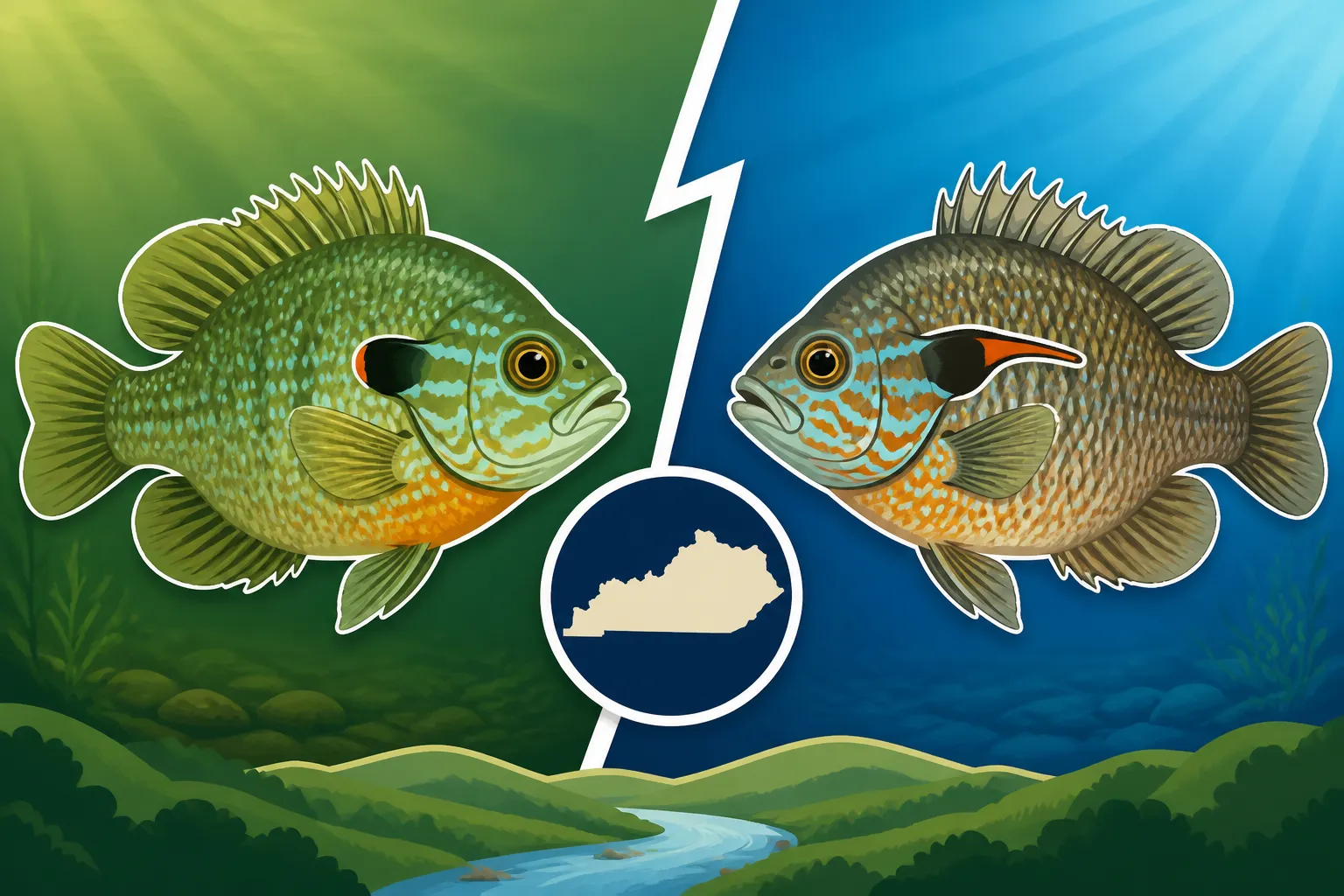
The easiest way to differentiate a green sunfish from a longear sunfish is to examine their opercular flap. The longear's "ear" is famously long, often flexible, and can extend significantly further back than the rear edge of the gill cover, usually with a bright red or orange trim. The green sunfish's flap, while black and often trimmed with red/orange, is much shorter and more rigid, rarely extending past the middle of the operculum. This is usually the first thing seasoned anglers check.
Next, open their mouths. The green sunfish will reveal a relatively large mouth, extending back to at least the center of the eye, if not beyond. The longear, on the other hand, has a noticeably smaller mouth that stops well short of the eye's midpoint. This size difference is often more pronounced than you might initially expect. If you're struggling to remember these details, consider printing out a quick reference guide or keeping a waterproof fish identification card, perhaps one you found on Amazon, in your tackle box.
Finally, compare their overall body shape and coloration. Green sunfish are stockier and more elongated, like a short, thick football, with typically subdued green-brown colors and scattered blue spots on their face. Longear sunfish are deeper-bodied and more compressed, like a thin disc, and sport much more vibrant, intricate patterns of blue, orange, and red wavy lines on their face and sides. The difference in fin shape – shorter, rounded pectorals for the green sunfish versus longer, pointed pectorals for the longear – also provides a reliable clue.
To summarize the key differences:
| Feature | Green Sunfish (Lepomis cyanellus) | Longear Sunfish (Lepomis megalotis) |
|---|---|---|
| Body Shape | Stocky, robust, more elongated/cylindrical | Deeper-bodied, more compressed (disc-like) |
| Mouth Size | Large; extends to or beyond the middle of the eye | Small; typically does not reach the front of the eye |
| Opercular Flap | Short, rigid, black with red/orange margin; rarely past mid-eye | Very long, flexible, black with red/orange margin; extends past gill cover |
| Coloration | Olive-green to brownish, yellowish belly; scattered blue spots on face | Vibrant blues, oranges, reds; wavy blue lines on face and operculum |
| Pectoral Fins | Shorter, more rounded | Longer, more pointed |
| Habitat | Slow-moving, often turbid water; heavy cover | Clearer water, rocky streams, vegetated lake coves |
Beyond Visuals: Habitat and Behavioral Cues
While visual identification is paramount, considering where and how you caught the fish can also reinforce your identification. If you're pulling fish from a muddy, brush-choked pond or a slow, somewhat stagnant ditch, chances are you're consistently catching green sunfish. Their tolerance for less-than-ideal water conditions is well-documented. Conversely, if you're fishing in a clear, gravel-bottomed creek or a clean, rocky cove of a lake, especially where there's visible aquatic vegetation, a longear sunfish is a much more likely candidate.
The way the fish fights can also offer subtle clues, though this is less definitive than physical traits. Green sunfish tend to be more brute-force fighters, digging in and pulling hard with their stocky build. Longears, while feisty, might exhibit more quick darts and turns due to their more compressed body. Paying attention to these subtle differences over time can refine your identification skills. Remember, both are panfish, so a good Best Rod and Reel Combo for Beginners will handle either with ease.
Ultimately, combining visual identification with an understanding of their preferred habitats significantly increases your accuracy. If you catch a fish with a long, flowing "ear" and brilliant colors from a clear stream, and then later catch a stockier, less colorful fish with a large mouth and a short "ear" from a murky pond, your identification skills are likely spot-on. It's a fantastic feeling to confidently name the species you've just brought to the bank.
Why Knowing Your Sunfish Matters for Kentucky Anglers
You might be thinking, "They're just sunfish, do I really need to know the difference?" And for many casual fishing trips, perhaps not. However, for those who truly want to understand the waters they fish, improve their angling skills, and respect the natural environment, accurate identification is a valuable tool. It enhances the entire experience and deepens your connection to the sport.
Enhancing Your Fishing Strategy and Success
Knowing the difference between a green sunfish and a longear sunfish can directly impact your fishing success. Each species, with its unique mouth size and habitat preference, responds better to certain baits and presentations. If you're consistently catching green sunfish, you might adjust to slightly larger baits or heavier cover fishing. If you're targeting longear, you might opt for smaller, more delicate offerings in clearer, rockier areas. This targeted approach is a cornerstone of effective angling, making your time on the water more productive and enjoyable.
Furthermore, understanding which species inhabits certain areas helps you predict future catches. If you discover a stream rich in longear sunfish, you know that the water quality and habitat are likely good, and you can return there expecting similar results. Conversely, if a pond is teeming with green sunfish, it might indicate a more disturbed or less pristine environment. This knowledge contributes to building a mental map of Kentucky's waterways and their inhabitants, guiding you to the right spots for the fish you want to catch. Developing a specialized Best Tackle Box Setup by Species can really make a difference.
Accurate identification also makes you a more observant and skilled angler overall. You start noticing subtle changes in water conditions, habitat, and fish behavior that you might have overlooked before. This heightened awareness translates to better success not just with sunfish, but with all species you pursue. It’s about becoming a student of the water, and every piece of knowledge you gain adds to your expertise.
Supporting Conservation and Respecting Regulations
While panfish often have generous daily limits, typically set statewide for "sunfish" or "bream," there can be specific regulations for certain water bodies or species. Knowing exactly what you've caught ensures you're always compliant with the Kentucky Fishing Regulations Explained. This is especially important if you're fishing in a water body with site-specific rules or if you encounter a less common species. While sunfish generally fall under broad categories, being able to identify individual species demonstrates responsible angling. For example, some states may have specific limits on certain panfish, so knowing the exact species is good practice.
Beyond regulations, accurate identification plays a small but significant role in conservation. By knowing what fish are present in certain habitats, you're contributing, even passively, to a broader understanding of local fish populations and ecosystem health. If a water body suddenly shows a shift in sunfish populations, identifying the species correctly helps wildlife biologists track trends. It's about being a conscientious part of the angling community, appreciating the biodiversity that Kentucky's waters offer. Every fish you identify correctly adds a small piece to the larger ecological puzzle.
Ultimately, the more you learn about the fish you pursue, the more rewarding the entire experience becomes. From appreciating the intricate patterns of a longear sunfish to understanding the tenacity of a green sunfish, accurate identification connects you more deeply to the natural world. It transforms a simple catch into a moment of discovery and learning, which is, after all, a huge part of what makes fishing so captivating. Familiarizing yourself with the Kentucky Fishing License Guide is always the first step before you even cast a line.
This article is for general informational purposes only and does not constitute professional advice. Laws, prices and regulations vary by location and change over time. Consult a qualified professional for guidance on your specific situation.