Kentucky Lake Summer Catfish Bite
Is there anything more frustrating than hitting the lake in the scorching Kentucky summer, only to find your favorite bass or crappie bite has completely shut down? Those mid-day doldrums can really put a damper on your fishing trip. But don't you dare pack up your gear! While some species are hunkering down in the deep, trying to escape the heat, the mighty catfish are just getting started on Kentucky Lake. This guide is your ticket to unlocking the incredible summer catfish bite, ensuring your warm-weather angling adventures are filled with bent rods and heavy stringers.
Understanding the Summer Catfish Behavior on Kentucky Lake
When the mercury climbs and the water temperature on Kentucky Lake feels more like a bathtub, many anglers assume the fishing is over. But that's just not the case for our whiskered friends. Catfish, particularly the channel, blue, and flathead varieties, are incredibly well-adapted to warm water. They don't just tolerate it; they thrive in it, making summer a prime time to target them.
Why Catfish Thrive in Kentucky Lake's Summer Heat
Unlike some of the more finicky game fish, catfish are built for the heat. Their metabolism often increases with rising water temperatures, meaning they need to feed more frequently. This makes them active and aggressive throughout the summer months. Kentucky Lake, with its vast expanse, nutrient-rich waters, and diverse forage base, provides an ideal environment for catfish to flourish. The warm water facilitates the growth of baitfish like shad and skipjack herring, which form a significant part of a large catfish's diet. As these baitfish become more active and numerous, so do the catfish pursuing them. You'll find them moving in patterns driven by food availability and oxygen levels, which fluctuate with the heat, but their hunger remains constant.
Imagine a sweltering July afternoon; most anglers are either hiding in the shade or giving up. But this is precisely when the blue and channel catfish on Kentucky Lake are cruising the channels or lurking under cover, waiting for their next meal. They're opportunistic feeders, and the abundance of warm-water forage means a buffet is always open. Even the slower-moving flatheads, who prefer live bait, become more active as their prey does. It's not about them being lazy; it's about their physiological makeup, which is perfectly suited for a hot Kentucky summer. This lake's sheer size, combined with the Tennessee River channel running through it, ensures there are always cooler, oxygenated pockets and abundant food sources, keeping the catfish population robust and ready to bite.
Locating Summer Catfish Hotspots: Depths and Structure
Finding catfish in a lake as massive as Kentucky Lake can feel like searching for a needle in a haystack, but they're creatures of habit, especially in the summer. During the day, as the sun beats down, catfish will often retreat to deeper, cooler water. This means focusing your efforts on the main river channel, especially along its ledges, drops, and bends. Look for depths of 20 to 50 feet, particularly where you see changes in the bottom contour. Creek mouths feeding into the main lake can also be goldmines, as cooler water may flow in, attracting baitfish and, subsequently, catfish. Standing timber and submerged brush piles in these deeper areas also offer excellent ambush points and protection.
As evening approaches and the water begins to cool, even slightly, catfish will often move shallower to feed. This is especially true for channel catfish and smaller blues. They might push up onto flats adjacent to deep water, explore creek channels in 10-20 feet, or even venture into shallower bays and coves under the cover of darkness. Don't overlook rip-rap along causeways or bridge pilings where current concentrates bait. The key is to think about where baitfish will be and where catfish can comfortably hide while waiting to strike. Using your electronics to identify submerged structure, old roadbeds, and creek channels is absolutely critical for success on a lake of this scale. Often, the best spots for these summer leviathans are the very same places that are known as the Best Catfish Holes on Kentucky Lake.
Essential Gear for Summer Catfishing on Kentucky Lake
You wouldn't show up to a rodeo with a bicycle, and you shouldn't show up to Kentucky Lake for summer catfishing without the right equipment. These fish can grow to impressive sizes, and they fight hard, especially in the warmer water. Having robust, reliable gear isn't just about catching more fish; it's about making the experience enjoyable and ensuring you have the power to land a true monster.
Rods, Reels, and Line for Big Kentucky Lake Cats
When it comes to rods for Kentucky Lake catfishing, you'll want something with some backbone. Forget your ultralight panfish setups; we're talking about heavy to medium-heavy action rods, typically between 7 and 9 feet long. The extra length helps with casting heavier rigs, absorbing powerful runs, and keeping big fish away from obstacles. Fiberglass or composite rods are often preferred for their durability and parabolic bend, which acts like a shock absorber. Brands like Ugly Stik or Penn offer excellent, budget-friendly options that can stand up to the abuse.
Pair these sturdy rods with baitcasting reels that boast a strong drag system and ample line capacity. Look for reels designed for heavy freshwater or light saltwater use. The drag is your best friend when a big blue cat decides to strip line, so ensure it's smooth and capable of handling significant pressure. Spool your reel with 30- to 60-pound monofilament or, even better, braided line. Braided line offers superior strength-to-diameter ratio, no stretch for better hook sets, and excellent abrasion resistance, which is crucial when fishing around submerged timber or rocky bottom structure. You can often find a great selection of these robust combos and lines on Amazon, making it easy to prepare for your trip. Don't skimp on terminal tackle either; heavy-duty swivels, snaps, and hooks (4/0 to 8/0 circle hooks are popular and effective) are a must.
Must-Have Baits and Rigs for Summer Success
The bait you choose for summer catfishing on Kentucky Lake can make or break your trip. While catfish are opportunistic, certain baits are undeniably more effective, especially for targeting bigger fish. Fresh cut bait is king. Shad, especially threadfin or gizzard shad common in Kentucky Lake, are irresistible to blue and flathead catfish. Skipjack herring, if you can get your hands on them, are another top-tier choice. Cut them into steaks or chunks appropriate for the size of fish you're targeting. Bluegill or other small panfish, cut or fished live (where legal), are also excellent, particularly for flatheads. Chicken liver is a classic channel catfish bait that works year-round, and various prepared "stink baits" or punch baits can also be effective, especially on smaller channel cats.
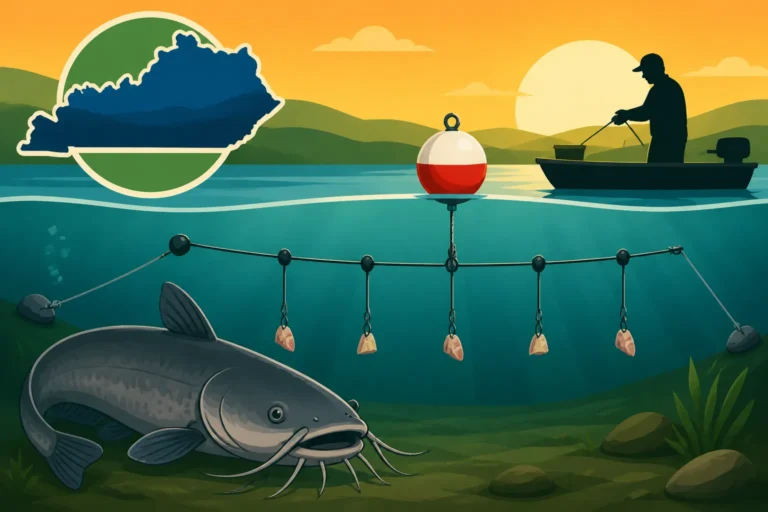
When it comes to rigging, versatility is key. The Carolina rig (or slip sinker rig) is a staple: a sinker (1-4 oz, depending on current and depth) slides freely above a barrel swivel, which is then tied to a leader (1-3 feet of 30-50 lb monofilament or fluorocarbon) and a strong circle hook. This allows the fish to pick up the bait without feeling the weight of the sinker. For fishing vertical structure or when drifting, a three-way swivel rig can be effective, allowing you to suspend a bait off the bottom. If you're exploring the option of How to Rig a Trotline for Catfish or trying Jug Fishing for Catfish: A Beginner's Guide on Kentucky Lake, remember to check all local regulations, as these methods can be incredibly productive but often have specific rules. And when in doubt, a quick search on Amazon will reveal a plethora of pre-made rigs and specialized catfish baits to get you started.
Proven Techniques for Targeting Summer Catfish
Kentucky Lake is a vast and varied fishery, meaning a one-size-fits-all approach won't always cut it. Successful summer catfishing often involves understanding when to hold your ground and when to cover water, adapting to the behavior of these powerful bottom dwellers.
Anchor Fishing vs. Drifting: When to Use Each
Choosing between anchoring and drifting largely depends on the specific spot you're fishing and the behavior of the catfish. Anchor fishing is your go-to strategy when you've pinpointed a specific hotspot – maybe a deep hole, a submerged creek channel intersection, a brush pile you found on your sonar, or around bridge pilings. The idea here is to present your bait directly to fish holding in a known area. Once you've identified a promising spot, use two anchors (one off the bow, one off the stern) to precisely position your boat and prevent it from swinging. This allows you to soak multiple baits on different rigs, often varying depths slightly to find the active zone. It's a patient game, but when you hit the right spot, the action can be furious. Remember to be mindful of your proximity to others and always exercise good boating etiquette.
Drifting, on the other hand, is a fantastic way to cover more water and locate active fish, especially when they're scattered across larger areas like flats or along extended channel ledges. This technique involves allowing your boat to be pushed by the wind or current, slowly dragging your baits across the bottom. You can control your drift speed with a trolling motor or by deploying drift socks, which act like underwater parachutes to slow your boat down. Drifting is particularly effective over long, gradual slopes or expansive flats where catfish might be cruising for food. It allows you to present your bait to a wider range of fish, increasing your chances of finding a hungry one. Both techniques have their merits, and often, a successful day involves using a combination of both – drifting until you find active fish, then anchoring down on the most productive stretch.
Night Fishing Strategies for Active Catfish
If you're serious about catching the biggest catfish Kentucky Lake has to offer in the summer, you absolutely cannot ignore the magic of night fishing. As the sun dips below the horizon and air temperatures finally offer some relief, the lake truly comes alive. Catfish, especially the larger blues and flatheads, become significantly more active at night. They move out of their deep-water daytime haunts and venture into shallower feeding grounds, taking advantage of the cooler water and reduced boat traffic. This is when they become less wary and more aggressive in their pursuit of baitfish.
When preparing for a night trip, safety is paramount. Ensure your boat's navigation lights are fully functional, and always have a powerful spotlight or headlamp on hand. Glow sticks attached to your rod tips can help you see bites, and having a lantern or floodlight for your boat can make rigging and handling fish much easier. As for bait, the same cut baits that work during the day are still excellent, but live bait for flatheads can be particularly effective under the cloak of darkness. Focus your efforts on shallower flats adjacent to deep channels, submerged humps, or even around lighted docks and bridges where baitfish gather. For more in-depth guidance on fishing after dark, our guide to Night Fishing Techniques for Catfish offers a treasure trove of tips to maximize your success when the sun goes down. A good quality headlamp or a floating boat light can be easily found on Amazon and are essential additions to your night fishing arsenal.
Navigating Kentucky Lake for Optimal Catfish Fishing
Kentucky Lake is an inland sea, a massive reservoir that can be intimidating to even seasoned anglers. Understanding its unique characteristics and leveraging modern technology are crucial for consistently putting catfish in the boat.
Understanding Kentucky Lake's Unique Features and Challenges
Kentucky Lake is not just any lake; it's one of the largest man-made lakes in the eastern United States, stretching over 160 miles and boasting more than 2,000 miles of shoreline. It's essentially the impounded Tennessee River, meaning it has a distinct main river channel that runs through its entire length. This channel, along with countless submerged creek beds, old roadbeds, and vast expanses of standing timber, creates an incredibly complex underwater landscape. These features are precisely where catfish orient themselves.
However, its size also presents challenges. Strong currents can develop, especially near the dams or during periods of heavy generation, which influences where fish hold and how you should present your baits. Summer also brings heavy boat traffic, particularly on weekends, which can make some areas less desirable during the day. Water levels can fluctuate, impacting access to certain spots or exposing new structure. Being aware of these dynamics and understanding how they affect fish behavior is key. It's more than just dropping a line; it's about interpreting the lake's moods and finding the subtle clues that lead to productive fishing. Remember, while the lake is vast, the fish are often concentrated in specific areas, so knowing how to read the water is essential.
Utilizing Electronics and Maps to Find Catfish Holds
In a lake as enormous and structurally diverse as Kentucky Lake, your fishing electronics are not just a luxury; they are an absolute necessity. A reliable fish finder with good sonar capabilities (2D sonar, Down Imaging, and Side Imaging are all incredibly helpful) can transform your fishing experience. You can't see what's beneath the surface, but your electronics can. Use them to identify the main river channel, locate those subtle depth changes and ledges, pinpoint submerged timber, brush piles, and even individual humps or rock piles that might hold catfish. Look for baitfish schools as well; where there's bait, there are usually predators.
Coupled with your fish finder, a good GPS unit loaded with detailed lake maps is invaluable. These maps will show you the contours of the bottom, the old river and creek channels, roadbeds, and even some marked hazards or historical structures. Mark promising spots as waypoints for future reference. Don't just motor around aimlessly; use your electronics to systematically scan areas, look for structure, and identify concentrations of fish or bait. The ability to return to a precise location, day after day, year after year, dramatically improves your chances of success. It's like having x-ray vision into the lake's depths, allowing you to quickly eliminate unproductive water and focus on prime catfish habitat. You can find many advanced fish finders and mapping chips for Kentucky Lake on Amazon, giving you a powerful edge.
Species-Specific Summer Catfish Tips for Kentucky Lake
Kentucky Lake is home to three main species of catfish: blue, channel, and flathead. While they all appreciate a good summer meal, they each have their own preferences when it comes to habitat, bait, and feeding behavior. Understanding these distinctions will help you tailor your approach for maximum success.
Targeting Big Blue Catfish
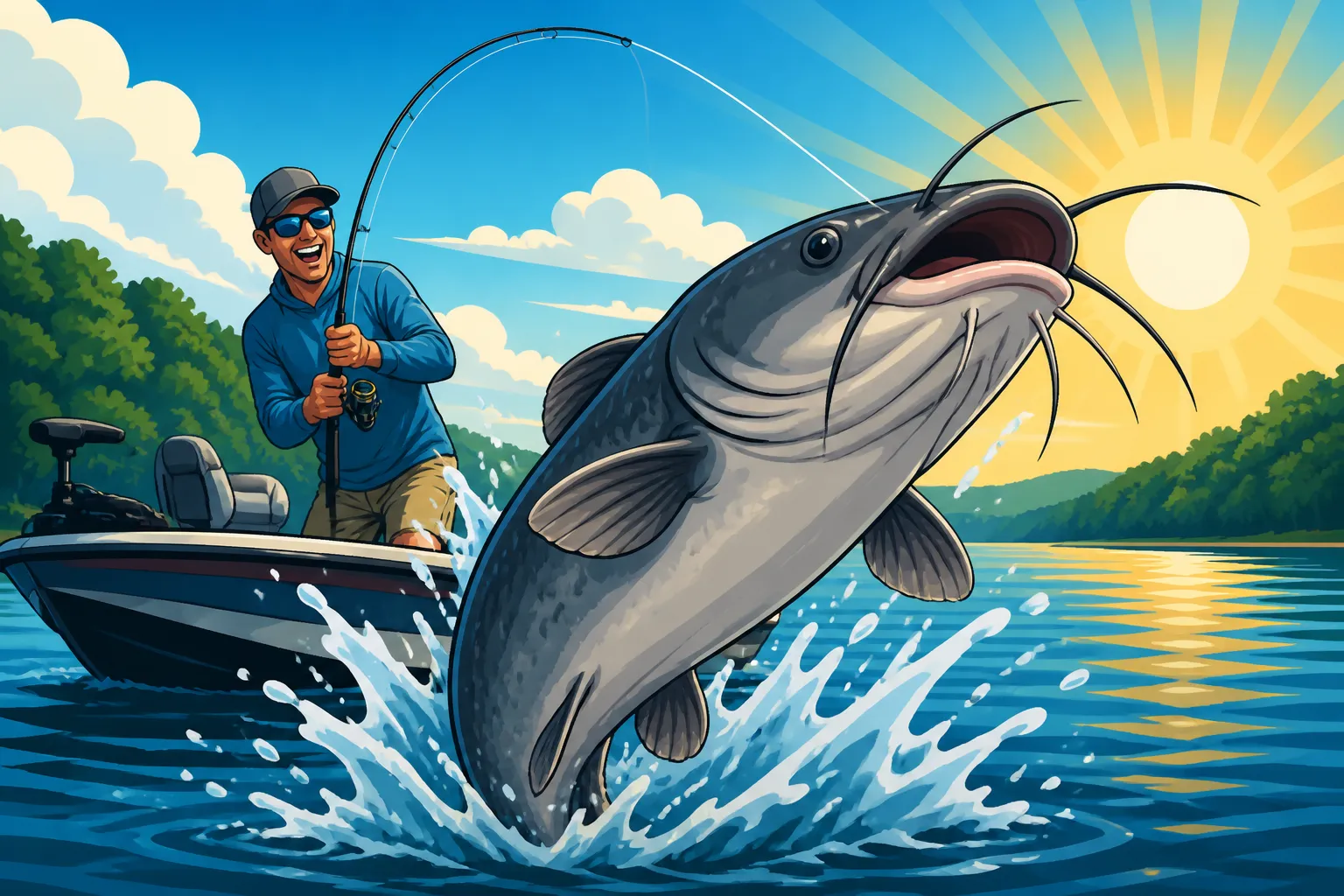
Blue catfish are often the target of trophy hunters on Kentucky Lake, and for good reason—they grow huge. These powerful fish are generally found in deeper, more open water, often along the main river channel or in large, deep creek channels. They tend to congregate in current breaks or deeper holes near structure, especially where baitfish are abundant. During the summer, look for them holding near ledges, deep humps, or around the base of bridge pilings where the current brings food to them. Blues are primarily piscivores, meaning they prefer fish. Fresh cut bait, particularly shad or skipjack herring, is their absolute favorite. The fresher, the better.
When targeting big blues, scale up your tackle. Heavy-action rods, strong baitcasting reels, and 50-80 lb braided line are not overkill. Use large, strong circle hooks (6/0 to 8/0) to ensure a solid hook set in their tough mouths and to protect the fish if you plan to release it. Patience is key; sometimes it takes a while for a large blue to find your bait. Once they do, be prepared for a fight that will test your tackle and your stamina. While the Kentucky Catfish Daily Limit and Trophy Fish Rule allows for keeping one blue catfish over 25 inches, many anglers targeting trophy-class fish practice catch and release to help sustain the population of these magnificent creatures.
Finding Channel Catfish and Flathead Catfish
Channel catfish are the most widespread and perhaps the most commonly caught catfish species in Kentucky Lake. They are less particular about habitat than blues or flatheads and can be found in a wider range of environments, from shallow creek mouths and flats to deeper channels. In summer, they'll often relate to structure like brush piles, submerged timber, or even rocky banks. Channel cats are opportunistic omnivores, meaning they'll eat just about anything. They respond incredibly well to traditional catfish baits like chicken liver, various prepared stink baits, nightcrawlers, and small pieces of cut bait. They typically don't grow as large as blues, but a 10-15 pound channel cat is a fantastic fight on medium-heavy tackle.
Flathead catfish, on the other hand, are a different beast entirely. These solitary predators prefer live bait and heavy cover. They'll often tuck themselves into dense log jams, undercuts in riverbanks, or submerged timber in deeper channels, waiting to ambush unsuspecting prey. Targeting flatheads requires patience and a willingness to fish in snaggy areas. Live sunfish, small carp, or large shiners (where legal) are excellent choices. Use a stout leader, a large circle hook, and present your live bait near their preferred cover. Be prepared for a powerful, slow fight. Flatheads often hug the bottom and try to bury themselves back in the structure. The Kentucky Catfish Limit: 15 Fish, Only 1 Over 25 Inches generally applies to combined catfish species, but it's always wise to double-check for any specific lake-specific regulations, though Kentucky Lake generally adheres to statewide guidelines.
Safety, Regulations, and Conservation on Kentucky Lake
No matter how excited you are to chase those summer catfish, safety and adherence to regulations should always be your top priorities. Kentucky Lake is a big body of water, and summer brings its own unique set of challenges and responsibilities.
Essential Summer Boating Safety and Heat Preparedness
Summer on Kentucky Lake means intense sun and high temperatures, which can quickly turn a fun day into a dangerous situation if you're not prepared. Hydration is key; bring plenty of water, sports drinks, and avoid excessive alcohol. Wear sunscreen, a wide-brimmed hat, and light-colored clothing to protect yourself from the sun's relentless rays. Always check the weather forecast before heading out, as summer thunderstorms can pop up quickly and violently on large lakes.
Beyond personal preparedness, boating safety is paramount. Ensure your boat is in good working order, with all required safety equipment on board, including fire extinguishers, sound-producing devices, and signaling devices. Most importantly, everyone on board must have a Coast Guard-approved life jacket. While adults aren't always required to wear them, they must be readily accessible. For kids, the rules are stricter: children 12 years of age and under are required to wear a U.S. Coast Guard approved life jacket while on the open deck of a moving boat. Our comprehensive guide to Life Jacket Rules for Boats in Kentucky provides all the details you need to stay compliant and safe. A little planning goes a long way in ensuring a safe and enjoyable day on the water.
Kentucky Lake Catfish Regulations and Ethical Angling
Before you even think about dropping a line, make sure you have a valid Kentucky fishing license. You can consult our Kentucky Fishing License Guide for all the information on how to obtain one. Once your license is in hand, it's crucial to understand the specific regulations for catfish on Kentucky Lake. While the lake primarily follows statewide limits, it’s always a good practice to consult the current Kentucky Department of Fish and Wildlife Resources fishing guide for any site-specific exceptions.
Generally, for blue and channel catfish, the statewide daily limit is 15 fish, of which only one can be 25 inches or longer. For flathead catfish, the daily limit is 5 fish, with only one being 25 inches or longer. You can find detailed breakdowns in our Statewide Bag and Size Limits by Fish Species article. Beyond the regulations, practicing ethical angling is vital for the sustainability of Kentucky Lake's incredible catfish fishery. If you're targeting trophy-sized blues or flatheads and plan to release them, handle them with care. Minimize their time out of the water, support their weight horizontally, and release them gently. For fish you intend to keep for the table, respect the limits and only take what you will consume. Good conservation practices ensure that Kentucky Lake remains a fantastic catfish destination for generations to come.
Disclaimer
Please remember that fishing regulations, conditions, and best practices can change. Always consult the latest Kentucky Department of Fish and Wildlife Resources regulations before your trip. The information provided here is for general guidance and informational purposes only, and does not constitute professional advice.