White Bass Vs Yellow Bass: How to Tell Them Apart
It’s a tale as old as time for many Kentucky anglers: you reel in a silvery, stripey fish, and for a moment, you’re not quite sure if you’ve landed a white bass or a yellow bass. These two popular panfish cousins can look incredibly similar at a glance, leading to confusion, especially when you’re out on the water and the bite is hot. This guide is here to clear up that mystery once and for all, helping you confidently identify each species so you know exactly what you’ve caught, and perhaps even better, how to target them more effectively on your next outing.
Why White and Yellow Bass Get Confused So Often
It’s completely understandable why anglers, even seasoned ones, sometimes pause when pulling in a white or yellow bass. They share a lot of common ground, making quick identification tricky in the heat of the moment. You’re excited, the fish is flopping, and you’re trying to remember those subtle differences. It happens to the best of us!
Shared Characteristics That Trick Anglers
Both white bass and yellow bass belong to the temperate bass family, which means they naturally have similar body plans. They’re both silvery, schooling fish with distinct horizontal stripes along their sides, and they love to congregate in similar types of freshwater habitats across Kentucky. You’ll often find them in the same lakes and rivers, chasing baitfish, which further blurs the lines when you're casting into a feeding frenzy. Their general size range, especially for younger fish, can also overlap, making a quick visual assessment even harder. When you're fishing a broad body of water like Kentucky Lake or the Ohio River, and you're catching fish left and right, it's easy for your brain to just register "stripey fish" and move on.
Picture this: you're out on Lake Barkley, the sun is reflecting off the water, and you've just hauled in a feisty little fighter. It's got stripes, it's silvery, and it put up a good fight. In that moment, with adrenaline pumping, the subtle nuances might escape you. Are those stripes broken? Is its body a little thicker? These aren't always the first questions that come to mind when you're trying to land a fish and get your line back in the water. Plus, environmental factors like water clarity and even the fish's diet can slightly alter their coloration, adding another layer to the identification puzzle.
The Importance of Correct Identification
Beyond just satisfying your curiosity, knowing the difference between a white bass and a yellow bass is actually quite important, especially when it comes to following fishing regulations. While many statewide limits might apply broadly to "temperate bass," there can be subtle differences in bag limits or even length limits for specific species in certain waters. Misidentifying your catch could, in rare cases, lead to an unintentional violation. For example, knowing the Statewide Bag and Size Limits by Fish Species is crucial.
Furthermore, understanding which species you’re consistently catching can help you refine your fishing techniques. While they share some similarities in feeding habits, there are often subtle differences in their preferred depths, structures, and even the baits they respond best to. If you’re targeting white bass during their famous spring runs, but you’re mostly catching yellow bass, you might need to adjust your approach. Accurate identification helps you become a more skilled and knowledgeable angler, letting you truly understand the ecosystem you’re fishing in. It’s about more than just catching fish; it’s about understanding them.
Diving Deep into White Bass Identification
White bass are often considered the more common and larger of the two "stripey bass" species in many Kentucky waters. They're a favorite among anglers for their aggressive strikes and strong fighting capabilities, especially during their legendary spring spawning runs in rivers and large reservoirs. Once you know what to look for, their characteristics are quite distinct.
Distinctive Body Shape and Size
When you hold a white bass, you'll generally notice a more streamlined, football-shaped body compared to its yellow cousin. They tend to be deeper-bodied and more elongated, giving them a powerful, almost bullet-like appearance. This body shape is built for speed and chasing down baitfish in open water. While smaller ones can be confused, adult white bass are typically larger than yellow bass, often reaching lengths of 12-15 inches, with trophy fish exceeding 2 pounds. It's not uncommon to pull a 3-pound white bass from a healthy reservoir like Kentucky Lake, especially during peak seasons. Their overall heft and muscular feel in your hand are often a good first clue.
Imagine you're fishing the Cumberland River during the spring run. You hook into something that absolutely rips line and makes your ultralight rod bend. When you bring it in, it’s a beautiful, silvery fish, maybe 14 inches long, robust and chunky. That's a classic white bass. They are prolific breeders and tend to grow quickly in fertile waters, making them a fantastic sport fish for anglers of all skill levels. They often put up a surprisingly strong fight for their size, turning sideways in the current to use every bit of their streamlined body against you.
Markings and Stripes: The Unbroken Lines
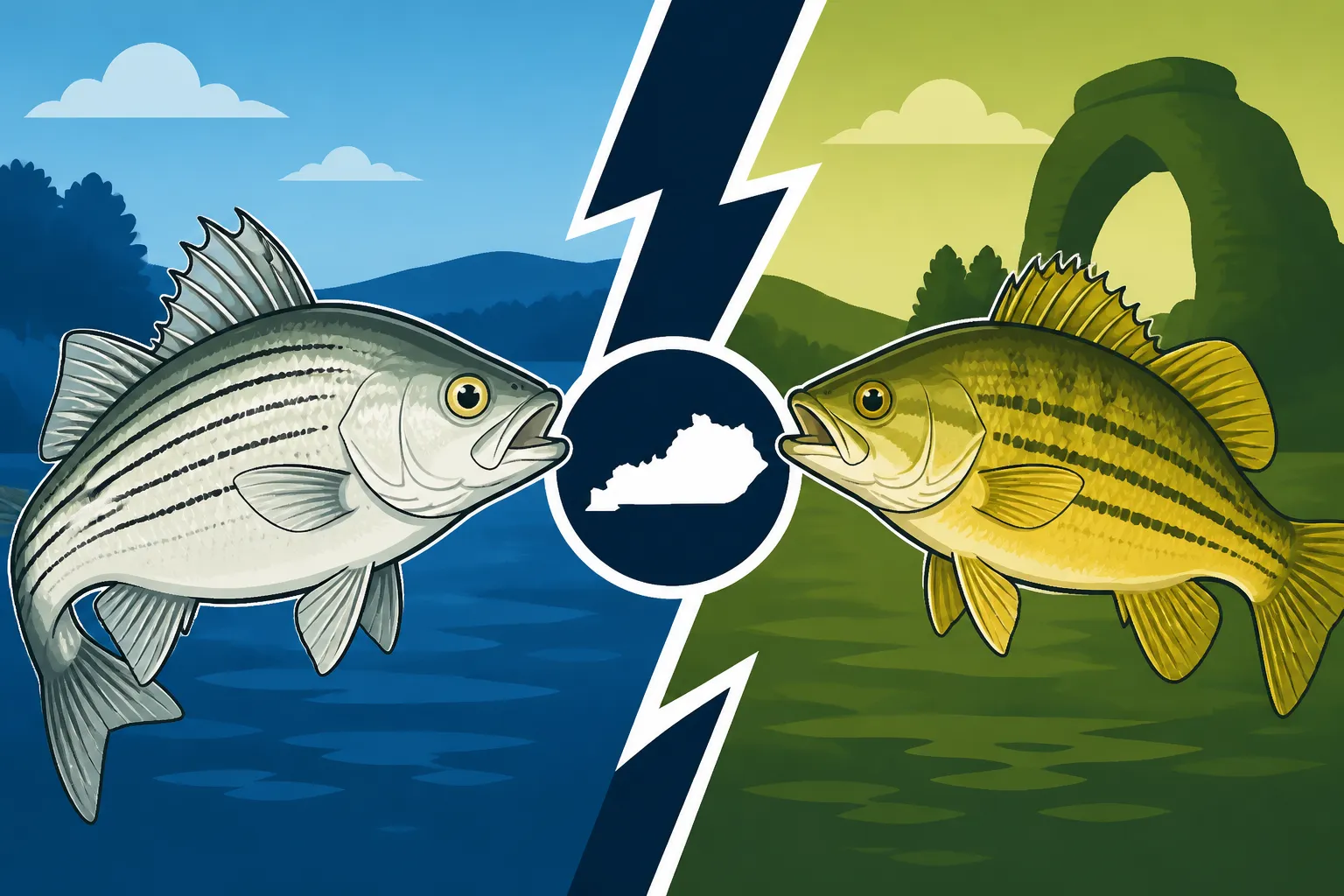
This is arguably the most reliable visual cue for identifying a white bass. Look closely at the horizontal stripes running along its silvery sides. White bass will typically have 5 to 7 dark, continuous lines. The key here is "continuous." At least one of these lines, usually the one running along or just below the lateral line, will extend unbroken from just behind the gill plate all the way back to the base of the tail. There might be some faintness or slight curvature, but the lines will not appear "broken" or "offset" like a zipper.
Sometimes, particularly on larger, older fish, these stripes can be less prominent, almost fading into the silvery background. However, if you run your finger along the lateral line and look closely, you should still be able to discern that uninterrupted pattern. It's like a solid, unwavering line drawn with a steady hand. Don't be fooled by faintness; focus on the continuity. Many anglers will quickly look for that tell-tale continuous stripe as soon as they land the fish. If you see that solid line, you're almost certainly holding a white bass.
Mouth and Tongue Patch
Another definitive characteristic of the white bass lies inside its mouth. Carefully (and safely!) open the fish’s mouth and feel its tongue. A white bass will have a single, distinct patch of teeth on its tongue. It feels like a small, rough patch right in the center. This might not be the first thing you check, especially if you’re trying to quickly release a fish, but it’s a fool-proof method if you’re still unsure after checking the stripes.
Beyond the tongue patch, the mouth of a white bass generally appears larger and more upturned compared to a yellow bass. They are aggressive predators, and that larger mouth is well-suited for engulfing baitfish. The lower jaw often protrudes slightly beyond the upper jaw, giving it a somewhat aggressive profile, perfect for snatching fleeing shad or minnows. Checking the mouth is an extra step, but it provides undeniable evidence of which species you have.
Dorsal Fins
Pay attention to the dorsal fins, which are the fins located on the fish’s back. White bass have two distinct dorsal fins that are completely separate from each other. The front dorsal fin is typically spiny, while the rear one is softer-rayed. There will be a clear, noticeable gap between the two fins. You can easily slip a piece of paper, or your finger, between them without resistance.
This separation of the dorsal fins is another consistent trait. It’s not something that varies based on the fish's age or diet. If you can clearly see and feel two separate fins on the back, without any connecting membrane at the base, you’re looking at a white bass. It’s a subtle but reliable indicator, especially when combined with the stripe pattern and the presence of a tongue patch.
Unpacking Yellow Bass Identification
Yellow bass, while perhaps not as widely distributed in some of Kentucky's massive reservoirs as their white bass cousins, are still a fantastic and fun species to target. They might not grow as large, but they make up for it with their vibrant coloration and willingness to bite, often providing fast-paced action, especially for newer anglers or kids.
Chunkier Body and Smaller Size
Compared to the streamlined white bass, the yellow bass often presents a chunkier, more compressed body profile. They tend to be a bit "taller" relative to their length, giving them a somewhat stockier appearance. Their overall size is generally smaller than white bass, with most adult yellow bass ranging from 6 to 10 inches. Catching a yellow bass over a pound is considered a very good catch, and anything approaching a foot in length is a true trophy.
One of the most striking visual differences is their coloration. As their name suggests, yellow bass often have a distinct golden or yellowish tint, especially on their belly and lower flanks, which can be quite pronounced in some specimens. This yellow hue is usually very noticeable when contrasted with the more purely silvery appearance of a white bass. You might reel one in and immediately notice that warm, golden glow radiating from its scales. This vibrant color is often a dead giveaway, even before you start counting stripes. This makes them truly stand out when you pull them from the water, particularly against the typically muted greens and browns of lake or river water.
Broken and Offset Stripes
This is the absolute defining characteristic for yellow bass and the most critical difference to observe. Look at the horizontal stripes along their sides. While white bass have continuous stripes, yellow bass have stripes that are distinctly broken or offset, especially below the lateral line and towards the tail section. Imagine a dashed line or a line that has been shifted slightly, like individual segments that don't quite line up.
These broken lines are usually quite prominent and easy to spot once you know what to look for. Sometimes the breaks are subtle, and other times they are glaringly obvious. If you see stripes that look like a series of dashes or seem to zig-zag slightly, you've almost certainly got a yellow bass on your hands. This is the visual cue you should look for first, as it’s the most consistent and apparent difference. It’s a design feature that nature gave them, making identification much easier if you simply pause and observe.
Mouth and Tongue: No Tooth Patch Here!
Just like its white bass cousin, the inside of a yellow bass's mouth offers another clear identification point, though this time by its absence. If you carefully check the tongue of a yellow bass, you will find it to be perfectly smooth. There is no distinct patch of teeth on the tongue, unlike the white bass. This is another reliable, scientific way to confirm your catch if the stripe pattern is still giving you trouble.
Additionally, the mouth of a yellow bass is generally smaller and less pronounced than that of a white bass. Their lower jaw typically does not extend beyond the upper jaw, resulting in a more proportionate, less aggressive mouth profile. They’re still effective predators, but their mouth structure reflects their preference for slightly smaller prey or different feeding strategies compared to the larger white bass.
Dorsal Fins: Joined at the Base
Just as the dorsal fins were a key indicator for white bass, they are equally important for identifying yellow bass. Unlike white bass, the two dorsal fins on a yellow bass are connected at their base by a membrane. While they still appear as two distinct fins, there will be no clear gap between them. You won't be able to easily slip your finger or a piece of paper between the front and rear sections; they are fused together.
This subtle connection is a physical characteristic that provides another reliable distinction. If you gently feel the base of the dorsal fins, you’ll notice that continuous tissue running between them. This, combined with the broken stripes and the lack of a tongue patch, forms a consistent set of identifiers for the yellow bass. It’s these small, consistent anatomical differences that make telling them apart much easier than you might initially think.
Side-by-Side Comparison: White Bass vs. Yellow Bass
When you’re out on the water, especially when the fish are biting fast, you need a quick way to differentiate your catch. Having a mental checklist or a handy reference can make all the difference. Let's lay out the key features side-by-side to solidify your understanding.
Quick Reference Table for Field Use
Here’s a table summarizing the most important identification points. This is the kind of chart you might want to screenshot and keep on your phone, or even print out and laminate for your tackle box, especially when you're first learning to tell these two apart. It covers the crucial differences we've discussed.
| Feature | White Bass | Yellow Bass |
|---|---|---|
| Body Shape | More streamlined, deeper, elongated | Chunkier, more compressed, "taller" |
| Coloration | Silvery, sometimes with a greenish tint | Distinct golden-yellowish tint, especially on belly |
| Stripes | Unbroken; at least one extends to tail | Broken/Offset below lateral line, especially rear |
| Size | Generally larger (12-15+ inches common) | Generally smaller (6-10 inches common) |
| Tongue Patch | Present (single rough patch) | Absent (smooth tongue) |
| Dorsal Fins | Separate (clear gap between them) | Joined at the base by a membrane |
Using this table, you can quickly run through the characteristics of a fish in your hand. The stripe pattern and the tongue patch are often the fastest and most reliable differentiators. If you can quickly confirm the unbroken stripes and the tongue patch, you’ve got a white bass. If you see broken stripes and a smooth tongue, it's a yellow bass.
Visual Cues for a Quick Glance
When that fish comes into the boat, your first reaction isn't usually to open its mouth or probe its tongue. You need faster cues. Here's what to look for at a glance:
- The "Broken Line" Rule: This is your primary visual test. Scan the stripes on the fish's side, especially the ones running toward the tail. If you see clear breaks or offsets in the lines, it’s almost certainly a yellow bass. If they run continuously from head to tail, it's a white bass. This is often the easiest first check you can make.
- Overall Coloration: Does the fish have a distinct golden or yellowish hue, particularly on its underside? If so, lean towards yellow bass. If it’s pure silver, it's more likely a white bass.
- Body Proportions: While harder for smaller fish, adult white bass generally look more "athletic" and elongated, while yellow bass appear a bit more "squat" or compressed from top to bottom.
- Dorsal Fin Gap: A quick look at the fins on its back will reveal if they are clearly separated (white bass) or connected at the base (yellow bass).
Practicing these quick checks will make you an expert identifier in no time. You'll soon find yourself distinguishing between the two with just a glance, even before the fish is fully in the net. It's a skill that comes with experience, so don't get discouraged if it takes a few trips to click.
Fishing for These Feisty Fighters in Kentucky Waters
Both white and yellow bass offer fantastic fishing opportunities across Kentucky, whether you're looking for high-numbers action or just a fun day on the water. Knowing their preferred habitats and behaviors can significantly boost your success. White Bass and Yellow Bass Fishing in Kentucky provides even more detailed tips!
White Bass: The River Run Specialists
White bass are famous for their aggressive, schooling behavior, especially during their spring spawning runs. In Kentucky, these runs happen in the tributaries of large rivers and major reservoirs like Kentucky Lake, Lake Barkley, and the Ohio River. When water temperatures begin to rise in early spring, often in March and April, white bass will migrate upstream into creeks and rivers to spawn. This is when the fishing can be absolutely phenomenal, with anglers sometimes catching dozens of fish in a single outing.
During these runs, white bass will aggressively strike at small jigs, spinnerbaits, and spoons. They are often found in eddies, current breaks, and at the mouths of feeder creeks. Later in the year, during the summer and fall, white bass will school up in open water in the main lake basins, chasing schools of shad. You'll often see them crashing the surface, creating a "boil" as they feed, which is a clear signal to cast your lure into the fray. What Fish Are Biting in Kentucky in July might include white bass if you're fishing a summer boil! They are incredibly fun to catch on light tackle, putting up a spirited fight for their size.
Yellow Bass: Smaller but Still Fun
Yellow bass, while often not as widespread in massive open waters as white bass, are excellent inhabitants of smaller lakes, ponds, and slower-moving river sections throughout Kentucky. They tend to prefer areas with more structure and cover, such as submerged brush piles, weed beds, and around docks. You might find them in places like Barren River Lake or even some of the smaller urban fishing lakes. They are known for being less migratory than white bass, often staying in specific areas year-round.
These smaller but feisty fish are readily caught on ultralight tackle using tiny jigs, minnows, or small worms. They are a fantastic species for kids or beginners due to their willingness to bite and the consistent action they provide. While you might not be catching them in the same frenetic "boils" as white bass, a good yellow bass school can keep your line tight for hours. They are often found in deeper pockets or channels, especially during the warmer months, but will move shallower during cooler periods. Don't underestimate the fun factor of a good yellow bass bite!
Gear Considerations for Both Species
When fishing for either white or yellow bass, light tackle is generally the way to go. A light to medium-light spinning rod, typically 6 to 7 feet long, paired with a small spinning reel spooled with 4 to 8-pound test line, is perfect. This setup allows you to cast lighter lures and really feel the fight of these energetic fish. You don't need heavy-duty equipment; in fact, lighter gear makes the experience much more enjoyable.
For lures, think small and flashy. Small inline spinners, blade baits, spoons, and jigs (1/16 to 1/8 ounce) are all highly effective. Crappie jigs, often tipped with a small minnow or a soft plastic grub, also work wonders. If you prefer live bait, small minnows are usually irresistible to both species. You can find a wide array of these effective lures and baits from reputable retailers. Many anglers enjoy browsing sites like Amazon for their fishing gear needs, where you can compare different brands and types of lures designed specifically for temperate bass. Remember to match your lure size to the size of the baitfish the bass are currently feeding on, if you can determine it. Sometimes, a tiny bait will outfish everything else.
Disclaimer
This article is for general informational purposes only and does not constitute professional advice. Laws, prices and regulations vary by location and change over time. Consult a qualified professional for guidance on your specific situation.