Where to Find Northern Pike in Kentucky Lakes
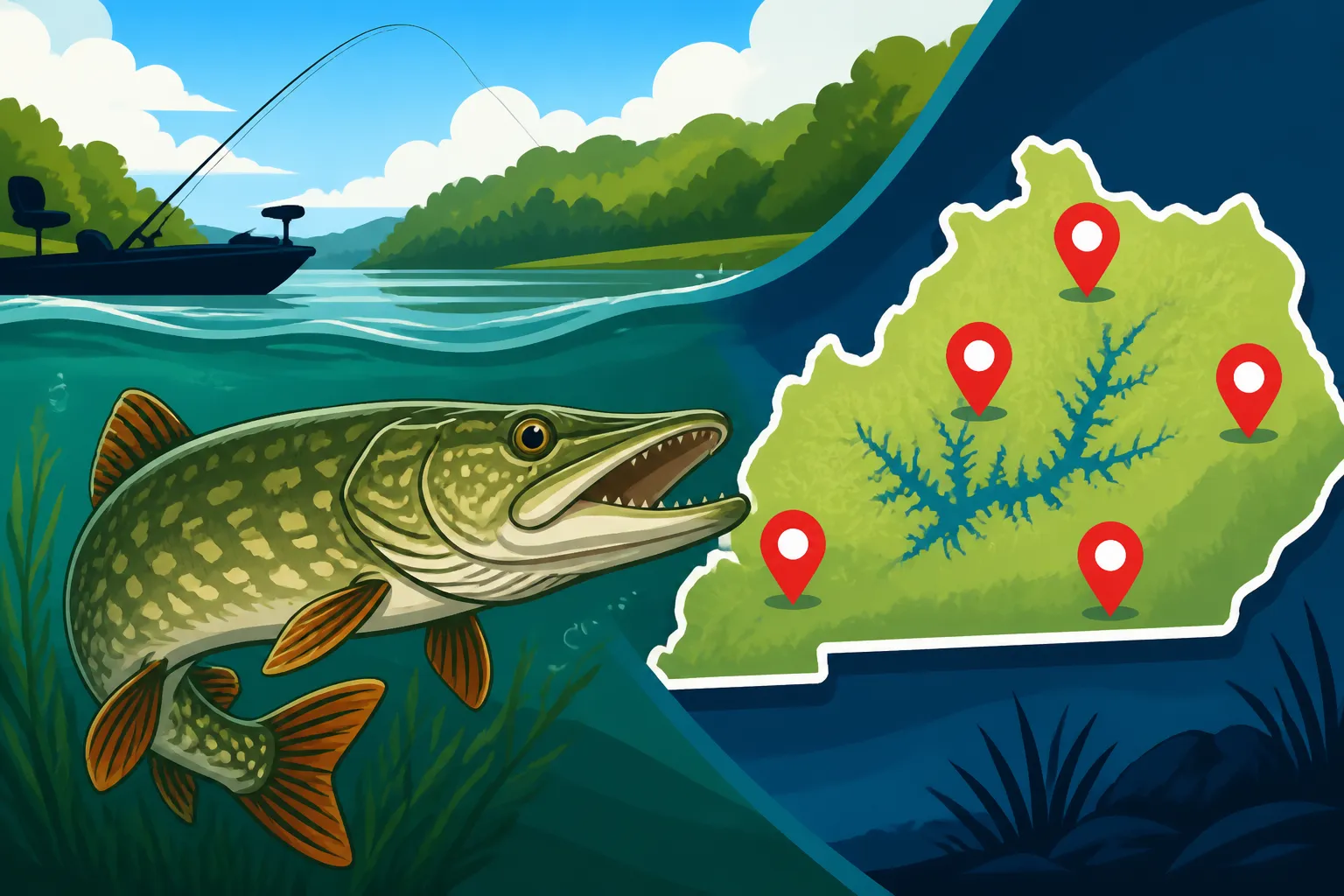
Let's be honest, when most folks in Kentucky think about fishing, their minds probably conjure up images of massive largemouth bass exploding on topwater lures, powerful blue catfish pulling drag on the Ohio River, or maybe even the elusive muskie lurking in the depths of Cave Run Lake. But Northern Pike? That's a species often associated with the colder waters of the Great Lakes region or the vast wilderness of Canada, leaving many Kentucky anglers wondering, "Do we even have those here?" The truth is, finding Northern Pike in Kentucky lakes is not an easy task, and it often involves sifting through rumors and historical records more than heading to a known hotspot. This guide aims to clear the waters, so to speak, helping you understand the reality of Northern Pike in the Bluegrass State and what to look for if you're determined to encounter one of these toothy predators.
The Elusive Nature of Northern Pike in Kentucky
It’s a common misconception, fueled by their aggressive reputation and widespread presence in northern states, that Northern Pike might be a more common catch in Kentucky. However, the reality is quite different. Kentucky just isn't prime pike territory, and for good reasons. Our warmer climate and specific aquatic ecosystems simply don't favor them the way they do our native esocids like muskie and chain pickerel. So, if you're picturing vast populations of pike lurking in every major lake, you might need to adjust your expectations.
Why Northern Pike Aren't Widespread Here
Northern Pike thrive in cooler, often shallower waters with abundant weed beds and structure where they can ambush prey. They prefer environments that offer a distinct winter season with ice cover, which our Kentucky lakes don't consistently provide for long periods. Our waters, while rich in biodiversity, lean towards a warmer thermal profile for a significant portion of the year. This warmer water simply isn't ideal for Northern Pike, impacting their reproduction, growth, and overall survival rates compared to more northern latitudes. While individual fish might be found, sustaining a robust, self-reproducing population is a different challenge altogether.
Furthermore, Kentucky's fisheries management has historically focused on species better suited to our climate and angler interest, such as bass, crappie, catfish, and muskie. There hasn't been a significant, sustained effort to stock Northern Pike across the state's major reservoirs. The resources are typically allocated to enhancing populations of species that naturally flourish here or have established successful stocking programs. This lack of active management and suitable habitat combine to make Northern Pike a genuinely rare catch, a true anomaly rather than a target species for most anglers.
Native vs. Stocked Populations
The question of whether Northern Pike are native to Kentucky is often met with a shake of the head. Generally, they are not considered a native species in the Commonwealth. Any sightings or catches are usually attributed to illegal introductions, accidental transfers, or perhaps very isolated, unsuccessful stocking attempts from decades past that never led to self-sustaining populations. Unlike muskie, which have a strong native presence in certain Kentucky rivers and a successful stocking program in lakes like Cave Run, Northern Pike haven't enjoyed similar success or focus.
What this means for the angler is that you won't find specific stocking schedules or designated "pike lakes" in Kentucky. If you do encounter a Northern Pike, it's a testament to its individual resilience or a fleeting product of circumstance, not a sign of a thriving population. For those truly seeking the thrill of a pike fight, you'll generally need to travel north to states like Michigan, Wisconsin, or Minnesota, where these fish are a cornerstone of the angling culture and fisheries management programs. Here in Kentucky, we have our own toothy predators that are far more accessible and abundant.
Specific Kentucky Lakes Where Northern Pike Have Been Reported (or Rumored)
Given their elusive nature, pointing to a definitive "Northern Pike lake" in Kentucky is nearly impossible. However, like any good fishing tale, there are whispers and occasional reports that circulate among dedicated anglers, often in the same breath as discussions about our robust muskie fisheries. It's important to approach these reports with a healthy dose of skepticism and understand that the fish being caught might not always be what they seem.
The Cave Run Lake Connection
When it comes to large, predatory, toothy fish in Kentucky, Cave Run Lake in Eastern Kentucky immediately springs to mind because it is renowned as a premier muskie fishery. Muskie, often called the "fish of 10,000 casts," share a similar body shape and predatory nature with Northern Pike. This similarity sometimes leads to misidentification, especially by anglers less familiar with the subtle differences between the two species. While Cave Run is certainly a fantastic place to target large esocids, those fish are overwhelmingly muskellunge, not Northern Pike.
Anglers might report catching a "pike" at Cave Run, but more often than not, it's a young muskie or perhaps a muskie-pike hybrid, sometimes referred to as a "tiger muskie." These hybrids are occasionally stocked in various lakes across the country, though not typically in Kentucky's dedicated muskie waters. If there were any Northern Pike in Cave Run, they would be exceedingly rare, likely escapees from private ponds or isolated, unverified introductions. For the best chance at a large esocid in Cave Run, focus your efforts on muskie—you'll have a much higher probability of success. You can learn more about this incredible fishery in our guide to Cave Run Lake Fishing Guide and Best Spots.
Other Potential Though Unlikely Northern Pike Habitats
Beyond the common muskie confusion, any other reports of Northern Pike in Kentucky waters are usually isolated incidents rather than indications of viable populations. Large reservoirs with ample forage and some degree of deeper, cooler water, such as Lake Cumberland or Kentucky Lake, might theoretically support an occasional rogue fish. However, the prevailing water temperatures and habitat conditions typically work against them thriving. These lakes are far better known for their bass, crappie, and catfish populations. For instance, Kentucky Lake: The State's Top Bass Fishing Destination and Lake Cumberland: Kentucky's Best All-Around Fishing Lake are celebrated for entirely different species.
Even river systems like the Ohio River, which sees a huge diversity of fish, is not a known stronghold for Northern Pike. While you might stumble upon almost anything in a vast river system, it would be an extreme rarity. The key takeaway for any Kentucky angler chasing Northern Pike is to temper expectations and recognize that if you do catch one, you've hit a true lottery ticket moment, rather than successfully targeted a known species. We are more likely to encounter Walleye, Sauger and Saugeye Fishing in Kentucky or Catfish Species in Kentucky: Channel, Blue, Flathead and White in our major waterways.
Distinguishing Northern Pike from Similar Species
Since actual Northern Pike are so rare in Kentucky, it's highly probable that any "pike" an angler catches is actually another species of the Esocidae family. Kentucky is home to several other elongated, toothy predators that are often mistaken for Northern Pike. Knowing the key identification features can save you a lot of head-scratching and help you accurately identify your catch. Understanding these differences is crucial, especially when fishing waters known for muskie or chain pickerel.
Northern Pike vs. Muskie: Key Identification Marks
This is where the most confusion lies. Both Northern Pike and Muskie (Muskellunge) are formidable predators with similar body shapes. However, there are a few tell-tale signs to tell them apart:
- Tail Fin: This is often the easiest first check. Muskie typically have a sharply pointed, V-shaped tail fin, whereas Northern Pike usually have a more rounded, shovel-like tail fin.
- Markings: Northern Pike generally have light, bean-shaped or horizontal bar markings on a darker body. Muskie, on the other hand, usually have dark spots, bars, or vertical markings on a lighter body. Think of it as inverse patterns.
- Cheek Scales: This requires a closer look but is a definitive identifier. Northern Pike have full scaling on their cheek and operculum (gill cover). Muskie only have scales on the upper half of their cheek and operculum, leaving the lower half bare. This distinction is one of the most reliable.
- Pore Count: Another advanced identifier is the number of pores on the underside of the lower jaw. Northern Pike typically have 5 pores per side, while muskie often have 6-9 pores per side.
Here's a quick comparison table:
| Feature | Northern Pike | Muskellunge (Muskie) | Chain Pickerel |
|---|---|---|---|
| Body Markings | Light spots/bars on dark body | Dark spots/bars on light body | Chain-like pattern on sides |
| Tail Fin | More rounded, shovel-like | Sharply pointed, V-shaped | Rounded to slightly forked |
| Cheek Scales | Fully scaled cheek and operculum | Scales only on upper half of cheek | Fully scaled cheek and operculum |
| Pores (Lower Jaw) | 5 per side | 6-9 per side | Typically 4 per side |
| Max Size (Avg) | 15-25 lbs (can exceed) | 20-50+ lbs (can exceed) | 2-5 lbs |
| Presence in KY | Very rare, isolated instances | Native & stocked (Cave Run, etc.) | Common, widespread (ponds, slow rivers) |
This table should help clarify the subtle yet significant differences. For more detailed information, check out our guide on Muskie Vs Northern Pike: Key Differences.
Northern Pike vs. Chain Pickerel: Smaller Cousins with Similar Looks
Chain Pickerel are much more common in Kentucky than Northern Pike and are often found in smaller lakes, ponds, and slow-moving rivers, especially in vegetated areas. They are a smaller species, rarely exceeding 5 pounds, but they share the elongated, predatory look of their larger cousins.
- Markings: Chain Pickerel are easily identified by their distinctive chain-like or reticulated (web-like) dark markings on a greenish-gold body. This pattern is quite unique and doesn't resemble the spots or bars of pike or muskie.
- Size: As mentioned, pickerel are significantly smaller. If you catch an esocid that looks like a small pike but has the chain pattern, it’s almost certainly a chain pickerel.
- Cheek Scales: Like Northern Pike, Chain Pickerel also have full scaling on both their cheek and operculum. This is one of the features that differentiates them from muskie.
- Pore Count: Chain pickerel typically have 4 pores on each side of their lower jaw, another key differentiator from Northern Pike.
So, if you're pulling a slender, toothy fish out of a weedy Kentucky pond, and it has that distinct chain pattern, congratulations, you've likely caught a Chain Pickerel! They are feisty fighters for their size and a fun catch. To delve deeper into fishing for these common Kentucky predators, see our article on Chain Pickerel Fishing in Kentucky: A Beginner's Guide.
Tactics for Catching Esocids in Kentucky
Since deliberately targeting Northern Pike in Kentucky is akin to looking for a needle in a haystack, it's more practical to adjust your mindset to targeting the esocid family as a whole. This includes the much more prevalent muskie and chain pickerel. These fish share similar predatory behaviors and can often be caught using comparable gear and techniques. If you happen to hook a Northern Pike while pursuing muskie or pickerel, consider it a remarkable bonus!
Gear and Lures for Predatory Fish
When you're chasing any of these toothy critters, whether it's a muskie in Cave Run or a pickerel in a smaller lake, your gear needs to be up to the task. These fish have sharp teeth and powerful jaws, so light tackle just won't cut it. You'll want to lean towards medium-heavy to heavy action rods, paired with strong baitcasting reels capable of handling heavy lines and big lures.
- Rods and Reels: A stout 7-foot to 8-foot rod with a good backbone is ideal for casting large lures and handling strong fish. Pair it with a baitcasting reel spooled with 50-80 pound braided line. The braid offers incredible strength and sensitivity, which is crucial for detecting subtle bites and setting hooks firmly. For specific recommendations, check out Best Rods and Reels for Kentucky Fishing.
- Leaders: This is non-negotiable! Because of their sharp teeth, a steel or heavy fluorocarbon leader (80-130 lb test) is absolutely essential. Tie your main line to a heavy-duty swivel, then attach a 12-18 inch leader to your lure. Without a leader, you'll be donating lures to these fish all day long. You can find a good selection of durable leaders and swivels on sites like Amazon, ensuring you're ready for any toothy encounter.
- Lures: Esocids are ambush predators that respond well to lures that imitate their prey.
- Large crankbaits and jerkbaits: These mimic baitfish and are excellent for covering water.
- Spinnerbaits and bucktails: The flash and vibration can trigger aggressive strikes, especially in stained water.
- Soft plastics: Large paddle-tail swimbaits or tube baits can be worked slowly around cover.
- Topwater lures: Chuggers, walk-the-dog baits, and prop baits can produce explosive strikes, especially during low-light conditions.
You can find an extensive array of these effective lures on Amazon, making it easy to stock up before your next trip. Consider our article on Best Lures for Northern Pike in Big Reservoirs for more ideas, keeping in mind the tips apply broadly to muskie and pickerel too.
Best Times and Conditions to Target These Species
Just like any fishing, timing and conditions play a huge role in success when targeting esocids. While Northern Pike are adapted to colder climates, muskie and pickerel in Kentucky are often more active during specific seasons and times of day.
- Seasons:
- Spring: As water temperatures rise into the 50s and 60s, these fish become highly active, feeding aggressively after the winter doldrums and preparing for or engaging in spawning activities. This is often an excellent time to target them around shallow, vegetated areas.
- Fall: As water temperatures begin to cool, esocids go on a feeding frenzy to bulk up for winter. This "fall turnover" period can offer some of the best big fish action of the year, particularly for muskie.
- Summer: During the heat of summer, these fish might become less active during the day, often retreating to deeper, cooler water or dense cover. Dawn and dusk are often the most productive times.
- Time of Day: Early morning and late evening, particularly around sunrise and sunset, are often peak feeding times. During overcast days, activity can extend throughout the day.
- Weather Conditions: Overcast skies, light rain, or periods leading up to a storm can often trigger a feeding bite. Extremely bright, sunny days can push them into deeper water or heavy cover. High winds can also make fishing challenging but can sometimes position baitfish in specific areas, making predators easier to locate. Learning How to Read Water for Fish Location can give you a significant edge in these conditions.
Remember, patience is paramount when targeting these apex predators. They are often solitary and can be notoriously difficult to coax into biting. However, the reward of hooking into a powerful muskie or even that incredibly rare Kentucky Northern Pike is an unforgettable angling experience. Don't forget to secure your Kentucky Fishing License Guide before heading out!
Disclaimer
This article is for general informational purposes only and does not constitute professional advice. Laws, prices and regulations vary by location and change over time. Consult a qualified professional for guidance on your specific situation.