Is Yellow Bass Common in Big Reservoirs?
You're out on one of Kentucky's vast reservoirs, maybe Kentucky Lake or Lake Barkley, and you're pulling in panfish or even some smaller bass. Amidst the flurry of white bass and crappie, you might occasionally wonder, "Are there yellow bass out here, and am I just not seeing them?" It's a fair question, as yellow bass often seem to be the overlooked cousin in the panfish family, sometimes mistaken for other species. This guide will dive deep into whether yellow bass are truly common in Kentucky's big reservoirs, where you might encounter them, and how to tell them apart from their more famous relatives.
Understanding Yellow Bass in Kentucky's Big Reservoirs
Let's cut right to the chase: while yellow bass are present in some of Kentucky's larger reservoirs, they aren't nearly as widespread or abundant as their cousins, the white bass, or popular panfish like crappie and bluegill. If you're consistently catching them, you're likely in one of their preferred spots, or you might actually be catching white bass, which are far more common and often mistaken for yellow bass. It’s a common confusion, and honestly, the two can look quite similar, especially to an excited angler on the water!
Are They Truly Common, or Just Misidentified?
For many anglers, the term "yellow bass" might conjure up images of small, yellow-hued fish with stripes. The reality is, their coloring can vary, and their defining features aren't always immediately obvious. This leads to a lot of misidentification. It's totally understandable; in the heat of the moment, with a fish flopping around, it's easy to assume. Often, what anglers think are yellow bass are actually smaller white bass, especially the juveniles. White bass are prolific spawners and thrive in Kentucky's large reservoir systems, forming huge schools that are much more frequently encountered. Yellow bass, while similar in appearance, tend to occupy a slightly different niche and often don't reach the same population densities.
Their presence is more localized. You won't find them in every big reservoir across the state with the same regularity as white bass. Some reservoirs might have a healthy, self-sustaining population, while others might have only sporadic catches or none at all. This patchiness makes them feel less "common" overall, even if they're abundant in specific honey holes.
Preferred Habitats Within Large Bodies of Water
When yellow bass do make their home in large reservoirs, they tend to stick to certain types of environments. Unlike white bass, which are often found schooling in open water, chasing baitfish near the surface, yellow bass often prefer slightly deeper, cooler water. They're typically found closer to the bottom, often congregating around structures. Think submerged humps, old creek channels, brush piles, or even artificial habitat structures that agencies like the Kentucky Department of Fish and Wildlife Resources place in the lakes.
They're not necessarily bottom-feeders in the traditional sense, but they aren't as pelagic (open-water dwelling) as white bass. They appreciate a bit of cover and often stick together in tight schools. So, if you're fishing a broad, open flat without much depth change or structure, you're less likely to stumble upon a school of yellow bass. Instead, focus your efforts on areas with defined underwater features or transitions, particularly in water that's 10-20 feet deep, depending on the season. This preference for structured, somewhat deeper areas means that anglers targeting them often have to switch up their tactics from those used for white bass.
Distribution of Yellow Bass in Kentucky Waters
While not found everywhere, yellow bass do have a notable presence in some Kentucky waters. They're historically associated with the Mississippi River basin, and thus, you'll find stronger populations in reservoirs that are connected to or influenced by this river system. Lake Barkley, for instance, is one of the larger reservoirs where yellow bass are known to exist, though again, often overshadowed by its white bass population. Other areas might include sections of the Ohio River or impoundments directly linked to it. Smaller impoundments or those in the eastern part of the state might have very limited to no populations.
It's crucial for anglers to remember that fish populations can fluctuate. What was true for a reservoir five years ago might be different today due to environmental changes, stocking efforts, or even fishing pressure. Always check the latest local fishing reports or talk to bait shop owners and other local anglers who are out on the water regularly. They'll have the most up-to-date intel on where these striped beauties might be biting, or if they're even showing up at all. Remember, understanding Kentucky Fish Species Guide: 265 Types You Can Catch can help narrow down your target.
Identifying Yellow Bass: Don't Confuse Them with White Bass!
This is where many anglers get tripped up. Yellow bass and white bass can look remarkably similar at first glance, but there are distinct features that, once you know what to look for, make identification much easier. Getting it right ensures you're following regulations and correctly identifying your catch. Plus, it's just plain satisfying to know exactly what you've reeled in!
Key Physical Characteristics of Yellow Bass
Yellow bass, as their name suggests, can have a yellowish tint to their scales, especially on their belly and lower fins. However, this isn't always a reliable identifier, as water conditions and diet can affect color. The most defining characteristics are their stripes and fin structure. Yellow bass have horizontal stripes running along their body, similar to white bass. The key difference is that on a yellow bass, the lower stripes are often broken or offset below the lateral line, especially towards the tail. Imagine drawing a straight line down the fish; the stripes on a yellow bass won't quite line up perfectly below that line.
Another crucial identifier is their dorsal fin configuration. Yellow bass typically have two dorsal fins that are connected at the base. White bass, on the other hand, almost always have two clearly separated dorsal fins. Run your finger along the top of the fish between the fins; if it's smooth and connected, it's likely a yellow bass. If there's a definite gap, it's probably a white bass. This simple test is often the quickest way to tell them apart on the boat. You can find many useful fish identification guides, even compact, waterproof versions, on Amazon to help you in the field.
Distinguishing from White Bass
Let's put it side-by-side to really highlight the differences:
| Feature | Yellow Bass | White Bass |
|---|---|---|
| Body Stripes | Lower stripes often broken or offset below lateral line; some may fade | All stripes typically continuous and unbroken; generally more pronounced |
| Dorsal Fins | Usually connected at the base | Almost always separated |
| Body Shape | Slightly deeper, more "stubby" body profile | More streamlined, elongated, somewhat thinner body |
| Coloration | Can have a yellowish tint on flanks and belly | Silver or white overall, darker back, sometimes faint yellow on fins |
| Size | Generally smaller; rarely exceed 1 lb (most are 0.25-0.75 lbs) | Significantly larger; commonly 1-3 lbs, can reach 5 lbs or more |
These distinctions are critical, especially since White Bass and Yellow Bass Fishing in Kentucky often occur in similar areas. Knowing what you're targeting can help you adjust your presentation and expectations. When you're fishing, if you think you've caught a yellow bass, quickly check those stripes and dorsal fins. After a few catches, it becomes second nature.
Average Size and Growth in Reservoirs
Yellow bass are generally a smaller species compared to white bass or even many crappie you'll pull out of Kentucky's big waters. Most yellow bass caught by anglers will be in the 6 to 10-inch range, weighing anywhere from a quarter-pound to maybe three-quarters of a pound. While it's certainly possible to catch one pushing a pound, they rarely exceed that mark, especially in comparison to the robust white bass populations that often yield fish weighing several pounds.
Their smaller size means they aren't often targeted specifically for trophy potential. Instead, they're typically caught as a bonus when pursuing other panfish, or by anglers looking for a high-action bite that fills the cooler. Don't underestimate them, though; even small yellow bass can put up a surprisingly good fight on ultralight tackle, making them a fun target, particularly for younger anglers or those who just enjoy a steady stream of action.
Tactics for Catching Yellow Bass (If You Find Them!)
So, you've identified a reservoir with a known yellow bass population, and you're ready to try your hand at catching them. While they might not be as prevalent as other species, when you find a school, the action can be fast and furious! The key is often to use lighter tackle and smaller presentations, mirroring techniques you might use for crappie or bluegill.
Best Baits and Lures
Yellow bass are not overly picky eaters, which is good news for anglers. They're opportunistic feeders, keying in on small baitfish, insects, and crustaceans.
- Small Jigs: This is probably the most consistent producer. Think 1/32 to 1/8 ounce jigs tipped with small plastic bodies. Chartreuse, white, pink, and motor oil are all excellent color choices. How to Rig a Jig for Crappie Fishing principles apply well here, as yellow bass often respond to similar presentations.
- Live Bait: Minnows are a classic choice and often irresistible to yellow bass. Small shiners or fathead minnows fished under a bobber or on a small jig head are highly effective. Worms, particularly small pieces of nightcrawler, can also entice a bite. You can find various sizes of hooks and weights for live bait setups on Amazon.
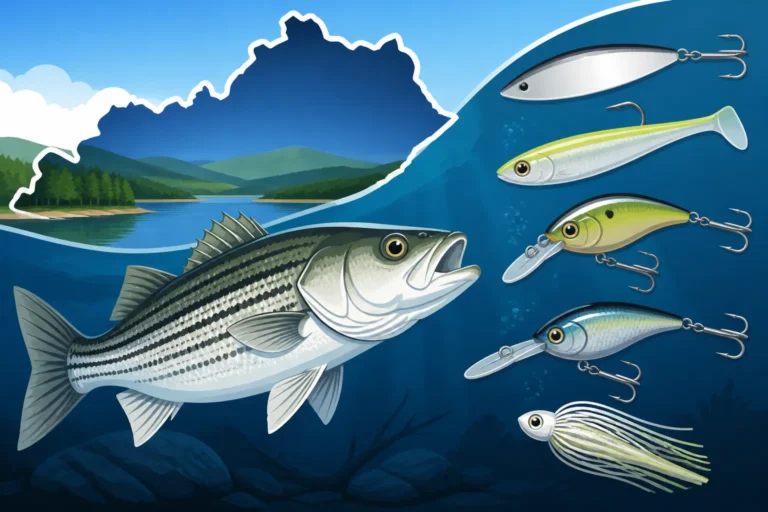
- Small Spinners: In-line spinners like Rooster Tails or Mepps, especially in sizes #0 to #2, can be very productive. Their flash and vibration mimic small baitfish, triggering aggressive strikes.
- Spoons: Small jigging spoons, like a Kastmaster or Cotton Cordell C.C. Spoon, are excellent for getting down to deeper schools and eliciting a reaction strike. A twitching retrieve is often best.
The main takeaway here is: downsize your presentation. Yellow bass have smaller mouths than bass or even larger crappie, so tiny baits are key.
Common Techniques and Presentation
Once you've got your bait or lure selected, how do you present it to these striped fighters?
- Vertical Jigging: Since yellow bass often hold to structure and deeper water, vertical jigging is a highly effective method. Position your boat directly over a marked school on your fish finder, drop your jig or spoon down to their depth, and impart a subtle jigging motion. A short, sharp twitch followed by a pause is usually effective. This is particularly useful when targeting schools holding tight to submerged brush piles or creek channels.
- Casting and Retrieving: If you're targeting shallower schools or fishing from the bank, a slow, steady retrieve with a small spinner or a jig can work wonders. Pay attention to how the fish are reacting; sometimes a stop-and-go retrieve is better, other times a constant retrieve.
- Bobber Fishing: For beginners or those just looking for a relaxing day, a slip bobber with a live minnow or a small piece of worm can be incredibly effective. Cast it near structure or where you've seen activity, and let the bobber do the work. This is a fantastic method for Beginner Bream Fishing Tips that translates well to yellow bass.
- Drifting: On larger reservoirs, if you find schools scattered over a flat, a slow drift with multiple lines rigged with jigs and minnows can help you cover water and locate active fish.
Remember, a good quality ultralight spinning rod and reel combo will not only make catching these smaller fish more enjoyable but will also provide the sensitivity needed to detect their subtle bites. Check out Best Rods and Reels for Kentucky Fishing for suitable options.
Timing and Conditions for Yellow Bass
Like most fish, yellow bass activity levels are influenced by various factors.
- Time of Year: Spring and fall often offer the most consistent action. In spring, they'll move shallower, potentially with crappie, as water temperatures rise. In fall, they'll feed heavily to prepare for winter. Even in summer, they can be caught, but they typically retreat to deeper, cooler waters during the heat of the day. Winter can be productive, especially if you can locate deep, active schools.
- Time of Day: Early morning and late afternoon are generally prime times, especially during warmer months. During overcast days, they might be active throughout the day. In deeper, cooler water, time of day can be less of a factor.
- Weather Conditions: Stable weather conditions often lead to more predictable fishing. Cold fronts can shut them down, pushing them deeper and making them less aggressive. Conversely, a warming trend after a cold snap can really turn on the bite. Look for subtle changes in the weather that might indicate a feeding window.
- Water Clarity: Yellow bass are visual predators, so moderately clear to slightly stained water is often ideal. Extremely muddy water can make it harder for them to find your bait, while crystal-clear water might make them warier of your presence.
Keep an eye on what other anglers are catching. If crappie and white bass are active, there's a good chance yellow bass might be in the area too, utilizing similar food sources and habitats.
Why Yellow Bass Might Seem Less Common Than Other Panfish
It's not just about their actual numbers; several factors contribute to why yellow bass often fly under the radar for many Kentucky anglers, especially when compared to the ubiquitous crappie or white bass. It's a combination of their behavior, ecological factors, and even angler preference.
Their Schooling Behavior and Habitat Specificity
While yellow bass do school, they often don't form the massive, highly mobile schools that white bass are famous for, which tear through baitfish near the surface and create visible feeding frenzies. Yellow bass schools tend to be tighter and more oriented towards structure, often staying in specific areas rather than ranging widely across open water. This makes them harder to stumble upon casually. You might have to actively search for them using a fish finder, scanning humps, ledges, and creek channels.
Furthermore, their preference for slightly deeper water and structured environments means they aren't as accessible to bank anglers or those who prefer to cast into open coves. If you're primarily fishing shallow docks or weed beds, you're just not going to encounter many yellow bass. This habitat specificity means that if you're not fishing their preferred spots with their preferred methods, you might entirely miss them, reinforcing the idea that they aren't "common."
Ecological Factors and Competition
In many big Kentucky reservoirs, yellow bass face significant competition from other, more dominant species. White bass, for example, are incredibly successful in these systems. They reproduce rapidly, grow quickly, and are efficient predators, often outcompeting yellow bass for food resources like shad and minnows. Crappie and bluegill also thrive, filling similar panfish niches and potentially putting pressure on yellow bass populations.
Management efforts also play a role. State fisheries agencies often focus stocking and habitat improvement efforts on more popular game fish like bass, crappie, or white bass due to angler demand. While yellow bass are part of the ecosystem, they aren't typically a primary management target, meaning less deliberate enhancement of their populations. This isn't a slight against yellow bass; it's simply a reflection of the reality of managing diverse fisheries with limited resources.
Angler Focus on Other Species
Let's be honest: when most anglers head out to Kentucky Lake or Lake Cumberland, they're usually dreaming of trophy largemouth bass, hard-fighting smallmouth, or a cooler full of crappie. These are the species that get the most attention, the most dedicated techniques, and the most specialized gear. Yellow bass, being smaller and less frequently encountered, often don't make it to the top of an angler's target list.
Many anglers might simply consider them an incidental catch, a "bonus fish" when they're targeting something else. If you're not specifically looking for them, you might not even register them as a distinct species, especially if you mistake them for juvenile white bass. This lack of dedicated angler pressure can contribute to their perceived rarity, even if they have healthy populations in specific areas. If you're looking to expand your horizons beyond the usual targets, deliberately learning more about Panfish and Sunfish Species Found in Kentucky could introduce you to some new angling adventures.
Disclaimer
This article is for general informational purposes only and does not constitute professional advice. Laws, prices and regulations vary by location and change over time. Consult a qualified professional for guidance on your specific situation.