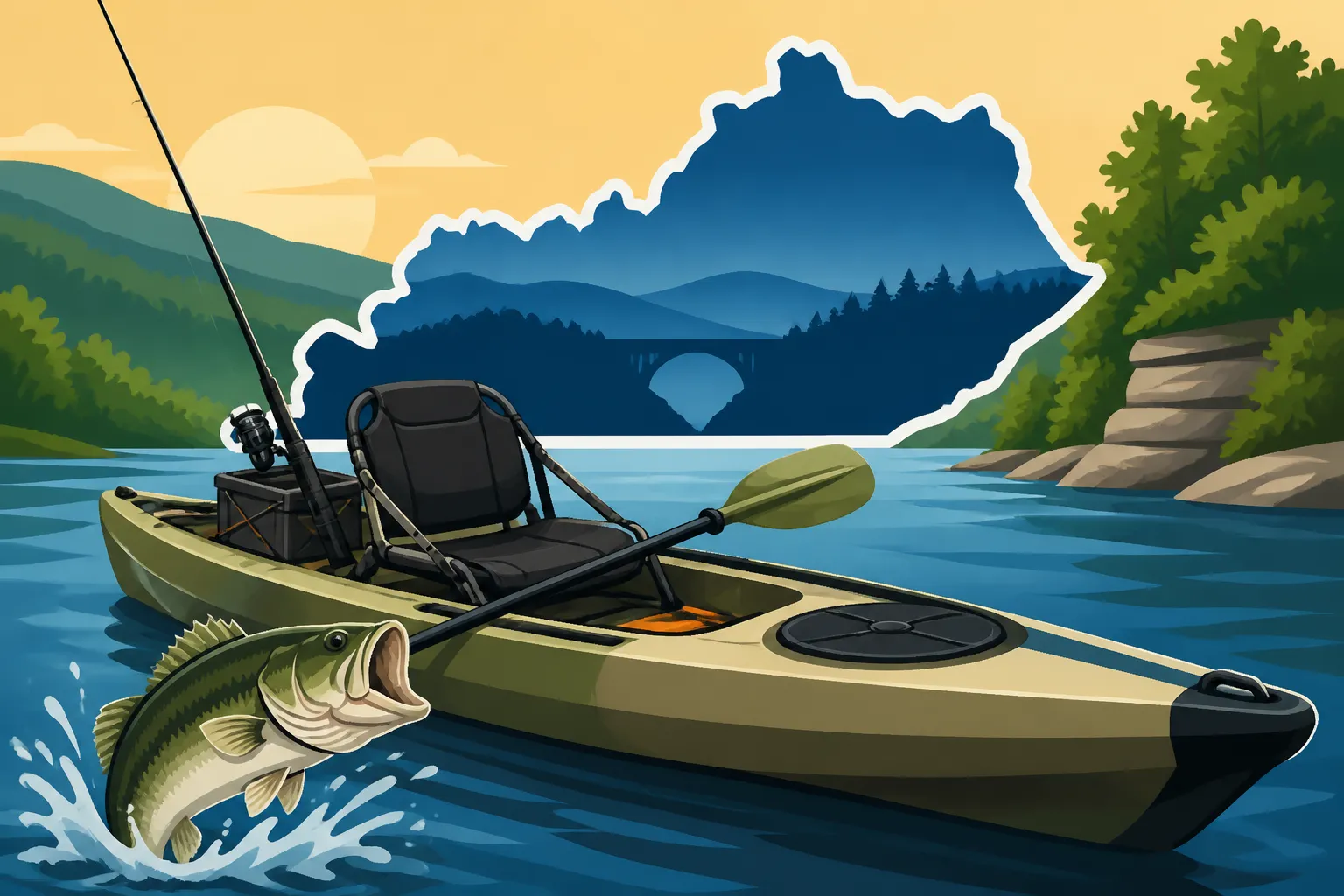
Best Fishing Kayaks for Kentucky Lakes and Rivers
There’s nothing quite like the freedom of slipping into a kayak and silently gliding across the glassy surface of a Kentucky lake or river, but choosing the right vessel can feel overwhelming. Many anglers struggle to balance stability, portability, and features without breaking the bank. This comprehensive guide will walk you through everything you need to know to select the perfect fishing kayak for navigating Kentucky’s diverse and beautiful waterways, ensuring you're well-equipped for your next angling adventure.
Why Choose a Fishing Kayak for Kentucky Waters?
Kayaks have truly revolutionized how many of us approach fishing, moving beyond just a niche trend to a mainstream choice for countless anglers. In Kentucky, with our incredible variety of water, from vast reservoirs to winding rivers and serene farm ponds, a fishing kayak offers an unparalleled connection to the environment and the fish you're pursuing. It’s about more than just getting to the fish; it’s about the experience itself.
The Allure of Stealth and Access
One of the biggest advantages of fishing from a kayak in Kentucky is the incredible stealth it provides. Unlike louder motorboats, kayaks glide almost silently through the water, allowing you to approach prime fishing spots without spooking wary fish. Imagine slowly paddling into a quiet cove on Lake Cumberland, where bass might be holding tight to submerged timber, or navigating a shallow backwater on the Ohio River, where a big flathead could be lurking. That quiet approach often makes all the difference between a frustrating outing and a successful one. This stealth also extends to your ability to slip into areas that larger boats simply cannot reach. Think about those hidden creeks and narrow channels on Kentucky Lake, or the countless small pockets and feeder streams along the Green River. A kayak opens up a whole new world of productive, untouched waters that might otherwise be inaccessible, giving you a competitive edge and a chance to truly explore.
Furthermore, the access a kayak grants is phenomenal. Many of Kentucky’s best fishing spots, especially on smaller lakes, rivers, and even some public ponds, have limited bank access or boat ramps that are difficult for larger vessels. With a kayak, launching is often as simple as finding a small patch of shoreline or a gentle slope. This means you can explore more remote sections of the Cumberland River for smallmouth bass, or find those quiet stretches on Taylorsville Lake where crappie congregate away from boat traffic. The portability of a kayak, whether on top of your car or in the bed of a truck, means you're not restricted by concrete ramps, significantly expanding your fishing horizons. This freedom to launch almost anywhere empowers you to chase the bite across many different locations, adapting to conditions and fish movements without the logistical headaches of a big boat.
Cost-Effectiveness and Maintenance
Let's be honest, fishing can be an expensive hobby, especially when you start looking at boats. A major draw of fishing kayaks, particularly for anglers in Kentucky, is their significantly lower upfront cost compared to even small motorboats. You can get a solid, feature-rich fishing kayak for a fraction of the price of a bass boat or even a modest jon boat. This makes kayak fishing an incredibly accessible entry point for new anglers or a fantastic alternative for those looking to expand their fishing opportunities without a massive financial investment. This doesn't just stop at the initial purchase; the ongoing costs are minimal. You don't need to worry about fuel, expensive marine electronics, or hefty insurance premiums in the same way you would with a motorized vessel.
Beyond the initial purchase, the maintenance associated with fishing kayaks is wonderfully simple. There's no engine to winterize, no oil changes, and no complex electrical systems to troubleshoot. Generally, a good rinse with fresh water after each outing and proper storage out of direct sunlight is all it takes to keep your kayak in top shape. If you ever need a minor repair, like patching a small scrape or replacing a bungee cord, the parts are usually inexpensive and the fixes straightforward. This low-maintenance aspect means more time on the water and less time tinkering in the garage, which is exactly what we want as anglers. This simplicity also translates to ease of transport; often, a basic roof rack or a small trailer is all you need, saving on storage fees or the need for a dedicated boat slip.
Health Benefits and Connection to Nature
Choosing a fishing kayak also comes with a host of wonderful health benefits, both physical and mental. Paddling, pedaling, or even standing in a kayak provides a fantastic full-body workout. It engages your core, arms, and shoulders, improving strength and endurance without the high impact of other activities. Spending hours actively propelling your kayak, maneuvering it through currents, and casting from a stable platform contributes to your overall fitness, transforming your fishing trip into a healthy outdoor adventure. It’s a great way to stay active while pursuing your passion, and many anglers find that the physical exertion actually enhances the satisfaction of a good catch.
Perhaps even more profound is the mental connection to nature that kayak fishing fosters. When you're in a kayak, you're at water level, intimately connected to the environment around you. The sounds of birds, the rustle of leaves along the bank, and the subtle movements of the water become more apparent. It's a truly immersive experience that allows you to de-stress, clear your mind, and appreciate the natural beauty of Kentucky's landscapes. Whether you're watching a deer drink at the edge of a quiet cove on Barren River Lake or admiring the majestic cliffs along the Kentucky River, kayak fishing offers a unique perspective that can be incredibly restorative. This deep connection helps reduce stress and promotes a sense of well-being that's hard to replicate with other forms of fishing.
Understanding Kentucky's Diverse Waterways
Kentucky is blessed with an incredibly diverse range of fishing opportunities, from massive impoundments to wild, free-flowing rivers and countless smaller, intimate bodies of water. The type of kayak that excels in one environment might be a hindrance in another, so understanding the characteristics of our waterways is crucial for making the right choice. Our state offers something for every angler, but each water body demands a slightly different approach and, often, a different kind of boat.
The Big Lakes: Kentucky, Barkley, Cumberland
When we talk about the big lakes in Kentucky, we're thinking of titans like Kentucky Lake, Lake Barkley, and Lake Cumberland. These are vast bodies of water, often stretching for miles, with wide open expanses that can get surprisingly choppy, especially on windy days or when pleasure boaters are out in full force. For these lakes, stability is absolutely paramount. You'll want a kayak that feels solid underfoot (or seat), even when a rogue wake hits. Longer, wider kayaks tend to offer this stability, making it safer and more comfortable to cast, retrieve, and even stand up to fish. Imagine trying to fight a big largemouth on Kentucky Lake when the waves are rocking you – a stable platform makes all the difference.
Beyond stability, covering distance efficiently becomes a key factor on these expansive waters. While you can paddle, pedal-drive kayaks truly shine here, allowing you to move across long stretches of water with less effort, saving your energy for fishing. Many anglers on these lakes also rig their kayaks with Fish Finders and Electronics for Kentucky Lake Fishing to locate structure and schools of fish in the vast depths. You'll likely be dealing with deep coves, offshore humps, and vast flats, so having enough storage for tackle, a cooler, and safety gear for longer trips is also important. These big lakes demand a robust, capable kayak built for endurance and varying conditions.
Rivers and Streams: Ohio, Cumberland, Green
Kentucky's rivers and streams, such as the mighty Ohio River, the scenic Cumberland River, and the wild Green River, present a completely different set of challenges and opportunities for kayak anglers. Here, current is a major factor. You need a kayak that is maneuverable and responsive, able to navigate bends, eddies, and sometimes faster flows without constantly battling the water. Shorter, nimbler kayaks or those with good rocker (curve in the hull) can be easier to control in these dynamic environments, allowing you to pivot quickly around obstacles or hold your position in a seam.
Safety becomes even more critical on rivers, especially the Ohio, with its barge traffic and strong currents. You'll need to be aware of your surroundings and have reliable propulsion, whether that's a strong paddle stroke or a robust pedal drive. When fishing the Cumberland River for trout or smallmouth, you might be dealing with rocky sections, shallow riffles, and submerged logs, so a durable hull is a must. Storage for a small anchor to hold position in the current and a good dry bag for essentials is also vital. The ability to effectively fish from current-laden waters often means a kayak that can be easily controlled with minimal effort, allowing you to focus on your presentation and the fish.
Smaller Lakes and Ponds: Taylorsville, Herrington, Barren River
Then we have Kentucky's extensive network of smaller lakes and ponds, ranging from popular state park lakes like Taylorsville Lake and Barren River Lake to the deeper, more intimate waters of Herrington Lake, and even countless private farm ponds. For these waters, versatility and portability often take center stage. You might not need the extreme stability or long-distance efficiency required for the big lakes, but ease of transport and quick deployment are highly valued. These waters are perfect for shorter fishing trips, quick evening escapes, or exploring multiple spots in a single day.
A more compact, lighter kayak can be a fantastic choice here, as it's easier to load and unload from a vehicle and carry to less accessible launch points. While pedal drives are still excellent, a good paddle kayak can be perfectly sufficient for navigating these smaller bodies of water where long distances aren't the norm. You'll want enough storage for your essential tackle and perhaps a small cooler, but extensive rigging might be less critical. These smaller waters often feature abundant shoreline cover, submerged brush piles, and shallow flats, making them ideal for casting into tight spots that a kayak can easily access. Look for models that balance good tracking for getting across open stretches with the maneuverability needed for working tight cover.
Key Features to Look for in a Kentucky Fishing Kayak
Choosing a fishing kayak isn't just about picking a color; it's about matching the boat's design and features to your specific fishing style and the types of water you'll be frequenting in Kentucky. A well-chosen kayak can enhance your experience dramatically, making your time on the water more comfortable, safer, and ultimately more productive. Understanding these key features will help you sift through the many options available at retailers like Bass Pro Shops or online platforms such as Amazon.
Stability and Hull Design
Stability is often the number one concern for kayak anglers, especially those new to the sport or those who like to stand up and cast. In Kentucky, where you might encounter everything from gentle ripples on a quiet pond to boat wakes on Kentucky Lake, a stable platform is essential for safety and comfort. Hull design plays a massive role here. Wider kayaks, especially those with a pontoon-style or tunnel hull, tend to be more stable initially. They might not be the fastest, but they provide a solid base for casting, fighting fish, and even retrieving gear. Many fishing kayaks are designed with secondary stability in mind, meaning they might feel a little tippy initially, but become very stable when tilted slightly, preventing accidental capsizing.
Consider the trade-off between primary (initial) and secondary stability. A kayak with high primary stability feels rock-solid immediately, while one with strong secondary stability allows for more aggressive leans, which can be useful for paddling efficiency or reaching out for a fish. For standing, you’ll definitely want a wider, flatter hull with maximum primary stability. However, this often comes at the expense of speed and tracking. If you plan to cover long distances on Lake Cumberland, a sleeker, more V-shaped hull might be faster and track straighter, but it will feel less stable when you try to stand. Understanding how you intend to fish – whether you’re a sit-down caster or a stand-up sight fisherman – will guide your choice in hull design.
Storage and Rigging Options
Fishing kayaks are distinct from recreational kayaks primarily because of their integrated storage and rigging capabilities. Anglers need space for rods, tackle, coolers, and essential safety gear. Look for models with generous storage areas, often featuring large bow and stern hatches, a roomy tankwell (an open storage area behind the seat) with bungee cords, and sometimes even dry storage compartments for electronics or personal items. Many kayaks come with molded-in rod holders, but the true advantage lies in the track systems (like those from YakAttack or Wilderness Systems) that allow for customizable rigging.
These track systems are game-changers. They let you easily mount rod holders, fish finder displays, GPS units, camera mounts, and other accessories without drilling permanent holes in your kayak. This modularity means you can adapt your setup for different fishing trips – adding extra rod holders for crappie fishing or a larger fish finder for chasing bass on Lake Barkley. Consider also the placement of these features. Is the tankwell large enough for your cooler or a bait bucket? Are the rod holders within easy reach for quick access but out of the way for casting? The thoughtfulness of the storage and rigging design will greatly impact your efficiency and enjoyment on the water, making it easy to carry all your necessary Kayak Fishing Gear for Kentucky Lakes.
Comfort for Long Days on the Water
Few things can ruin a fishing trip faster than an uncomfortable seat, especially when you’re planning to spend an entire day on the water. Kayak seats have come a long way from simple padded bottoms. Modern fishing kayaks often feature elevated, framed seats that resemble small lawn chairs, providing excellent back support and allowing for better circulation. This elevated position also offers a better vantage point for spotting fish or navigating submerged structure. Look for seats that are adjustable, allowing you to customize the recline and height to find your perfect ergonomic position.
Beyond the seat, consider footpegs or rudder controls. Adjustable foot braces ensure you have a comfortable and secure platform to push against while paddling, which is crucial for efficient propulsion and reducing fatigue. If the kayak has a rudder system, make sure the foot controls are intuitive and comfortable to operate over extended periods. Small details like padded deck areas for standing, soft-touch handles for carrying, and well-placed gear tracks contribute to overall comfort and reduce strain during long sessions. Remember, a comfortable angler is a happy and more focused angler, especially when you're targeting those elusive fish species.
Propulsion: Paddle, Pedal, or Motor
How you move your kayak across the water is a fundamental choice that dramatically impacts your fishing experience in Kentucky. Traditionally, kayaks are paddle-driven, offering a quiet, simple, and physically engaging way to move. Modern lightweight paddles are efficient, and many anglers enjoy the rhythmic motion. Paddle kayaks are generally lighter, less expensive, and require less maintenance. They excel in tight spaces or shallow waters where a prop might get fouled.
However, pedal-drive kayaks have soared in popularity for fishing, and for good reason. Systems like those from Hobie (MirageDrive) or Old Town (PDL Drive) allow you to use your legs, freeing up your hands for casting, rigging, or fighting a fish. This hands-free operation is a huge advantage, especially when trolling or needing to maintain position in wind or current. Pedal drives are also incredibly efficient for covering long distances, making them ideal for vast lakes like Kentucky Lake or battling current on the Ohio River. While they are heavier and more expensive, the efficiency and hands-free nature often outweigh the drawbacks for serious anglers. Finally, some kayaks are now designed to accept small electric trolling motors, providing the ultimate in hands-free propulsion and speed. These motorized options are gaining traction, especially for those who want to cover significant ground or fish in windy conditions without expending physical energy, though they add weight, cost, and the need for a battery.
| Feature / Propulsion Type | Paddle Kayak | Pedal Kayak | Motorized Kayak (e.g., trolling motor) |
|---|---|---|---|
| Cost | Lowest | Medium | Highest |
| Speed | Medium | High | Highest |
| Effort | High | Medium | Lowest |
| Hands-Free Fishing | Low | High | Very High |
| Maneuverability (Tight Spaces) | High | Medium | Medium |
| Weight | Lowest | Medium | Highest |
| Maintenance | Low | Medium | High |
| Ideal Kentucky Waters | Rivers, small lakes, creeks, shallow areas | Large lakes (Kentucky, Cumberland), some rivers | Large lakes, covering long distances |
Types of Fishing Kayaks Best Suited for Kentucky
The world of fishing kayaks has expanded dramatically, offering a specialized design for almost every conceivable angling scenario. In Kentucky, with our blend of large reservoirs, flowing rivers, and smaller, intimate waters, understanding the different types of kayaks available is key to finding your perfect match. Each style has its own unique advantages and disadvantages that will influence your experience on the water.
Sit-on-Top SOT Kayaks
Sit-on-top (SOT) kayaks are by far the most popular choice for fishing, and for excellent reasons, especially in a state like Kentucky. Their primary appeal lies in their open deck design. Instead of sitting inside a cockpit, you sit on top of the kayak, making them incredibly easy to get in and out of – a huge plus for launching from tricky banks or taking a quick swim on a hot summer day. This open design also means they are self-bailing; scupper holes in the hull allow any water that splashes onto the deck to drain right out, keeping your feet and gear relatively dry. This is particularly advantageous on larger lakes like Kentucky Lake or Lake Barkley, where boat wakes can easily splash over the sides.
SOTs are also renowned for their stability. Most fishing-specific SOT kayaks are designed to be wider and flatter-hulled than recreational kayaks, providing a very stable platform for casting, standing (on some models), and managing a fish. This stability instills confidence, especially for beginners or those who prefer to stand for better visibility. The open deck also offers ample room for customization, with track systems and accessory mounts easily added for rod holders, fish finders, and tackle storage. While they might not be as fast as some sit-inside touring kayaks, their comfort, accessibility, and fishing-focused features make them a dominant choice for Kentucky anglers targeting bass, crappie, and even catfish.
Sit-Inside SIT Kayaks
While less common for dedicated fishing than SOTs, sit-inside (SIT) kayaks still hold a place in the Kentucky fishing scene, particularly for certain niches. SIT kayaks feature a closed cockpit where the paddler sits down inside the hull, often with a spray skirt to keep water out. Their main advantages lie in their speed, tracking, and protection from the elements. The narrower, often V-shaped hull of a SIT kayak cuts through the water more efficiently, making them faster and easier to paddle in a straight line, which can be beneficial for covering long distances or battling headwinds on larger, open sections of the Cumberland River.
They also offer more protection from cold water and wind, keeping the paddler drier and warmer, which could be a factor during colder spring or fall fishing outings. While storage is usually more limited to bow and stern hatches, some wider SIT models, often called "recreational sit-insides," can be adapted for fishing with rod holders and small tackle organization. However, their primary drawbacks for fishing are the difficulty in re-entering from the water, more limited space for gear, and less stability compared to dedicated SOT fishing kayaks. They might be a good choice for river anglers who prioritize speed and protection and don't require standing capability or extensive gear storage.
Hybrid Kayaks and Canoes
The line between kayaks and canoes has blurred with the advent of hybrid designs, offering an intriguing middle ground for Kentucky anglers seeking specific characteristics. These "hybrid" vessels often blend the stability and open-deck feel of a canoe with the paddler position and efficiency of a kayak. Some larger, wider kayaks blur into what might be called a canoe-kayak hybrid, offering enormous open storage space, very high stability (often allowing multiple people or pets), and the ability to paddle standing or seated on a bench-style seat. These are fantastic for anglers who need maximum gear capacity or want to bring a child or dog along.
Conversely, many modern canoes are designed with kayak-style seats, foot braces, and even paddle or pedal drive options. These specialized fishing canoes can offer incredible stability, vast amounts of storage, and often the ability to accommodate small trolling motors, making them versatile workhorses for various waters. They might not be as nimble as a pure kayak, but their capacity for gear, multiple rod setups, and even coolers or livewells can be a huge advantage for extended trips or for those who simply like to bring a lot of equipment. Whether it's a dedicated fishing canoe with kayak features or an oversized SOT, these hybrids offer a compelling blend of features for Kentucky anglers looking for something beyond the traditional kayak.
Top Kayak Brands and Models for Kentucky Anglers
With the explosion of interest in kayak fishing, many reputable brands have emerged, each offering a range of models designed to meet different needs and budgets. For Kentucky anglers, finding a brand that balances quality, features, and durability is essential for long-term satisfaction. Whether you’re browsing the aisles at Bass Pro Shops or scrolling through options on Amazon, you'll encounter a variety of excellent choices.
Entry-Level and Budget-Friendly Options
Getting into kayak fishing doesn't have to break the bank, and there are several excellent entry-level and budget-friendly options that are perfectly capable for fishing Kentucky's lakes and rivers. Brands like Perception, Lifetime, and Pelican often lead this segment, offering robust and reliable kayaks that provide a solid platform without all the bells and whistles of higher-end models. A popular choice is the Perception Pescador line, which offers good stability and decent rigging options for its price point, making it a favorite for many new anglers. These kayaks are often made from durable rotomolded polyethylene, capable of shrugging off bumps against rocks or stumps in a shallow creek.
These entry-level kayaks are fantastic for those who are unsure if kayak fishing is for them or for anglers who primarily fish smaller, calmer waters such as local ponds or the quieter sections of the Green River. While they might feature simpler seating (often just padded seat pads rather than elevated frames) and less integrated storage, they are generally easy to transport and manage. Many anglers start with one of these and gradually upgrade or customize it with aftermarket accessories found on sites like Amazon. For example, adding a clip-on rod holder or a simple anchor system can transform a basic recreational kayak into a functional fishing machine, proving that you don't need to spend a fortune to enjoy the sport.
Mid-Range and Feature-Rich Models
Stepping up to the mid-range category opens up a world of enhanced features, improved comfort, and more specialized designs that greatly benefit the serious Kentucky angler. Brands like Wilderness Systems, Old Town, and Native Watercraft excel in this segment. These kayaks typically offer elevated, adjustable framed seats that provide all-day comfort, making those long outings on Lake Cumberland or the Ohio River much more enjoyable. You'll also find more sophisticated hull designs that balance stability with improved tracking and speed, allowing for more efficient travel across larger bodies of water.
Mid-range kayaks also come with a greater array of integrated fishing features, such as multiple flush-mount and adjustable rod holders, extensive gear tracks for customization, and more robust storage solutions including large bow hatches and spacious tankwells. Old Town’s Sportsman series, for example, is highly regarded for its stability, comfort, and the option for a pedal drive system, making it a versatile choice for everything from chasing bass on Taylorsville Lake to trolling for crappie on Lake Barkley. These kayaks offer a significant upgrade in performance and angler-specific design without reaching the premium price points, providing excellent value for the dedicated Kentucky fisherman.
Premium and Advanced Fishing Machines
For the angler who demands the absolute best in performance, features, and technology, the premium segment of fishing kayaks offers advanced "fishing machines." Brands like Hobie, with their renowned MirageDrive pedal system, and high-end models from Old Town and Wilderness Systems, represent the pinnacle of kayak fishing design. These kayaks often feature highly efficient pedal drives that allow for effortless speed and hands-free fishing, which is a huge advantage when trying to cover miles on a large reservoir like Kentucky Lake or fight strong currents. Their hulls are meticulously designed for optimal hydrodynamics, offering an incredible blend of speed, stability, and tracking.
Beyond propulsion, premium kayaks come fully loaded with thoughtful, angler-specific features. This includes advanced seating systems that provide superior comfort and adjustability, integrated transducer mounts for easy fish finder installation, built-in rod storage for multiple setups, and expansive, intelligently designed storage compartments. Some even include features like integrated power pole mounts or battery compartments for electric motors. While the price tag is significantly higher, these kayaks are built for serious anglers who spend countless hours on the water, demand peak performance, and want every advantage possible. They are often sought after by tournament anglers or those who want a fishing platform that truly enhances every aspect of their Kentucky fishing experience.
Essential Kayak Fishing Gear and Accessories
Having the right kayak is just the first step; outfitting it with essential gear and accessories is crucial for both safety and maximizing your fishing success on Kentucky’s diverse waters. From life jackets to rod holders and even advanced electronics, each piece of equipment plays a vital role in transforming your kayak into a functional and safe fishing platform.
Safety Gear and PFDs
Safety should always be the top priority when heading out on any water, especially when you're in a kayak. The single most important piece of safety gear is a U.S. Coast Guard-approved Personal Flotation Device (PFD), or life jacket. In Kentucky, Life Jacket Rules for Boats in Kentucky mandate that all boats must have one PFD for each person on board, and children under a certain age must wear them. For kayak fishing, it's highly recommended that everyone wears their PFD at all times. Look for a fishing-specific PFD; these are designed with large pockets, tool attachment points, and a comfortable fit that doesn't hinder casting or paddling. Brands like Onyx or NRS offer excellent options.
Beyond the PFD, other essential safety items include a whistle or other sound-producing device (also often required by law), a signaling mirror, and a small first-aid kit. A bright, visible flag on a pole (often called a "safety flag" or "kayak flag") is highly recommended, especially on larger, busy lakes like Kentucky Lake or Lake Cumberland, to make you more visible to other boaters. A sturdy paddle leash is also a good idea to prevent losing your paddle in the event of a capsize. Carrying a dry bag with essential items like your phone, car keys, and a change of clothes can be a lifesaver. Never underestimate the importance of these items; they can literally save your life or prevent a minor mishap from becoming a serious problem.
Paddles, Rod Holders, and Anchors
A good paddle is your primary means of propulsion and control for most kayaks. While your kayak might come with a basic paddle, upgrading to a lighter, more efficient paddle made of fiberglass or carbon fiber can drastically reduce fatigue, especially on longer trips. The right length is crucial, so be sure to size it correctly for your height and kayak width. Many kayak anglers also carry a spare paddle, just in case. Rod holders are another absolute necessity. While some kayaks have molded-in holders, adjustable, external rod holders (often mounted to gear tracks) allow you to position your rods for trolling, holding a spare, or keeping them out of the way while paddling.
An anchor system is incredibly useful, particularly on rivers or in windy conditions on lakes, allowing you to hold your position over a productive spot. A small drag anchor or a grapple anchor, combined with a quick-release cleat system, is perfect for kayak fishing. You'll also want a paddle leash and a rod leash to prevent losing expensive gear overboard. A net or a lip gripper is essential for safely landing and handling fish, especially larger species like bass or catfish. Finally, a small cooler or insulated bag for drinks and snacks, and to keep your catch fresh, is a smart addition for any trip on the water.
Fish Finders and Electronics for Kentucky Lake Fishing
For many serious kayak anglers on Kentucky's larger waters, a fish finder has become an indispensable tool. These compact units help you identify structure, depth contours, and even individual fish or schools of bait. When you're fishing expansive waters like Kentucky Lake or Lake Cumberland, a good fish finder can significantly increase your efficiency by helping you pinpoint productive areas. There are many excellent kayak-specific fish finders available, often with smaller screens and battery-saving features, and many can be found on Amazon or at Bass Pro Shops.
When selecting a unit, consider features like GPS mapping, which allows you to mark waypoints for productive spots, and side imaging or down imaging, which give you a clearer picture of the underwater world. Installation typically involves mounting the display on a track system and either using a scupper-mounted transducer or an external arm-mounted transducer. Power usually comes from a small, sealed lead-acid or lithium battery, housed in a dry box. While they add weight and cost, the ability to "see" what's beneath your kayak can be a game-changer for locating those elusive fish. Having a reliable power source for these devices is also key, so always remember to charge your batteries before hitting the water.
Rigging Your Kayak for Kentucky Fishing Success
Once you’ve chosen your kayak and gathered the essential gear, the next step is to rig it efficiently for your specific fishing needs in Kentucky. Proper rigging isn't about adding every gadget imaginable; it's about optimizing your setup for accessibility, comfort, and functionality, ensuring that your kayak becomes an extension of your fishing style. A well-rigged kayak can dramatically improve your fishing experience, making you more effective and less frustrated.
Customizing for Specific Fish Species (Bass, Crappie, Catfish)
The way you rig your kayak should often be tailored to the species you’re targeting. If you're primarily chasing largemouth and smallmouth bass on Kentucky Lake or the Cumberland River, you'll want quick access to multiple rods for different techniques – perhaps one for topwater, one for a jig, and another for a crankbait. This means multiple rod holders, strategically placed within easy reach. Many bass anglers also prioritize a large, open tankwell area for a cooler or a soft livewell, to keep their catch healthy for weigh-ins or release. Quick access to pliers, scissors, and a measuring board is also crucial for efficient catch-and-release.
For crappie fishing, especially when spider rigging or trolling on lakes like Lake Barkley or Barren River Lake, you'll need even more rod holders, often extending out from the sides or bow of the kayak. These setups allow you to present multiple baits at different depths simultaneously. Crappie anglers also typically carry small bait buckets for minnows and need easily accessible tackle storage for jigs and bobbers. Catfish anglers, particularly when targeting big blues or flatheads on the Ohio River, might prioritize heavy-duty rod holders, a sturdy anchor system to hold against current, and ample space for cut bait or live bait buckets. Each species demands a slightly different approach, and your kayak's rigging should reflect that specialization.
Electronic Installation Tips
Installing electronics, particularly fish finders and GPS units, can seem daunting, but with a little planning, it's quite manageable. The key is to keep wires neat, connections dry, and components secure. Most kayak anglers use a track system (like those popular on Wilderness Systems kayaks) to mount the fish finder display, allowing for easy adjustment and removal. For the transducer, common methods include a scupper hole mount (where the transducer fits directly into one of the kayak’s drainage holes), an in-hull shot-through mount (where the transducer is epoxied inside the hull, reading through the plastic), or an external arm mount (which allows you to deploy and retrieve the transducer as needed).
Powering your electronics usually involves a small, rechargeable battery (either a 12V sealed lead-acid or a lighter, more expensive lithium battery) stored in a waterproof dry box. Route all wiring cleanly, using zip ties or cable clamps to secure it and prevent tangles. Apply dielectric grease to all electrical connections to prevent corrosion, especially in saltwater or brackish environments (though less of an issue in Kentucky's freshwater). Always ensure your battery is fully charged before each trip, and consider carrying a small, portable power bank for emergencies. Proper installation ensures your electronics function reliably, giving you that vital edge in finding fish.
Maximizing Storage and Organization
A cluttered kayak is an inefficient kayak, leading to frustration and potentially lost gear. Maximizing storage and organization is paramount for a smooth fishing trip. Start by utilizing the built-in storage features your kayak offers – bow hatches for dry bags, the tankwell for coolers or crates, and side pockets for small items. Consider adding a milk crate or a specialized kayak fishing crate to your tankwell; these are perfect for holding multiple tackle boxes, a bait bucket, and other essentials, keeping them contained and accessible. You can even customize crates with PVC pipe rod holders.
Think about how you’ll access your frequently used items. Pliers, line cutters, and a measuring tape should be within arm's reach, often secured with lanyards to prevent loss. Waterproof tackle boxes or soft-sided tackle bags are excellent for keeping lures and baits organized and protected. Dry bags are essential for anything you absolutely cannot get wet, like your phone, wallet, and extra clothing. Finally, consider a small anchor trolley system, which allows you to deploy your anchor from either the bow or stern without having to reach outside your boat. This is especially useful for holding position in varying currents or wind and can be a huge time-saver. A well-organized kayak allows you to focus on the fishing, not on searching for lost gear.
Kayak Fishing Safety and Regulations in Kentucky
While kayak fishing offers incredible freedom, it's crucial to understand and adhere to safety protocols and local regulations. Just like any other vessel, kayaks are subject to specific rules in Kentucky, designed to ensure the safety of all waterway users. Being prepared and informed is not just good practice; it's often the law and can prevent serious incidents or fines.
Life Jacket Rules for Boats in Kentucky
As mentioned earlier, wearing a U.S. Coast Guard-approved Personal Flotation Device (PFD) is not just a recommendation, it's a legal requirement in many situations on Kentucky waters. Specifically, Life Jacket Rules for Boats in Kentucky dictate that every vessel must have a wearable PFD for each person on board. For children under the age of 12, it is mandatory to wear a PFD at all times while on board a vessel that is underway. While adults are not always legally required to wear their PFD while underway, having it readily accessible is not enough for kayakers. Due to the inherent risk of capsizing in a kayak, even in calm water, it is strongly advised that all kayak anglers wear their PFD continuously.
A PFD designed for fishing is a fantastic investment. These vests often have thinner back panels to allow for comfortable seating in a kayak, along with numerous pockets and attachment points for fishing tools, making them practical for active anglers. Always check that your PFD fits properly – snug but not restrictive – and that it is in good condition, free from tears or excessive fading. Familiarize yourself with how to quickly put on and secure your PFD, although ideally, you'll already be wearing it. Remember that even strong swimmers can be quickly incapacitated by cold water shock or an unexpected injury, making a properly worn PFD your most vital piece of safety equipment.
Kentucky Boat Registration Requirements Explained
Many people mistakenly believe that small, non-motorized vessels like kayaks are exempt from registration. However, Kentucky Boat Registration Requirements Explained clearly state that any boat powered by a motor, regardless of size, must be registered. This means if you decide to add an electric trolling motor to your fishing kayak, even a small one, you will need to register it with the Kentucky County Clerk's office. Non-motorized kayaks, canoes, and paddleboards, however, are typically exempt from registration. Always double-check the current regulations, as rules can change.
If your kayak requires registration, you'll need proof of ownership (like a bill of sale or manufacturer's statement of origin) and may have to pay a fee based on the vessel's length. Once registered, you'll receive a registration card and decals that must be properly displayed on your kayak. Failing to register a motorized kayak can result in fines if you're stopped by a game warden during a routine Game Warden Enforcement and License Checks While Fishing. It's always best to be compliant to avoid any issues and ensure your time on the water is hassle-free.
Navigating Busy Waterways and Weather
Kentucky's waterways, especially the larger lakes and rivers, can become quite busy, particularly on weekends and holidays. Navigating these waters safely requires constant vigilance. Kayaks are small and sit low in the water, making them less visible to larger powerboats. Always assume other boaters don't see you. Using a bright, visible flag on a pole and wearing bright clothing can significantly increase your visibility. Stay clear of main navigation channels on rivers like the Ohio and avoid high-traffic areas on lakes like Kentucky Lake during peak times if possible. When crossing open water, do so directly and quickly, and always be aware of approaching boat wakes, turning your kayak into them at a slight angle to minimize rockiness.
Weather can also change rapidly in Kentucky, transforming a calm day into a dangerous one. Always check the forecast before heading out, and be prepared for sudden storms, strong winds, or temperature drops. If high winds or lightning are predicted, it's best to postpone your trip. If you find yourself in deteriorating conditions, head to the nearest safe shore immediately. Carry a waterproof phone or VHF radio for emergencies, and let someone know your float plan – where you're going, when you expect to return, and who you're with. Understanding how to manage your kayak in rough water and having a plan for unexpected weather events are critical skills for any Kentucky kayak angler.
Disclaimer
This article is for general informational purposes only and does not constitute professional advice. Laws, prices and regulations vary by location and change over time. Consult a qualified professional for guidance on your specific situation.